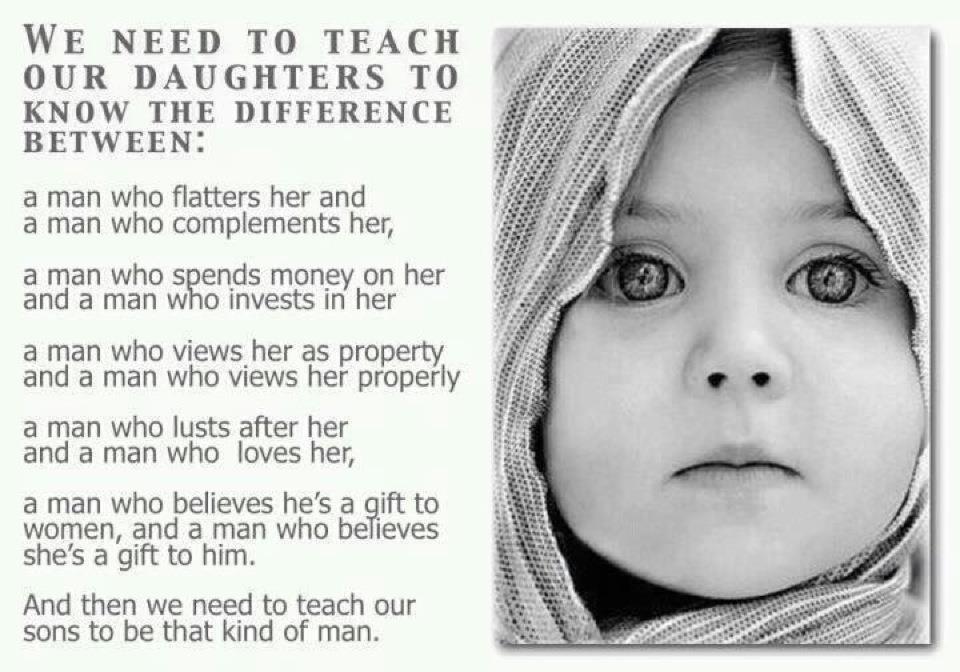
Some (better) advice for the chronically single

So the Daily Wire recently put out an interesting article about the current trend of chronically single young adults who want to get married but have had zero luck, especially with today’s online dating scene. From what I can tell, online dating is like a post-apocalyptic wasteland right now—which is a huge problem, because ever since the pandemic, online dating has come to replace almost every other form of getting out there and finding prospective romantic partners.

So since I graduated from the online dating scene after a period of chronic singlehood, and am now happily married, I thought I was qualified to share some of my thoughts on the subjects in the comments on the article. And since I thought some of my readers here might find it interesting, I’ve decided to cross-post my comment. Here it is:


I was chronically single until I met my wife at age 34. We met online and got married just before the pandemic. Some thoughts:

1. It sucks to be rejected, but if marriage is really what you’re looking for, you’ve got to embrace the suck. You’ll never find “the one” if you’re trying to please everyone. Know what you’re looking for, and when you write up your dating profile, share the things about you that will drive everyone else away. My profile had an explicit declaration of faith, because that was what I was looking for–and I found my wife on the third or fourth match, in part because that declaration was explicit enough to drive everyone else away.

2. The only way to stop wasting time is to embrace Jordan Peterson’s 8th rule of life. You grew up in an online world where almost everything you saw was a lie. Embrace total honesty, no matter how much it hurts. On our second date, I asked my future wife what she wanted to do with her life. She embraced total honesty and told me she wanted to be a wife and a mother more than anything else, even though she had no idea how I would respond to that. We were married less than a year later.

3. Have enough faith to trust God’s timing. My wife and I were actually enrolled in the same college class a decade before we met online. If we had dated each other then, it wouldn’t have worked out. We both needed to grow a bit first (quite a bit, in my case). Everything in this world has been prepared in the wisdom of Him who knows all things. Do your part to bring your life in line with Him, and all things will work together for your good.

4. Stop making everything about yourself. Selfishness is the root cause of every divorce, which also makes it one of the biggest deterrents to marriage and relationships. You grew up in an age of unbridled narcissism, exploited by Big Tech and social media to leverage your loneliness for corporate profits. When you think you may have found the right one (and you’re not in a codependent or abusive relationship), make it all about them. He who seeks his life shall lose it, and he who loses his life, for God’s sake, shall find it. I will never forget the impression I received when I first held my daughter: “this is her story now, not yours.”

I’m engaged!

So a couple of days ago, I proposed to the girl I’ve been dating for the past few months. She’s pretty amazing. She’s currently at BYU, getting a masters in computer science. Where I make stuff up for a living, she actually makes stuff happen.

The funny thing is that we were both in Brandon Sanderson’s English 318R class back in 2009, even though we didn’t know each other at the time. She also lived in German house at the FLSR (Foreign Language Student Residence) during the summer I was on the Jordan study abroad. I lived in the Arabic house the year before and the year after. Also, after I came back from Jordan, she studied at the BYU Jerusalem Center.

So many near misses, but the way we actually met was through an online dating app. A couple of years ago, I wondered if I should try online dating, but I got this feeling like I should wait. Then around June of 2018, I got this feeling that the time had come to set up a profile and start looking around.

We started dating back in September, and decided to go exclusive after watching Venom (kind of a weird movie to cuddle together at, but still fun). I spent Thanksgiving and Christmas with her family in Provo, and apparently made a good impression. While playing a board game, her six year-old niece smiled at me and said “you’re my uncle!” to which I replied “not quite.”

Dating this girl has been a real adventure. Without getting into all the personal details, I can say that she’s got everything I’ve been looking for, and then some. On one of our earlier dates, we did an exercise where we each listed twenty things we wanted out of life, and five of those things were on both of our lists.

So yeah, she’s a keeper. I secretly met with her parents last weekend, and proposed on Tuesday. Nothing elaborate, just went on a walk around campus after eating lunch together. We’ve talked about getting married before, so after asking if there was anything else she felt we needed to talk about, I said “I can think of one thing,” got down on one knee, and took out the ring.

We’re planning to get married in June. My dad will be out of school by then, and hopefully my sister and her boyfriend will have their residency papers in Brazil figured out so that they can come. It feels like a long engagement period, and perhaps for a Latter-day Saint wedding it is, but I can be patient. Probably.

Good things are definitely happening!

Motatseba, or how to bag a wife—literally (Blast from the Past: April 2012)

With the rise of #MeToo, I thought it would be interesting to revisit this old post from my time in the Republic of Georgia. Here in the US, we seem to be in the process of completely reworking the societal norms for how men and woman interact in the public sphere. On one extreme, we have serial predators getting ousted from power in industries that enabled their abuses for years. On the other extreme, we have the perpetually outraged calling for blood because someone greeted a woman in public with an unwanted hug. False and anonymous accusations abound, while clear and obvious abusers like the Clintons have gotten off scot-free. In short, it’s a mess.

Changes this drastic always produce unintended consequences. One of the unintended consequences of #MeToo may be the blurring of the lines of consent. After all, if a woman can call it rape because she decided afterward that she regretted it, is positive consent worth anything in the first place? In eastern Europe and central Asia, consent has also been blurred, which is part of the reason why bridenapping is still a thing. In Georgia, I came face to face with this reality.

Let me make it clear that I do not condone bridenapping in any form. Cultures are not equal, and some cultures (or some aspects of a culture) are better than others. A culture that condones the kidnapping and forced marriage of women is much worse than a culture that ennobles and empowers women to be agents of their own destiny.

With that in mind, here’s the updated post.


მოტაცება (pronounced motatseba) is the Georgian word for bride kidnapping, as opposed to regular kidnapping, which takes a different word. It’s an ancient practice in the Caucasus region that still occasionally happens, especially in the rural areas. Today, most Georgians condemn it, but there’s still a whole slew of lingering cultural subtexts that can be very difficult for a Westerner like me to understand and navigate.

This is how it works: boy meets girl. Boy decides to marry girl. Boy gets his friends together and kidnaps the girl, with or without her consent, holding her captive overnight. The next morning, boy contacts girl’s parents to ask for girl’s hand in marriage.

Since the girl has been held overnight, the implication is that she’s been raped (which may or may not be true). Therefore, to avoid a scandal which could tarnish the family’s reputation, the parents will usually marry their daughter off as quickly as possible. However, if the girl can escape, or the girl’s brothers can rescue her before nightfall, the crisis can be averted.

Basically, it’s capture the flag with sex.

I first heard about motatseba from this post on Georgia On My Mind, back when I was looking into teaching English. It disturbed me, but not enough to dissuade me from coming to Georgia. A couple of weeks ago, however, I learned that that was how my host parents got married.

Here’s the thing, though: they both seem to remember it fondly. In fact, when my host mom saw a comedy skit on the subject, she couldn’t stop laughing. Her mom lives with them now, and from time to time they go out to visit his family in the village, so it looks like everyone’s on pretty good terms.

So what the heck happened?

Here’s the story, as best as I can piece it together. They were introduced by his sister, who was her coworker at the hospital. He liked her, but was too poor to afford a dowry, having just gotten out of the Red Army. After a month, he got together with some friends and tricked her into coming out to his family’s house out in the village. She was surprised and upset at first, of course, but her parents gave their consent, probably because she was starting to get into old maid territory (she was 29 at the time). They were married the next day by a magistrate. Now, they’ve got four kids—a huge family, by Georgian standards—and seem to be happy together.

As a Westerner, it blows my mind that a strong, healthy family can come out of something as violent as an act of kidnapping. Indeed, I have yet to be convinced that that’s a normal outcome. However, after asking around and doing some research, I’ve come to realize that motatseba isn’t a black and white issue: there are all sorts of cultural subtexts that make it much more complicated.

The key to understanding how all this works is the following proverb, which underscores Georgian concepts of gender roles and the differences between men and women:

If a woman says no, she means maybe. If she says maybe, she means yes. If she says yes, she is not a woman.

From this, two things follow:

Men should be more assertive

As a man in Georgia, I get this all the time. All three of my co-teachers are women, and all of them constantly defer to me, even though they have far more teaching experience than I do. When I had some pretty serious differences over teaching methodologies with one of them, she suggested that I take over the next lesson and teach it without her interference, so that she could get a better idea that way.  This isn’t the case with the female volunteers. Many of them complain about how hard it is to get anyone to take their suggestions seriously.

A woman can never say no—or yes

If “no” is constantly interpreted as “maybe,” then it follows that no one is going to believe that a woman is even capable of saying “no.” On the other hand, if a real woman can never say “yes,” then the man ultimately has to take matters into his own hands. This turns the whole concept of rape into a nebulous gray area, which is why motatseba isn’t universally considered to be a horrible thing.

This is not to say that in Georgian culture, women are doormats or property (even though that’s what some TLGers claim). Women have a number of support networks, such as family, friends, and other women, and can use these networks to ward off unwanted attention. When I asked my host sister if she’s worried that she would ever be kidnapped, she said no, because if she was, her brothers would kick some serious ass.

On top of all this, Georgians have no real concept of casual dating. If a girl and a guy are seeing each other, they’re either married or about to be married. This shows up in the way they use Facebook and other social networks: instead of listing themselves as “in a relationship,” the girl will give her password to the guy she’s dating. And they don’t just do it because the guy demands it—when my host sister was seeing someone, he asked her if she wanted to give her password to him, as if that was the natural next step in their relationship. From the way she told me, she seemed to be worried that she’d made a mistake by telling him no.

Combine all of these together, and you should start to get a clearer picture of some of the subtext surrounding motatseba.

When I asked my first co-teacher about it, she said it was only an ancient practice and absolutely didn’t happen anymore. When I brought up rape and asked if that was also a part of it, she was horrified and didn’t want to talk about it. However, when I asked if it’s possible for a happy marriage to come of it, she kind of smiled a little and said that if the woman likes it, then why not?

My second co-teacher was much more straightforward with me. Yes, it happens occasionally, though it was a lot more “fashionable” about twenty or thirty years ago. No, it’s not romantic. Yes, a lot of the marriages aren’t very happy, which is why so many of them end in divorce. She told me that one of her friends from college was married through motatseba, and that she knows of at least one case in our school where an 8th grader was kidnapped and married. However, motatseba is now considered a serious crime, so it’s not as common as it used to be.

My third co-teacher’s answer was a lot sketchier. The first time I asked about it was in passing, as she walked in on the conversation I was having with my first co-teacher. When I asked her about rape, she laughed and said “well yes, of course it happens!” as if that wasn’t a big deal. Later, however, she sat me down and said quite seriously that motatseba is a horrible thing, that it’s a criminal act, that it doesn’t happen anymore, etc etc.

However—and this was perhaps the most illuminating thing—she said that sometimes, when a guy and a girl are in love, but she’s being wishy-washy and non-committal, he’ll sweep her off her feet and carry her off. In fact, that was what happened with her: her boyfriend wanted to marry her, but she kept putting it off, so one day he tricked her into getting in the car and told her “all right, enough is enough—we’re getting married this weekend.” And they did.

When I asked her if that was motatseba, she said no, but the subtext was clearly similar. A real man knows how to assert himself and take what he wants. Since a real woman will never say yes, sometimes you just have to man up and tell her how it’s going to be.  And don’t worry if she says no—she just doesn’t know yet that she wants it. She’ll come around eventually. They always do.

It sounds pretty horrible, but that seems to be how it works. And really, there are gradations of it. Most Georgians will agree that it’s wrong for a guy to kidnap a girl he doesn’t know so that he can rape her. But if the guy and the girl know each other, and are already pretty serious, and he wants to speed things up—or, alternately, if she knows her parents would never say yes otherwise—that’s when everyone starts to wink and nod.

And really, can we say that our culture’s problems are any less abhorrent? What about teenage pregnancy? Secret abortions? Date rape? At least with motatseba, the guy is trying to marry the girl, not just sleep with her and walk away. If it’s just sex that the guy is after, there are plenty of other options for that.

Either way, learning about motatseba firsthand has certainly been an interesting anthropological experience.


Don’t worry, I’m still alive

Wow, has it been more than a week since my last post? I think this is the longest I’ve gone without updating this blog since coming back from Georgia.

I wish I could say life has been busy, but it hasn’t really. Just another lazy summer in Utah. I did start dating someone recently, which probably explains where all my time has gone. But don’t worry, I’m still writing–in fact, the first draft of Strangers in Flight (Sons of the Starfarers: Book III) should be finished next week. It’s taken me a lot longer to write this one than I’d expected, but now that I’ve buckled down, it’s really coming together.

Comrades in Hope (Sons of the Starfarers: Book II) should be out by the end of the month, barring something crazy like my editor or cover designer dropping off the face of the Earth. Once they get back to me, all I’ve got to do is run through the edits (which shouldn’t take longer than a day or two) and format the thing (which also shouldn’t take longer than a day or two). So if you’ve read the first book and are eagerly awaiting the second, you shouldn’t have to wait longer than a couple of weeks!

I’m not sure what cons I’ll be attending this summer/fall. I thought I was going to Westercon, but it turns out my parents are going to be in town that week, and considering that it falls on the fourth of July (which also happens to be my sister’s birthday–who also happens to be pregnant), it looks like I have more important things to do that weekend. Besides, I want to start a new 4th of July tradition with my girlfriend this year: watching Gettysburg.

In any case, it looks like I won’t be doing too many cons this year. Maybe Salt Lake Comic Con, but I don’t know about that one yet either.

Once I’ve finished Strangers in Flight, I’ll probably take some time to work on a novel. There are three projects that I’m thinking about working on:

Star Wanderers: Children of the Starry Sea — I’ve been wanting to write a Star Wanderers novel for some time, but haven’t actually started it yet. It would definitely be fun to revisit the characters from that series, and it seems that a lot of my readers would really be interested in it too. It would also be a good way to tie things in with Sons of the Starfarers, and give some direction to the later books in that series.

The Sword Bearer — I explained the plot of this one to my girlfried, and she really liked it. That got me excited about it again, so I’m thinking very seriously about taking that project off of the back burner for a while. It’s a long-form epic fantasy that will probably turn into a trilogy–very different from the stuff I’m writing now. Still, it has a lot of potential, and the story is definitely solid. If I do pick it up, I’ll probably rename it The Sword Keeper, so that book 2 will be The Sword Bearer, and book 3 will be The Sword Wielder.

Star Wolf, AKA Heart of the Nebula — I’ve been meaning to finish this one for some time, so I might as well knock it off. With the last round of revisions, I got about halfway through, but it’s still very messy, so this would definitely be a project. However, this is the one that is closest to actually being publishable.

So that’s what I’m up to right now. I’ve got a lot more to say, especially about my girlfriend, but for now, I think I’d better get back to writing.

Q is for Quitting the Day Job (or never having one to begin with)

Writing is one of those gigs where everyone expects you to have a day job, since common wisdom says that writers don’t make money. In traditional publishing, that may be generally true, but self-publishing is an entirely different game. It isn’t necessarily easy to make a living as an indie writer, but it is possible–much more possible than it is in the traditional industry.

I can’t speak authoritatively on when it’s right to quit the day job because I never really had one. I graduated in 2010, during the height of the “jobless recovery”–the soporific catchphrase invented by Washington policy wonks to describe the weird phenomenon where GDP was improving but unemployment was still in the crapper. For everyone outside of the Emerald City of Washington, we were still deep in the quagmire of the Great Recession.

I had just gotten back from an internship in the Emerald City that had severely disillusioned me to all things political. That rendered my degree in Political Science pretty much useless, and I found myself hitting the streets of Provo looking for something–anything–that would pay. I sold my body as a plasma donor, I sold my soul as a call center interviewer, and eventually I settled into that weird blend of mercenary prostitution that constitutes temp work. But even the temp jobs were scarce, and I found myself living from month to month, barely scraping enough to get by.

That’s when I learned about self-publishing. By this point, I already knew that I wanted to be a full-time writer. That was my plan A, and since it didn’t look like I’d ever land a steady day job, there was no plan B to fall back on. The stuff I was writing didn’t seem to be anything New York was interested in–not enough to pay a living wage, at least–so I jumped into self-publishing with both feet and never looked back.

When you first start out self-publishing, chances are that you’ll languish in obscurity for a while, barely selling enough books to make pizza money month to month. That was certainly the case with me. My economic situation wasn’t improving, so in 2012 I decided to go overseas and teach English in the Republic of Georgia.

GEORGIA | hyper – travel from Piotr Wancerz | Timelapse Media on Vimeo.

Besides temp work (which doesn’t really count), teaching English is the closest thing I’ve had to a day job. And while I loved the adventure of living in another country, the job itself wasn’t really all that fulfilling. It was really hard to balance writing with all the other stuff going on, even though the job took no more than 20 hours per week. It took up a lot of mental space, and that was enough to make writing really difficult.

So I came back to the States in 2013 and did my best to settle back in. Then, a weird thing started to happen. My books, which before had only earned pizza money, suddenly started earning grocery money. That soon grew to grocery and gas money, and before the end of the year, I was making rent money on top of that as well. My Star Wanderers books had started to take off, and even though they weren’t spectacular bestsellers, they pushed me up to the point where writing was my primary source of income.

Today it’s still touch and go, but I’m more or less making a living off of my books. I’m considering going overseas again, only this time, I’d live off of my royalties instead of getting an ESL job. Then again, there’s this girl I’ve been seeing, and she might keep me in this country for a while. If things work out, I have no idea how that would change things, but I imagine it would raise the making-a-living bar pretty substantially. With the way my book sales are growing, though, I’m confident that things will work out.

Back when I still planned on getting a day job, I thought that there would be some sort of magic threshold where, once I crossed it, I would make my entire living off of my writing career and would never work another job again. Instead, what I’ve found is that it’s more of a zone, where some (or perhaps even most) of your income is from book sales, but you still have to take on an occasional paying gig to make ends meet. There is no magic threshold at which you’ve “made it,” it’s more about just making it up as you go along.

All of this is made much, much easier by the fact that Amazon pays monthly royalties like clockwork. Barnes & Noble does too, and Smashwords and Kobo are also reliable, though a little less predictable as to when they’ll get their money to you (Smashwords seems to be holding onto my royalties until the end of this month, which is really annoying because usually they pay in the first week of each quarter). Since sales reports are instantaneous, I can look at how my books sold in March and know how much I’ll make in May.

It also helps that my earnings per book are significantly higher as an indie than they would be if I were signed with a traditional publisher. I don’t get an advance, but that’s okay because advances these days are pitiful anyway (seriously, $5,000 paid out over the course of two or three years? That’s less than I made as a volunteer ESL teacher in Georgia). And since I can publish as many books as I can write, I’ve been able to put out a lot more books as an indie, without the hassle of trying to run them past a committee of overworked editors in the bowels of some New York publishing house.

As for when it’s right to quit your day job, I have absolutely no idea because I never had one. But the fact that I (a nobody) am making it even without a day job says a lot. If you want to quit your day job and make a living as a writer, your chances of making it are a lot better if you take the indie route.

I need to get out of Provo, but where to live next?

ProvoLogo_FullColor
… yeah, no thanks.  Not yet, anyway.

It’s been almost six months since I moved back out to Provo, and I don’t think I’ll be staying here much longer.  It’s a great place if you’re a Mormon college student in your early twenties, or married with kids and looking for a nice, quiet place to settle down, but for everything in between it’s just not the greatest.

So where am I going to go next?  Honestly, I don’t have a clue.  Probably somewhere in the United States, but I’m not ruling out the possibility of another overseas adventure.  In fact, that’s exactly the sort of thing that I’d love.

But I’ve got to be honest here: I came back to the States mostly to find a girl.  I don’t know about getting married or not–that’s like step twenty-five, while I’m still on step three–but I do know that next time I go overseas, I want to go with someone, preferably someone special.  That’s what I learned while I was living in the Caucasus mountains, that an adventure is like ten times better when you have someone to share it with.

I may be opening up a little bit in this post, and I don’t want to give the wrong impression to the people I know who read it.  It’s not that I’m uninterested in any of my female friends here, but so far, nothing has really worked out.  Some of that is because I’m not as interested as I thought I was, but the reverse is probably just as true.  Nothing wrong with that, and I still value all of my friendships.  And hey, you never know–things can always change.  But when you start to get sick of a place, that’s probably a good time to move on.

So what am I looking for?  Ideally, a place with a lot of Mormons in their late twenties / early thirties, most of them young professionals or recent graduates.  A place with a decent art scene, or that sort of vibe to it, where I can meet up with other artists / entrepreneurs like myself and be a part of that community.  I really want to live in a place with mountains–my sister is moving to a town just out of Des Moines, and omigosh just from looking it up on Google Earth I know I could never live there.  Barring that, I really love deserts, so I wouldn’t mind living in Arizona or New Mexico.

I’ve heard good things about Salt Lake City, so that’s pretty high on the list.  I’ve got a couple of friends up that way, and lots of family as well.  Other than that, I wonder if Saint George or Cedar City might be good places for a guy in my situation to live.  I really love Utah, so if I could find another place out here besides Provo, that would be ideal.  Moab, perhaps?  Seems like a tourist town more than anything.  Though if I could score a job at a hostel out there, that could be a lot of fun.

Texas is also fairly high on the list.  Beautiful place, Texas.  I’ve always loved driving through that country.  Lots of Mormons too, apparently, though where I’d want to go exactly, I have no idea.

One place I absolutely do not want to go is Washington DC.  I HATE that place, especially after my internship experience.  It’s a great place to visit, and the museums and cultural stuff are amazing, but I never want to live there again.

Other than that … I’ve got a couple of friends who suggested Portland, but I dunno.

And honestly, a not insignificant part of me wants to go somewhere crazy, like Mongolia or the Czech Republic, or even back to Georgia.  I’m making enough on my book sales right now that I could probably get a small apartment in Tbilisi and support myself entirely off of my ebook royalties alone.  Better yet, I could arrange a long-term boarding situation back in the village, or out in Kutaisi, or maybe even up in Svaneti … but that’s probably just me missing the place.  I miss it almost every day.

All I know for sure is that I absolutely cannot stay here in Provo much longer.  If I do, I’ll either go crazy or get old and fat and complacent, and I’m not sure which is worse.  I’ll stay here through the summer, just to save up some money, but when September comes around, I am getting out of here.

Someday…

Someday I will settle down, probably in southern Utah or somewhere else in the American West.  I will live with my wife and kids in a small house in the country, one that I’ve built with my own hands. It won’t be larger than 1,000 square feet, but we’ll have at least five acres of land–a small house with a big yard.

We will keep a sizeable garden and grow at least half of the food we eat.  We’ll start with tomatoes, peas, cucumbers, and zucchini, then move on to other crops as our tastes change and our gardening skills improve.  We will keep live chickens, and maybe a cow if it’s not too difficult.  We will eat what we love, love what we eat, and live by the maxim: “Eat food.  Not too much.  Mostly plants.”

In the winter, we’ll stay warm with a wood burning stove.  Everything in our house will all be centered around one main room, which will help to keep our family close.  We’ll sleep in the loft, with the kids on the other side.  Daddy’s writing space will be off in the corner, but not cut off from the rest of the family.

Our house will be well-insulated, so it will be warm in the winter and cool in the summer.  We’ll get our water from a well on our property.  Like good old-fashioned Mormons, we’ll grind our own wheat and bake fresh bread every week.  We won’t own a lot of material things, but we won’t waste anything either.  The people in our lives will always be more important than the things.

When we aren’t at home, we’ll be on the road.  Our children will see the whole country, from the rolling hills of New England to the oil fields of West Texas, from the orchards of California to the skyscrapers of New York.  My wife and I will have seen the world together, and we’ll visit our international friends as often as we can.

Above all else, we will be independent.  No one will own us, and we’ll stay out of debt as much as possible.  Our failures will be our own, as well as our successes.  And when our friends and family need us, we’ll be there.

All of this will happen someday.  That’s my dream.  Someday soon, I’ll find a girl who shares this dream, and together we’ll make it a reality.

A Letter From My 2013 Self

tomy2012selfSo shortly after writing up my last blog post, I got an email from myself marked December 27, 2013.  How freaky is that?I don’t know if it’s a glitch or a feature, but apparently in 2013, you can use gmail to send messages back in time.

In any case, the letter is pretty interesting, so I thought I’d post it.  Here it is:

Dear Joe,

Well, it’s been an interesting decade so far, hasn’t it? Not a bad time to be alive–and that’s going to be even clearer by the end of 2013.

Right now, you’re still in the Republic of Georgia, anxious to get on that flight and head back home. Don’t be. You’re going to miss that place, even though it’s hard to feel that way right now. Your time there has changed you a lot more than you realize, though it’s going to take most of the year for you to figure that out.

You’ve picked up some bad habits, mostly from the other expats. Swearing is one of them. Clean up your language–it’s not going to do you any favors, especially back in Utah. Personal hygiene is another. Just because you could go for days without showering back in Rokhi doesn’t mean that you can get away with it in the States.

Money issues are on your mind right now. That’s good. You’ve learned how to be extremely frugal in the past two years, and that skill will serve you well. Don’t be afraid to get a crap job–that’s actually one of the best things you can do right now. The economy hasn’t improved much since you left, but if you look in the right places and speak with the right people, you’ll be able to make ends meet without too much trouble.

Remember, your writing career should be your main focus. Don’t go chasing after the dollar. You’ve experienced a taste of success in the last few months, and you’re going to taste it again. It comes in spurts, though, so be prepared for that. You’ll figure it out–in fact, you’re already most of the way there. Just remember to keep your butt in that chair, and you’ll be all right.

By the way, you really should spend more time on your business plan. Don’t just use it as motivation to write something else–that stuff is actually important. In Georgia, you can get away with winging it, but not in the States. That’s going to take some getting used to as well.

Your biggest anxiety right now is your supposed lack of self-discipline. That’s actually not as much of a problem as you think. After spending a year in Georgia, you might feel incapable of working another honest day in your life, but that feeling will soon pass. In fact, 2013 is going to be a very productive year for you. All that self-discovery is going to pay off in a big way soon. So don’t worry about it so much, and remember, you haven’t written your best book yet.

Perhaps the most important thing about your year in Georgia is that it really lit a fire under your butt. You know what I’m talking about. If you can travel alone to a foreign country, you can work up the courage to ask her out. No, I’m not going to tell you who. You’ll know her when you see her. But you may have to trim the beard. Just sayin’.

You won’t spend the entire year back in the States, but when you do go overseas again, you won’t be alone. No, I won’t tell you who you’ll go with, or where. Some surprises are better left unspoiled.

There’s more I could tell you, but that’s enough for now. You’ll figure things out on your own, same as you always have. Hope for the best, plan for the worst. Follow the path of least regret.

Joe

Summer recap and new goals

So back in June I made a to do list of things I wanted to accomplish this summer.  I’ve only got a week left before I go overseas again, and I’m happy to say I’m on track to finish most of them.  A couple of them (such as doing a blog tour and submitting aggressively to book bloggers) I decided weren’t worth my time, and dropped them, but these are the major things I’ve accomplished:

  • Release print-on-demand editions of Genesis Earth, Bringing Stella Home, and Desert Stars through CreateSpace.
  • Redo cover art for Bringing Stella Home.
  • Redo blurb/description for all titles.
  • Put proper copyright page in all titles.
  • Publish all titles on Kobo Writing Life.
  • Find a better way to build an ebook and reformat all titles.
  • Finish the second draft of Stars of Blood and Glory.
  • Finish and publish parts I and II of Star Wanderers.

The only major thing I haven’t accomplished is figuring out how to sell ebooks directly from my website.  I figure I can set that up later, though, when I’ve got a large enough readership to justify it.  If it’s all online, I can probably do it from anywhere.

While I was vacationing with my family on Cape Cod, I had a chance to step back and take a long look at what I’m doing with my life, which helped me to set some new goals and get a renewed sense of direction.  I stopped tracking my daily writing word counts in July, which threw off my productivity a lot more than I thought it would.  After setting some long-term goals, though, I think I can find a better way to structure my writing.

In ten years (2022), I want to…

  • have 25+ published novels.
  • earn a solid middle-class income through my writing.
  • be married and have kids.
  • own a house.
  • live in the United States.

My lifetime goal is to publish 100+ novels, which is actually a lot more doable than it sounds.  It means writing a minimum of two novels a year, though, so I’m going to have to follow Heinlein’s rules a lot closer than I have been in the past.  That’s the trouble with keeping a daily word count: it made me look a lot more productive when I was in revisions, so I spent more time doing that than writing new work.

In three years (2015), I want to…

  • have at least 10 published novels.
  • make enough with my writing not to need another job.
  • be married or engaged.
  • have lived for at least three months in 3+ countries (not including USA).

I want to settle back down in the States eventually, but before that I want to get around and see the world a bit.  The absolute coolest thing would be to marry another world traveler and make enough on the writing to have a bunch of adventures together.  I’m not sure if I’ll find her in Georgia, but I’ll be sure to keep my eyes open.

As for short-term goals, I’m still trying to work them out.  Here’s what I have so far:

Quarterly Goals:

  • Start at least 2 new projects.
  • Finish at least 2 first drafts.
  • Publish at least 2 titles (print and ebook counts as two).

I think this is enough to stretch me while still being doable.  By my count, in the first quarter of this year I did 2-2-1, in the second quarter I did 2-2-0, and in the current quarter, I’m at 2-0-5 so far.  Of course, this includes all the Star Wanderers novelettes and novellas, which I hope to expand in the future.

I’m not going to count revisions as progress, except as part of the publishing stage.  Some stuff needs a lot of revision, other stuff, not so much.  What I really want to do is train myself to produce high quality work on the first or second write-through.  Of course, I’ll still use test readers to gauge my work before publishing anything.

Monthly Goals:

  • Finish at least 2 projects (first draft or revision).
  • Write at least 15k words of new material.

I can write a lot more than 15k words in a month, of course, but I figure this is a good starting point.  The key is that this is for new material.  When I looked back at my word counts, I found that months of revision would go by before I actually worked on something new.  I want to change that, but I still need to allow for longer projects that might require several weeks of revision (while emphasizing the need to produce new material, of course).

Weekly/Daily Goals:

  • Keep all project deadlines.
  • Start each day with writing.

I’ve found that if I don’t start off each day with writing, I keep putting it off until I’ve spent more time and energy angsting about it than actually doing it.  For a short period of time this summer, I put my butt in the chair and my hands on the keyboard first thing after waking up (even before getting dressed).  It was amazing how much of a difference that made.

Beyond that, I’m not really sure what other goals to set.  I want to plan things out on a project to project basis, but beyond that I haven’t yet figured out what kind of a daily structure I need to build.

It’s probably a good idea to keep things flexible at this point, though, since I have no idea what my schedule is going to be like once I’m in Georgia.  I do know a little bit about my next placement–more on that later–but for the first half of September, I’m going to be all over the place.  Ani, Tusheti, Kars, Akhaltsikhe, Tbilisi, Baghdati, and Istanbul–it’s going to be crazy!

For this next week, my goal is to finish the revisions for Star Wanderers: Sacrifice (Part III) and send that out to my beta readers.  I’ve been struggling with it all month, but I think I’ve got a pretty good idea of where I need to go with it.  I’m going to finish chapter 3 tomorrow, then rewrite chapters 4 and 5 from scratch.

After that…another Caucasian adventure! 🙂

Trope Tuesday: A Man is Not a Virgin

I’m back from vacation, but I’m going to take a break from the Hero’s Journey trope posts to talk about something that I really feel passionate about.  I hope you’ll forgive me if this turns into a rant, but I think this is an important issue that has some very dangerous implications that need to be explored.

In modern fiction, there’s a very prominent trope that a man is not a virgin.  The basic idea is this: if the protagonist is an adult male and he hasn’t yet had sex with a woman, there’s something fundamentally wrong with him.  Of course, because of his adventurous lifestyle, he can’t be tied down in a committed relationship–that would spoil the story.  But he can’t be holding himself back, either, lest his manhood come into question.  And most of the time, he doesn’t really want to, anyway.

This trope has a whole host of unfortunate implications, though, all of which serve to reinforce constrictive gender roles, disempower both men and women, drive a gulf of misunderstanding between the sexes, and emasculate true manhood and its role in our society.

To demonstrate this, let’s take this trope to the logical conclusions that our society seems to have come to.

If a man is not a virgin, then sex is a rite of passage, and it isn’t rape if it’s female on male.

In fiction, the sex as rite of passage trope is often seen in stories about angsty teenagers trying desperately to get laid. These are not typically stories about love–they are stories about peer pressure, objectification, and power.  By equating sex as a rite of passage in this way, it actually divorces sex from any concept of love or commitment, and turns any form of physical intimacy into a caricature of itself.

It doesn’t stop there, though.  If sex is a rite of passage, then it’s only reasonable that the young novice should have an older mentor to help him through the initiation process.  Thus we get the professional sex-ed trope, where the boy’s mentors or guardians help guide him through his first sexual encounter.  The implications for pedophilia and underage sex are more than a little disturbing.

We can see this trope in action in the way we treat female sex offenders.  If a 30-something male teacher has sex with one of his female students, he gets a lengthy prison sentence and spends the rest of his life stigmatized as a predator.  If a 30-something female teacher has sex with one of her male students, she gets a slap on the wrist and TV spot.  She’s not a sexual predator–she’s just having a personal crisis.

Needless to say, this double standard is extremely destructive for the victims of such abuse.

If a man is not a virginthen men cannot help themselves.  Therefore, all men are perverts.

If a true man is not a virgin, then a true man doesn’t say no to sex.  Even if he can say no, he won’t because that’s just not what men do.  Therefore, being a man is functionally synonymous with being a pervert.

The danger here is that it reduces men to their basic animal urges.  If being a man means finding a warm, inviting place for your penis each night, then you might as well go out to the pasture and eat grass.  Whatever happened to self control and delayed gratification?  Do you think anything meaningful would ever have come out of our civilization if we couldn’t keep our pants on?

And yet, both men and women seem perfectly willing to believe that it’s not only unmanly for a man to control his animal urges, it’s impossible.  On the Kindle Boards forum about a month ago, there was a thread on erotica and marriage and one of the members posted this:

I used to work as a forums admin on a large women’s forum (over 100,000 members) and the relationships forum had a lot of heated discussions on this topic. I won’t of course refer to any specific threads, but the discussions went a lot like this:

One woman concerned that her husband was spending too much time watching porn
A massive amount of women telling her that it’s ok, that ‘all men watch porn’
A small amount of women saying either they don’t agree with it or that their men don’t view it
A percentage of women saying their men are addicted to porn and would rather watch it than go to bed with a willing wife
A percentage of women saying it’s not the porn itself that concerns them, but the type of porn their husbands watch
Another group of women saying they either watch it themselves, or watch it with their husbands
Yet another small group of women who either were or are prostitutes/strippers/involved in amateur porn (who are either for or against based on their experiences)
A very vocal percentage of women saying that if your man says he doesn’t watch it, he’s a liar
A heated discussion ensuing….

How does it possibly empower men to tell them that they cannot control their own sexual impulses?  It’s a self-fulfilling prophecy, which harms not only men but women as well.  If all men are perverts, then women can’t afford to wait for a decent man and should settle instead for a deadbeat porn addict.

But that’s not even the worst of it:

…and if all men are perverts and all women are prudes, then men and women are two entirely different species that are completely incapable of understanding one another.

This one really gets to me.  I hear it everywhere, even from people who don’t consciously buy into the logic behind it.  I used to buy into it myself.  It’s the idea that women are so complicated that they are impossible to understand, whereas men are as simple as an on/off switch.

In my experience, men and woman are both human.  Both of them are equally complex and equally emotional.  Yes, they are different, but in such a way that it’s equally difficult (or equally easy) for the one to understand the other.  Generally, women tend to externalize their complexity, whereas men tend to internalize it.  At least,  that’s what I’ve found.

Our society takes this to the next level, however, and teaches men that they should just swallow their emotions.  If they don’t, they risk being seen as weak or effeminate (never mind that equating weakness with femininity is a whole other can of worms in itself).  And after a lifetime of living this way, it can be hard not to believe that that’s just the way men are.

But this is perhaps the most insidious danger of all.  It’s the falsehood that real men don’t cry, or show emotion, or have any capacity for compassion or tenderness.  It’s the fallacy of equating strength with violence.  It’s the destructive belief that men will never rise above the lowest common denominator of their hormones, and should never even try.  And because men are so obviously different from women in this regard, any attempt to understand them would be futile.

But how can you have a committed relationship with someone you can’t understand?  How can you possibly hope to make the necessary sacrifices for each other to make the thing work out?  And if you can’t reach the understanding necessary for a committed, loving relationship, how can you ever hope to raise a family together?

So yeah, sorry for the rant, but this trope REALLY gets under my skin.  It doesn’t help that one of my favorite authors, David Gemmell, is a big fan of it.  I tried to get into his Rigante series, but this trope was so strong that I couldn’t finish the first book.

I should also clarify that the thing that irks me isn’t just the trope, but how much our society has bought into it.  By themselves, tropes are neither good nor bad, but when something like this becomes so prevalent that it defines the entire operating system on which our society is based, that’s when someone needs to speak out.

And for the record, I am a 28 year old single male who is not ashamed to say that he is still saving himself for marriage.  Am I gay?  No.  Has it been difficult?  Yes.  Am I anything less than a man because of it?  Hell, no.  In fact, I would argue that the wait has made me more of a man than I otherwise would have been, and I’m sure that my future wife will agree.

Real men aren’t defined by their hormones or their sexual history.  They’re defined by the way they treat the people around them, especially the ones who are most important in their lives.