Trope Tuesday: Colony Ship

It’s been a while since I did the weekly Trope Tuesday posts, but those were a lot of fun and they still get a lot of traffic, so I’m going to bring them back with a couple of changes. Instead of focusing on the trope itself, essentially rewriting the description on the tvtropes page, I’m going to pick apart what I like about it and focus instead on the trope’s appeal. I’m also going to pick tropes that are in my own books, so that I can talk about how I’m using them.To kick things off, this week’s trope is the Colony Ship. A staple of space opera, this trope is exactly what it says on the tin: a giant starship, often a worldship or a starship luxurious, taking a band of colonists to settle the final frontier. Essentially, this trope takes the wagon train to the stars concept to its logical conclusion, since what is a wagon train but a band of hopeful colonists? And since this is space, there’s no limit to where you can take it!

I love this trope because it’s so hopeful. Even in dark post-apocalyptic stories like A Canticle for Leibowitz, the possibility of taking humanity to the stars shines like a beacon of hope, an interstellar ark that can fling a light into the future. No matter how badly we screw up Earth, we can still atone for our sins by starting over with a clean slate out among the stars.

One of the other things that makes this trope appealing is that it’s not that far removed from reality. On that other wiki, there’s an article on Generation Ships with a link to this very interesting academic paper on the feasibility of building giant worldships. Just as Science Fiction conceptualized satellites, robots, and cloning before they were actually built, this may very well be the case with interstellar colony ships as well. I doubt that NASA or SpaceX are currently working on any prototypes, but we’re definitely on a path that will lead us there, if we have the courage and tenacity to follow it through.

If faster-than-light travel is in play, then the people who set off on the colony ship are usually the same people who build the colony. If FTL is not in play, though, things get really interesting. Sanderson’s second law of magic states that the limitations of a magic system are inherently more interesting than the powers, and since sufficiently advanced space travel is itself a kind of magic (see Clarke’s third law), then it makes sense that sublight colony ships are more interesting than FTL ones.

Sublight colony ships come in two basic types: generation ships and sleeper starships. In a generation ship, the colony ship itself becomes something of a miniature world, often like a city in a bottle (with all of the juicy story implications that come with it). In a sleeper starship, the colonists freeze themselves in stasis, opening the possibility for stuff like lightspeed leapfrog.

In my current WIP, Heart of the Nebula, I’ve combined both of these subtropes to create a hybrid generation sleeper ship. The ships are designed for sublight travel through a region of space where FTL is impossible, but there are too many colonists to fit in all the cryotanks. Subsequently, those who don’t go to sleep have to turn their tiny little ship into a self-enclosed home. When the sleepers wake up, they find that they’ve become living relics to the great-great grandchildren of their friends and relatives.

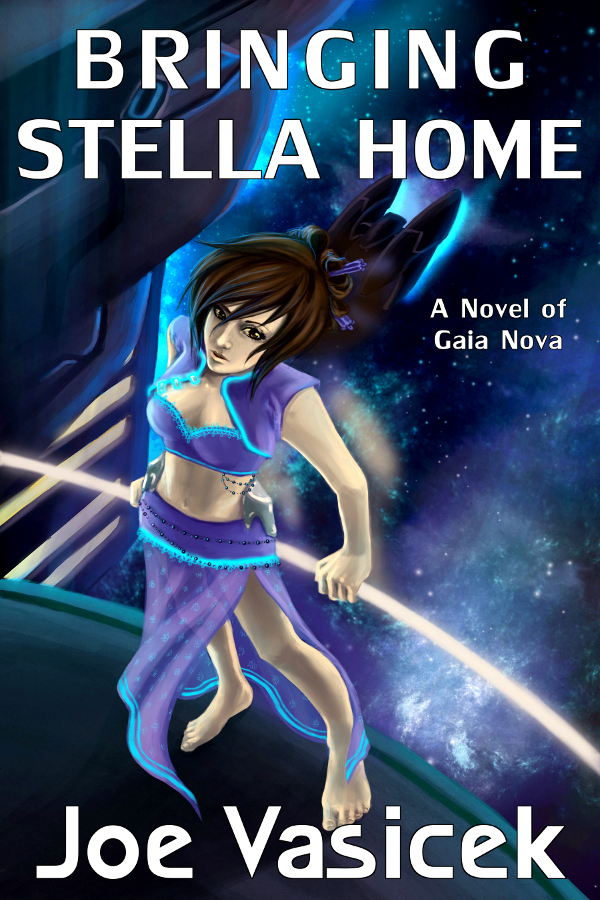
The main character in Heart of the Nebula is James McCoy, who you might remember from Bringing Stella Home. Just before he goes into cryo, he rescues his people from a terrible enemy, so that when he wakes up he’s a living legend. People have been watching movies about his exploits and doing grade school reports on him for generations. But the thing that made him a legend also put a lot of lives at risk, so that he’s also an extremely divisive figure. To make things worse, most of his friends didn’t go into cryo, so they’re all gone by now. But their great-great grandkids are still around …

As you can see, Colony Ships can be a lot of fun to play with. I’m definitely having fun with it now, and I plan to return to this trope often in the future!
F is for Faster Than Light

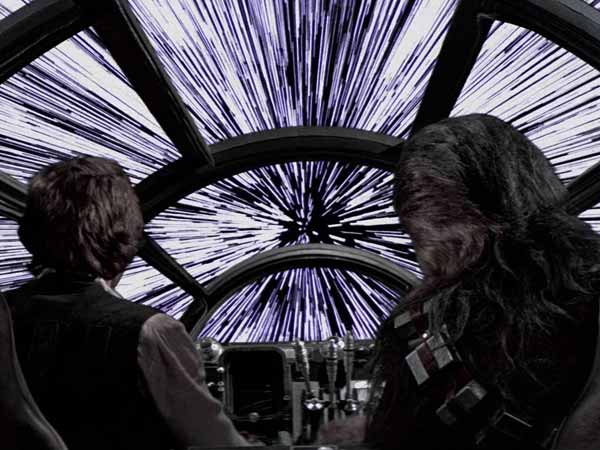
falcon_startrailsRemember that moment in Star Wars when the Millennium Falcon went into hyperspace?  When Harrison Ford shouted “go strap yourselves in, I’m going to make the jump to light speed,” and the sky lit up as the stars streaked by?  That was my first introduction to faster-than-light (FTL) travel, and I haven’t looked back since.

FTL is a major recurring trope in space opera, and not just because of how cool it is.  If you’re going to have a galactic empire, you need some way to get around that empire–or at least some way to transmit information without too much difficulty.  The distance between star systems is measured not in miles or kilometers, but light years–that is, the distance that a particle of light can travel in one year.  Considering how the nearest star to Earth, Proxima Centauri, is ~4.24 ly away, you can see the need for some sort of magical technology to bridge the distance.

FTL travel comes in four basic flavors:

  • Warp Drives — The ship breaks the speed of light as easily as our modern fighter jets break the speed of sound.  Impossible to justify, except through hand-waving.  The most prominent example of this is Star Trek.
  • Jump Drives — The ship disappears from its current position and reappears somewhere else.  Also requires hand-waving, but is at least a little easier to justify.  Battlestar Galactica is a good example of this, as is Schlock Mercenary.
  • Hyperspace Drives — The ship enters an alternate dimension which allows it to travel faster through our own.  The alternate dimension is called ____space, usually “hyper” but also “quasi,” “x,” etc.  Star Wars is the classic example, though Star Control II took things a step further by having a hyperspace dimension within hyperspace.
  • Wormgate Network — The ship (or maybe just the passengers) enters a portal which transports it to a portal somewhere else.  A network of these portals allows travel throughout the galaxy.  Stargate and Babylon 5 use this method.

An alternate way to do it is to make FTL travel impossible, but hold the galactic empire together through FTL communication.  This technology, known as the ansible, features prominently in Ursula K. Le Guin’s books and the Ender’s Game universe.  It has some really interesting implications: for example, even though planets can communicate instantaneously with each other, it takes almost 40 or 50 years to go from one to another, but at near-light speeds, it feels as if only a few months have gone by.  Thus, if you’re going to travel to another world, you have to leave everything behind, including your family and loved ones.  By traveling from world to world, you can skip entire generations, spreading your natural lifespan across thousands of years of normal time.

In writing FTL, one thing you have to be really careful about is to keep in mind ways in which the system can be abused.  For example, if jump drive technology makes it possible to instantaneously transport anything anywhere in the universe, then you can bet that someone is going to send a bomb into the White House (or whatever the equivalent is in your fictional universe).  Thus, the invention of unrestricted jump drive technology will lead to a very short and brutal war.

This actually happened in Schlock Mercenary, and the solution was Terraport Area Denial (TAD) zones, or broad areas of space where a force field prevents anyone from either jumping in or out.  Thus, anyone who wants to visit a planet in a TAD zone has to jump to the edge of the field and travel the rest of the way at sublight speeds.

FTL isn’t always appropriate for a science fiction story.  If the story is supposed to lean more toward hard sf, then it’s probably better to stick with our current understanding of the rules of physics, which state that nothing can travel faster than the speed of light.  Still, with things like quantum entanglement and other recent discoveries, if you know the science well enough, even the speed of light might not be an upper limit.  But for the rest of us mortals, FTL is basically just magic–a sufficiently explained magic, perhaps, but magic nonetheless.

Personally, I’m a fan of the jump drive form of FTL.  That’s the one I use the most in my own books.  The cost is that the further distance you try to jump, the harder it is to pinpoint exactly where you’ll end up.  To overcome this, you can use jump beacons to draw out anyone trying to jump into your particular sector and have them exit jumpspace next to the beacon.  This comes in handy in combat, when the enemy tries to jump a nuke onto your ship.

In the later Gaia Nova books, FTL is facilitated by jump stations spread out in a line across space, with reactors powerful enough to jump ships rapidly to the next point along the line.  In the earlier Star Wanderers books, that technology hasn’t been invented yet, so there’s still an Outworld frontier.

It gets kind of complicated, but it’s lots and lots of fun to world build.  For example, how does a particular change in the FTL tech alter the galactic balance of power?  When settlers try to colonize a new system, what do they establish first–starlanes, jump beacons, Lagrange outposts, or what? As with any magic, changing one thing affects everything else, which also affects everything else, which … yeah, you get the picture.

C is for Cryo

halo_cryochamber

I think every science fiction writer has a cryo (aka “human popsicle“) story sitting around somewhere, even if it’s just in the back of their head.  It’s one of those tropes that keeps coming back, just like the alien invasion, the robot apocalypse, and the Adam and Eve plot.

The basic concept is pretty simple, even if the technology is a bit more complex: a human or animal undergoes rapid freezing in order to put themselves into stasis for an extended period of time.  Months, years, or even centuries later, someone thaws and resuscitates them so that they wake up in a completely different time and place.

There are a lot of good reasons why going into cryo makes sense in a science fiction universe.  One of the more common ones is that the characters are colonists on a mission to an alien star, and their spaceship doesn’t have a faster-than-light drive.  Rather than go through all the trouble of building a generation ship, the designers instead built a series of cryo chambers to put the colonists into stasis for an extended period of time.  It might take centuries or millennia for the ship to reach its destination, but when it does, the colonists wake up as if it’s just been a long, dreamless night.

In The Worthing Saga, Orson Scott Card has a somewhat unusual rationale behind the prevalence of cryo in his universe (though they call it “hot sleep,” and it’s induced by a drug called soma).  Only the rich can afford the technology, and the imperial overlords very carefully regulate the use of it so that there’s a clear hierarchy based on who goes under for the longest amount at a time.  It’s a way for the citizens to achieve a simulated form of immortality, by skipping five or ten years every year or two of their lives.

In the Halo video game series, the UNSC uses cryo as a way to preserve their greatest military assets, the Spartans, for the times when they’re needed.  The first game in the series starts when John-117, aka the Master Chief, is awakened just as the starship Pillar of Autumn crash lands on a mysterious alien structure.  Like something from an old Norse legend, the third game ends when the Master Chief seals himself into the cryo chamber of a derelict starship, telling the AI Cortana “wake me when you need me.” (highlight to view spoilers).

So why are cryo stories so prevalent in science fiction?  For one thing, they’ve been floating around in our cultural subconscious a lot longer than the genre has been in existence–just think of Sleeping Beauty or Rip Van Winkle.  For another thing, the science is not that far-fetched.  Certain animals can be revived after extended periods of frozen stasis, and according to the New York Times, it’s happened at least once with a human being.  Science fiction has a long history of turning fiction into fact (for example, Arthur C. Clarke and communication satellites), so perhaps it’s only a matter of time before human cryotech becomes a reality.

I’m definitely a fan of this trope in my own writing.  Genesis Earth has a chapter with a rather horrific cryothaw scene, which I later spun off into a short piece titled “From the Ice Incarnate.” I haven’t played with it much in my latest books, but in Heart of the Nebula which I hope to publish later this year, the cryotech plays a very important role in the plot.  And if I ever write a prequel to my Gaia Nova series showing how that universe got started, it will feature a cryo colonization story.  The main premise of that series is that a group of human colonists fled 21st century Earth and went into cryo to colonize a distant corner of the galaxy, but when they woke up, they couldn’t find Earth anymore, so it became something of an ancient holy legend (which is a major driver for Desert Stars).

Trope Tuesday: Recycled IN SPACE!

Or, as my friends at Leading Edge would say, IN SPAAACE!!!

The basic idea behind this trope is that setting a story in space makes it cool and different.  The tvtropes article focuses mainly on how this trope is used in children’s cartoons, but it actually goes much wider.  In fact, most space stories are actually based on stories from other genres, or even from history.

For example, Asimov’s Federation series is based on Edward Gibbon’s Decline and Fall of the Roman Empire, David Drake’s Lieutenant Leary series is based on Patrick Obrian’s Master and Commander series, and Frank Herbert’s Dune is based on the rise of Islam.  Westerns are especially prone to get the space treatment (Firefly, anyone?), which is where we get “wagon train to the stars.”

At its worst, this trope is nothing more than a pointless gimmick.  At its best, however, it can produce some extremely good work.  The key, as always, is to work within the limitations of the setting.

One of the best examples of this is Dune.  Frank Herbert didn’t merely lift 7th century Arabia into space and call it Arrakis; he created a distinctly alien world with its own history, culture, biology, and role within the galactic empire.  For example, Herbert solved the FTL problem by linking interstellar travel to the spice, tying his space-Arabs to the politics and economics of the rest of the galaxy.

Interestingly, your space physics don’t have to be perfect for this trope to work; they just have to be believable.  For things like artificial gravity and faster than light travel, most people will accept a little hand-waving, provided that you do it well.  The important thing, as always, is the story.

Bringing Stella Home is now up on Amazon!

That’s right–after a whole lot of work, my novel is now up on Amazon for $3.95.  Check it out!
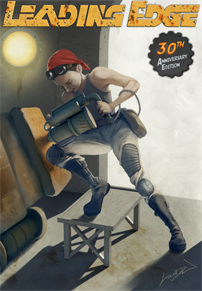
This novel is the first of a much larger series that I have planned.  It’s not a series like Ender’s Game or Song of Ice and Fire, though; all of the novels are supposed to stand alone, though they share the same setting and feature recurring characters.  In that sense, it’s more like Gemmell’s Drenai series.

Even though the series is space opera, I tried to keep the science plausible at least on a high school level.  So while there’s “magic” like FTL and artificial gravity, I’ve tried to bend rather than break the laws of physics.

At its core, the story is more about the characters than the setting or even the plot.  It follows a young boy who is determined, at all costs, to save his brother and sister, even as his world quite literally falls to pieces all around him.  Along the way, he meets up with a mercenary captain who is running from some demons of her own.  The way they help each other overcome their personal challenges is a major driving force throughout the book.

Anyhow, I suppose that’s enough.  I could ramble on forever, but I don’t want to get in the way too much.  Thanks so much, and I hope you enjoy it!

Another publication in Leading Edge!

That’s right!  My poem “Zarmina,” dedicated to Gliese 581 g (the first exoplanet discovered in its sun’s habitable zone) is published on page 98 of issue 61 of Leading Edge!

Also included in this issue is an excellent essay by Brandon Sanderson, in which he introduces his second law of magic systems.  It’s an excellent essay, and has made me rethink how I do FTL systems, especially for the Gaia Nova universe.  I’ll have to do a post a little later on that.

Besides this landmark essay by Brandon Sanderson, this issue features stories by Dan Wells and Dave Farland, as well as an interview with Howard Tayler.  And as always, it includes a number of excellent stories and illustrations.  Check it out!

(Full disclosure, I volunteer as a slushpile reader and occasional copy editor for the magazine.  However, my work always goes through the submission process under a pen name, where only the head editor knows who I am until the decision on whether to acquire the story has been made.)

In other news, Genesis Earth is now up on Goodreads, so go check that out as well!  The nice thing about Goodreads is that you can give the book a # star rating without having to write out anything else.  If you’re so inclined, I would very much appreciate an honest review–but if you do give it a rating, please be honest.  Don’t worry; even if you give me less than five stars, I won’t hunt you down like this crazy author (hint: get some popcorn and read the comments).

So anyhow, that’s what’s been going on here.  Desert Stars is coming along slowly but surely, and I’m working on getting some cover art for Bringing Stella Home.  If you have any ideas or suggestions on the art, please let me know.  I’ll probably go through my back issues of Leading Edge to search out good sf artists.  For some reason, I’m having a hard time finding anything that clicks on deviantart.  My goal is to epublish that book by the end of July.

Drawing up the starmaps

I’m a big fan of indirect sequels, where each book tells a standalone story but incorporates many of the same characters as other works and is set in the same world.  Sharon Creech did this with Walk Two Moons and Absolutely Normal Chaos: the main character from ANC was a minor character in WTM.

The thing is, I write space opera, which means that each novel spans at least two or three different star systems.  After four or five novels, it can get really hard to remember where all the stars are in relation to each other.  So, taking my own advice from an earlier post, I drew up a starmap for my universe.

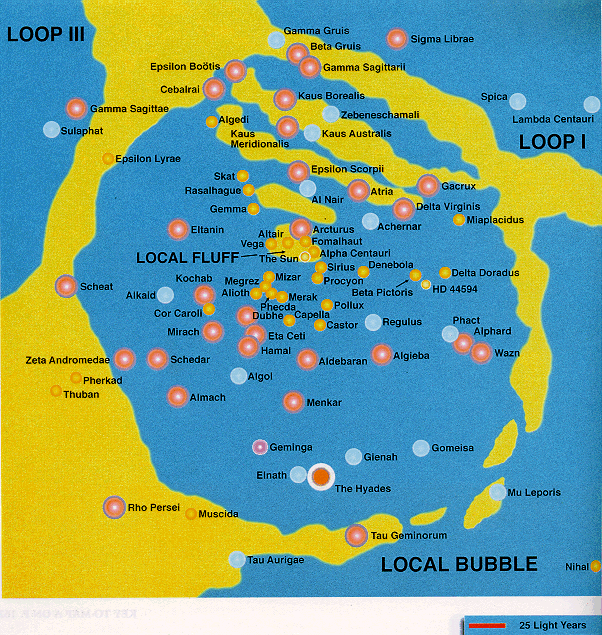
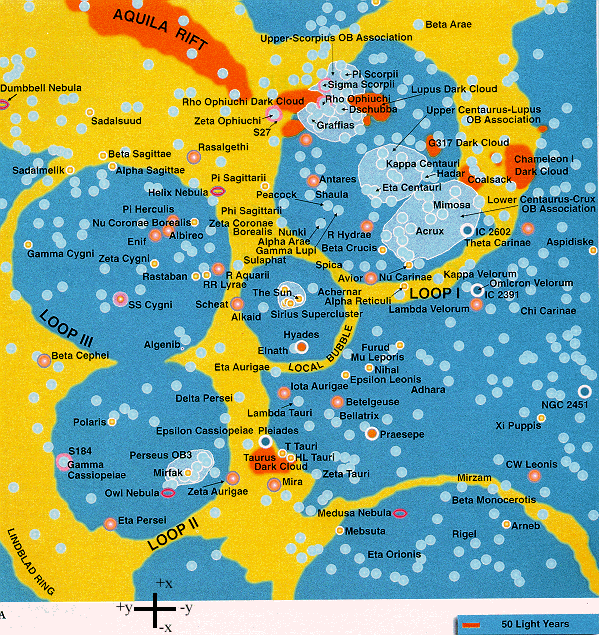
For a pattern, I used these maps of the region of space local to Sol.  I’ve since forgotten where I got them; I think wikipedia, or maybe the atomic rockets site:

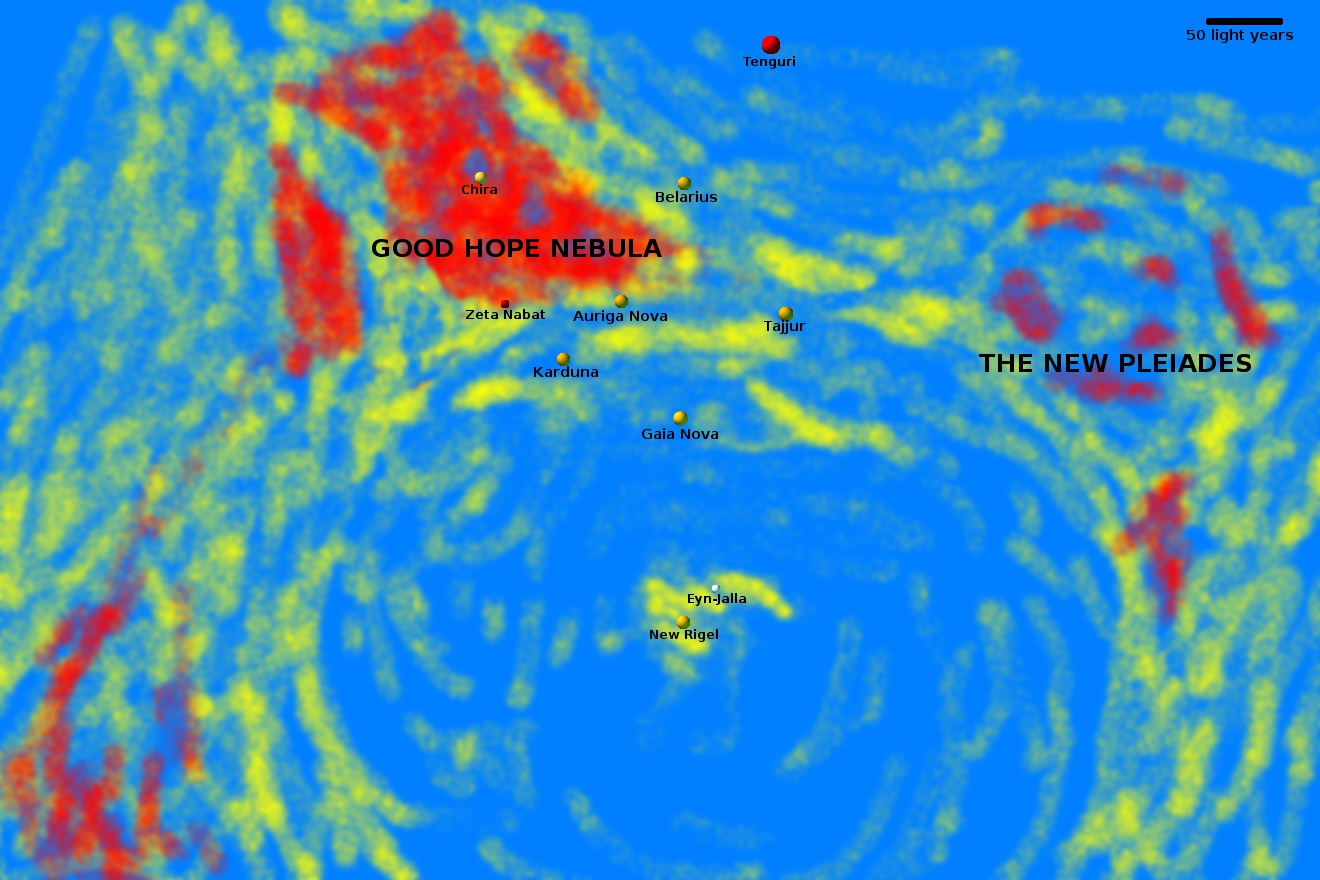
Since they’re only 2-dimensional, they have some obvious shortcomings, but for my purposes they work just fine.  The thing I like the most about these maps is that they show rough distributions of interstellar gas and dust.  In my Gaia Nova universe, areas of high density (such as the interiors of nebulae) are off limits to the FTL technology, so finding a way to show that was absolutely critical.

And so, after playing around with MS Paint and The Gimp, this is what I came up with:

It’s definitely a work in progress (seeing as I’ve only got about a dozen stars up so far), but I’ve got to be honest–I geeked out hardcore when I was finished with this thing.  Whether you’re writing fantasy or science fiction adventure (which I’d argue is a branch of fantasy), there’s just something about having a map…

The best thing is that it’s REALLY easy to update.  If I want, I can throw up half a dozen new stars in fifteen minutes–or rearrange the current arrangement of stars with the simple click of a mouse.  That’s good, because I don’t want to spend all my time drawing up maps–the map is just a tool to help me write the stories.

And oh man, I’ve got a lot of stories to tell! 🙂

New projects and other stuff

So I started the sequel to Mercenary Savior today; I figure I can take a couple months off to finish the rough draft, then leave it in the trunk until the first one sells.

The working title of this one is Into the Nebulous Deep, which captures the main premise quite nicely (though let me know if it doesn’t jive with you).  It takes place five years after the events of Mercenary Savior. James is a lieutenant in the Colony’s civil defense forces, and has made a name for himself as an ace gunboat commander.

The basic premise is that the Colony is falling into economic ruin and must therefore make a mass exodus in order to survive.  Their only real option is to flee into the Good Hope Nebula, where FTL drives don’t work and the Hameji can’t follow them.
Deep in the nebula are newly born stars with planets and proto-planets, and they hope to re-establish themselves there.  Of course, nothing happens quite that smoothly, and James is going to find himself putting out fires most of the time.

While all that is going on, however, I hope to put him in the middle of a love triangle.  I have the ending of it planned out, and it can ONLY happen this way in a science fiction novel.  Oh man, the twist is going to be way interesting–and incredibly hard to pull off well.  I’m up for a challenge, though, and I can already tell this one is going to be fun.

For some reason, things worked out so that I started this novel on November 1st.  Because of that, I suppose I’m doing it for a nanowrimo–since hey, the rough draft is probably going to be between 120k to 140k words long, and I want to finish it before January.  Sounds tough, but I’ve got the money saved up to take off a few weeks and work on my writing, so that’s what I plan to do.

In loosely related news, I hope to start running soon.  My brother in law ran a marathon this year, and he’s going to help me get set up.  Basically, I need to get in shape for the wilderness job I hope to train for in January, and also because hey, I need to take better care of my body.  Besides, I’ve found that exercising boosts my writing tremendously, which is something I definitely need.  Exercise = win/win/win.

The most pressing thing on my mind now, however, is the article I need to write about the history of “the class that wouldn’t die.” I’m working on a very tight deadline, and absolutely must produce.  I wish I hadn’t been so flaky with the previous deadlines, but it is a volunteer magazine and I have had other pressing things taking up my time.  Not any more–I’ll get it done right away.

In the meantime, I’m tired and must get some sleep.  I wish I could function like one of Stephanie Myer’s vampires, but reality is a harsh and unforgiving mistress.  One of these days, though, I’ll be free of her–just you wait!

Old story notebook, part 2

Alright, here is the second part of my oldest story notebook, the one that I just found a couple days ago.  These ideas date from 2007 when I started pursuing writing as more than a hobby, up to the summer of 2008 when I went to Jordan on the BYU study abroad program.

The Singularity: it will lead more to a social change and conflict than a transformation of humanity–increasing disparity between techies and non-techies, and a tech/class conflict. What will the perspective be of those who look at us and our advances after the new dark ages? Or are we in the dark ages?

Interesting–if you believe in the technological singularity, that is. I’m not quite so sure I do anymore; that’s kind of what Genesis Earth

was all about.

An alien race of beings that have no sensory organs, but instead perceive the thoughts of beings with sensory organs, and thus do all their perceiving through others.

There is so much cool stuff you can do with aliens–stuff that nobody seems to be doing, because they always stick with the tropes. Or maybe I’m just not well-read enough.

The more advanced our society becomes, the more our education specializes so that it becomes harder to know the minimum necessary to understand everything. This leads to class/tech divisions, and to the potential for society to fall apart.

Have you ever wondered about this? I mean, it’s kind of crazy how complicated we’ve made life and living. And all this we call “civilization.”

When relativistic space travel becomes more widespread, society will develop new rituals and ways to mourn and deal with the separation that comes with people going forward out into space.

I think I had this thought while reading Speaker for the Dead or another of Orson Scott Card’s Ender’s Game books. That series totally blew my mind.

If we lived in a telepathic society, we would learn to separate our deep thoughts from our shallow thoughts to put up a facade in public–but how would the relationship between deep and shallow change the way society works? If we had to hide even our thoughts?

Heck, what would a telepathic society even look like?

Aliens who shed their skin each year (or something else) and have derived a culture that treats each person as having a different identity each year.

Kind of like in Tahiti, where people change their names at different stages of their lives (childhood, adulthood, etc). I hear it makes family history work insanely frustrating.

We make contact with aliens who need a human companion with whom they merge telepathically, and the story is from the human translator’s point of view.

This would make a really cool anime.

First contact was made in the 12th century with the Abassids, and the explorer ship returned with Arab emissaries to the alien homeworld. Now those emissaries are returning to establish regular connections via ansible, and they are shocked to find the world in its current state.

Okay, I think this idea has some really cool potential. I’m not sure I’d be the one to write it, but it sounds like it could be really awesome, if it were done right.

An alien species incapable of lying.

It would probably turn first contact into an unmitigated disaster. After all, lying is the essence of diplomacy.

When we first go into space, colonies will be governed by multi-national corporations, not stats. Profit will come before the welfare of the colonists themselves, and the wars will be over trade routes and tariffs.

Sounds like something straight out of C. J. Cherryh.

An alien species* that considers it okay to show uncovered reproductive organs but obscene to show the eating organs. *Or, a human society

It sure would be weird, especially if it were a human society that did that.

An alien spaceship comes to Earth and it’s full of colonists.

Definitely been done already. Probably multiple times.

Dolphins are a post-alien species that came to Earth millions of years ago.

Has this been done before? I seriously doubt it. I’d write it, but any story set on Earth tends to bore me.

EDIT: Alright, yeah, it’s been done–quite a bit, actually. Looks like I need to get out from under my rock and read some more.

Aliens have colonies under the ocean.

Hey, if they have them anywhere, they’re probably down there.

Is a necessary element of our free agency our ignorance of ourselves, on the deepest level?

Perhaps.

A 19th century Mormon gets stuck in a time warp and ends up in 21st century Utah.

Oh, the horror!

I’d better stop here, since general conference is about to start. I’ll finish this list in the next couple of days, probably. Blogging keeps me sane. In the meantime, have a wonderful Easter!

Worldbuilding

This is what I was doing the other day.  The FLSR (Foreign Language Student Residence) at BYU has chalkboards in the common rooms, and I just discovered that those can be WAY useful for diagramming your story.

On this occasion, I drew out a couple of space battles, according to how they’d play out with the FTL technology I’ve been thinking up and a few other things.  I worked things out logically and figured out a few basic rules of combat–some basic strategies that you can expect people to follow.  I then took what I know about the Hameji, the main antagonists in my novel, and figured out how they would use their special abilities to counter these tactics.

Pretty fun.  Now, when I go back and rewrite the beginning, I can make the opening space battles feel a lot more vivid, immediate, and engaging.

I finished part 1 of my story last week, and now I’m at the beginning of part 2.  I’ve got the novel roughly outlined out in my head, and it’s following fairly closely to the three act structure.  Not exactly, but pretty close.

According to Brandon Sanderson (and several other people), act 2 is the most difficult part of the story.  It’s where  you need to do the “blue collar work” of simply sludging through and writing the thing.  It’s where things get complicated enough that you can get lost if you don’t know how to plot things out.  Considering the fact that I’ve only gotten this far with two other novels I’ve written, I’m expecting this part to be really difficult.

Only 599 words today, and none on Sunday (more because I was feeling sick than anything else).  It really is getting easier to get hung up on a single scene; even if I know where I want to be three or four chapters from now, if the scene right in front of me isn’t working out, it’s almost impossible to move past it and get things to work.

Today I took a big piece of butcher paper from upstairs and drew a diagram of everything I’ve written so far, scene by scene.  That was immensely helpful.  Now I know what this chapter is about, what I need to do to bring it to a natural close and leave a hook for the next few chapters, and how to develop my characters and what they’re doing.

While taking a shower, I figured out what Estella needs to do next, and how to take her story over to the end of act 2 and carry her to act 3.  That’s something of a breakthrough.  I’m excited.

And…it’s late.  I’d better get some sleep.