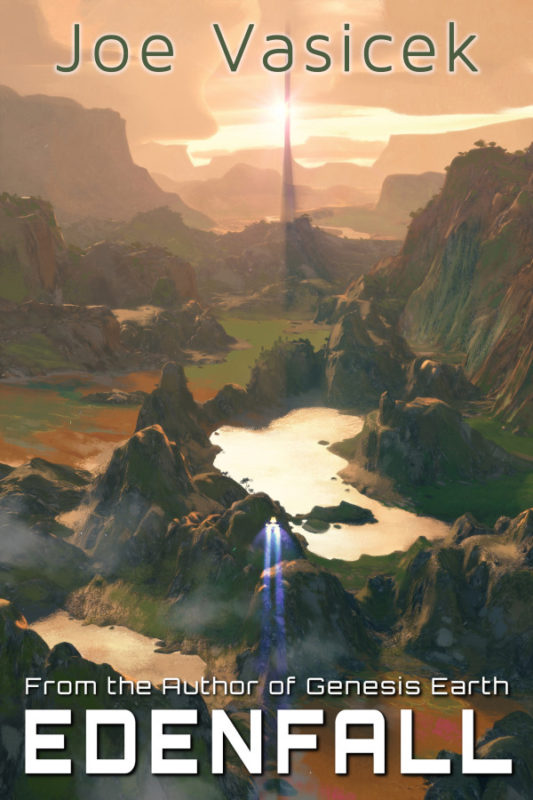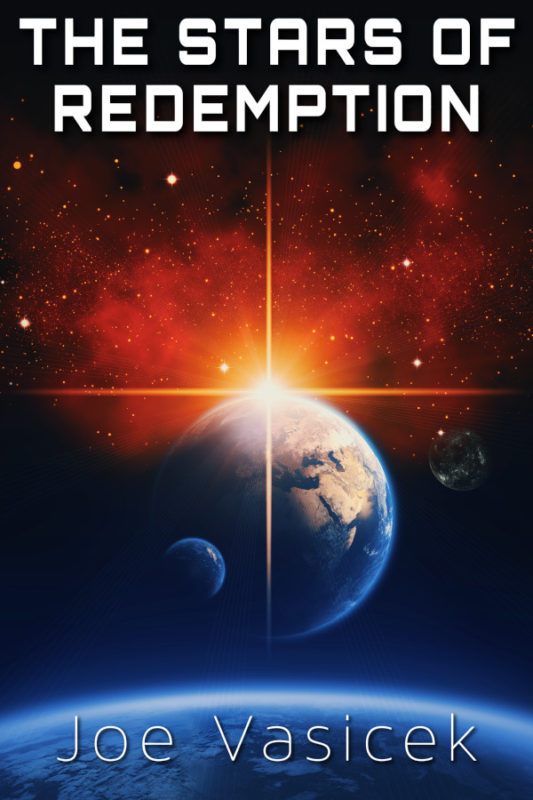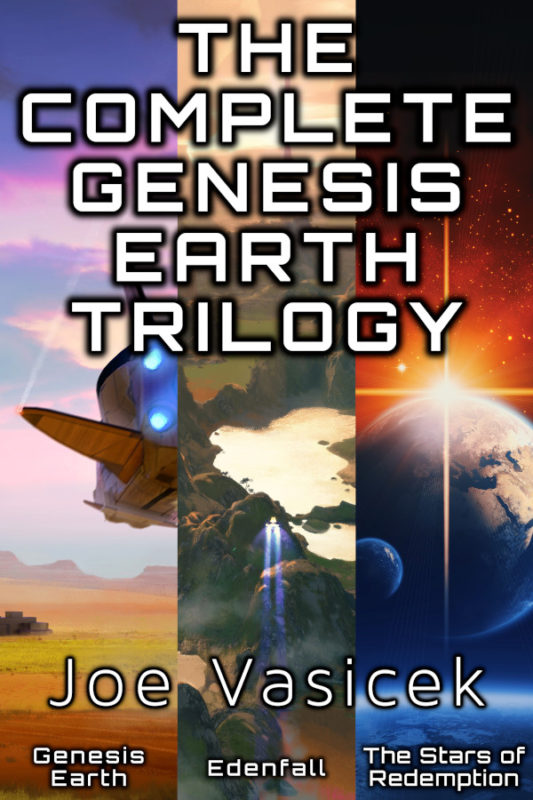
The heat of the summer is upon us, and our air conditioning is… struggling. Hopefully we get it fixed soon, because my wife really can’t stand the heat, and if she can’t sleep, neither can I.
Not much happening around here. We’re just plugging away, me at my writing, Piper at her thesis. She just finished her user study, so all she needs to do is write up the thesis itself and defend it. That’s currently the top priority in the household, so I’m doing my best to write around it.
I’ll be at Writers Cantina later this month, where I’ll be on a panel about AI and writing, and moderating a couple of other panels, including one with Larry Correia. That one should be fun. Writers Cantina is a fantastic little convention, started by a bunch of us local writers who occasionally get together at the IHOP up in American Fork. We started after Life, the Universe, and Everything went a little crazy in 2020, mandating vaccines at the very last minute and pulling all sorts of other woke shenanigans. Writers Cantina isn’t explicitly anti-woke, but it’s definitely not woke either. It is a lot of fun, though! Kind of like what LTUE was back in the 00’s, except without a dealer’s room, and the hallway is the main attraction. Oh, and lots of great snacks.
Other than that, there’s not much going on around here. We’re going up to Canada right after Writers Cantina, and as soon as we get back, we’re moving back to Orem. I am both looking forward and really not looking forward to that. Hopefully we can get everything moved over with a minimum of chaos (especially since my wife is starting her new job at the same time). And then we’re having a baby. Yay!
Magic! What would fantasy be without it? About the same place as science fiction if you took out the science. Speculative fiction is all about the sense of wonder that it makes you feel, and the main way that fantasy does that is through magic.
In Brandon Sanderson’s writing class (which he has generously made available to the public, by videotaping and podcasting his lectures), Sanderson divides magic into two broad types: hard magic and soft magic. And while some fantasy readers take issue with the way that Sanderson leans more toward hard magic in his own books, the division he draws between hard and soft magic is still quite useful.
Soft magic is the kind of magic that isn’t fully explained, and is mostly left up to the reader’s imagination. Magical things happen, and we don’t know how or why, but it helps to instill a feeling that the world is vast and wondrous. As such, soft magic is primarily used as a way to enhance the setting.
In Tolkien’s Lord of the Rings, a good example of this is the elves. We know that they are immortal and that they are far more glorious than most other races, but we never really know the full extent of their capabilities. Gandalf is another example of this. Just what was he doing with the Balrog, and how did defeating that ancient beast in a marathon spelunking-hiking-wrestling match? Who knows!
And that’s the biggest criticism of soft magic: if you don’t know how the magic works, how do you know that the heroes won’t just pull a rabbit out of their hat to save them at the last possible moment? Or summon the eagles, which amounts to the same thing. For that matter, if the eagles are so awesome, why don’t the heroes just fly on their backs all the way to Mount Doom? I mean, can you believe what it would have been like if they had to walk the entire way? Somebody might have died!
Hard magic, on the other hand, is the kind of magic where everything is explained. It’s not just magic, but a whole magic system, which operates by rules in the same way that our physical universe works according to rules. In essence, it is the fantasy inverse of Clarke’s third law, where any sufficiently explained magic is indistinguishable from science. The reader might not know all of the rules, but the writer does, and he drops enough hints throughout to make the reader confident that there are rules.
In Lord of the Rings, a good example of hard magic is the ring of power itself. What does it do? It makes you invisible if you put it on (though it makes you shine like a beacon to Sauron and his ringwraiths), and it tempts you with false promises of power, with the goal of leading you back into the clutches of Sauron. If Sauron ever gets the ring, it’s game over, because he will regain all of his powers. Oh, and it also stretches out your lifespan, at the cost of your quality of life (and quite possibly your sanity).
Because we know the rules the govern the magic of the one ring, we aren’t upset when Tolkien uses that magic to advance the plot of the book. Indeed, that is the biggest strength of hard magic: that it can be used in all sorts of interesting and creative ways to advance the plot.
“But hold on!” the advocates of soft magic will say. “If you reduce your magic into a fancy plot device, it kills the sense of wonder that comes with the best magic systems.” After all, there’s a reason why Tom Bombadil is in the book. There are two big things that happen when the hobbits make their detour to his house: first, Tom Bombadil puts on the ring and shows that it has absolutely no effect on him; and second, when Frodo puts on the ring and goes invisible, Tom Bombadil demonstrates that he can still see Frodo.
It’s subtle, but it’s there—and believe it or not, it’s there for a reason. By demonstrating that there are higher or more powerful forces that can supersede the laws of magic surrounding the one ring, Tolkien preserves that sense of vastness and wonder that more rules-based magic systems tend to lose.
There is a rejoinder to that point, however. When hard magic is done well, it creates its own sense of wonder, more akin to what we feel when we’re playing a good video game. It’s the wonder that comes from imagining what it would be like to exercise the kind of magical powers that we see the characters exercise. Brandon Sanderson is a master of this, and my favorite example is from his novella The Emperor’s Soul. By the end of that book, I couldn’t help but daydream what I would do if I had my own set of soulstamps. One of them would make me an awesome writer, the other an awesome marketer, and the third an awesome publisher. How cool would that be? (Okay, maybe you have to be an indie author yourself to fully get it… but still!)
As you can probably guess, though, the best fantasy novels feature a blend of hard and soft magic—and Sanderson says as much in his lectures. There’s a reason why he draws from Lord of the Rings for examples of each, much as I’ve done here. And ultimately, it’s less of a binary and more of a spectrum. The important thing is to know when to lean more toward the soft side, and when to lean more to the hard side. The best authors can play to the strengths of both to capture that magical sense of wonder that makes fantasy such a pleasure to read.
I saw this really interesting video last week, and it made me think: am I relying too much on AI?
In my personal life, this probably isn’t an issue. I do occasionally ask ChatGPT to make me a recipe, or to advise me on a particular topic, but I always do a gut check and assume that it’s hallucinating if it doesn’t pass. If it gives me something that I can quickly and easily verify, I always do that… and half of the time, it turns out to be a hallucination to some degree. So yeah, I don’t rely on it nearly as much in my personal life as some of the characters in this video.
What about blogging? Don’t be too scandalized, but with my new blogging schedule, I have experimented a bit with using ChatGPT to write some of these blog posts. It’s not like I’ve been copy-pasting everything straight from the chatbot, but I have relied on it a little more heavily than I do in my own writing.
After trying that a couple of times, though, I decided to cut that out and write all of these blog posts by hand. Why? Because I felt like it was creating too much distance between myself and the people who read this blog, and the purpose for writing this blog is to foster a human connection. So it kind of defeats the purpose to rely on a chatbot to generate most of the content I post here. For that reason, I plan to keep writing all these blog posts entirely myself, with only minimal AI input.
So what about my fiction? This is where things get a little tricky. While I totally agree that simply copy-pasting from AI is a piss-poor way to write a book, I do think that AI can be a very useful tool in writing and crafting a novel, provided that you understand the limitations of the AI and don’t rely on it too much. But how much is too much? That is the question.
The biggest way that AI has helped to enhance my own writing is in giving me a birdseye view of the story as I generate a “crappy first draft.” This birdseye view allows me to see and fix major story issues before they metastatize and give me writer’s block, which is what tends to happen if I write these drafts out entirely by hand. When I’m focused on the page, I tend to lose sight of the forest for the trees, so I don’t notice that there’s a problem with the story until I’m several chapters in and find that I just can’t write.
This has happened with basically every project that I write on my own, and is the main reason why it took me anywhere from six to eighteen months (or longer) to write even a short novel, before I started using AI. However, since I began incorporating AI into my writing process, this problem has basically gone away, and I no longer experience this form of writer’s block at all.
However, while I do rely on AI to help me to craft my “crappy first draft,” that isn’t the draft that I publish. Once the AI draft is as good as I can make it, I will then go through scene-by-scene and rewrite the entire book in my own words. The purpose for this step is to make sure that I’m telling the story in my own words, and to make the story my own. I will still have the AI draft open on another screen, and refer to it as I write out the story, but I don’t do any copy-pasting. It’s all written out by hand.
Is this enough, though? Or do I need to add more steps to make sure that I’m not relying too much on AI, and thus losing my own voice? Recently, I’ve been spending a lot more time on the AI draft, generating multiple iterations and combining the best parts to (hopefully) boost the quality. I’ve also been doing a revision pass over the AI draft, tweaking it to smooth over some common AI-isms and (hopefully) adding a bit of my own voice before I move on to the human draft and rewrite the whole thing to make sure it’s all in my voice.
But while this might be enough to keep the book in my own words, is this enough to keep my own writing skills from atrophying? Or do I need to occasionally pick up a WIP that is 100% human writing, with no AI at all, just to make sure I don’t lose these writing skills? That is the question that I’m currently pondering. Perhaps this is the sort of thing that short stories could serve really well to help with. Perhaps I should go back to writing short stories again, just as a way to keep my writing skills sharp.
If I were starting out right now as a new writer, I would definitely avoid writing with AI until I’d written enough to find my own voice. And I would also make sure to write at least one novel 100% without AI-assistance, just for the experience, and to prove to myself that I could do it. Otherwise, I think there would be a very real danger in becoming over-reliant on AI to write my books, and thus risk losing my own unique voice, so that none of the books that I write ever truly become my own.
Anyhow, those are some of my current thoughts on the subject. What do you think of this problem?
I’ve been working on this for a while, but I finally have new cover art for the old Gaia Nova books! I’m also renaming this series to The Hameji Cycle, and plan to publish a series box set very soon.
In the meantime, check out these new covers—I’m very pleased with how well they turned out!
“Think on it, Chani: that princess will have the name, yet she’ll live as less than a concubine—never to know a moment of tenderness from the man to whom she’s bound. While we, Chani, we who carry the name of concubine—history will call us wives.”
Worth listening through to the end. I think Malcolm misses some of the deeper nuances of Epstein’s (alleged) operation, but there are plenty of people schooling him on it in the comments to this video.
Epstein did not kill himself… and if it ever became public who did, it would probably start WWIII (or massively escalate it, if indeed it has already started). We certainly live in interesting times.
A couple of weeks ago, I posted my thoughts on AGI (artificial general intelligence) and all of the doom-porn floating around that we are years, or possibly even months, away from the emergence of an artificial superintelligence that will either usher in an Edenic post-scarcity utopia, or exterminate all of mankind. Believe it or not, this is a big fear in Silicon Valley, among the people who are building these systems (though I suspect that the top-level executives don’t really believe it and are instead exploiting that fear to serve their own ends).
My view, in a nutshell, is that we will not see the emergence of AGI or superintelligence under the current research paradigm, because the current paradigm is based on pure materialism, assuming that intelligence itself is merely an emergent phenomenon, and that if the conditions for that emergence can be replicated, a human-level (or superhuman-level) intelligence will be created. My prediction is that in the next 1-3 years, AI development will run up against a wall, and all of the scaling in the world will fail to produce the sort of drastic gains that the doomsayers are predicting.
Well, it seems that we may be much closer to that wall than I supposed. I’m not super familiar with this YouTuber, but I’ve been following a lot of his content recently, and he seems to be very intelligent and also very keyed into what’s currently happening in AI development. And in this video, he may have just pointed out the wall that we’re about to run up against—if indeed, we haven’t already.
In any case, it’s worth watching, especially if you are looking to incorporate AI into your work life. Lots of practical advice, too.
According to Merriam-Webster, “virtue signaling” is:
the act or practice of conspicuously displaying one’s awareness of and attentiveness to political issues, matters of social and racial justice, etc., especially instead of taking effective action.
Because it is much easier to signal your virtue than it is to actually be virtuous, the people who virtue signal the loudest also tend to be the ones who have something they’re trying to cover up. This hypocrisy is a big part of what makes virtue signaling so obnoxious.
Time for me to spill a little tea. A couple of years ago, after I wrote “Christopher Columbus: Wildcatter,” I got an acceptance from the editor of Interzone. It wasn’t formalized yet, but he expressed over email that he was interested in purchasing the publishing rights for that story, the sequel, and possibly others after. It got far enough along that we were going back and forth on editorial details, our vision for the stories, etc.
Then the time came for him to send me a contract. Aaand… he ghosted me. Flat out ghosted me. A month went by without any correspondence at all. I didn’t want to seem too forward, but I also was starting to get a little concerned. So I sent out a brief follow-up email, asking about the contract… and I got a response that read like something copy-pasted from a form rejection.
Now, as far as literary transgressions go, that’s kind of tame. It’s not like the editor owed me money and refused to pay. And as far as I know, Interzone is prompt with all of their payments and pays all of their authors in full. After all, everyone deserves the benefit of the doubt.
But that sort of unprofessionalism really wasn’t cool, either. In fact, it was enough that I stopped sending Interzone any submissions. After all, if the editor saw nothing wrong with yanking my chain around before he published me, that’s kind of a yellow flag. Not to mention that it left a very sour taste in my mouth.
So when I saw this story from Jon Del Arroz, with the editor of Interzone accusing Asimov’s of using AI art, and using that as a pretext to blacklist all of their authors, I immediately recognized that sort of behavior for what it is: virtue signaling. Which made me wonder: how much of the anti-AI vitriol that’s ubiquitous in online writing communities these days really just a new form of virtue signaling?
Think about it. It explains so much about the insane anti-AI faux controversies that have been blowing up around 2025 WorldCon. For more than a decade now, the people chasing the Hugo Award have been among the worst offenders of gratuitous virtue signaling (especially Scalzi). It also explains why so much of the anti-AI content on YouTube is less about presenting well-reasoned arguments, and more about sighing dramatically or making snide, sarcastic remarks. Virtue signaling always appeals to pathos before it appeals to reason.
I expect this phenomenon is going to get a lot worse in the next few years, at least until AI-assisted art and writing become normalized (which is going to happen eventually, it’s just a matter of time and degree). So the next time you see someone publicly posting about how horrible it is for creatives to use AI, take a good, hard look at the person leveling the accusations. Chances are, they’re just virtue signaling.
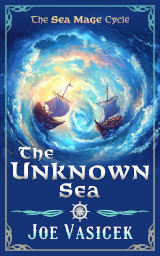
I have decided to make Rescuer’s Reward the permafree book for my Sea Mage Cycle fantasy series. If you haven’t yet read any of these books, this is a great place to start. It’s not the first book chronologically, but it is the first book that I published in the series, and since the Sea Mage Cycle is really just a series of interconnected standalones (kind of like most of Louis L’Amour’s westerns), you won’t miss anything by starting here.
Rescuer’s Reward
A captain in debt, a princess in peril, and a fate that neither can foresee.
All Jason ever wanted was to sail the Azure Sea as a merchant ship's captain. But money problems have him up to his eyeballs in debt, and if he doesn't return to port with the gold, his dreams will be dashed forever. So when the princess of a far-off kingdom is kidnapped by pirates en route to her wedding, Jason merrily takes up the chase, staking his future on the reward for her safe return.
Yet the competition for the princess proves fierce, and Jason soon learns that there are far more powerful forces behind her kidnapping than any of them realize. And though Princess Julietta has no qualms about marrying for political advantage, the last thing she wants is to be a mere trophy in a different sort of game.
As duty, desire, and destiny clash, only one thing is certain: they both must risk everything to earn the ultimate reward.
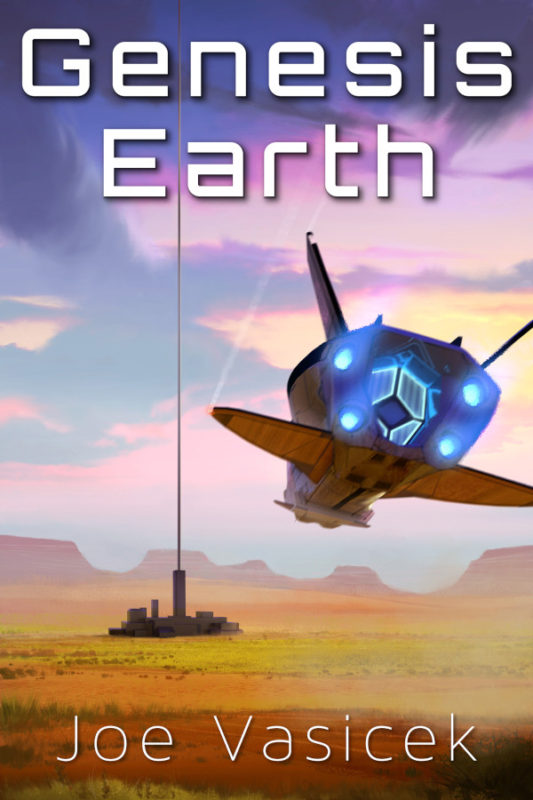
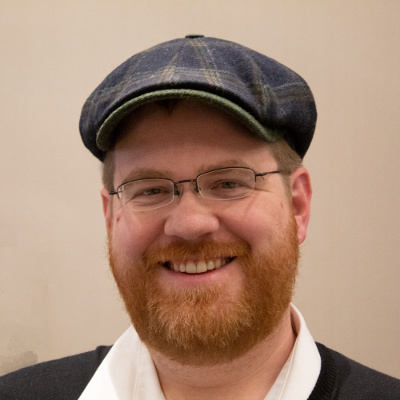
Joe Vasicek fell in love with science fiction and fantasy when he read The Neverending Story as a child. He is the author of more than twenty books, including Genesis Earth, Gunslinger to the Stars, The Sword Keeper, and the Sons of the Starfarers series. As a young man, he studied Arabic at Brigham Young University and traveled across the Middle East and the Caucasus Mountains. He lives in Utah with his wife and two apple trees.
Some of the links in the page above are "affiliate links." This means if you click on the link and purchase the item, I will receive an affiliate commission. You will not receive any additional charge.
As an Amazon Associate I earn from qualifying purchases.