Picking up the pace

I’m writing this post from somewhere in Iowa, riding the California Zephyr from Chicago to Salt Lake City. Since I hate sleeping on the train, I figured now is as good a time as any to write a blog post.

One of the good things about traveling by train is that you have lots of time to just sit and think. Yesterday I took a long, hard look at my writing over the course of the last year, and was surprised at what I found. Long story short, I think it’s time for a major recalibration.

As you know, my main writing goal is to produce a minimum of two novels per year, fully polished and of publishable quality. Desert Stars will be my third this year, if I can get it up before January. But after that, I don’t have a whole lot lined up in the queue. Heart of the Nebula is a finished rough draft, but it’s the only one; everything else is either incomplete or just an idea floating around in my head.

Perhaps the best way to see it is to look at this chart. It lists all of the novels that I started, finished, and published by year. The titles highlighted in blue are novels that I’ve epublished. Ashes of the Starry Sea was a practice novel, so I’ve grayed it out, but everything else is a project I intend to carry to completion.

While 2011 was a great year for me in terms of starting new works, it was a downright horrible year in terms of actually finishing anything new. I’m worried that unless I can force myself to buckle down and produce new material at a much faster rate, this handicap is going to bite me in the butt next year.

Here’s another way to think about it: if I want to write two novels per year, and I can only focus on one novel at a time, I should be able to complete any project in no more than 26 weeks. And yet, when I look at my word count spreadsheet (which only goes back to May 2009), here’s what I see:

  • Genesis Earth: 22 to 26 weeks
  • Bringing Stella Home: 50 to 54 weeks
  • Desert Stars: 52 to 56 weeks
  • Heart of the Nebula: 18 weeks (unfinished)
  • Edenfall: 2 weeks (unfinished)
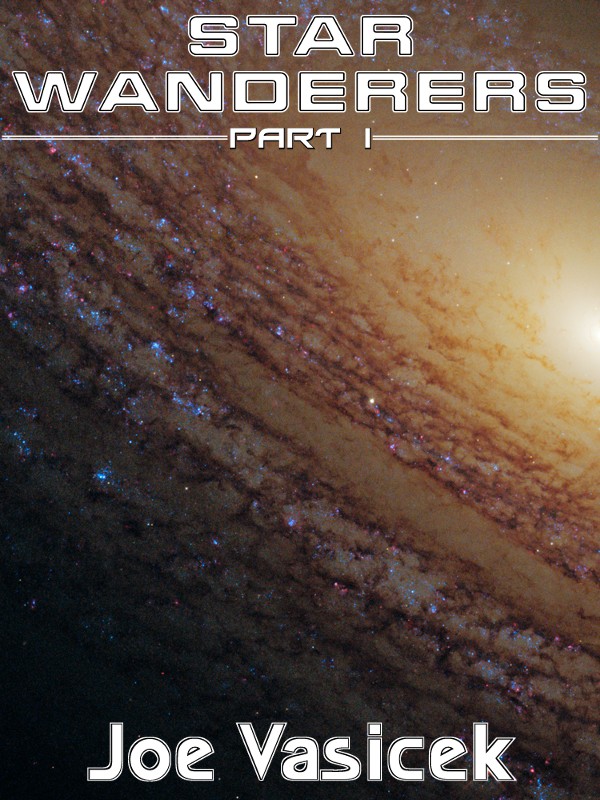
  • Star Wanderers: 9 weeks (unfinished)

What this tells me is that my current writing method is unsustainable. Either I need to learn how to juggle two projects at once, or I need to learn how to produce quality material in half the time–and in all reality, I should probably learn how to do both.

For those of you who might be worried that I’ll sacrifice quality for speed, let me assure you that I don’t intend for that to be the case. Dean Wesley Smith makes a very compelling argument on this subject, how speed and quality are not mutually exclusive. The more I write, the more practice I’ll get, which will hopefully improve the quality of my writing.

One thing I really ought to do is write something new every day. For most of 2011, I was revising something I’d originally written in 2008 or 2009, maybe throwing out a couple of scenes to start from scratch, but overall simply revising an older work. It’s made me a little rusty, and I can feel it. I can say right now, that needs to change.

My biggest concern is that once I’m overseas, it will be much harder to balance these writing goals with everything else going on. However, this isn’t 2008; I don’t have all the obligations of a student. As for whether the obligations of a teacher are any worse, we’ll have to see.

What I really want to do is write a novel in a week–preferably, in three days. Even if the first draft isn’t very good, just the act of doing it will break down some major barriers, I feel. If I finish Star Wanderers by mid-January, I’ll turn it around and write a novel with the same events from Noemi’s point of view, all in a weekend if possible.

In short, this is what I want to do:

  • Produce a minimum of 2 publishable novels per year.
  • Reduce the time for each draft to 6 weeks average.
  • Write a minimum of 500 new words each day.
  • Learn to juggle two projects when revising.

This isn’t going to be easy; I have the feeling that it’s going to involve a fundamental shift in the way I approach writing. However, if I can pull through it, I think this might just transform my career in the way that I need in order to take things to the next level.

In the meantime, I’d better get some sleep. I’ve got a long day of travel ahead tomorrow, and I’ll need all the energy I can get if I want to get some serious writing done.

Last day for Desert Stars campaign

So today is the last day for the Desert Stars kickstarter campaign.  I’ve got a little under half the funds raised so far, but if I don’t reach the target goal by the end of the day, the project doesn’t get funded (at least, not through kickstarter).

All I need is about 35 people donating $10 each, or 14 donating at $25, so if you’ve been meaning to pledge but just haven’t gotten around to it, I’d appreciate it if you could take the time to do it.  Worst case scenario, the project doesn’t get funded, and you don’t pay anything.

I’m currently traveling across the country by train, so I won’t be back online until Friday when I arrive in Utah.  Right now, I’m in Chicago, getting ready to board the California Zephyr; internet is a little spotty at Union Station, but I’ve found a corner where I can check up on things.

Thanksgiving was great; I blogged about it on the travel blog.  It was good to spend some time with my parents and visit with family.  Christmas is going to be great, not only because all my sisters and their families will be there, but because we’ll be in Texas where the weather is a bit milder.  I’m looking forward to it!

As for the kickstarter campaign, whether or not it works out, I’ll definitely blog about it in the next couple of days.  Even if it doesn’t get funded, I’ve learned a lot from the experience, and I’m sure my fellow writers will be interested to hear about it.

So keep in touch, and I’ll be back on Friday!

Trope Tuesday: Scarpia Ultimatum

How far would you go to save the one you love?  Would you sacrifice your life?  Suffer an irreparable blow to your reputation?  Or would you sleep with your lover’s would-be killer?

Scarpia Ultimatum is when the villain threatens to kill the hero (or, alternately, a basket full of kittens) unless the romantic interest gives him some sort of  sexual favor or gratification.  It doesn’t have to explicitly involve the physical act, though if it does, it tends to take the story in a very dark direction.  G-rated examples of this trope tend to revolve around marriage or some sort of emotional commitment instead.

The standoff can end in one of the following ways:

  • The romantic interest submits to the villain’s demands.  Since the ultimatum involves a fundamental betrayal of fidelity, this rarely ends well.
  • The romantic interest decides she’s not all that interested in the hero after all.  Alternately, she does the villain’s job for him.
  • One of the side characters offers to go in the romantic interest’s place, and the villain consents.  IIRC, something like this happened in Enchanted.
  • The romantic interest submits to the villains demands, but the hero escapes and rescues her at the last minute.  Can be difficult to pull off, since it basically consists of having your cake and eating it too.
  • The romantic interest comes up with a third option that saves the hero without forcing her to give herself up to the villain.  By far, this is the most common solution.

At the heart of this standoff is the fact that both choices involve a betrayal.  If the romantic interest refuses, she lets the hero die.  If she submits, she becomes unfaithful.  Even if the standoff is over a basket full of kittens, it almost always involves a choice between two morally reprehensible options.

My favorite example of this trope is from Phantom of the Opera, where the Phantom forces Christine to choose between her freedom and Raoul’s llife.  She takes the third option and kisses the Phantom, making him have compassion on her because no one else had ever shown him such affection.  What makes this a crowning moment of awesome, for me at least, is the way that it empowers Christine without doing anything to diminish Raoul.  He shows himself willing to make a truly heroic sacrifice, while she proves that love is more powerful than violence.

As a way to add a moral dilemma to your story, this trope is highly effective.  The stakes are high, the options are limited, and the moral choices are far from black and white.  If your characters do take a third option, however, it should probably make some sort of commentary on the ethical questions raised–otherwise, it’ll probably come across as an ***-pull.

Heinlein’s rules for the digital age

I’ve been thinking a lot about Heinlein’s rules and how they apply to my own writing career.  While a lot of newer writers like to debate Heinlein, all of the long-time professionals tend to agree with him.  For that reason, I think it’s worth taking a serious look at his rules and doing my best to follow them.

The trouble is that Heinlein formulated his rules before the digital age, when self-publishing was non-viable and writers sold to editors, not to readers.  While I wouldn’t go so far as to say his rules are outdated, I do think that they need to be tweaked a little in order to apply to today’s aspiring professionals.

As a disclaimer, I should say that I’m only a beginning writer without much authority or experience.  However, my goal is not to debate Heinlein, but to explore ways in which his advice can be adapted to myself and writers in my position.  If any of you have any thoughts or input, I would very much like to hear it.

So anyhow, here we go:

Rule One: You Must Write.

Pretty straightforward: if you want to write for a living, then the bulk of your time should be spent writing.  Too many indie writers spend all their time and energy promoting their one book when they should be writing others.  If promotion gets in the way of writing, then you should stop promoting and just go write.

Personally, I could probably spend a lot more time writing new material as opposed to revising stuff I’ve previously written (yes, that’s the infamous third rule; I’ll get to it in a minute).  I tend to spend a month writing something new, then take a couple of months to revise old works without producing new material.  If I want to be strict about following Heinlein’s rules, I should probably change that.

Rule Two: You Must Finish What You Write.

Another straightforward rule, but you’d be surprised how hard it is when you know you can publish whatever you write.  Kris Rusch calls these ideas “popcorn kittens,” after a popular youtube video that embodies what goes on in our minds when we have the freedom to create anything.  The problem with too much freedom is that it’s a struggle not to flit from one idea to another, dabbling in all of them but carrying none to completion.

I myself had this problem over the summer, and to some extent I’m struggling with it now.  The key is just to buckle down and have the discipline to finish what you start.  Pretty straightforward.

Rule Three: You Must Refrain From Rewriting, Except to Editorial Order. 

This is Heinlein’s most controversial rule, especially for new writers.  However, I think he has a good point.  If a story is fundamentally broken, revising it is no more effective than stirring around a pile of crap; and if the story works, revising it without first getting a trusted second opinion could actually make it worse.  After all, writers are often the worst judges of their own work.

The key question, then, is where to go for that second opinion.  In the old days, money flowed from the editors to the writers (or at least from the publishers, who employed the editors), but in the new world of publishing, it’s exactly the opposite.  Most of us can’t afford to hire editors for extensive developmental edits, especially when we’re just starting out, and while it’s possible to publish a rough draft, for most of us it’s probably not a good idea.

My approach is to share my unpolished work with a network of trusted first readers, and use their feedback to guide me in the revision process.  I don’t always adopt all of their suggestions, but I carefully consider each one.  Most of the time, I use them to see where the problems are, then use my creative mind to come up with a solution, sometimes taking the book in an entirely new direction.  And if something works well for some but doesn’t for others, I figure it’s not a problem but a judgment call that requires my attention.

Using this method, it currently takes me about four or five drafts before I feel confident enough to publish something.  If I really wanted to follow Heinlein’s rules, I would probably try harder to nail it on the first draft, but I’ve found that my creative process works better in revision mode than while writing new material.  So long as I can revise efficiently enough to produce at least two novels each year, I think I’ll be in good shape.

Rule Four: You Must Put Your Story on the Market.

In the old days, this meant submitting your manuscript to contests, magazines, and publishing houses, not self-publishing.  For short stories, contests and magazines are probably still the best place to start.  However, with novels, indie publishing is generally much better.

The trouble is that publishing your own work is as scary as hell, especially when it’s close to your heart.  This is probably the main thing keeping most new writers from going indie: the need for external validation which grows out of a lack of much needed self-confidence.

The key, I believe, is to get some emotional distance between yourself and your work.  As a rule, I don’t respond to reviews, good or bad.  As for external validation, I don’t seek it at all.  I only publish the stories that I believe in, and even if I’m nervous about sending them out into the world, I figure it’s better to suck it up and do it anyway.  It was the same with writing queries; the only difference is that the market is now the readers, not the editors.

Rule Five: You Must Keep It On The Market Until It Has Sold.

This is especially challenging for indie writers.  When weeks go by without a single sale, it’s easy to believe that your work is crap and that you should just take it down.  It’s even worse when your book isn’t selling and you get a bad review.

Just like with queries, however, the key is to keep your work out there until it finds its natural audience.  With indie publishing, you have all the time in the world, provided you don’t lose confidence.

The key question in my mind is whether to take down your old, crappy stuff as your writing improves, or to leave it up alongside your newer, better work.  Personally, I think it should come down to the readers; if the old stuff is consistently getting bad reviews, it’s probably better to take it down, but if not, might as well keep it up.

So there you have it.  From Heinlein’s rules, I’ve more or less crystalized the following approach:

  1. Always make time to write, even at the expense of promotion.
  2. Only chase new ideas if you know you can finish what you start.
  3. Don’t revise without first getting feedback from trusted readers.
  4. Don’t wait for external validation before you publish.
  5. Keep your work up, even if it doesn’t sell.

Not quite as pithy as Heinlein’s rules, but they seem pretty reasonable.  I don’t have the experience to say whether they follow his, however, so if you have any comments or suggestions, please chime in.

Interview with Slava Heretz

I met Slava Heretz online shortly after I started publishing my books.  He’s another indie writer who specializes in science fiction and space opera.  I’m reading his short story / novelette series Outer Pendulum right now, and it’s pretty good.  If you like a good space adventure, I think you’ll like his stuff.

Anyhow, we decided it would be fun to interview each other on our blogs, so here he is.

Tell us a little bit about your books.

The Outer Pendulum is a space opera which I am releasing in monthly 10,000 word installments. The story is set in a galaxy where humans are the unwanted newcomers, escaping an oppressive life back in the Milky Way, only to find themselves facing another kind of tyranny: the seemingly endless stream of piracy and corruption in their new land. Our hero is Captain Eli Saffinger, a former New Alliance Navy captain turned mercenary fleet commander. His mission, which he accepts reluctantly, is to escort a freighter carrying extremely valuable mining equipment to the only allies of the weakening colonial state. So his journey begins in Corsair (Outer Pendulum, Book 1), where he must immediately confront the most ruthless and dangerous privateer in the galactic region.

How long have you been a writer, and what got you started?

I started serious work on a near-future technothriller back in late 2007. I think that’s really when I began to consider myself a writer. As opposed to earlier dabbles with fiction back in my youth, I actually spent a very large portion of my days dedicated to this project — and to be perfectly honest, I’m still not exactly sure why. I just suddenly had a story to tell. It came to me one day in the shower and I said to myself, “Hey, Slava, let’s write a novel.” So when the idea for The Outer Pendulum popped into my head this past spring, I had the wisdom and experience from my many many mistakes to give this story more life, energy and passion.

What draws you to space opera and science fiction?

As an only child I had a lot of time to just sit there by myself and dream up wildly imaginative tales of space travel and cool technology. Some of these ideas were good, some not so much. But I always marveled (and still do) at the things which I have no hope of ever accomplishing. Theoretically I could be a rock star. I have no talent for it, but at least the occupation exists. But no matter how hard I work at, there is no way in my lifetime, save a true miracle, that I will ever travel to another solar system. And because of that, the possibilities of the imagination are endless. I love that.

Who are some of your favorite authors?

Dan Simmons for his wonderful characters and settings. Iain M. Banks for that touch of witty humor we all love and need. And M. John Harrison for anytime I want a truly warped, weird, yet poetic reading experience — he’s kind of the Stanley Kubrick of sci-fi noir.

Why did you decide to self publish?

I had submitted several pieces of fiction to traditional publishers in the past. Many of them flat out ignored me. Others, however, sent very positive rejection letters. That’s when a light bulb appeared over my head. I asked myself: why am I waiting for months to have one person tell me I write well, when I could let the world of hungry readers decide for themselves? It wasn’t long before I discovered Amazon Kindle Direct Publishing and Smashwords. I soon realized what a revolutionary idea it was to allow authors to simply create and let the market speak for itself.

What have you learned from your indie publishing experience thus far?

I’ve actually learned quite a bit about readers of indie literature as a whole. I’ve heard the complete spectrum of praise and criticism about my series. Some have absolutely loved the story. Some have vehemently hated it. But if I were to pick out some things that they all had in common they would be a) a seemingly insatiable appetite for reading within the genre b) that MOST of them actually do read samples and/or product descriptions before buying and c) that this growing community of open-minded folks is truly willing to ignore the stigma of indie publishing and seek out works by self-published authors. I can’t say that for them it’s an easy job. But they try, and I thank each and every one that contacts me — because it seems in the end, the reward of finding a few self-published diamonds far outweighs the possible tedium of sifting through the ever-growing rough.

What are your goals and plans for the future?

First and foremost, I have to finish The Outer Pendulum. I envision eight or ten installments culminating into a complete saga by summer of 2012. There is also an audiobook/podcast in the works. There will even be a multiplayer online card game based on the universe within the story. I mean, I have a ton of other ideas kicking around in the ol’ noggin — such as books in other genres. But this will certainly keep me busy for the next several months. It’s really been a lot of fun writing the series.

If all of us have at least one impossible dream, what is yours?

I would love to meet a sentient alien. I can’t say with 100% certainty that they exist, but I really hope so. If I may quote one of my favorite TV shows — “I want to believe”

Slava lives in Brookline, MA with his beautiful wife Alyssa, his neurotic dog Duke and his passive aggressive cat Chester.

Trope Tuesday: Walking the Earth

Oh there’s sober men in plenty
And drunkards barely twenty
There are men of over ninety
That have never yet kissed a girl.
But give me a wandering rover
From Orkney down to Dover
We will roam the country over
And together we’ll face the world.

When a character decides to walk the Earth, they leave behind friends, family, and earthly possessions to wander from town to town in search of adventure. In real life, we think of these people as bums, but in fiction these characters are often the protagonists–or if not, then some sort of wise figure or noble adversary.

There are two character archetypes that tend to fill this trope: the drifter (or “the stranger” as Joseph Campbell called him) and the knight errant. For the knight errant, walking the Earth is simply part of the job description: always in search of evil to slay and damsels to rescue, he cannot stay in one place for long. It’s the same with the drifter, though he might not have the same skill set or code of honor.

As you can imagine, this trope tends to be most prevalent in Westerns, with the knight errant transformed into a gunslinger and the drifter wandering the wide frontier. American culture has definitely embraced this trope; what else did you expect from the nation that invented cars, highways, and the road trip? However, it’s also quite prevalent in East Asia as well, with the ronin and other wuxia archetypes.

Of course, this trope is only possible in a society that has a long tradition of sacred hospitality; otherwise, the wandering hero will almost certainly starve. That’s one way to spot stories where this trope is done poorly: if the wanderer has no visible means of support, yet appears clean and well-fed, the author hasn’t connected the dots. Also, characters who walk the earth are almost always male, since women who travel alone are more likely to get raped or assaulted.

One of my favorite examples of this is Van Hoenheim from Full Metal Alchemist. <SPOILER: highlight to read>After he unwittingly helps the first humunculous to sacrifice the population of Xerxes to make two giant philosopher’s stones, Hoenheim sets off to wallk the Earth as an immortal being, his sorrow too great to allow him to settle down. However, while the humunculous uses his stone to acquire even greater power, Hoenheim becomes familiar with every damned soul trapped in his and enlists their help. In the final battle, we learn that Hoenheim has used his centuries of walking the Earth to bury the damned souls in such a way to counter the humunculous’s transmutation circle, thus saving the people of Amnestria.</SPOILER>

There’s a dark side to this trope, however: the flying dutchman, cursed to wander the earth forever. By definition, every adventure must come to an end; when it doesn’t, it becomes instead a sentence of exile. Perhaps this is why characters who walk the Earth in a post-apocalyptic setting (like the wandering Jew in A Canticle for Leibowitz) tend to lean more towards this: after the world ends, there is no going home.

Which makes me wonder: in order for this trope to be positive, is it necessary for the main character to have the option of settling down whenever he wants to? Certainly there are those who choose a life of eternal adventure, but that implies that they have a choice. Even if they would have chosen not to settle, when that option is taken from them does that always make the story darker and less hopeful?

Either way, this trope intrigues me. Expect to see it in my own work soon.

Lyrics from “The Ramblin Rover” by Silly Wizard.

Random updates before leaving

I’m spending Thanksgiving with my parents this year, which means I’m leaving for Massachusetts tomorrow…by train.  Well, technically, Sunday morning, since the cross-country trains come through Salt Lake City in the wee hours, but to my way of thinking it’s tomorrow and not Sunday.  Either way, I won’t be posting anything until Tuesday night, since that’s when I arrive.

You may have noticed that Amazon recently bumped the price of my two short stories, Memoirs of a Snowflake and Decision LZ1527,” back up to $.99.  I decided to raise the price because giving them away for free wasn’t having any sort of effect on sales of my other novels.  Sure, it exposed my work to more readers, but I want to be known for my science fiction series, not because of a couple of cute stories that aren’t a whole lot like anything else I’ve written.

However, after reading Kris Rusch’s recent post on this subject, I decided to drop the price of Sholpan to free for the next couple months.  Sholpan is a novella taken from Bringing Stella Home, and is a great place to start for my Gaia Nova series.  It’s a complete story on its own, but I’m hoping it will drive interest in the full length novel, and later in Desert Stars.

If the price dropping process is anything like it was for the short stories, though, it will be a while before Sholpan is free across all platforms.  Amazon doesn’t allow you to set the price to free yourself; you have to get all the other places to do it first, so that Amazon’s bots will detect it and price match.  To do that, you have to drop the price on Smashwords first and wait for it to trickle down.

In short, it will probably take three to five weeks for Amazon to make Sholpan free.  Hopefully it’ll happen in time for the holiday season, and probably for a month or two afterward.

In the meantime, I just noticed that Memoirs of a Snowflake is on both the science fiction anthology and fantasy anthology top 100 lists on Amazon.  Woot!  It’s not going as fast as it was when it was free (I think I’ve had just five sales in the past 48 hours), but it’s still going.  It will be interesting to see how long it holds up; it would be awesome to crack the top 10 on either of those categories!

And that’s about it.  I’ll leave you with the following quote:

All journeys have secret destinations of which the traveler is unaware.

–Martin Buber

Story Notebook #7

All right, it’s been forever since my last story notebook post, so I figure it’s time to do another one.

Last time, I shared the story ideas I from my fifth story notebook, during my time in Washington DC.  This next notebook is pretty tattered, and it covers my time from graduation to winter of last year.  One of the reasons it’s falling apart is probably because I didn’t have a car and had to bike everywhere.  That’s probably why I weighed fifteen pounds less, too.

EDIT: This notebook actually covers the end of summer to the the winter, after I’d gotten a car.  Minor point, but it’s worth noting to clarify.

Anyhow, here we go:

Machu Pichu…IN SPAAACE!!!  Seriously, an exploration mission that finds abandoned ruins on another planet.

Happens fairly often in science fiction, though it isn’t something I’ve tried my hand at yet.  Although I guess there was some of that in Genesis Earth, and I’ve got a couple of ideas for something similar in the Gaia Nova Universe…moving on!

A knight sets out to rescue the damsel from the dragon, but the damsel slays the dragon and becomes the monster that the knight must slay.

Hmm, this one sounds promising.  Of course, “knight,” “dragon,” and “damsel” are all archetypes, not literal characters.  For example, if Raoul is the knight, the Phantom is the dragon, and Christine is the damsel in distress…wow, that would be disturbing.

What if Earth is a wildlife preserve for an interstellar species that is far more advanced than us?

Kind of like “They’re Made of Meat”?  I think Predator might have done something like this, except that Earth was a hunting preserve.

A society where people achieve immortality by uploading their consciousnesses to a normal human fetus through a process called “reconception.” They do this because computer hardware is incompatible with human wetware.

I’m pretty sure I retrofitted this story idea from a play on the word “inception.” Man, that was a good movie.

Planetary colonization scheme: send down a group of genetically modified humans, who are hardy, extremely fertile, have shorter gestation periods, etc, and have them do the dirty work of building the first settlements.  Then send the regular humans after a couple of generations, when they’ll be revered as gods for their superior technology, and have the two cultures intermarry.

I had a long involved dream about this story idea shortly after I had it.  Sounds like a good idea for a series; one of these days, I’ll have to write it.

A character who sees right through all the pretenses and lies of society to know people for what they are–a magnificent judge of character who isn’t swayed by power, position, or pretend honors (eg high paying jobs)

In other words, Captain Moroni–IN SPAAACE!!!

An offworld version of Australia or Siberia, where convicts create their own country.

This idea could single handedly save the US space program.

A society in which everyone must remarry every X number of years.

Wow–I want to use this right now in my current WIP!  Okay, maybe that would be a bad idea.

What if dreams are not only the subconscious working through the events of the past day, but of events that our consciousness perceives as lying in the future?  That the subconscious transfers information non-linearly through time and space?

So shiny…must..resist…

A character who can read minds, knows every dirty thought inside your head, and isn’t disgusted by it.

If I ever met a girl like that, my first question for her would be “will you marry me?”

What if the evolution of our society in the information age is like simple celled organisms evolving into complex ones?  Where the AI overmind will organize into a giant organism as complex as a human being?

Reminds me of an excellent story on Escape Pod titled “Endosymbiont.” You should drop whatever it is that you’re doing and listen to that story right now!

An evil overlord who wants to unite mankind under the overmind instead of under his own rule

Kind of like a mashup between Sauron and Javier.

Perhaps every generation has an impossible battle, and whether they rise to meet it or fail to overcome it defines that generation’s place in history.

If that’s true, I’m pretty sure my generation is failing.

A fantasy that romanticizes the minion.

An AI that falls in love with its creator.

A person who appears schizo but actually jumps between close possible universes.

Better yet, a story that mashes all of those ideas together!

A character who loses the mental ability to translate sounds into words and language–who sees everyone else as animals.

I’m pretty sure this happened in The Silmarillion at some point.

A character who believes that existence itself is an epiphanic prison.

…and appears schizo but actually jumps between close possible universes…

What if war and terror is normal everywhere else in the world, and all of us Americans living our quaint middle class lives are ridiculously sheltered?

Uh, I’m pretty sure that’s not fiction…

A fast food place that uses time travel to delver full course meals.

<facepalm> Oh man, there are so many ways that could go wrong.

And finally:

A future world in which smiles have been turned into a commodity.

WE…ARE..THE NINETY NINE PERCENT!

And that concludes my sixth story notebook.  I sense an encouraging trend; some of these ideas were pretty good!  Or maybe I’m still too close to them…in any case, there’s no telling until someone actually sits down and writes the story.

So if you feel like taking one of these ideas and running with it, feel free!

Trope Tuesday: Bittersweet Ending

WARNING! CONTAINS SPOILERS FOR AMERICAN GODS, LAGAAN, LORD OF THE RINGS, TREASURE ISLAND, AND CROUCHING TIGER HIDDEN DRAGON.

And he sang to them, now in the Elven-tongue, now in the speech of the West, until their hearts, wounded with sweet words, overflowed, and their joy was like swords, and they passed in thought out to regions where pain and delight flow together and tears are the very wine of blessedness.

Tolkien, J.R.R. The Return of the King.

I love bittersweet endings.  I love stories that warm my heart even as they make me cry.  There’s something about reading them that makes me feel alive, and something about writing them that makes me feel like I’ve truly told a story worth telling.

The tvtropes page claims that bittersweet endings fall more to the cynical side of the sliding scale of idealism vs cynicism, but I disagree.  Without tasting the bitter, how can we know the sweet?  Too many of our modern stories are like high fructose corn syrup, where everything gets tied up with a pretty bow and the characters remain essentially unchanged.  I firmly believe that it’s only through sacrifice that we can know true joy, and stories that follow this often end up being bittersweet on some level, even if they are idealistic.

The tvtropes page lists six types of bittersweet endings, which are:

  • Did Not Get the Girl: When the hero either loses the girl or has to give her up to win the day.  American Gods is a good example of this, I think: Shadow never actually gets back with Laura, even though he spends most of the book looking for a way to bring her back.
  • The Greatest Story Never Told: When the hero fades into obscurity after winning the day.  Lagaan, one of my favorite Bollywood movies, is an excellent example of this.  The last line of the movie is the narrator explaining how after the events of the story, the village faded into history until it was forgotten.
  • End of an Age: When the triumph over evil transforms the world so completely that there is no going back to the way things used to be.  Lord of the Rings is the best example of this: after the one ring is destroyed, all the other rings lose their power, and the elves must pass into the west.
  • Heroic Sacrifice: When victory comes only after the death of many or all of the main characters.  This is basically every David Gemmell book ever written, which is why I can’t get enough of him.
  • Only the Leads Get a Happy Ending: Where life is great for the main characters but everyone else ends up suffering.  I can’t think of any examples where this is done well; it’s probably just bad storytelling.
  • Karma Houdini: When the bad guy doesn’t get what’s coming to him.  The best example of this is probably Treasure Island, where Long John Silver gets away with the treasure in the end, leaving the good guys to say “I can almost find it in my heart to hope he makes it.”

It’s important to point out that this trope is not simply a tragic tale with a heart-wrenching twist.  Crouching Tiger Hidden Dragon, for example, is a straight up tragedy: even though Mu Bai confesses his love to Shu Lien, he promptly dies, and Jen commits suicide.  It’s an awesome ending to an awesome story, but there is no sweet in it.

When done poorly, a bittersweet ending can feel confusing or anti-climactic.  When done well, however, I think it adds a wealth of depth and feeling, as well as a degree of believability and realism.  After all, how many of our victories are complete?  How often do we have to give up something good for something greater?

So yeah, I love this trope.

Struggling not to settle

I’m in the middle of my first revision pass through Heart of the Nebula, direct sequel to Bringing Stella Home, and…I don’t know exactly how to put this, but the story seems to be simultaneously smoother and more shallow.  Plot-wise, everything works great; character-wise, there just doesn’t seem to be as much depth as my other work.

I remember finishing the first draft in May, and being surprised at how well structured it was.  Each of the three major plot points happened after exactly five chapters, and each of the chapters was almost perfectly balanced–a far cry from my previous work.  I had a few stops and starts in the first part, but everything after the first hundred pages was smooth as gravy.  What’s more, I’m finding in this revision that not a whole lot needs to change; it works pretty well as-is.

And yet…I can help but feel as if something is missing.  The characters just aren’t coming alive the way they did in my previous works.  The story isn’t quite as engaging, the climaxes quite as gut-wrenching as I would like.  It feels like a good story, but not a great story.

Here’s the thing: my previous stories were all broken in this phase.  Desert Stars was so broken I had to write another novel to figure out how to finish it–and even then, the second half of the book went entirely in the wrong direction and had to be thrown out.  Bringing Stella Home had a solid storyline, but Stella’s character was completely broken and had to be rebuilt from the bottom up.  And Genesis Earth had half a dozen false starts, and at least as many chapters that had to be thrown out because they did nothing to advance the plot.

But Heart of the Nebula isn’t exactly broken, it’s just…not at the level I would like.  And I worry that because it isn’t broken, I won’t feel as compelled to make it better.  I worked hard on the others, and learned a lot of lessons which helped me to write this book, but even if I’ve hit my stride and this is the result, it feels too much like settling.  I can do better.

None of this probably makes any sense if you haven’t read the manuscript, but I hope it doesn’t sound too much like whining.  Even if these are problems, these are good problems and I’m happy to have them.  When I share this with my first readers, they will probably have all sorts of insights that will make me smack my forehead and make everything awesome again.

I guess my point is that I don’t want to settle, even though this draft will probably not be as good as I’d like it to be.  I’ll fix all the known problems, then send it out to my first readers and trust them to help me find the unknown problems.

In the meantime, I should probably start something new.  I have a ton of great ideas for the fantasy novel, and bouncing them off of friends has really helped me to figure out what else the story needs.  After I finish reading American Gods, I’ll stock up on some fantasy to get into the right mindset, starting with David Gemmell (incidently, at dinner group tonight, I literally squeed while talking about David Gemmell.  It was simultaneously embarrassing and really awesome).

Enough of this.  Time for sleep.