In between teaching English and putting in my daily word count (between 1k and 2k most recently), I’ve come across some interesting things worth sharing. If you’re a fellow writer, I’m sure you’ll appreciate this stuff, but even if you’re just a reader, it’s worth checking out.
First, there’s an excellent article at The Nation on the rise of Amazon and how it took the publishing world by storm. The author isn’t very pro-Amazon, but he paints a much more reasonable and far-seeing picture than anything I’ve seen from the Amazon-bashers. If you’re interested in indie publishing at all, it’s a must-read.
The way I see it, Amazon has fundamentally changed the paradigm by cutting out the middle-man, facilitating a direct connection between readers and writers. Everyone who sees them as some kind of harbinger of the apocalypse is so focused on their particular niche that they fail to see all the positive ways in which the system is being remade.
For example, ebooks never go out of print–never. Isn’t that awesome? And yet some people turn around and claim that Amazon is on some kind of crusade to destroy books and literature. Wha?? Yes, they’re probably cannibalizing mass-market paperback sales, and perhaps even hardcover sales as well, but they’re also opening all sorts of new literary possibilities, the likes of which we haven’t seen since the days of Gutenberg.
Well, so much for that. The next item is a lot less controversial: it’s a round-table discussion from Adventures in Sci-Fi Publishing in which several writers discuss productivity and various aspects of their writing process. If you’re a writer, this is definitely worth checking out–it’s probably the most comprehensive discussion on the subject that I’ve heard in a while.
Some of my takeaways: the best way to unblock yourself and get the writing flowing again is to take a walk. When I listened to the podcast, I was actually taking a walk for that very purpose–and it worked! Also, if you have the time but the writing isn’t flowing, it’s better sometimes to do something else rather than force it. If you do try to force it, chances are that you’ll just get a bunch of crap. For some writers, that’s just part of priming the pump, but for me, I’ve got to take the time to fill the well.
Third, I just listened to a fascinating interview on the Sword & Laser podcast with Todd McAffrey. I’d tell you what it’s about, but really, they went off on so many fantastic tangents, it’s really more interesting just for that. The practicalities of space exploration, human-host bacteria and emergent AI, the secrets of the human brain and the potential for long term collective consciousness–reminds me of an uber-nerdy conversation I had at the con-suite for World Fantasy 2010. Man, those were good times.
To be honest, I took issue with many of McAffrey’s comments. When it comes to science and engineering, he’s extremely intelligent, but when it comes to bio-ethics, the sociological implications of his ideas, and a general awareness of the proverbial 99% of humanity that still lives on less than $10 USD per day, I think he’s a little too short-sighted. But if you put us in a room together, the argument would be so fascinating it would definitely be worth listening to.
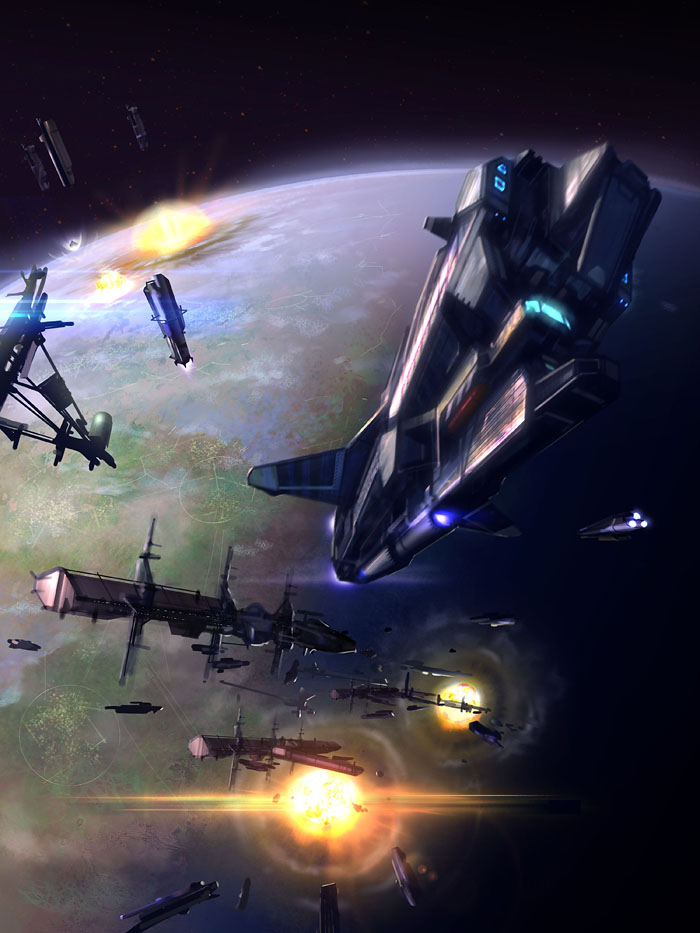
Finally, I just got the new cover art from Hideyoshi for Bringing Stella Home, and it is seriously kick-ass. Check it out!
Now that is what I call Science Fiction! Expect to see the updated ebook with the new cover in the next couple of weeks.
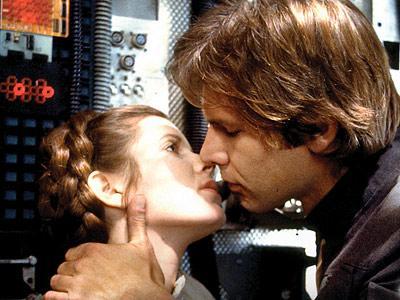
Unless you have an unhealthy aversion to kissing books, you’re probably familiar with Slap Slap Kiss. It’s common in genre romance, but you’ll often find it in science fiction & fantasy too. When done well, it’s a great way to make sparks fly, but when done poorly…I think you can fill in the rest.
The basic underlying concept is that love and hate are just two sides of the same coin. Both involve strong feelings for another person, the kind that drive you crazy and make it hard to think straight. According to this theory, it’s a lot easier to fall in love with someone you hate than to fall in love with someone you don’t really care about. And once you fall in love, the rest is easy. <snark!>
Of course, it’s possible to go too far. There’s a fine line between “all’s fair” and kicking the dog, and if you cross it…good luck. Alternately, if the slapping doesn’t cross the line, but the kiss doesn’t live up to expectations, it’s also going to fall flat. And if the main reason you invoke this trope is because the plot demands it…let’s just say, you’re doing it wrong.
In general, I think it’s important to keep the following in mind:
The attraction needs to be properly foreshadowed. If the characters start slapping each other without even a hint of sexual tension first, no amount of backpedaling is going to make up for it.
Neither of the characters should tear each other down. There’s a big difference between a slap and a punch (and a roundhouse kick, for that matter). Even though the characters may abuse each other, they have to have at least some mutual respect. After all, Han still called Leia “your highness,” and Leia still complimented Han on his “bucket of bolts” (albeit sarcastically). Once the respect is gone, so is any hint of romance.
The kiss needs to be proportional to the slap. Lots of slap with an innocent little peck is going to feel anticlimactic, while a tap on the chin with a giant make out moment immediately afterward is going to feel melodramatic. The two need to be balanced in order for the trope to work.
The couple should have at least something in common. “Opposites attract” is often just an excuse for shoddy character development. In real life, if the two people don’t have at least something in common, value-wise and personality-wise, the romance is pretty much doomed to fail. As always, however, Your Mileage May Vary.
Finally, even though there are a lot of reasons to hate this trope, there’s a reason we keep coming back to it. What that reason is exactly, I can’t say, but I know it when I see it. After all, you really shouldn’t over analyze some things. Like this video:
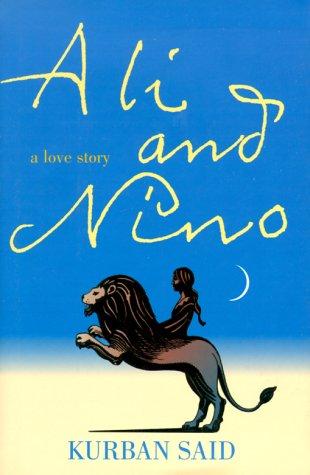
At the crossroads of Europe and Asia, Christianity and Islam, the progressive West and the reactionary East, the peoples of the Caucasus lie poised between three empires and their own dreams of independence. And at the city of Baku, where the ancient and unchangeable desert meets the oil rigs of the Caspian Sea, young Ali Shirvanshir has fallen in love with Nino Kipiani, a Georgian and a Christian.
A timeless story of forbidden love, Ali and Nino is both the Romeo and Juliet of the Caucasus and the national novel of Azerbaijan. It is as much a romance as it is a story of the clash of cultures and identities in our rapidly changing modern world. Above all else, it is a beautiful and haunting tale that will leave you dreaming with your eyes open and yearning for lands that you’ve never seen.
This is, quite possibly, the most perfect book I have read all year. I picked it up in Tbilisi from another TLG volunteer on Sunday, and I finished it at a breathless sprint on Wednesday. But while the story was good, it was the writing itself that really captivated me. The simple yet surprisingly rich descriptions of the alien cultures, so dreamlike and yet so straightforward, often to the point of being shocking–here, let me give an example:
“Shamil’s Prayer!” called Iljas Beg to the musicians. Immediately a wild melody arose. Iljas Beg jumped into the middle of the hall. He drew his dagger. His feet moved in the fiery rhythm of the Caucasian Mountain Dance. The blade glittered in his hand. Nino danced up to him. Her feet looked like small strange toys. Shamil’s Mystery began.
We clapped to the rhythm of the music. Nino was the bride to be abducted…Iljas put the dagger between his teeth. Like a bird of prey, his arms outstretched, he circled round the girl. Nino’s feet flew whirling round the hall, her supple arms depicting all stages of fear, despair, and submission. In her left hand she held a handkerchief. Her whole body trembled. Only the coins on her cap lay quietly on her forehead, and that was the correct way–this is the most difficult part of the dance. No one but a Georgian girl can do such fantastically quick turns and not let even one coin on her cap tinkle.
Iljas raced after her. Without stopping, he chased her round and round. The wide gestures of his arms became more and more dominating, Nino’s defensive movements more and more tender. At last she stopped, like a deer overtaken by the hunter. Closer and closer Iljas Beg circled. Nino’s eyes were soft and humble. Her hands trembled. A wild, short howl from the music, and she opened her left hand. The handkerchief fluttered to the floor. And suddenly Iljas Beg’s dagger flew onto the little piece of silk and nailed it to the floor. The symbolic dance was finished.
By the way, did I mention that before the dance, I gave Iljas Beg my dagger and took his? It was my blade that pierced Nino’s handkerchief. It is best to be on the safe side, for a wise rule teaches: “Before you trust your camel to Allah’s protection, tie it fast onto your fence.”
The whole novel is like that, and it’s awesome. The narrative passes from one description to the next, and you feel almost like you’re caught up in a dream, reading a fairy tale. It’s only the railroads and oil rigs, the mention of Paris and London and Moscow, that make you step back and realize that this isn’t a fantasy novel, but something set in our modern world.
And yet, even though it feels like a fairy tale, the author gets a surprising number of things right. Georgians really do have some of the most beautiful eyes of any people. I haven’t yet been inside the sulfur baths at Tbilisi, but everything else in Said’s description of that city is more or less correct. Kakhetian wine really is the most famous within Georgia, and probably the whole Caucasus as well.
The most gratifying thing is to see how it all comes together. Even though the descriptions sometimes feel as lavish as a Persian rug, no word is wasted–there is a good reason for every tangent, solidly grounded in the story. There are plenty of red herrings and Chekhov’s guns to make the plot twists thoroughly satisfying. But never at any point did I feel compelled to try and predict what would come next. I enjoyed the story so much, I was barely aware of the fact that I was reading.
Whether you’re looking for an exotic romance, or you just want to explore a culture thoroughly alien from your own, Ali and Nino is a book you will thoroughly enjoy. If, like me, you have any interest in the Caucasus, you probably won’t be able to stop coming back to it. And if you’re just looking for a good read, I can think of few books that are more perfect than this one.
So I figured I should post something here and give you guys an update before the next Tuesday rolls around. I’ve been neglecting this blog, but that will soon change, inshallah.
Last night, I was on pins and needles waiting to hear back from Writers of the Future. We’re almost overdue for the winners / finalists announcement, and my story has been “on hold” for about a month. What that means, I don’t know exactly, but I haven’t been rejected yet and it looks like…
…no, I’m not going to jinx it. In any case, they told us the results would be out before the end of the month, so whatever happens, it’s going to come soon. I hope. GAH!!!
In other news, I read an amazing novel this week, quite possibly the most perfect novel I have read so far all year (and that includes War and Peace, at least the first two thirds of it). It’s called Ali and Nino, and it is basically Romeo and Juliet of the Caucasus. Except…it’s so much more than that. So much more. Expect to see a glowing review in the next couple of days.
In other news, I have decided to put Into the Heart of the Nebula on hold for a while, and to focus instead on a new project…which I can’t really talk about because it’s connected to that writers of the future story. GAH!!! But it’s really, really awesome–seriously, one of the better stories I’ve come up with–and I’m really loving it so far. Except writing has been slow the last couple of days, for stupid reasons that would only bore you. Point is, things are finally heading in the right direction.
Speaking of which, I’ve earned enough money through my ebook sales to commission a new cover for Bringing Stella Home. I got in touch with Hideyoshi, the illustrator who did the cover for Genesis Earth and Desert Stars, and he’s really excited about this one. After seeing the first sketch, so am I! Not much else I can tell you, but you can expect to see some really cool artwork in the next few weeks.
Tomorrow is Georgian Independence Day, which means a giant military parade about fifteen minutes from where I live. And the opening of the new Parliament in Kutaisi. It’s going to be big. But it’s late right now, and my host family is about to hit the sack, so I’d better cut things short and get back to writing. With luck, I’ll put in another thousand words on the awesome unnamed project before going to bed.
Good night! Or, as they say in Georgia, ghame mshvidobis!
Last week, I blogged about the Three Faces of Eve trope. But if we’re going to discuss power trios in any depth, we first need to examine the classic Freudian Trio, one of the most prevalent combos and, in some ways, a precursor to all others.
As you might expect, the Freudian Trio borrows heavily from Sigmund Freud, specifically, his theory of the Id, the Ego, and the Superego. The main idea is that the human mind is divided into three parts: the Id, which comprises our basest animal instincts; the Superego, which comprises our concepts of morality and social norms; and the Ego, which struggles to find a balance between the two.
In the Freudian Trio, these elements of the psyche are represented by:
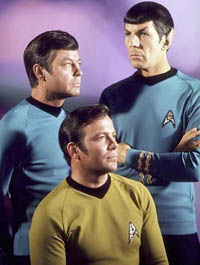
The Kirk (Ego): A pragmatic, free-wheeling character who takes the lead and mediates between the other two. When the the group is in conflict, often resolves it by taking a third option, though this often makes him seem morally ambivalent. In a five-man band, this is the Hero.
Each of these character archetypes are fascinating in their own right, and deserve to be examined in much greater depth. However, in the Freudian Trio, it’s the combination of the three that proves so fascinating.
When faced with an interesting moral dilemma, the McCoy often wants to screw the rules and run in with guns blazing, while the Spock advocates caution, reminding us of the prime directive. Or maybe the McCoy is paralyzed by indecision, while the Spock is the only one cold enough to make the sadistic choice. In either case, the way the Kirk manages to resolve it will almost always reveal something deeper about the world or human nature.
The thing that’s truly amazing is how prevalent this trope is in fiction. To name a few:
Star Wars: Han (Id), Leia (Superego), and Luke (Ego), also:
Star Wars: Emperor Palpatine (Id), Grand Moff Tarkin (Superego), and Darth Vader (Ego).
Ender’s Game: Peter (Id), Valentine (Superego), and Ender (Ego).
Lord of the Rings: Gollum (Id), Sam (Superego), and Frodo (Ego), also:
Lord of the Rings: Gimli (Id), Legolas (Superego), and Agagorn (Ego), also:
Lord of the Rings: Dwarves (Id), Elves (Superego), and Humans (Ego).
Arthurian Legend: Sir Gawain (Id), Sir Lancelot (Superego), and King Arthur (Ego) (I would argue that Guinevere fits the Id role better, but I’m not an expert).
The Dark Knight: The Joker (Id), Harvey Dent (Superego), and Batman (Ego).
The Matrix: Neo (Id), Trinity (Superego), and Morpheus (Ego).
Shaun of the Dead: Ed (Id), Liz (Superego), and Shaun (Ego).
Fullmetal Alchemist: Edward (Id), Alphonse (Superego), and Winry (Ego).
The Melancholy of Haruhi Suzumiya: Haruhi (Id), Yuki (Superego), and Kyon (Ego).
Final Fantasy VI: Kefka (Id), Leo (Superego), and Emperor Gestahl (Ego).
Final Fantasy VII: Barrett (Id), Cloud (Superego), and Tifa (Ego).
Myst: Achenar (Id), Sirrus (Superego), and Atrus (Ego).
Starcraft: Zerg (Id), Protoss (Superego), and Humans (Ego).
Homestar Runner: Strong Mad (Id), Strong Sad (Superego), and Strong Sad (Ego).
The Good, the Bad, and the Ugly: Tuco (Id), Angel Eyes (Superego), and Blondie (Ego).
20,000 Leagues Under the Sea: Ned (Id), Conseil (Superego), and Aronnax (Ego).
Twilight: Jacob (Id), Edward (Superego), and Bella (Ego).
Archie Comics: Veronica (Id), Betty (Superego), and Archie (Ego).
Sometimes, the villains come from a dysfunctional or broken Freudian Trio, where one of the three died, was kicked out, or was never part of the combo in the first place. When this happens, it’s called (aptly enough) a Evil Duo. Examples include Pinkie and the Brain, Lex Luthor and the Joker, and Kefka and Gestahl (though that particular duo was very, very, VERY short lived).
Finally, it’s worth pointing out that the Freudian Trio is so common, it even occurs in real life. Perhaps the best example of this would be World War II, where Churchill was the Id, Stalin was the Superego, and Roosevelt was the Ego. With quotes like “never, never, never, never give up,” Churchill practically embodied the McCoy (his drinking penchant also helped), while Stalin, with his fanatic adherence to communism and his “million is a statistic” approach to the revolution, was as cold and calculating as you can get. FDR was the one who held the alliance together, and it was only after his death that the Cold War really broke out.
Of course, it’s possible that we only see this trope everywhere because our brains are programmed to see it. But if that’s true, it makes for an even stronger argument that the Freudian Trio plays on some powerful, universal archetypes.
Sid Meier’s Alpha Centauri is, without a doubt, the best strategy game I have ever played. I have many fond memories playing it into the early morning hours while I was in college.
The last time I played this game, it quite literally consumed my life. I eventually had to delete it from my computer just to keep up with my schoolwork.
But wow, it’s so good. And the best part, in my opinion, is the story. Unlike other 4x strategy games, where everything is basically up in the air, Alpha Centauri has a very distinct storyline full of interesting twists and turns.
It starts out with a colony mission to (where else?) Alpha Centauri that fractures into seven factions, based not on ethnicity or nationality, but on ideology. These are: the scientists, the religious fundamentalists, the communists, the free-market capitalists, the diplomatists, the militarists, and the environmentalists.
The last faction is my favorite, because the planet itself is a character in this story. As you settle and explore new territory, you come across giant patches of fungus and swarms of hostile mind-worms. The more the game progresses, however, the more you realize that the fungus is part of a giant neural network, and that it’s trying to communicate with you. When you finally learn to communicate back–THAT’S when things get interesting.
Oh man, I love this game. It’s a science fiction classic, reminiscent of Orson Scott Card and Arthur C. Clarke. I just hope I can exercise some self-restraint this time–but hey, if I can moderate how much time I spend on Minecraft, surely I can do the same with Alpha Centauri.
Imagine you wake up tomorrow, and find out that everyone around you has vanished. Well…not everyone. But the ones who are still around claim to see strange things that you can’t see. And then, you get an eerie feeling of a presence…something dangerous, something coming at you right now. And then, things get really weird…
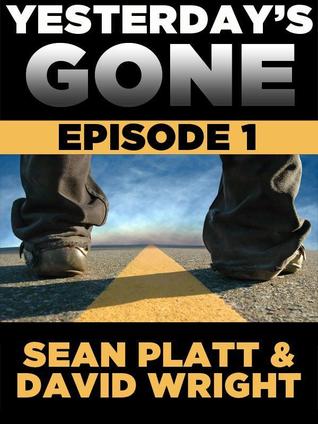
Yesterday’s Gone is a post-apocalyptic serial thriller: basically, a novel divided into six parts or “episodes,” the first of which is free. Since I’m interested in doing something similar with my next project, I decided to check it out.
From the very start, I was hooked. The conflict was intriguing, the pace was fast and gripping, and the characters were interesting, with reactions that were spot on. I wasn’t intending to finish the whole thing in one sitting, but once I’d started, there was no way I could put it down.
A couple of things jolted me out of the story, though. The first was the sheer immensity of the cast of characters. Literally, the first half of the episode was just introducing new ones, and none of them got more than two viewpoint scenes in the whole ebook. I was on board for the first three or four of them, but around number six or seven, I just wanted to skip them and get back to the first guy.
Two of the later characters were just painful to read–not only did I not care about them, I vehemently hated who they were and wanted them to die or get out of the way so I didn’t have to read their viewpoints anymore. The first was an eight year-old boy who had some mystical connection with animals…I just couldn’t sympathize with him at all. The other one was a serial rapist and/or murderer who saw the apocalypse as just an opportunity to run around raping and killing the other survivors. I skipped his scenes, but then had to go back because there were some clues hidden there and I didn’t want to miss them…ugh.
The other thing that really bothered me was the very last scene in the episode, where the authors made the mistake of showing the monster. I won’t spoil it for you, but the image on the page clashed so strongly with the image in my mind, it deflated almost all the tension for me. What was supposed to be a cliffhanger instead turned out to be a big “huh?”
Your mileage may vary, however, so if you’re into post-apocalyptic fiction, I think it’s definitely worth checking out. Just like the happy pills in the empty lot behind the school, the first one is free: you can pick it up on Amazon or Smashwords. And in spite of its problems, there was a lot in this story that I really liked. Maybe you’ll enjoy it more than I did.
In terms of the serial format, I think it worked very well, except for those two problems: too many characters to keep track of, and an ending that booted me out of the story. Otherwise, I think it’s a great way to publish, and I’ll probably experiment with something similar in the future.
Why do so many character combinations come in groups of three? Unlike love triangles, where the combo is primarily a way to build conflict, the characters in power trios all build on each other in some way. They might be foils for each other, but as complementary archetypes, they do far more to drive the story together than they ever would apart.
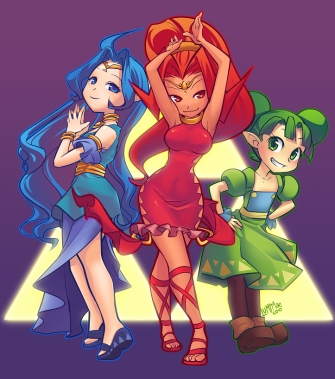
One of the most interesting all-female power trios is the Three Faces of Eve, which combines the archetypes of child, seductress, and wife:
The “child” (who does not have to be a child literally) will be seen as innocent, perhaps to the point of naïveté. The wife, the wiser, calmer aspect, someone around whom one could build a home life. The third, the seductress, is sexually experienced and independent.
Roughly speaking, the characters in the trio correspond to:
The Ingenue: A naive, innocent, childlike girl who is just setting out into the world. In a Freudian Trio, this would be the Ego.
The Femme Fatale: A seductive, alluring, mysterious woman who is experienced in the ways of the world. Unlike the Vamp, she may or may not use her feminine wiles for evil. In a Freudian Trio, this would be the Id.
The Yamato Nadeshiko: A calm, steady, faithful wife, who provides the kind of marital stability and maternal strength that is ideal for settling down and raising a family. In a Freudian Trio, this would be the Superego.
You’d be surprised to see how often this trope shows up, even in works of science fiction. In Star Wars, Leia was the child in A New Hope, the wife/mother in Empire Strikes Back, and (what else?) the seductress in Return of the Jedi. Just about every Star Trek series featured some alignment of these archetypes.
Squaresoft played with this trope a lot in their Final Fantasy series, which may be illustrative to examine in greater depth. I’ve only played through FF IV, VI, VII, and Chrono Trigger, but each of these titles features some interesting variations (warning: spoilers!).
Final Fantasy IV: Porom (child), Rydia (seductress), Rosa (wife).
Porom is pretty solidly the child, though Rydia starts out as this and later grows up into the seductress role. She doesn’t get the guy in the end, though: that would be Rosa, who pretty much starts out with him as well.
In terms of story, the characters don’t really seem to build much on each other, though in terms of gameplay you definitely want to have Rydia and Rosa/Porom in your party (though not Rosa and Porom together–you only need one white mage, after all).
Final Fantasy VI: Relm (child) , Celes (seductress), Terra (wife).
This is my personal favorite in the series. Unlike IV and VII, which both center around male protagonists, Final Fantasy VI revolves around Terra (world of balance) and Celes (world of ruin) as the central protagonists. Because they also play a role in the power trio, their characters are quite complex, especially in the second half of the game. Relm is arguably more of a Mary Sue, but her relation to the other characters, especially Shadow, also makes her role more complex and interesting.
In the end, the romantic subplot is fulfilled by Celes, not Terra, which was something of a surprise to me in my first playthrough. It works really well, though, because of Celes’s heel face turn and subsequent reformation (in which Locke is arguably a Manic Pixie Dream GirlSpear Counterpart). Does that also translate into a shift from seductress to wife as well? I’m not sure, but I’d probably say no–after all, it’s Terra who takes on the mother role in the world of ruin.
Final Fantasy VII: Yuffie (child), Aeris (seductress), Tifa (wife).
The main twist with this one is that visually, you’d think Tifa is the seductress and Aeris is the wife. In terms of story archetypes, however, it’s just the opposite: Tifa is the one whom Cloud depends on, the one who helps him work through his problems, while Aeris is the shifty, mysterious one.
Unlike IV, where Rosa and Cecil are set up from the very beginning, for a while it actually looks like Aeris and Cloud are going to end up together. But then, in perhaps the most tragically gut-wrenching moment in all of video game history, Aeris dies (and doesn’t come back). Since Yuffie is kind of, well, crazy, Tifa and Cloud are pretty much garanteed to get together after that point (and as for Sephiroth…I don’t even want to go there).
Chrono Trigger is interesting because the girl who ends up with the guy in the end (Chrono) is actually the one who fulfills the child archetype, Marle. It works, though, because of the childlike feel of the story. Unlike FF VI and IV, Chrono Trigger is not a dark or an edgy tale–it’s heartwarming innocence at its best. I always did feel that Lucca got the short end of the stick, though–but she did get a cameo in Xenogears, so perhaps the last laugh was hers after all.
Ah, Xenogears. <sigh>
Anyhow, long story short, the Three Faces of Eve power trio is a fascinating way to play with feminine archetypes. Recently, I’ve become quite interested in it because it showed up quite inadvertently in my current project, Heart of the Nebula. It’s funny how tropes can sneak up on you like that, especially some of the more archetypal ones.
Anyhow, in its current form the novel is a piece of trash, but now that I’ve recognized the potential to set up this particular power trio, I think I can really make it shine. If you have any insights, please share–I’m very interested in this trope right now!
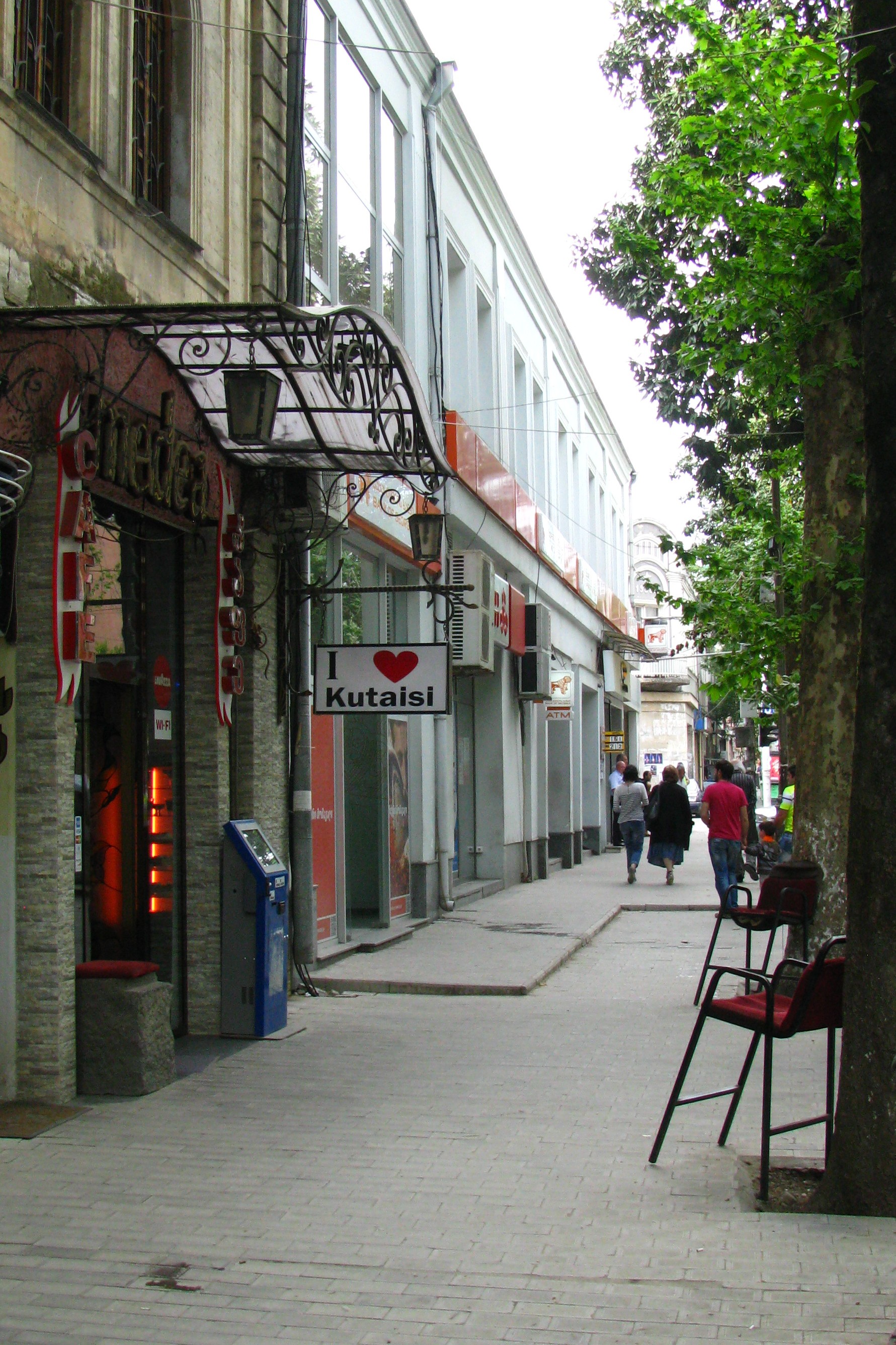
Medea Cafe & Bar, a popular expat hangout in downtown Kutaisi. It’s also something of a landmark because of the conspicuously English street sign.
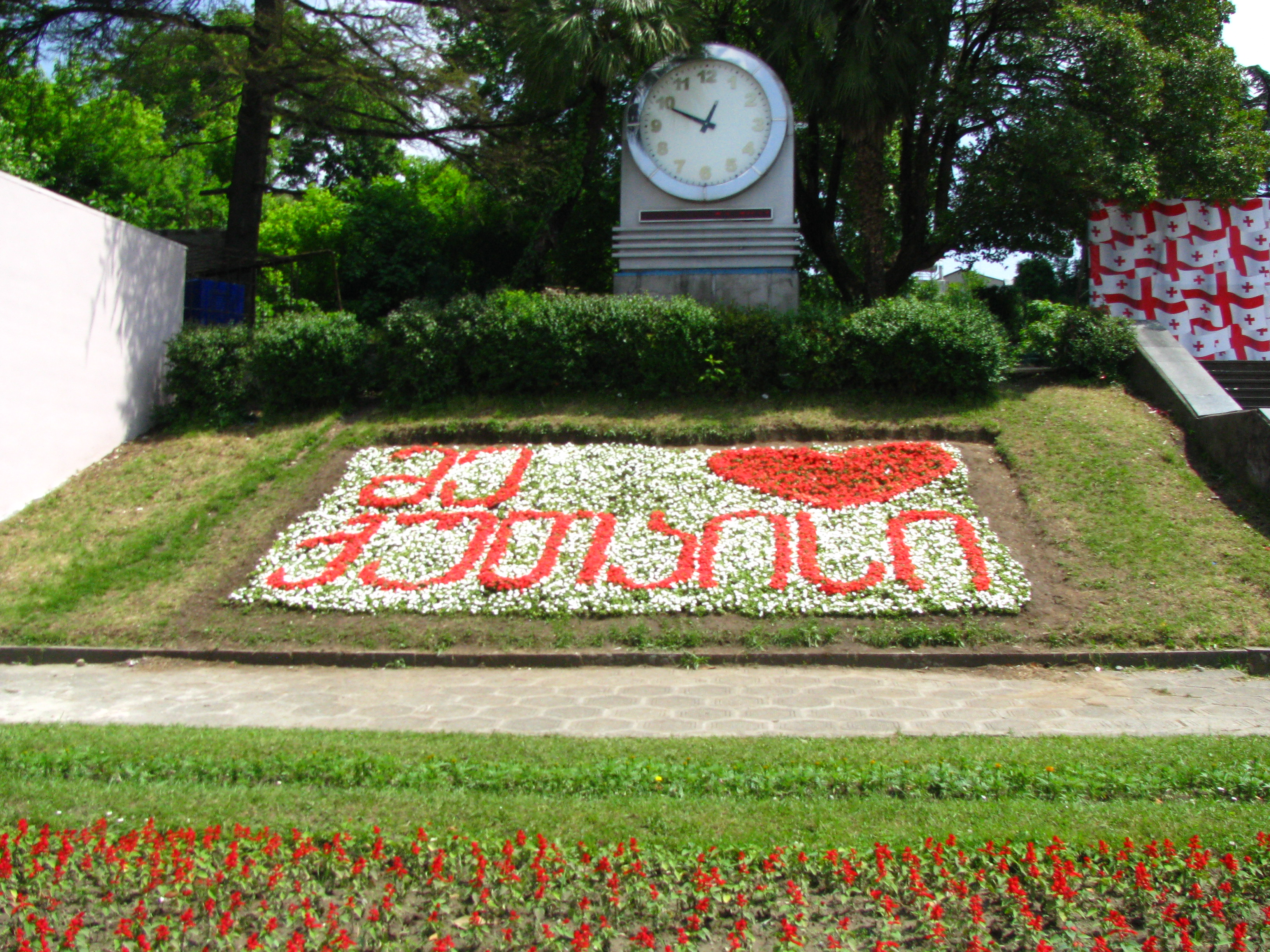
That’s Georgian for “I ♥ Kutaisi.” Like the New York City ad campaign on which it’s based, it’s become a part of the local culture. You can see it on billboards, street signs, stickers, t-shirts–unlike the US, where it’s uncool to wear a band’s t-shirt at their own concert, everyone was wearing their “I ♥ Kutaisi” shirts at Kutaisoba last week.
So since I’ve been living here in Kutaisi for almost three months, I thought I’d give you all a virtual tour of the city–or at least the downtown area, since Kutaisi is really more like a very big village with a city in the middle. But that’s why I love it.
Tsitelikhidi, or Red Bridge Station.
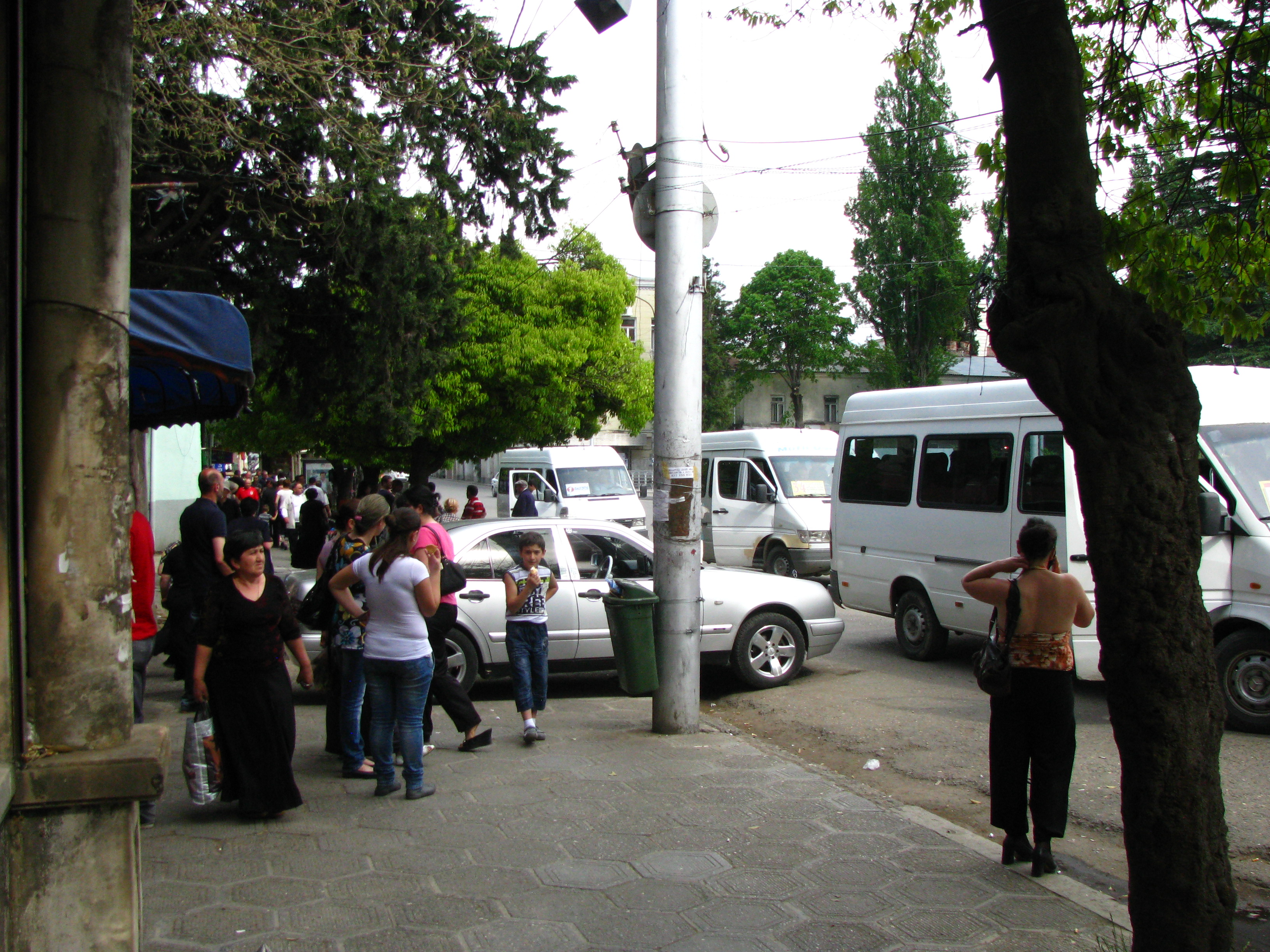
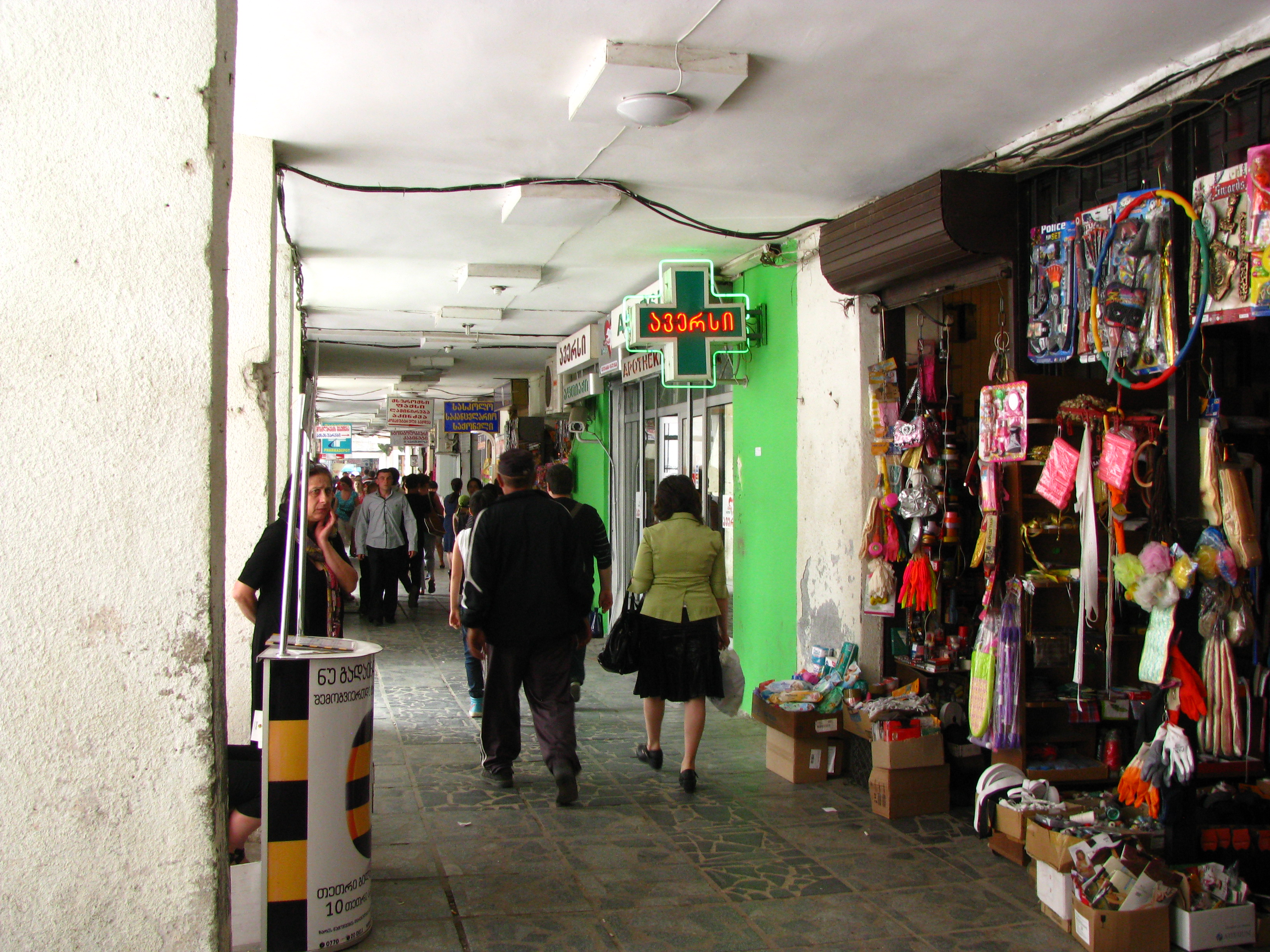
Our tour starts at the main marshrutka terminal downtown, Tsitelikhidi, or Red Bridge Station. The place is a wonderfully chaotic mess of taxis, buses, and marshrutkas, while their drivers pass the time by smoking cigarettes and yelling at each other. Old women wander around the crowds selling khatchapuri and lavash, while people are constantly coming and going. Interestingly enough, this is also where you can find one of the largest concentrations of apothekas (pharmacies) in the city.
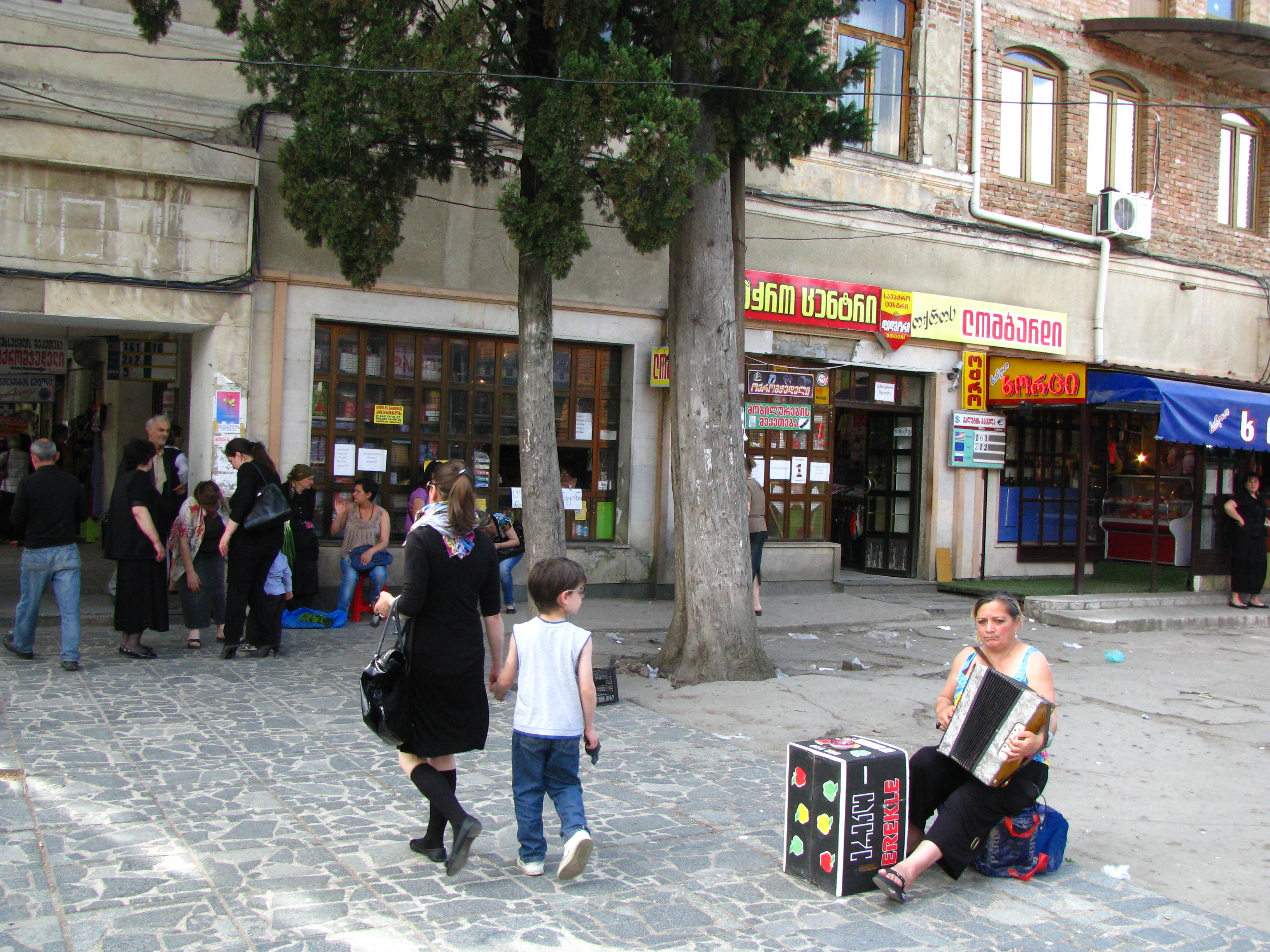
I bought an earwax removal kit from this apotheka, along with a bulb syringe obviously meant for babies. The pharmacist thought that was hilarious.For street performers in Kutaisi, the accordion is the instrument of choice.
The sidewalk leading away from the station leads into a long narrow corridor typical of most Georgian street markets, with stalls and vendors packing every available space. Here you can find cookies, ice cream, and cold drinks, both soft and hard; candles, religious icons, and other “souvenirs,” as the vendors like to call them; cheap plastic goods from China, wrapped in dusty plastic; freshly killed meat hanging from butcher’s windows; and all sorts of other random things. But as busy as this place seems, it’s nothing compared to the main marketplace.
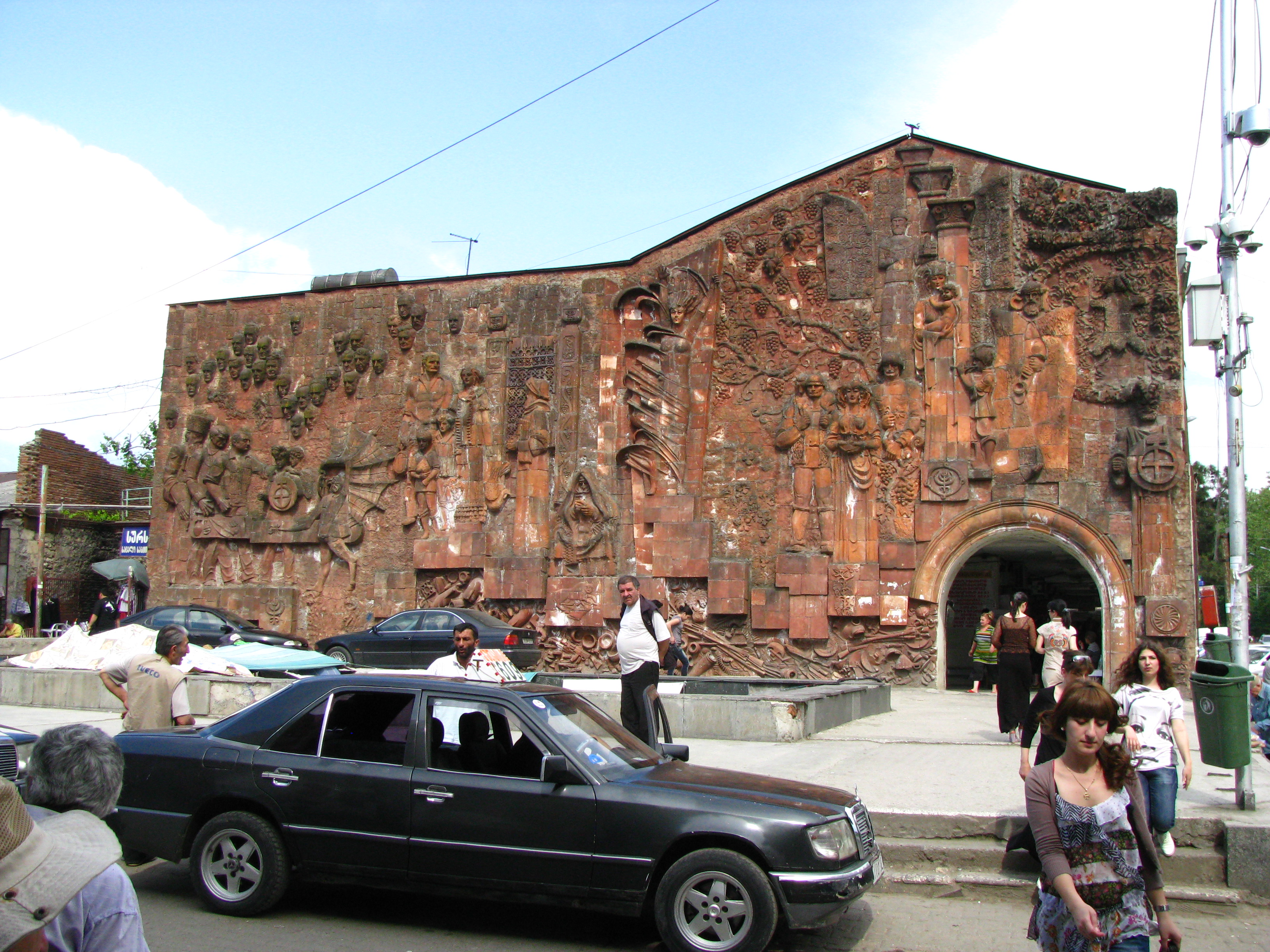
I have no idea what’s all on this frieze, but it looks pretty cool. Also, bangs are very much in fashion.This is actually a pretty good place to buy a belt.
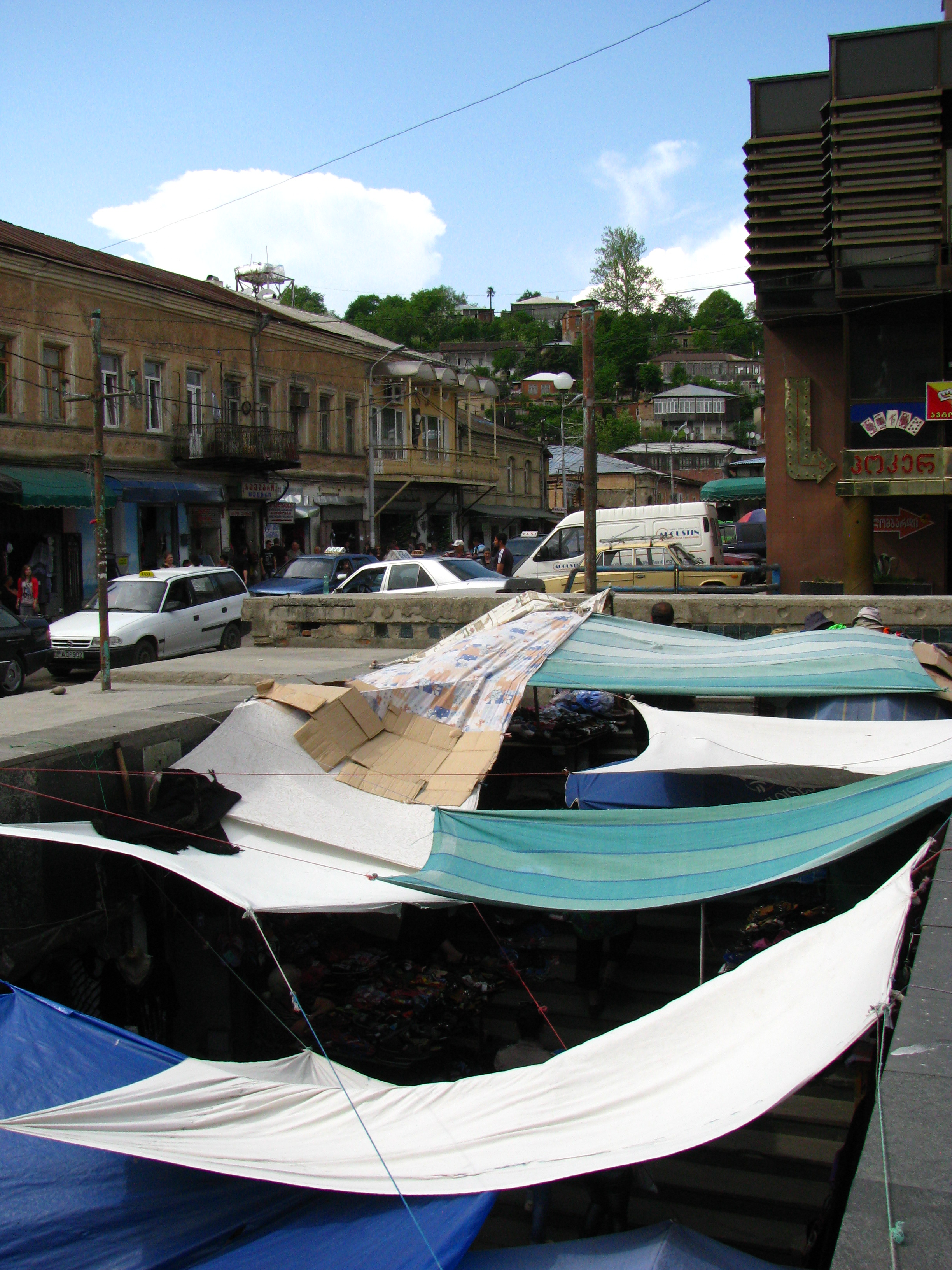
The corridor opens up at the end of the block, to a tunnel which leads underneath the main road (Rustaveli, named after the great medieval Georgian writer) to Mirzani restaurant on the far side. At the mouth of the tunnel, tarps and blankets stretch haphazardly over vendors selling clothes, cheap shoes and cigarettes. Further down the tunnel, you can find more clothes, belts, brassieres, more shoes, and all sorts of fabrics.
We continue past an old building with a giant frieze, presumably depicting scenes from the history of the city. There’s a lot of history to choose from–Kutaisi was the capital of ancient Colchis, and a major regional center throughout the Middle Ages, when locally-born King David the Builder united all of Georgia, turning it into a “land between two seas.”
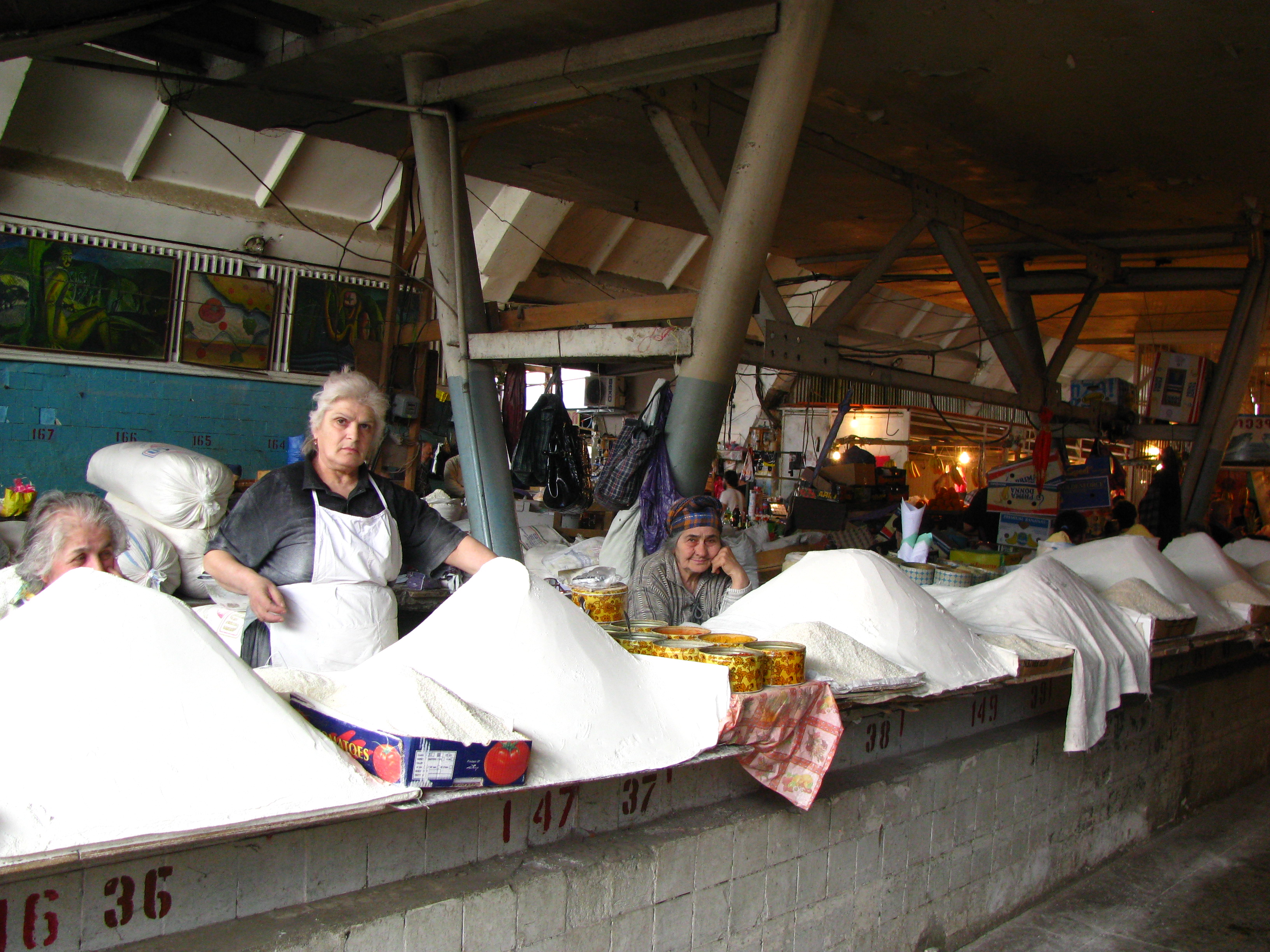
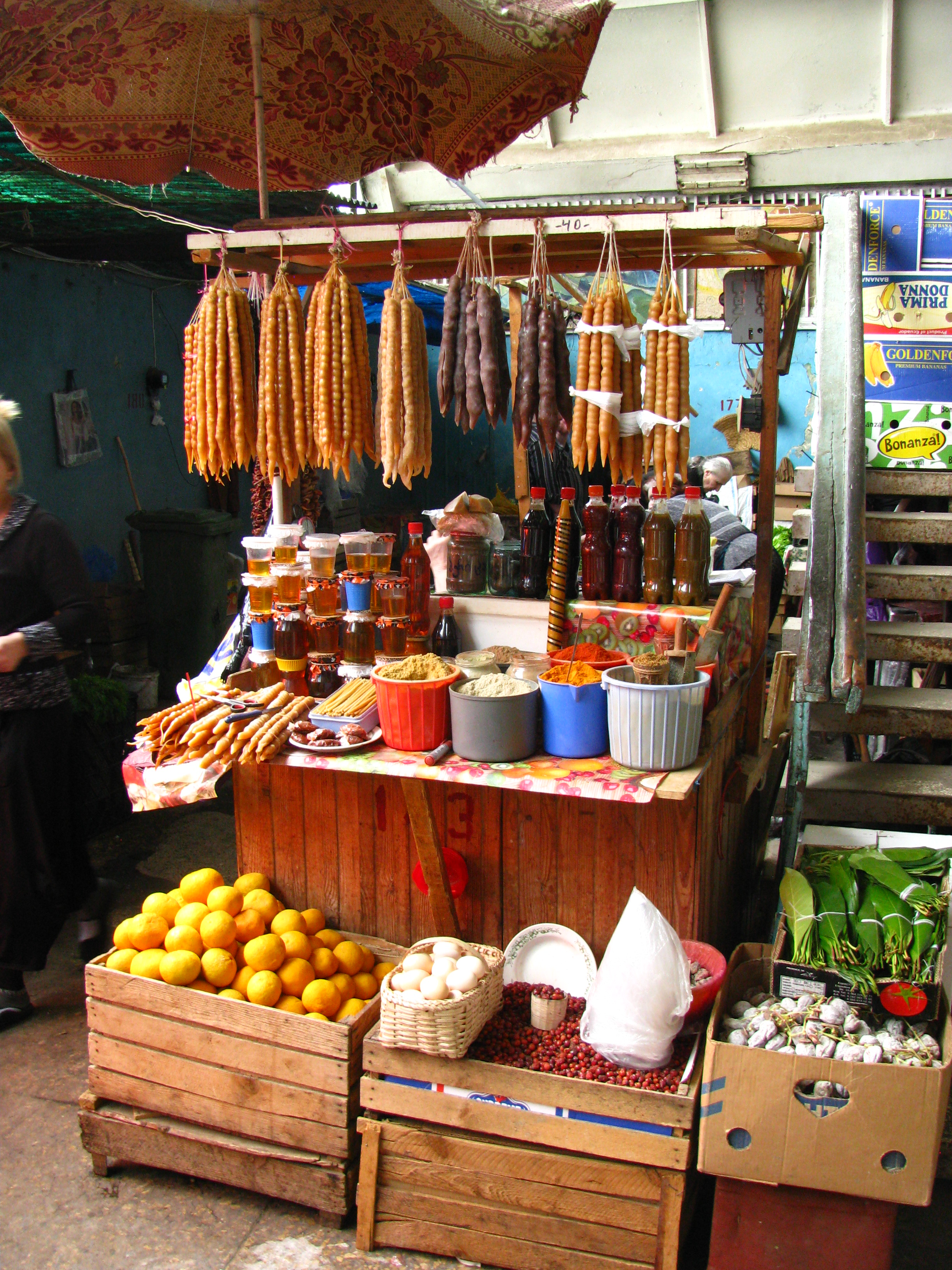
Alas, no hot peppers.This is where you come to buy flour.The candle-like stuff hanging from the top is churchkhela, strings of hazelnuts dipped in congealed grape extract. I assume the jars immediately beneath them contain wine.
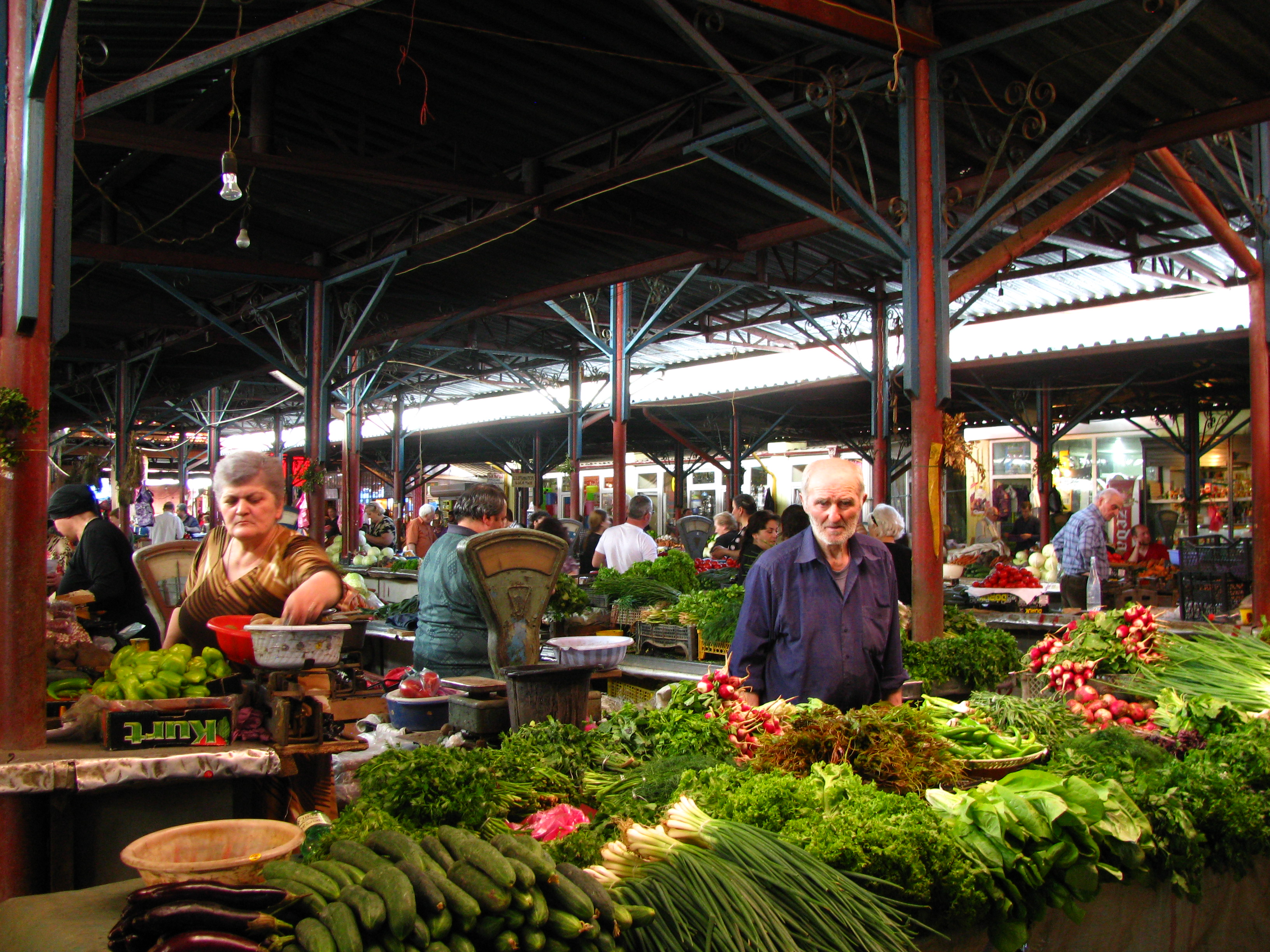
Next, we take a left and promptly get lost in a giant bazaar. Here, you can find all sorts of fruits and vegetables, beef and chicken, bread and cheese, wine and beer–basically, anything that you would usually get from a grocery store in the US. Georgians have grocery stores too, but the bazaars are usually cheaper and fresher. Plus, they’re a whole lot more fun. I’ve heard that you can haggle with the vendors, though the prices are so low (1.5 GEL for a kilo of apples) that I’ve never felt a need.
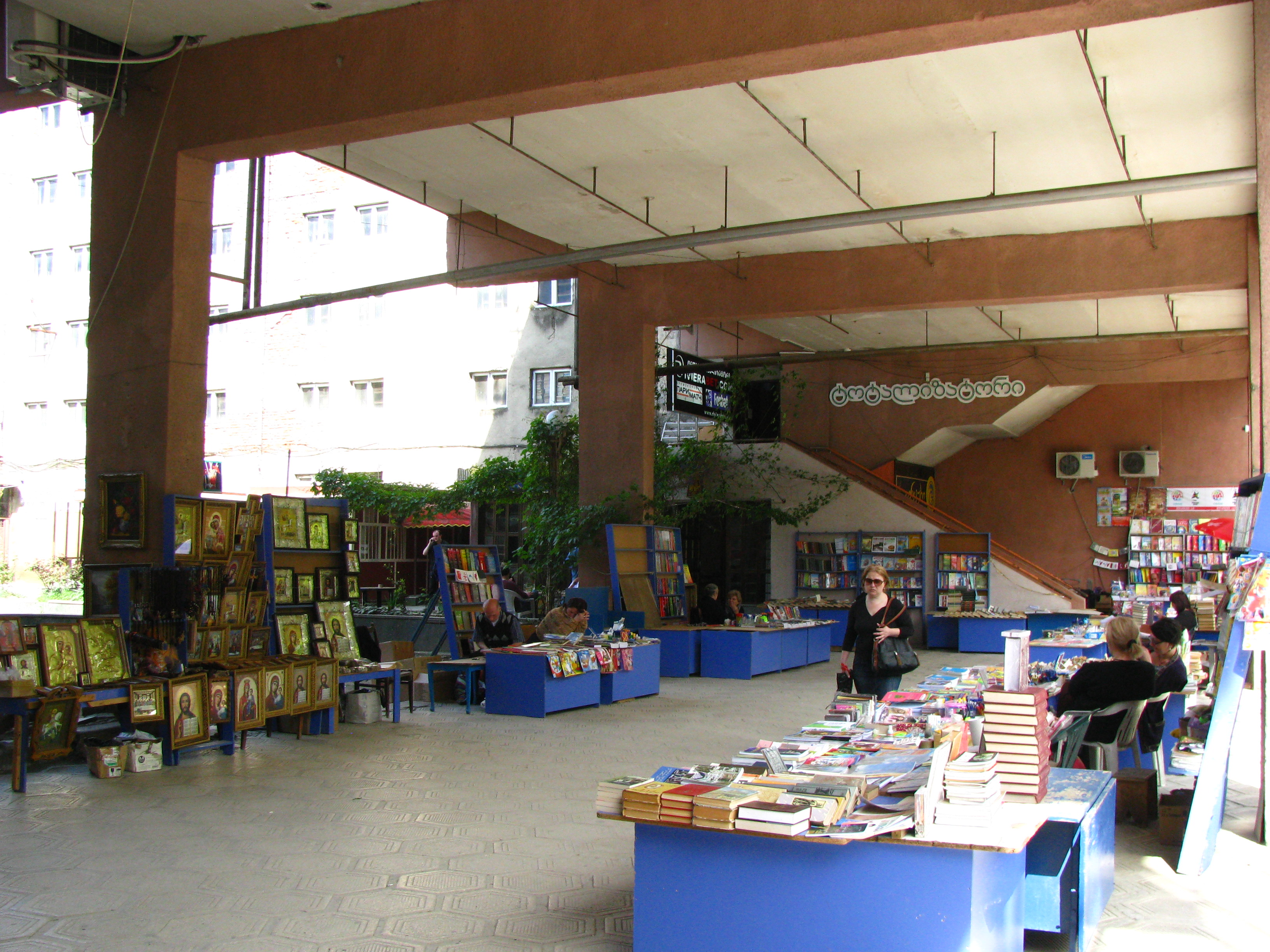
Rustaveli Avenue.Las Vegas casino. Gambling is big in Georgia.The book market. If I could read Georgian, this is where I would spend most of my time.
We spend a little bit of time wandering around before going to the main city park. Heading up towards Jatchviskhidi, you can find all sorts of pawn shops, casinos, and money exchanging places, while near the library (at least, that’s what I think it is) there’s a mini-bazaar with all sorts of books. Of course, that’s one of my favorite places to check out!
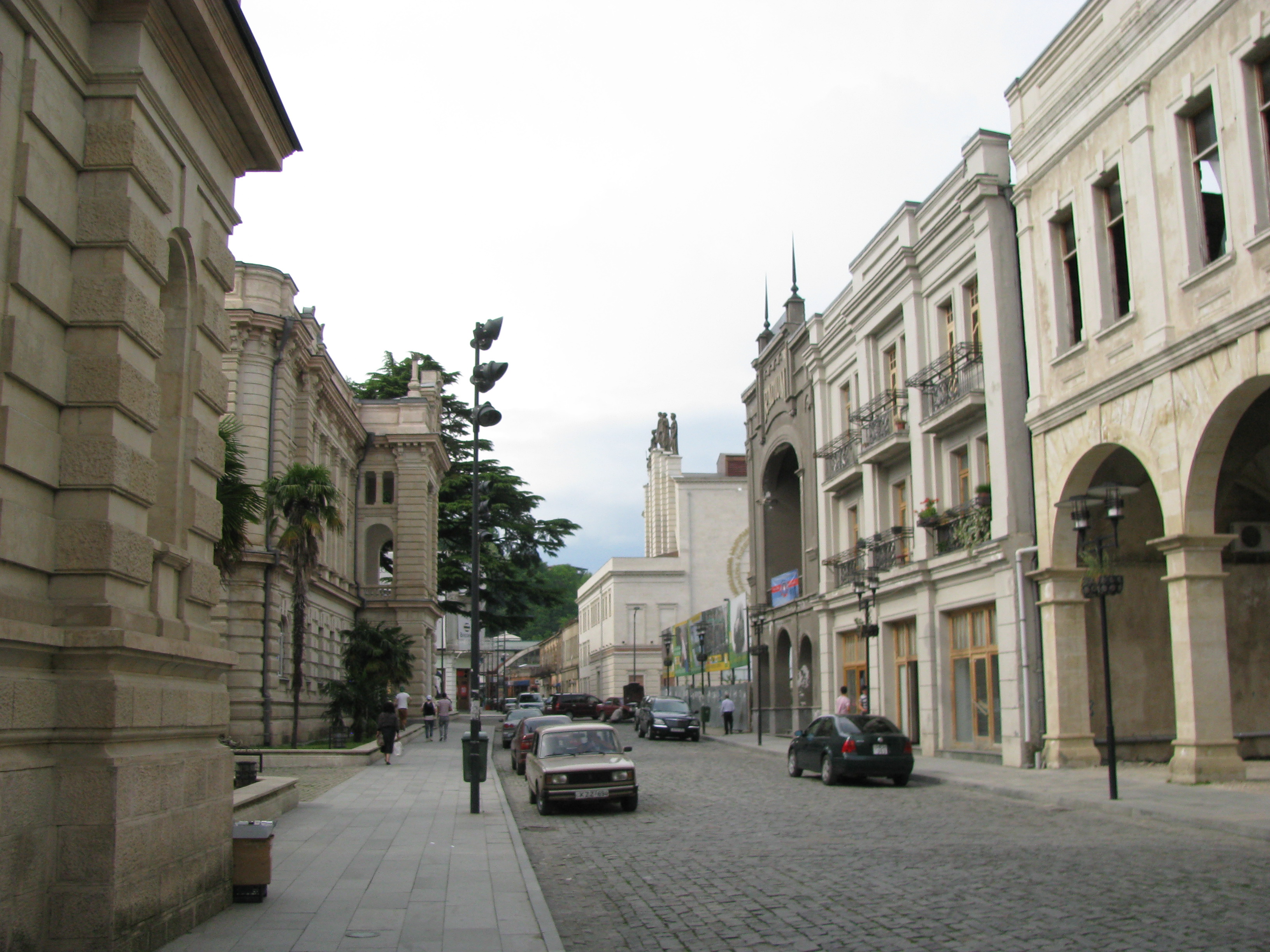
Along Rustaveli Avenue, however, the city takes on a pleasant European feel, with attractive cobblestone streets, wide boulevards, and Napoleonic architecture. Here, you’ll find the opera house, the mayor’s mansion, and the central school (of 44 public schools citywide).
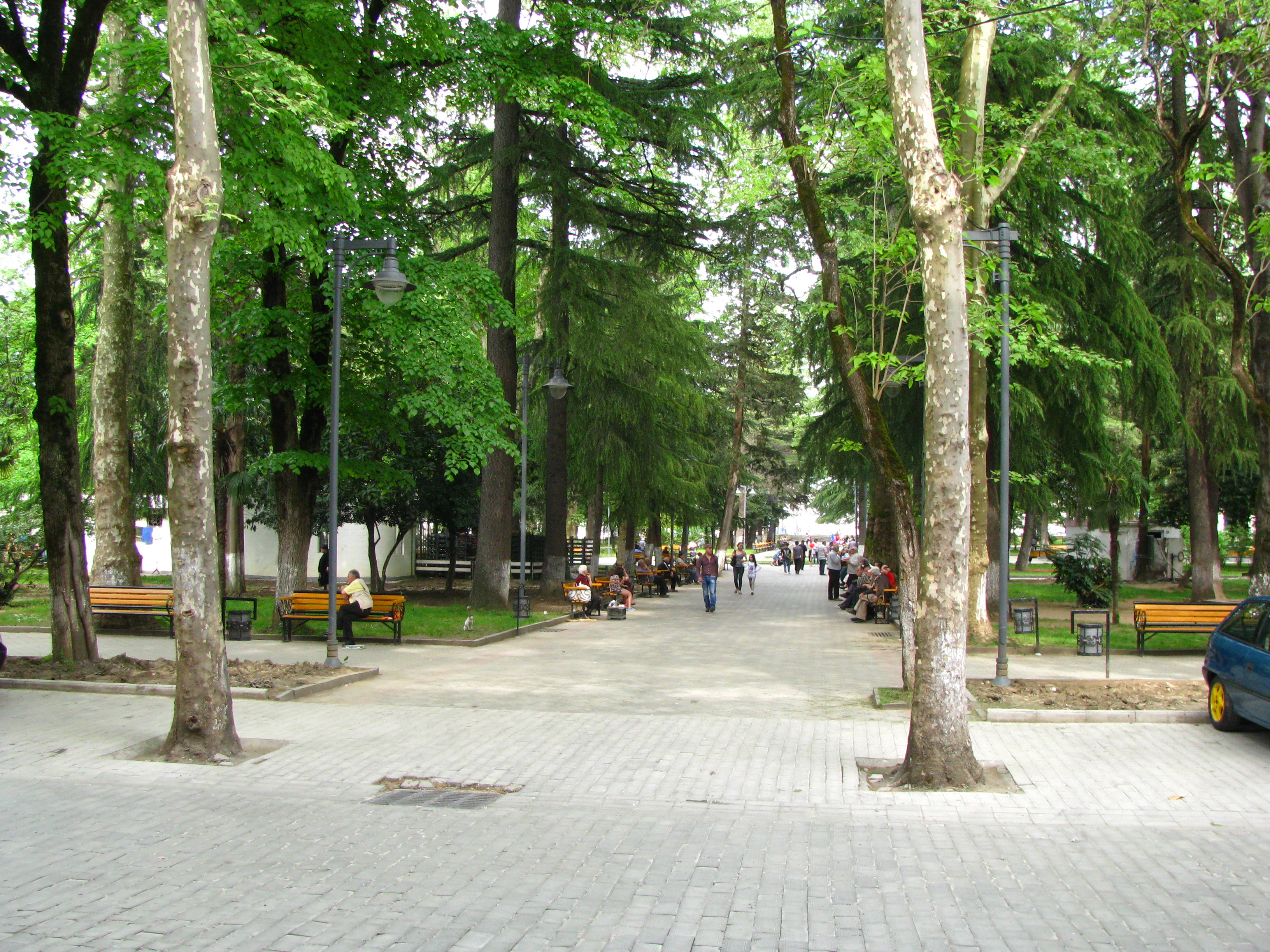
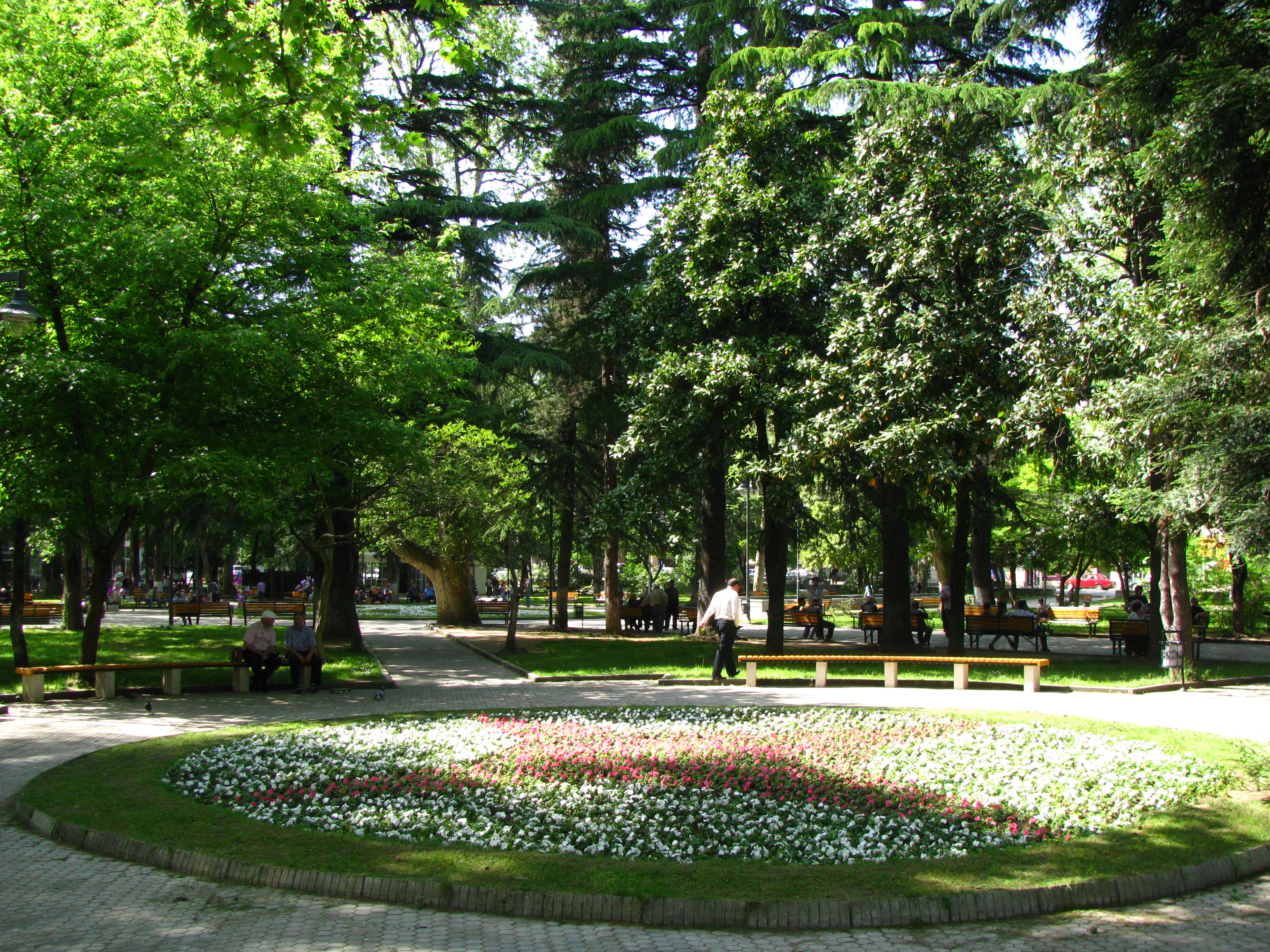
The view from just outside Medea Cafe.One of the many flower gardens in central park.One thing Georgians (or at least, Kutaisians) know how to do right is their public parks.
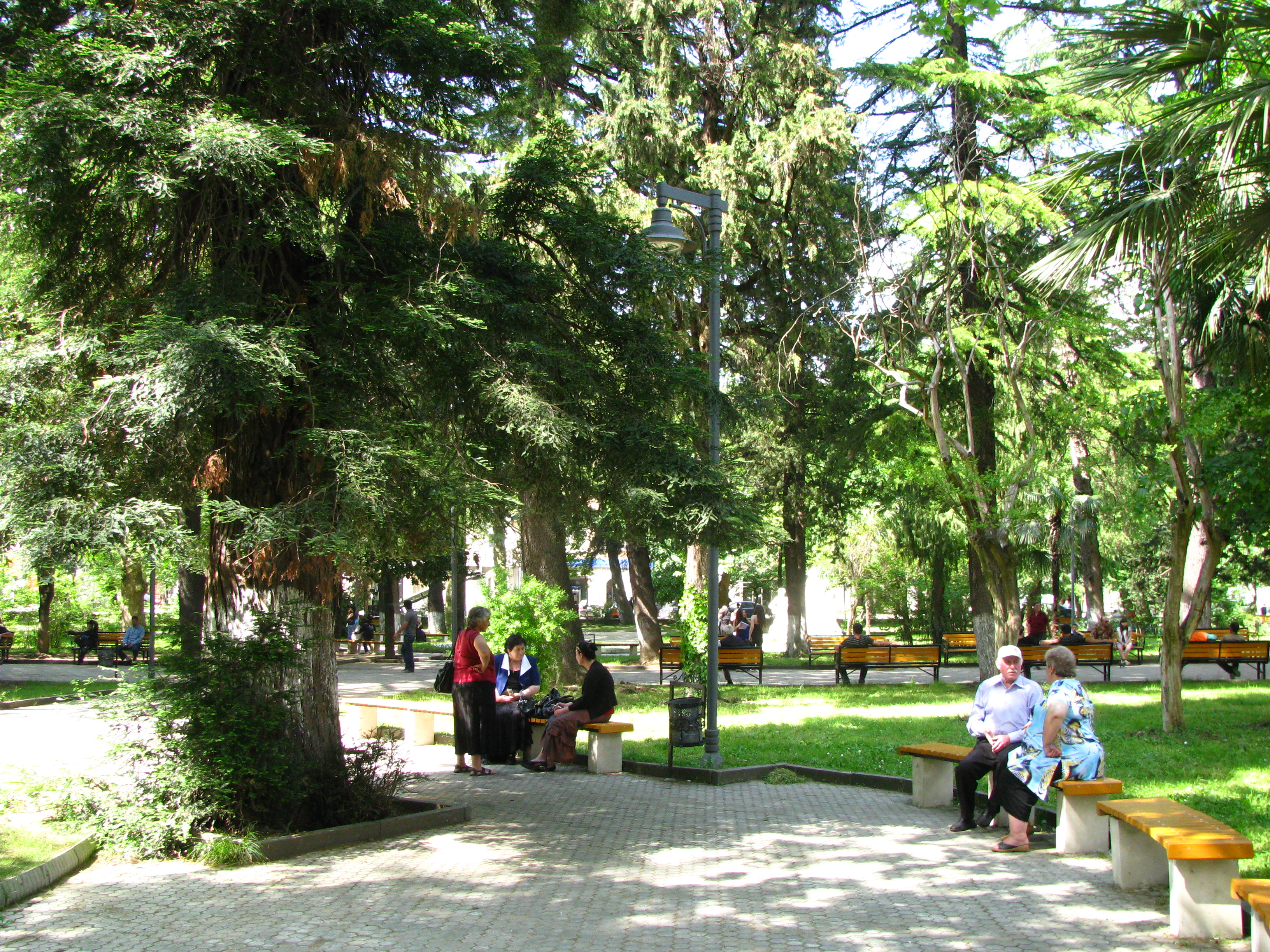
Next we come to Bulvari, the main central park of Kutaisi. On a hot, muggy day, this is the perfect place to relax, with shady palm and pine trees, attractive public fountains, and plenty of benches to go around. Vendors sell balloons, candy, and ice cream, while at the center, old men with cheap plastic cars take children for a ride around the main circle.
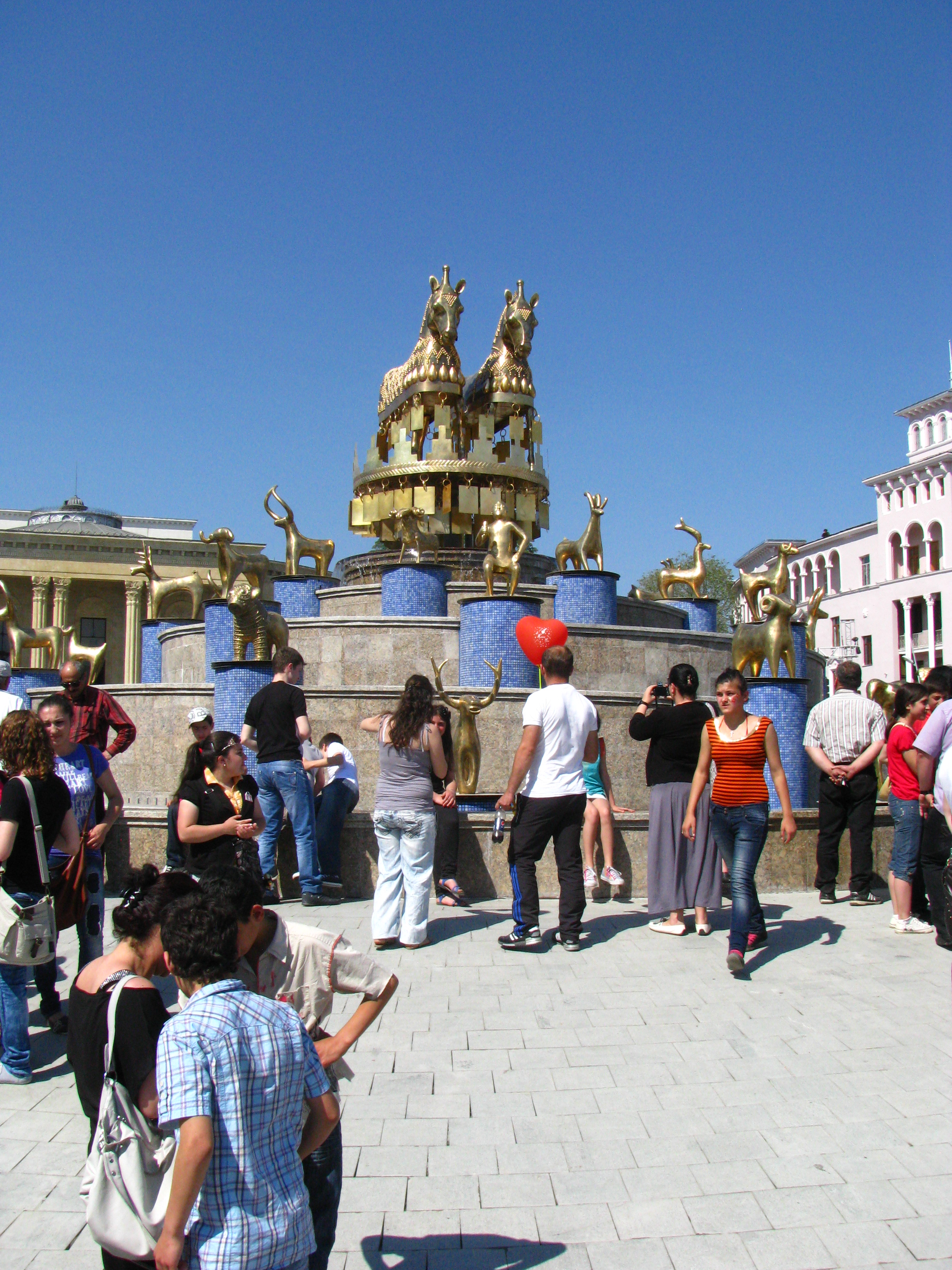
The new fountain at the main square. Some TLGers think it looks kind of tacky, but I think it’s a pretty good attempt to capture some of Kutaisi’s ancient heritage. There’s certainly plenty to choose from.
The main city square is on the other side of the park, with the theater on the left, the banking district on the right, and a giant fountain in the center depicting replicas of ancient Colchian artifacts found in Imereti province. It’s one of the many interesting ways the city has been trying to reinvent itself since the end of the Soviet Union. The statue of David the Builder that once graced this square now stands in front of the train station, at the end of the boulevard that bears the same king’s name.
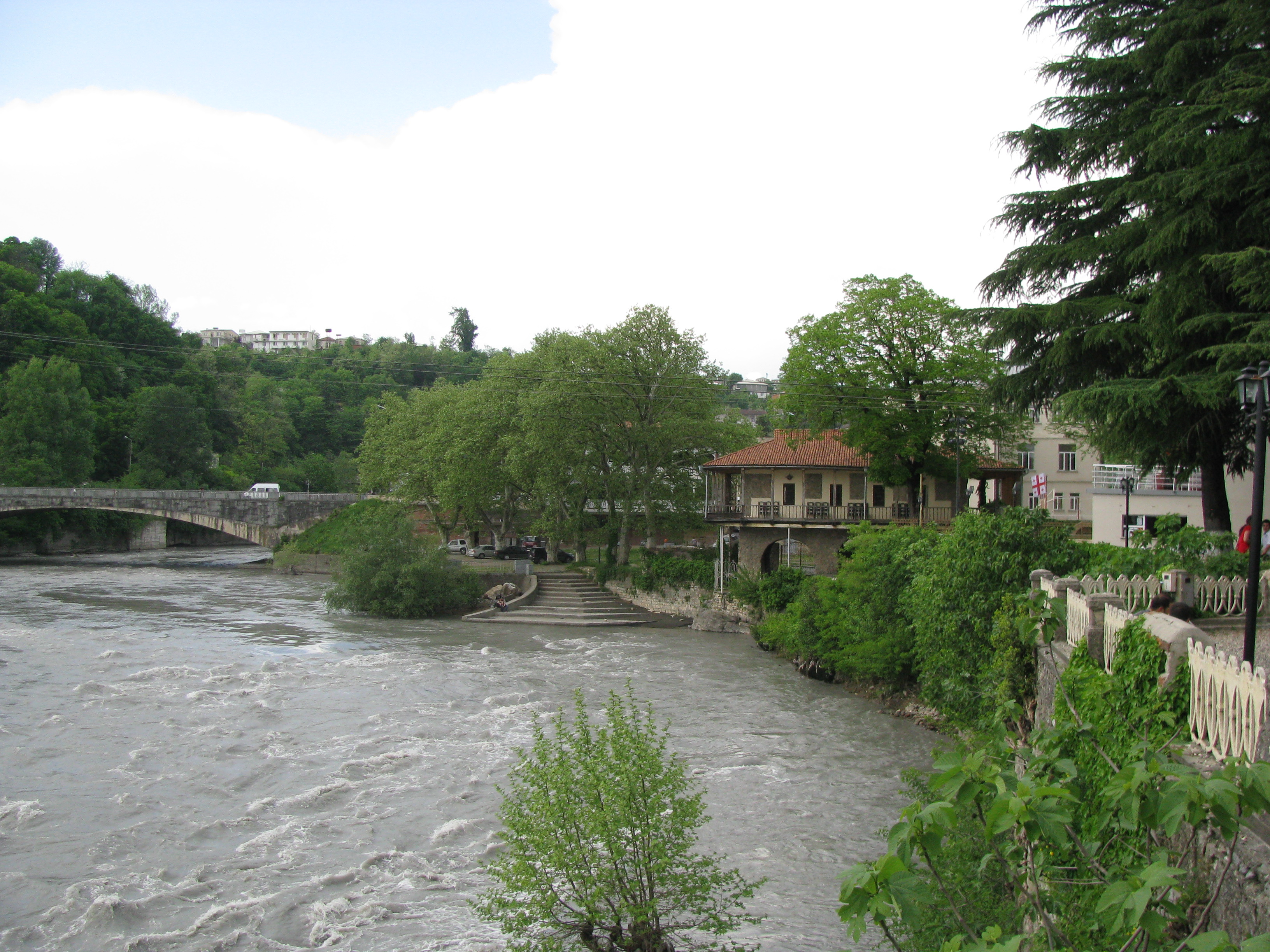
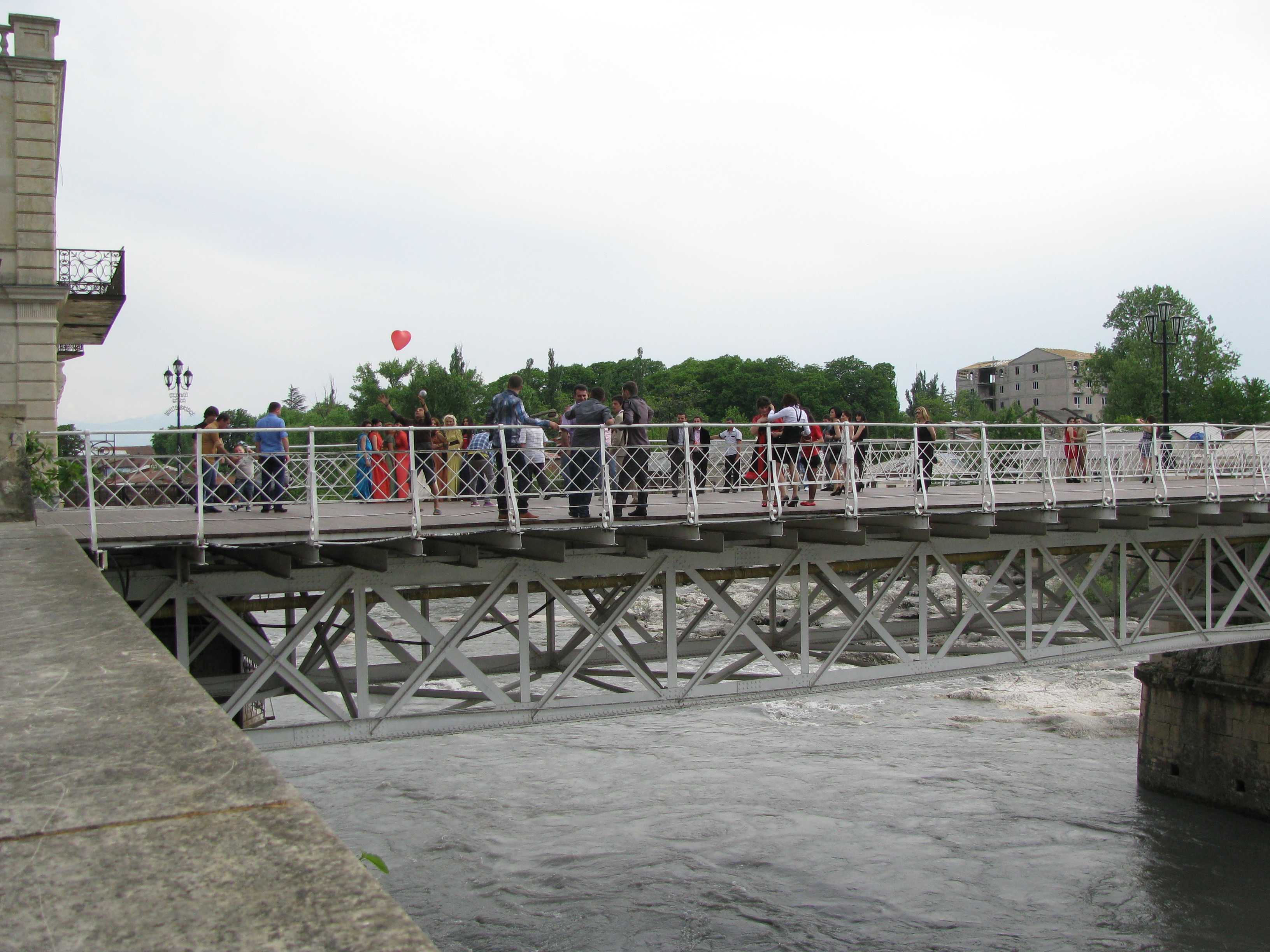
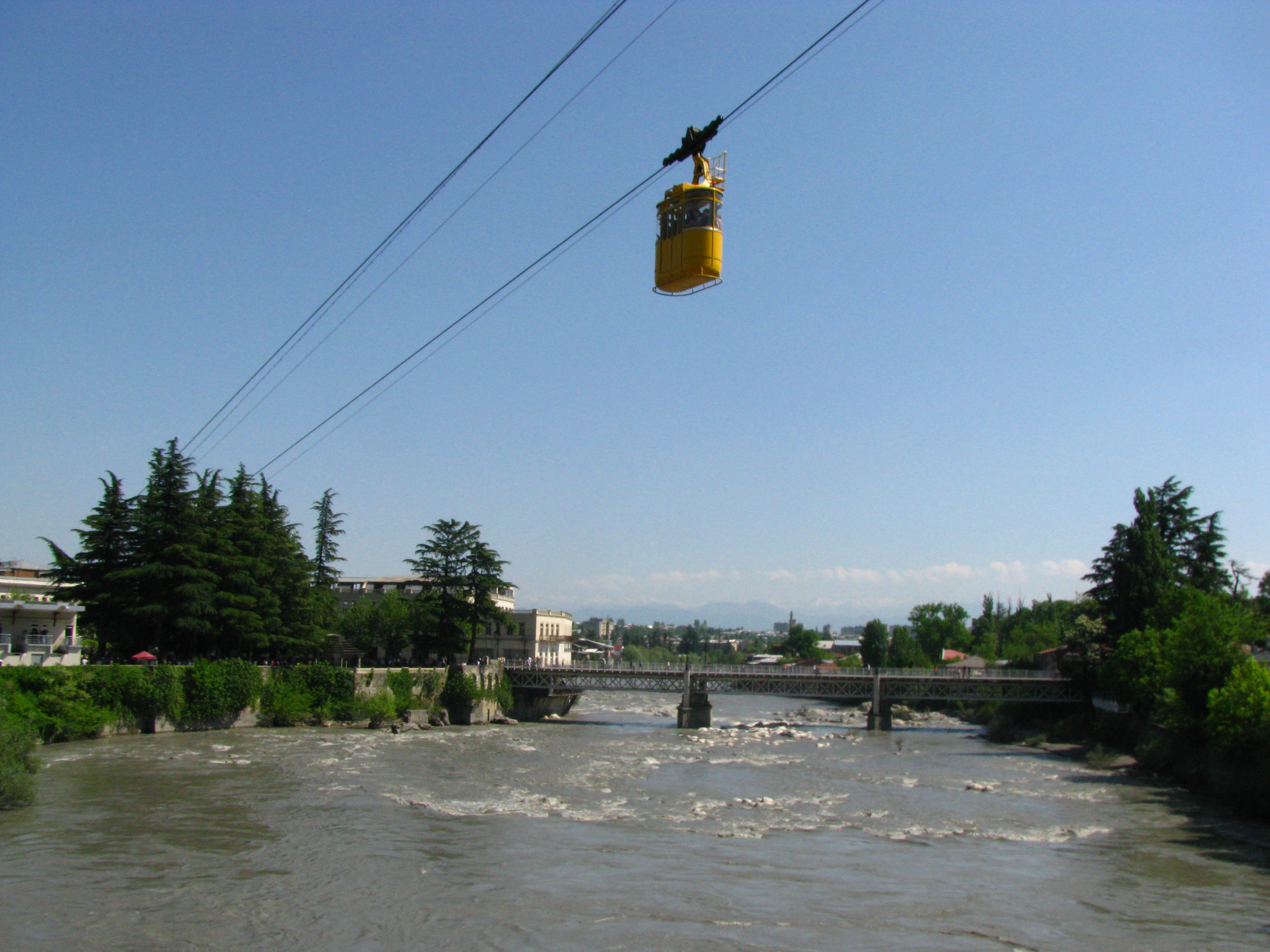
You can see the back of Mirzani’s across the river. It’s probably the best restaurant in town.Tetrikhidi (White Bridge), with a wedding party posing for photos.The Kutaisi gondola. I don’t know why, but Georgians seem to have a thing for gondolas.
Looping back around, we return to the Rioni river and the neighborhood immediately surrounding Tsitelikhidi. There are actually three bridges here: Tsitelikhidi (Red Bridge), Rustaveliskhidi (Rustaveli Bridge), and Tetrikhidi (White Bridge), a pedestrian bridge next to another attractive garden. From here, a gondola takes visitors over the river to an amusement park at the top of a hill. On the weekends, wedding parties often stop here to take pictures, then speed around the city honking their horns and making noise.
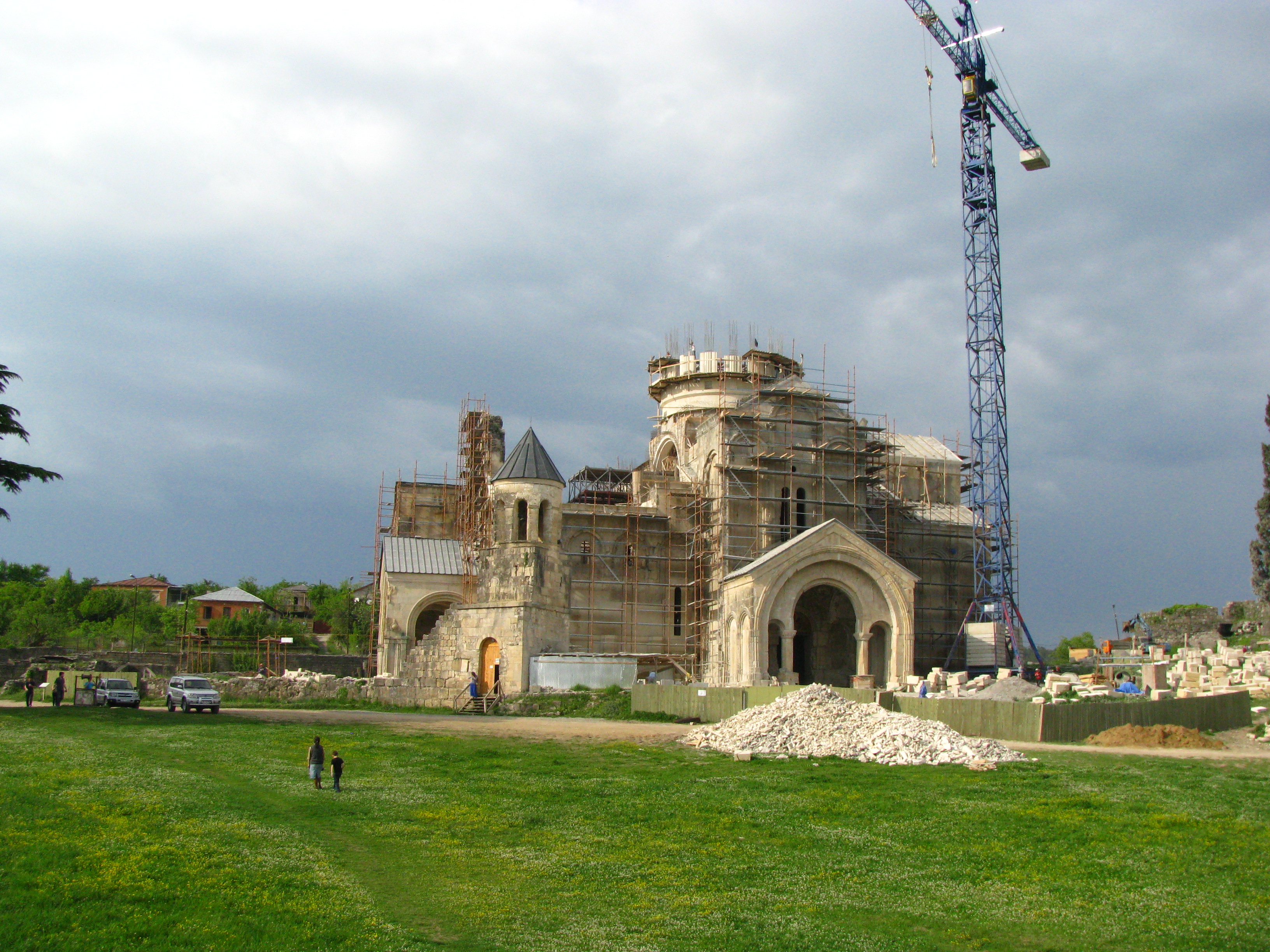
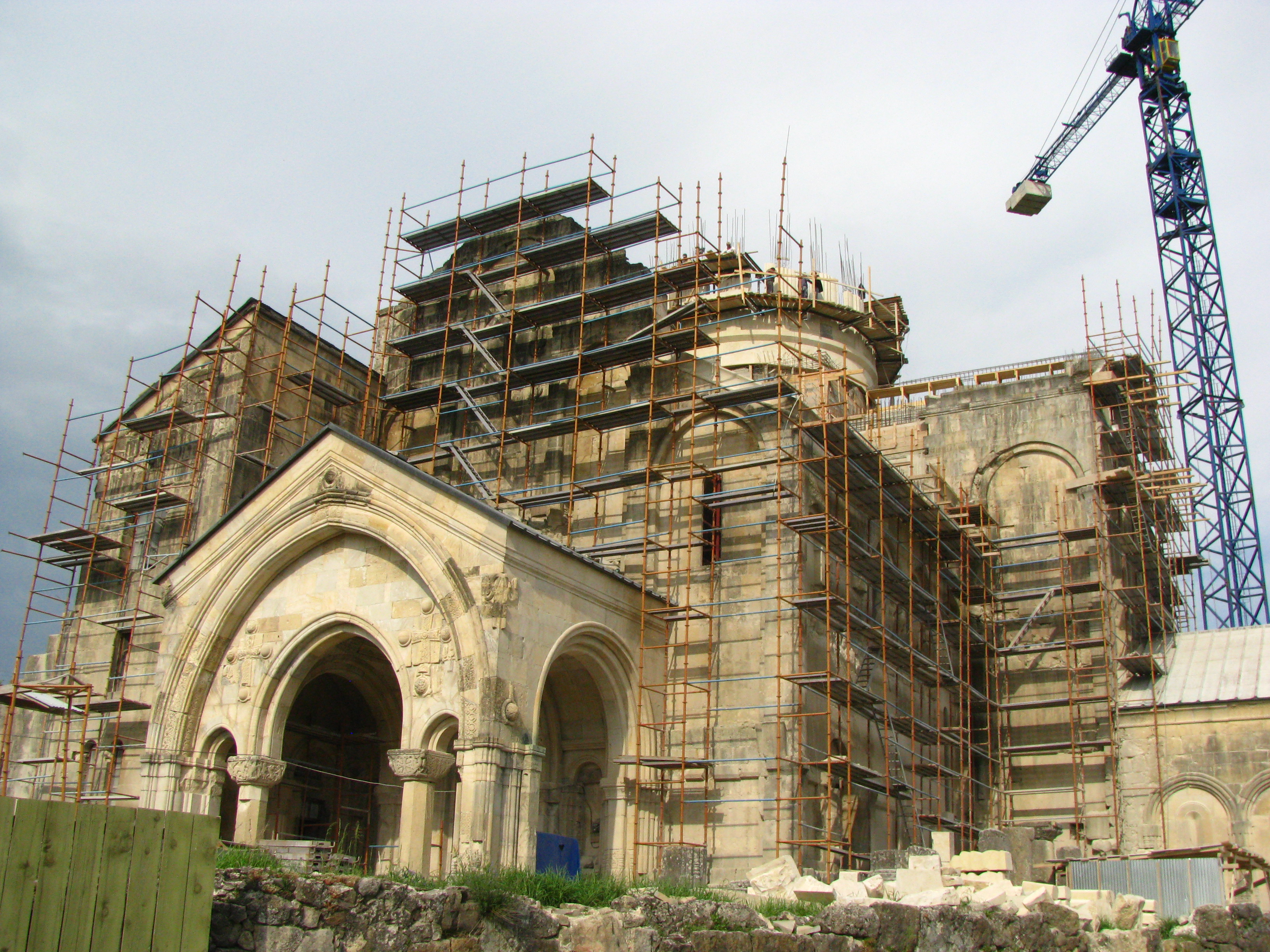
Bagrati Cathedral in the spring.Close up of Bagrati. The reconstruction is actually progressing fairly rapidly.
Heading north, we pass through the markets again and cross over Jatchviskhidi (Chain Bridge) to the right bank of the Rioni. After passing another curbside station–this one for marshrutkas heading to the northern villages–we climb a 200 step staircase and find ourselves at the foot of Bagrati Cathedral.
Bagrati is a thousand year-old Georgian Orthodox church, the largest and most important in the city. After the Turks razed it in the 18th century, it lay in ruins for hundreds of years. But now, with Georgia’s newly-won independence and the economic boom fueled by the IMF and other foreign investors, the historic cathedral is under reconstruction. I probably won’t be here when it’s finished, but I definitely want to come back and see it when it is.
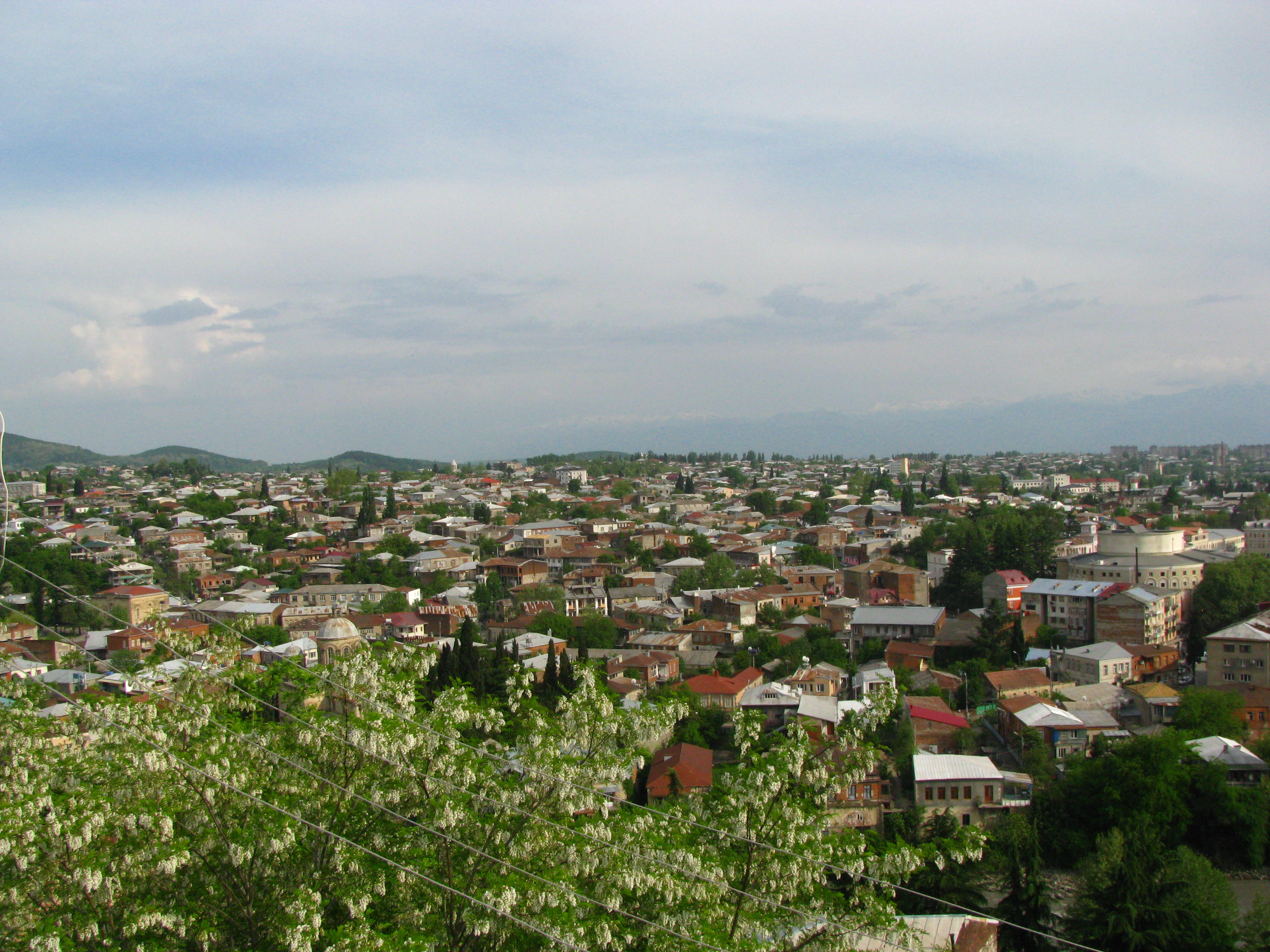
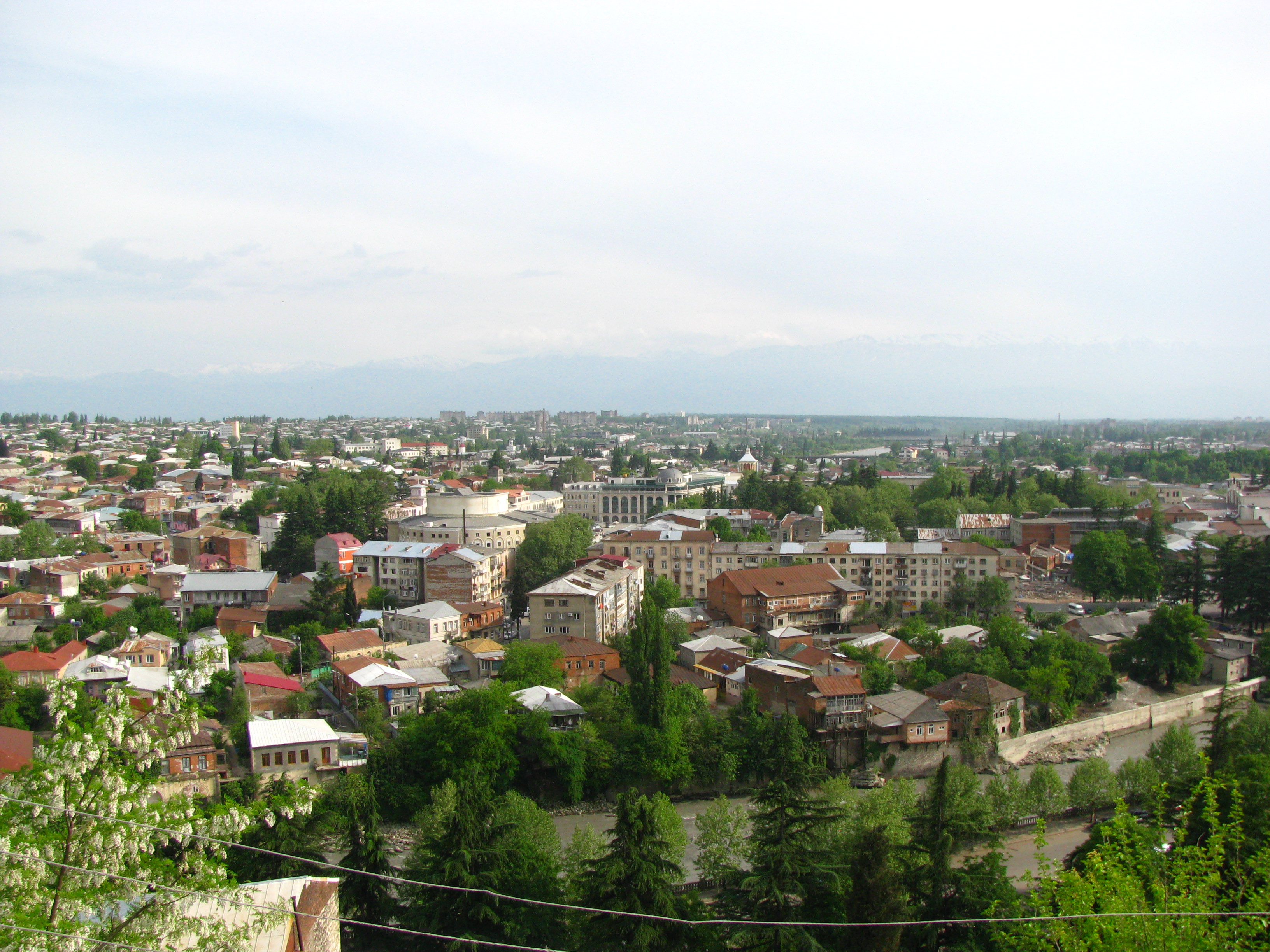
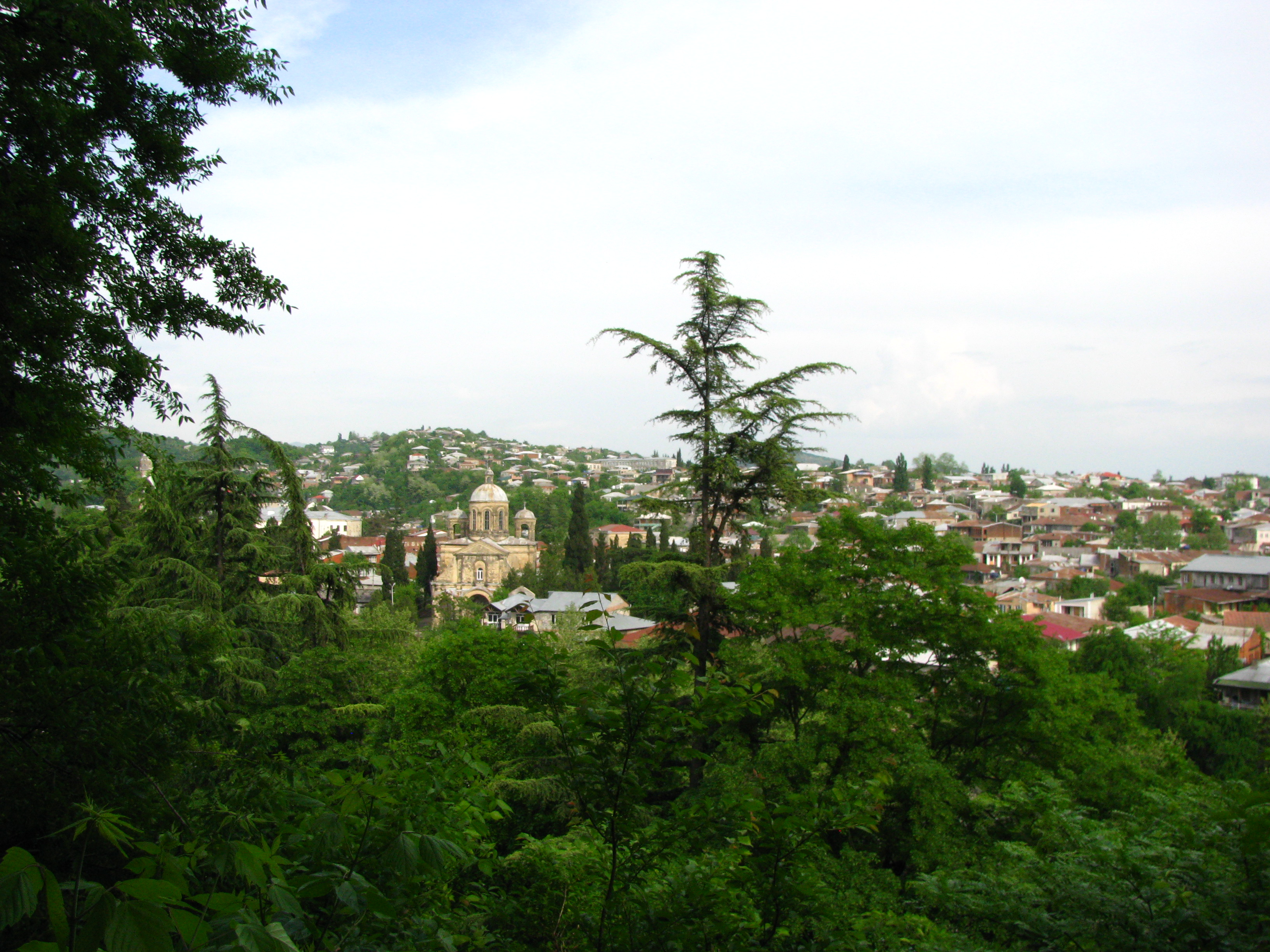
The view looking southeast.The view looking southwest. The mountains in the distance are the Lesser Caucasus, about 4000 meters above the elevation of the city.View from the steps leading up to Bagrati. Kutaisi has a lot of churches.
Bagrati Cathedral sits on an imposing hill with a magnificent view of the whole city. Here, you get a sense of just how big Kutaisi really is. It’s not a tall city, or a particularly busy city, but compared to the rest of Georgia outside of Tbilisi, it’s pretty huge.
Unlike Tbilisi, however, the city has had very little exposure to the West. People still stop to stare curiously at foreigners, and hardly anyone speaks English. It’s much quieter than Tbilisi, too, with fewer cars, more parks, and lots of gardens and orchards, even in the more crowded districts. People live closer to the land, and travel often to the outlying villages where they still have friends and family.
Perhaps the best way to put it is that Kutaisi still possesses that sense of rustic Caucasian innocence that Tbilisi has since lost. You can hear it in the way people laugh and see it in the way they kiss and are kissed by their children. For a city that was legendary long before the maps showed America as a separate continent, that’s no small thing.
That’s probably the best term for what I’m doing with Heart of the Nebula right now. Basically, I let some of my darlings live, and they grew some extra limbs and started drooling acid without my realizing it. But now, I’ve put enough distance between myself and the first draft that I have no qualms about grabbing the axe and chopping off heads.
Don’t worry; this is all a normal part of my creative process. Maybe someday, stories will burst fully formed from my head like Athena from the brow of Zeus, but for now, my ideas are a lot more like baby turtles–if I’m lucky, one or two out of a dozen will actually reach the water and survive. Protip: don’t follow the lights.
Speaking of ancient mythology, I’m reading the Argonautica right now, and I can’t help but notice that it would make a really, really, REALLY awesome science fiction story. No, seriously–think about it. A group of legendary heroes sets out on an epic voyage in search of some applied phlebotinummacguffin, have all sorts of adventures on strange and distant planets, get the girl to fall in love with the captain, and bring her back with them to their homeworld. It would also work well as a heroic fantasy, but space is so much more awesome.
Incidently, Kutaisi was the capital of ancient Colchis, where Jason and the Argonauts came seeking the golden fleece. People still speak of Medea as if she were a real person–generally, they think she was a dirty traitor who sold out her own people. But people still enjoy the love story, and if you keep your eyes open you can see restaurants and hotels named after her.
So yeah. Ancient Greek mythology + science fiction = win. You can definitely expect to see some more of that in my own writing in the future.
In other news, I recently did an interview on fellow indie author Ty Johnston’s blog. In it, I talk a little about my travel writing, what draws me to speculative fiction, my favorite number (hint: it’s 12), and my insights into the ancient Mayan calendar and the 2012 apocalypse. It was a lot of fun–you should definitely check it out.
If you would like to host me for an interview on your blog, shoot me an email! I’m always up for stuff like that. Otherwise, I’d better roll up my sleeves and get back to hacking up operating on my book.