How going indie is like driving a manual (plus a cover reveal)

A couple of weeks ago, I got a new (to me) car. It’s a 2005 Ford Focus / Saleen: a two-door hatchback that drives like a racing car and gets about thirty miles per gallon (WA-A-AY better than the gas guzzler I was driving before). It’s also a manual transmission, which is perhaps the biggest difference between this and my previous car.

This is my first time driving stick shift, and I have to say, it is a lot of fun! When you drive a stick, each hand and each foot is doing something different. There’s a lot more to keep track of, and if you do things in the wrong order (like braking without engaging the clutch, or starting without giving it some gas), you run the risk of making the car stall or doing nasty things to your transmission. On the other hand, driving a manual gives you a much better feel for the engine and what it’s capable of. You can feel when you’re putting too much stress on it–or alternately, when you can push it a little further.

I usually like to walk everywhere, but ever since I got this car, I just want to drive it! It’s way more fun than driving an automatic, even with (or indeed, because of) the extra challenge. So today, while I was walking to BYU campus (alas, the parking situation there makes driving a major pain), I got to thinking about it, and I realized that driving a manual is a lot like being an indie author.

When you’re an indie, you have a lot more things to juggle, just like driving a manual. This gives you much greater control of your career, but it also makes it easier to stall or screw up. At the same time, because of that extra control, you’ve got a much better feel for the market, and probably a better connection with your readers. And for me at least, the extra challenge doesn’t make it less enjoyable, it actually makes me enjoy it more!

Nothing Found

This week, I had the first day where I sold 100+ books in a 24 hour period. That was pretty awesome! I’ve been running a $.99 sale for Star Wanderers: The Jeremiah Chronicles (Omnibus I-IV), and it got picked up by a couple of ebook sites that really pushed it in the right way. Now that I know how to run a sale like that, I hope to do it again, perhaps for Black Friday. And if you haven’t picked up this one yet, it’s on sale for $.99 through Friday.

Marketing and promotion is one of the harder parts about going indie for me, kind of like how finding the clutch point and starting without stalling is hard when you first drive a manual. The more that I practice, though, the better that I get at it, and the more I enjoy it.

Another area where I think I’ve more or less stalled is in my covers. When I put out the first few Gaia Nova novels, I spent a fair amount of money hiring out artists to do the illustrations, but I did the typography myself. On those earlier covers, it definitely shows. For my later books, I worked with a bunch of cover designers, and seeing their work made me realize that there’s definitely room for improvement on those earlier ones, especially for the print editions.

I’ve decided to redo the covers for those three novels (Bringing Stella Home, Desert Stars, and Stars of Blood and Glory), keeping the illustrations but changing the typography. I tried to find a cover designer to do it, but I wasn’t able to find one that did satisfactory work, and after playing around with them for a bit I think I can actually do them myself. I’ve got a lot more experience with covers and cover design now than I did when I was starting out, and I’ve learned a few photoshop tricks as well.

In any case, here is what I came up with for Bringing Stella Home:

BSH (cover)How do you like it? I rather like how it turned out, though I’ll admit I’m still learning. I did the new design just this morning, so I figure I ought to wait a couple of days and maybe seek out some feedback from professional designers before I go through with it.

I hope to have the new edition out before the end of the month. The content and story will all be the same, but the cover and metadata will be updated, and some minor errors such as typos will be fixed. I also hope to do the same thing with Desert Stars and Stars of Blood and Glory. Once the new editions are out, I’ll probably run some sales and giveaways with them, so definitely stay tuned!

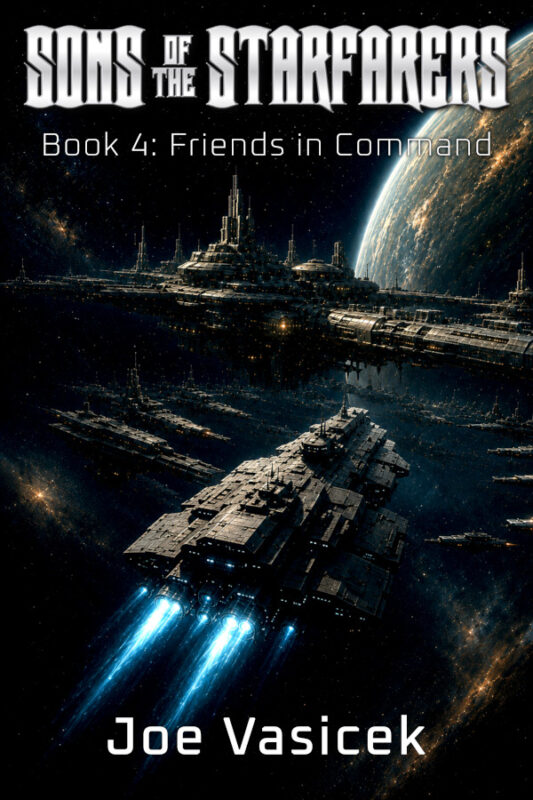
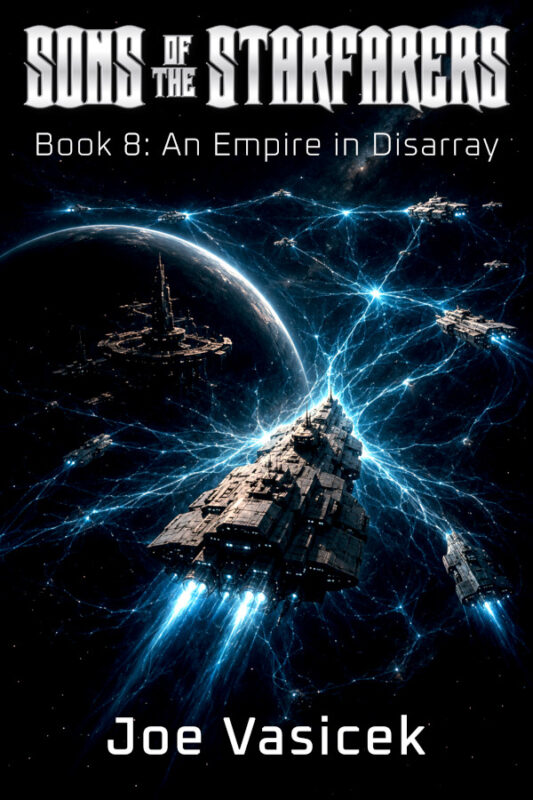
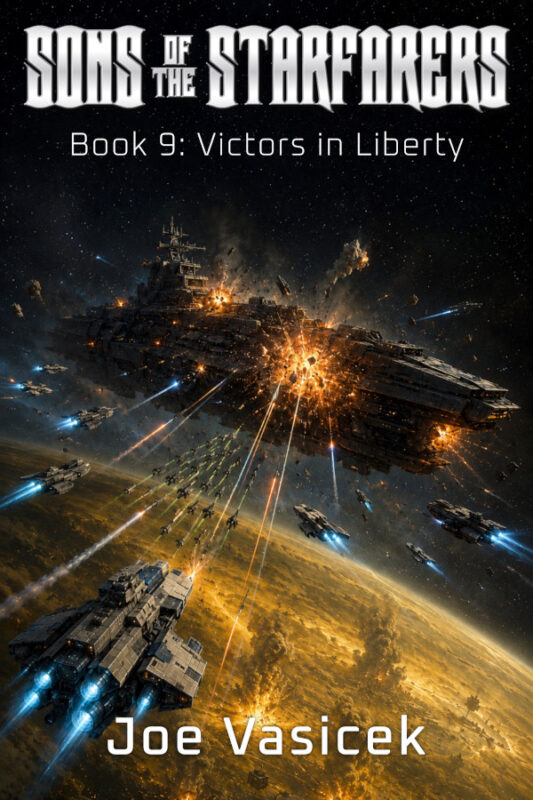
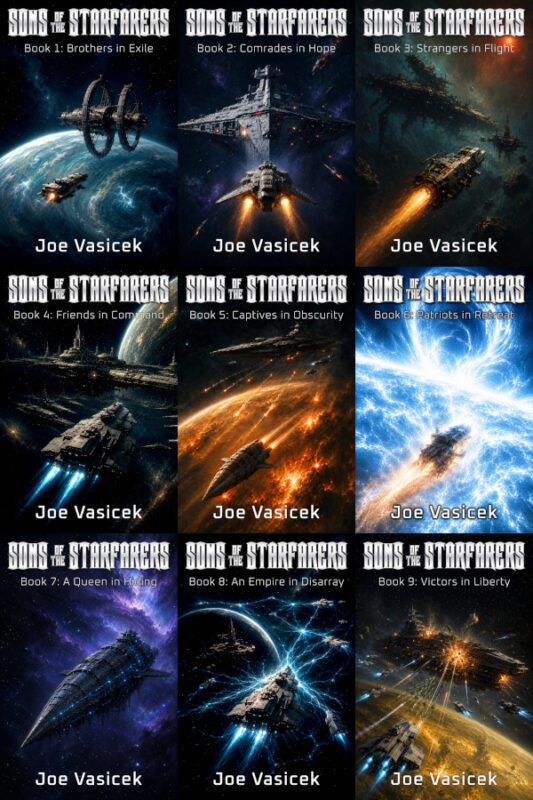
As for my other projects, the next book in the Sons of the Starfarers series is out with my first readers, so it’s on track for a January release. My next WIP is The Sword Keeper, a fantasy novel I think I’ve mentioned before, and I hope to get that one knocked out in about a month or so. It’s already halfway finished, so the hard part is just ahead. There are also a couple of Gaia Nova novels that I’ve been meaning to get around to, and probably will before the end of the year.

That just about does it. Look out for more covers soon! I’m definitely having fun with the new ones. 😀

I love these trailers

Holy cow, I cannot get enough of this trailer for Civilization: Beyond Earth! It’s like something from a book I would write. There’s the classic Science Fiction story about leaving Earth to colonize the stars, but there’s also a deeply human element to it. And I love the religious element to it, how the colonists take the old religions of Earth with them to the new world. Awesome.

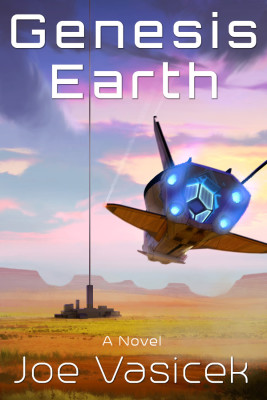
This definitely looks like a game I want to play. I grew up with Civilization 2, perhaps the most classic title in the series, and discovered Sid Meier’s Alpha Centauri in college. In a lot of ways, Alpha Centauri shaped my love for Science Fiction, and gave me many ideas that later influenced my stories. Genesis Earth is, in some very key ways, a response to the vision of humanity’s future presented in SMAC.

While on the subject of awesome trailers, it’s worth pointing out this one for the new Christopher Nolan film, Interstellar:

Again, this looks like a fantastic story–the kind of one that I’d love to tell just as much as I’d love to hear. And with all of our modern problems like climate change, resource depletion, wealth disparity, terrorism, and global war, it strikes frighteningly close to home. Are we as a species on the verge of driving ourselves extinct? What will we do if our home planet can no longer support us? Where could we go, and what could we hope for?

So much awesomeness. I really, really, REALLY want to see this movie and play this game! But even more, these trailers make me want to write an awesome story along those same lines. I’ve already written at least one novel that addresses these issues, and it’s definitely part of the background of the Gaia Nova universe, but I want to revisit these same issues again.

Maybe in Starship Lachoneus? Who knows?

Goodreads giveaway for BRINGING STELLA HOME!

My cover designer is working on some new covers for Bringing Stella Home, Desert Stars, and Stars of Blood and Glory, so I figured I’d do a few Goodreads giveaways to get rid of the old versions that I have lying around. If it goes well, I may do some more giveaways in the future!

To sign up for a chance to win a copy, check out the widget below. The copies will be signed, though I’m not sure if I’ll be able to personalize them.

Thanks for reading!

Goodreads Book Giveaway

Bringing Stella Home by Joe Vasicek

Bringing Stella Home

by Joe Vasicek

Giveaway ends November 20, 2014.

See the giveaway details
at Goodreads.

Enter to win

The most unmarketable story every conceived

I have an awesome idea for a story that absolutely, completely, 100% unmarketable. It blends two completely unrelated genres in such a way that it will almost certainly offend large numbers of readers in both. The best way to blend genres is usually to label it clearly as one and don’t let the others know that they’re invited. Well, with this particular story, that’s impossible.

The story blends Mormon religious fiction with Space Opera. It takes place in the Millennium, hundreds of years after Jesus Christ’s second coming to the Earth. The lamb has laid down with the wolf, and the lion eats straw like the ox. There are no more wars or armed conflicts: the swords of the Earth have been turned into plowshares, and the spears into pruning hooks. Satan has been bound, that he has no power over man, and Christ reigns in power and glory upon the Earth. People live to the age of a tree, and when their time comes, they are changed from mortality to immortality in the twinkling of an eye without tasting death. Resurrected beings regularly come down to visit the Earth.

All is not well, however. The events that launched the Millennium set off a thousand-year chain reaction that will turn the Earth to a sea of glass. At that time, it will become a great Urim and Thummim and be rendered uninhabitable for mortal beings. For that reason, Christ descended in power and glory to unite the nations of the Earth so that they could pool their resources and build a generation ship that will take the last remnants of humanity to the stars. This Millennial ark, the Starship Lachoneus, now represents the last hope for the continuation of humanity.

By now, you can probably see why this story is completely unmarketable. Science Fiction fans will be turned off by all the overtly religious stuff (I plan to make Jesus Christ an actual character), and Mormons will be turned off by all the Science Fiction mixed with their religion. There’s no doubt that I’ll offend large numbers of people in both genres if/when I ever write it.

At the same time, though, the concept really fascinates me. The Mormon version of Christ’s Millennial reign is completely different from most other Christian flavors, in ways that make for some very interesting story possibilities. For example, we believe that there will still be unbelievers in the Millennium–that people will still be free to reject Christ and deny the existence of God, even though He lives and walks among them. What kinds of life experience would lead a person to do that? And how would they react if Christ Himself took the time to have a personal chat with them?

Then there’s the question about which audience the book should be written for. Clearly, it’s meant for people who have at least a passing familiarity with Mormonism. It would be far too tedious for both myself and the readers if I had to stop and explain every religious reference. At the same time, though, I don’t feel that it’s right to limit the audience exclusively to Mormons. The Left Behind series was written almost exclusively for Evangelical Christians, and if you try to read those books, it readily becomes apparent that there’s a wide gulf between the gentile unbelievers and the faithful–not only in the books themselves, but in the eyes of the authors as well (full disclosure: I have only read parts of the first book). I don’t want this book to be that hostile or alien to anyone, whether they’re part of the intended audience or not.

By far, though, the most difficult issue is going to be the world building. What the heck is the Millennium supposed to be like? The last time any Mormon General Authority spoke in-depth about it was sometime in the 70s–not because we’re any less fervent in our Millennialist beliefs, but because whenever a church leader talks about it over the pulpit, people tend to freak out and think that the world is about to end (literally!). And aside from the issue of research, there’s the practical difficulties of fitting it all together in a way that doesn’t strain incredulity. If the lions, wolves, and other carnivorous animals no longer hunt or kill for their food, how can the Earth have a functioning ecosystem? If resurrected beings regularly visit the Earth, what’s to stop them from doing all our work for us?

In spite of all these challenges, though (or indeed, perhaps because of them), I really, really want to write this book. In some ways, I even feel like it’s something I’m supposed to write. I already have the title picked out: Starship Lachoneus, based off of a story from the Book of Mormon about a prophet who saved his people by gathering them all together for a lengthy siege that starved out their enemies and brought his people closer to God. I also have the first chapter planned out in my head, though as for the rest of the story, I have no idea.

For now, it’s probably just going to be another side project of mine. It might take years to get it done in a way that I find satisfactory. But it’s definitely something I plan to write, starting now.

Thoughts on writers, reviewers, and stalkers

catfishnoThe bookish side of the English-speaking internet exploded last week with an article in The Guardian about an author who stalked a Goodreads reviewer, showing up unannounced on the reviewer’s doorstep and going to great lengths to expose the reviewer’s identity. The crazy part–or crazier, I guess, since the whole thing is batshit crazy–is that the Guardian article was written by the author/reviewer herself.

It gets crazier, though. This same author, in another article published a little over a year ago, confessed/bragged to stalking someone else who she perceived as crossing her, this time assaulting her victim both physically and verbally. According to Jezebel, even after she was brought into court and censured for her brazen act of assault, she continued to stalk this person online, to the point where the police intervened a second time.

I normally do my best to stay away from drama like this. However, with the issues that this case raises and the way that it’s rocking the book world right now, I feel that I ought to add my own thoughts to the public discussion that’s happening right now.

First, I think that this author’s actions were completely inexcusable. Period. No book review, however critical, justifies hunting the reviewer down and showing up unannounced on her doorstep. Furthermore, when you read the original review that sparked the whole incident (and the subsequent Goodreads discussion thread), you realize that the author’s characterization of the reviewer is simply untrue. Was the reviewer “bullying” the author? Because she seems perfectly civil (if perhaps a bit enthusiastic) on that thread–much more civil than the author’s fans, in fact.

If there’s any bullying that happened in this case, clearly the worst offender is the author. She not only crossed the line of civility, but she also demonstrated herself to be both dangerous and unpredictable. And after all of that, to write about it in the Guardian–that is crossing a whole new line altogether.

It’s frustrating for me, because bad actors like this completely undermine the review space for all of us. Reviews–honest ones, critical ones–are an important part of a healthy book culture. They are helpful to readers in deciding whether or not to read a book, and they are helpful to authors in guiding our books to the readers who will enjoy them the most.

At the same time, reviews for readers and not for authors. When authors argue with reviewers, it undermines the review space for everyone. Arguing with a reader is not going to change their opinion of a book, and being public about it makes other reviewers think twice about posting anything less than a diabetically saccharine review.

And then you have a case like this, where one batshit-crazy nutcase goes over the deep end so spectacularly that she tarnishes the review space for everyone.

I have to be honest–this story pisses me off, not only as a reader and a reviewer, but as an author as well. Have I received negative reviews? Certainly. Does it sting when I get them? Of course it does–and the ones that sting the most are the ones that bring up good points. Do I engage with negative reviews? Only when I feel that there’s a point that needs clarification, and then only in the most non-intrusive and non-confrontational way possible.

Whenever I hear about reviewers bullying authors, it almost always turns out upon closer examination that the author is behaving just as badly, if not much worse. For that reason, I have very little sympathy for authors in these cases, especially when reviewers everywhere are made to feel unsafe. This narcissistic literary pettiness helps no one, at the ones who get burned the most are almost always the reviewers.

So that’s my $.02. Now time to do something productive with my time and energy–like, y’know, actually write or something. Take care.

What readers want

I’ve been thinking a lot recently about what science fiction and fantasy readers want in the books they read. I’m in the middle of writing and publishing a series of novellas and short novels, so it’s definitely on my mind. After publishing twenty books and completing another novella series, I think I have a pretty good idea.

First and foremost, I think that readers want to have an experience. The exact nature of that experience depends on the genre, but for science fiction and fantasy readers, that experience needs to be out of this world. They want to be transported somewhere and feel that they’re immersed in the world of the story.

I think I’ve done a pretty decent job of this so far. I’ve gotten a lot of feedback from readers who say that they really enjoy the worlds that I’ve created. There’s always room for improvement, but so far, I think I’ve done a pretty good job transporting my readers to other worlds.

Second, readers want characters that they can connect with somehow. That usually means characters that they can relate to, though it can also include larger-than-life characters as long as they don’t feel fake. The characters are especially important for science fiction and fantasy, since they make everything else in the book feel real and authentic. Besides, when you’re visiting a new and unfamiliar place, it’s always good to have a friend.

I think that character is one of my strong points. I love getting into my characters’ heads and showing how they uniquely see the world around them. I also love showing how characters change and grow as they struggle to overcome their weaknesses. I’ve gotten a lot of positive feedback from readers on my characters, even in some of the more critical reviews, so that tells me I’m doing something right that so many readers can connect with them.

Third, readers (especially sf&f readers), want an adventure. They don’t just want an internal struggle as a character wrestles with difficult moral issues, or a transformative growth experience as a character faces a difficult challenge. Both of those can make a good story into a great story, and turn a reader into a fan, but more than that they want stuff to actually happen. They want the plot to move at an exciting pace–to get sucked into a story as they wonder what’s going to happen next.

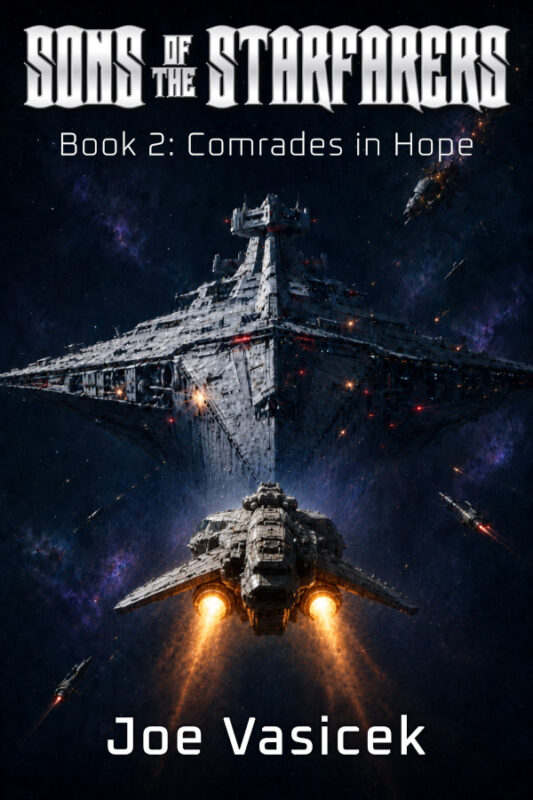
With the series I’m writing now (Sons of the Starfarers), I’m trying to do just that. Star Wanderers (my other novella series) did pretty well, but I think the conflict was more personal and internal, or had more to do with the relationships between the characters than any sort of adventure that they were having together. There’s a place for that, but I think a lot of readers got bored midway through the series, or didn’t feel a compelling need to finish it. With Sons of the Starfarers, I’ve been careful to keep the action moving at a good clip with every book, and so far almost everyone who reads the second book goes on to the third book.

So those, I think, are the top three things that the majority of readers are looking for. But there’s something else that I don’t think I’ve been as good at, and it has to do with everything above.

I think that most readers, especially sf&f readers, are looking for longer books. They want everything above, but they want it in much bigger doses. The enjoyment they get out of a book doesn’t increase linearly with the page count, it increases exponentially. The longer the book, the deeper the immersion. The characters feel that much more real the longer they get to spend with them, and the adventure feels that much more thrilling.

As I’ve said before, I really enjoy writing novellas. But if my readers want something meatier, I’ll do what I can to satisfy them. I may love writing novellas, but I also love writing novels too. Since they generally take longer to write, with a lot more time between new releases, it’s more of a challenge to market them, but I have enough books out now that I can switch gears.

There are a couple of half-finished novel projects that I’ve had on the back burner for a while. I’ll keep working on Sons of the Starfarers until that series is complete, probably sometime next year, but I’ll also work on the novels in the meantime. Sons of the Starfarers will have nine books (three omnibus editions), and then it will be complete. After that, time to move on to longer books.

Why writing retreats and seminars make me uneasy

Writing retreats and seminars make me uneasy. I’ve never attended one, mostly because the prices tend to run so high, and that’s part of what makes me so uneasy about them. Yes, writing is a business, and yes, the author deserves to be paid, but paid for what exactly? For telling stories, or for telling other people how to tell stories?

There’s an unfortunate tendency in the writing world, especially the SF&F corner of the writing world, for us to elevate authors to a quasi-godlike status and take them as a definitive final authority on the field. Certainly, when Brandon Sanderson or Orson Scott Card gives an opinion, I give it more weight than an anonymous handle on a message board somewhere. At the same time, though, an opinion is just an opinion, no matter where it comes from.

You don’t have to shell out a lot of money to learn the craft of writing. There are lots of excellent books on the subject, as well as online communities, videos on Youtube–I think all of Brandon Sanderson’s lectures from his English 318R class at BYU are now up on Youtube. More importantly, there’s no one stopping you from sitting down in front of a computer (or setting out a pen and paper) and learning from doing it yourself. So why do we need all these huge, expensive retreats and seminars?

Perhaps my view on this subject is different because I’m an indie writer. One of the great things about self-publishing is that it tears down the walls, throws open the gates, and levels the playing field for everyone. Since we all can be authors now, the pedestals are a lot shorter. The old authorities are no longer quite so definitive, because there’s so much room for experimentation in this new marketplace.

In the indie writing community, there’s a very strong ethic of sharing. Hugh Howey is probably the biggest example of this. He repeatedly goes out of his way to help his fellow writers, putting together the Author Earnings Report and being very generous in sharing everything he’s learned. He’s also very modest about it, constantly putting other, lesser-known authors forward as much better writers than he is. Instead of capitalizing on his knowledge by creating artificial scarcity, he puts it all out there on his blog and the internet communities where he participates.

Of course, retreats and seminars are just as useful for the networking opportunities as they are for the actual instruction. The thing is, just how useful is that networking really? The market is open–we all have access to readers now. The gatekeepers no longer have the power to make or break anyone’s career. And if you’re in the business of writing and telling stories, what better way to network is there than doing exactly that? Sure, it can boost your career to be on a first-name basis with a successful author/editor, but if you don’t also have the writing chops to back that up, it’s not going to do you much good.

I don’t want to call in doubt the motivations of those authors who do put on retreats and seminars. I think that for the most part, their motives are pure. But the structure is one of artificial scarcity that props up this legacy model of gatekeepers and pedestals. It makes me uneasy, because it grants too much of an air of solemnity and authority in a field where the brightest new voices are often self-taught.

Perhaps the thing that makes me most uneasy about these retreats and seminars is the fact that I’ve received so much bad writing advice over the years. To the extent that I have succeeded at all, it has been in spite of the advice I’ve received, not because of it. When I see people turning around and selling their advice for top dollar, it makes me very uneasy, regardless of their motivation in doing it.

I never want to participate as an instructor in expensive retreats or seminars. I don’t feel comfortable supporting that sort of thing. If I ever do get to the point where people would pay to hear me pontificate, I’m going to be very careful not to put myself out there as a definitive authority, since I’m sure any of my advice will be just as harmful to the wrong person as it is helpful to the right person. As for networking, I’d much rather do that through collaborating, reviewing, guest blogging, and putting anthologies together.

Cooking with cast iron

So a little while ago, I mentioned how my parents had sent me their old cast-iron skillet. It had been sitting in the basement unused for the better part of a decade, and had gunked up pretty bad with rust and other stuff.

CAM00207Well, I’m happy to say that I got it cleaned up! Toad, a friend from my short story writing group, helped me out with it. We poured a bunch of salt into the bottom as an abrasive and scrubbed it down with a rag and some oil. After that, we fried some eggs up, seasoning the skillet with oil both before and after (we didn’t even bother seasoning it in the oven, just did it all on the stove top).

Right away, we could tell that this was a good quality piece of cast iron. You can tell by how smooth the surface is. The cheaper modern and/or Chinese stuff has a fairly rough surface, so that food tends to get stuck in it. The good old-fashioned skillets are much smoother.

I’ve been cooking regularly with it ever since, and I can confirm that these things only get better with use! Here are a couple of things I’ve been cooking with it:

CAM00211I love omelettes, but it’s hard to cook them in old teflon pans because the eggs tend to stick (or worse, the teflon peels off into the food). However, in my cast-iron skillet, it’s not a problem at all! In the picture above, I mixed two eggs with chives, red pepper, garlic salt, and a splash of milk. Later, I added a sprinkling of cheddar and mozzarella. To oil the pan, I used about 2/3rds tablespoon of butter.

CAM00212I’m not very good at turning these things over, but as you can see it’s not really sticking to the pan at all. If it does, it’s not hard to scrape it off. I use only metal cookware with this skillet, so I don’t have to worry about melting plastic (ever notice how an old plastic spatula tends to have a sharp edge with bits of plastic peeling off?). And honestly, it doesn’t take much work to scrape food off of this thing, even when it does stick.

CAM00227Another thing I love to cook in my cast-iron skillet is hash browns. I’ve got a small herb garden in my kitchen window, so I fry up my potatoes with rosemary, chives, and dill. It tastes FANTASTIC.

With my old second-hand teflon pans, I could never get the potatoes very crispy because they’d always stick to the pan if I cooked them for too long. But with cast iron, that isn’t a problem at all! As you can see in the picture above, these potatoes are browning quite nicely.

But that isn’t even the best part.

CAM00219See that? It’s a selfie I took in the bottom of the pan after cooking all the stuff above! I didn’t wash it at all, I just dropped a little bit of oil on it and used a paper towel to wipe it down.

I’m telling you, this cast-iron skillet is AMAZING. I can cook whatever I want in this thing! Even better, I fully expect that this skillet will outlive me. It’s WAY more durable than any other piece of kitchen equipment that I’ve ever seen. And it’s versatile, too–I can hardly wait to go camping with it!

Just in time!


Orc Chieftain by Wulfgnar on deviantART

So yesterday was the deadline for the fourth quarter of the Writers of the Future contest. I’d submitted the Gettysburg time paradox story waaay back in July, but after workshopping it with some friends, I realized that it wasn’t quite up to par. On Monday, though, I workshopped another story with the same group of friends, and got some amazing feedback that helped me to turn a great story into an awesome one.

I originally wanted to submit that story to Tor.com, which opens up to submissions again today, but after finishing it up I wondered if maybe I could withdraw the Gettysburg story from WOTF and submit the better one instead. The thing about Tor.com is that they have a ridiculously long wait time–145 days average, up on The (Submission) Grinder. Since WOTF has a much shorter wait time (no longer than three months, since they announce the winners each quarter), I wasn’t too keen on taking this story out of the loop for more than a quarter.

So I emailed Joni yesterday afternoon, just a few hours before the deadline, but I didn’t think she’d respond in time to submit it. To my surprise, she responded in fourteen minutes (fourteen minutes!) and told me that the old story was withdrawn, so I was free to submit the other one! Awesome!

So now I’ve got a story in the contest that I’m super super proud of and think might actually have a shot at placing. And even if it doesn’t, the sooner I can run it through WOTF, the sooner I can run it through the other markets I want to submit it to (there’s only three more after this), which means the sooner I can self-publish it and get it up for you guys to read. It’s kind of hard talking about a story when none of you guys can read it, but trust me, I think you’re really really going to like this one.

Workshopping it Monday gave me an AWESOME idea for another short story / novelette in the same universe, about a runtling orc who uses his wits to free the hero from the dungeon and get him to kill the orc high commander, freeing all the disgruntled warriors to desert the Witch King’s army and return to their clans (which is what all of them want to do anyway). I am super super excited to write this story!

For those of you waiting for the next Sons of the Starfarers book, though, don’t worry, that’s coming along as well. I’m about halfway through Book IV: Friends in Command right now, and it should be finished (the rough draft, anyway) by October 15th. If all goes well, I’ll have it up for pre-order sometime in November, with a release date of January 1st.

Brothers in Exile

Brothers in Exile

eBook: free!

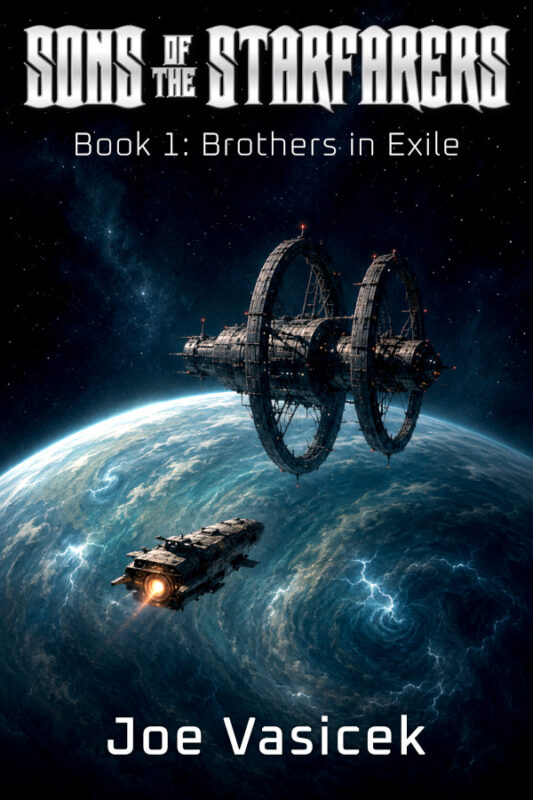
Isaac and Aaron are nothing if not survivors. Their homeworld lost and their people scattered, all they have left is each other. Then, in the Far Outworlds, they find a dead colony with a beautiful young woman frozen in cryostasis. She is also a survivor—and she needs their help.

More info →

Also, I’m happy to report that Book I: Brothers in Exile is now free on the main Amazon store! If you haven’t read it yet, feel free to pick up a copy, and if you have read it, I would appreciate it immensely if you could post an honest review. In order to feature it on a couple of sites, I need to get at least ten reviews, preferably with a high-star rating, but more than that I think it’s important just to have reviews that are honest and thoughtful. Anything you guys can do to help with that, I would appreciate it.

And that’s just about it. I have a lot of writing to do, so I’d better get back to that. See you guys around!

Strangers in Flight — excerpt 9

The deadbolts retracted with a clang, and the hatchway creaked open on its old, squeaky hinges. Two men stepped through: one of the strong men, wearing the same black beetle-shell skin covering as before, and the doctor’s apprentice. The young man regarded her in silence for a moment, his cheeks reddening just as before. He knelt down by her side and spoke to her, holding out another fluid pack with a one-way straw.

There’s no way I can get out of here with both of them watching me, Reva thought, her mind racing. But if there were only one …

She glanced apprehensively at the strong man, who waited just inside the doorway. It took the apprentice a few seconds to get the hint, but when she ignored the fluid pack, he spoke to the strong man and waved him out of the chamber. The man hesitated a moment, but shrugged and stepped outside.

The apprentice smiled at her and nodded. He put a hand on her shoulder, his eyes wandering involuntarily to her breasts. Pervert, Reva thought. You’re all perverts in this place.

Fortunately, she could use that to her advantage.

She rose smoothly to her feet, her eyes meeting and holding the apprentice’s gaze. He stood up unsteadily, but before he could react, she slipped a hand around his waist and pressed her body close against his. If her captors could break all the rules, she’d show them that she could, too. She pressed the young man up against the wall and locked her lips against his in a wild and ferocious kiss. His body stiffened and he gasped a little through his nose, but he made no move to resist her and soon melted to putty into her embrace.

Just as he let out his breath, she snaked her arms around his neck and took the fabric of his skin covering in a vice-like grip. With the edge of her palm pressing up against his windpipe, she rotated her wrists and squeezed.

==========

Excerpt 1
Excerpt 2
Excerpt 3
Excerpt 4
Excerpt 5
Excerpt 6
Excerpt 7
Excerpt 8

==========

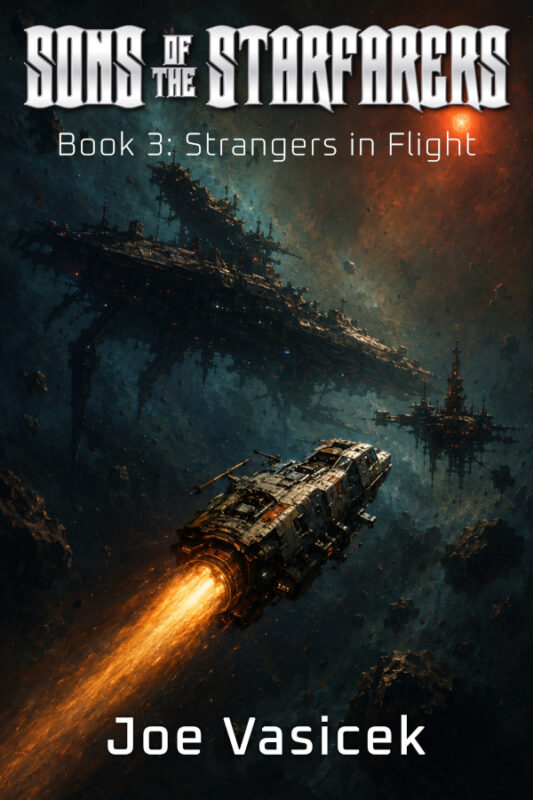
Strangers in Flight

Strangers in Flight

$9.99eBook: $2.99

When Reva went into cryosleep, she wasn't prepared to be the sole survivor of a people that history never remembered. Isaac wants to help her, but he carries a secret that may decide the outcome of the war. Little does he know, the Imperials aren't the only ones hunting him.

More info →