Story Notebook #7

All right, it’s been forever since my last story notebook post, so I figure it’s time to do another one.

Last time, I shared the story ideas I from my fifth story notebook, during my time in Washington DC.  This next notebook is pretty tattered, and it covers my time from graduation to winter of last year.  One of the reasons it’s falling apart is probably because I didn’t have a car and had to bike everywhere.  That’s probably why I weighed fifteen pounds less, too.

EDIT: This notebook actually covers the end of summer to the the winter, after I’d gotten a car.  Minor point, but it’s worth noting to clarify.

Anyhow, here we go:

Machu Pichu…IN SPAAACE!!!  Seriously, an exploration mission that finds abandoned ruins on another planet.

Happens fairly often in science fiction, though it isn’t something I’ve tried my hand at yet.  Although I guess there was some of that in Genesis Earth, and I’ve got a couple of ideas for something similar in the Gaia Nova Universe…moving on!

A knight sets out to rescue the damsel from the dragon, but the damsel slays the dragon and becomes the monster that the knight must slay.

Hmm, this one sounds promising.  Of course, “knight,” “dragon,” and “damsel” are all archetypes, not literal characters.  For example, if Raoul is the knight, the Phantom is the dragon, and Christine is the damsel in distress…wow, that would be disturbing.

What if Earth is a wildlife preserve for an interstellar species that is far more advanced than us?

Kind of like “They’re Made of Meat”?  I think Predator might have done something like this, except that Earth was a hunting preserve.

A society where people achieve immortality by uploading their consciousnesses to a normal human fetus through a process called “reconception.” They do this because computer hardware is incompatible with human wetware.

I’m pretty sure I retrofitted this story idea from a play on the word “inception.” Man, that was a good movie.

Planetary colonization scheme: send down a group of genetically modified humans, who are hardy, extremely fertile, have shorter gestation periods, etc, and have them do the dirty work of building the first settlements.  Then send the regular humans after a couple of generations, when they’ll be revered as gods for their superior technology, and have the two cultures intermarry.

I had a long involved dream about this story idea shortly after I had it.  Sounds like a good idea for a series; one of these days, I’ll have to write it.

A character who sees right through all the pretenses and lies of society to know people for what they are–a magnificent judge of character who isn’t swayed by power, position, or pretend honors (eg high paying jobs)

In other words, Captain Moroni–IN SPAAACE!!!

An offworld version of Australia or Siberia, where convicts create their own country.

This idea could single handedly save the US space program.

A society in which everyone must remarry every X number of years.

Wow–I want to use this right now in my current WIP!  Okay, maybe that would be a bad idea.

What if dreams are not only the subconscious working through the events of the past day, but of events that our consciousness perceives as lying in the future?  That the subconscious transfers information non-linearly through time and space?

So shiny…must..resist…

A character who can read minds, knows every dirty thought inside your head, and isn’t disgusted by it.

If I ever met a girl like that, my first question for her would be “will you marry me?”

What if the evolution of our society in the information age is like simple celled organisms evolving into complex ones?  Where the AI overmind will organize into a giant organism as complex as a human being?

Reminds me of an excellent story on Escape Pod titled “Endosymbiont.” You should drop whatever it is that you’re doing and listen to that story right now!

An evil overlord who wants to unite mankind under the overmind instead of under his own rule

Kind of like a mashup between Sauron and Javier.

Perhaps every generation has an impossible battle, and whether they rise to meet it or fail to overcome it defines that generation’s place in history.

If that’s true, I’m pretty sure my generation is failing.

A fantasy that romanticizes the minion.

An AI that falls in love with its creator.

A person who appears schizo but actually jumps between close possible universes.

Better yet, a story that mashes all of those ideas together!

A character who loses the mental ability to translate sounds into words and language–who sees everyone else as animals.

I’m pretty sure this happened in The Silmarillion at some point.

A character who believes that existence itself is an epiphanic prison.

…and appears schizo but actually jumps between close possible universes…

What if war and terror is normal everywhere else in the world, and all of us Americans living our quaint middle class lives are ridiculously sheltered?

Uh, I’m pretty sure that’s not fiction…

A fast food place that uses time travel to delver full course meals.

<facepalm> Oh man, there are so many ways that could go wrong.

And finally:

A future world in which smiles have been turned into a commodity.

WE…ARE..THE NINETY NINE PERCENT!

And that concludes my sixth story notebook.  I sense an encouraging trend; some of these ideas were pretty good!  Or maybe I’m still too close to them…in any case, there’s no telling until someone actually sits down and writes the story.

So if you feel like taking one of these ideas and running with it, feel free!

Trope Tuesday: Bittersweet Ending

WARNING! CONTAINS SPOILERS FOR AMERICAN GODS, LAGAAN, LORD OF THE RINGS, TREASURE ISLAND, AND CROUCHING TIGER HIDDEN DRAGON.

And he sang to them, now in the Elven-tongue, now in the speech of the West, until their hearts, wounded with sweet words, overflowed, and their joy was like swords, and they passed in thought out to regions where pain and delight flow together and tears are the very wine of blessedness.

Tolkien, J.R.R. The Return of the King.

I love bittersweet endings.  I love stories that warm my heart even as they make me cry.  There’s something about reading them that makes me feel alive, and something about writing them that makes me feel like I’ve truly told a story worth telling.

The tvtropes page claims that bittersweet endings fall more to the cynical side of the sliding scale of idealism vs cynicism, but I disagree.  Without tasting the bitter, how can we know the sweet?  Too many of our modern stories are like high fructose corn syrup, where everything gets tied up with a pretty bow and the characters remain essentially unchanged.  I firmly believe that it’s only through sacrifice that we can know true joy, and stories that follow this often end up being bittersweet on some level, even if they are idealistic.

The tvtropes page lists six types of bittersweet endings, which are:

  • Did Not Get the Girl: When the hero either loses the girl or has to give her up to win the day.  American Gods is a good example of this, I think: Shadow never actually gets back with Laura, even though he spends most of the book looking for a way to bring her back.
  • The Greatest Story Never Told: When the hero fades into obscurity after winning the day.  Lagaan, one of my favorite Bollywood movies, is an excellent example of this.  The last line of the movie is the narrator explaining how after the events of the story, the village faded into history until it was forgotten.
  • End of an Age: When the triumph over evil transforms the world so completely that there is no going back to the way things used to be.  Lord of the Rings is the best example of this: after the one ring is destroyed, all the other rings lose their power, and the elves must pass into the west.
  • Heroic Sacrifice: When victory comes only after the death of many or all of the main characters.  This is basically every David Gemmell book ever written, which is why I can’t get enough of him.
  • Only the Leads Get a Happy Ending: Where life is great for the main characters but everyone else ends up suffering.  I can’t think of any examples where this is done well; it’s probably just bad storytelling.
  • Karma Houdini: When the bad guy doesn’t get what’s coming to him.  The best example of this is probably Treasure Island, where Long John Silver gets away with the treasure in the end, leaving the good guys to say “I can almost find it in my heart to hope he makes it.”

It’s important to point out that this trope is not simply a tragic tale with a heart-wrenching twist.  Crouching Tiger Hidden Dragon, for example, is a straight up tragedy: even though Mu Bai confesses his love to Shu Lien, he promptly dies, and Jen commits suicide.  It’s an awesome ending to an awesome story, but there is no sweet in it.

When done poorly, a bittersweet ending can feel confusing or anti-climactic.  When done well, however, I think it adds a wealth of depth and feeling, as well as a degree of believability and realism.  After all, how many of our victories are complete?  How often do we have to give up something good for something greater?

So yeah, I love this trope.

Trope Tuesday: Childhood Friend Romance

Oh come on--you just KNOW that they get together!

There’s something heartwarming about a romantic couple that knew each other as children.  Maybe it’s that return to innocence, or a sense that destiny is on your side, but I find these kinds of stories hopeful and encouraging.

My favorite example of this is probably Deanna and Michael from For Better or for Worse.  My sister was obsessed with that comic growing up, so my parents bought her just about every book and I got to read them all.  I still remember when Deanna showed up again, after seven or eight books: at first, I was like “holy cow, is it the same girl from way back when Michael was a little boy?” And then he started dating her, and I was like “YES!!!”

Another good example is Phantom of the Opera, with Christine and Raoul.  Lloyd Alexander’s Chronicles of Prydain also had a long-running friendship between Taran and Eilonwy, which eventually took a romantic turn.  Apparently, Jane Austen was also fond of this trope, though I haven’t read enough of her to be able to say.

A lot of times, this trope is coupled with a childhood marriage promise.  It doesn’t have to be, though; I just love the thought that Calvin and Susie eventually end up together, even though they hate each other as kids.  As a storytelling device, this trope can also work well in conjunction with first girl wins.

Sometimes, though, the love is unrequited.  In many stories, this happens when one of the friends thinks their relationship is more like a brother and sister thing.  The scientific rationale for this is called the Westermarck effect, where people become sexually desensitized to those with whom they grow up together.  A good example of this would probably be Cyrano de Bergerac; the whole nose thing was more a self-esteem issue for Cyrano than a turnoff for Roxane.

In the Middle East, where it’s still common for first cousins to marry, this trope tends to be a lot more prevalent.  In Arabic 202, we read several magazine stories about couples who fell in love after growing up together.  There might be a bit of a squick factor there for Western readers, though–and that’s something you have to look out for with this trope.  If the characters really are like brother and sister, and they get together anyway…ew.

So there you have it.  For an innocent, hopeful, satisfying romance or romantic subplot–or a crushingly depressing tale of unrequited love–the childhood friend romance trope can be used to great effect.

Image courtesy sora1589. Line art by nami86.

Tradition!

We have some pretty weird traditions in my family.  One of them is that we watch The Ten Commandments every Thanksgiving.  Another is that my mother tells everyone “rabbit rabbit!” on the first of every month.  Yet another: whenever anyone opens a bucket of fresh butter, everyone nearby screams bloody murder and scrambles to be the first one to break it.

The biggest tradition of them all, however, is that whenever it’s someone’s birthday, everyone else rushes to be the first to wish them a happy birthday–or at least to get one of the first slots.  For mine, my youngest sister called me at midnight to get the coveted number one spot.

So anyways, today is my sister Kate‘s birthday.  I called her at 11:35 pm MST (GMT-6), which is half an hour past midnight where she lives.  Of course, she didn’t answer her phone (she never does!) so I called her husband and asked him to wake her up so I could talk with her. “It’ll only take a second,” I said.

Well, he did…AND SHE SAID I WAS NUMBER TWO!!!

All I can say is she married smart.

#$@! !#$@# $%@^ !@#!

That is all.

Trope Tuesday: Recycled IN SPACE!

Or, as my friends at Leading Edge would say, IN SPAAACE!!!

The basic idea behind this trope is that setting a story in space makes it cool and different.  The tvtropes article focuses mainly on how this trope is used in children’s cartoons, but it actually goes much wider.  In fact, most space stories are actually based on stories from other genres, or even from history.

For example, Asimov’s Federation series is based on Edward Gibbon’s Decline and Fall of the Roman Empire, David Drake’s Lieutenant Leary series is based on Patrick Obrian’s Master and Commander series, and Frank Herbert’s Dune is based on the rise of Islam.  Westerns are especially prone to get the space treatment (Firefly, anyone?), which is where we get “wagon train to the stars.”

At its worst, this trope is nothing more than a pointless gimmick.  At its best, however, it can produce some extremely good work.  The key, as always, is to work within the limitations of the setting.

One of the best examples of this is Dune.  Frank Herbert didn’t merely lift 7th century Arabia into space and call it Arrakis; he created a distinctly alien world with its own history, culture, biology, and role within the galactic empire.  For example, Herbert solved the FTL problem by linking interstellar travel to the spice, tying his space-Arabs to the politics and economics of the rest of the galaxy.

Interestingly, your space physics don’t have to be perfect for this trope to work; they just have to be believable.  For things like artificial gravity and faster than light travel, most people will accept a little hand-waving, provided that you do it well.  The important thing, as always, is the story.

Minecraft!

I have a confession to make…I bought minecraft a week ago, and I’ve been playing it almost non-stop ever since.  It is such a fun, addicting game!

The goal is…well, there is no goal, and that’s kind of the point.  You start out in this vast open wilderness full of resources, and you gather them together and build stuff while trying to survive the monsters that spawn in the night.  It’s like a world made of legos–there’s no limit to what you can do!

I got it so that I could play with my brother in law, but since then I’ve learned that a whole bunch of my other friends play too.  I’ve got a pretty awesome world that I want to share with them, since multiplayer is probably a lot more fun than single player anyway.  I call it New Cappadocia, and it’s basically a vast underground city that runs from the top of a mountain down to the bedrock.

Anyhow, I just finished up the main hall.  Here are some pics:

The view from the entrance.
The hearth.
One of the wings--not sure whether to build anything here or just leave it as is.
The feasting table. Get me a tankard of ale, serving wench!

So yeah…needless to say, my productivity has taken a major hit.  Fortunately, the novelty of the game has started to wear off; I managed about 2k words in Star Wanderers on Saturday, and I’ve all but got the kickstarter campaign for Desert Stars ready to launch.  Last week was upside down, but this week I think I’ll be able to strike some balance.  Famous last words, right?

Anyhow, if I did throw this up on a server, who would be interested in playing?  I don’t want to make it too public for fear that griefers would tear it apart, but I think it would be cool to open it up to friends.  My only rule would be that the physical structures have to look semi-plausible–no giant floating platforms with waterfalls that you swim up to get to the top (unless you can make it look believable).

Together, we could build something truly awesome!

Trope Tuesday: Pet the Dog

Awwwww!!

The basic principle behind this trope is that when you want your readers to feel some kind of sympathy toward a character, have them pet a puppy / puppy equivalent.  Often used to show who the good guy is, but can also be used to add depth to a villain.

I first learned about this trope in Brandon Sanderson’s English 318 class, where he taught it as a way to build immediate sympathy when introducing a major character.  A good example from his own work is Mistborn, where Kelsier’s first scene shows him giving the manor lord’s food to the skaa.  From that moment on, there’s never really any doubt that Kelsier is the good guy.

Although often used to introduce a good guy, this trope can also be used quite effectively in the middle of the story, especially in a gray and black world where it seems that everyone’s a bad guy.  A good example of this is Shadow from American Gods, who flips a coin with a hitchhiker to see who pays for dinner.  Even though he’s a thief and an ex-convict, he rigs the coin toss so that he can pay for her.  Through little gestures like this, Gaiman maintains rooting interest in his protagonist, even though everyone else in the novel is basically a jerk.

Another good example from a darker work is Angelo Osic from On My Way to Paradise.  On the very first page, a fugitive shows up at his pharmacy booth, asking him to grow her a new hand.  Even though he knows it’s dangerous, he takes her in and does what he can to help her.  Later on, this same character rips out a man’s testicles and guts him like a fish.  As repulsive as that is, however, I still keep rooting for him because I know that at his heart, he’s a good person.

Of course, when used most effectively, the pet-a-puppy moment has to grow naturally out of a person’s character.  Even though Shadow is an ex-con, he served his time and feels genuinely sorry for what he did.  Angelo Osic is a doctor, so it’s natural for him to try to help others; whenever he commits an act of violence, a part of his humanity dies, which becomes a major driving conflict throughout the book.

Don't. Touch. Me.

Finally, though this trope is often used to create rooting interest in a protagonist, it can also be used to add depth to a villain.  A prime example for this is Captain Nemo from 20,000 Leagues Under the Sea.  The first moment happens when he rescues the main characters after their ship sinks, but it happens many more times too, such as when Arronax finds him weeping over a picture of his family.  At the end of the book, even though we know that Nemo is the bad guy, we can’t help but feel a little sorry for him after he’s gone.

Puppy image courtesy Wikimedia.  Cat image taken by me.

Goddesses by Linda Nagata

From the book description:

Michael Fielding is the newly appointed site director of the Four Villages project in rural India, tasked with guiding the economic development of the region. But a chance encounter with an ailing, homeless, and very young widow plunges him into the maze of an ossified and violent traditional culture, while putting his own career at risk.

On the other side of the world, Cody Graham’s hazardous waste cleanup company, Green Stomp, has earned a reputation for tackling the toughest, dirtiest jobs around. The harder the challenge, the more Cody likes it. But when chance—and the polluted ground water of Four Villages—brings Michael back into Cody’s life, both are forced to question their shared past, their values, and what it means to do good in the world.

This book was a change of pace for me.  It’s science fiction, but takes place on a near-future Earth much like our own.  In fact, the two driving elements of the story (infertility and economic development) are such contemporary issues that at points, I felt I was reading a piece of mainstream literature.

The writing is quite good, both on a technical and an artistic level.  The storytelling is a little slower, but the character development is very well done, especially for Rajban, the native Indian girl whom Michael takes in and rescues.  The parts from her point of view made me think a bit about my friends who did micro-finance after graduation; I think they would like her story a lot.

As a writer, one thing that interested me was how Nagata started off with a whole bunch of flashbacks and actually pulled it off.  They tell you never to do this, but she made it work by grounding those scenes with clear action and a relatable conflict (childbirth, for example), all in the first couple of paragraphs.  There were a couple of parts that confused me, but overall I think she handled it very well.

The ending was a bit ambiguous, which was dissatisfying in some ways but in other ways fit the story much better than a clean wrap-up.  The story raises some very thought provoking questions about tradition and modernity, and a more definitive ending would probably have ruined a lot of that.  But still, I wish I knew what happened to some of the characters after the end.

Overall, I’d give this book four stars.  If you enjoy science fiction but you’d rather read something grounded in the real world, you’ll probably enjoy this book.  If you’re interested in the developing world at all, I’d highly recommend it.

Trope Tuesday: The Call Knows Where You Live

Yeah, it's kind of like that.

I have a confession to make: I’m a tvtropes addict.  Fortunately, it’s only about as bad as vicodin, which means that doses which would knock other people out do nothing to me–but still, I’ve wasted many, many hours on that site.

So anyhow, I thought it would be fun to do a weekly series where I pick out a trope and discuss it.  After a lot of deliberation (and much clicking), I decided to start with:

The Call Knows Where You Live

This trope stems from one of the stages of the archetypal Hero’s Journey.  The hero usually starts out in some sort of familiar setting, so that the reader gets a sense of who he is and where he’s coming from.  To get the story started, someone or something from the realm of the unfamiliar calls him to leave on an adventure.

Most of the time (but not always), the hero turns down the call at first, not wanting to leave his comfort zone.  This is called the Refusal of the Call, and it happens a lot.  In The Matrix, Neo refuses to climb outside the window to escape the agents.  In Ender’s Game, Ender Wiggin doesn’t actually want to go to Battle School, he just wants to be a normal kid and stay with his sister Valentine.  In Star Wars IV, Luke tells Obi-Wan that he can’t go to Alderaan because he’s needed on the farm.

Unfortunately, the Call is not so easily evaded.

Uncle Owen? Aunt Beru?

Sometimes, the best way to send a character off on an adventure is to have him lose everything right at the very beginning.  With nothing to hold him back, the hero is free to go off and do something truly reckless.

I still remember how I felt when I first saw the burning homestead scene in Star Wars IV.  The sinking feeling when I saw the smoke billowing from Luke’s house, the wide-eyed gasp at the mangled bodies of Luke’s aunt and uncle (I was so young, I had to close my eyes for that part).  All of a sudden, the conflict felt a lot more real–and a lot more inevitable.

Of course, this trope only works for a certain kind of story. If the hero’s family is dead before he even leaves his home, there had better be some serious action later on. Also, the villain had better be the real thing–if nothing else in the story lives up to the depravity at the very beginning, a major promise has been left unfulfilled.

Alternately, I suppose you could have the hero’s family killed off by a natural event, or an unintentional accident–something where he has no one to blame and no face to put to the tragedy.  I can’t think of any examples of this off the top of my head, but it seems a plausible motivation for, say, a scientist who wants to find a cure for some disease, or the source of some magnificent and dangerous anomaly.

Now, if I were an overlord, I would avoid this trope altogether by cozying up to the hero’s parents, perhaps even sending them Christmas cards.  I might consider imprisoning them alive as collateral, but that would give the hero too much of an incentive to storm my castle.  And of course, when slaughtering villages, I would make absolutely certain that everyone in the village is dead.

So what do you guys think of this trope?  Any other cool examples you can think of, or interesting ways to subvert it?  Let me know!

Let the job hunt begin!

Pull!

All right, I just updated my resume to account for the last year or so, and I’m ready to start looking aggressively for work.  Given the state of the economy, I’m not optimistic that it will lead anywhere, but hey might as well give it a shot.

The ideal job would be something part time that allows me to write on the side while teaching me useful skills like book selling or copywriting.  Oh, and it wouldn’t hurt to have interesting coworkers (especially female coworkers) and a fun work environment, too.

I’ve got to be honest, though; there aren’t very many jobs here in Utah Valley that are awesome enough to keep me here.  In September, I finally got my TEFL certification, which means that I could probably land a decent job teaching English abroad if I were to look for one.  In fact, if I showed up in Cairo or Amman with $500 USD in my pocket, I’ll bet I could establish myself.

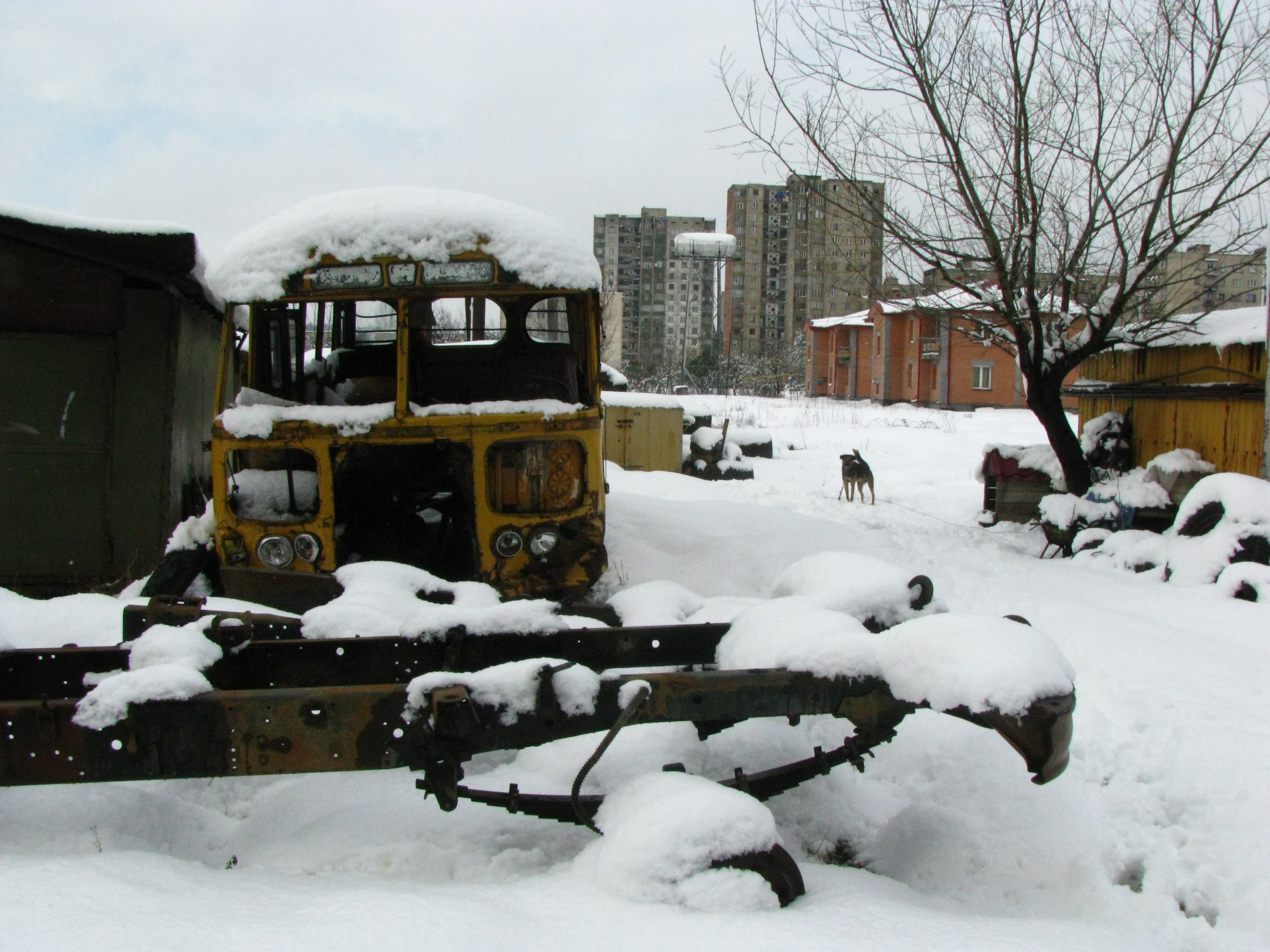
So while there are a few jobs here in Utah that would make me decide to stay, if I can’t find anything satisfactory in the next few weeks, I’m probably going to go with teaching English abroad.  My friends who have done it say that it gives you tons of free time to write, though generally more if you have a private apartment than if you’re living in a homestay.  Even so, I think I’ll try out the Teach and Learn with Georgia program first for a few months, just to test the waters and see if this is something I actually want to do for a career.

That’s the tentative plan anyways.  Things that could derail it include:

  • Finding an awesome job here in Utah.
  • Getting signed with my band.
  • Selling a bazillion ebooks.
  • Falling in love.

But either way, something’s gotta change.