Some awesome blogs you should follow

So a bunch of blogs I follow have been doing this blogfest called “Pay it Forward,” organzied by Alex J. Cavanaugh. The idea is to bring attention to some well deserving yet lesser known blogs, and that’s something I’m all for supporting.

The rules are simple: list, describe and link to three blogs that you follow, and check out some of the ones that others are recommending.  So without any further ado, here are mine:

Believe it or not, this guy is an American.

سفيرات أنثون — Don’t let the Arabic intimidate you.  This is the travel blog of an old college friend of mine, Anthon Jackson.  Since graduating in 2009, Anthon has been to just about every continent except Antarctica, taking some amazing pictures in the process.  He’s the kind of guy who believes that life should be lived in the present, to the absolute fullest, and his blog reflects that.

Recently, he just got back from an Oxford sponsored expedition to the Danakil people of remote western Ethiopia.  Other places he’s visited include Egypt, Iran, Pakistan, the Hindu Kush, western China, Italy, Norway, Korea, Morocco, the Sahel, etc.  He posts rather sporadically, but whenever he does, it’s a real treat.  So check him out!

God, Witches, Space & Stars — Laura is an old friend from Brandon’s writing class.  She’s a great writer and insightful blogger, who takes a very thoughtful approach to everything she blogs about.  She’s also an avid Kindle user with a lot of interesting thoughts on ebooks.  So check her out!

Ben Godby — Ben Godby writes “mysteriously thrilling pseudo scientific weird western adventure fantasy tales.” He’s got a hilariously sarcastic writing style, and he’s not afraid to tackle controversial subjects on his blog.  Whether or not you agree with him, he’s always entertaining to read.  So check him out!

What does it mean to be “published”?

One interesting thing about making the shift from traditional to indie publishing is that it changes your perspective on what it means to be “published,” and not in ways that you might expect.

Before I made the shift, I felt as if I were at the base of a giant mountain, where climbing to the top meant getting published and that was all I could see.  Sure, I knew there was more to it than getting that first book deal, but I figured I’d learn all about that at some point later–and besides, there’d be people along the way to help me.

Once I started indie publishing, though, my paradigm changed completely.  Instead of focusing all my efforts on trying to land that lucky break, I started thinking in ways that were much more concrete and practical, like “how can I build my readership?” “how high (or low) should I price my books?” “how can I improve my ebook formatting?” etc.

All of a sudden, it was as if I were on top of that first mountain, with a whole range of even taller mountains to climb.  And while that’s a very daunting place to be, it’s also quite encouraging, because I can see what lies in front of me and figure out what path I want to take.

One of the side effects of all this is that “getting published” is no longer a big deal to me.  Whenever I see aspiring writers obsess over getting an agent or a book deal, as if that’s the single greatest thing that could ever happen to them and all their hopes and dreams hang on the balance, I have to stop and scratch my head. 

Don’t get me wrong; it’s still a big deal to get picked up by a major publisher, and kudos to everyone who is.  It’s just that that is not and shouldn’t be the end of your publishing journey; it’s only the beginning.

For this reason, I really don’t like the words “published” or “author” anymore.  People throw those terms around as if it makes you part of a select elite, one of those godlike beings who lives up in the clouds and periodically descends from On High to grant blessings to all the poor unpublished wastrel folk on the surface.  That’s complete and utter BS, and I never ever ever want to buy into it, not for an instant.

The problem is, so many people still do.  They still think that there’s some kind of a divide between them and Big Name Authors, like peasants in the face of royalty.  They labor endlessly over their manuscripts, terrified that one misplaced comma will forever their chances of fulfilling their hopes and dreams.  And whenever anyone tries to tell them that there’s a better way, that it doesn’t have to be like this, they cling to the old paradigm like battered women who refuse to get help–or worse, like religious zealots who dream of being martyrs for their cause.

It used to be that self-published writers were the ones who constantly obsessed about being “published,” but now, I think it’s the exact opposite.  Sure, there are crazies in both camps, but it seems that the balance of aspiring professionals–the ones who actually treat writing like a business–are turning to independent self-publishing.

The point is, I don’t like to think of myself as an “author,” or as an “indie published” whatever; I like to think of myself as an “indie writer”–or better still, just a “writer.” All the other terms are just too misleading and destructive.

Conquering the mountain

So this last weekend, I decided to solo climb Y Mountain.  For those of you who don’t know, Y Mountain is one of the smaller mountains along the Wasatch range local to the Provo/Orem area.  It’s called Y Mountain because of the enormous letter “Y” painted on its side (yeah, that’s what they do to mountains in this part of the country).

Of course, the only reason I did a solo hike was because I’ve been up this mountain multiple times before and I know the trail.  Plus, it’s kind of a smaller mountain–it’s still over 8,000 feet, but the trail is only about 2 miles long.  I’m a slow hiker, so it took me about three hours to get to the top.

To get to the top, you first have to hike the Y, which is the most boring part.  The trail is literally wide enough for a truck to drive up–that’s how they repaint the Y every few years–and it’s all on the side facing the valley, so all you can really see is city.

After the Y, you go up a much smaller trail that cuts across the face of the mountain south, into Slide Canyon.  At the entrance to the canyon is this really cool rocky outcropping that some people call Lover’s Point–I like to call it the Citadel.  The trail winds up the canyon a ways, passes another really cool overlook, and turns a couple of bends before you reach the canyon head.

This is where things get interesting.  At the head, there’s a small meadow surrounded on all sides by forest.  On the right is a campsite, where the trail forks and heads up to Maple Mountain.  If you stay left, though, the trail eventually takes you to the summit of Y Mountain.

The next half mile or so is pretty strenuous.  The trail goes through an aspen grove, past another meadow, into this freaky dark forest, past another meadow, into another forest…and then you find yourself in this vast meadow, above the trees, surrounded on all sides by mountains.

I have to be honest: when I got to this point, I was absolutely terrified.  The roar of the city was gone (and yes, the city roars–it’s a very distinct sound), the only other people around were a couple of hikers somewhere behind me, whom I hadn’t heard in maybe an hour, and all around was such incredible vastness…it’s hard to explain without actually being there.  I just felt so small and isolated, surrounded by this immensity of nature that didn’t know who or what I was, or even that I was…

It was AWESOME.

By the time I got to the peak, the sun had set and the stars were already coming out.  I only climbed to the false summit–the one with the view of the entire valley–and from there, I could see past Point of the Mountain all the way north to Sandy, with Spanish Fork and Elk Grove to the south, and Utah Lake a giant puddle in between.  It was pretty cool.

But again, the alone-ness of the place really got to me.  It made me wonder: is this how future space explorers will feel, when they’re traveling between stars?  I can’t imagine how much greater is the vastness of space, compared to what I felt.  If so, what kind of an effect with that have on the people who live out there on the fringes of settled space?  How will it affect their culture, their religion, their sense of who they are and what their place is in this infinite universe?

I wish I could say I felt this huge sense of triumph after getting to the top, but honestly all I could think was: “oh crap, now I’ve got to walk all the way down.”  I did it the same way anyone does anything–one step at a time–and thankfully, I made it down without incident.

Passed a young couple up on a date; they were pretty impressed that I hiked by myself, and gave me some water (which was fortunate–I ran out at the summit).  Passed another pair of backpackers who were hoping to camp overnight on the summit, but other than that, I didn’t see anyone else until I got to the Y.

So that was my adventure this weekend, and how I celebrated my 27th birthday.  It was totally worth it.  In a couple of days, I’ll share the photos.

Difficult choices and keeping perspective

So I have some news, and it’s probably going to freak my parents out a little bit…I decided to turn down the full-time job offer that I mentioned a few weeks ago.

The company is great, they treat their employees well, I got along well with everyone there–so why not take the job?  Because it wasn’t helping me make progress toward my long-term goals, it wasn’t teaching me any new or useful skills, and it wasn’t in a field where I’d like to make a career.  After weighing the benefits vs. the costs, especially the opportunity costs, it just didn’t make sense to stay.

I know what a lot of you might be thinking: “Dude, a job’s a job.  In this economy, you should take it and count yourself lucky!” I reject that, though.  Last year, I managed to cut my expenses to less than $950 per month.  I’ve been saving up my paychecks, and I’ve got enough to float me for a couple of months until I find a job that fits better, hopefully part-time.

The big thing I’m worried about is whether I’m digging myself into a hole.  Since graduating in April 2010, here are the jobs I’ve held:

  • Conducting unsolicited phone interviews at a call center.
  • Picking, packing, and shipping at a costume company warehouse.
  • Delivering phone books from my car.
  • Miscellaneous unskilled labor at a candy factory.
  • Miscellaneous unskilled labor at an alarm company warehouse.
  • Processing inventory and shipments at an alarm company warehouse.

So yeah, nothing all that great.  I’ve been doing some volunteer stuff in the interim, though, especially with Leading Edge and the “class that wouldn’t die” article from last year.  But in general, it feels like I’m getting stuck in a rut, and that the longer I stay stuck, the harder it’s going to be to break out.

What I really want is something that will expand my mind and/or give me another major cultural experience.  That’s why I’m thinking seriously again about teaching English abroad.  But grad school is definitely another attractive option, especially if it gives me a chance to work on my Arabic.

With that in mind, here are the options I’m considering right now:

  • Travel to the Caucasus in January and volunteer teach English with the TLG program.  It’s not particularly lucrative, but if I can balance my writing career on the side while having an awesome cultural experience in a region of the world that interests me, it might be perfect.
  • Study Arabic and/or Middle Eastern Studies at a university in the Middle East, ideally AUB or AUC.  I don’t really want to be a security analyst, but I would love to make a career as an Arabist of some sort–provided, of course, that I could balance it with my writing.
  • Pursue a graduate degree in History, Anthropology, or Sociology in the United States.  I’m less sure of this option, mainly because I don’t know if I’m passionate enough about any of those subjects to really succeed at them.
  • Take a chance and travel to the Middle East to teach English.  I’d probably go to Jordan or Oman, where I actually know people, but Egypt, Libya, or Tunisia might be good too, especially with the Arab Spring opening them up.  It might also be dangerous…but hey, at least it’s an adventure.
  • Finding a graveyard desk job, like night auditor at a hotel, and use that to support myself until the writing career start to take off.  Even though this is the most boring option, it’s probably the most likely one I’ll follow…which probably isn’t a good thing.

The main goal, of course, is still to go full time with the writing career.  That’s like the holy grail.  I’m still optimistic about that; it’s just a matter of finding something useful to do in the interim.  The last thing I want is to settle, or to get stuck in a comfort zone, or lose sight of my long term goals…

…I don’t know.  I’m still figuring all this stuff out.  But regardless, I just don’t think working full-time at an unskilled labor job is going to get me anywhere–and that’s an opportunity cost I can’t afford to take.

Birthday wish list

So my birthday is coming up a little later this week, and my family has been asking what’s on my wish list.  In order to help them out, as well as anyone who might feel inclined to give me stuff, I thought I’d post it here on my blog.  Some of the stuff might be reaching a bit, but what the heck, might as well throw it out there.

Item One: Signed First Edition Hardcover Copy of Legend by David Gemmell

This is the ultimate gift of all time for me.  It is my life’s goal to obtain a signed copy of Legend, which is made all the more difficult by the fact that David Gemmell passed away in 2006.  He is, by far, my favorite fantasy author, and this book is my favorite of everything he’s written.

I don’t expect to fulfill this life ambition on this particular birthday, but in the unlikely chance that it lies within your power to help me obtain a copy, know that I will be your slave for life in exchange for this priceless gift.  Literally.  With chains and everything (or caramel topping and whipped cream, if that’s your preference).

Item Two: Göttmann Dress Cap

Specifically, the Dallas-2 design pictured here.  I have no idea how or where you’d get it, but that’s what I want–specifically from Göttmann Caps and Hats, in Germany.  I’ve got a similar cap right now and it’s pretty spiffy, but it’s from Ross so the quality is pretty cheap.  I need an authentic writerly cap like this to give me x2 pretentiousness and +5 charisma.

Item Three: Kant Stop The Music T-Shirt

This one’s a little pricey for a T-shirt, but I absolutely love the design.  What better way to combine your love of music with your love of 19th century philosophy?

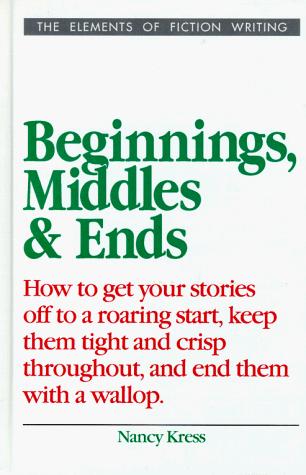
Item Four: Beginnings, Middles, and Ends by Nancy Kress

Nancy Kress is one of my favorite people to listen to at a con, and I’ve heard a lot of good things about this book.  If you want to get me a book on writing, this would probably be the best one (or, alternately, either of Orson Scott Card’s books: Character and Viewpoint or How To Write Science Fiction & Fantasy).

Item Five: Anything by Hiyao Miyazaki

You simply can’t go wrong with this awesome Japanese director.  I already own Princess Mononoke, Kiki’s Delivery Service, and Castle in the Sky.  Even though it was done by Miyazaki’s son, I wouldn’t mind a copy of Tales of Earthsea either. 

Item Six: Interstella 5555

My favorite anime ever!  Now out on Blu-Ray!

Item Seven: Mirage: the Remixes by Armin Van Buuren

Recently, I’ve really gotten into trance & progressive music, and Armin Van Buuren is one of my favorite artists.  I skip lunch each week just so I can listen to his radio show, A State of Trance.  His latest album, Mirage, is really good, and so I’d like to pick up a copy sometime of the remixes.  Alternately, you could get me the Imagine remixes album, or anything by Cerf, Mitiska, & Jaren.

So that’s pretty much my wish list.  Of course, if for some reason you’re not in a position to get me any of this awesome swag, I’ll take a gift card or a sweater or a homemade whatever <grumble>.  But if you do get me a gift card, please make it an Amazon gift card, so I can buy more books and music.  And if it is within your power to get me a signed hardcover first edition copy of Legend…let’s just say, I’m only partially joking about the slave thing.

9.11.11

I realize that by the time you read this it will probably be September 12th, and most of you will be breathing a collective sigh of relief that the 10th anniversary of 9/11 is over and done with.  I apologize for bringing up the subject again; I’ve been putting off writing this post because I feel exactly the same way.  And yet it doesn’t feel right to say nothing, so I figure I’ll just get this off my chest and return to my normal blogging routine tomorrow.

To be honest, there’s very little I can say about 9/11 itself that I haven’t said already.  Last year’s post pretty much summed up everything I could say about my experience that day, and I won’t try to do a better job here.

There’s a reason I chose to spill everything last year as opposed to now, however, and that’s because last year was the final year in a decade that I think it’s safe to say all of us would rather forget.  It started with the 9/11 terror attacks and ended with a global financial meltdown and massive recession, with two ultimately fruitless wars and millions of shattered lives in between.

I almost want to call it the “Decade of Lost Dreams,” which is sad because many of those years were the prime of my life.  It’s true, though; the world has gotten a lot darker and grittier, at least for us Americans, and there are very few places we can look to for hope.  President Monson wrote an excellent op-ed in the Washington Post on that subject, coming at it from a more spiritual perspective.

I wish I could be more positive, but I don’t expect things to get better anytime soon.  These are dark times, and even if the specter of terrorism isn’t as bad as it used to be (thanks to the brave men and women in counter-terrorism and the military, to whom I give my utmost respect), the economy is a hundred times worse.  With the crisis in Europe, I wouldn’t be surprised if we fall into a second recession; it may be that the 00’s were merely the “Decade of Disillusionment,” whereas the 10’s will truly be the “Decade of Lost Dreams.”

I actually want to do a series of posts on this later, because even though things are grim, I still think there’s a lot of options open to us–possibly more than at any other time in history.  But that’s a subject for another time.

Basically, I just wanted to say that I feel like after 9/11, the country took a nosedive off a cliff, and that’s something I would rather put behind me than commemorate.  Fortunately, we don’t need to let that define us–I know I certainly don’t.  And as for those who have been working hard to make this world a better place since then, I tip my hat to you.  We need a lot more people like that right now.

Skye Object 3270a by Linda Nagata

It’s not easy being a teenager in the orbital colony of Silk–especially when all the adults are functionally immortal and anyone under one hundred is considered an adolescent.  To make matters worse, Skye fell to the city in an escape pod when she was just a baby, with no idea who she is, where she’s from, or how long she was drifting in space.

Fortunately, she’s a tough girl with several close friends and a determined spirit.  One way or another, she’ll find out where she’s from–and whether there are any of her people still out there.  

I thoroughly enjoyed this book.  It combined the best of both science fiction and young adult: likeable teenage characters struggling to find their place in a high-tech alien world.  In particular, I found it fascinating how the widespread nanotech shaped both the society and the universe.

But the story isn’t about the technology, it’s about the characters, their adventures, and the friendships that form between them.  This was what really made the story come alive for me.  There’s a small amount of wish fulfillment, which may or may not be your thing, but overall I found the characters to be both believable and likeable.  It was a lot of fun to watch them grow and learn together.

At times, though, it felt as if the characters weren’t challenged enough.  The friendship and relationship issues were well done, but it wasn’t until the end that they started to have any significant try-fail (or try-almost fail) cycles in their adventures.  Also, while the ending was quite satisfying, it was also a little abrupt.

Those didn’t detract much from the rest of the story, though.  Overall, I thought it was a very satisfying read–the sort of book I wish I’d found when I was twelve or thirteen.  If I wasn’t already hooked on science fiction by that age, I have the feeling that this book would have turned me into a lifelong fan.

As a footnote, I’d like to add that this is EXACTLY the kind of book that indie publishing was made for.  It’s a great story, but the science-fictional setting is so unconventional that most publishers wouldn’t take a chance on it.  Even houses like Tor and Baen are focusing more on sub-genres like urban fantasy and military sf, which both have large, proven readerships.  For something that’s a little more niche or experimental, it’s good to see that there’s still a way to get it out to readers who would love it.

So yeah–if you like young adult books and you’re not turned off by space elevators, nanobots, or alien planets, you should totally try out this book.  I think it will surprise you just how much you enjoy it.

How do you know when you’ve succeeded?

With books and publishing changing so quickly, a lot of writers are wondering how they can tell when they’ve actually “made it.” It’s a valid question, one that I think we all need to answer if we want to write seriously.  For myself in particular, as an indie writer, how will I know when I’ve achieved success?

The question made me think about my experience as a Mormon missionary in California, and the definition of success that my mission president (the ecclesiastical leader and father figure for the missionaries) often quoted:

Success is peace of mind which is a direct result of self-satisfaction in knowing you did your best to become the best you are capable of becoming.

— John Wooden

This definition taught me that success isn’t just about external things that may or may not be in your control (for example, the number of convert baptisms per month), but is more about doing the things that are in your control to stretch yourself and reach your full potential.  To be sure, external factors are important measures of success, but at the end of the day, it’s not just about the numbers.

That said, for a writer like me who hopes to make a living at it, the numbers are pretty dang important.  At my current standard of living, I need to sell between 550 and 750 ebooks per month priced at $2.99 and $3.95 to accomplish that goal.  Right now I’m doing about 30 to 50, so I still have a ways to go.

But is that the best measure of commercial success?  If I have 10 titles selling around 55 to 75 copies each per month, will those books be hitting their full potential?

Probably not.  For that reason, I’ll probably end up signing a deal with a publisher at some point in my career; there’s only so much that I can do by myself.  However, in order for me to do that, the terms have to be right; I’m not going to sell myself short just to see my name in print.

(This is one thing that bugs me whenever I hear writers discuss whether traditional or indie publishing best fits their goals.  If all you want is “to see my name in print,” or “to see my book in a bookstore,” how is that any different from vanity publishing?  If that’s really your goal, fine, but don’t think it somehow puts you above indie writers–many of whom have goals that are much more pragmatic than yours.)

Artistically, I think the best way for me to achieve success is to take on a new challenge with every project and still feel like each book is better than the one before it.  Contests and reviews have their place, but going back to the definition, success is all about self-satisfaction and peace of mind.  I don’t want to tie any of those to someone else’s opinion about my work–that way lies madness.

But really, I think it all comes down to the readers.  Unless you stuff your manuscript in the closet, writing is never a solitary act: it is an act of collaboration with the reader.  If I have any measure of success, it will be because someone took the time to read my words.  To be sure, I can’t please everyone, but that doesn’t matter; it only takes one person to make a story come alive.

When I was a missionary, I constantly asked myself whether I was doing the will of God in the life of every person that I met.  That’s how I knew that I had succeeded: when I felt the peace of mind that came from knowing I’d made that personal difference in someone’s life.

I expect it to be similar with my writing.  Commercial success is great, but numbers aren’t everything.  What really matters is telling a story that connects with people on a deep and personal level, transforming them in some meaningful way.  If I can do that and make a living at it, that’s how I’ll know I’ve succeeded.

Ira Glass on storytelling

I just listened to this awesome presentation by Ira Glass, host of This American Life, on the art of storytelling and narrative, and I wanted to share it because it’s that good. 

If you haven’t ever heard of This American Life before, do yourself a favor and check it out.  You may or may not love it, but it’s one of the best produced radio shows out there, with fascinating stories from all walks of life that will completely blow you away.  My favorite is probably the one about the department of the LAPD that exists entirely to identify the next of kin of people who live and die alone–and how many people in this world have essentially no connections with the people around them.  It was an incredibly sad and incredibly moving story.

Anyhow, Ira makes some very good points about how stories work, and how we as humans are wired to see the world around us in terms of story.  It’s not enough to simply convey facts–you have to hook your audience by making them feel emotionally involved, and creating suspense by giving them the sense that the events in your story are leading up to something.

He finishes the lecture by recounting the basic frame story of the Thousand and One Arabian Nights: how Scheherazade saves the kingdom from the sultan’s madness through the power of story.  It’s a wonderful tale, one that has a lot of bearing on why we write and why fiction matters.

That’s one of the reasons why I decided to name this blog “One Thousand and One Parsecs”; it implies a combination of the magic of the Arabian Nights with the science fiction elements that I love so much. Like Scheherazade, I hope to tell stories that have the power to transform individuals and ultimately change the world for better.

That’s enough from me. Here’s Ira Glass:

Paradise Seekers by Nathan Major

Haven–a land where no one knows who they are, where they’re from, or how they got there.  A place where everyone has a different recurring dream every night, which gradually grows in intensity until it drives them to madness.  A place where everyone has only a short amount of time to find Paradise, before they perish.

When Sam first comes to Haven, he thinks he’s found an idyllic utopia.  However, as he slowly uncovers the gruesome secrets of the place, he realizes he’s in a race against time to make Atonement and escape.

But how can he do that, when he can’t even remember who he is?  And how can he save the girl he loves, when she has only days before her dreams drive her into madness?

A few weeks ago, I said I’d start reviewing indie books on this blog.  This is my first one.  As a disclaimer, Nathan Major is a fellow Utah writer and a friend of mine, and I received a copy of the book for free, with the agreement that I would review it.

I genuinely enjoyed this book.  It’s a very compelling story, with a mysterious dystopian world and an intriguing premise.  Nathan is very good at building suspense and keeping the reader hooked, and the ending fully lived up to its potential.

As far as editing goes, I noticed only minimal spelling and grammatical errors.  However, the copy I read had some major formatting issues, such as wacky indents and an auto-generated table of contents that missed a few chapters.  Nathan assures me he’s fixed those issues, but I can’t vouch for the most recent copy.

As for the story, while I enjoyed it, it did feel as if it had been published too early.  More than once, I wanted to scream at the characters for doing something stupid, and the romance was occasionally over-the-top sappy.  The level of melodrama was on par with most anime, which is great if you can stand it.  Still, the story kept me hooked, and while I occasionally had to put the story down just to cool off, I always came back to it, right up to the very satisfying end.

If you like dystopian YA, I think you’ll like this book.  It reminded me a little of The Giver, with the urgency and sense of danger of a thriller.  Like I said, it also had a bit of an anime flair to it, so if you’re a fan of anime and manga, the issues I had with it probably won’t be as bad for you.

Overall, I rate Paradise Seekers at 3.5 stars.  If the formatting issues were fixed, I would rate it at 4.  Nathan has a natural talent at good storytelling, and I expect we’ll see many good things from him in the future.

Paradise Seekers is available for .99c from Amazon and free on Smashwords.