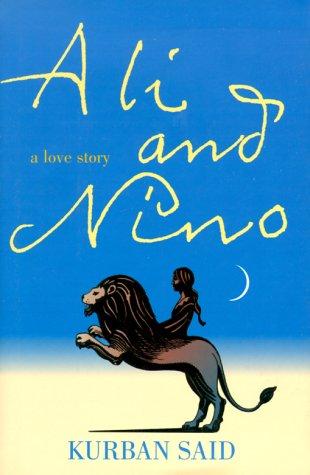
The Jerusalem Man by David Gemmell

The old world is dead, destroyed by nuclear fire.  The old ways are long forgotten–except by one man in search of the Holy City.  He wanders the Earth with two guns and a Bible, leaving a trail of death and ancient prophecy in his wake.  Brigands fear him, honest men pity him, and the Hellborn hunt him.  He is John Shannow–the Jerusalem man.

This is some vintage David Gemmell.  In fact, I think this particular edition has been reprinted as Wolf in Shadow, and can no longer be found except in used bookstores and book trading sites.  Regardless, the book is awesome, right on par with Gemmell’s other work.

David Gemmell has the uncanny ability to suck you in almost as soon as you open the book, making you emotionally invested in the characters and conflicts to the point where you can’t stop thinking about it.  My favorite part of this book was in the first few chapters, when John Shannow found a frontier woman and briefly settled down.  It only lasted a handful of pages, but it was so powerful and moving that I felt compelled to read almost nonstop until I’d finished the book.

The later half gets a little outlandish, with magic stones, the lost city of Atlantis, and a Satanic cult bent on world domination.  It was a fun adventure, but not as compelling for me as the personal story of John Shannow.  In fact, it seems as if Gemmell unconsciously fell back on all the old tropes of the Drenai series, turning his post-apocalyptic western into a sword and sorcery romp, like Waylander with guns.  It wasn’t bad, but at times it did feel a little over the top.

This might have to do with my own personal tastes, however.  I tend to enjoy stories that have more to do with the personal lives and intimate struggles of the characters than grand quests to save the world.  I don’t know if it’s always been like that, or if it’s just something that’s changed as I’ve gotten older.

Regardless, The Jerusalem Man was a great book, and I thoroughly enjoyed it.  If you’re a fan of fantasy-western mashups, or post-apocalyptic fantasy in general, then this is a must-read.  And even if that’s not your usual fare, if you’re drawn to loner heroes who don’t pull any punches, you’ll almost certainly love this book.

Trope Tuesday: Space pirates with Kindal Debenham

For today’s Trope Tuesday post, I thought it would be fun to bring on my friend Kindal Debenham to speak about one of the tropes in his new book, Wolfhound.

Kindal and I were in the same writing group in college, and attended Brandon Sanderson’s English 318 class together.  I just picked up a copy of his book, and it’s pretty good–definitely the kind of science fiction that I love.  You can currently find Wolfhound on Amazon, as well as Kindal’s self-publishing site.

So anyhow, here’s Kindal’s discussion of space pirates in Wolfhound.

==============================

Space pirates are kind of a staple in science fiction. We’ve seen them in all sorts of different forms since the genre came into being. As the trope states, though, there are basically two main classes. The first class is basically a bunch of violent criminals on a spaceship, kind of mirroring the behavior of modern day pirates in Somalia or Southeast Asia. The second are a corny recycled in space variant of the eighteenth century Caribbean pirate with robotic peg legs and a space parrot. Obviously one is a bit more realistic than the other. 🙂

The version I went for leans a lot more heavily on the first class of space pirates rather than the second. I wanted a smaller scale conflict in order to introduce my main character, and pirates seemed to be a good opponent to use for that purpose. Since the ship that Jacob Hull is on was partially based on the USS Constitution, I decided that I could use some of the pirates that ship fought during its history: the Barbary pirates.

These pirates weren’t your clichéd corsairs with parrots and a desire for plunder. The Barbary pirates were a collection of raiders that operated out of northern Africa. Their motivation was to support their nations by taking ships and capturing crews, which they then added to their fleet and put to work as slaves. In addition to raiding ships, the Barbary pirates also went on slave raids throughout southern Europe. They would accept tribute to ignore the ships of certain countries (think ‘protection money’ for a mob equivalent). The US had to pay about a fifth of the early national budget in tribute to these pirates until the politicians decided that guns were cheaper to buy—which led directly to the creation of the USS Constitution.

Building off of those ideas, I created the Telosian pirates. Vicious, more interested in valuable ransom for prisoners and well armed ships than simple cargo, and willing to do just about anything to satisfy their greed. With an utter ruthlessness only matched by their subtle plots, they made quite a good enemy for Jacob Hull and the rest of Wolfhound’s crew, and they were a much more interesting enemy to fight than a stereotypical Pirate-with-an-Eyepatch would have been. In my opinion at least, though I’m a little biased.

So those are the bad guys of Wolfhound—at least, they’re the majority of the bad guys—and believe me, they live up to their reputation as nasty pieces of work. Hope you guys enojoyed the background, and I hope I didn’t get too history nerd on you guys. See you around!

Why I won’t be signing up for KDP Select

In the last couple of weeks, there’s been a lot of discussion about Amazon’s new Lending Library program.  Just a few days ago, Amazon opened it up to indie writers with the KDP Select program.  By signing up, writers gain access to Amazon Prime members (US only), where readers can borrow the book for free and Amazon still reimburses the writer.

The catch?  Two, actually: writers agree to make their books exclusive to Amazon for 90 days, and payment for all KDP Select authors comes out of a monthly “fixed pot” of $500,000, where every writer gets a cut according to what percentage of the Lending Library downloads were for their books.

Reactions from the indie community have been mixed.  Within only a few hours, several thousand enthusiastic writers had signed up (the current number of participants is ~50k), but many others remain cautious and aloof.

The full range of reactions can be seen in the Kindle Boards thread.  Guido Henkel does a good job pointing out how the numbers don’t add up, while David Gaughran offers a compelling analysis that likewise dampers enthusiasm for the program.  On the Smashwords blog, Mark Coker pleads with writers to keep their options open, while at Writer Beware, A.C. Crispin points out some disturbing language in the terms & conditions that essentially amounts to a non-compete clause.

I’m sure that many others will weigh in on KDP Select in the coming days, and I look forward to reading their analysis, but I’ve already decided that I won’t be signing up with the program.  Even if no one else signs up, with 50k writer splitting a $50,000 pot, the average monthly paymentis only going to be $10.  Unless you’re one of the lucky bestsellers, you’ll probably make even less than that.

But the real reason I’m not signing up is because I don’t feel that it serves my readers.  If I put any of my titles through KDP Select, I’d be giving Amazon a 90 day exclusive, which means that my readers would be forced to either buy through Amazon or wait three months to buy my books.  I don’t feel that that’s fair to my readers, especially in territories where Amazon levies a $2 surcharge.

At this point in my career, my goal is to build up a dedicated fan base that looks forward to each new release.  To do that, I want to make my books available in as many places as possible.  Even if I’m not selling all that well right now at Barnes & Noble or the smaller retailers, it’s not worth it to cut those readers off and tell them to go to Amazon or wait.

However, the KDP Select program does foreshadow the next big phase of the ebook revolution, and that is the move to subscription services.  I expect that in the mid- to near-future, we’re going to see a lot of ebook lending models arise, kind of like Netflix for books.  The big question in my mind is how the writers are going to be compensated.

Like David, I have a lot of concerns with KDP Select’s “fixed pot” model.  Besides the lack of any guaranteed or minimum rate of compensation and the general opaqueness of the system, it fundamentally pits writers against each other in a zero-sum game, where one writer’s gain is another one’s loss.  To me, this represents a giant step backward.

When a reader finds something they like, they’re more likely to try out another book just like it.  This is how readers have historically found new writers, and it fosters a sense of community, where writers work together to reach out to new readers and expand the scope of the genre.  The “fixed pot” model disincentives all this and replaces it with a Machiavellian system that, at its worst, works against the natural advantages of the medium and undermines the genre community.

For all these reasons, I won’t be signing up for Amazon’s KDP Select.  The exclusivity hurts writers and readers, the numbers just don’t add up, and the “fixed pot” model represents a fundamental shift in bookselling that I cannot support.

How to make an ebook

Since I plan on publishing a number of books this next year, I decided to write down the step-by-step instructions for how I make my ebooks.

There’s 50 steps altogether and the process can get a little complicated, but if you follow the instructions it should all be very straightforward.  It takes me about two hours now to run through all the steps, and when I’m finished I have a .mobi file for Amazon, an .epub file for Barnes & Noble, a .doc file for Smashwords, and a couple .jpg files for cover art and thumbnails.

The best part is that all the programs are free, so once you know what you’re doing, it costs nothing but a couple hours of your time to actually make the ebook files.  Other than maybe another hour (if that) to upload the files to Amazon, B&N, and Smashwords, that’s all it takes to publish.

Since publishing isn’t a zero-sum business and all of us benefit when writers have options, I’m making this short manual available as a free PDF.  It may or may not work for you the way it works for me, but if it helps you to climb the steep learning curve that all of us face when we first start out, then I’ve done my job.

Vasicek epublication manual

Also, if any of you are more knowledgeable about formatting than I am, please let me know if you have any suggestions.  I’m always looking out for ways to make my books better, so none of this is set in stone (or print, for that matter 🙂 ).

Picking up the pace

I’m writing this post from somewhere in Iowa, riding the California Zephyr from Chicago to Salt Lake City. Since I hate sleeping on the train, I figured now is as good a time as any to write a blog post.

One of the good things about traveling by train is that you have lots of time to just sit and think. Yesterday I took a long, hard look at my writing over the course of the last year, and was surprised at what I found. Long story short, I think it’s time for a major recalibration.

As you know, my main writing goal is to produce a minimum of two novels per year, fully polished and of publishable quality. Desert Stars will be my third this year, if I can get it up before January. But after that, I don’t have a whole lot lined up in the queue. Heart of the Nebula is a finished rough draft, but it’s the only one; everything else is either incomplete or just an idea floating around in my head.

Perhaps the best way to see it is to look at this chart. It lists all of the novels that I started, finished, and published by year. The titles highlighted in blue are novels that I’ve epublished. Ashes of the Starry Sea was a practice novel, so I’ve grayed it out, but everything else is a project I intend to carry to completion.

While 2011 was a great year for me in terms of starting new works, it was a downright horrible year in terms of actually finishing anything new. I’m worried that unless I can force myself to buckle down and produce new material at a much faster rate, this handicap is going to bite me in the butt next year.

Here’s another way to think about it: if I want to write two novels per year, and I can only focus on one novel at a time, I should be able to complete any project in no more than 26 weeks. And yet, when I look at my word count spreadsheet (which only goes back to May 2009), here’s what I see:

  • Genesis Earth: 22 to 26 weeks
  • Bringing Stella Home: 50 to 54 weeks
  • Desert Stars: 52 to 56 weeks
  • Heart of the Nebula: 18 weeks (unfinished)
  • Edenfall: 2 weeks (unfinished)
  • Star Wanderers: 9 weeks (unfinished)

What this tells me is that my current writing method is unsustainable. Either I need to learn how to juggle two projects at once, or I need to learn how to produce quality material in half the time–and in all reality, I should probably learn how to do both.

For those of you who might be worried that I’ll sacrifice quality for speed, let me assure you that I don’t intend for that to be the case. Dean Wesley Smith makes a very compelling argument on this subject, how speed and quality are not mutually exclusive. The more I write, the more practice I’ll get, which will hopefully improve the quality of my writing.

One thing I really ought to do is write something new every day. For most of 2011, I was revising something I’d originally written in 2008 or 2009, maybe throwing out a couple of scenes to start from scratch, but overall simply revising an older work. It’s made me a little rusty, and I can feel it. I can say right now, that needs to change.

My biggest concern is that once I’m overseas, it will be much harder to balance these writing goals with everything else going on. However, this isn’t 2008; I don’t have all the obligations of a student. As for whether the obligations of a teacher are any worse, we’ll have to see.

What I really want to do is write a novel in a week–preferably, in three days. Even if the first draft isn’t very good, just the act of doing it will break down some major barriers, I feel. If I finish Star Wanderers by mid-January, I’ll turn it around and write a novel with the same events from Noemi’s point of view, all in a weekend if possible.

In short, this is what I want to do:

  • Produce a minimum of 2 publishable novels per year.
  • Reduce the time for each draft to 6 weeks average.
  • Write a minimum of 500 new words each day.
  • Learn to juggle two projects when revising.

This isn’t going to be easy; I have the feeling that it’s going to involve a fundamental shift in the way I approach writing. However, if I can pull through it, I think this might just transform my career in the way that I need in order to take things to the next level.

In the meantime, I’d better get some sleep. I’ve got a long day of travel ahead tomorrow, and I’ll need all the energy I can get if I want to get some serious writing done.

Last day for Desert Stars campaign

So today is the last day for the Desert Stars kickstarter campaign.  I’ve got a little under half the funds raised so far, but if I don’t reach the target goal by the end of the day, the project doesn’t get funded (at least, not through kickstarter).

All I need is about 35 people donating $10 each, or 14 donating at $25, so if you’ve been meaning to pledge but just haven’t gotten around to it, I’d appreciate it if you could take the time to do it.  Worst case scenario, the project doesn’t get funded, and you don’t pay anything.

I’m currently traveling across the country by train, so I won’t be back online until Friday when I arrive in Utah.  Right now, I’m in Chicago, getting ready to board the California Zephyr; internet is a little spotty at Union Station, but I’ve found a corner where I can check up on things.

Thanksgiving was great; I blogged about it on the travel blog.  It was good to spend some time with my parents and visit with family.  Christmas is going to be great, not only because all my sisters and their families will be there, but because we’ll be in Texas where the weather is a bit milder.  I’m looking forward to it!

As for the kickstarter campaign, whether or not it works out, I’ll definitely blog about it in the next couple of days.  Even if it doesn’t get funded, I’ve learned a lot from the experience, and I’m sure my fellow writers will be interested to hear about it.

So keep in touch, and I’ll be back on Friday!

Trope Tuesday: Scarpia Ultimatum

How far would you go to save the one you love?  Would you sacrifice your life?  Suffer an irreparable blow to your reputation?  Or would you sleep with your lover’s would-be killer?

Scarpia Ultimatum is when the villain threatens to kill the hero (or, alternately, a basket full of kittens) unless the romantic interest gives him some sort of  sexual favor or gratification.  It doesn’t have to explicitly involve the physical act, though if it does, it tends to take the story in a very dark direction.  G-rated examples of this trope tend to revolve around marriage or some sort of emotional commitment instead.

The standoff can end in one of the following ways:

  • The romantic interest submits to the villain’s demands.  Since the ultimatum involves a fundamental betrayal of fidelity, this rarely ends well.
  • The romantic interest decides she’s not all that interested in the hero after all.  Alternately, she does the villain’s job for him.
  • One of the side characters offers to go in the romantic interest’s place, and the villain consents.  IIRC, something like this happened in Enchanted.
  • The romantic interest submits to the villains demands, but the hero escapes and rescues her at the last minute.  Can be difficult to pull off, since it basically consists of having your cake and eating it too.
  • The romantic interest comes up with a third option that saves the hero without forcing her to give herself up to the villain.  By far, this is the most common solution.

At the heart of this standoff is the fact that both choices involve a betrayal.  If the romantic interest refuses, she lets the hero die.  If she submits, she becomes unfaithful.  Even if the standoff is over a basket full of kittens, it almost always involves a choice between two morally reprehensible options.

My favorite example of this trope is from Phantom of the Opera, where the Phantom forces Christine to choose between her freedom and Raoul’s llife.  She takes the third option and kisses the Phantom, making him have compassion on her because no one else had ever shown him such affection.  What makes this a crowning moment of awesome, for me at least, is the way that it empowers Christine without doing anything to diminish Raoul.  He shows himself willing to make a truly heroic sacrifice, while she proves that love is more powerful than violence.

As a way to add a moral dilemma to your story, this trope is highly effective.  The stakes are high, the options are limited, and the moral choices are far from black and white.  If your characters do take a third option, however, it should probably make some sort of commentary on the ethical questions raised–otherwise, it’ll probably come across as an ***-pull.

Heinlein’s rules for the digital age

I’ve been thinking a lot about Heinlein’s rules and how they apply to my own writing career.  While a lot of newer writers like to debate Heinlein, all of the long-time professionals tend to agree with him.  For that reason, I think it’s worth taking a serious look at his rules and doing my best to follow them.

The trouble is that Heinlein formulated his rules before the digital age, when self-publishing was non-viable and writers sold to editors, not to readers.  While I wouldn’t go so far as to say his rules are outdated, I do think that they need to be tweaked a little in order to apply to today’s aspiring professionals.

As a disclaimer, I should say that I’m only a beginning writer without much authority or experience.  However, my goal is not to debate Heinlein, but to explore ways in which his advice can be adapted to myself and writers in my position.  If any of you have any thoughts or input, I would very much like to hear it.

So anyhow, here we go:

Rule One: You Must Write.

Pretty straightforward: if you want to write for a living, then the bulk of your time should be spent writing.  Too many indie writers spend all their time and energy promoting their one book when they should be writing others.  If promotion gets in the way of writing, then you should stop promoting and just go write.

Personally, I could probably spend a lot more time writing new material as opposed to revising stuff I’ve previously written (yes, that’s the infamous third rule; I’ll get to it in a minute).  I tend to spend a month writing something new, then take a couple of months to revise old works without producing new material.  If I want to be strict about following Heinlein’s rules, I should probably change that.

Rule Two: You Must Finish What You Write.

Another straightforward rule, but you’d be surprised how hard it is when you know you can publish whatever you write.  Kris Rusch calls these ideas “popcorn kittens,” after a popular youtube video that embodies what goes on in our minds when we have the freedom to create anything.  The problem with too much freedom is that it’s a struggle not to flit from one idea to another, dabbling in all of them but carrying none to completion.

I myself had this problem over the summer, and to some extent I’m struggling with it now.  The key is just to buckle down and have the discipline to finish what you start.  Pretty straightforward.

Rule Three: You Must Refrain From Rewriting, Except to Editorial Order. 

This is Heinlein’s most controversial rule, especially for new writers.  However, I think he has a good point.  If a story is fundamentally broken, revising it is no more effective than stirring around a pile of crap; and if the story works, revising it without first getting a trusted second opinion could actually make it worse.  After all, writers are often the worst judges of their own work.

The key question, then, is where to go for that second opinion.  In the old days, money flowed from the editors to the writers (or at least from the publishers, who employed the editors), but in the new world of publishing, it’s exactly the opposite.  Most of us can’t afford to hire editors for extensive developmental edits, especially when we’re just starting out, and while it’s possible to publish a rough draft, for most of us it’s probably not a good idea.

My approach is to share my unpolished work with a network of trusted first readers, and use their feedback to guide me in the revision process.  I don’t always adopt all of their suggestions, but I carefully consider each one.  Most of the time, I use them to see where the problems are, then use my creative mind to come up with a solution, sometimes taking the book in an entirely new direction.  And if something works well for some but doesn’t for others, I figure it’s not a problem but a judgment call that requires my attention.
Using this method, it currently takes me about four or five drafts before I feel confident enough to publish something.  If I really wanted to follow Heinlein’s rules, I would probably try harder to nail it on the first draft, but I’ve found that my creative process works better in revision mode than while writing new material.  So long as I can revise efficiently enough to produce at least two novels each year, I think I’ll be in good shape.
Rule Four: You Must Put Your Story on the Market.
In the old days, this meant submitting your manuscript to contests, magazines, and publishing houses, not self-publishing.  For short stories, contests and magazines are probably still the best place to start.  However, with novels, indie publishing is generally much better.

The trouble is that publishing your own work is as scary as hell, especially when it’s close to your heart.  This is probably the main thing keeping most new writers from going indie: the need for external validation which grows out of a lack of much needed self-confidence.

The key, I believe, is to get some emotional distance between yourself and your work.  As a rule, I don’t respond to reviews, good or bad.  As for external validation, I don’t seek it at all.  I only publish the stories that I believe in, and even if I’m nervous about sending them out into the world, I figure it’s better to suck it up and do it anyway.  It was the same with writing queries; the only difference is that the market is now the readers, not the editors.

Rule Five: You Must Keep It On The Market Until It Has Sold.

This is especially challenging for indie writers.  When weeks go by without a single sale, it’s easy to believe that your work is crap and that you should just take it down.  It’s even worse when your book isn’t selling and you get a bad review.

Just like with queries, however, the key is to keep your work out there until it finds its natural audience.  With indie publishing, you have all the time in the world, provided you don’t lose confidence.

The key question in my mind is whether to take down your old, crappy stuff as your writing improves, or to leave it up alongside your newer, better work.  Personally, I think it should come down to the readers; if the old stuff is consistently getting bad reviews, it’s probably better to take it down, but if not, might as well keep it up.

So there you have it.  From Heinlein’s rules, I’ve more or less crystalized the following approach:

  1. Always make time to write, even at the expense of promotion.
  2. Only chase new ideas if you know you can finish what you start.
  3. Don’t revise without first getting feedback from trusted readers.
  4. Don’t wait for external validation before you publish.
  5. Keep your work up, even if it doesn’t sell.

Not quite as pithy as Heinlein’s rules, but they seem pretty reasonable.  I don’t have the experience to say whether they follow his, however, so if you have any comments or suggestions, please chime in.

Interview with Slava Heretz

I met Slava Heretz online shortly after I started publishing my books.  He’s another indie writer who specializes in science fiction and space opera.  I’m reading his short story / novelette series Outer Pendulum right now, and it’s pretty good.  If you like a good space adventure, I think you’ll like his stuff.

Anyhow, we decided it would be fun to interview each other on our blogs, so here he is.

Tell us a little bit about your books.

The Outer Pendulum is a space opera which I am releasing in monthly 10,000 word installments. The story is set in a galaxy where humans are the unwanted newcomers, escaping an oppressive life back in the Milky Way, only to find themselves facing another kind of tyranny: the seemingly endless stream of piracy and corruption in their new land. Our hero is Captain Eli Saffinger, a former New Alliance Navy captain turned mercenary fleet commander. His mission, which he accepts reluctantly, is to escort a freighter carrying extremely valuable mining equipment to the only allies of the weakening colonial state. So his journey begins in Corsair (Outer Pendulum, Book 1), where he must immediately confront the most ruthless and dangerous privateer in the galactic region.

How long have you been a writer, and what got you started?

I started serious work on a near-future technothriller back in late 2007. I think that’s really when I began to consider myself a writer. As opposed to earlier dabbles with fiction back in my youth, I actually spent a very large portion of my days dedicated to this project — and to be perfectly honest, I’m still not exactly sure why. I just suddenly had a story to tell. It came to me one day in the shower and I said to myself, “Hey, Slava, let’s write a novel.” So when the idea for The Outer Pendulum popped into my head this past spring, I had the wisdom and experience from my many many mistakes to give this story more life, energy and passion.

What draws you to space opera and science fiction?

As an only child I had a lot of time to just sit there by myself and dream up wildly imaginative tales of space travel and cool technology. Some of these ideas were good, some not so much. But I always marveled (and still do) at the things which I have no hope of ever accomplishing. Theoretically I could be a rock star. I have no talent for it, but at least the occupation exists. But no matter how hard I work at, there is no way in my lifetime, save a true miracle, that I will ever travel to another solar system. And because of that, the possibilities of the imagination are endless. I love that.

Who are some of your favorite authors?

Dan Simmons for his wonderful characters and settings. Iain M. Banks for that touch of witty humor we all love and need. And M. John Harrison for anytime I want a truly warped, weird, yet poetic reading experience — he’s kind of the Stanley Kubrick of sci-fi noir.

Why did you decide to self publish?

I had submitted several pieces of fiction to traditional publishers in the past. Many of them flat out ignored me. Others, however, sent very positive rejection letters. That’s when a light bulb appeared over my head. I asked myself: why am I waiting for months to have one person tell me I write well, when I could let the world of hungry readers decide for themselves? It wasn’t long before I discovered Amazon Kindle Direct Publishing and Smashwords. I soon realized what a revolutionary idea it was to allow authors to simply create and let the market speak for itself.

What have you learned from your indie publishing experience thus far?

I’ve actually learned quite a bit about readers of indie literature as a whole. I’ve heard the complete spectrum of praise and criticism about my series. Some have absolutely loved the story. Some have vehemently hated it. But if I were to pick out some things that they all had in common they would be a) a seemingly insatiable appetite for reading within the genre b) that MOST of them actually do read samples and/or product descriptions before buying and c) that this growing community of open-minded folks is truly willing to ignore the stigma of indie publishing and seek out works by self-published authors. I can’t say that for them it’s an easy job. But they try, and I thank each and every one that contacts me — because it seems in the end, the reward of finding a few self-published diamonds far outweighs the possible tedium of sifting through the ever-growing rough.

What are your goals and plans for the future?

First and foremost, I have to finish The Outer Pendulum. I envision eight or ten installments culminating into a complete saga by summer of 2012. There is also an audiobook/podcast in the works. There will even be a multiplayer online card game based on the universe within the story. I mean, I have a ton of other ideas kicking around in the ol’ noggin — such as books in other genres. But this will certainly keep me busy for the next several months. It’s really been a lot of fun writing the series.

If all of us have at least one impossible dream, what is yours?

I would love to meet a sentient alien. I can’t say with 100% certainty that they exist, but I really hope so. If I may quote one of my favorite TV shows — “I want to believe”

Slava lives in Brookline, MA with his beautiful wife Alyssa, his neurotic dog Duke and his passive aggressive cat Chester.

Trope Tuesday: Walking the Earth

Oh there’s sober men in plenty
And drunkards barely twenty
There are men of over ninety
That have never yet kissed a girl.
But give me a wandering rover
From Orkney down to Dover
We will roam the country over
And together we’ll face the world.

When a character decides to walk the Earth, they leave behind friends, family, and earthly possessions to wander from town to town in search of adventure. In real life, we think of these people as bums, but in fiction these characters are often the protagonists–or if not, then some sort of wise figure or noble adversary.

There are two character archetypes that tend to fill this trope: the drifter (or “the stranger” as Joseph Campbell called him) and the knight errant. For the knight errant, walking the Earth is simply part of the job description: always in search of evil to slay and damsels to rescue, he cannot stay in one place for long. It’s the same with the drifter, though he might not have the same skill set or code of honor.

As you can imagine, this trope tends to be most prevalent in Westerns, with the knight errant transformed into a gunslinger and the drifter wandering the wide frontier. American culture has definitely embraced this trope; what else did you expect from the nation that invented cars, highways, and the road trip? However, it’s also quite prevalent in East Asia as well, with the ronin and other wuxia archetypes.

Of course, this trope is only possible in a society that has a long tradition of sacred hospitality; otherwise, the wandering hero will almost certainly starve. That’s one way to spot stories where this trope is done poorly: if the wanderer has no visible means of support, yet appears clean and well-fed, the author hasn’t connected the dots. Also, characters who walk the earth are almost always male, since women who travel alone are more likely to get raped or assaulted.

One of my favorite examples of this is Van Hoenheim from Full Metal Alchemist. <SPOILER: highlight to read>After he unwittingly helps the first humunculous to sacrifice the population of Xerxes to make two giant philosopher’s stones, Hoenheim sets off to wallk the Earth as an immortal being, his sorrow too great to allow him to settle down. However, while the humunculous uses his stone to acquire even greater power, Hoenheim becomes familiar with every damned soul trapped in his and enlists their help. In the final battle, we learn that Hoenheim has used his centuries of walking the Earth to bury the damned souls in such a way to counter the humunculous’s transmutation circle, thus saving the people of Amnestria.</SPOILER>

There’s a dark side to this trope, however: the flying dutchman, cursed to wander the earth forever. By definition, every adventure must come to an end; when it doesn’t, it becomes instead a sentence of exile. Perhaps this is why characters who walk the Earth in a post-apocalyptic setting (like the wandering Jew in A Canticle for Leibowitz) tend to lean more towards this: after the world ends, there is no going home.

Which makes me wonder: in order for this trope to be positive, is it necessary for the main character to have the option of settling down whenever he wants to? Certainly there are those who choose a life of eternal adventure, but that implies that they have a choice. Even if they would have chosen not to settle, when that option is taken from them does that always make the story darker and less hopeful?

Either way, this trope intrigues me. Expect to see it in my own work soon.

Lyrics from “The Ramblin Rover” by Silly Wizard.