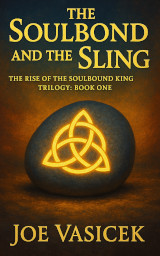
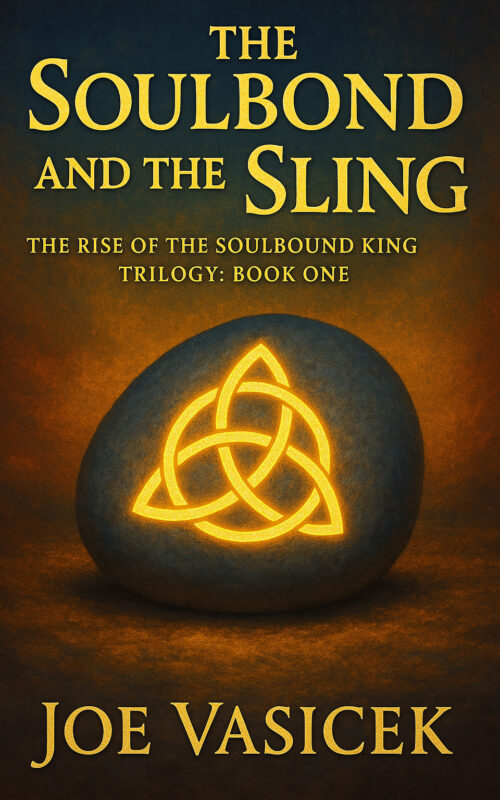
I’ve decided to put The Road to New Jerusalem on the back burner and focus instead on my epic fantasy series, The Rise of the Soulbound King Trilogy. If I push, I think I can finish the AI draft of book 1 in the next two weeks. I’ve also nearly finished the outline for book 2, and will probably have a rough AI draft for that one by the end of September.
I would really like to publish this series in 2026, but I don’t want to launch it until I’m ready to rapid release the first three books. And since these books are all epic fantasy, it’s going to take a lot of time and effort to write them. Without AI, it would probably take me something like two or three years for each book. I’m not a very fast writer, and I tend to get stuck in the middle, even when I have a solid outline. With AI, I think I can shorten that to 6-8 months.
These books are probably going to range between 150k and 200k words, so not super long for epic fantasy (for comparison, Mistborn: The Final Empire is about 214k words, and The Way of Kings is about 384k words). That’s much longer than most genre books, though, including most of the books I’ve written until now. And writing difficulty doesn’t scale linearly with book length; it scales logarithmically. So while it may take only 1-2 months to write a Sea Mage Cycle book, those are only about 1/3rd the length of a Soulbound King book.
My long-term goal, though, is to pivot to epic fantasy, to the point where that’s mostly what I write. And if you read my science fiction novels, you’ll find that they’re much more like epic fantasy, with multiple viewpoints, grand galactic empires, wars and political machinations, and a universe that has its own character arc. So while this may superficially seem like a huge pivot, it’s actually not.
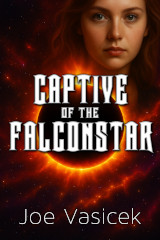
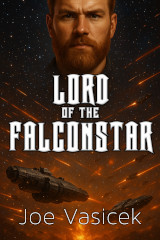
There are three science fiction books that I need to write before I can pivot entirely to writing fantasy: Captive of the Falconstar,Lord of the Falconstar, and The Return of the Starborn Son. Those are the only outstanding science fiction series that need finishing (and I will finish them, I promise—I’m not going to pull a GRRM). I also need to finish the Twelfth Sword Trilogy, the epic fantasy series I started in the 2010s while I was still mostly writing science fiction.
Realistically, the only ones of those books that are going to be finished between now and the end of next year are the Falconstar books, since I need to juggle all of these with the Soulbound King epic fantasy books that I’m also writing. But I think I can finish the Falconstar books, and also write and publish a Sea Mage Cycle book or two within the next year. I’ve found that it often helps to take week-long breaks to work on other projects, which allows me to approach a larger and more challenging WIP like The Soulbond and the Sling with new eyes. So I will probably alternate between working on the Soulbound King books and working on Falconstar and Sea Mage Cycle for the forseeable future.
But my goal for the next two weeks is to go full steam ahead on The Soulbond and the Sling, until it is finished. And with luck, I will also have a few excerpts to share with you soon!
So we are more or less moved into our new (old) house, though there is this overdue kid’s book from the library that somehow got lost during the move, and we haven’t been able to find it… but aside from that, we are more or less settled in. Our five year-old has started kindergarten, my wife is starting her new job, and by the time this post goes live, we will have acquired office chairs from the BYU surplus sale, so I won’t have to be standing all the time like I am as I write this.
I’ve already gotten back into writing my epic fantasy, The Soulbond and the Sling, and am making steady progress on it again. The AI draft is about 66% complete, and it’s good enough that if I were writing it under a secret AI-only pen name, I would feel comfortable publishing it as-is. But my personal standard of quality is higher than that, especially for epic fantasy, so after the AI draft is complete, I will rewrite the whole thing without any AI, to put it in my own voice (and will probably add a whole lot of other stuff to it too—you know, the kind of setting and character details you’d expect in a proper epic fantasy, giving it much more depth).
(Also, as a side note, I do not have a secret AI-only pen name… though I must admit, a part of me kind of wants to start one. With a little bit of market research to figure out the pulpiest genres where I could really excel… but no, with two (soon to be three) small kids and a wife who works full-time, there are only so many projects I can work on at a time.)
I’m also working on The Road to New Jerusalem for my J.M. Wight pen name, though that one has been going much more slow. I really have no idea how much market appeal this one is going to have, and doubt it will do much more than help me to flesh out the world for a potential series in the same universe (a post-apocalyptic Mormon polygamist romance, which also probably has limited market appeal). However, I feel impressed that this is a book I need to see through to the end, so my goal is to finish it before October, at which point I will probably focus on The Soulbound King.
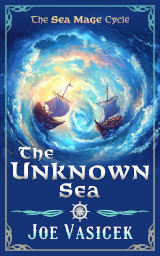
Beyond that, I’m also working on two other novels that I hope to finish before the end of the year (or, more realistically, sometime early next year, since I’m sure the new baby will throw things off for a while. The first is The Unknown Sea, a Sea Mage Cycle book, which is going to be a lot of fun. The rough AI draft is already done, and I had a real blast writing it.
The other one is Captive of the Falconstar, the sequel to Queen of the Falconstar. The rough AI draft is also done for this one, but the revised AI draft is going to take a bit more work. Also, I need to redo the cover and blurb. But I’m really looking forward to getting this one out, and completing the trilogy, which has stood unfinished for nearly a decade now. Yes, I really need to finish these unfinished series, and fully intend to do so—not just with this one, but for all of them.
Over the next year, I hope to transition from being a science fiction writer who occasionally writes fantasy, to a fantasy writer who occasionally writes science fiction. My two big unfinished sci-fi series are the Falconstar Trilogy and the Outworld Trilogy. The plan right now is to finish Falconstar first, knocking out the last two books almost at the same time (the rough AI draft for Lord of the Falconstar is also complete), and then spend a little more time on Return of the Starborn Son to finish that trilogy strong. For a long time, Star Wanderers was my flagship series, so I want to do right by it. But I haven’t even outlined book 3 yet, so it’s going to be a while.
And when Return of the Starborn Son is done, I will probably release another volume of my author’s notes, since hey, why not? But that won’t be for a while—probably not until this time next year, at the absolute soonest. However, Return of the Starborn Son probably will come out before The Soulbond and the Sling, since for marketing reasons I don’t want to release an epic fantasy trilogy until all three books are ready to rapid release. And yes, I fully blame George R.R. Martin for conditioning epic fantasy readers not to try out a new series until it is complete. It is what it is.
So that’s the long-term plan. I will probably start a few new projects as well, including a relaunch of my Christopher Columbus stories, once I figure out what I want to do with that series. But for now, I’m just going to focus on The Road to New Jerusalem and The Soulbond and the Sling, until we are back into a new routine. BYU classes start on September 3rd, so it will probably be a little crazy until then. And the way things are shaping up, I half-expect they will induce my wife at the tail-end of September. So maybe we won’t actually get into a new routine until sometime next year. But either way, I’ll do my best to keep writing.
We just got back yesterday from our second family road trip this summer, this time to Alberta for a family reunion. My wife’s grandmother passed away in the winter, and it wasn’t a good time for us all to get together (not to mention that we didn’t have passports for the kids yet), so we scheduled a family event for the summer to get together and remember her.
I’ve been to Canada before, but only to Quebec. This was my first time driving through Alberta. It was interesting. About as similar as you can get to the United States while still being a foreign country. Alberta itself feels kind of like a cross between Nebraska and Pennsylvania, with Hutterites instead of Amish, and more rapeseed (for canola oil) and alfalfa than corn and soy. This was especially true up in the northern part of the province where we were going, where there were also lots of little lakes, and all of the trees were high-altitude trees (aspen and pine, mostly). Even though it was summer, the air was pleasantly cool, which makes me wonder what the winters are like. Probably brutal.
At the reunion itself, we had lots of food and outdoor games. Had a big campfire both days and roasted marshmallows for s’mores, which the kids really enjoyed. There was also a LOT of pie, including saskatoon pie, which was a new thing for me. Saskatoon berries are kind of like blueberries, except tart, and they grow in large bushes a little like currants. We picked our own saskatoons for the pies.
Overall, it was a very good trip. About sixteen hours of driving, split across two days, so that wasn’t too bad. There were a couple of times where we had to change poopy diapers on the side of the road. There aren’t really any rest stops in rural Alberta, just roadside pullouts with trash cans for throwing away your garbage. Lots of cows too. We drove up route 36, which feels more like a state highway than a true highway. As far as I can tell, there aren’t any American-style highways in Alberta, except perhaps around the major cities. And the speed limit was 100 km/hr for most of the way (about 65 mph), so it was kind of nice to get back into the States where we could drive faster.
I didn’t get much writing done on the trip, but now that we’re back, that’s hopefully going to change. However, we do have a bunch of stuff going on. My wife is starting her new job at BYU, and also finishing up her dissertation, so that’s the priority right now. I’ll be watching the kids for most of the time, which limits how much I can write (though the family study room on campus is good for working while letting the kids run around). Also, we’re going to move back into our house in Orem over the next couple of weeks, so that’s going to be another big project. But we should hopefully be settled down before the end of the month.
Long story short, things are going to be crazy for a little while, but I should still be able to make at least a little bit of writing progress each day. The two big WIPs I’m working on right now are The Road to New Jerusalem, which I hope to finish before October, and the AI draft of The Soulbond and the Sling, which is more than halfway finished but is still a massive epic fantasy novel. No idea when those WIPs will be done, but for now I’m just going to keep chipping away at them a little at a time, and make more definitive plans later once things are a little more settled.
What would fantasy be without religion? Probably much the same as us, when we don’t have religion: aimless, drifting, and lost.
Religion is more than just a useful aspect of worldbuilding. It’s something that lies at the very core of what makes us human—and thus, it’s something that any story needs to at least touch on if it is to be meaningful or important. Most likely, it won’t be meaningful at all unless the religious aspect is incorporated deeply within its bones.
But what is religion? For our purposes, religion is how we, as humans, relate to the powers that are higher than ourselves. It’s not about painting a cross on your cover, or a star of David, or a crescent, or an omh, or whatever else. It’s about how we act in regards to the cosmic and the transcendent. It’s about how we understand how to orient ourselves in this vast and terrifying universe, and find our own place within it.
I grew up in a time when religion was one of those taboo subjects that you never brought up in polite society. Politics, religion, and sex were all taboo like that. Granted, those taboos were already beginning to fray by the time I was old enough to hold an uninformed opinion on any of that, but even in the 90s, the post-war liberal consensus still held.
What was the post-war liberal consensus? It was the set of rules and norms that we all (or those of us in polite society, at least) agreed to live by, after the tumultuous catastrophe of the World Wars. From 1914 to 1945, more than a hundred Europeans died from political causes—and that was just in Europe. For thirty long years, the whole world was drowned in blood.
The wars ended with the invention of the world’s most devastating superweapon, which for the first time in the history of this planet gave us the power to literally annihilate our own species. So at the end of all that, our grandparents felt a very strong need to keep those weapons from ever being used again. Hence, they developed the post-war liberal consensus.
The greatest value of the post-war liberal consensus was tolerance—but they didn’t think of that as a value in itself. The idea was that instead of elevating the values of any one group over another, they would create a world where everyone tolerated each other. Everyone could keep their own culture and religion, along with their own unique (and often contradictory) cultural and religious values, so long as they didn’t try to impose those values on anyone else.
The trouble with that, of course, is that tolerance itself is a value. Which means that in order to maintain the post-war consensus, they had to be intolerant toward any culture or religion that threatened it. Which meant that they had to push their globalism and multiculturalism on everyone, superseding all of their own cultural and religious values. This gave rise to the global urban monoculture, which ultimately gave us the clown world we now live in. Which is currently falling apart.
Religion should not be off-limits, especially for good storytelling. At the same time, that doesn’t mean that stories should bash you over the head and try to convert you to whatever church the author happens to belong to. Indeed, some of the most religious stories aren’t about any particular church or creed at all.
An example of this is Epic: The Musical. Beyond the old Greek mythology that runs through the story, the religious view is that the universe is utterly unpredictable, the gods (or higher powers) are arbitrary and capricious, and that the ends (getting home to Penelope) always justify the means. Indeed, any means that aren’t justified by the ends are immoral and wrong. Ruthlessness is mercy upon ourselves. How do we sleep? Next to our wives.
Those aren’t the religious views that I subscribe to, but those are deeply religious views. How? Because they show us how we stand in relation to powers that are higher than ourselves. In the 19th century, it became fashionable to throw out religion, and reverence man himself as the highest power in the universe. Where did that get us? It gave us the 31 years that killed 100 million Europeans and drowned the whole world in blood.
G.K. Chesterton said: “When men choose not to believe in God, they do not thereafter believe in nothing, they then become capable of believing in anything.” Now, more than ever, the world needs religion.
Of course, one of the nice things about writing fiction is that you can explore all sorts of religious ideas that may or may not have a direct counterpart in our world. Indeed, that’s part of what makes fantasy so rich. Tolkien created a whole race (the elves) that is bound by magic and immortality to this earth, contrasting with us humans, who are “strangers in a strange land.” In fact, Tolkien’s entire oeuvre is rich with religious elements, not just in the worldbuilding and the mythology, but in the Christian symbology—and he does it so subtly and so deeply that it draws you into his world, rather than kicking you out. It’s all in service to the story.
There’s a reason why the best stories in the world are in the Bible (and most of those are in the Book of Genesis). Which is one of the reasons why I’m drawing on the life of King David for the fantasy epic that I’m currently writing (The Soulbound King). But I’m also drawing on symbology and mythology as well, to make sure the religious elements aren’t just skin-deep. There is so much fascinating tree-related symbolism within the Jewish/Christian tradition. So much rich and wonderful stuff to draw on for creating a fantasy world.
Don’t be afraid to play with religion in your own fantasy stories. After all, on the deepest level, creativity itself is something of a religious act.
In the grim darkness of the far future, there is only war.
While the quote comes from Warhammer 40k, a science fiction franchise, it very soon became applied to the “darker and edgier” fantasy that started coming out in the 80s and 90s. Indeed, the quote itself spawned the term “grimdark” for a fantasy subgenre that became very popular in the 00s, with the rise of George R.R. Martin’s Song of Ice and Fire and subsequent Game of Thrones TV series.
Grimdark combines the scope and feel of epic fantasy with the savagery and moral greyness of sword & sorcery, ramping up the violence and savagery to levels that would have made even Robert E. Howard blush. It often features twists that subvert the old fantasy tropes, such as killing off the “chosen one” hero who would typically be the protagonist, or presenting a horrifying dystopia of a world that is the utter antithesis of an escapist fantasy.
In part, I think the grimdark phenomenon was a reaction to the Tolkien formula that dominated fantasy for so long. After J.R.R. Tolkien’s Lord of the Rings became wildly popular, his publishers tried to replicate that success by explicitly creating a formula that they wanted their writers to follow. This resulted in a bunch of Tolkien clones, such as Terry Brooks’s Shannara series and David Edding’s Belgariad series. For a couple of decades, these dominated the fantasy shelves, until writers began to revolt, and their books began to take off. After all, Game of Thrones was originally published in 1996.
But while there’s some truth to that theory, I don’t think it’s sufficient to explain the rise of grimdark. After all, Stephen R. Donaldson was rebelling against the Tolkien formula back in the 70s, and while his Thomas Covenant books were quite successful, they didn’t spawn a new subgenre (though arguably, they paved the way for later writers like Martin and Abercrombie). Instead, I think there’s something generational about the grimdark subgenre—that it’s the sort of thing that only could have arisen in the 90s and 00s, because of how the generational cycle works.
I wrote a lengthy blog post about this, which remains one of my more popular posts. My basic thesis is that the fantasy genre goes through generational cycles just like history goes through generational cycles. In its simplest form, the cycle looks something like this:
Hard times create strong men.
Strong men create good times.
Good times create weak men.
Weak men create hard times.
During the hard times, we tend to resonate more with stories that feature grim characters and dark fantasy worlds—hence, the rise of grimdark. But during the good times, we tend to resonate more with noble characters and bright fantasy worlds.
(It’s a little more complicated than that, of course. The fantasy cycle is offset just a little, since we tend to resonate less with darker stories as we become exhausted from living in a darker world. Indeed, the yearning for the next phase of the cycle drives us to tell more hopeful stories, which in turn drive us to build a more hopeful world. But to read the full analysis, go check out my original post.)
So what is noblebright fantasy, then? It’s basically the antithesis of grimdark—a backlash against the backlash. And while it hasn’t yet manifested as a distinct subgenre, with a George R.R. Martin or a Joe Abercrombie to champion it, I think it’s only a matter of time before we see an author who rides this cultural wave to massive literary success. And as soon as that happens, I think we’ll have a much better idea of what “noblebright” actually is.
In other words, noblebright fantasy is currently in the process of being born—and after it has emerged fully formed into the world, it will probably take a different name. Indeed, “noblebright” as a term is itself merely a knee-jerk reaction to “grimdark.” To subvert the original Warhammer 40k quote:
In the Noble Brightness of the far future, there is only HIGH ADVENTURE!”
Currently, there are only a handful of writers who are explicitly labeling their books as “noblebright fantasy.” I am not one of them, though I suspect that my books (and my readers) have a lot of overlap. As it exists right now, noblebright is characterized by heroic quests and the triumph of good over evil, with an emphasis on hope, virtue, and making a positive difference in the world. It’s also very common for these authors to include Christian themes, though from what I can tell, the books aren’t explicitly religious.
While I haven’t yet joined the pioneers of this budding new subgenre, I expect that I will in the not-too-distant future. I’m currently working on an epic fantasy trilogy based loosely on the life of King David, which features many of these noblebright tropes and themes. But it’s going to be a while before I release the first book, since I want to publish the books of the first trilogy all within a month of each other. Since these books are going to fall in the 150k to 200k word range, a lot of things can change between now and then. Perhaps the term “noblebright” will have been abandoned, with people looking down on it as a passing fad of the early 20s.
But I don’t think the broader trend toward brighter, more hopeful fantasy is going to reverse course anytime soon. In fact, I think it’s generational. Whether or not it takes the name “noblebright,” I think that we’re going to see a new subgenre of fantasy emerge very soon. It’s starting right now as a backlash to grimdark, but as the wave crests and it begins to gain some staying power, I expect that it will stop defining itself by the thing it opposes and start to define itself in a more independent way.
I’m really hoping to catch this wave, and I think that my Soulbound King series has some real potential to do so. But whether or not I catch it, I know that this is the kind of stuff I like to write, and I hope to be able to write it for a long time to come.
Seriously, though, what counts as “love” in fantasy these days? The romantasy subgenre is taking the field by storm, but much of it seems to be outright pornography, at least to me. Back when Twilight was all the rage, I at least understood the romantic angle, even if I didn’t particularly care for it. But now, there’s all this stuff about mate-bonding, consent/non-consent, something called “the omega-verse,” and a weird hierarchy of various forms of bestiality that I frankly cannot follow at all.
I should take a few steps back, and perhaps abandon romantasy altogether. I’m sure there are plenty of non-pornographic books in that subgenre—in fact, I’m fairly certain that one of my old college friends, Charlie Holmberg, was a pioneer in it. Everything of hers that I’ve read is pretty good, and also quite understandable, even to a dopey guy like me.
Outside of romantasy (and paranormal romance, which it appears that romantasy has more or less cannibalized), the love stories are pretty straightforward. Epic fantasy in particular tends to have at least a couple of romantic subplots in every book—which makes sense, considering how expansive the subgenre is trying to be. After all, if you’re writing a story where the world itself is a major character, you’ve got to have at least a few good love stories in there too.
But as the internet has continued to spawn narrower and narrower niches and subcultures, all existing in their own little subcultures, things on the extremes have gotten… weird. And as the gender divide appears to be widening with each subsequent generation, especially in areas like politics and culture, it’s beginning to seem like we aren’t even speaking the same language, even when it comes to something as basic and essential as love.
Now, male-coded romances are pretty easy to understand (though I could be biased… I am a man, after all). It starts with a boy who really wants a girl. Like, really, really, really wants a girl. He likes her so much, he spends the whole book trying to get her—and by the end, he either wins her, or he realizes that he doesn’t actually want her, he wants this other girl he met along the way. If things get spicy, it’s all very straightforward and everyone generally has a good time. If there are issues with rape or non-consent, those are generally separate from the romantic subplot
And often, male-coded romances don’t even include much spicy content at all. Even Robert E. Howard’s original Conan the Barbarian stories were pretty mild, in terms of spiciness. Yes, there was usually a scantily-clad female love interest, described in such a way as to increase Howard’s chances of getting his story featured on the magazine cover (and thus earning double the pay). But when it came to the actual, you know, kissing and stuff, Howard never went into graphic detail. The most he would do was hide behind euphemisms like “he crushed her in his arms.” All of the ejaculations in his stories were saidisms—as in, “look out!” he ejaculated, waving his hands wildly (and you would be shocked how often he used “ejaculated” as a saidism—seriously, I think there’s at least one in every classic Conan story).
(Side note: just because Robert E. Howard’s Conan stories were pretty mild on the spiciness scale, that does not mean that subsequent authors kept it mild. Lin Carter and L. Sprague de Camp tended to keep it more in the vein of the original, but Robert Jordan’s Conan was… let’s just say, it was too much for me.)
And it used to be that female-coded romances were pretty simple, too. An ordinary, boring girl somehow finds herself the object of attraction between two incredibly powerful (and incredibly sexy) men from the other side of fairy, who are positively obsessed with her. However will she choose between them both? Oh, look—now they’re fighting each other to determine which one gets her. Stop fighting, you sexy fairy men! But seriously, however will she choose?
Somewhere along the line, that morphed into a thing called “reverse-harem,” which (as I understand it) is where the girl throws up her hands and decides that she can’t possibly choose between them, so she chooses them all. Which meant, of course, that the love triangles quickly turned into love dodecahedrons—since if you’re going to have a harem, you might as well fill it up with as many sexy fair men as you can.
And then somehow, things got really weird—and also, really toxic. According to Malcolm and Simone Collins (who know more about this subject than I do), some of the more toxic behaviors that romantasy normalizes include:
Fated or “mate-bond” relationships that override consent,
Extreme male possessiveness portrayed as genuine love,
Drugging and public humiliation portrayed as romantic tension,
Huge age and maturity gaps between partners,
Serial betrayal framed as female empowerment and playing hard-to-get,
Intentional miscommunication, with heroines refusing to talk through their problems—again, often framed as female empowerment,
Violence rebranded as safety, since the love interest will never really hurt the heroine,
Wish-fulfilment with serial partners, often framed as a justification for serial betrayal mentioned above, and
Lazy trope stacking (eg “rich-fey-boyfriend,” scent/marking, etc) without confronting the darker implications of coercive and non-consenting relationships.
Sadly, it seems that all of these toxic aspects of romantasy are reflections of the current state of modern dating and relationships. For example, in a world of online dating where ghosting and fading is all-too common, serial betrayal is a bit of a power fantasy, as is wish-fulfillment with serial partners, since if “true love” doesn’t work out, there’s always another one just a swipe away. Similarly, because women who have taken multiple sexual partners find it difficult to pair-bond with any of the later ones, the concept of “mate-bonding” may have arisen as a way to recapture that lost sense of bonding that comes with the “first time.”
Call me old fashioned or out of touch, but I preferred it when things were simpler, and the traditional boundaries around sex and relationships were still very much in force. There’s something charming about the love stories that were written before birth control and the sexual revolution, where men had to woo their women and get them to say “I do” before any of the bedroom gymnastics became a factor. Of course, I’m totally biased, because my wife and I both have a “body count” of exactly one.
I think romantic love is one of the greatest things in the world. I think that sex is also a wonderful and a beautiful thing, especially when it is used to fulfill its primary purpose: to facilitate lifelong pair-bonding between a man and a woman. In my experience, this is an even more important purpose of sex than procreation, though of course that is a very important (and very fulfilling) secondary purpose.
I don’t read or write romantasy, so you won’t find any of those tropes in my books. You will find a lot of romantic love, though, especially in my sea mage cycle books. Rescuer’s Reward is probably the closest thing I’ve written to a straight up romance, at least in the fantasy genre. The Widow’s Child also has a strong romantic subplot, though it goes a little further than fade-to-black. And of course, the Soulbond King books are going to have a lot of romance, since the magic system requires a man and a woman to become bonded in love in order to unlock their unique magical powers. Those books are going to be a lot of fun to write.
Happy 4th of July, everyone! It’s Independence Day here in America, when we celebrate our nation’s birthday by doing all of the most American things possible: fly our flags, eat lots of meat, and blow things up. God bless America!
It’s been a busy month so far, with family visiting from out of town all last week, and lots of kids all over the place. Great for our kids, who got to play with their cousins, but not the best for writing. Oh well. It looks like things are going to settle down for the rest of the month, which is really good, especially for my wife, who is racing to finish her PhD before she starts her new teaching job. So I will definitely be helping her with that.
On the writing and publishing side of things, I am actually going to take advantage of this time to catch up on all of the non-writing things, like publishing tasks, that I’ve fallen behind on. When August rolls around, things are going to get really crazy, with our move back to Orem as my wife starts her new job, so I want things to be set up really well for that.
I will continue writing, though: just at a slower pace. If I plan to do about an hour a day, and make that a consistent thing, I think I can keep that up through the crazy times that are coming. Not only are we moving and starting a new job, but we also have a new baby due to be born very shortly after all of that. So I fully anticipate that it’s going to be a crazy year.
(still not the final cover)
My plan right now is to keep plugging away at The Soulbond and the Sling, slowly but surely, until the AI draft is complete. At the rate that I plan to go, however, it probably won’t be finished until August or September.
I’ll also be working on the human draft of The Road to New Jerusalem, but since my plan is to submit that to the Ark Press contest in October, I’m not too worried about rushing that one. Besides, it’s a much shorter novel, so it shouldn’t be that hard. A part of me wonders if I’ll finish that one before The Soulbond and the Sling.
In the meantime, I plan to publish Bloodfire Legacy in paperback, ebook, and audiobook as soon as I go through the edits and get it formatted! In fact, that’s the next big thing I plan to work on in the next two weeks. With luck, it should be out very soon.
So those are the big things that I’m working on right now. I’m also going to try and finish all the blog posts for Fantasy from A to Z before the end of the month, though they will probably run through the first half of August or so. And once Fantasy from A to Z is done, I will turn that into an ebook exclusive for my newsletter list, and make my current newsletter exclusive, Science Fiction from A to Z, available as a regular ebook (and maybe audiobook and paperback as well).
All of this is part of my plan to pivot toward being more of a fantasy author. Right now, I’m a science fiction author who occasionally writes fantasy. In the future, I want to be known as a fantasy author who occasionally writes science fiction. Most of my science fiction leans heavily into fantasy tropes anyway, so it shouldn’t be too difficult to make the change. Hopefully most of my readers follow me over as I make the transition.
Toward that end, I’m happy to report that Rescuer’s Reward, the first novel in the Sea Mage Cycle, is now available as a permafree book! If you like fun quick fantasy adventures with a touch of romance, I think this will be right up your alley. All of the Sea Mage Cycle books are pretty short, and they all stand alone, though they often have recurring characters. Check it out and give it a read!
From 2020 to 2024, I did my best to publish a new short story every month. The idea was to make my short story singles free, and to rotate through so that there were only six of them out at a time. Occasionally, I would republish an old one, for those months where I didn’t have a new one to put out. But I tried to always have at least standalone short stories free at a time.
The main reason I did this was to have something new to share with readers each month. I knew I couldn’t write full-length novels at a rate of one per month, so I figured that short stories were the next best thing. And even if I put them out for free, it would still be a great way to build a following and keep my name fresh in readers’ minds.
As a publishing strategy, it worked decently well. The floor for my book sales rose during this period, suggesting that it was a good way to keep my name fresh. However, as a writing strategy, it wasn’t very good, because it meant that I was dividing my energy too much between short stories and novels. It’s probably the sort of strategy that works out better when you’re a new writer, still working to learn your craft and develop your voice, and hoping to build an audience at the same time.
For the past 18 months or so, I’ve just been cycling through the old short stories, and the effect has not been the same. For the strategy to work, you really do need to be putting out new short stories each month. If you can write them in such a way that they’re easy to bundle or stitch up into novels, that’s fantastic, but if you’re juggling full-length novels at the same time, both sides are going to suffer.
So in the next week or so, I’m going to retire my remaining free short story singles, since they’re all available in the bundles anyway. I’m working on an epic fantasy series right now, and that really needs my full attention and energy. I’ll republish some of the longer ones as $2.99 novelettes, but anything under 7,500 words is going to only be available in the short story collections for the foreseeable future.
So we’re finally back from our family vacation to Arkansas! My youngest sister manages cabins over at the Buffalo River National Park, which means she’s busy over there all summer, so we all decided to go over to her.
It was a looong drive. Took us three days to get down there, mostly because we stayed with my brother-in-law in Omaha for a couple of nights (just long enough for our five year-old to fall in the shower and bust open her head. Took her to the emergency room, where she got a couple of staples. She’s fine.) On the way back, we busted our butts and did it in two days. We must have listened to the Tarzan and Mulan soundtracks thirty or forty times each.
Arkansas is almost like another world. Very beautiful, but mostly jungle, and full of all sorts of venemous things that want to suck your blood. The first day, I made the mistake of walking around in shorts without any bug spray, and I got nearly a dozen deer ticks on me, including one that had crawled up into my unmentionables. My wife and both our kids also had ticks on them. Needless to say, we did very thorough tick checks every day after that.
Other than that, it wasn’t too bad. I heard from one of the locals that there are copperheads and water mocassins in the river, but we didn’t see any of those. Also, the black widows like to roof in the awning and lower themselves down in the evening, but we didn’t see any of those either (thank goodness). And apparently, there’s an annual tarantula migration, which sounds absolutely terrifying. In fact, it sounds like someone in the Ozarks started a game of Jumanji some 150 years ago, and it’s never been finished.
But the people are all friendly and generous, and there’s a tiny little country church almost every other mile in the back country. Also, driving through Branson and southern Missouri was like driving through the heart of Trump country. The Twelve Days War was raging the whole time, and there were MAGA billboards and billboards saying “we stand with Israel.” Kind of surreal.
It was good to spend some time with family, but it’s good to be home now. We just got the staples out of our daughter’s head, and it’s healed just fine. She’s really glad to be able to swim now (too bad she couldn’t swim while we were at the park). For the next week, my brother-in-law from Couer D’Alene is down here with his wife and eight kids for a family vacation. Our kids are having a blast, though our littlest just came down with a stomach bug… hopefully it ends with him, but I’m not holding my breath.
The plan for now is to finish writing all the blog posts for Fantasy from A to Z, hopefully before the end of next week. I’ll also do my best to finish up the rough AI draft of Lord of the Falconstar (book 3 of the trilogy) by the end of this week. So far, it’s going really well. After that, it’s back to the revised AI draft of The Soulbond and the Sling, which I hope to finish before we go on our next road trip to Canada for my wife’s family. And after Fantasy from A to Z is finished, I’ll work on the rough human draft of The Road to New Jerusalem, hopefully finishing it in time for the Ark Press contest.
That’s the plan, anyway. I have a lot of thoughts on the Twelve Days War and the situation in the Middle East, but I’ll save all that for now. If the ceasefire holds and it truly is the end of the war, I think President Trump will go down as the greatest American president of the 21st century.
We live in a time of deepening division—not just between political parties or social classes, but between the sexes as well. Of course, men and women have always been different, but those differences have grown increasingly stark in recent years, even as it becomes more politically incorrect to say so.
Across the Western world, men are drifting one way, women another. In politics, men are turning more conservative, while women—especially young, unmarried women—are growing more liberal. We can see this gap not only in US voting patterns, but in voting patterns across the world. In matters of faith, men are turning toward traditional, even ancient forms of religious expression: high liturgy, orthodoxy, duty, and structure. Meanwhile, women are leaving organized religion altogether in record numbers. Some are embracing a kind of therapeutic spirituality—mindfulness, astrology, crystals—but many are simply checking out.
It’s not hard to see this growing rift playing out in other areas of life: marriage, dating, education, employment. But it’s also playing out in fantasy literature, not just among readers, but also among writers and publishers.
Instead of sharing a common ground, men and women are building parallel worlds. Many male readers are flocking to grimdark, with its blood-soaked realism and morally gray protagonists, or to litRPG, which merges game mechanics with fantasy worldbuilding in a system-focused power fantasy. Meanwhile, women are turning increasingly to romantasy, a subgenre that often verges on outright pornography and has virtually no appeal to men.
A lot of this is downstream from the gender divide in publishing. Traditional publishing—especially in the U.S.—has become overwhelmingly female, especially in the editorial departments. Some of that is demographic; some of it is cultural. But the result is that the gatekeepers of traditional fantasy publishing are mostly women. Their tastes, sensibilities, and values shape what gets acquired, marketed, and celebrated.
This divide wouldn’t be so troubling if it were merely about preferences or taste. But it runs deeper than that. Increasingly it seems that men and women no longer understand each other—or worse, no longer even try to. And when even our fiction reflects that fracture, it becomes that much harder to bridge the growing divide.
That’s what makes the current state of fantasy so toxic. Not because romantasy or grimdark are inherently bad—every subgenre has its place—but because they have become echo chambers that silo the sexes off from each other.
Men and women were not made to live in separate worlds. We need each other—not just to perpetuate the species, but to challenge, balance, and refine one another. I know this from personal experience. Without my wife, I’d be a lesser man. She often drives me crazy (to be fair, I return the favor), but we have each grown so much since marrying each other that I think I would hardly recognize the man I once was. Together, we are far more than the sum of our two parts.
Our stories should reflect that truth. We don’t need more genre ghettos. We need shared myths. Stories where masculine and feminine virtues don’t clash with each other, but come together in harmony.
That’s what I’m hoping to accomplish with my epic fantasy series, The Soulbound King. When building out the fantasy world, I deliberately designed the magic system so that latent magical powers can only be unlocked through marriage—the “soulbond”—between a man and a woman. I did that largely in response to the growing gender divide, because I wanted to write a story that shows how men and women can overcome it. Hopefully it works.
Fantasy, perhaps more than any other genre, gives us the space to reimagine what’s possible. It allows us to explore not just what the world is, but what it could be. And right now, what the world needs is for the young men and women of the rising generation to come together and reinvent the world.