Why I’m not submitting to the 2012 Amazon Breakthrough Novel Award contest

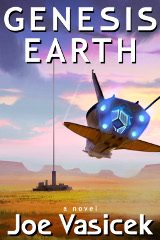
Last year, I submitted Genesis Earth to the Amazon Breakthrough Novel Award contest and made it to the quarter-finals.  I’m pretty sure I could do at least that well this year, but after reading the contest rules, I’ve decided not to participate.

Why? Because of this:

5. GRANT OF RIGHTS. By submitting an Entry and if you are selected as a Quarter-Finalist or Semi-Finalist, you grant Penguin the exclusive first publication rights to your Entry. If you are selected as a Quarter Finalist, Penguin’s exclusive first publication rights to your Entry terminate when you are eliminated from the Contest (unless you are selected as a Semi-Finalist); and if you are selected as a Semi-Finalist, Penguin’s exclusive first publishing Rights to your Entry terminate after June 30, 2012.

But mostly because of this:

A. Grand Prize. If you are selected as the Winner in a category, you will receive one of two Grand Prizes each consisting of a full publishing contract with Penguin to market and distribute your Manuscript as a published book…you may not negotiate the publishing contract with Penguin, and you must sign it “as is” upon receipt of the executable contract.

The language is a little unclear as to whether the grand prize winner can elect to turn down the publishing contract, but considering how merely submitting to the contest constitutes a grant of publication rights, I’m guessing no.

So why is this a big deal?  Because it gives the writer no room to negotiate.  Suppose the boilerplate contract is unfavorable when it comes to rights reversion, non-compete clauses, or derivative works.  Penguin could conceivably retain the rights to my book indefinitely, even if I’m earning less than $10 a year on it.  With a non-compete clause, they could forbid me from writing or publishing any other books.  Even worse, they could conceivably buy up rights to the world or the characters, making it impossible for me to write any other books in my own series without their approval.

But even if none of those unfavorable terms are in the contract, the standard royalty for erights is 25% of net, not gross.  For those of you who know the difference between net and gross, that’s a red flag in itself, but even supposing Penguin does pay me the full 25% of the 70% it receives from Amazon, that comes to only 17.5% of the cover price.  Right now I’m getting 70%.  Is it really worth it?

I checked the sales rankings for the last three years of ABNA winners, and they aren’t all that great.  The ebook versions for the 2010 winners have a slightly better ranking than mine, but they can’t be selling more than a couple of books a day.  At the prohibitively high price of $9.99, that’s $.30 less per unit than what I’m earning for Genesis Earth at $2.99.  And the 2009 winners?  Their sales rankings are abysmal.  Whatever Penguin did to market those books, it either didn’t work or they’ve given up and moved on to other things.

Now, I don’t expect to win the grand prize even if I submit to this contest.  Most of the previous winning novels are either literary, mystery, or mainstream YA–no science fiction.  Even so, by submitting to this contest, I would not be able to negotiate a publication contract with any other publisher until my book is eliminated.  That’s a headache I could do without.  And as for the consolation prizes, if this year’s Publisher’s Weekly reviewer is anything like last year’s, I already know what she’ll say: “science fiction is garbage.”

So yeah, I won’t be submitting to this year’s ABNA contest.  If I win, I’m forced to sign a contract that I haven’t seen and have no power to change, and if I lose, I get an unnecessary hassle for all my time and effort.  Thanks but no thanks.

Trope Tuesday: The Bechdel Test

The Bechdel Test is a way to measure how prominently women figure in a story.  It mostly comes up in discussions of TV and film, but can also be applied to works of literature.  To pass the test, the story must have

  1. at least two named female characters
  2. who talk to each other
  3. about something other than men.

The surprising thing, as you can see in this discussion of the trope, is that so few stories actually pass this test. Even in literature, works like The Odyssey, Romeo & Juliet, and even War & Peace fail to pass or only barely pass this test.

Closely related to the Bechdel Test is the Smurfette Principle, where only one of the major characters is female–the token chick.  Stories that fail to pass the first part of the test fall into this category.

So why does this happen?  It may be because most writers are male, but that isn’t necessarily true of books and literature.  Novel writing, after all, was originally considered a womanly pursuit, and the English major was created in the so that women could have something to study while they were in college.  Not surprisingly, 19th century works by female writers like the Bronte sisters tend to pass…

…or do they?  It’s been a while since I read Jane Eyre or Pride and Prejudice, but the impression I got was that the women in those books spend only really talk with each other about men.  And when you look to contemporary writers like Dickens and Tolstoy, the trend holds.  After all, how many female characters are there in A Christmas Carol?  Do any of them ever even talk to each other?

This isn’t necessarily a measure of how good or bad a story is, or even of how feminist it is (Aliens, after all, technically passes), but it is a measure of how independent and well rounded the female characters really are.  If the story doesn’t pass, it’s a sign that the women only play a role in relation to the men, or that the male characters are the ones who advance the plot.

I don’t usually like to bring up my own stories in relation to these tropes, but I thought it would be useful to apply this test to my own books and see how they shape up.  As a writer, I think it’s a good idea to do this periodically, to make sure my work isn’t slipping into a rut.  So here we go:

Genesis Earth

Point 1: Yes, there are two named female characters: Terra and Stella.

Points 2 & 3: No, they never talk.  However, when you apply the reverse Bechdel test (two men who talk to each other about something other than women), Genesis Earth only barely passes.  Michael talks with Tom in the first chapter, mostly about Terra, and for the rest of the book he and Terra are alone.

Bringing Stella Home

Point 1: Yes, it passes.  Named female characters include: Stella McCoy, Danica Nova, Anya Sikorsky, Tamu, Lady Borta, Lady Zeline, Sergeant Maria.

Point 2: Yes; in most of Stella’s scenes, she’s talking with Tamu or Borta or one of the other Hameji women.  Also, since Danica is the captain of the Tajji Flame and Anya is the chief pilot, they interact quite a bit.

Point 3: Yes, but just barely.  In most of their scenes together, Stella and Tamu are talking about Qasar or the harem or sex.  There are a couple where they talk about each other and their past, but it all relates back to their captivity under the Hameji.  At one point later in the book, Anya goes AWOL and Danica has to talk her down, which is probably the scene that makes the book pass, but a hardcore feminist might argue that that conversation is indirectly about a man.  Still, I’m counting it.

Desert Stars

Point 1: Yes, there are plenty of women.  In fact, as you can see from this list of non-minor characters, there are almost as many women as there are men:

Female Male
Mira Jalil
Shira Sathi
Zayne Hamza
Tiera Rumiya
Lena Gregor
Surayya Kariym
Amina Ashraf
Rina Ibrahim
Sarah Lars
Michelle Nash
Mark
Will

Point 2: Yes, plenty of these women talk to each other.  Surayya and Amina are practically joined at the hip, Tiera, Shira, and Lena all have private conversations with Mira, and the only time Rina even talks is when she and Mira are alone.

Point 3: While most of the conversations between the female characters revolve around men and marriage, Tiera talks with Mira about honor, and Rina talks with Mira about leaving home.  Without spoiling too much, there are other conversations that have nothing to do with men, though they happen off-stage and only get reported second-hand.  Either way, I’d say this book passes.

None of this is to say that a good story must pass the Bechdel test.  Lawrence of Arabia, for example, doesn’t have a single female actress–not one single actress!–and it’s an amazing film.  As a counterpoint, I’m sure there are plenty of good stories out there (most of them probably anime or manga) that do not pass the reverse Bechdel test.

However, it is a good measure of female presence and how much the story is driven by men.  And as a lens through which to view the wider culture, it offers a surprising and somewhat disturbing perspective on male-domination in fiction.

Picking up the pace

I’m writing this post from somewhere in Iowa, riding the California Zephyr from Chicago to Salt Lake City. Since I hate sleeping on the train, I figured now is as good a time as any to write a blog post.

One of the good things about traveling by train is that you have lots of time to just sit and think. Yesterday I took a long, hard look at my writing over the course of the last year, and was surprised at what I found. Long story short, I think it’s time for a major recalibration.

As you know, my main writing goal is to produce a minimum of two novels per year, fully polished and of publishable quality. Desert Stars will be my third this year, if I can get it up before January. But after that, I don’t have a whole lot lined up in the queue. Heart of the Nebula is a finished rough draft, but it’s the only one; everything else is either incomplete or just an idea floating around in my head.

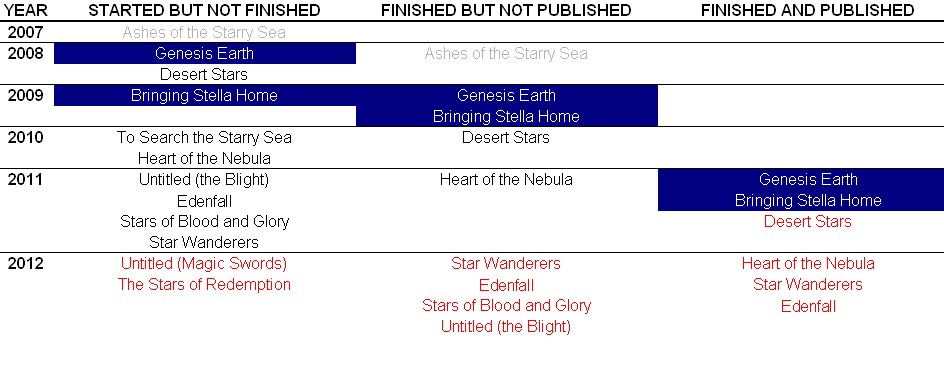
Perhaps the best way to see it is to look at this chart. It lists all of the novels that I started, finished, and published by year. The titles highlighted in blue are novels that I’ve epublished. Ashes of the Starry Sea was a practice novel, so I’ve grayed it out, but everything else is a project I intend to carry to completion.

While 2011 was a great year for me in terms of starting new works, it was a downright horrible year in terms of actually finishing anything new. I’m worried that unless I can force myself to buckle down and produce new material at a much faster rate, this handicap is going to bite me in the butt next year.

Here’s another way to think about it: if I want to write two novels per year, and I can only focus on one novel at a time, I should be able to complete any project in no more than 26 weeks. And yet, when I look at my word count spreadsheet (which only goes back to May 2009), here’s what I see:

  • Genesis Earth: 22 to 26 weeks
  • Bringing Stella Home: 50 to 54 weeks
  • Desert Stars: 52 to 56 weeks
  • Heart of the Nebula: 18 weeks (unfinished)
  • Edenfall: 2 weeks (unfinished)
  • Star Wanderers: 9 weeks (unfinished)

What this tells me is that my current writing method is unsustainable. Either I need to learn how to juggle two projects at once, or I need to learn how to produce quality material in half the time–and in all reality, I should probably learn how to do both.

For those of you who might be worried that I’ll sacrifice quality for speed, let me assure you that I don’t intend for that to be the case. Dean Wesley Smith makes a very compelling argument on this subject, how speed and quality are not mutually exclusive. The more I write, the more practice I’ll get, which will hopefully improve the quality of my writing.

One thing I really ought to do is write something new every day. For most of 2011, I was revising something I’d originally written in 2008 or 2009, maybe throwing out a couple of scenes to start from scratch, but overall simply revising an older work. It’s made me a little rusty, and I can feel it. I can say right now, that needs to change.

My biggest concern is that once I’m overseas, it will be much harder to balance these writing goals with everything else going on. However, this isn’t 2008; I don’t have all the obligations of a student. As for whether the obligations of a teacher are any worse, we’ll have to see.

What I really want to do is write a novel in a week–preferably, in three days. Even if the first draft isn’t very good, just the act of doing it will break down some major barriers, I feel. If I finish Star Wanderers by mid-January, I’ll turn it around and write a novel with the same events from Noemi’s point of view, all in a weekend if possible.

In short, this is what I want to do:

  • Produce a minimum of 2 publishable novels per year.
  • Reduce the time for each draft to 6 weeks average.
  • Write a minimum of 500 new words each day.
  • Learn to juggle two projects when revising.

This isn’t going to be easy; I have the feeling that it’s going to involve a fundamental shift in the way I approach writing. However, if I can pull through it, I think this might just transform my career in the way that I need in order to take things to the next level.

In the meantime, I’d better get some sleep. I’ve got a long day of travel ahead tomorrow, and I’ll need all the energy I can get if I want to get some serious writing done.

Struggling not to settle

I’m in the middle of my first revision pass through Heart of the Nebula, direct sequel to Bringing Stella Home, and…I don’t know exactly how to put this, but the story seems to be simultaneously smoother and more shallow.  Plot-wise, everything works great; character-wise, there just doesn’t seem to be as much depth as my other work.

I remember finishing the first draft in May, and being surprised at how well structured it was.  Each of the three major plot points happened after exactly five chapters, and each of the chapters was almost perfectly balanced–a far cry from my previous work.  I had a few stops and starts in the first part, but everything after the first hundred pages was smooth as gravy.  What’s more, I’m finding in this revision that not a whole lot needs to change; it works pretty well as-is.

And yet…I can help but feel as if something is missing.  The characters just aren’t coming alive the way they did in my previous works.  The story isn’t quite as engaging, the climaxes quite as gut-wrenching as I would like.  It feels like a good story, but not a great story.

Here’s the thing: my previous stories were all broken in this phase.  Desert Stars was so broken I had to write another novel to figure out how to finish it–and even then, the second half of the book went entirely in the wrong direction and had to be thrown out.  Bringing Stella Home had a solid storyline, but Stella’s character was completely broken and had to be rebuilt from the bottom up.  And Genesis Earth had half a dozen false starts, and at least as many chapters that had to be thrown out because they did nothing to advance the plot.

But Heart of the Nebula isn’t exactly broken, it’s just…not at the level I would like.  And I worry that because it isn’t broken, I won’t feel as compelled to make it better.  I worked hard on the others, and learned a lot of lessons which helped me to write this book, but even if I’ve hit my stride and this is the result, it feels too much like settling.  I can do better.

None of this probably makes any sense if you haven’t read the manuscript, but I hope it doesn’t sound too much like whining.  Even if these are problems, these are good problems and I’m happy to have them.  When I share this with my first readers, they will probably have all sorts of insights that will make me smack my forehead and make everything awesome again.

I guess my point is that I don’t want to settle, even though this draft will probably not be as good as I’d like it to be.  I’ll fix all the known problems, then send it out to my first readers and trust them to help me find the unknown problems.

In the meantime, I should probably start something new.  I have a ton of great ideas for the fantasy novel, and bouncing them off of friends has really helped me to figure out what else the story needs.  After I finish reading American Gods, I’ll stock up on some fantasy to get into the right mindset, starting with David Gemmell (incidently, at dinner group tonight, I literally squeed while talking about David Gemmell.  It was simultaneously embarrassing and really awesome).

Enough of this.  Time for sleep.

Managing excitement and an idea for an epic fantasy novel

After getting about 40% through Star Wanderers 1.0, I hit a wall and decided to put the project on the back burner for now.  The beginning part, which I’m hoping to shop around as a novelette, has some issues with it and those are keeping me from making any real progress in the rest of the story.

I wish I could just wave my hand and pretend as if I’ve already fixed those problems, but my creative process just doesn’t work like that.  I guess I’m more of a discovery writer in that way, because I can only build on stuff that I’ve already written.  I have to figure out my characters as I write, otherwise they just fall flat.

It’s discouraging, because I feel like I don’t have enough control or discipline over my creative process.  Other writers seem to be able to pick up a project and finish it, even when that project is commissioned by someone else (editors, franchise owners, etc).  But with me, if I can’t get excited about a project, I can’t finish it.

Fortunately, even if I can’t always control which project I’m excited about, I always seem to be excited about something.  After finishing the last revision for Desert Stars, I felt this unusually strong urge to work on Into the Nebulous Deep (which, after the last post, I’ve tentatively decided to rename Heart of the Nebula).  I totally didn’t see that coming, but I’m glad that it did, because that project is getting due for its first major revision.  It’ll probably be a quick one, just to fix some major known issues before sending it off to first readers.

As for new projects, I’m not quite sure what to pick up next.  I’ve got a feeling I could give Edenfall another shot, though it’s dubious at this point, and I still have a bit of lingering excitement over the untitled Gaia Nova novel that involves Roman, Danica, Rina, and Stella’s son.

At the same time, though, I have a really cool idea for a fantasy novel involving magic swords.  The idea is that the swords are actual characters, with the ability to think, feel, remember, and communicate with those who wield them.  They can only be wielded by those whose minds have been melded to them, however, kind of like the Dragonriders of Pern.

As the swords get passed down from generation to generation, they pass on their skills and memories, so that those who wield them become legendary warriors.  However, all but one of the swords goes insane, turning their wielders to evil.  The one sword that remains has refused to take on a new master, even though war and destruction sweeps the land.  A prophecy states that the one who wields this sword will eventually defeat the evil of the others, but when the good sword finally does take on a new owner, it ends up being a farmgirl / tavern wench (I haven’t really decided).

I don’t have a lot of experience writing fantasy, but this story is starting to really excite me.  If I can combine it with a few other ideas and read some good fantasy novels to get into that mood, I think I can make some good progress on it.

So yeah–I have plenty of projects to work on, so things aren’t that bad.  I just need to find one that I can really get into for the next couple of months; if I keep bouncing around from project to project without finishing any of them, that’ll be bad.

Why I’m not a fan of writing groups

I was listening to a recent episode of I Should Be Writing today, and it got me thinking about writing groups and how my philosophy on them has changed.  Long story short, I used to love them, but now I’m not such a huge fan.

I should probably start out by mentioning that I lead a college writing group for two years, and I don’t regret the experience at all.  The Quark writing group was extremely helpful, both in terms of my own growth as a writer, and the connections it gave me with other writerly people.  I still keep in touch with many of them.

But now…I just don’t think writing groups are all that great.  In fact, I think that they often do more harm than good, not just for experienced writers, but for the beginner who lacks the confidence to strike out on their own.  Here’s why:

The group dynamic gives inexperienced critiquers a false sense of authority.

Most writing groups consist of writers who are at roughly the same level of expertise.  For beginners, this means that the people critiquing your story might not know any better than you whether the story is broken.  However, because of the dynamics of the whole thing (captive audience, desire to impress peers, etc), these people are likely to act as if they have more authority than they really do.

To be fair, I’ve had plenty of critique partners who have managed to be modest and down-to-Earth when offering their critiques.  However, I’ve also seen plenty of others get puffed up and offer some really dumb advice.

Beginning writers often naively look for someone to show them the answers–some mentor or authority figure whose every word is true, who will light the path and show them the way.  Put a bunch of them into a writing group together, and more often than not you’ll end up with the blind leading the blind.

The weekly submission process does not simulate the reading experience.

Logistically, most writing groups have to set a limit on the size and number of submissions.  For the Quark writing group, our limit was three submissions of four thousand words each.  It worked out fine for short stories, but most of us were writing novels, which meant that we had to workshop our books in little four thousand word chunks.

The problem is that nobody reads novels at that rate.  Either they get hooked and finish the thing, or they get bored and stop reading.  Therefore, while the feedback you receive might be good for helping out with craft issues, by the time the next week rolls around either everyone has forgotten what happened already, or they remember it wrong, or they were expecting something different and are ticked off because they have to wait another week.

After I revised Bringing Stella Home a couple of times (after–see below!), I workshopped it through a writing group I’d put together after leaving the Quark writing group.  I can’t tell you how many times I heard “why are we in James’s point of view this week?  I hate James!  I want to get back to Stella!” I got this comment so often, for a while I thought the book was really flawed.  However, when I got the feedback from my first readers, no one had this problem at all.

The reason?  They read the book the way it was actually meant to be read.

Workshopping a work in progress is the surest way to kill a book.

Committees might be good at doing some things, but they’re absolutely horrible at producing anything innovative or original.  Make no mistake: if you’re workshopping something you haven’t already finished and you follow most or all of the feedback you receive, you’re writing your book by committee.

Most writers agree that when you write your first draft, you should not revise anything until it’s done.  This is because the act of revision makes you so critical of your own work that it’s very easy to get discouraged or “fix” something that was actually a good idea.

Workshopping a work in progress does exactly the same thing: it puts you in a critical frame of mind that will literally kill your book.  Even if you manage to finish it, it won’t be nearly as good as it could have been because you’ve probably nipped all your best ideas in the bud, before they had time to grow and develop.

A truly great book does not appeal to everyone.

There’s a word for something that appeals to everyone equally, that runs about middle of the road and doesn’t upset anyone.  That word is “average.”

No truly great work is loved by everyone.  This isn’t just true of controversial stuff–it’s true of everything.  For every one of your favorite books, there’s a one-star review of it on the internet somewhere.  So if everyone tells you your book is good, that might not actually be the case.  In fact, it’s a much better sign when some people hate it and others can’t stop raving about it.

The trouble with writing groups is that the group dynamic can lead to a herd mentality, where everyone goes along with the first opinion that gets expressed.  Ever played Werewolf?  The same thing happens there.  One person throws out an accusation, the vote gets called, everyone starts looking around to see who is raising their hand and before you know it, all the hands are in the air.

So unless one of the seven or eight people in your writing group loves your work enough to stand up and defend it, chances are the feedback will err on the side of being too negative.  This makes it very difficult to tell whether your story actually sucks, or whether it’s just above average.

Writing groups teach you to write to rules, not for readers.

One of the dynamics of writing groups is that they encourage people to find and latch on to certain writing rules, where people can say “this story is broken because of x” or “this writing is flawed because of y.” Over time, this becomes so ingrained that people stop reading to see whether the story actually works and instead read to see whether the story follows the rules.

The truth, however, is that there are no hard and fast rules when it comes to writing.  For example, you’ve heard of “show, don’t tell”?  Yeah, go and read Ender’s Game.  The entire book is one giant tell–and it’s brilliant.  It was the first sf novel to win both the Hugo and the Nebula awards in the same year, and has remained a perennial bestseller ever since.

Nothing hit this home for me more when the cryo scene excerpt from Genesis Earth won first place in the 2009 Mayhew contest at BYU.  Parts of the scene lapse from first person past tense to second person present tense, and the members of my writing group pointed that out as a major no-no.  However, even though it broke the rules, it worked well enough to win an award.

To be fair, there are some things that writing groups are very good for.  They can be a good way to learn the basics of craft (ie “the rules”), and they do give you a sense of community that can be very encouraging when you’re just starting out.  However, the drawbacks are so great that I don’t think I’ll ever go back.

Personally, I’ve moved from writing groups to a core group of first readers whose feedback I value and whose opinions I trust.  I finish my project, send them the entire manuscript with a deadline in which to read it, and thank them graciously for whatever feedback I receive.  Most of them aren’t even writers, in fact–but all of them are readers.  Most of them don’t know who the others are, and none of them ever see any of the feedback from the others.

Criticism is good; if you want to grow as a writer, you should welcome criticism and constantly solicit it.  But I do believe it’s possible to grow out of a writing group–or to succeed without ever being a part of one at all.
New upload and thoughts on ebooks

Yesterday, I reformatted Genesis Earth and uploaded the new version to Amazon, Barnes & Noble, and Smashwords.  Basically, I took everything I’ve learned about ebook formatting in the last few months and brought it up to date.

Here’s the complete list of changes:

  • Revised author’s note to include Facebook and Goodreads links, mention of newsletter, etc.
  • Added teasers for BSH and Desert Stars.
  • Credited my editor on copyright page.
  • Put table of contents on one screen.
  • Added nav points using KindleGen.

If you’ve got the old version, the book itself is pretty much the same; basically, I just uploaded a cleaner version, with links to my other works.  Genesis Earth continues to sell better than Bringing Stella Home and Sholpan, so I figured it would be good to update it.

As for how sales of my ebooks have been going, to be honest they’ve dropped off quite a bit.  At Amazon, my free short stories have more or less equalized at 20-80 downloads per week, and they’re starting to get some traction on the new Amazon FR store, but the paid stuff has slowed down quite a lot.

What this tells me is that I haven’t yet built up enough of a reader base to be self sustaining.  It’s not enough just to upload your work to Amazon and the other ebook retailers (though that’s certainly important);  you’ve got to find ways to reach new readers and get your name out there.

I’m not too worried; I figure the most important thing right now is to build my list.  After all, if you want to get discovered, the most important thing is to have something that people can discover.

Beyond that, though, I’m going to try a variety of strategies, including submitting work to more traditional markets (especially short stories).  The biggest breakthrough would probably come from Writers of the Future, so I plan to put a lot more effort into that contest.

I’ll also focus a lot on the email newsletter, since that’s the best direct connection I have with my readers.  For those of you who have already signed up, expect to see a lot more free and exclusive content.  And for those of you who haven’t–what are you waiting for??  Check out the sidebar and sign up!

In the meantime, I’m going to keep writing novels and indie publishing them.  It’s definitely worth it, even if sales are initially slow.  Like Howard Tayler says, the first step to making grizzly bear soup is killing the grizzly bear–everything after that is just making soup.

Part I of Star Wanderers is finished!

That’s right–I was up until about 2 am last night finishing it.  Man, time goes by fast sometimes.  This is probably just the first part of a much longer novel, but I hit a good stopping point so I’ll probably put it on the back burner for now while I finish Edenfall and do a final polish for Desert Stars. 

What I really want to do is submit this first part to Writers of the Future, since it falls just under 15k words.  I might be a little biased, but I think it’s got potential. 🙂 It’s going to need some work, though; the story literally sprung out of my head one day, and while that doesn’t necessarily mean that it’s bad, it’s probably missing a couple of scenes and needs some work with the transitions.  Also, the tone completely shifts midway, from a happy go lucky space adventure to something much more serious.  Not sure what to do about that.

So yeah, I’ll probably set this story aside for a little while so I can come back at it with fresh eyes.  It’s not too long, so the revisions should be pretty quick; hopefully, I’ll have it ready to submit to Writers of the Future before January.  If it doesn’t make the contest, I’ll shop it around the short markets for a year while I finish the novel-length version.  At some point I’ll probably epublish it, but I’m not sure when.

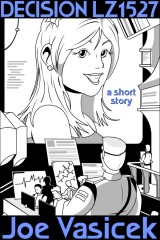
In other news, my short story “Decision LZ1527” just went free on Amazon, so if you want to pick up a copy or tell your friends, go right ahead!  It’s right around #200 in the Kindle free category now, but for some reason hasn’t hit any of the lists.  Hopefully that’ll change before the ranking drops back down.

“Decision LZ1527” first appeared in the December 2009 issue of Leading Edge, and was my first traditionally published short story.  Basically, it’s about a college freshman working up the courage to ask out a girl he likes, as told from the perspective of the little men inside his head.  Like Star Wanderers, the story just sprung out of my head one day.  It was a ton of fun to write, and I’m glad that so many others seem to enjoy it too.

In other news, I just got back the edits for Sholpan, so I’ll hopefully have that up on Amazon and other eretailers over the weekend.  More on that as it happens, but it’s happening soon.  I’d also like to put together a blog tour for Bringing Stella Home and Sholpan both, so if you’d like to have me on as a guest blogger, shoot me an email at joseph dot vasicek at gmail dot com.  More on that later as well.

And that’s just about it for now.  Take care, and I’ll see you around!

Just following my bliss

They say the way you know you’re a writer is if you can’t not write.  Well, last week I had the gratification of experiencing that again firsthand.

For all of August, I was more or less betwen projects and not writing a lot of new material. I’d just epublished Bringing Stella Home and was busy getting Sholpan ready for epublication.  Then Worldcon happened, and my writing dropped off precipitously.  I tried to get back in a groove, but found it difficult to choose between projects, none of which seemed to fit my writing schedule.

And then the creative half of my brain said “screw it” and ran off on an idea that came from practically out of nowhere.

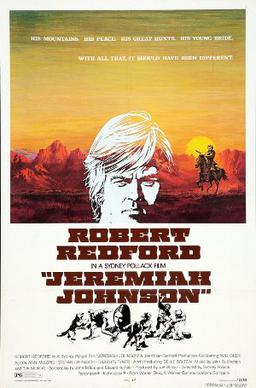
It all started when I was taking a power nap after a long day at work.  For some reason, my mind wandered to Jeremiah Johnson, an old Western with an awesome love story.

In the movie, Robert Redford unkowingly insults an indian chief by giving him several captured scalps.  The chief must return with a gift of equal or greater value, and so gives Redford his daughter, who doesn’t speak a word of English.  At first, things are hilariously awkward, but over time they grow into a beautiful and touching relationship.

Well, as I lay there thinking about the movie, I wondered: what if the same basic storyline were set in space?  Instead of a mountain man, the protagonist would be a space explorer / interstellar merchanter.  Instead of an indian chief’s daughter, the female protagonist would be the daughter of a station master whose colony is facing severe famine and widespread starvation.  When the merchanter boy unwittingly shows up at the doomed colony, the station master coerces him into taking his daughter to save her life.  And so, for the next two months, the boy finds himself crammed into a tiny little ship with a girl who doesn’t speak his language.  Hilarity ensues.

At first, I thought I’d keep it as a short story, but…yeah, that didn’t last long.  The more I run with it, the more ideas keep coming to me–ideas that I haven’t played with in a couple of years.  The story is set in the same universe as Gaia Nova and Bringing Stella Home, but about a thousand years earlier, back when things were, shall we say, more primitive.  I still don’t know where this story is going to take me, but I can tell it’s going to be a lot of fun.

The best part is that even if I expand this into a full length novel, the first part stands on its own so well that I could probably submit it to Writers of the Future.  That never happens!  It’s been years since I submitted to the contest; I always wanted to send something, but all I could ever write was novels with long, complex beginnings that couldn’t be cut off at the 17,000 word mark.

Anyhow, the working title of the novel is Star Wanderer (I can’t believe it’s not already taken), and it’s probably going to end up around 80k words or so.  I only have a vague idea at this point, but it’s much more intimate and personal than epic in scope, so I don’t expect it to go much longer.  I’ll probably finish the first part sometime next week and start looking for some first readers.  I’d like to finish the rough draft before I start the Desert Stars revision in October, but we’ll see whether that works out.

As for Edenfall, don’t worry, I’m still working on that project too.  One of the advantages of writing longhand is that it’s much easier to pick up and just go; instead of having to stop and think about what needs to happen next, the physical act of writing is slow enough that the ideas come much more organically.  I might not finish it before October, but if I can juggle it with Star Wanderer, I can probably juggle it with Desert Stars.  In any case, it’ll be good to work on new material and keep my writing sharp while I’m doing the revision.  We’ll see how it turns out.

So that’s what I’ve been up to in the last week.  I only wish I were doing this full time, so that I could spend all day working on these stories.  Soon, inshallah.

Edenfall update

So I haven’t exactly gotten into a good writing routine yet, but Edenfall is coming along pretty well.  I’m just about finished with the first chapter, and the dominoes are already starting to fall.

It’s fun to revisit the world of Genesis Earth, but I’m not going to get too bogged down in recapping the events of the first book or setting things up.  I hate it when sequels do that.  Fortunately, since the majority of this story is going to be from a new character’s point of view (Michael and Terra’s oldest daughter), I don’t really have to do that, except to lampshade some of the worldbuilding.

One thing I need to do is get more in the mood of the first book, which was a lot more introspective and big-picture than my other science fiction.  To do that, I found an excellent collection of videos called The Sagan Series.  Here is my favorite:

Man, I get shivers every time I watch that. “Sailors on a becalmed sea…”

Another good video is this one from The Piano Guys:

I know it says “Southern Utah,” but you could substitute that for “Icaria” and it wouldn’t be that far off.  In particular, the night clip from the bottom of the slot canyon at 2:05 looks like something straight out of Genesis Earth.  Throw in some primitive natives, a few giant lizards and various avians and insectoids, and you’re pretty much there.

I’m still adjusting to writing in longhand, but so far I think it’s going to work out well.  Because the writing process itself is much slower, it’s much more time intensive but surprisingly easy to jump in and get started.  Once I’ve got some momentum going, I think the story will practically write itself.

I do have a confession to make, though.  A couple days ago, I had an idea for another science fiction story that was just so awesome I decided to run with it.  At first, I thought I could keep it down to a short story, or perhaps a novella at most, but…well, I think it’s going to be a bit longer than that.

Don’t worry: Edenfall is still my primary project, and if juggling them both becomes too difficult (which it probably will), I’ll put this new one on the back burner until Edenfall is finished.  It’s kind of a guilty pleasure anyways, a sci-fi romance that draws heavily on tropes from old westerns (Jeremiah Johnson in particular).  I have no idea where it’s going to go (well, nothing more than a vague idea about the twist at the end), but that just makes it all the more exciting to write.

So anyhow, that’s what I’ve been up to these last few days.  Now if you’ll excuse me, I need to get back to writing.  See you around!