Early January Update

The holidays are over. Blergh.

I don’t generally do well when my routine gets broken up by outside forces, which is why this blog has fallen by the wayside for the last week or so. I’m also not very good at creating structure in my life where none exists, so during times like the holidays I don’t tend to do very well. This is definitely a skill that I need to work on.

In any case, the holidays are over, which means it’s time to get back to work. Thank goodness!

I am about 10,000 words from finishing my current WIP, An Empire in Disarray. With the work on my friends’ basement finished and my roommate starting school in Salt Lake today, there shouldn’t be any more interruptions between now and the end of next week. This bodes well.

When that’s done, I’ll jump right into work on Victors in Liberty. I’ve got to admit, there are other projects I’d really like to work on right now, but finishing Sons of the Starfarers takes priority.

The series was supposed to be finished way back in 2015. But I underestimated the volume of work I’d taken on—and that was before I got a girlfriend. I fell behind on my writing as the relationship got really serious, and then we broke up, which didn’t help with productivity either.

Long story short, I did a lot of things wrong back in 2014. But I learned from my mistakes, and I think my books are better because of it. So instead of finishing up Sons of the Starfarers in 2015, I’m finishing it now in 2018. And then I’m moving on to other projects.

Edenfall is at the top of that list. It’s been years since I started the Genesis Earth trilogy, which is another ball that I’ve dropped. Genesis Earth does stand alone, but I’ve been promising to finish the trilogy since I published it in 2011, and judging from the reviews (as well as the slow but remarkably steady trickle of sales), this is a WIP that deserves to get priority.

One thing I’m really trying to do this year is to get better at structuring things: my writing, my publishing and marketing efforts, my daily routine, etc. Towards that end, I’ve put together a publishing schedule for 2018. Here it is as it stands at the beginning of the new year:

  • JANUARY — Patriots in Retreat (Sons of the Starfarers, Book 6)
  • FEBRUARY — The Janus Anomaly: A Short Story
  • MARCH — A Queen in Hiding (Sons of the Starfarers, Book 7)
  • APRIL — Time and Space in Amish Country: A Short Story
  • MAY — An Empire in Disarray (Sons of the Starfarers, Book 8)
  • JUNE — Lizzie-99XT: A Short Story
  • JULY — Victors in Liberty (Sons of the Starfarers, Book 9)
  • AUGUST — Edenfall (Genesis Earth Trilogy, Book 2)
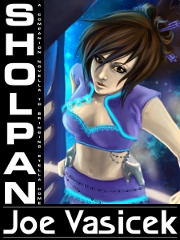
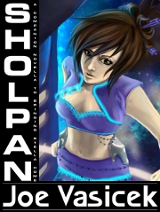
  • SEPTEMBER — Sholpan
  • OCTOBER — The Sword Bearer (The Twelfth Sword Trilogy, Book 2)
  • NOVEMBER — In the Beginning: A Short Story
  • DECEMBER — Gunslinger to the Galaxy (Gunslingers Trilogy, Book 2)

Lots of book 2s and finishing series. I suppose you could say this is the year where I start to finish what I’ve started.

And while the schedule may seem a bit daunting, the first four books are already ready to go, with Patriots in Retreat and A Queen in Hiding already up for preorder. Of the ones that are left, half are already written. So even though it seems ambitious, it’s actually quite doable, even if something crazy happens and I end up eloping to Mongolia before the end of the summer.

So that’s what I’m up to. I’ll get back to blogging as I can, but my first priority is writing, followed closely by publishing. Lots of behind the scenes stuff happening which I don’t have time to get into right now.

Take care, and thanks for reading!

Joe
Still alive, still writing

One of my friends asked why I don’t post on my blog anymore, and I realized that I haven’t posted anything here in forever. It’s not that I’m not doing anything worth blogging about, it’s just that it keeps slipping my mind to post something. So hopefully that will change.

On the writing side of things, I’ve decided not to give myself any specific direction for the rest of the month other than to write at least 2k words per day (or revise at least 10k words). After my last WIP took a month longer to finish than I’d expected, I’ve come to realize that I might be able to be more productive if I changed up which projects I’m working on. So for the next couple of weeks, I’m giving myself permission to work on anything, just to see what excites me the most right now.

I’ve been spending a lot of time with my writing friends recently. We’ve had some very interesting discussions, such as whether the 2nd amendment should apply to nukes and which modern cities are most likely to be abandoned in the next 200 years (Detroit doesn’t count, since it’s pretty much already there). It’s fun to get together and burn things, especially when you have a cast iron skillet and bacon. Good times–maybe I’ll post a couple pictures from the next bonfire.

I just finished all the new covers for Desert Stars, Stars of Blood and Glory, and Sholpan, so you can expect to see a few cover reveals soon! I’m keeping the artwork, but updating the typography to look more, well, professional.

Also, I just got an email from the Writers of the Future contest that they should have the finalists for the 4th quarter decided in about a week, and my story is still in the running! I’m super super nervous about this, because I think the story may actually be good enough to have a decent chance. You never can tell about these things, though–writers are horrible judges of quality when it comes to their own work. In any case, either way, I’ll probably self-publish that story once I hear back.

Winter is here, and I haven’t stocked up on LDS cannery hot chocolate yet. The shame! If the apocalypse happens between now and April, I’ll be broke (I am convinced that the LDS church offers hot chocolate as a food storage item so that we’ll have some form of currency in the event of the apocalypse).

In any case, I’d better get back to writing. Take care!

Trope Tuesday: Made a Slave

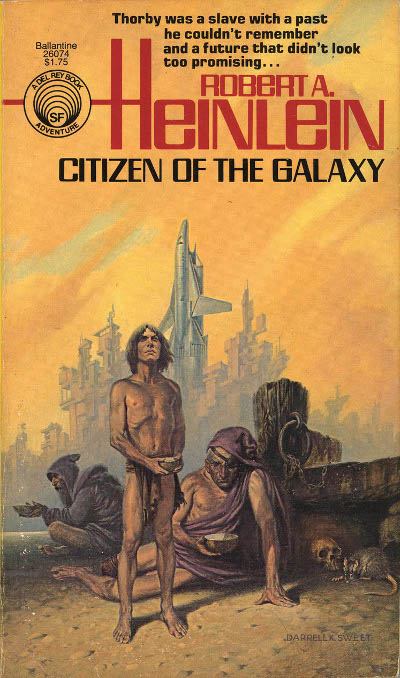
Citizen of the GalaxyJust because something is heinous doesn’t mean that it won’t make a good story.  In fact, the Rule of Drama practically guarantees that it will make a good story.  For some weird reason, we humans are fascinated by things in fiction that would horrify us in real life, and love it when our favorite characters are put into situations where we would never want to find our loved ones.  Perhaps there are many reasons for this, some of them better than others.

One of the worst situations in which anyone can find themselves is slavery, in which they basically become the property of someone else.  Slavery takes many different forms (and has many different tropes), but the thing they all have in common is the denial of freedom, dignity, and the basic human rights that most of us take for granted.  So when a character who’s free gets made a slave, you can usually expect to see some pretty high drama as a result.

As the tvtropes page for this trope explains it:

There is often a scene in which the character is being sold on the slave market, showcasing all the evils of slavery; the protagonist will witness how families are torn apart, will have to undress and be examined like an animal, and will perhaps be beaten … If he looks strong, he will be told that he will go to the galleys or the mines — a Fate Worse Than Death — or perhaps to the Gladiator Games. If she (or occasionally he) is attractive, she will be told that she will make a buyer very happy indeed.

If the main character is a slave, this is usually a part of his (or her) backstory; it’s fairly rare for a character to be born into slavery these days, probably because slavery is no longer considered an acceptable social institution in our modern Western society.  In older stories, the slave character may be of noble birth, setting up a sort of Cinderella story where they realize who they are and eventually come into their own.  That still happens, though usually it’s more about them taking power into their own hands to rise above their awful circumstances.

Surprisingly, this is a trope you’ll see with some frequency in science fiction.  Heinlein wrote a novel about it, pictured to the left (one of his better ones, in my opinion).  It happens quite a bit in the Sword and Planet subgenre, as well as any gladiator-type tale.  You’d think at some point our technology would become sufficiently advanced that we wouldn’t need to enslave each other, but apparently we will use manual labor in the future. Besides, at it’s core, slavery isn’t about acquiring cheap labor–it’s about owning someone, taking away their freedom and control.  Until human nature itself changes, we’re probably going to have to deal with slavery in one form or another for the forseeable future.

In any case, there’s something rousing–perhaps even inspiring–about the story of a character who rises above such an awful situation to win back, against all odds, their rights and freedoms.  That’s probably why we still enjoy retelling this trope.  A character can’t truly rise until they’ve bottomed out somewhere, and as far as hitting rock bottom goes, getting made a slave is pretty dang low.

I’ve played with this trope in a couple of my books.  In Sholpan and Bringing Stella Home, Stella goes through pretty much everything on the tvtropes page, which sets things up pretty well for … well, I won’t spoil it. 😉 In Stars of Blood and Glory, Abaqa tries to make the Princess Hikaru his slave, but since they’re both teenagers and he’s younger than her, it ends up being rather hilarious (she gets rescued soon afterward too, so it doesn’t stick long enough for the really bad stuff to happen.  And then the rescuers … well, I won’t spoil that either).

Right now, I’m playing with it a bit in Sons of the Starfarers, though I’m not sure where it’ll end up exactly.  Probably not so far as this trope, but I never really know what my characters will do–or what will happen to them.

U is for Universal Translator

In science fiction, whenever two characters from different planets or different alien races have to interact with each other, they almost always speak the same language or have some sort of universal translator that magically makes them able to communicate with minimal misunderstandings.  This is especially common in Star Trek, though it happens in just about every franchise involving a far-future space opera setting of some kind.

I’ve got to be honest, I think this is a cheap plot device that almost always weakens the story.  As a writer, it’s tempting to have something like this so you don’t have to deal with any pesky language barriers, but when you do this, you remove a major potential source of conflict, thus violating the rule of drama.  Also, you make your fictional universe feel a little less grand, your aliens a little less alien.  After all, if everyone can perfectly understand each other, then there must not be a huge difference between Earth and the far side of the galaxy.

There are some times when having a universal translator allows you to broaden the story and focus on other conflicts.  For example, if some sort of interstellar legislation is under review in the grand galactic council, you can’t spend all your time focusing on basic communication difficulties.

However, if this is the case, then you can usually overcome the language barrier through other means–a galactic lingua franca, for example, or translation tools that may or may not misfire on occasion (much like Google Translate).  Of course, if you’re writing a comedy like Galaxy Quest (or parts of Star Control II), then falling back on a universal translator is forgivable.  But if you’re going for believability and a sense of wonder, this trope isn’t going to do you any favors.

While linguists and technologists have been working on translation programs for some time (and admittedly making some significant breakthroughs), I’m extremely skeptical that we will ever develop a perfect universal translator in real life.  If we do, I expect we will have to develop a sentient AI as a prerequisite, since the nuances of language are so inseparable from the things that make us human.

Here’s how translation services like Google Translate work:

  1. They amass an enormous database of language material by scanning websites, newspapers, and other documents.
  2. They analyze this database to look at word combinations and frequencies, observing the likelihood that any one word will appear in combination with any others.
  3. They compare these combinations and frequencies with those in other language databases to match words and phrases.

This data crunch method of translation works fairly well for simple words and phrases, but it falls apart in the more complex grammatical structures.  I see this any time I try to use Google Translate with an Arabic source.  Arabic is an extremely eloquent language, with all sorts of structures that simply don’t work in English.  One mistranslated word can completely change the meaning of the entire text, and even when it works, the technically correct English translation sounds as if it’s full of errors.

The methodology also falls apart for languages that are too small to have much of an electronic database.  The Georgian language is a good example of this.  It’s spoken by only about 4.5 million people worldwide, most of them in the country of Georgia, which is predominantly rural.  Internet access for most of the population is very limited, and most Georgians who do communicate online tend to use the Roman or Cyrillic alphabets more often than their own.  As a result, Google Translate for Georgian is utterly useless–seriously, you’re better off just sounding out the letters and guessing at the meaning.  There are some other sites like translate.ge that try to fill the gap, but they seem to rely on actual lexicons, not databases and algorithms.

All of this is between entirely human languages that developed in parallel on the same planet–indeed, languages between human cultures that have traded and shared linguistic influences for thousands of years.  What happens when we encounter an alien race whose biology makes it impossible for them to make human-sounding noises?  Or an alien race that communicates through smell or electromagnetic impulses instead of sound?  What happens when humanity is spread out across hundreds of star systems, each of which periodically becomes isolated from the others for hundreds or even thousands of years?  When our definition of human is stretched so thin that we would not even recognize our far-future descendents as anything but alien?

There is so much wasted potential whenever a science fiction story falls back on a universal translator.  Case in point, compare Halo I, II, and III with Halo: Reach.  In the first three games, the Master Chief’s universal translator enables him to hear exactly what the enemy Covenant troops are saying.  This is great fun when you’re chasing down panicked grunts, but it tends to get old after a while.  In Halo: Reach, however, the human forces haven’t yet developed a universal translator, so everything the Covenant say is in their original language.  All of a sudden, the game went from a hilarious joyride to a serious war against aliens that felt truly alien.  That one little change did wonders to the tone and feel of the entire game.

Needless to say, you won’t find a universal translator in any of my books.  In Star Wanderers, the language barrier is the heart and soul of the story–it’s a science fiction romance between two characters from radically different worlds who don’t speak the same language, and yet overcome that to develop a strong and healthy relationship.  In Sholpan and Bringing Stella Home, Stella knows a language that is fairly similar to the one spoken by the Hameji, but there are still words and phrases that elude her.  This detail is critical because it impedes her ability to understand and adapt to the Hameji culture, leading to some major conflicts later in the book.

As someone who’s lived for significant periods of time in Europe and Asia and learned languages very different from English, I can say that the language barrier is not something that we as writers should avoid, but something that we should embrace.  There are so many interesting stories that can be told when two characters don’t speak the same language.  Please, don’t be lazy and write that out of the story through a cheap plot device!  Let your aliens be truly alien, and your worlds and cultures so fantastic that we can’t help but feel hopelessly lost in them.

S is for Space Station

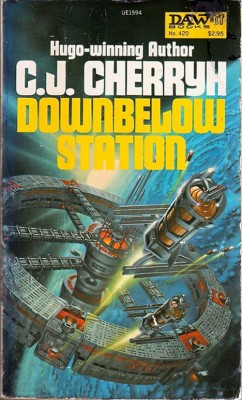
downbelow_stationPlanets are not the only setting for science fiction stories–space stations are common as well.  From the Death Star (“that’s no moon…”) to Downbelow Station, the Venus Equilateral to ISPV 7 to the Battle School in Ender’s Game, space stations are a major staple of any space-centered science fiction.

The reasons for this should be fairly obvious.  Before we can go to the planets and the stars, we need to have a permanent presence outside of this massive gravity well we call Earth.  The easiest and most logical place to expand first is to orbit, where supplies can be ferried up without too much difficulty and astronauts can escape in case of an emergency.  Indeed, with the International Space Station, that’s exactly what we’re doing right now.

In science fiction, of course, space stations go much further than they do in real life.  They’re often giant orbital cities, with thousands of people living and working there permanently.  Often, they feature some sort of rotating toroidal structure in order to simulate gravity.  If there are settlements on the planet below, the station often serves as a major hub for commerce, serving as a waypoint for interstellar merchants and wholesalers who ferry their wares up to orbit.  And if the planet is still being colonized, then the space station often serves as an important umbilical to the outside universe.

They can also have strategic value in the event of a war.  Battleships need to be serviced too, after all, and a station’s position in orbit can provide an excellent platform from which to bombard or lay siege to the planet.  Alternately, outposts at more distant locations like the Lagrange points can serve as a staging ground for future attacks–a sort of astronomical “high ground,” if you will.  If nothing else, abandoned stations may contain supply caches that can aid a fleeing starship, or provide shelter behind enemy lines, as was the case with the first Halo game.

Stations can come in all sorts of different flavors, from the puny to the magnificent.  The most eye-popping station of all is probably the Ringworld from Larry Niven’s series of the same name.  As the name would imply, the station is a giant ring–so huge, its circumference is the orbit of a habitable planet, with the sun at its center!  Gravity is provided by rotation, and night and day by giant orbiting panels that block out the sun at regular intervals.

My favorite stations, though, are the more realistic ones–the ones that I can imagine myself living on someday.  That was one of the things I enjoyed about Downbelow Station by C.J. Cherryh–her depiction of human expansion into space is eminently believable, and her stations are a natural extension of that.  I also really enjoyed her focus on the social dynamics of living on a giant station, and what it would be like to live in such a society.

The Battle School from Ender’s Game is another huge favorite of mine.  One of the advantages of building a structure in space is that gravity becomes malleable, so that some parts of the structure can simulate Earth-surface gravity while others leave people completely weightless.  The Battle School uses that to its advantage, with the main training room a zero-g laser tag battle arena, where the students have to learn how to stop thinking in terms of the planar dimensions, where “up” and “down” have any meaning.  It’s really quite fascinating.

It should come as no surprise that space stations pepper my own works.  They’re especially common in the Star Wanderers series, where few worlds have been terraformed and orbital platforms make up the majority of human living space (at least in the Outworlds).  In Sholpan and Bringing Stella Home, James, Ben, and Stella are all from a space station–a distinction that is especially useful for Stella, since her Hameji captors despise the “planetborn.” Genesis Earth takes that a step further, as spaceborn Michael and Terra have never been to the surface of a planet before until midway through the novel.  Just as going into space is paradigm shifting for us, the experience of walking on a planet proves just as transformative for them.

K is for Klingon

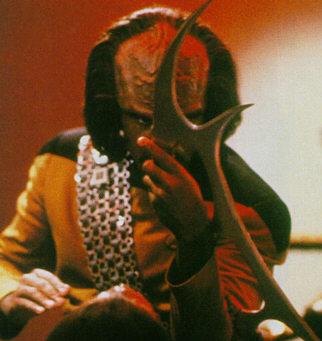
worfAh, the proud warrior race.  Where would science fiction be without it?  From Klingons to Ur-Quans, Wookies to Sangheilis, Mri to Green Martians to Vor Lords, warrior races have been a staple of space opera and space-centered science fiction pretty much since the genre was invented.

The concept behind this trope is the same as the one behind blood knight: honor is more valuable than life, and the best way to win or defend honor is through combat.  It’s not necessarily death that these guys live for, so much as glory and a chance to prove their prowess.  Unlike the always chaotic evil races, these guys usually follow a strict code of honor, sometimes to the point of absurdity.

When taken too far, of course, you get a planet of hats, where everyone has exactly the same values without any kind of depth or diversityFridge logic leads to Klingon Scientists Get No Respect.  After all, how did the Klingons build starships and discover space travel if they’re all constantly fighting each other?

Fortunately, we have plenty of real-world examples for how this sort of thing works.  Lots of human cultures have placed a high value on warrior qualities, including the Spartans, the Samurai, the Vikings, and the Mongols, just to name a few.  Of course, relying on stereotypes may lead to some unfortunate implications, so it’s not a good idea not to have too narrow or ethnocentric a reading of history.  Still, there’s a lot from history that we can glean.

In fact, you could make a valid argument that humans are the quintessential warrior race.  After all, we developed the technology to annihilate our own species before we put a man in space.  Even today, the amount of resources we spend on war and security far outstrips the amount of resources we dedicate to just about any other pursuit.  From the earliest ages, we engage in competitive physical sporting activities that mimic warfare and video games that outright simulate actual combat.  Our everyday language is full of violent terms like “on target,” “wiped out,” and “having a blast,” to the point where most of them are invisible.  Indeed, if we ever make contact with an alien race, we may very well find that we are the Klingons.

In that respect, this trope is just another way that science fiction acts as a mirror through which we can better see ourselves.  The proud warrior race fascinates us because we have so much in common with them.  Klingons are not just faceless orcs for the good guys to slay by the dozen–in many sci-fi universes, they (or individual members) actually become good guys.  Just think of Worf from Star Trek, or The Arbiter from Halo, or Aral Vorkosigan from Louis McMaster Bujold’s Vorkosigan Saga.  While on the surface, these guys seem absolutely crazy, when you start to explore them you frequently find a lot of depth.

I am fascinated by the concept of a warrior race.  I’ve played with it quite a bit in my own work, especially with the Hameji in Bringing Stella Home, Sholpan, and Stars of Blood and Glory.  The Hameji are an entirely spacefaring society that lives on the outer fringes of space, beyond any terraformed planets.  Because they live entirely on spaceships, they must capture and repurpose new spaceships just to have enough living space to expand their families.  Since their battleships also house their families, they make no distinction between military and civilian, and live by an extremely rigid social hierarchy with the patriarchal captain at the top and everyone else under his command.  Life is a privilege, not a right, and disobedience is strictly punished since it has the potential to put everyone’s life at risk.

As a result of all this, the Hameji are extremely vicious and warlike, living by a moral/ethical code that runs completely counter to our modern sensibilities but makes perfect sense to them.  They think nothing of slagging entire worlds and killing billions of people because to them, a world is a giant starship, and all those billions of people are so many enemy warriors.  They look down at the planetborn as weak because of their lack of discipline and obedience, and think nothing of enslaving them due to their strict social hierarchy.  In fact, because resources are limited and life is a privilege granted by the ship’s captain, the Hameji prefer to space their prisoners rather than keep them alive.

Man, those books were fun to write. 😀 Brutal, but fun.  Because the weird thing is, as much as you abhor a culture whose values contradict your own, when you really understand them, you can’t help but feel something of a connection.  You might not love them, but you respect them, and in a strange sort of way sympathize with them.  I’m not sure if that’s the experience with the Hameji that my readers have had, but that’s definitely been my experience in writing them.

So yeah, I’m definitely a big fan of the proud warrior race.  Expect to see me play with it many more times in the future.

New blurbs and an interview

First of all, I recently did an interview with Elizabeth Baxter on her blog, Small Blonde Hippy. In it, I discuss Star Wanderers, Stars of Blood and Glory, and a bit about my path to becoming an indie author.  You can find it here–go check it out!

Second, in preparation for the new ebook versions of my novels which I plan to release soon, I’ve been going over some of the old blurbs and updating them.  It’s harder than you might expect!  I think the new ones are getting better, but I’d appreciate some feedback before I post them.  What do you think?

For Genesis Earth:

A BOY AND A GIRL ON A VOYAGE TO AN ALIEN STAR.

Michael Anderson never thought he would set foot on a world like Earth. He only studied planetology to satisfy his parents, two of humanity’s most brilliant scientists. But when they open a wormhole to an alien planet—one emitting a signal that can only be a sign of intelligent life—he soon becomes caught up in the mission to explore it.

His sole mission partner, Terra, doesn’t care nearly as much about the science as he does, though. The child of a bitter divorce, she sees the mission as a chance to escape from the expectations of others.

Before they can work out their differences, a mysterious alien ship begins to hunt them down. Alone, twenty light-years from the nearest human being, they must learn to open up and trust each other—but how can they do that when they can’t even agree why they’re there?

As Michael struggles to keep the mission from falling apart, he is forced to reexamine his deepest, most unquestioned beliefs about the universe—and about what it means to be human.

For Bringing Stella Home:

HE’LL GO TO THE ENDS OF THE GALAXY TO SAVE HIS BROTHER AND SISTER.

The New Gaian Empire is crumbling. An undefeatable enemy from the outer reaches of space is sweeping across the frontier stars, slagging worlds and sowing chaos. No one dares to stand up to them—no one, that is, except James McCoy.

As the youngest son of a merchanter family, James never thought he would get caught up in the Imperial wars. But when his home world falls to the barbarian Hameji, his brother and sister, Ben and Stella, are taken away as prisoners and slaves. With the rest of the galaxy thrown into chaos, only James has the determination to rescue them—even if it means losing everything in the process.

For Sholpan:

SHE’D RATHER DIE THAN BE A SLAVE TO THE CONQUERORS OF HER HOME WORLD.

Stella McCoy never thought she’d fall prisoner to the barbarian Hameji. The oldest daughter of a working class family, all she wanted was to finish her apprenticeship and start a career an astrogator. But when the Hameji conquer her home world with their starfaring battle fleets, she is forced against her will to become a concubine to one of their highest ranking warlords.

Stella would rather die than spend the rest of her life as a concubine. Fortunately, as she looks for a chance to escape, she starts to make friends in high places. But in the dangerous world of harem politics, with new friends come new enemies—ones that have the power to destroy her.

One of the changes I plan to make is to insert the blurb immediately before the first chapter.  I’ve heard that a lot of ebook readers are downloading so many free books and samples that it often takes months before they get around to reading them. This parallels my own experience, so I figure it’s a good idea to have something in the beginning to remind readers what the book is and why they picked it up.

Other than that, no big changes except fixing typos and formatting errors.  I’m not the kind of writer who makes sweeping changes to a published story based on reviews, one-star or otherwise.

In other news, I’m almost finished with the second draft of Stars of Blood and Glory.  This has been a surprisingly fast revision, but then again, that might be because I haven’t sent it out yet to my first readers.  Based on their feedback, I’ll probably do another draft before putting it in the publishing queue.

Star Wanderers is going to be my main focus until the end of the year, though.  I’ve gotten a lot of excellent feedback on Part II, and should start the revisions in the next couple of days.  With luck, I’ll have it published by mid-July.  Part III is going to take a little more time, but I’m pretty confident I’ll have it up by October at the latest.

For that to happen, though, I need to get back to writing.  So long!

Yay for Kobo Writing Life!

So after a month of waiting, Kobo’s publishing platform, Writing Life, is finally up!  I just finished uploading all of my titles (except my short stories–I’ll just continue to distribute through Smashwords for now). Genesis Earth is already available, and the others should be up soon.

For those of you who are readers, this means that you’ll be able to find my books on Kobo almost as soon as they go up on Amazon.  The formatting will (hopefully) be cleaner, since I’ll have direct control.  Prices will generally be the same as on other platforms, but when I change the price on Amazon, I’ll change it simultaneously on Kobo, too–no waiting for weeks on end for the price to drop.

For those of you who are writers, I’ll be sure to keep you updated with thoughts on my experience.  So far, it looks pretty good: the royalty rates are better than Amazon (70% for titles priced $1.99 – $12.99, 45% for all other titles), the publishing process is faster, and the upload formats (.epub, .doc, .docx, .mobi, and .odt) are generally more flexible.  Downsides include a higher minimum threshold for direct deposit ($100 or every 6 months), fewer category choices, and what appears to be a forced 2:3 aspect ratio for cover art.

Besides that–oh, look, Bringing Stella Home and Journey to Jordan just went up too!  Man, that’s fast!  And it looks like the aspect ratios went back to 3:4, so I won’t have to redo the covers.  That’s a relief!  So yeah, I’ll be sure to keep you updated.

Also, in preparing my books for upload to Kobo, I discovered some pretty egregious formatting errors for the Barnes & Noble copies of Bringing Stella Home and Sholpan.  I’m not sure what happened–probably it had something to do with an older version of Calibre or Open Office, since I was overseas at the time and only had access to my netbook.  So yeah, if you downloaded one of the broken copies, just shoot me an email and I’ll send you the updated epub version, no questions asked.

In general, I need to revamp my publishing process.  Currently, it resembles jumping through a ring of fire while juggling half a dozen angry poodles.  Open Office, Mobipocket, Notepad, Calibre, KindleGen, DOS prompts, and Kindle for PC–yeah, I’d better get on that.  If you have any suggestions for free/open source software that does .mobi and .epub, please let me know.

In other news, I finished my first pass through Stars of Blood and Glory, and should be finished with draft 2.0 by the end of the week.  After that, it’s back to Star Home and Star Wanderers.

Sholpan is now available for free from Amazon!

My novella Sholpan just went free on the Amazon site!  Currently it’s at the #26 spot on the science fiction –> adventure bestseller list, and ranked #1,783 free in the kindle store overall.

If you’d like to check out some of my writing but haven’t gotten around to it yet, Sholpan is a good place to start.  It takes place in the same fictional universe as my novels Desert Stars and Bringing Stella Home, with several others in various stages of planning and completion.  It’s a companion novella for Bringing Stella Home, which means that it follows the first half of Stella’s storyline from the novel, with some extra scenes and backstory to flesh things out.

Of course, if you don’t like shopping at Amazon, you don’t have to be left out: Sholpan is also available as a free download from Barnes & Noble, Smashwords, Diesel, and Kobo.  All of my other ebooks are also available from those sites, so you can check them out there as well.

If you’ve already read Sholpan and enjoyed it, I would appreciate it immensely if you would take the time to rate it or post a review.  It only takes a moment, but it helps me out a ton.  And of course, I’m only looking for honest reviews, so I won’t be offended if you don’t give it five stars if you don’t feel it deserves it.

It isn’t free yet on Amazon’s other stores (UK, Germany, France etc), but I’ve contacted Amazon so hopefully that will soon change.  In the meantime, I hope you enjoy!

Finding the right price

One of the most controversial parts of indie publishing is deciding what price to set for your books.  Epublishing is so new that there isn’t any good data to base pricing decisions off of, and everyone seems to have a different feeling as to what is “fair.” Most readers (including me) agree that $12.99 is a little outrageous for an ebook, but beyond that, the opinions are all over the map.

When I published Genesis Earth, I priced it at $2.99 and haven’t changed it since.  It remains my best selling novel, but at maybe 5 to 10 sales per month, that really doesn’t mean much.  Besides, it’s impossible to know whether price has been the main factor in that.  I briefly dropped my other novels to $2.99, and it had absolutely no effect.

My ultimate goal is to make a living off of my writing, so if my books aren’t going to sell much better at $2.99 as they are at $4.95, from a business perspective I’d rather go with the higher price.  However, as a reader, I’m opposed to paying more than about $5 for an ebook, even from an author I love.  Others might be willing to pay more, but if I can build a readership large enough to support myself at the $4.95 price point, I’d much rather do that.

So, after experimenting with price points and thinking things through, here’s the scheme that I think I’m going to follow:

  • Short stories: $.99
  • Novellas and novel installments: $1.49
  • Short novels (under 90k words): $2.99
  • Longer novels (over 90k words): $4.95

The important thing, of course, is to build a readership that is willing to pay for my work.  I have no idea how to go about doing that, but as far as pricing goes it’s probably important to pick a scheme and be consistent.  Some of my friends are doing quite well at $2.99, while Dean Wesley Smith advises charging much more, but this is the scheme that makes the most sense to me–which honestly isn’t saying much.

About the only thing I can say is that the best way to push a title is to make it free.  All of my short stories were free at one point or another, and even after the initial rush was over, I was still getting around 80 to 100 downloads per week, sometimes more.  I have no idea how many of those people actually read the stories, or how many of those people went on to buy my other titles, but sales did seem to be slightly better across the board when I had at least something out for free.

Now that I’ve got eight titles out, I think it may be a good idea to drop the price of at least one of them for free and keep it there permanently.  David Gaughran recently featured a guest blogger who used this strategy to push her other titles at places like Barnes & Noble, which isn’t as indie friendly/agnostic as Amazon or Smashwords.

For that reason, I’ve decided to make Sholpan free again and to keep it there for the foreseeable future.  It’s already available for free at Barnes & Noble, KoboSmashwords, and Diesel, but Amazon hasn’t matched the price yet–and that’s where you can help me.

If you go to Sholpan’s Amazon page and scroll down to the Product Details, there’s a link that says “tell us about a lower price.” If you click on that, it asks for a link to the site that’s selling the ebook at a reduced price.  If enough people fill that out, I’m hoping that Amazon’s algorithms will take notice and match the price–so if you could take a moment and do that for me, I’d greatly appreciate it!

Also, if you’ve read the novella and enjoyed it, I’d appreciate it greatly if you’d take the time to post a favorable review.  Amazon has some weird thing where they copyright reviews written on their site, but for everywhere else you can just copy and paste the same review across multiple sites.  And a lot of them allow you to just leave a rating without writing a review, including Goodreads (Sholpan’s page is here).  I don’t want anyone to be disingenuous, of course, but if you enjoyed the book and took the time to rate it or leave an honest review, I would greatly appreciate it.

Thanks so much!  Until next time, I’ll see you around.