Excited for a new old project

So a couple of weeks ago, I picked up the manuscript for a novel I’d written years ago, looking to see how much work it would take to salvage it. It’s a direct sequel to Bringing Stella Home, with James McCoy (again) as the main character. Long-time readers of this blog may remember it as Heart of the Nebula.

I wrote the first draft in 2010-2011 (started it almost exactly four years ago, in fact), and right from the start I could tell there were a lot of problems with it. I tried to throw in a romantic subplot that backfired horribly, and several of the major plot points weren’t thought out very well. I pushed through and finished it, though, and in spite of a few extra arms growing out of weird places, there was a lot of stuff in there that I liked.

(Come to think of it, I think this was my NaNoWriMo attempt back in 2010. That would explain why I pushed myself to finish the thing, even though I knew it had problems. I dropped it before the end of November and didn’t pick it up again until March, but since the only other books I had going on at the time were Desert Stars and Bringing Stella Home, I forced myself to finish it just so I had another one. This was back when I was under the impression that every book needs at least five or six revisions to be any good, and that most of the work in writing is actually revising. I no longer labor under those myths).

Over the next few years, I went back to it from time to time to dust it off and run it through a revision pass. Unlike my other novels, though, this one was so broken to begin with that revising wasn’t enough. I changed a lot in the 2.0 revision, cutting out most of the worst problems but not really replacing them with anything better. In the 3.0 revision, I mixed things around a bit but didn’t substantially change the story. Then I went through a bunch of incomplete revision attempts, tweaking scenes and rewriting sentences, but not really changing the story as a whole.

Then last year, I read through all the sundry drafts that I’d written of this story and put together a massive set of revision notes for the 4.0 draft. This time, I tore into the heart of the story itself, reworking plot points and adding new subplots to replace the ones that didn’t work. I went through the whole thing by chapter and scene, making a list of bullet points for all the changes that needed to be made. I also made notes for scenes that I needed to write entirely from scratch, and other notes for scenes that I needed to recycle from previous versions.

It was a massive undertaking, and I got about halfway through it before putting it on hold for other projects. That was nine months ago. Between then and now, enough time passed for me to more or less forget most of my ideas for it.

So earlier this month, I had an opening in my schedule and decided to take a look at this one again. Instead of picking it up where I’d left of, I decided to start from the beginning. Immediately, I was struck by how much better the story was. This wasn’t the three-armed baby I’d stuffed into the closet back in 2011–this was a really compelling story, with an intriguing hook and great potential to go places. The further I got in it, the better it became.

There were a couple of scenes early on that just didn’t work. I could tell that I’d reworked them to death, so I threw them out and wrote completely new ones. This time, they actually worked! By completely getting rid of the problem scenes, amputating those mutated limbs at the base, I was able to free the story from the mess in which it had spawned. For some of these scenes, revision is not enough–they need to be tossed and rewritten from scratch.

Over the last two weeks, I’ve really gotten excited about this project. Not only do I think it’s salvageable, I think I can make a really awesome story from it. I just got to the middle of it today, past the part where I’d stopped back in February. For the next few chapters, I think I’m going to throw out the revision notes entirely and just see where the story goes. I’ll probably write toward the stuff I know I want to keep, but throw out everything else.

So yeah, you can expect to see Heart of the Nebula come out sometime next year, probably in the spring. I still want to run it past my first readers, but I don’t think it’s going to need any major revisions after this one (at least, not any that should take more than a week). Keep an eye out for it!


The Writer by Dosshaus on deviantART
Still alive, still writing

One of my friends asked why I don’t post on my blog anymore, and I realized that I haven’t posted anything here in forever. It’s not that I’m not doing anything worth blogging about, it’s just that it keeps slipping my mind to post something. So hopefully that will change.

On the writing side of things, I’ve decided not to give myself any specific direction for the rest of the month other than to write at least 2k words per day (or revise at least 10k words). After my last WIP took a month longer to finish than I’d expected, I’ve come to realize that I might be able to be more productive if I changed up which projects I’m working on. So for the next couple of weeks, I’m giving myself permission to work on anything, just to see what excites me the most right now.

I’ve been spending a lot of time with my writing friends recently. We’ve had some very interesting discussions, such as whether the 2nd amendment should apply to nukes and which modern cities are most likely to be abandoned in the next 200 years (Detroit doesn’t count, since it’s pretty much already there). It’s fun to get together and burn things, especially when you have a cast iron skillet and bacon. Good times–maybe I’ll post a couple pictures from the next bonfire.

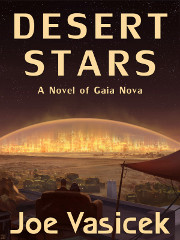
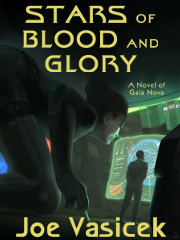
I just finished all the new covers for Desert Stars, Stars of Blood and Glory, and Sholpan, so you can expect to see a few cover reveals soon! I’m keeping the artwork, but updating the typography to look more, well, professional.

Also, I just got an email from the Writers of the Future contest that they should have the finalists for the 4th quarter decided in about a week, and my story is still in the running! I’m super super nervous about this, because I think the story may actually be good enough to have a decent chance. You never can tell about these things, though–writers are horrible judges of quality when it comes to their own work. In any case, either way, I’ll probably self-publish that story once I hear back.

Winter is here, and I haven’t stocked up on LDS cannery hot chocolate yet. The shame! If the apocalypse happens between now and April, I’ll be broke (I am convinced that the LDS church offers hot chocolate as a food storage item so that we’ll have some form of currency in the event of the apocalypse).

In any case, I’d better get back to writing. Take care!

How going indie is like driving a manual (plus a cover reveal)

A couple of weeks ago, I got a new (to me) car. It’s a 2005 Ford Focus / Saleen: a two-door hatchback that drives like a racing car and gets about thirty miles per gallon (WA-A-AY better than the gas guzzler I was driving before). It’s also a manual transmission, which is perhaps the biggest difference between this and my previous car.

This is my first time driving stick shift, and I have to say, it is a lot of fun! When you drive a stick, each hand and each foot is doing something different. There’s a lot more to keep track of, and if you do things in the wrong order (like braking without engaging the clutch, or starting without giving it some gas), you run the risk of making the car stall or doing nasty things to your transmission. On the other hand, driving a manual gives you a much better feel for the engine and what it’s capable of. You can feel when you’re putting too much stress on it–or alternately, when you can push it a little further.

I usually like to walk everywhere, but ever since I got this car, I just want to drive it! It’s way more fun than driving an automatic, even with (or indeed, because of) the extra challenge. So today, while I was walking to BYU campus (alas, the parking situation there makes driving a major pain), I got to thinking about it, and I realized that driving a manual is a lot like being an indie author.

When you’re an indie, you have a lot more things to juggle, just like driving a manual. This gives you much greater control of your career, but it also makes it easier to stall or screw up. At the same time, because of that extra control, you’ve got a much better feel for the market, and probably a better connection with your readers. And for me at least, the extra challenge doesn’t make it less enjoyable, it actually makes me enjoy it more!

Nothing Found

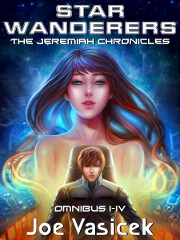
This week, I had the first day where I sold 100+ books in a 24 hour period. That was pretty awesome! I’ve been running a $.99 sale for Star Wanderers: The Jeremiah Chronicles (Omnibus I-IV), and it got picked up by a couple of ebook sites that really pushed it in the right way. Now that I know how to run a sale like that, I hope to do it again, perhaps for Black Friday. And if you haven’t picked up this one yet, it’s on sale for $.99 through Friday.

Marketing and promotion is one of the harder parts about going indie for me, kind of like how finding the clutch point and starting without stalling is hard when you first drive a manual. The more that I practice, though, the better that I get at it, and the more I enjoy it.

Another area where I think I’ve more or less stalled is in my covers. When I put out the first few Gaia Nova novels, I spent a fair amount of money hiring out artists to do the illustrations, but I did the typography myself. On those earlier covers, it definitely shows. For my later books, I worked with a bunch of cover designers, and seeing their work made me realize that there’s definitely room for improvement on those earlier ones, especially for the print editions.

I’ve decided to redo the covers for those three novels (Bringing Stella Home, Desert Stars, and Stars of Blood and Glory), keeping the illustrations but changing the typography. I tried to find a cover designer to do it, but I wasn’t able to find one that did satisfactory work, and after playing around with them for a bit I think I can actually do them myself. I’ve got a lot more experience with covers and cover design now than I did when I was starting out, and I’ve learned a few photoshop tricks as well.

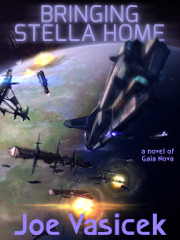
In any case, here is what I came up with for Bringing Stella Home:

BSH (cover)How do you like it? I rather like how it turned out, though I’ll admit I’m still learning. I did the new design just this morning, so I figure I ought to wait a couple of days and maybe seek out some feedback from professional designers before I go through with it.

I hope to have the new edition out before the end of the month. The content and story will all be the same, but the cover and metadata will be updated, and some minor errors such as typos will be fixed. I also hope to do the same thing with Desert Stars and Stars of Blood and Glory. Once the new editions are out, I’ll probably run some sales and giveaways with them, so definitely stay tuned!

As for my other projects, the next book in the Sons of the Starfarers series is out with my first readers, so it’s on track for a January release. My next WIP is The Sword Keeper, a fantasy novel I think I’ve mentioned before, and I hope to get that one knocked out in about a month or so. It’s already halfway finished, so the hard part is just ahead. There are also a couple of Gaia Nova novels that I’ve been meaning to get around to, and probably will before the end of the year.

That just about does it. Look out for more covers soon! I’m definitely having fun with the new ones. 😀

Goodreads giveaway for BRINGING STELLA HOME!

My cover designer is working on some new covers for Bringing Stella Home, Desert Stars, and Stars of Blood and Glory, so I figured I’d do a few Goodreads giveaways to get rid of the old versions that I have lying around. If it goes well, I may do some more giveaways in the future!

To sign up for a chance to win a copy, check out the widget below. The copies will be signed, though I’m not sure if I’ll be able to personalize them.

Thanks for reading!

Goodreads Book Giveaway

Bringing Stella Home by Joe Vasicek

Bringing Stella Home

by Joe Vasicek

Giveaway ends November 20, 2014.

See the giveaway details
at Goodreads.

Enter to win

X is for Expectations

What sort of expectations should or shouldn’t you have when you start self-publishing? What is plausible, and what is unrealistic?

Honestly, it’s probably a good idea to go into it with expectations that are fairly low. Most books don’t sell more than a handful of copies, and there’s no way to tell what will and will not take off (if there was, publishing would be a whole lot more lucrative). There’s nothing wrong with dreaming, but it will save yourself a lot of trouble and heartbreak (not to mention, money) if you go in expecting things to be kind of rough for the first few years.

When I started out with “Memoirs of a Snowflake” and a couple of other shorts, they didn’t hardly sell at all. Then I published Genesis Earth, and while I saw maybe 50 sales in the first three months, after that they fell off to single digits for the next two years (and yes, zero is a digit). I made my shorts free for a while, and they got tens of thousands of downloads, but that didn’t really translate into sales.

I didn’t expect to be a runaway bestseller right out of the gate, so I wasn’t too disappointed, but still it was kind of a blow. It was worse when Bringing Stella Home only got about ten sales in its first month before falling off to single digits just like Genesis Earth. I suppose things could have gone differently if I’d promoted a bit more aggressively, but that seemed like such a crap shoot that I channeled that energy into writing instead.

And it paid off eventually. When Star Wanderers took off, it generated some interest in all of my other books–not as much as I was expecting, but enough to bring them up to double digits every other month or so. My Star Wanderers books are all selling in the double and triple digits, and I couldn’t tell you why other than that the story just seems to strike the right chord with enough people. Those books would probably be doing better if I promoted them more, and since it looks considerably better than a crap shoot now, that’s something that I plan to be more aggressive about.

I think there’s an important difference between dreams and expectations. Dreams can suffer through setbacks considerably better, and help to maintain a sense of optimism that is perhaps one of the most important things an indie writer can have. Expectations, though, are much more practical and down to Earth, and can provide a useful yardstick for measuring progress. They can also provide an anchor in the face of uncertainty. Those are important things for an indie writer to have as well.

Expectations can be negative, though. If you don’t expect a book to do well, then perhaps you won’t put as much effort into it, sabotaging and self-rejecting your own work to the point where it really can’t do well. If you expect a book that hasn’t been selling at all to continue not to sell, you may lose sight of important opportunities to put it in front of the people who are most likely to fall in love with it.

Every genre is different, every book is different, and every writer is different. Because of this, no one can tell you exactly what to expect–including me. Like me, you might be stuck making nothing but pizza money for the first two years–or your books might take off fantastically well right from the start. There’s no way to know what will happen until you get your feet wet.

C is for Cover Art

They say not to judge a book by its cover, but the truth is we all do. In fact, the cover probably sells a book more than the book blurb does. Whether in print or in digital format, it’s the first part of the book that readers see, and often makes the difference between “meh” and “hmm, what is this? I want to find out more!”

So how do you do cover art when you’re an indie? Is it better to make your own, or hire a designer? If you do hire a designer, how much can you expect to pay?

Honestly, when I started out, I think I invested a little too much into my covers. The first novel I published was Genesis Earth:

thumb (Genesis Earth)The cover art is gorgeous, and from an artistic view I’m very, very happy with it, but it took a long time for the book to earn that money back–far longer than the expense really justified. I would love it if all of my books could have awesome covers like this, but when you’re first starting, not every project justifies that sort of expense.

The thing to keep in mind when you do covers as an indie is that you can always change them. When you first start out and you don’t know how well a book is going to do, there’s nothing wrong with doing it on a shoestring budget and reinvesting those earnings later. There is a bit of a feedback loop, where a bad cover will hold a book back, but it’s not that hard to make a cover that’s not great, but acceptable.

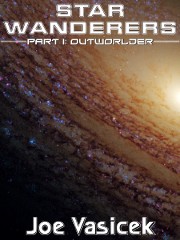
Case in point, check out the first cover I did for Star Wanderers: Outworlder (Part I):

Star Wanderers I (thumb)The cost for this art was $0. I made it myself, using freeware fonts and public domain space art from NASA. It’s not nearly as gorgeous as the cover for Genesis Earth, but it says “space!” in a sci-fi sort of way, and that’s what I was going for. And even with a mediocre cover, this was the book that really started to take off.

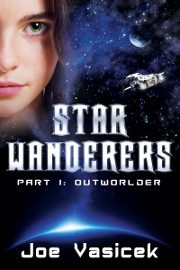
Of course, as soon as those books were earning enough, I made plans to reinvest that money in proper cover art. Here is the new cover for Outworlder:

SW-I alt (thumb)I’m working with a cover designer right now to redo all the other ones in the series along a similar vein. In the next couple of weeks, expect to see some cover reveals!

In general, I’ve found that there are three approaches to cover art: doing it completely yourself, hiring a cover designer to make an cover from stock art, and hiring an illustrator to paint an original illustration. The last is probably the most expensive, though it does depend on the illustrator–you can find good illustrators on sites like Deviantart whose rates are quite reasonable. But the quality varies a lot.

Besides the art itself, a key part of the cover is the typography. One thing I’ve learned from working with cover designers is that they can do amazing things just with the fonts and font effects for your title. That’s probably the biggest benefit of going with a cover designer as opposed to an illustrator.

In fact, if you can afford to commission an original illustration, you can probably find a cover designer who will give you a deal on the typography. It is something you can learn yourself, but the difference between you and a cover designer is often the difference between acceptable and awesome.

Like anything with self-publishing, cover design is something you can learn–perhaps something you can excel at–but you probably can’t excel at that and everything else at the same time. What I’ve found is that I’m okay at doing my own cover art, but not awesome. From here on out, I expect I’ll be hiring cover designers.

At the same time, my books are earning enough that I can justify that expense. If I were first starting out, I’d probably DIY it or barter with other writers who do their own covers. A cover isn’t static–you can always change it later.

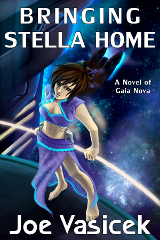
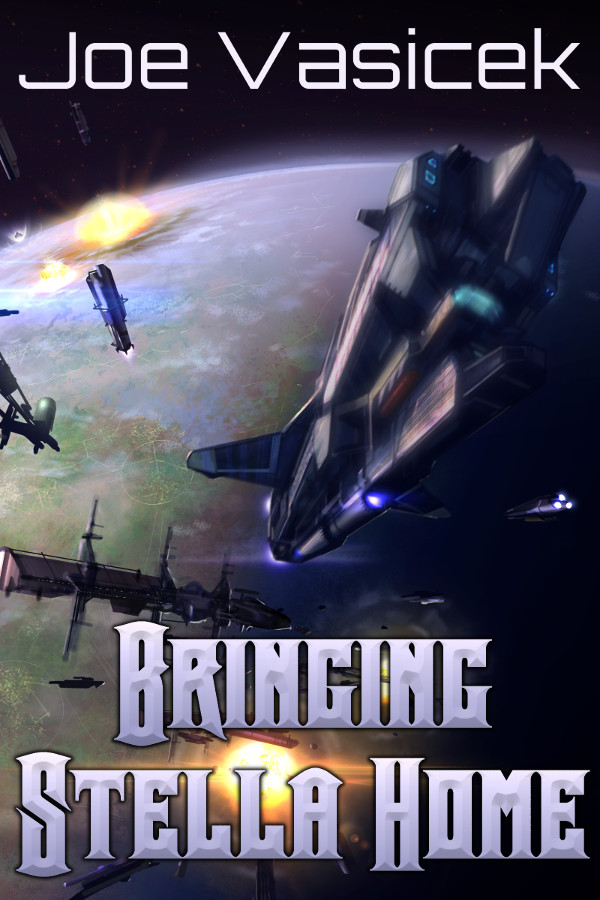
Case in point, check out the covers for Bringing Stella Home:

thumb (Bringing Stella Home)thumb 2 (Bringing Stella Home)

I got a good deal on the illustration for the first cover, but frankly, it’s not that great. The second cover was more expensive, but I’m much happier with it. What I’m probably going to do next is find a cover designer who can redo the title/author typography, since I did that myself and it kind of shows.

So that’s been my experience with cover art. It’s important to get it right, but you do have to work to find the best solution that works for your budget. Fortunately, when you’re an indie, your cover is something you can always upgrade.

Lindsey Stirling, Nichieri, Susan Boyle, and thoughts on discoverability and greatness

I saw a couple of things on Youtube that made me think recently about the importance of quality work, especially in the arts.

I’m a casual fan of Lindsey Stirling–I’ve watched most of her videos, put them on in the background from time to time, and get a kick out of following her career. For those of you unfamiliar with her, she’s a Youtube sensation who combines violin music, dance, and dubstep/electronica, often in some interesting and beautiful places. This is her most popular video, and probably her best work so far:

Her career is interesting because it follows a path very similar to a lot of self-published authors. She started by putting out videos on Youtube, built up a huge following that way, turned down a number of deals from traditional record labels and put out her first album herself. Now, she’s touring all over the world, collaborating with a bunch of other Youtube artists, and doing a lot of other amazing stuff completely independently.

The other day, I was really surprised that she was on America’s Got Talent back in 2010. Apparently, this was before she got really big, and the connections she made while on the show helped her find success later on:

Two things stood out to me from that video.  First, the judges were right–even though she was pushing herself, this was not her best work, and it showed in a way that was rather glaring. I hate to say that because I like so much of her stuff, but it’s really true–her performance fell short.

The second thing that stood out to me was her response to the criticism. It must have been incredibly painful to stand up there in front of everybody and get hammered like that, but she still managed to smile, be gracious, thank the judges, and focus on the positive without being confrontational. That takes class.

When I was in Georgia, I watched a lot of TV, especially on the Rustavi 2 channel. One of the most popular shows is Nichieri (ნიჭიერი), a talent competition show set up much like The X Factor or America’s Got Talent. Even though I didn’t really understand anything the people were saying, I could still really tell when a contestant did some truly amazing.

There’s something about greatness that makes you sit up and pay attention–something that makes it stand out on its own. It’s something timeless and stirring, something that drives you to keep coming back to it, or at least to remember it long after it’s passed. With poor quality stuff, like bad writing, clumsy performance, or the like, you tend to forget it (unless of course it’s a spectacular failure, which in a weird way gains a sort of greatness of its own to a certain extent). But good quality stuff sticks with you–indeed, it’s almost like it becomes a part of you. It certainly becomes part of the culture.

When it comes to talent shows like Nichieri, The X Factor, and America’s Got Talent, the greatest moment has to be Susan Boyle. Everything about it is just perfect, from the awkward, homely way she started out to how she blew everyone away with her stellar performance. She didn’t look like she had it, and she certainly didn’t act like she had it, but she did, and she knew it. She didn’t settle for anything less than her best, and she didn’t let anyone else put her down.

In a lot of my discussions with other indie writers, we talk a lot about discoverability. We’re all anxious to be read, to be heard, to be discovered–to get our shining moment. The thing is, though, that moment is not enough if you don’t have quality work. It’s not going to keep you down or “ruin” your career, necessarily–Lindsey Stirling has come a long way since her disappointing performance on America’s Got Talent. But that’s only because she produces quality work.

I think I need to spend a lot less time trying to boost my discoverability and a lot more into producing the best work that I possibly can. The thing to remember, though, is that quality is subjective and you can’t please everyone. As Lindsey later said, “A lot of people have told me along the way that my style and the music I do … is unmarketable. But the only reason I’m successful is because I have stayed true to myself.” You can’t compare yourself against others, either–you can only really compete against yourself.

How do you know when you’ve done your best? That can be a little tricky, partly because it’s a moving target. I think Genesis Earth and Bringing Stella Home represent my best work at the time, though when I look back at those books I see things that could be improved. I tend to think that Desert Stars is my best work to date, though I’m not so sure anymore. Do I only think that because I struggled so much and for so long with that book? Just because something is a joy to create doesn’t mean that it’s any less than something you toiled and suffered over.

Star Wanderers was both a gift story and an experiment. The novella format was new to me at the time, so I did a lot of learning on it. Outworlder, Dreamweaver, Homeworld, and Deliverance came to me in a white-hot creative heat, but Sacrifice and Reproach were a real struggle. Is there a discernible difference in quality between them? Not that I can tell. I do think that the later stories hold together better on their own, though. I didn’t really hit my stride with the novella format until I started branching off into other characters’ viewpoints.

This is all on my mind because my next big project, Sons of the Starfarers, is something that I really want to do right. I don’t just want to write it for the sake of putting it out there (though I recognize that writing quickly doesn’t always mean sacrificing quality). I don’t just want to put it out so that I can make my work more “discoverable,” though that’s certainly a motivation. I don’t even just want to do my best. I want to improve my writing and storytelling so much that this becomes the best thing that I’ve ever written.

At LTUE a few years back, Tracy Hickman said that as writers, it is important for us to believe that we have not yet written our best book. That’s so incredibly true. You have to always believe that you can do better, not to make you depressed when you look back, but to make you enthusiastic as you look forward. Imagine what would have happened if Lindsey Stirling thought that her performance on America’s Got Talent was the best that she’d ever do! Her career hadn’t even dawned yet.

I think it’s the same with me. I’ve gained a little exposure, suffered a few setbacks, and experienced a small measure of success, but the big stuff is yet to come. And even though I may not want to be the next Brandon Sanderson or Orson Scott Card in terms of popularity, I do need to shoot high in terms of quality. Before I work on my discoverability, I need to make sure that I’m putting out some truly amazing stuff. I need to shoot for greatness.

Trope Tuesday: Made a Slave

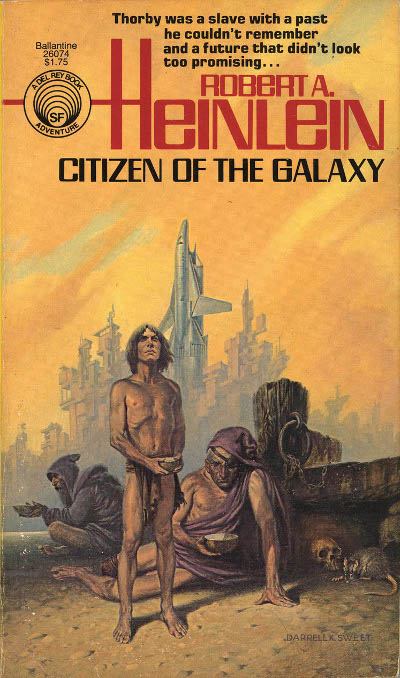
Citizen of the GalaxyJust because something is heinous doesn’t mean that it won’t make a good story.  In fact, the Rule of Drama practically guarantees that it will make a good story.  For some weird reason, we humans are fascinated by things in fiction that would horrify us in real life, and love it when our favorite characters are put into situations where we would never want to find our loved ones.  Perhaps there are many reasons for this, some of them better than others.

One of the worst situations in which anyone can find themselves is slavery, in which they basically become the property of someone else.  Slavery takes many different forms (and has many different tropes), but the thing they all have in common is the denial of freedom, dignity, and the basic human rights that most of us take for granted.  So when a character who’s free gets made a slave, you can usually expect to see some pretty high drama as a result.

As the tvtropes page for this trope explains it:

There is often a scene in which the character is being sold on the slave market, showcasing all the evils of slavery; the protagonist will witness how families are torn apart, will have to undress and be examined like an animal, and will perhaps be beaten … If he looks strong, he will be told that he will go to the galleys or the mines — a Fate Worse Than Death — or perhaps to the Gladiator Games. If she (or occasionally he) is attractive, she will be told that she will make a buyer very happy indeed.

If the main character is a slave, this is usually a part of his (or her) backstory; it’s fairly rare for a character to be born into slavery these days, probably because slavery is no longer considered an acceptable social institution in our modern Western society.  In older stories, the slave character may be of noble birth, setting up a sort of Cinderella story where they realize who they are and eventually come into their own.  That still happens, though usually it’s more about them taking power into their own hands to rise above their awful circumstances.

Surprisingly, this is a trope you’ll see with some frequency in science fiction.  Heinlein wrote a novel about it, pictured to the left (one of his better ones, in my opinion).  It happens quite a bit in the Sword and Planet subgenre, as well as any gladiator-type tale.  You’d think at some point our technology would become sufficiently advanced that we wouldn’t need to enslave each other, but apparently we will use manual labor in the future. Besides, at it’s core, slavery isn’t about acquiring cheap labor–it’s about owning someone, taking away their freedom and control.  Until human nature itself changes, we’re probably going to have to deal with slavery in one form or another for the forseeable future.

In any case, there’s something rousing–perhaps even inspiring–about the story of a character who rises above such an awful situation to win back, against all odds, their rights and freedoms.  That’s probably why we still enjoy retelling this trope.  A character can’t truly rise until they’ve bottomed out somewhere, and as far as hitting rock bottom goes, getting made a slave is pretty dang low.

I’ve played with this trope in a couple of my books.  In Sholpan and Bringing Stella Home, Stella goes through pretty much everything on the tvtropes page, which sets things up pretty well for … well, I won’t spoil it. 😉 In Stars of Blood and Glory, Abaqa tries to make the Princess Hikaru his slave, but since they’re both teenagers and he’s younger than her, it ends up being rather hilarious (she gets rescued soon afterward too, so it doesn’t stick long enough for the really bad stuff to happen.  And then the rescuers … well, I won’t spoil that either).

Right now, I’m playing with it a bit in Sons of the Starfarers, though I’m not sure where it’ll end up exactly.  Probably not so far as this trope, but I never really know what my characters will do–or what will happen to them.

Trope Tuesday: Foolish sibling, responsible sibling

Whenever you’ve got two characters who interact with each other a lot, chances are that one is a foil of the other.  There are a lot of reasons for this, but the big reason is that it helps to highlight certain character traits by providing contrast.  Because the contrast is the important thing, the relationship between the characters can take a variety of possible forms.  It may be that one is the hero and the other the sidekick, or (if they’re villains) perhaps one is the Big Bad and the other is the Dragon.  If enemy mine or one of the other frenemy tropes is in play, they might be on opposing sides.

Foolish sibling, responsible sibling is what happens when the character foils are siblings.  It’s a subtrope of sibling yin-yang that contrasts the character traits of responsibility and recklessness, duty and prodigality, and how the two opposites somehow manage (or not) to live together and stand up for each other in spite of their differences.

It may be used to set up an aesop, usually along the lines of “be like the responsible sibling, not the foolish one,” but that’s not always the case.  It might be that the younger sibling is closer to earth and the uptight responsible one needs to learn how to loosen up.  Simon from Firefly kind of fits that mold, though he learns to loosen up not from his sister River so much as from the rest of Mal’s crew.

In a lot of stories, it’s not necessarily meant to send a message so much as set up an interesting dynamic between two equally sympathetic characters.  In the movie Gettysburg, for example, Lawrence Chamberlain is the commanding officer of the regiment, and thus has to lead the men, follow military protocol, etc, while his annoying younger brother Tom calls him by name and forgets to salute him, runs around chatting it up with union soldiers and rebel prisoners alike, and generally seems a lot more loose and carefree.

Usually, the responsible character is the older sibling, for reasons that should be fairly obvious to anyone who grew up with siblings.  As the oldest child in my own family, I can readily sympathize with the dutiful son, since I more or less was one.  That’s not always the case, though.  In sitcoms where the middle child is the main character, usually it falls on them to thanklessly pick up the slack (yeah, being the middle child pretty much sucks).  Bart and Lisa from The Simpsons are a good example of this.

I played with this a little in Desert Stars with some of the minor characters: as the second oldest, Surayya generally tries to do things by the book, whereas Amina tends to be more mischievous and conniving.  Michelle and Lars also fall into this trope, with Lars a carefree academy dropout and Michelle a hardworking (though also fun-loving) mechanic on her father’s ship.  Between Desert Stars and Bringing Stella Home, though, Lars completely turns around, so that by Heart of the Nebula (not yet published) he’s quite possibly one of the most responsible characters in the book (and I still have yet to give him a viewpoint … hmmm).

In Sons of the Starfarers, I’m playing with this character dynamic a lot.  Isaac is the oldest son, who always knew he would leave on his father’s starship to fulfill the Outworld traditions and seek his fortune as a star wanderer.  Aaron, on the other hand, kind of got roped into the whole thing unexpectedly (see Star Wanderers: Benefactor) and hasn’t yet matured.  The events of the story will no doubt give him a growth arc, but in the meantime, the dynamic between the two of them is a lot of fun to write.

There are a lot of other issues in that relationship to play with too, such as promotion to parent and always someone better, but I’ll save those for another Tuesday.

July Smashwords sale–all books 50% off!

swlogoEvery summer, Smashwords does a sale in which authors can enroll their books.  This year, I’ve enrolled all of mine at 50% off, so all of them are under $2.50.  Check it out!

thumb (Genesis Earth)Genesis Earth
A boy and a girl on a voyage to an alien star.
Price: $4.95 $2.48

thumb 2 (Bringing Stella Home)Bringing Stella Home
He’ll go to the ends of the galaxy to save his brother and sister.
Price: $4.95 $2.48

thumb (Desert Stars)Desert Stars
A tale of adventure and romance from the fringes of an interstellar empire that has forgotten its holiest legend: the story of Earth.
Price: $4.95 $2.48

thumb (Stars of Blood and Glory)Stars of Blood and Glory
The only hope for the last free stars now lies on the path of blood and glory.
Price: $4.95 $2.48

SW-TJC (thumb)Star Wanderers: The Jeremiah Chronicles (I-IV)
He wanders the stars in search of a home. Instead, he got a girl without one.
Price: $4.99 $2.49

Star Wanderers II (thumb)Star Wanderers: Fidelity (Part II)
Is fidelity worth the price of freedom? Can love take root beyond the stars?
Price: $.99 free!

Star Wanderers III (thumb)Star Wanderers: Sacrifice (Part III)
She gave up everything to wander the stars with him. Now, he must do the same.
Price: $2.99 $1.49

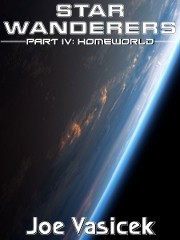
Star Wanderers IV (thumb)Star Wanderers: Homeworld (Part IV)
They’ve finally found a world to call home. But first, they have to fight for it.
Price: $2.99 $1.49

SW-V Dreamweaver (thumb)Star Wanderers: Dreamweaver (Part V)
He saved her from death, but to save him, she must command the power of dreams.
Price: $2.99 $1.49

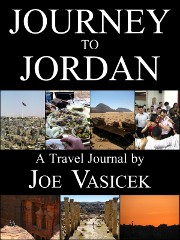
thumb (Journey to Jordan)Journey to Jordan
Travels of a young Mormon writer to Jordan, Egypt, and the Holy Land.
Price: $2.99 $1.49

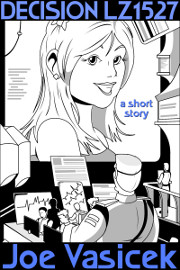
thumb (Decision LZ1527)Decision LZ1527
A boy, a girl, and a whole crew of matchmakers.
Price: $.99 free!

One of the great things about Smashwords is that these prices are the same throughout the world–no extra surcharge for international sales.  So if you live outside the United States and don’t have a US bank account, these are the best prices you’re going to find.

These books will remain 50% off on Smashwords through the month of July.  Just use the coupon code SSW50 to get the discount. Smashwords does accept Paypal, so you don’t have to sign up for an account or share your credit card information to purchase.

If you’ve been meaning to check out some of these books but haven’t gotten around to it, this is a great way to try them out.  And if you want to sample them first, the first 15% to 25% is available on each book’s Smashword’s page.

Enjoy! 😀