WIP Excerpt: Captive of the Falconstar, Chapter 5 (AI generated)

I’ve been experimenting a lot with AI-assisted writing, and I think I’m starting to produce some decently good work with it. Of course, in six months I’ll probably look back on what I’m producing now and feel utterly embarrassed by how bad it is, but still, it’s measurably better than the stuff I was producing six months ago.

Here is an excerpt from chapter 5 of my current WIP, Captive of the Falconstar. This scene is taken from the AI revised draft, and is 100% AI generated. It contains some mild spoilers, but nothing too major for the book or the series.

In the next draft, I will make a bunch of human revisions based on my notes, such as later events I need to forshadow, worldbuilding elements that I need to fix, or adjustments to the character’s motivations and growth arc—in other words, things that the AI doesn’t do as well. And in the draft after that, I’ll throw everything out and rewrite the scene completely from scratch, using the previous AI draft as little more than a guide or reference.

In other words, this AI generated version of the chapter is merely supposed to simulate the version of this chapter that I will actually write. It’s not intended to replace my own writing, or to be revised into the final published version. It’s a crappy first draft, in other words, and the reason I’m generating it with AI is so that I can iron out any potential wrinkles with the overall story arc, and fix them before they grow into huge creative blocks for me later on in the writing process. Generating the crappy first draft with AI is great, because 1) it’s super fast, and 2) it sucks up less of my mental energy, allowing me to focus on the broader story issues and not lose sight of the forest for the trees.

Anyhow, here is the AI version of scene 5.6 (Zenoba) before performing any human revisions. My process was that I generated three or four different versions of the chapter using Sudowrite, stitched together the parts I wanted to keep, and used Sudowrite’s AI revision tools to touch it up. Enjoy!


Zenoba moved through the austere corridors of the Falconstar, her gait measured but her mind a turbulent sea. She navigated the ship with an urgency that belied her usual composure, her thoughts a tempest of strategy and emotion. Her hands, usually so steady, now betrayed her with their tremble as she approached the door to Lady Nari’s quarters.

She hesitated at the entrance to Lady Nari’s quarters, steeling herself for the confrontation ahead. 

“Enter,” came the matriarch’s voice from within, a command more than an invitation.

The door slid open with a soft hiss, and Zenoba stepped inside, her tall frame stiff with determination. The room was dimly lit, the walls adorned with tapestries depicting the Valdamar clan’s storied past. Lady Nari sat on a plush chair, her silver hair reflecting the light from the hologram projector that cast ghostly images of distant stars across the ceiling.

“Lady Nari,” Zenoba began, her voice steady despite the turmoil within, “I come seeking counsel.”

“Sit, Zenoba.” Lady Nari gestured to a seat opposite her, her brown eyes locking onto Zenoba’s with an intensity that could bend steel. “You refer to the marriage alliance with the Naimal clan, I presume?”

“News has reached me of Khasan’s intent to take another wife,” Zenoba said, each word measured, betraying none of the desperation clawing at her insides.

“Indeed,” Lady Nari said, finally turning to face her daughter-in-law. Her eyes held the wisdom of years and the unyielding strength of the matriarch she was. “It is a favorable alliance for our clan.”

“Is it truly wise?” Zenoba asked, desperation seeping into her tone. “Khasan already has a loyal wife who bears his child. This could divide our clan and create conflict within our own ranks.”

“Conflict?” Lady Nari scoffed. “Polygamous marriages have been part of our traditions for centuries. You knew this when you married my son.”

Zenoba clenched her fists, her nails digging into her palms. “Yes, I am aware of our traditions, but I never imagined that Khasan would consider such a move without even consulting me. I cannot help but feel betrayed.”

“Betrayed?” Lady Nari’s voice hardened, her eyes narrowing. “You are not the one making sacrifices for the good of our people. You should know your place and humbly submit to your husband’s decisions.”

Zenoba was taken aback by the harshness of the woman’s words. She had always looked up to her as a mother figure and expected support, not rejection. As she processed the sting of her words, Zenoba couldn’t deny that her own pride and fear were also at play. She didn’t want to lose Khasan’s love, but she also didn’t want to give in to tradition and loyalty without a fight. It was a constant inner battle between what was expected of her and what she truly wanted for herself.

Zenoba took a breath, willing her voice not to falter. “But it undermines my position, and what of the child I carry? Their future could be jeopardized by this—”

“Your position?” Lady Nari’s tone was reproachful. “Or your pride? You speak as if you are the only one affected by this. You forget your place, Zenoba.”

“Forgive me, but my place—as you say—is at Khasan’s side, in command of the Falconstar. If he were to marry again—”

“Then you will welcome Lady Tsarnai as you should,” Lady Nari interjected, her rebuke sharp. “Khasan’s choice honors the Valdamar name. It secures our future.”

As Zenoba stood before Lady Nari, the coldness of the room seemed to seep into her bones. Her pleading eyes searched for any sign of compassion in the ruler’s face, but found only a stern and unyielding expression. It was as if Lady Nari had been molded from the ice that covered the outer systems.

“Is this truly what he desires?” Zenoba’s voice trembled with emotion as she pleaded for understanding.

Lady Nari’s gaze remained unflinching. “His heart belongs to you, but his duty is to our clan. Your duty is to support him as his queen and make decisions for the benefit of our people.”

As the words hit Zenoba, she felt her whole body stiffen in shock. For so long, she had believed that her cleverness and manipulation would secure her future, but now, that certainty was crumbling beneath her feet. The once unbreakable bond between herself and her husband now seemed fragile and uncertain. She couldn’t help but feel a pang of fear as she realized that perhaps her control wasn’t as absolute as she thought it was.

“Khasan knows what must be done for the greater good,” Lady Nari continued, her gaze unwavering. “This alliance with the Naimal clan will secure our future. It is bigger than any one person’s pride or fear.”

Pride or fear—the words echoed in Zenoba’s mind. Was it pride that made her want to hold her place at Khasan’s side, or fear of being replaced, diminished? She swallowed hard, the contemplative silence stretching between them.

“Consider this a lesson in humility,” Lady Nari concluded, her voice softening just slightly. “A true leader knows when to yield for the greater good.”

Zenoba rose, her movements automatic. “I understand,” she lied, her voice hollow. She did not look back as she left Lady Nari’s quarters, the weight of the older woman’s expectations pressing down on her like the gravity of a collapsed star.

As she turned to leave, her mind was already racing, plotting her next move in the intricate dance of power that surrounded them. But beneath the veneer of calculation, there lay a fissure in her resolve, a vulnerability she dared not show.

As the door clicked shut, Lady Zenoba Valdamar, queen of the Falconstar, was left alone with her inner turmoil. In the silence and stillness of the corridor, she couldn’t help but doubt herself and her abilities. A lone tear escaped her eye before she quickly wiped it away, reminding herself that weakness was not an option in the days ahead. She needed to be cunning and resilient, but she couldn’t shake off the fear and uncertainty that consumed her.

Happy Easter!

For God so loved the world that He gave His Only Begotten Son, that whosever believeth in him should not perish, but have everlasting life.

For God sent not His Son into the world to condemn the world; but that the world through Him might be saved.

John 3:16-17

How I would vote now: 1953 Hugo (Best Novel)

The Nominees

The Demolished Man by Alfred Bester

The Actual Results

  1. The Demolished Man by Alfred Bester

How I Would Have Voted

  1. (Abstain)

Explanation

I didn’t hate this book—I did finish it, after all—but I had some issues with it, especially the ending. It’s basically a futuristic murder mystery / true crime piece, where the protagonist is a telepathic detective who figures out immediately who committed the murder, but has to jump through a bunch of hoops in order to gather the evidence and prosecute the case. The story isn’t a whodunnit so much as a character piece about the motivations behind murder, with a fair amount of action and some intriguing world-building thrown in for good measure.

There’s a lot of good, old-fashioned sci-fi stuff in here, especially with the espers and the telepaths (which were all the rage back in the science fiction of the 50s), but the ending rubbed me the wrong way, because it’s not about putting the murderer behind bars, but in “demolishing” him, brainwashing him so completely that he’s not even really capable of committing such a crime. Just like telepathy and extra-sensory perception were big in golden-age sci-fi, so was the idea that an elite class of benevolent technocrats could use The Science to usher in a futuristic utopia. That was what rubbed me the wrong way about this one.

There were also some hippy/beatnik elements in it that I didn’t like, such as a dinner party with some flagrant and gratuitous nudity. For all that golden age and new wave authors loved to project a post-sexual revolution future, most of them did a really piss-poor job anticipating its second- and third-order effects (Heinlein being one of the chief offenders—but we’ll get there). In spite of all this, I wouldn’t go so far as to vote “no award” over this one. Rather, I’d probably just abstain.

As a side note, 1953 was the first Hugo Award ever issued. As such, the nominating and voting process hadn’t been ironed out yet, so The Demolished Man was the only nominee.

Our world makes a lot more sense…

…when you realize that the internet is a factory for creating cults, and that social media and smart devices are force multipliers for this effect.

Before the internet, your “community” was a geographically bound group of people, who were diverse enough (that’s “diverse” with a lower-case d) to give you an interesting variety of perspectives and worldviews. Also, you typically interacted with each other while physically in person. If you said or did something extremely embarrassing, it typically didn’t get beyond your immediate circle of associates, or the people you decided to tell about it.

The internet changed everything by turning “community” into something that was bound by interests, hobbies, perspectives, or worldviews. Now, every person with a weird and perverse fetish, who before kept it hidden because they were the only person in their community who held it, now could find all the other people in the world who held the same weird and perverse fetish, and create a “community” around that thing. Same with crazy political views. Same with radical ideology.

At the same time, if you said or did something embarrassing, and it went viral, your embarrassing moment would be broadcast far beyond your immediate circle of associates, to people you had never before met—as well as to people whom you would never want to hear about it. This effect was multiplied by the development of social media, and it led people to self-censor and conform to whatever “community” they were a part of, in the fear of standing out and going viral.

At the same time, all these “communities” turned into echo chambers that warped the various members’ view of reality. And because anger and outrage are the things that are most likely to get spread on the internet (see the video above), these echo chambers starting to become paranoid and break off from the rest of the world, taking the dimmest and least charitable view of everyone who wasn’t a member of their “community.”

As these online communities came to take a more prominent place in the average person’s life than their own families and communities, then the average person’s sense of identity increasingly became caught up in whatever hobby, fetish, or ideology united the “community.” And because of how paranoid these communities became, they increasingly came to demand absolute and preeminent allegiance. Is this starting to sound like a cult yet?

But it goes deeper than that, because the devices through which we connect with these “communities” actually make us more physically isolated from each other, while giving us the illusion of a genuine connection. When you’re holding up your smart device to capture a fireworks show, you’re not actually enjoying the fireworks. And when you’re lying in your bed, posting updates on your social media or chatting with your friends, you are still, in reality, lying alone in your bed. Combine with the internet’s penchant to drive outrage, and you have the two key ingredients for a mass formation psychosis: a large group of atomized and isolated individuals suffering from free-floating anxiety.

Before the pandemic, (that’s the Covid-19 pandemic of 2020, for future readers who may be wondering “which one?”) I think that we lived in a world where the majority of our countrymen—the members of our “community” in the traditional sense—were not caught up in one of these cults. Either the majority of people weren’t caught up in one of these echo chambers, or the majority of echo chambers hadn’t yet reached cult-status, but people were still generally reasonable, on the whole. But with the pandemic, I think we passed through some sort of a threshold, to the point where now the best way to make sense of our world is to assume that the majority of people around you are trapped in some sort of a cult—which may literally be the case, considering the theory of mass formation psychosis.

So what does this mean for where the world is headed? Nothing good. I suppose that in an optimistic scenario, a critical mass of people manages to break themselves and their friends out of this mess, and go on to build a new society with proper safeguards in place to prevent this sort of mess from happening again. But I think it’s much more likely that this thing runs its course, and large swaths of our civilization drink the proverbial Kool-Aid.

Fortunately, there is a script that we can run, as individuals and (more importantly) as families, to get through this mess. It’s the same script that we use to get ourselves or our loved ones out of a dangerous cult. I’m not yet an expert on that script, but I know that it’s out there, because cults have been a thing for a very long time. But I’m pretty sure it involves putting your family first, getting off of social media, limiting the amount of time that you spend on your smart devices, and becoming more involved in your real “community”—the real-life one where you actually live.

Writing and Publishing Plans moving forward

Over the past few months, I’ve been spending a lot of time experimenting with AI writing and finding ways to incorporate it into my writing process. The goal so far has been twofold:

  1. Develop the ability to write one novel per month.
  2. Get to a level where I can write 10k words per day.

I’ve accomplished both of those things, but I can’t hit them consistently without burning out. Writing with AI has proven key to both of them, but I feel like I need a lot more practice with AI-assisted writing before I’ve achieved any level of mastery. Once I have mastered AI-assisted writing, however, I should not only be able to achieve both goals consistently, producing a much higher quantity of work, but should also be able to maintain or exceed the current quality of my writing as well.

However, I was thinking about it from a reader’s perspective on my morning walk last week, wondering what I would think if, say, David Gemmell was still alive and writing Drenai books, or Roger Zelazny was still alive and writing Amber books. What would I think if either of them announced that they had found a way to incorporate AI into their writing process, so that they could produce a new Drenai/Amber book once every month, instead of once every year? Better yet, what if Andrew Klavan—who is both still alive and still writing Cameron Winter books—announced that he would start publishing new books monthly. As a fan of all these writers, what would I think of that?

Assuming that there was no drop-off in the quality of these new, AI-assisted books, I would find this really exciting, and would probably become a much bigger fan, simply from the fact that I’m reading so much new stuff. However, after a while this might become too costly to me to keep up, leading me to fall away and not be quite so current on what they’re producing. I would still love them as authors, but if they published too quickly, I might have to take a break after a while—and if they continued to publish at that rate, I might never catch up. After all, there are lots and lots of authors that I love, and I can’t dedicate more than a fraction of my reading time to any particular one of them.

So there’s probably a sweet spot, between publishing too much and publishing too little. Most authors are probably on the Patrick Rothfuss / George R.R. Martin side of that line, where fans wish they would write more and write more quickly. But at a certain point, it is possible to overwhelm most readers by writing too much. Of course, there will always be a core group of fans who will read everything much faster than you could ever possibly write, even with AI assistance, but if that’s the only group you’re catering to, then you probably won’t ever have more than a cult following, because you won’t be able to convert casual readers into superfans.

With all of that said, I feel like I’ve gotten to a good place right now, where I’m publishing a free short story every month. I think that’s actually been a really effective way to turn casual readers into fans, and to keep my name fresh in the minds of my readers. And if Gemmell, or Zelazny, or Klavan were producing a free short story every month, I would definitely subscribe to their newsletters and drop everything to read it.

So keeping up the free short story per month is probably a good idea. But for novels, it might be better to release a new one every two or three months instead. Free short stories are much less of a time and money burden on the readers, and thus are effective at turning fans into superfans. But with the novels, which do take more time and money to read, it’s probably better to throttle that back a little bit.

The interesting thing to me is what that means for my creativing process, especially once I’ve reached the point where it takes less than a month for me to produce a novel. If I’m only publishing a novel every 2-3 months, that means that I can—and probably should—take a break between each novel WIP. Which means that the thing I should be shooting for isn’t to maintain a writing speed of one novel per month, month after month after month, but to hit that speed in creative bursts, taking some down-time to replenish the creative well and prepare for the next project.

It’s a very different writing paradigm from the one I’ve been following for the past decade. Until now, I’ve basically always had a novel WIP that I’ve actively been working on, and whenever I feel like I need a break, I usually move on to a different novel WIP. From time to time, I’ll “take a month off” to work on short stories, but the goal there has always been to write X number of stories in no more than a month or two, once again making writing the focus instead of recharging the creative well.

How would things be different if instead, I told myself “I’m taking a break in order to prepare myself to write my next novel,” with a plan for books and other media to consume in order to get things ready for it? And then, instead of taking several months or even years to write the project, to produce it in just a few weeks of white-hot creative heat, afterwards necessitating a break for a while just to cool down? Until now, I’ve never tried anything like that, because I haven’t thought myself capable of producing work that quickly. Indeed, the very thought of taking an extended break from having an active writing WIP has struck me as being lazy. But now that I know I can produce that quickly, perhaps this is a new paradigm that I ought to at least explore.

For my current WIP, Captive of the Falconstar, I’m not stressing out about finishing it in less than a month. But I am following all the benchmarks that I developed, and watching closely to see what takes more time to write than I thought, and what takes less. And it may very well turn out that the best way to improve quality is to get into that white-hot creative heat that comes from producing quickly, so that’s something that I’m watching closely as well.

How I would vote now: 2022 Hugo Award (Best Novel)

The Nominees

Light from Uncommon Stars by Ryka Aoki

The Galaxy and the Ground Within by Becky Chambers

A Master of Djinn by P. Djeli Clark

A Desolation Called Peace by Arkady Martine

She Who Became the Sun by Shelley Parker-Chan

Project Hail Mary by Andy Weir

The Actual Results

  1. A Desolation Called Peace by Arkady Martine
  2. Light from Uncommon Stars by Ryka Aoki
  3. A Master of Djinn by P. Djeli Clark
  4. The Galaxy and the Ground Within by Becky Chambers
  5. She Who Became the Sun by Shelley Parker-Chan
  6. Project Hail Mary by Andy Weir

How I Would Have Voted

  1. Project Hail Mary by Andy Weir
  2. No Award

Explanation

Project Hail Mary was a fun read, and a really good hard SF novel. There were a couple of minor things that made me roll my eyes, but the story itself was solid, and the science was fascinating. Also, the ending really stuck with me for several days. I don’t think it was better than Hyperion or Ender’s Game, but it certainly was deserving of a positive vote for best novel.

I DNFed everything else on the ballot. Normally, that alone wouldn’t be a reason for voting No Award, but some of these books were just insanely woke: in particular, Light from Uncommon Stars was full of transgender madness (and judging from the author bio in the back, the author herself is caught up in the madness as well).

I didn’t read A Desolation Called Peace or The Galaxy, and the Ground Within because I’d already DNFed the first book in the series, mostly for the “all true love is LGBTQ love” trope (I should do a blog post dissecting that particular trope), so I can’t speak to the relative wokeness of either of those titles. But it says something that I tried and DNFed the series.

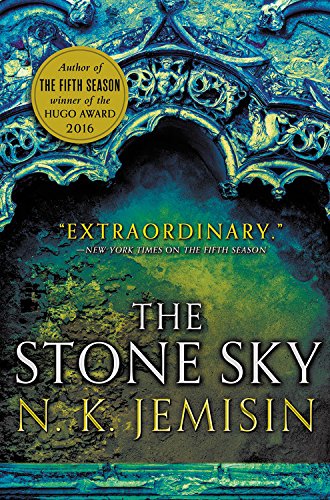
But the most infuriating read for me was She Who Became the Sun, since by all indications it should have been right up my alley, what with all the steppe nomad warriors and all. The writing was pretty good too, and the setup was fantastic. Yes, there was some gender bending stuff, but for the first half of the book I generally didn’t find it any more offensive than Mulan. I forget why I decided to skip to the last chapter, but the ending was so infuriating that it put this author solidly on my blacklist, just like The Fifth Season did for N.K. Jemison (more on that when we get to 2016’s Hugo ballot). I can’t say much without spoiling the book, but it has to do with what many conservative and alternate media commentators rightly call the death cult. Really infuriating.

As for A Master of Djinn, having traveled across Egypt and the Middle East, the worldbuilding was so fundamentally broken that I just couldn’t swallow it. The author basically created a steampunk Middle East that embraces several tenets of modern wokism. The only alternate reality in which the main character wouldn’t be tossed off of a high building for being a lesbian is a reality where the source code of Islam has been rewritten so entirely that it isn’t really Islam anymore. Which I suppose is fine for a pulpy escapist fantasy, but this one just didn’t appeal to me.