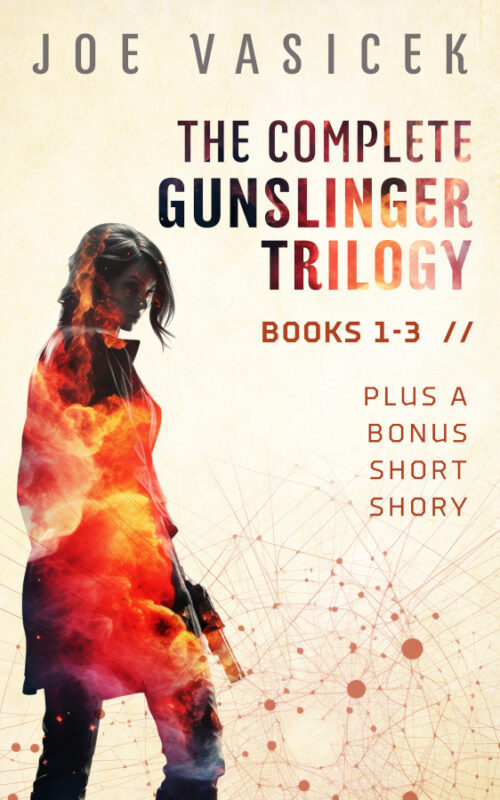
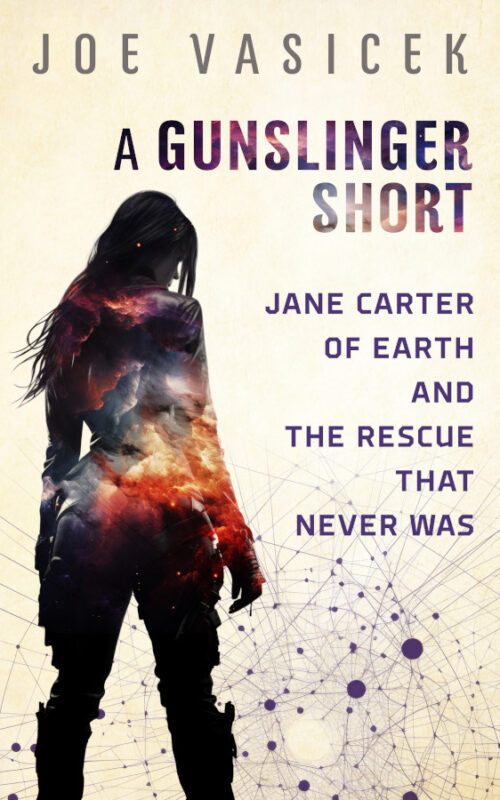
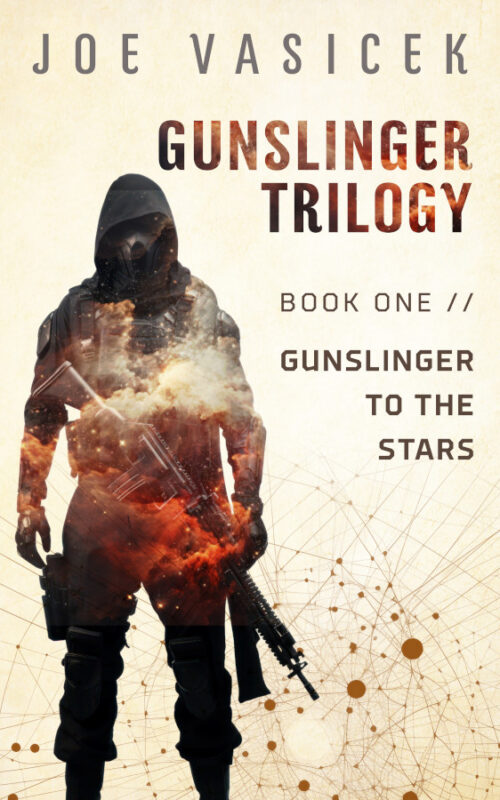
New Gunslinger covers!

From time to time, it’s a good idea to put up new book covers—especially when the originals were ones you made yourself. I realized last year that it was high time to get new covers for my Gunslinger novels, and this month I went ahead and got it done. Check them out!

I will try to get them up before this post goes live, but there might be some delays. Regardless, they should all be up everywhere within a week or two.

Also, if you’re curious, these covers are done by James at GoOnWrite. He does really good work!

How I would vote now: 1955 Hugo Award (Best Novel)

The Nominees

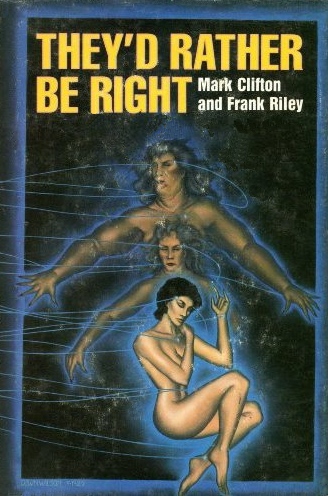
They’d Rather Be Right by Mark Clifton and Frank Riley (also published as The Forever Machine)

The Actual Results

  1. They’d Rather Be Right by Mark Clifton and Frank Riley

How I Would Have Voted

  1. They’d Rather Be Right by Mark Clifton and Frank Riley

Explanation

Things worked a little differently back in 1955. This was only the second time the Hugo Awards were given out (the first was in 1953), though it was the thirteenth Worldcon. As far as I can tell, there was no formal ballot or nominating process, just the organizers of the convention getting together and deciding which winners to award.

They’d Rather Be Right was serialized in four issues of Astounding Science Fiction, before it was published as a novel by Gnome Press in 1957. Among the fans who regularly attend Worldcon, it is largely panned as the worst book to ever win a Hugo Award. For that reason, it is very difficult to find a copy (I was fortunate enough to find a used copy on Amazon that a small-town library in California happened to be selling, but I had to keep an eye out for a couple of months).

But does the book really merit the distinction of being the worst? Personally, I don’t think so. Don’t get me wrong—it’s nowhere near the caliber of Dune, Hyperion, or Ender’s Game, but it does tell a fun story with an interesting sci-fi premise and some entertaining twists. It wasn’t the greatest book I’ve ever read, but I did genuinely enjoy it.

So why does this book get panned so hard? Probably because of its underlying message, which is that 1) Malthus was wrong, 2) Freud was wrong, 3) most self-styled scientists are actually charlatans and quacks, and 4) the best way to safeguard a new technology from evil and conspiring men is to make it open source, even if that technology grants the user with god-like powers.

In short, this book gives a glorious middle finger to would-be authoritarian statists everywhere. For that reason, it will always have a special place in my heart. If the 1955 Hugos were held today, I would happily vote They’d Rather Be Right for best novel.

2024 Predictions for the Publishing Industry

I started working on this post over the Christmas break, but then things got so busy that I never got around to writing anything more than the section headings. The year is still young, though, so I figured it was worth posting it anyway, even if only as a list of bullet points.

  • The courts will side against authors and publishers, in favor of OpenAI and generative artificial intelligence.
  • Amazon will use self-published content to create an LLM or other generative artificial intelligence.
  • We will not see an AI-assisted novel break out and become a bestseller this year…
  • …but we will see generative AI used to power a new book recommendation engine that will outperform everything currently out there.
  • Censorship and book banning will accelerate and become more flagrant.
  • The gap between bestsellers and midlisters will grow.
  • Book sales overall will decline, unless a new pandemic is declared.
  • A surprising number of authors will find success with their online stores, though we probably won’t hear about that.
  • The long, slow decline of Amazon’s prominence in the book industry will become a talking point.
  • By the end of the year, AI-assisted stories will garner public interest as more than just a novelty.

How Not To Write An AI-Assisted Novel

The worst way to write a novel with generative AI is to make the AI do all the work.

In fact, thinking of it in terms of “how much of the work can I get the AI to do?” is pretty much guaranteed to give you a really crappy book by the end of it. The AI’s job isn’t to “do the work,” any more than a power tool’s job is to build a house. You do the work. AI is just a tool to multiply your efforts.

But let’s take a step back. Who am I to talk about all of this? My name is Joe Vasicek, and I’m an indie author who’s been writing and publishing regularly since 2011. At this point, I have several dozen novels under my belt, including about half a dozen AI-assisted novels, the first of which is published under my Joe Vasicek pen here on this blog. Also, my wife is a PhD student and research assistant who works with generative AI and large language models. Her thesis is on using generative AI to create interactive cross references for any body of text, customized to the user. We talk a lot about generative AI and share what we’ve learned, so we’re both fairly knowledgeable on the subject.

At this point, it’s still very much the wild west of writing with AI-assistance. The technology is new enough that there really are no experts on the subject, though I expect that that will change rapidly over the next few years. And while I can’t (yet) say that I’ve made gazillions of $$$$ from my AI writing methods, I can say that I’m one of the first professional writers to develop a method for writing with AI-assistance.

And that’s not a boast. Whenever I get together with other writers, I wish there were more of them (really, any of them) that I could talk with about this stuff. There are some online communities that come at it more from the AI side than the professional writing side, and I probably ought to spend more time in those, because it’s probably only a matter of time before one of them has a runaway bestseller and shakes up the publishing industry in the same way that Amanda Hocking shook things up when the indie publishing revolution was just getting underway.

Maybe that someone will be you. Who knows? We’re still very much in the wild west of AI writing, and probably will be for a while.

It’s that very loneliness that makes me want to blog about AI-assisted writing—that, and the fact that I’m still trying to figure it out for myself, so I would love to hear what’s working for other writers. But one thing that I’ve learned from my own experience is that the worst way to write an AI-assisted novel is to dump all the work on the AI and expect anything good to come out.

The main reason for this is that LLMs and generative AI do not think—at least, not in any meaningful way that’s similar to the way you and I think. Instead, these models analyze human language for patterns, and replicate those patterns according to the parameters and instructions give by the user. It’s much closer to how your phone is able to predict your next word when you go to write a text, except that instead of writing the next word, ChatGPT or Sudowrite or whatever LLM you happen to be using is instead predicting the next 5-10 paragraphs.

So really, it’s not very useful to think of an AI as being able to “write” anything. Instead, it’s much more useful to think of it as “simulating” the thing that you’ve told it to write, or producing a simulation of the kind of work that a human would produce, given your parameters and instructions. The AI isn’t “doing the work” for you, it’s merely simulating the end product of that work. You still have to make it your own.

And how do you make it your own? Personally, I’ve found that the best way to do that is to open up a new document on my second monitor and type it all out by hand, occasionally referring to the AI-generated text when I don’t know what to write next, but largely trusting in myself to create the real, non-simulated draft. No copy-pasting! The mental exercise of writing it all out, word for word, stimulates something in the creative mind, and in most cases I end up writing something completely different, using the simulated version of the novel merely as a stepping stone.

So why do I go through all the trouble of generating a whole novel, when I’m probably going to throw out most of that text anyway? That’s a very good question—so good, in fact, that it needs to be the subject of its own post.
…it sure has been quiet around here

So I was looking back at my stats, and I couldn’t help but notice that (not counting yesterday’s post) it’s been almost two months since I posted anything on this blog. What happened?

I could give all the normal excuses: time flying by, kids taking up the time, etc etc… but that would all be evading the main reason, which is that I’ve been working on a secret project for the last six to eight months now, and that’s sucked up all my time.

I can’t yet reveal exactly what the secret project is, because I’m still gathering data and revealing everything about it would screw that up. Also, I don’t want to overhype it, because it’s not the sort of thing that’s going to blow your mind and make you super excited when I reveal it… or maybe it will? I don’t really know.

But without revealing any specifics, I can say that I’ve been developing a method for writing AI-assisted novels, and I think I’m at a point where I can start using it to finish some of my open trilogies, like the Falconstar Trilogy, or maybe even write some new books.

I also really want to share some of the things I’ve learned, because I do think that AI is going to change everything when it comes to writing, and not necessarily in a bad way. Originally, I just wanted to keep my head down, because there are so many negative opinions and misconceptions about AI in the writing world. But now, I think it will actually be better to be more open about it and share some of the things I’ve learned.

So I will probably do a blog series about AI-assisted writing. I also want to finish a couple of other blog series that I started ages ago, and never really finished—maybe turn those into a nonfiction book at the end or something. And I’ve also been reading some old Hugo nominated books, in an effort to figure out how I would have voted in past years. That’s been a very interesting exercise.

So for the next few weeks, my goal is to post something new every Wednesday and Friday. My email newsletters typically go out on Thursdays, so that’s a pretty decent amount of content to put out there. And if I have something fun to share, like a meme or a picture or a video, I’ll try to post those on Mondays if I can. But if there’s anything in particular that you want me to blog about first, feel free to let me know!

Thoughts on the 2023 Hugo Awards

This video gives a pretty good recap of the endless fountain of scandals surrounding the 2023 Chengdu Worldcon and Hugo Awards. Larry Correia also gives an interesting take on it on his blog, and in his writing podcast.

My initial thoughts:

  • Schadenfreude is one hell of a drug.
  • Accusation = confession = projection, no exceptions.
  • This scandal vindicates the Sad Puppies 110%. Remember how they called us the racists? How they said we were the ones manipulating the system? …yeah.
  • Wow, schadenfreude is one hell of a drug.

Laying aside all of the knee-jerk internet outrage (and schadenfreude), though, I do find it tragic that there doesn’t seem to be a way to recognize excellence in the SF&F genres that isn’t totally given over to in-group politics and petty fannish controversies. At the end of the day, I think that’s really what the Sad/Rabid Puppies was all about: a small and exclusive group of insiders (aka “true fans”) refusing to give any space to outsiders who also wanted to be part of the awards process. The fact that most of these outsiders happened to be politically conservative was incidental; we might as well have been Chinese, for how the in-group treated us.

With all of that said, though, I don’t necessarily think that the best solution is to burn the Hugos to the ground. For all the scandals, and how terribly woke the Hugos have swung in the last few years, the system itself is still pretty good. I mean, can you imagine how much different things would be if our national elections were decided by ranked-choice voting, with “none of the above” as an available option? As much as I have a problem with the people who organize and run the Hugo Awards—the people who are rightly being slammed for arbitrarily discounting hundreds of Chinese ballots and arbitrarily disqualifying several titles from the final ballot—the system itself is actually a pretty good one.

A couple of years ago, I read every Hugo and Nebula award-winning book. It was an enlightening exercise, to say the least. Since then, I’ve dabbled with doing something similar with other wards, like Goodreads Choice, but I’ve never really made the plunge, since most of these other awards are either too young to really give a comprehensive overview of the genre, or too narrow or cliquish. Many of them are thinly-veiled popularity contests, where the author with the most rabid fanbase wins.

Is it possible to have an award that recognizes true excellence that doesn’t devolve into a thinly-veiled popularity contest on the one hand, or else isn’t taken over by a small and snobbish group of elites on the other? I can see how these sorts of concerns might have driven many of the concerns about “slate voting” during the Sad Puppies controversy in 2015. Unfortunately, they clearly took it to the opposite exteme, turning the Hugos into their own exclusive club, un-personing conservative and Chinese fans alike.

In the end, it probably comes down to who we are as a people more than what systems have been put in place. If fandom really was the kind of place where people could come together over their shared love of science fiction and fantasy, regardless of politics, religion, nationality, or anything else, then perhaps the Hugos actually would be a marker of excellence, and not just identification with a very small (and snobbish) in-group. And I do think there have been times in the past where that has been the case.

So, in a funny way, this whole controversy around the 2023 Hugo Awards actually makes me want to go back and read a bunch of the older Hugo-nominated books from previous years, to see how I would have voted (and how my own vote differs from the votes that were actually cast). I think it could be a useful exercise, not so much in determining how useful or authoritative the Hugos ought to be (I figured that out a couple of years ago), but in determining my own reading tastes, and how they may or may not have fit in with previous generations of Hugo-award voting fans.

One of the most difficult things I’ve recently had to wrestle with is the realization that my own tastes and values run almost completely contrary to the culture in which I live. I don’t think the Hugo Awards have ever represented mainstream culture, but it is still an interesting bellweather of a subculture that I love, plagued as it might be by in-group politics and petty infighting. And I do think there were periods where my own tastes and values aligned pretty well. I’m curious to see which periods those are.

All of this is to say that I’ve been going through all of the old Hugo nominations for Best Novel, reading through them to see how I would have voted for each year. I’m mostly just doing it for myself, but I may post it here if you guys are interested, since it probably would make for some good blogging content.

Oh, Murderbot…

Why I initially enjoyed the Murderbot books

  • The character of murderbot was an interesting and highly entertaining take on the “depressed robot” trope.
  • I found the contrast between murderbot’s competence and the humans’ incompetence to be hilarious.
  • The futuristic sci-fi universe was interesting and immersive.
  • The politics, legal structure, and social/cultural makeup of the Corporate Rim was mildly fascinating.
  • Murderbot had a lot of cool gadgets/weapons and knew how to use them.
  • I really loved ART as a character: smart, competent, deadly, and possessing all the emotional maturity of a five year-old.
  • The alien infections subplot kept me interested.
  • There were lots of great plot twists, especially in Book 5.

Why I’ve decided I don’t enjoy them any more

  • The worldbuilding is super, super woke:
    • Way too much emphasis on fantasy genders and made-up pronouns—in fact, I would say that the clunkiness of “te/ter” and “vi/vir” inadvertently proves that using any other pronouns than those that are biologically derived is nonsensical and inherently ridiculous.
    • We’re supposed to understand that the Corporate Rim is evil because… capitalism, I guess? Anyone with power in the CR is the 21st century equivalent of a mustache-twirling victim, and everyone from the free colony resisting the CR is a good guy by default. Boring.
    • The good guys are all happily engaged in a polyamorous relationship, and to the extent that there’s ever any friction because of the arrangement, it’s solved when the wise mentor offers some trite and cliched advice about human relationships, like the moral at the end of an episode of Mister Rogers (if Mister Rogers had aired in an alternate free love universe).
  • As fun as Murderbot is as a character, the humans are all flat and uninteresting and blend together. Seriously, I can’t keep any of them straight.
  • Book 6 is a prequel novella to book 5, with a murder mystery plot that is really a side quest with no bearing whatsoever on the main series arc. Then, book 7 picks up immediately where book 5 left off, without any sort of setup or summarization to ease us back into what’s happening and remind us where everything stands. Way too much in media res.
    • Furthermore, book 5 has major spoilers for book 6.
  • By book 7, Murderbot’s snarkiness consists mainly of dropping f-bombs on every other page. That’s how we’re supposed to know that murderbot is funny. Because, fuck it. Ha ha ha.
  • Why are we supposed to care about this story or the world or any of the characters again? I forget.
  • The novellas are way too expensive.
    • Also, I personally think the first four novellas would work better if they had been written as a single novel, rather than four shorter books. But if that were the case, the publisher wouldn’t have made 4x profits. Remind me again how capitalism is totally evil? Right.

Third Dune Trailer is out!

I am so incredibly stoked to see this movie. Dune is, in my opinion, the most perfect science fiction novel ever written, and Dune: Part 1 was perhaps the most perfect adaptation of the novel that could have been made, let alone the best adaptation. And this trailer is one of the best that I’ve ever seen. Really looking forward to seeing the sandworms on the big screen!

Vasicek family Christmas traditions

I’ve been thinking for a while now that I need to write these down somewhere, and why not share it as well? Here is a list of all of the things we do as a family during the Christmas season. We don’t always hit all of them every year, but we do hit most of them.

  • Cut down a wild Christmas tree from the mountains (requires permit)
  • Decorate the tree together
  • Do the daily advent calendar, with scriptures for each day
  • Get a new framed picture of Jesus Christ
  • Gift one of our old pictures of Jesus Christ to a family friend
  • Writing group Christmas party
  • Neighborhood Christmas party
  • Watch Mr. Kreuger’s Christmas
  • Listen to Handel’s Messiah
  • Attend a Messiah sing-along
  • See the lights at Temple Square
  • Visit the SLC German Market
  • Buy something with the Giving Machine
  • Drive around our neighborhood to see the Christmas lights
  • Go caroling together as a family
  • Make bread to share with neighbors
  • Do the Vasicek extended family holiday book exchange
  • Do the Dollar Store gift exchange with the extended Armstrong family
  • Get a 2024 calendar and fill it out
  • Make a new spread in the family scrapbook for 2023
  • Write personal testimonies for the 2023 family scrapbook spread

That’s how the list stands as of right now. I’m sure we’ll add a few more things as the kids get older.

What are some of your family Christmas traditions?