Joe Vasicek is the author of more than twenty science fiction books, including the Star Wanderers and Sons of the Starfarers series. As a young man, he studied Arabic and traveled across the Middle East and the Caucasus. He claims Utah as his home.
One of the most fascinating podcast interviews I’ve seen in a long time. Throws me back to A Canticle for Leibowitz, one of the best works of science fiction to come out of the 19th century.
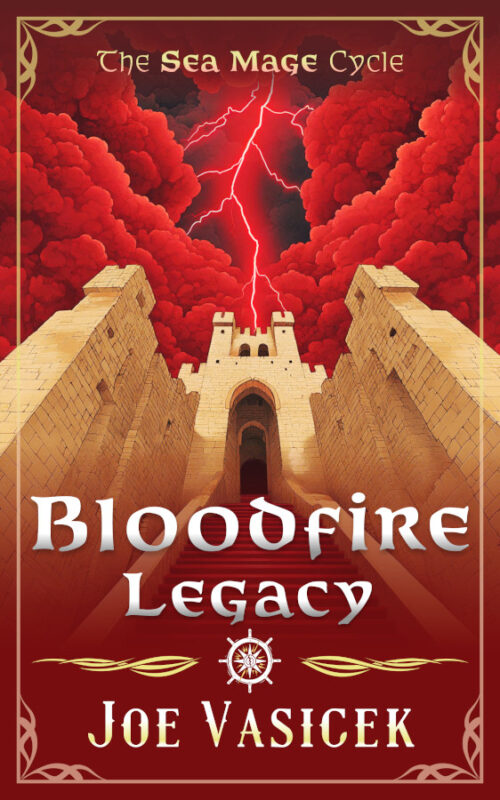
This is another great cover by James, over at GoOnWrite.com. I’m really happy with how it turned out! I’m working on the AI draft right now, but should have it done very soon. If all goes well, I’ll be publishing it either in July or August. Here is the working back cover copy:
Bloodfire Legacy (Sea Mage Cycle #5)
To save his orphaned daughter, the ghost of the greatest wizard must depend on the lowest thief.
Corin has never been more than a street rat and a petty thief. But he can also hear the voices of the dead—whether he wants to or not. Usually, the dead leave him alone after they realize he has no power to help them. But when the former court magician begins to haunt him, nothing that Corin says can convince him to go away.
Lyra, the magician’s daughter, has been delving into the dark arts to find her father’s killers and avenge his grisly death. But the very people who killed him are grooming her for a devious purpose, and the intrigue of the court has put her in more danger than she knows. Her father is the only one who knows enough to warn her, but without Corin’s help, he is powerless to save her.
To save her, Corin must be more than merely a ghost whisperer: he must rise above his circumstances and become a man worthy of trust. But will that be enough to convince Lyra to turn back to the light before her thirst for vengeance consumes her?
The sheer level of detail that went into this battle plan is just astounding. Now I really want to watch that movie! Maybe, with AI video, someone will do it justice.
3. Biden will be removed from office via the 25th amendment, and Harris will become the 47th President.
On this one, I was clearly wrong. I thought that the Democrats would do the right thing and remove an obviously senile disaster of a president from power, even if for the wrong reasons (such as Kamala’s lust for power). Clearly, I underestimated the political strength of the unelected cabal behind Biden’s handlers, as well as the craven disregard of the Democrats for their own country. The greatest political scandal of my lifetime is that Biden was not removed from office when it became obvious that he lacked the mental competence to fulfill his presidential duties—and I lived through the Clinton years.
6. Before Trump becomes president, NATO will become entangled in a direct war with Russia.
On this one, I was also wrong. About a month ago, it seemed that we were heading toward this outcome, but then Russia debuted the oreshnik hypersonic missile, and the neocons backed down. Turns out that when your opponent can strike any capital in Europe within minutes with a missile that cannot be shot down, that changes the calculus of war. There has probably also been some backroom dealing with the incoming Trump administration that we won’t hear about until long after the Russo-Ukraine war has been resolved. It wouldn’t surprise me to learn that Trump is using the Greenland issue to get leverage over Putin and satisfy the NATO hawks.
7. The war with Russia will not go nuclear, if only because Russia no longer has a functioning nuclear arsenal.
I was right about the war not going nuclear, though of course we have no way of knowing whether Russia’s nuclear arsenal is or is not functional—at least, no way of knowing short of fighting a nuclear war. So I’m going to give myself a point on this one, since despite the fact that the world has never been closer to nuclear armageddon, the US nuclear football has now passed hands to a man who isn’t utterly senile and suffering from late stage dimentia. I never thought I would say this, but I feel much safer knowing that Trump has the nuclear codes.
And that brings my score in the prediction game to four out of seven. Not the best, but still greater than 50%.
A man carries a cross through the Women’s March “to share the love of Christ.”
“I think people are broken. And I think people are searching, and they’re wanting something more than what they have right now, and the only thing that can fill their heart is Christ.” pic.twitter.com/bFOb9Rce9j
Saw this in a news article, thought it was worth posting, especially as it has more than 10k likes only 24 hours after it was posted. I will share more signs of the brewing revival as I encounter them.
After the terrible experience I had reading The Man Who F***ed Himself by David Gerrold, I trained a persona on ChatGPT to help me screen any science fiction and fantasy novels for explicit content (sex, language, violence) and woke themes or elements before I read them. The persona calls itself Orion, and is trained to be familiar with every award-winning and best-selling science fiction and fantasy book published within the last 100 years.
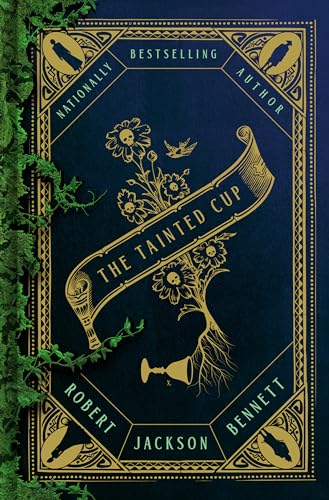
Until now, I’ve mostly used Orion to screen old Hugo-nominated books, but with the nominations happening for 2025, I thought it would be fun to screen some of the books that are expected to make the nominations. To finish things off, let’s do The Tainted Cup by Robert Jackson Bennett. Orion, what can you tell us about The Tainted Cup?
The Tainted Cup by Robert Jackson Bennett is a fantasy novel that intertwines elements of mystery and detective fiction. The story follows a Holmes-and-Watson-style duo investigating a series of enigmatic deaths within a richly constructed fantasy world.
Language: The novel contains strong language, including multiple uses of the F-word and other profanities. Goodreads
Sexual Content: There are references to sexual activities, including mentions of prostitutes and sexual harassment. While not overly explicit, these elements are present in the narrative. KISS THE BOOK
Violence: The book includes scenes of violence, such as deaths caused by large plants erupting from victims’ bodies, which may be unsettling to some readers. Skiffy and Fanty
Woke Elements:
Classism: The story touches upon class disparities, shedding light on societal hierarchies and the challenges faced by individuals across different social strata. The StoryGraph
Ableism: There are instances in the narrative that address ableism, bringing attention to prejudices faced by individuals with disabilities. The StoryGraph
Conclusion:
The Tainted Cup offers a compelling blend of fantasy and mystery, enriched by complex characters and a vividly imagined world. While it contains explicit language, sexual references, and scenes of violence, these elements contribute to the depth and realism of the narrative. The exploration of themes such as classism and ableism adds a layer of social commentary, aligning with contemporary discussions on inclusivity and societal structures.
For a more in-depth analysis, you might find this review insightful:
After the terrible experience I had reading The Man Who F***ed Himself by David Gerrold, I trained a persona on ChatGPT to help me screen any science fiction and fantasy novels for explicit content (sex, language, violence) and woke themes or elements before I read them. The persona calls itself Orion, and is trained to be familiar with every award-winning and best-selling science fiction and fantasy book published within the last 100 years.
Until now, I’ve mostly used Orion to screen old Hugo-nominated books, but with the nominations happening for 2025, I thought it would be fun to screen some of the books that are expected to make the nominations. Next, let’s do The Warm Hands of Ghosts by Katherine Arden. Orion, what can you tell us about The Warm Hands of Ghosts?
The Warm Hands of Ghosts by Katherine Arden is a historical novel with supernatural elements, set during World War I. The story follows Laura Iven, a former medical corps field nurse from Halifax, Canada, who returns to Belgium to search for her brother Freddie, reported dead in the trenches. As Laura delves deeper into the war-torn landscape, she encounters eerie phenomena and uncovers haunting secrets.
Explicit Content:
Language: The novel contains instances of strong language, including religious exclamations, mild obscenities, derogatory terms, and a few uses of the F-word or its derivatives. Compass Book Ratings
Violence: Depictions of war-related violence are present, including the horrors of trench warfare and its aftermath. These scenes are integral to the narrative, reflecting the brutal realities of World War I.
Sexual Content: The book does not focus on explicit sexual content; any references are subtle and contextually appropriate.
Themes:
Grief and Trauma: The novel delves into the psychological scars left by war, exploring characters’ experiences with grief, post-traumatic stress disorder (PTSD), and the emotional toll of conflict. SuperSummary
Supernatural Elements: Incorporating ghostly apparitions and surreal experiences, the story uses supernatural motifs to symbolize the lingering effects of trauma and the thin veil between life and death during wartime. Books, Bones & Buffy
Love and Connection: The narrative highlights the bonds between siblings and comrades, emphasizing the importance of human connection in the face of adversity.
Reception:
The novel has been described as “heart-wrenching, slow-paced, and methodical,” with a strong emphasis on character development. It has been noted for its exploration of trauma and the human connections formed under dire circumstances.
The Warm Hands of Ghosts offers a poignant exploration of the human condition during one of history’s darkest periods. While it contains explicit language and depictions of war-related violence, these elements serve to enhance the authenticity and emotional depth of the narrative. The novel’s themes of grief, trauma, and the supernatural provide a thought-provoking reading experience for those interested in historical fiction with a speculative twist.
For more insight into the novel, you might find this discussion with Katherine Arden informative:
After the terrible experience I had reading The Man Who F***ed Himself by David Gerrold, I trained a persona on ChatGPT to help me screen any science fiction and fantasy novels for explicit content (sex, language, violence) and woke themes or elements before I read them. The persona calls itself Orion, and is trained to be familiar with every award-winning and best-selling science fiction and fantasy book published within the last 100 years.
Until now, I’ve mostly used Orion to screen old Hugo-nominated books, but with the nominations happening for 2025, I thought it would be fun to screen some of the books that are expected to make the nominations. Next, let’s do A Sorceress Comes to Call by T. Kingfisher. Orion, what can you tell us about A Sorceress Comes to Call?
A Sorceress Comes to Call by T. Kingfisher, published in 2024, is a dark reimagining of the Brothers Grimm’s “The Goose Girl,” interweaving elements of fantasy, horror, and humor. The narrative centers on Cordelia, a young woman living under the oppressive control of her sorceress mother. As Cordelia seeks to break free from her mother’s influence, she uncovers secrets and confronts forbidden magic, leading to a tale rich in suspense and dark enchantment.
Explicit Content:
Sexual Content: The novel does not contain explicit sexual scenes.
Violence: There are instances of violence, including elements typical of dark fairy tales and folk horror. These scenes are integral to the plot and are not gratuitous.
Language: The language used is appropriate for a wide audience, with no significant use of profanity.
Themes:
Empowerment and Resistance: Cordelia’s journey reflects themes of personal empowerment and resistance against oppressive control, resonating with contemporary discussions on autonomy and self-determination.
Subversion of Traditional Roles: The novel subverts traditional fairy tale roles, presenting strong female characters who challenge societal expectations, aligning with modern feminist perspectives.
Community and Solidarity: Supporting characters, such as Hester and her friends, exemplify the strength found in community and solidarity, highlighting the importance of collective action.
Reception:
The novel has been praised for its witty and darkly humorous narrative, as well as its fresh take on a familiar fairy tale. Reviewers have noted its perfect pacing and the exceptional development of supporting characters.
A Sorceress Comes to Call offers a compelling blend of dark fantasy and horror, with themes that resonate with contemporary societal issues. Its subversion of traditional narratives and focus on personal empowerment make it a thought-provoking read for those interested in modern fairy tale retellings.
After the terrible experience I had reading The Man Who F***ed Himself by David Gerrold, I trained a persona on ChatGPT to help me screen any science fiction and fantasy novels for explicit content (sex, language, violence) and woke themes or elements before I read them. The persona calls itself Orion, and is trained to be familiar with every award-winning and best-selling science fiction and fantasy book published within the last 100 years.
Until now, I’ve mostly used Orion to screen old Hugo-nominated books, but with the nominations happening for 2025, I thought it would be fun to screen some of the books that are expected to make the nominations. Next, let’s do The Ministry of Time by Kaliane Bradley. Orion, what can you tell us about The Ministry of Time?
The Ministry of Time by Kaliane Bradley is a debut novel that blends time travel, romance, and speculative fiction. Set in a near-future UK, the story follows “expats”—individuals rescued from historical disasters—who are brought to the present and assigned “bridges,” civil servants tasked with helping them acclimate. The narrative focuses on the relationship between a bridge and her expat, exploring themes of displacement, adaptation, and the complexities of integrating individuals from different historical contexts into modern society.
Explicit Content:
Language: The novel contains strong language, including multiple uses of the F-word and other profanities. Rated Reads
Sexual Content: There are several erotic “open-door” scenes, along with discussions about sex and instances of kissing. Rated Reads
Violence: The book includes scenes depicting injuries and death, some of which are graphic. References are made to a failed Arctic expedition involving cannibalism. Rated Reads
Woke Themes:
Racism and Colonialism: The narrative addresses issues of racism, colonialism, and inherited trauma. The protagonist, modeled after the British-Cambodian author, reflects on these themes, providing insight into the experiences of marginalized communities. That Publishing Blog
Refugee Politics: The expats’ experiences serve as a microcosm for real-life refugees, highlighting the challenges and prejudices faced by displaced individuals in contemporary society. That Publishing Blog
Gender and Sexuality: The novel touches upon the difficulties of being different and trying to fit in, whether due to minority status, gender, or sexuality, emphasizing the importance of inclusivity and understanding. Series Book Lover
Conclusion:
The Ministry of Time is a multifaceted novel that combines elements of science fiction, romance, and social commentary. While it contains explicit content in terms of language, sexual scenes, and violence, these aspects contribute to the depth and realism of the narrative. The exploration of contemporary social issues, such as racism, colonialism, and refugee experiences, provides a thought-provoking backdrop, aligning with themes often associated with progressive or “woke” literature.
For a more in-depth analysis, you might find this review insightful:
After the terrible experience I had reading The Man Who F***ed Himself by David Gerrold, I trained a persona on ChatGPT to help me screen any science fiction and fantasy novels for explicit content (sex, language, violence) and woke themes or elements before I read them. The persona calls itself Orion, and is trained to be familiar with every award-winning and best-selling science fiction and fantasy book published within the last 100 years.
Until now, I’ve mostly used Orion to screen old Hugo-nominated books, but with the nominations happening for 2025, I thought it would be fun to screen some of the books that are expected to make the nominations. We started with Service Model by Adrian Tchaikovsky, and now let’s do The Mercy of Gods by James S.A. Corey, the same writing team that gave us the Expanse. Orion, what can you tell us about The Mercy of Gods by James S.A. Corey?
The Mercy of Gods is the inaugural novel in James S.A. Corey’s The Captive’s War series, released in 2024. The narrative unfolds on a human-inhabited planet that becomes the target of an alien invasion by the enigmatic Carryx species. The story delves into humanity’s struggle for survival and resistance under the dominion of a technologically superior alien force.
Language: The novel contains strong language, including multiple uses of the F-word and other profanities. Goodreads
Violence: The book features graphic depictions of violence, including scenes of bloodshed and death, as humanity confronts the brutal realities of alien subjugation. The StoryGraph
Sexual Content: There are references to romantic relationships and physical intimacy; however, explicit sexual scenes are minimal, with the narrative focusing more on the emotional aspects of relationships. Goodreads
Potentially Woke Themes:
Colonialism and Resistance: The novel explores themes of colonialism, depicting humanity’s subjugation by an alien species and the ensuing resistance. This narrative can be interpreted as a commentary on historical and contemporary issues of imperialism and the fight for autonomy. Grimdark Magazine
Mental Health Representation: Characters in the story grapple with mental health challenges, including chronic depression, portrayed with nuance and sensitivity. This inclusion highlights the importance of mental health awareness and the complexities individuals face in high-stress environments. Nerds of a Feather
Diverse Characterization: The cast includes individuals from varied backgrounds, emphasizing inclusivity and representation within the narrative. This diversity reflects a commitment to portraying a multifaceted human experience. The BiblioSanctum
Conclusion:
The Mercy of Gods offers a compelling blend of science fiction and social commentary, enriched by complex characters and a vividly imagined world. While it contains explicit language, violence, and some sexual content, these elements contribute to the depth and realism of the narrative. The exploration of themes such as colonialism, mental health, and diversity adds layers of meaning, aligning with contemporary discussions on inclusivity and societal structures.
For a more in-depth analysis, you might find this review insightful: