Where Ezra’s Eagle Goes Off the Rails

So it’s November 6th, 2024, the day after election day. President Trump has won an astonishing election victory, marking the greatest political comeback in US history. For those of us who feel like we’ve been gaslit and abused for the last four years, it really does feel like things are starting to look up for the country.

At least, for most of us, that is the case. For others of us, the black pill has been so bitter that we’re almost scared to hope again. Last night, I was up until 2am, just because I didn’t want a repeat of 2020, where we all went to bed convinced that Trump had a lock on the election, only to wake up to burst pipes, boxes of uncounted ballots, voting machines behaving strangely, windows and doors boarded up against Republican observers, and other sorts of “election fortification.” So frankly, I don’t blame anyone for being on pins and needles until Trump actually puts his hand on the Bible and is officially sworn in as the 47th (or possibly 48th) President.

I’m seeing that reflected right now in my blog stats, where in the last 24 hours, I’ve seen hundreds of hits on my old post This Scenario Would Fulfill Ezra’s Eagle, which I wrote several years ago. For some strange reason, that post is now the #2 Google search result for the query “Ezra’s Eagle,” which makes me feel like it’s my duty to offer periodic updates to the situation.

But first, a quick explanation of the Ezra’s Eagle prophecy:

This video is a very good explanation of the prophecy, as interpreted by Michael B. Rush. The part I find most compelling about it is the sequence of rulers, which really does line up uncannily well with our last 16 presidents. Whenever Biblical prophecies start going into numerology, I always raise my eyebrows a bit, because there are lots of ways to twist numbers to make them appear to fit your own personal interpretation. But if you read the original source material in 2 Esdras 11 and 12, it actually lines up very well with what has (so far) transpired.

However, it’s where we get to Rush’s interpretation of the last two short feathers and the lion that I tend to think it goes off the rails. This may come as a surprise to some of you, but I am not convinced that there will be a singular Anti-Christ figure in the end times. I know that a lot of Evangelical eschatology revolves around this figure, but the way they get there is through a rather selective reading of Daniel, Ezekiel, and Revelation that leaves me scratching my head. When I read the Bible, I see a lot of passages talking about a spirit of Anti-Christ, but not a singular figure—and certainly not one with Godlike powers.

But the big thing is the lion, which Rush connects (correctly, I believe—assuming of course that the prophecy is true, which it may very well not be) with the remnant of Jacob in 3 Nephi 20 and 21. Latter-day Saint eschatology draws not only from Daniel (where we get the stone cut out of the mountain without hands), Ezekiel (where we get the stick of Joseph), and Revelation, but also from Isaiah, which goes into great depth about the scattering and gathering of Israel, and the return of the lost 10 tribes. There are also several other prophecies in the Book of Mormon that describe the latter-day gathering of Israel, which is central to the Latter-day Saint understanding of the end times.

Regarding the lost 10 tribes, within the Latter-day Saint tradition there are basically three possible views about what happened to them and where they are now.

The first is that they were taken to the north pole and currently live under the polar ice. This view was very popular in the 19th century, but almost no one believes it seriously now.

The second is that they were taken into space, and currently reside on another planet or in another dimension. While this may sound crazy, it does resonate with the scriptures we have that talk about how Enoch was taken into heaven, with the original city of Zion. This is the view that Michael B. Rush espouses, and he believes that the prophecies in 3 Nephi (as well as Ezra’s Eagle) will be fulfilled when the ten tribes come back down from space and liberate us from the Anti-Christ.

If that sounds a little too science fictional to you, you’re not the only one. Personally, I would love to read a novel where that’s how things turned out, but I don’t think those prophecies are actually going to be fulfilled that way—and here’s why.

The third view is that after the ten tribes passed out of our historical records, they migrated to the northern reaches of the Eurasian landmass, probably in what is now Siberia. There, they established a civilization, which was apparently still extant when the resurrected Christ visited the Americas, because He referred to them explicitly in 3 Nephi 17:

4 But now I go unto the Father, and also to show myself unto the lost tribes of Israel, for they are not lost unto the Father, for he knoweth whither he hath taken them.

This civilization probably continued for a while, perhaps for several centuries after the resurrection of Christ, but it eventually fell, probably due to a combination of the changing global climate (which was much warmer during Roman times, but went into a little ice age during the medieval era) and political upheaval on the Eurasian steppes. When China fell apart after the Three Kingdoms period, there was a massive depopulation as the survivors of those wars migrated westward onto the steppes, creating a cascade of violent displacement that ultimately culminated in the rise of the Hunnic confederacy and the migration period in Europe, which brought about the fall of the western Roman Empire. The ten tribes could easily have been conquered during this period, and their survivors assimilated into the Hunnic or Turkish tribes. Or perhaps they survived this era, only to be conquered by the Mongols in the 1200s. Either way, their culture was wiped out, and their descendants were assimilated into the cultures that conquered them and settled on their lands.

There’s quite a bit of evidence for this theory, including DNA evidence. There’s also some spiritual evidence from the patriarchal blessings of people from this region, where most of the people are have been blessed to belong to one of the ten tribes. The guys at Ward Radio discuss this at length in the episode above—Jonah Barnes actually served his mission in Siberia, so he has firsthand experience with this. Also, there is some pretty solid scriptural evidence in Jacob 5 and the allegory of the olive tree. When the branches of the natural tree are first scattered throughout the vinyard, there is a location that is mentioned once in verse 24, and never mentioned again. If this represents the lands of the lost ten tribes during Christ’s time, that makes sense, since their culture had not yet been wiped out—but after it was wiped out, and the survivors assimilated into the culture that conquered them, they were no longer a “branch” within the context of the allegory.

So how does this relate to Ezra’s Eagle? If the ten tribes are actually among us, and not in space as Michael Rush believes—indeed, if the descendants of the lost tribes are currently being gathered into the Church of Jesus Christ of Latter-day Saints, through the missionary work currently happening in central Asia—then the “remnant of Jacob” that will go forth as a lion is the members of the Church of Jesus Christ of Latter-day Saints who gather to the New Jerusalem, either to build it or to migrate there after it has been built. Third Nephi 20 and 21 go into great depth about this.

But what does it mean that they will tread down their enemies among the gentiles? Does it mean that the Church of Jesus Christ of Latter-day Saints will go all nationalistic, organize a militia, and go to war directly against the United States? Almost certainly not. After all, the twelfth article of faith states: “we believe in being subject to kings, presidents, rulers, and magistrates in obeying, honoring, and sustaining the law.”

But I could see a scenario where the United States collapses and becomes a failed state on the national level, with cartels, gangs, and local warlords stepping into the power vacuum under the veneer of what’s left of our democratic republic. Under that scenario, the church would step into the gap and help its members to organize and develop a strong, self-reliant community that could not only survive in such a post-collapse world, but actually thrive in it. In many ways, we’re already set up to do exactly that. And if the call comes during this time of chaos to build up the New Jerusalem, I could see us making a modern pioneer trek to Missouri, and prevailing over the gangs and warlords who try to stand in our way.

Under this scenario, the last two feathers of Ezra’s Eagle aren’t the Anti-Christ and the Beast, but the last two presidents of the United States, who attempt to restore the nation after the catastrophic fall of the deep state (represented by the three eagle heads) but who ultimately fail to do so. This is when the nation collapses, and we become a failed state on the federal level. Then the Church of Jesus Christ of Latter-day Saints rises up to fill in the gap, standing against the gangs and warlords in the ensuing power vacuum, until we are called to build the New Jerusalem and fulfill the end-times prophecies contained in 3 Nephi.

To me, this is a much more plausible interpretation of Ezra’s Eagle than Rush’s view that the lost ten tribes will liberate us in some sort of extraterrestrial invasion of our planet, while a godlike Anti-Christ rules the whole world. But frankly, I don’t think any of this is going to happen—at least, not on the timeline of Ezra’s Eagle. President Trump won the election with a clear mandate, and I believe he will become our 47th president. With the way things are currently unfolding, I no longer believe that the Ezra’s Eagle prophecy is true in a literal sense. It may have been an authentic vision of a possible series of events, but I do not believe we are on that timeline. After all, there is a reason why Joseph Smith never translated the Apocrypha—or canonized it, for that matter.

But I guess we’ll find out soon. After all, if anything happens to Trump between now and January 20th… let’s just pray for our country during this very uncertain time.

(And for the record, if the Ezra’s Eagle prophecy is true, I still totally believe that Janet Yellen is the first eagle’s head.)

Did I predict it?

On July 24th, 2024, eleven days after the (first) Trump assassination attempt, I posted the following predictions:

1. There will not be a second assassination attempt against President Trump before the election.

On this one, I got it wrong badly. There was at least one other attempt on Trump’s life, the one with the gunman camped out in the golf course for ten hours, who very nearly got a shot in. There was also a case where a whole bunch of people in the stands at one of the Trump rallies was hospitalized with chemical burns, probably from an attempted chemical attack on President Trump. But that one didn’t make the news nearly as much. And those are only the ones we’ve heard about.

I hope Trump makes it to the inauguration, because now that he’s actually won the election—and there are still people taking shots at him—the odds of him getting assassinated between now are not insignificant.

5. Harris will lose badly and Trump will win the 2024 election in an electoral landslide.

This one, I think I got right. I’m writing this post on election night after all of the networks have called Pennsylvania for Trump, and Trump has declared victory (though it’s unclear if Kamala has called him to concede yet). It is possible that we might see some “election fortification” in the next 24 hours, but I think it’s unlikely. And while Trump’s victory could have been more of a blowout, I do find it telling that Kamala Harris failed to outperform Joe Biden in every single county in the country. Youch.

So by my count, that puts me at three out of four in the prediction game. Not perfect, but pretty good. We’ll see how the rest of them play out, because I think the last few weeks of 2024 are going to be pretty rocky. Hopefully I’m wrong, but we’ll see.

It’s November already?

It’s November already? Wow, that went fast. October was so mild, it felt almost like summer. Then, about a week ago, a cold front blew in and it’s been feeling very much like autumn ever since.

I figure I should share more pictures in these updates, so here is one of the food storage wheat I’ve been sprouting. I just started doing this, and the results from the previous attempt were quite delicious. The kids loved them! Since they’re super healthy, I figured we might as well make it a regular thing. They go great on salad, with a little bit of hummus on the side.

I’m getting ready to start a new novel WIP. This one is for my friend Ben, so I ran three book blurbs by him and had him pick his favorite. That’s what I do these days whenever I need to start a new project: I keep a document with pre-written book blurbs for the books I want to write, and I have a friend pick from them. That’s also how I choose who to dedicate the book to. Anyway, Ben chose the blurb for the novelization of my old short story, “Lizzie-99XT”:

To save the people she loves, she must become the machine.

The first wave of the alien invasion was just a few scouts—and they nearly conquered us. Now, a proper expeditionary force is on the way, forcing humanity to scramble their defenses fast. But the best defense is a good offense, and the XT starfighter program is the culmination of every space and weapons program since the war began.

Eliza never thought she would become a soldier, much less the human half of an AI/human hybrid starfighter. But when the recruiters seek her out for her rare genetic attributes that make her ideal for the program, she goes all in, dedicating her life—and her humanity—to saving the people she loves from the looming alien menace.

And thus, from the merger of human and AI, Lizzie-99XT is born. A superweapon capable of fighting at near-light speeds, the moon his her playground, the planets her backyard. But her power comes at a steep price. Whenever Eliza decouples from the machine, she feels as if she’s lost another piece of her humanity. And with each new battle, the world that she’s fighting for slips further into the past.

The XT starfighter squadron is the only thing standing between Earth and annihilation. But as the war drags on and humanity takes the fight to the enemy’s own stars, Eliza begins to wonder if death is truly the ultimate sacrifice.

So the plan is to write that one next. I’ve already imported the short story into Sudowrite, and have played around with it enough that I’ve even generated a few chapters. But most of that is stuff that I’ll probably end up throwing out, since I really need to write a thorough outline first. I have a pretty good idea of what the book will look like, but I need to meet with Ben again first to hash a few things out.

I would have already started the outline this week, but my four year-old came down with a really bad UTI. We though it was the flu at first, so we didn’t catch it until after her fever was spiking to 104 and she was really delirious (kind of surprised the clinic didn’t give her a urine test the first time we went in). But she’s on antibiotics now, and they appear to be working. Thank God we live in a time of cheap, safe, and effective antibiotics.

The other big thing I’ve been up to is figuring out what I want to do for my pricing strategy. It’s been about a year or two since I first started publishing my books as AI-narrated audiobooks, and until now, I’ve been pricing them similar to human-narrated audiobooks, but running frequent sales (for example, all of my audiobooks are currently on sale for $2.99). But the audiobook market is changing rapidly, and it appears that most other authors are pricing their AI-narrated audiobooks similar to their ebooks.

Perhaps I should do another blog post where I share the results of my survey. This is the third year that I’ve run it: the first time was in 2020, and the second time was in 2022. There have been some interesting changes compared to previous years. Basically, within the $2.99 to $4.99 range, people are more open to higher prices if they know and trust the author, but much fewer readers are willing to go higher, even for authors they know and trust. And for unknown authors, they are much less willing to go for anything higher than $2.99.

In short, it seems like readers are feeling the pinch of inflation, and are finding it much more difficult to justify spending more than $5 for an ebook. So what I plan to do is price all of my ebooks and audiobooks at $4.99, and run the occasional month-long sale where I drop the price of all my ebooks to $2.99, or all my audiobooks, alternating between the two. Hopefully, I’ll be able to get the best of both worlds that way.

Also, it being November and all, there’s an election going on. For the last week or so, I’ve been doing my best to tune it out. We don’t live in a battleground state, and my wife and I already filled out our ballots and dropped them off. On election night, I’ll probably tune into the livestreams, and I’ve been following the news through alternative and conservative media, but I’m really trying not to think about it more than that. I will say, though, that this AI-generated political ad was super, super hilarious:

Hey… if it were a novel, I’d at least check it out from the library. I’d probably DNF it, but I’d at least be willing to give it a try. In the hands of a good writer, it could even be a decent sci-fi novel… emphasis on the “science fiction.” LOL!

Got a moment to take my book pricing survey?

It’s been a few years since I last ran this survey, and I’m curious to see how things have changed (if indeed they have changed at all). Also, there’s a new question about pricing audiobooks, which I’m especially eager to analyze, since that’s something I haven’t quite figured out yet. Check it out!

Just finished my last short story

So I just finished writing what may be the last short story I ever write, at least for the forseeable future. Years from now, I may scribble out a quick short for a charity anthology or something, but unless someone actually commissions me to write one, I’m done for now. Instead, I’m going to focus all of my attention on writing novels, since that’s where all the money (and readers) are.

This last one was fun: a post-apocalyptic tale in a wintry wilderness, where the scout of a tribe of survivors comes across the “Ark Facility” built by a bunch of wealthy elites to freeze themselves in stasis while their workers maintain the facility, and wake them once civilization has been restored. But of course, the plan goes to hell, and the only person left is the daughter of the last caretaker, all the other workers having abandoned the aging facility rather than trying to maintain it. So the scout convinces the girl to come with him, and to leave the facility in the care of the elites after waking them up. That’s when the drama begins.

I wrote the rough draft of this story with AI, back when I was just starting to climb the learning curve for AI-assisted short stories. Because of that, it was rather frustrating in parts, and I ended up throwing out almost everything that I generated. It still turned into a +8k word novelette, though I may be able to cut it down to 7.5k or lower with a couple of revision passes.

But frankly, I don’t much care whether it ends up as a novelette or a short story, because I’m not going to bother submitting it anywhere. I’ve come to the conclusion that none of the short story markets for science fiction or fantasy are worth submitting to, because they are all commercially non-viable and exist primarily as (typically short-lived) passion projects, stepping stones for people trying to carve out a career in the book world, or as vehicles for clout-seeking authors and editors to get their names on the ballots for the Hugos and the Nebulas.

Also, I’m a straight white male conservative, which automatically makes me anathema to every (and I do mean every) pro-paying science fiction short story market. The 1,000+ rejections that I’ve accumulated over the course of my career give me authority to say that—specifically, 1,062 rejections out of 1,255 submissions, according to my lifetime stats on The Submission Grinder (and most of those 193 non-rejections were submissions that never received a response). Thank God for self-publishing.

Since I’m not yet at the point where I can consistently write and publish a novel each month, I will continue to republish some of my old short story singles on the off-months when I don’t have a novel. I was doing the novel-a-month thing for the first few months of 2024, but needed to take a break after the third Sea Mage Cycle book to recuperate, re-evaluate, and rework my writing process. Starting in 2025, I will probably start publishing a novel every other month, and ramp up the process until I’m doing a novel every month. At that point, I’ll retire the free short story singles for good.

It’s been a good run. I’ve written and published about 60 short stories, some of them with semiprozines and anthologies, but most of them indie. I do think it’s a good way to get started when you don’t have much of a following, and I attribute a sizeable chunk of my own following to my consistency in putting out new content for my readers each month. But the money is all in writing novels, since that’s what readers are actually willing to pay for—and given the current state of short fiction, I can’t say I blame them.

Late October Update

It’s been a really mild autumn this year. We got our first hard frost only about a week ago, and it’s currently about 66 degrees outside. Feels positively balmy!

The image above is my current computer setup. The playpen is for the kids to watch a show while I’m working on the other monitor, such as what I’m doing right now. We’re still living with my in-laws, so this room is their library add-on. It’s really nice! I especially like how much light the windows let in, as well as the fact that it’s set away from the rest of the house, so I don’t have to worry as much about waking sleeping kids.

For the last few months, I’ve been alternating between each week between different WIPs, trying to use some of the principles I learned from hacking my ADHD in order to write more. I should really write a blog post about that soon. Basically, I switch out a new project every week, shepherding about half a dozen WIPs toward completion instead of completing them one at a time.

Since I only just started a few months ago, it’s going to be a few more months before the first of the projects is finished, but once I fill out the queue to that point I should be able to publish a new novel every other month for the forseeable future. Once I can do that consistently, without sacrificing the quality of the stuff I write, the plan is to move it up to once every six weeks, then once every month. With the way I’ve been incorporating AI into my writing process, it’ll be a challenge but still very doable.

I’m also working to get all of my audiobooks up on Findaway Voices, which distributes to Spotify, among other places. Since I’m not quite sure how to price them, I’m running a $2.99 sale for the rest of the year. The plan is to run a book pricing survey with my email list and use that data to guide future pricing for my ebooks and AI-narrated audiobooks. I’ve also been invited into the beta for Amazon’s AI-narrated audiobooks, so those should be going up on Audible before too long.

In family news, my wife is applying for a position in the BYU Linguistics Department, and they just set up a bunch of interviews (including the one with a General Authority, which is supposed to be with both of us). She’s also finishing up her PhD, which should be done next year. Between that and watching the kids, I don’t have a lot of uninterrupted writing time—thank goodness for AI!

And now the kids’ shows are over, so I’d better get back to doing other things. Take care!

How I Would Vote Now: 1956 Hugo Awards (Best Novel)

The Nominees

The End of Eternity by Isaac Asimov

The Long Tomorrow by Leigh Brackett

Double Star by Robert A. Heinlein

Not This August by C.M. Kornbluth

Three to Conquer by Eric Frank Russell

The Actual Results

  1. Double Star by Robert A. Heinlein
  • The End of Eternity by Isaac Asimov
  • The Long Tomorrow by Leigh Brackett
  • Not This August by C.M. Kornbluth
  • Three to Conquer by Eric Frank Russell

How I Would Have Voted

  1. The Long Tomorrow by Leigh Brackett
  2. The End of Eternity by Isaac Asimov
  3. Double Star by Robert A. Heinlein
  4. Three to Conquer by Eric Frank Russell
  5. Not This August C.M. Kornbluth

Explanation

This was a really good year for science fiction.

I’ve read every one of these books from start to finish, and I love them all. Even the lesser ones I’d put up above most of the Hugo-nominated books from the last couple of decades. And the best—well, let’s go there.

First, Not This August. This was really more of an early Cold War political thriller, with frightening near-future space technology since, at the time this was written, Sputnik was freaking everyone out in a major way. The technology itself is moderately science fictional, but if a book like this were written today, it would probably be shelved as a technothriller—which makes me wonder if the conservative science fiction writers of the 60s and 70s didn’t just migrate to the thriller genre as science fiction was increasingly taken over by the left. But that’s a subject for another blog post.

In any case, Not This August is very much a cautionary tale, kind of like 1984, but set only a decade or two after WWII. Basically, China and the USSR launch a joint invasion of the US that succeeds, but an underground resistance movements works to finish this American superweapon: an orbital military base armed with nuclear weapons that is undetectable by the surface and can bomb anywhere on the planet.

Since it was written in the early part of the 50s, it plays very much on fears that the world wars would shortly resume, and that the US would never recover economically from the wars. Such fears later proved to be unfounded, but at the time, there were very good reasons to think we were caught in a vicious cycle—and in some ways (such as with Eisenhower’s warnings of the Military-Industrial complex), perhaps we were.

In some ways, it was a difficult read, not because of the writing itself, but because of how dark it was. However, like any good thriller, it built up the suspense quite nicely, and I finished the last hundred pages at a sprint. With that said, it hasn’t aged nearly as well as 1984, and reading it from the perspective of the 2020s it seems much more like an historical curiousity than a true cautionary tale. But I enjoyed it.

Three to Conquer was much lighter, and a fun, quick read. It’s about a man who is secretly a telepath, who stops on the side of the road to help a stranded motorist and discovers that some hostile alien body-snatchers have come to Earth after infecting three returning astronauts, and are now trying to takeover all of humanity before we realize that they’re even here. It’s a race against time to find and kill all of the zombified humans before they infect everyone else, with a cute little love story thrown in for good measure, between the main character and his secretary. A fun if somewhat forgettable read. I did really like how the main character had a sharp mind and was quick on his feet.

Now, to the really good ones.

Double Star is a fantastic book, and just because I’ve put it at third place on my ballot, you should not think that means that I thought it was mediocre at all. In fact, I’d put it above probably 60% or 70% of the novels that have won the Hugo. It’s quite good, showcasing Heinlein at some of his best (though I do think Farnham’s Freehold is better). It was a really compelling story about a man who overcomes his prejudices and shortcomings to grow into the role that has (quite literally) been cast for him. It also makes me very, very glad that I’m not an actor. Highly recommended.

The End of Eternity is one of the best time travel novels I’ve ever read. It’s about this bureaucratic organization called Eternity, which exists to shepherd humanity safely through 75,000 centuries of history. Basically, the technicians of Eternity calculate all the best ways to tweak the timeline with “reality changes” in order to avoid all of the worst catastrophes, like pandemics, global wars, etc. But after the 75,000th century, there’s a long period of “hidden centuries” that are somehow inaccessible to them, followed by a world where humanity is extinct. The main character is a technician who falls into forbidden love with a woman in Time, whose existence is going to be wiped out by a reality change. He conspires to save her by bringing her into Eternity, and sets off a series of events that threaten to wipe out Eternity itself.

I really enjoyed this book. Toward the end, I wondered if this book would have a happy ending, since I couldn’t think of any way to pull that off without making it kind of sappy and cliche. Then the twist happened, and everything changed… but we still got the happy ending, which fit in perfectly with the world-changing twist. Just a really brilliant book by an all-time science fiction master. Classics like this are the reason why Isaac Asimov hasn’t been canceled yet, and hopefully never will be.

As I said above, I genuinely enjoyed all of these books. But as good as they all were, none of them blew me away nearly as much as Leigh Brackett’s The Long Tomorrow.

The Long Tomorrow is a post-apocalyptic story about a future America, after the atomic wars, where cities are a thing of the past, the Constitution has been amended to restrict the size of towns (in order to prevent them from becoming potential targets for a nuclear weapon), and most of the population has reverted back to 19th century tech and an Amish or Amish-adjacent lifestyle. But there are legends about a secret city called Bartorstown, where the old technology hasn’t been lost, and people still live lives full of wonder and wealth, just like the old days.

The story follows two boys who run away from home in order to find Bartorstown, tracing their adventures and coming of age, until they finally learn the terrible truth about what Bartorstown actually is, and grapple with what that means for all of them. It’s a pretty basic plot, but what really blew me away was the depth of character and how brilliantly Brackett’s writing and storytelling drew me into their lives, making them come alive. Consequently, the story really came alive, raising all sorts of questions that left me thinking and wondering long after I’d put it down. There are some really heavy themes in this book, but like the best sci-fi, it doesn’t feel like “message” fiction at all.

It’s a little bit sad, though, because Brackett wrote this book just as the hydrogen bomb transformed foreign policy with the threat of mutually assured destruction, thus making her post-apocalyptic future into something totally implausible. The Long Tomorrow only works in a world where total nuclear war doesn’t result in the utter annihilation of humanity. From what I can tell, that’s the main reason this book never really took off. Also, I’m guessing that Brackett didn’t have as many fans as Heinlein or Asimov, and since the Hugos have always essentially been a popularity contest (these days, among an increasingly narrow and snobbish clique), that’s probably the main reason why The Long Tomorrow didn’t win the Hugo this year, even though I personally think it’s the most deserving book on the ballot.

But as I said above, 1955 (the publication date) was a really good year for science fiction, and all of these books are really good—some of the best, in fact. I highly recommend them all!

The Silmarillion Teaser Trailer

I just hope Amazon isn’t involved in any of the production.

(FYI, this isn’t real. But wouldn’t it be neat if it were? Heck, even if it were just the Narn i Hîn Húrin, I’d be all over that!)

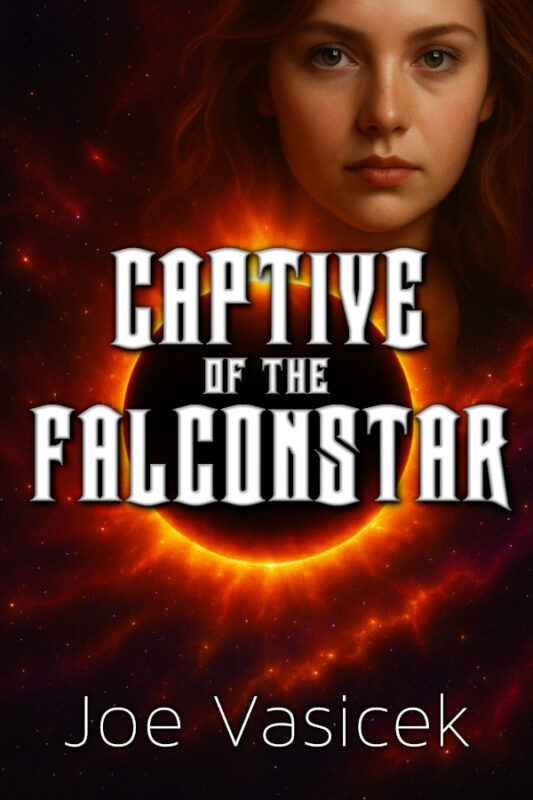
WIP Excerpt: Captive of the Falconstar, Chapter 1

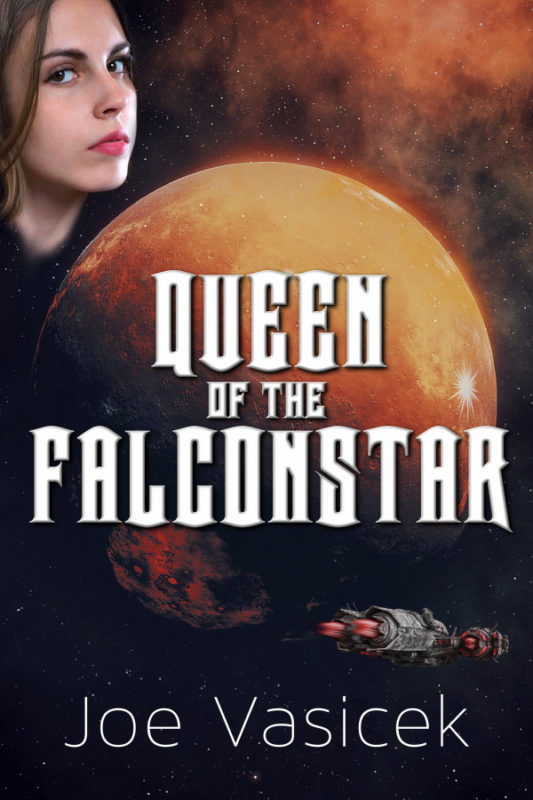
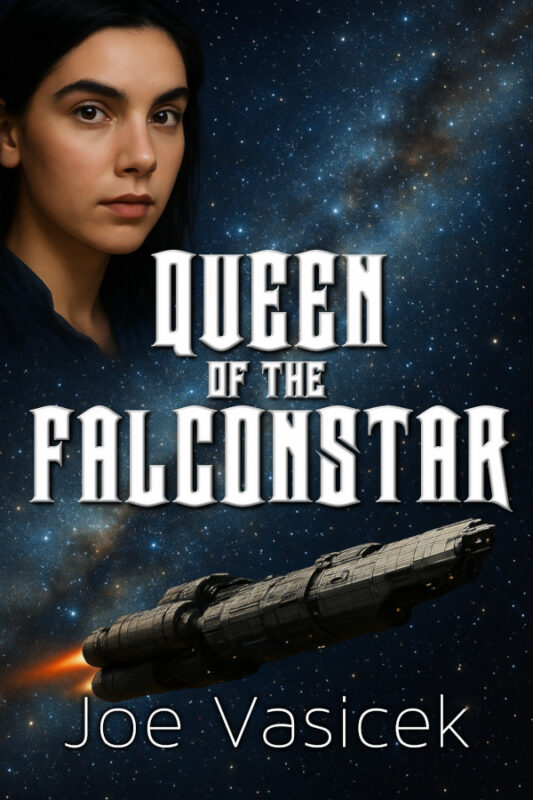
This book is a direct sequel to Queen of the Falconstar, which has been out for a few years now. I’m working on finishing the trilogy, trying out my new AI-assisted writing process to see how it does with a series that I’ve already started. So far, it’s going pretty well.

This draft is pretty rough, so you’ll see a lot of AI-isms that are going to get smoothed out before the final draft, but there’s a good chunk of human writing in there too, including the entire first scene. But that’s also kind of rough, so it will go through a couple of revisions before the novel is finally published.

If all goes well, Captive of the Falconstar should be out by the middle of next year, with the final book in the trilogy, Lord of the Falconstar, coming out soon after. One of the nice things about writing with AI is that it really helps to make the writing more efficient, so that I don’t get stuck on writer’s block nearly as much. Hopefully that will translate to much shorter wait times between books, since I really should have finished this trilogy years ago.

Enjoy!


Sonya

Sonya had never felt so happy, wandering the chaotic bazaar of Graznav Station with Petyr’s hand firmly clasped in her own. A large merchant ship had just come in from the Tajji Union, and there were so many wonderful new goods to browse. Even so, the noise and bustle of the bazaar all faded into the background as she lost herself in the company of her betrothed.

“I think I love you, Petyr,” she said, daring to give voice to the unspoken affection between them that had grown and matured for so long. For a moment, she feared that he would brush it off—say something disappointingly cavalier, like “I know”—but instead, he turned and gave her such a warm and honest smile that she knew she would love him forever.

For the next few moments, she stared back into his eyes as he stared into hers, drinking in each other like a fine wine. Time slowed until it was barely a crawl—as if this moment of pure and innocent bliss would go on forever. Petyr was not a child anymore: his rugged face was punctuated with manly stubble, his jawline square and his chest broad and muscular. And beneath the scent of engine oil and foreign spices that permeated the station’s bazaar, his manly and familiar musk comforted her and made her feel safe and loved.

Home, she thought silently, closing her eyes as she leaned into his chest. This was her home, her safe place, her refuge from the storm. And for the briefest moment, she could believe that it was real.

But all too soon, the moment passed. Her dream faded as sleep fled her all too soon, and she found herself blinking and staring up at the gaudily painted ceiling above her. Instantly, she knew that she was in the small annex of the master suite on board the Falconstar, not home on Graznav Station. And Petyr, her betrothed, was light-years away from her by now—if he was still alive at all.

No, she thought silently, her whole body tensing as she woke back up to the nightmare that was her life now. The background hum of the Falconstar’s engines seemed to roar in her ears, reminding her of her captivity. How many months had it been now since she’d been ripped away from her home? She drew a deep breath, her chest constricting as she steeled herself for another dayshift as a slave of the Hameji.

Well, not exactly. Technically, she wasn’t a slave, but a “maidservant”—her friend Zlata had seen to that. But to Sonya, it was a distinction without a difference.

She sat up on her uncomfortable cot just as the bedroom door to the master suite hissed open. The sound made her jump in surprise. She hurriedly clutched the thin blanket to her chest as Lord Khasan Valdamar stepped through.

The man who was now her captor stood tall, his muscular frame filling the open doorway as his brown eyes quickly scanned the room before falling on her. Even dressed in nothing but a robe, he exuded a commanding presence that made Sonya shrink and tremble. From the way she looked at him, she seemed to be nothing more than another asset in the ship’s inventory.

“Good upshift, Mistress Gulchen,” he greeted her with a perfunctory nod.

“L-lord Khasan,” Sonya answered, lowering her gaze as she struggled to keep her voice steady.

The Hameji clan lord took a step toward her, making her whole body tense with alarm. He narrowed his eyes with a look of disapproval.

“I see you are still dressed in your bedclothes.”

“Y-yes, Milord,” she stammered.

“That is not acceptable. Rouse yourself and prepare for the dayshift. I know you are Zenoba’s maidservant, but I am the captain of the Falconstar. My word is law.”

Sonya’s whole body shook, as if she expected him to strike her at any moment. But the authoritative tone of his voice was as strong as any blow.

“Of course, Milord. I’ll get ready at once.”

“See to it, Mistress Gulchen. I do not wish for Lady Zenoba to want for anything.”

With that, he turned and strode back into the bedroom, letting the door shut behind him with an ominous hiss. Sonya let out a breath she didn’t know she’d been holding, and hastily rose to her feet, shedding her bedclothes and dressing herself in the simple and ugly servant’s tunic that the Hameji had provided for her.

She had barely fastened the clasp around her waist when the bedroom door opened and Lord Khasan stepped out again, dressed now in his gray captain’s uniform. A massive curved dagger was sheathed on his hip, its gold-plated hilt somehow looking not at all out of place with the immaculately clean military garb of the Hameji. On his other side, a fearsome firearm was holstered so snugly it almost looked like an extension of his body.

Sonya bowed her head respectfully as he passed her, barely acknowledging her with a nod. He crossed the master suite’s front room and opened the door to the Falconstar’s main hall, greeting the two guards who stood watch for Lady Zenoba. Sonya heard only a small fragment of their conversation before the door hissed shut behind him, sealing her back in the apartment that she and Lady Zenoba now shared.

“Right,” she said, willing herself to relax a little now that the fearsome Hameji Lord was gone. She turned to the still-open doorway leading to the bedroom and rapped softly on the doorframe.

“Zlata? Are you awake?”

Her friend and oncetime fellow captive stretched languidly amidst the scarlet bedsheets and yawned. Her bare skin was still flushed from the early morning sex that she and Lord Khasan had doubtless just partaken in. The heady scent of it almost made Sonya gag. But Zlata herself seemed profoundly satisfied, and regarded Sonya with an almost sultry gaze, heedless of her own disheveled state of undress.

“Oh, there you are. Is it upshift already?”

Sonya bit her lip and nodded. “Do you… want me to give you some privacy?”

Zlata yawned and pulled the bedsheets off of her. “That won’t be necessary, Mistress Gulchen. Better to rise up and prepare for the dayshift. Here, help me.”

Sonya stepped forward and helped her gather the sheets, doing her best to avoid the wet spots. It had been nearly a month since Zlata had become Khasan’s wife and Queen of the Falconstar, but they still spent almost every nightshift engaged in carnal activities, and the clean up afterward had become something of a routine. As Zlata wrapped her body in the plush, soft fabric of her bedrobe, Sonya stuffed the dirty sheets into the laundry hamper and laid out clean ones to replace them.

“Is everything alright, Zlata?” Sonya asked, noting how Zlata paused before the mirror on the far side of the bedroom, her black hair cascading over the white fabric of her robe.

“My name is Zenoba,” Zlata muttered, glancing at Sonya through the reflection. “You must remember to use my Hameji name.”

Sonya frowned. “But I thought that was only for when we—”

“Call me by my Hameji name,” Zlata repeated firmly. Through the mirror, her striking eyes fixed on Sonya with an intensity that demanded obedience.

“Of course, Lady… Zenoba,” Sonya forced out. The Hameji name felt like acid on her tongue. It almost physically pained her to address her former friend with the name their captors had given her—but of course, Zlata wasn’t a captive anymore. She was one of them.

“Here,” said Zlata, opening the closet and selecting a green, high-collared dress. “Carry this for me.” She handed the clothing to Sonya, who held it mutely as Zlata perused the drawers to complete the outfit. 

Am I just another accessory to you now? Sonya thought bitterly as Zlata led them out into the hall of the women’s quarters to the bathroom facilities that they shared. Hatred and anger flared in Sonya’s gut like the ever-present fire at the heart of a reactor core, carefully contained but still full of burning energy just waiting to be unleashed. She carefully held onto that energy, knowing that without it, the circumstances of her captivity would have already crushed her fragile spirit.

The bathroom was not vacant, but Zlata hardly seemed to care. She shed her bathrobe on the cold tile floor and stepped into the open shower unit, leaving Sonya to wait for her outside. Sonya carefully placed the clothes on a nearby counter and retrieved the bathrobe, exchanging it for a towel. This, too, had become part of the insufferable routine.

A toilet flushed, and an overweight red-headed girl stepped out of the stall. Even though Sonya stood almost half a head taller than her, Aruzhan still seemed to look down at her she walked past her without a word. Sonya bit her lip and bowed her head demurely, carefully cultivating the anger in her heart.

I’m not afraid of you, she thought inwardly. And before I get out of this place, I’ll see you wipe that condescending look off of your face.

At length, the shower cycle finished, and Zlata stepped out, holding up her arms as Sonya dried her. Of course, she was capable of drying herself, but she seemed to take pleasure in letting Sonya do the work—which was, after all, just another form of condescension. Sonya grit her teeth and complied without a word, carefully feeding the anger into her heart.

“Dress me,” Zlata ordered as she finished wrapping the towel around her head. Her voice was soft but no less commanding.

“Yes, Milady,” Sonya said softly, unfolding the dress and helping Zlata into it. As she did, one of the other women of the Falconstar stepped into the doorway.

“Good upshift, Lady Zenoba.”

“Good upshift to you, Lady *Kulen! Are we still on for tea with Lady Nari?”

“Of course, Milady. And I have to say, I’ve been very impressed with how…”

Sonya pointedly ignored their conversation as she finished helping her former friend get dressed. If Zlata wanted to treat her like nothing more than an accessory, then that was what she would be. After all, there were certain advantages to being functionally invisible—especially when the people who made it a point to ignore you were the ones who were going to pay.

Before I get out of this place, you’ll wish you hadn’t ignored me.

Each layer of fabric that Sonya spread onto Zlata’s skin was like another barrier between them. The differences in their bodies were stark: Zenoba’s thin frame was a study in sharp angles, while Sonya’s more feminine curves filled out her simple tunic almost to the point of bursting. Still, at least she didn’t have to wear the horrid thing that Zlata had picked out.

That’s only because she hasn’t asked me to accompany her to Lady Nari’s, Sonya told herself. She shuddered as she remembered what Zlata had made her wear the last time they’d gone to Lady Nari’s together. Not that it had helped her to feel any less vulnerable or exposed before the dowager queen of the Falconstar. She shuddered again—that woman frightened her even more than Lord Khasan himself.

At length, Zlata bade farewell to Lady *Kulen and turned to Sonya. “Shall we return to our apartment, Mistress Gulchen?”

“As you wish, Milady.”

She trailed behind Zlata as they walked back through the colorful hallway of the women’s quarters, decorated with silk wall hangings and little gold tassels dangling from the ceiling. The shaggy carpet would have felt soothing against Sonya’s bare skin, if she didn’t feel so horribly out of place.

Zlata palmed open the door, and they stepped back into the apartment that they both shared. As Zlata made herself comfortable on the divan, Sonya’s eyes lingered on her cot, remembering with some wistfulness the dream from the nightshift before. She bit her lip to keep from crying.

“Would you like to play a game of Damka while we wait for breakfast, Gulchen?”

Sonya carefully clenched her fists, keeping them out of view. “Will you stop calling me that, please?” she asked, forcing herself to meet Zlata’s gaze. “My name is Sonya.”

Zlata stared at her for several moments, her eyes unreadable. “But your Hameji name is Gulchen. You chose it yourself.”

As if I had a choice! Sonya wanted to scream. Instead, she took a deep breath and cultivated her growing rage.

“My name is Sonya,” she repeated, as if that were answer enough.

Zlata sighed. “Do you really want to make a big deal out of this? We are both Hameji now. It’s only fitting that we should use our Hameji names.”

“No, it’s not,” Sonya insisted, unable to hold herself back. “I’m not going to forget who I am. I’m never going to forget.”

“That’s not what I’m asking you to do,” Zlata retorted. “I’m only asking you to accept that this is who you are now. Our names give us power, and sometimes we must shape ourselves anew to properly wield it.”

Her words made Sonya want to scream. Instead, she took a deep breath and looked Zlata in the eye.

“My name… is Sonya.”

They stared at each other in tense silence for several moments. It took a feat of will for Sonya not to turn away. But she held her gaze firmly until Zlata finally sighed and shook her head.

“Very well,” she said at length. “If Sonya is truly the name you wish to go by, then that is what I will call you whenever I can. But I expect you to call me Zenoba, even when it’s just the two of us alone.”

“Yes, Milady,” said Sonya, with only a hint of sarcasm in her voice. Zlata still picked up on it, though, and raised an eyebrow.

“Sonya?”

“Yes, Zenoba,” she said quickly, looking away. “I hear you.”

“Good. Now, how about a little Damka?”

Sonya sighed and sat down on her cot as Zlata set up the board. Who was she to refuse? After all, whether she was a maidservant or a slave or something else entirely, the one thing she knew was that she was no longer free.

But somedayshift, I will be, she inwardly resolved. And when I finally am, Zlata will pay.

Khasan

Khasan stood ramrod straight as his gaze swept the view from the observation deck. Out here, in deep space, the stars in their myriad thousands were all distant points of light, glowing like cold jewels from the depths of a fathomless abyss. Out here, the Falconstar was his only world; any accompanying friendly starships were little more than nearby islands, and enemy ships existed only as blips of data on a screen. There were no other ships for at least a parsec, though, which suited Khasan just fine. The solitude of the stars was lonely and cold, but it issued no judgment, nor tried to force his hand.

The last few months had been surprisingly eventful. He had raided the planetborn for starships and had come back with a pair of slaves. He had lost his chief advisor—the traitor!—and won a ruthless wife. He had broken off a marriage arrangement that would have secured his family’s safety, at the expense of their family name, and had plunged them anew into peril for the promising hope of a glorious restoration. 

He narrowed his eyes and clenched his fists. By all the holy stars before him, he would not rest until the Valdamar Clan had been restored.

Khasan Valdamar stood tall, his back straight and eyes fixed on the small dots of light that illuminated the darkness outside the viewport. They were distant stars, but to him, they held a lifetime of memories- of his childhood, of his ancestors, and now, of his own struggles as the ruler of the Valdamar Clan. Nergui’s betrayal still haunted him, and a part of him yearned for his old advisor, even though he now knew the man was a traitor.

The door to his private quarters whooshed open, and Zenoba entered with purposeful strides. She was newly appointed as matriarch of the Valdamar clan, her eyes reflecting both authority and curiosity.

“Zenoba,” he greeted her, barely hiding his eagerness. Nergui had always opposed his marriage to her, but now she at least partially filled the void that his betrayal had left behind.

“Khasan,” she said, as if confirming his thoughts.  “We need to speak about what lies ahead for us.”

He turned from the stars, his piercing brown eyes meeting hers. In their depths, a tumultuous sea of ambition and resolve churned. “We will expand our fleet,” Khasan declared, his words slicing through the uncertainty that hung between them. “The betrayal of Nergui has left a void, but it also gives us clarity. We must expand our strength by raiding the planetborn, seizing their ships.”

“I see,” she said, her mind racing through all the possible outcomes. “Must we cause so much bloodshed, though? Is there no other way to strengthen our clan?”

“Blood is the price we pay for greatness,” Khasan replied, his voice filled with fervent determination. “Our ancestors understood this, and so must we.”

She nodded. “I stand by your side,” Zenoba affirmed, her loyalty unwavering. “But I need to fully comprehend what we plan to do.”

“Then let me show you,” he said, a hint of vulnerability creeping into his stern demeanor. He led her to the holographic display at the center of the room and activated it, revealing a star map dotted with enigmatic symbols.

Zenoba stepped closer, her gaze falling upon the projected star systems. “You intend to raid the planetborn?” she inquired, her voice tinged with a supportive curiosity. She knew the importance of expanding their fleet, but the layers of political intricacies were not lost on her.

“Indeed,” he confirmed, “Our future—and the future of the Valdamar clan—lies in the ships we capture. But first, we will journey to the secret holdings of Clan Valdamar to gather supplies and men. Besides, as Lady in Command, it is important that you should see these holdings for yourself, and be able to assess the true strength and weaknesses of our clan.”

Zenoba leaned forward, her black hair falling like a shadow across her face. Her striking eyes darted over the display, taking in the information with keen interest. “This will not be a short voyage,” she observed.

“Indeed, it will not be,” Khasan affirmed. “But the rewards will be worth it. We have hidden these ships away for a reason, and now, in our time of need, we will make use of them.”

Zenoba nodded in understanding. “And what of the planetborn?” she asked. “Where do you plan to strike?”

Khasan’s expression hardened. “The planetborn are weak and complacent,” he replied. “They do not possess the strength to defend their territories against us. Still, we are not yet strong enough to take what is rightfully ours. We must be cautious, and choose our targets carefully.”

“Of course. Will you leave me behind in the secret clan holdings while you conduct this raid?”

“No, my love. The Falconstar is more than a ship; it is our home, our fortress among the stars,” Khasan stated, pride swelling in his chest. “It will carry us safely, and there, you will witness the full extent of our potential.”

“Show me,” she said, accepting the challenge his invitation presented.

He nodded, a silent acknowledgment of her role in his life and the unfolding saga of their clan. Together, they would venture into the fringes of space, to an uninhabited system where the roots of their power spread unseen.

They spoke for a while afterward, about less pressing matters. He enjoyed her company, and found himself relaxing in her presence in a way that he never could with Nergui. And yet, the stakes of their next raid hung over him, never far from his mind. Sensing this, she excused herself.

As she left his quarters, the ship’s engines hummed with readiness, a deep vibration that resonated with the pulse of Khasan’s own heart. The stars beyond called to him, and he answered with the determination of one who would stop at nothing to restore his clan to its former glory, to carve out a legacy that would endure through the ages.

Zenoba

Zenoba’s footsteps echoed softly against the cold, metallic floors of the Falcontar’s corridors as she made her way to the bridge. The steady hum of the ship’s engines reverberated softly through the bulkheads, a constant reminder that this sleek and powerful vessel was an island in the infinite void. Was it strange that she felt so at home here? She dismissed the thought before it had any time to take hold in her thought. Of course it was not strange. For a Valdamar queen such as her, it was only natural.

The door parted before her, and she stepped onto the bridge of the Falconstar with a soft but confident stride. As she gazed upon the suite of intricate control panels and glowing consoles manned by the dozen or so bridge officers, she felt a sense of awe rise within her. This was the beating heart of their starship, the very center of their sanctuary in the depths of interstellar space.

Gavirl, the Captain of the Falconstar’s Guard, acknowledged her presence with a curt but respectful nod. The dim lighting cast soft shadows across his sharp features, defined by a strong jawline that was framed with a short, thick beard. He turned to face his captain, his face a stoic mask.

“Lord Khasan,” Gavril announced. “Lady Zenoba has joined us.”

“Excellent,” Khasan replied from the captain’s chair. He rose and turned to greet her, his muscular silhouette outlined against the glow of the display screens and the view of the starfield outside. Zenoba smiled inwardly at the sight.

“Excellent,” Khasan replied from the captain’s chair, his muscular silhouette outlined against the vast backdrop of space. His body was coiled like a spring, his eyes darting feverishly between screens. 

Zenoba gave Gavril a curt nod and stood by the captain’s chair, taking her place beside her husband as Lady in Command.

“Status report,” Lord Khasan barked, his voice resounding through the bridge with sharp precision.

Jabeg’s confident voice rang out above the din. “Coordinates locked in and engines primed for jump.”

Elbek’s fingers danced over his console, a silent symphony of war and defense. “Weapons systems are in standby, Lord Khasan. We are ready for jump.”

“What about the rest of the fleet?” Zenoba asked.

“Communications channels will be limited during the jump, Lady Zenoba,” Shilugei added, his sharp features set in a mask of focus. “But I’ll ensure you remain informed.” There was a reverence in his tone, reserved for those of Zenoba’s new station.

Khasan’s hand hovered over a panel, fingers curling into a tight fist before finally pressing down to initiate their first leap into the unknown.

“Let’s go,” he commanded, his determination palpable and echoing throughout the ship as they hurtled towards their destination.

“Jump commencing in three… two… one…”

A gut-wrenching lurch, a gasping breath—the universe collapsed in on itself. In that split second, the void consumed all, its emptiness consuming the very essence of existence. But then, like a fierce phoenix rising from the ashes, the Falconstar emerged on the other side, victorious and unbreakable.

“Jump successful,” Jabeg reported, relief palpable in his tone.

“Let us offer our prayers,” Khasan intoned, and the bustle quieted to a sacred hush. “For the stars guide us, and the darkness shields us.”

Khasan stood with arms outstretched, invoking the power of the star map projected on the wall. The rest of the crew circled around him, their heads bowed in reverence to the ancient deities.

“Oh great Tenguri, Lord of the Celestial Heavens and Father of all, we invoke thy holy name and reverence thee.”

“Oh Karduna, God of *, we ask for thy blessing and favor as we embark on this great journey.”

“And thou, New Rigel, vouchsafer of ancient and forgotten wisdom, we revere thee last of all, that our voyage may be blessed. Amen”

As he recited the Hameji chants of navigation, Zenoba felt her soul stir with primal energy. She watched in awe as Khasan’s words conjured an aura of magic and purpose within the room.

“Never forget our purpose,” Khasan continued. “Our mission is crucial to the survival of our people and the blessings of the gods.”

Zenoba nodded, feeling a renewed connection to her pagan roots and a fierce determination to see their quest through to the end. They were united by their shared devotion and trust in each other, guided by the unseen forces that governed their destinies.

As the echo of the last prayer dissipated, Zenoba excused herself, her footsteps silent on the metal deck as she made her way back to the women’s quarters. She could sense that she was no longer needed or wanted on the bridge, despite Khasan’s polite dismissal.

“I’ll leave you all to your duties,” she said with a small smile, acknowledging that her duties as lady in command were done. The men could rest more easily, after she had returned to the womens’ quarters.

Khasan gave her a nod of understanding, his attention already shifting back to the star map displayed on the wall. Jabeg and Shilugei were deep in conversation, their voices hushed but urgent.

Zenoba glided down the narrow hallway towards the women’s quarters, adorned with intricate tapestries and sacred symbols of their beliefs. As she entered the familiar space, a wave of serenity washed over her, surrounded by her sisters in faith. The soft rustle of silk and exotic fragrances greeted her, a stark contrast to the clinical atmosphere of the bridge. Here, among the female nobility of Clan Valdamar, strength and elegance intertwined within the metallic walls of their warship, creating a powerful presence that commanded respect.

Amidst the soft glow of the starship’s interior, Lady Nari’s silver hair shimmered. She sat beside the aquaponics tanks in the lounge, surrounded by a circle of women as they knit and tended to their craft. Khasan’s mother was the undisputed matriarch, her brown eyes holding the weight of wisdom and unspoken authority.

“Good downshift, Lady Zenoba,” Lady Nari greeted her, rising in respect. The others followed.

“Please,” said Zenoba, raising her hands. “There is no need to rise on my account.”

“On the contrary,” said Lady Nari, a glint in her eye. “As Lady in Command, your rank on this ship is now equivalent to mine—and I would certainly take it as an affront if you did not show the same respect to me.”

They resumed their seats, Lady Nari’s *golden samovar set in the center of the room, where Aruzhan tended to it.

Lady Gerel, Khasan’s half-sister, smiled warmly at Zenoba, her dark red hair falling in loose waves around her rosy cheeks. Her gentle demeanor belied the fierce loyalty that bound her to her brother’s cause.

Towering over them all was Lady Khulan, tall and statuesque with sharp eyes that missed nothing. Her midnight-black hair was meticulously braided and her presence commanded respect.

But amidst the serious conversation, young Aruzhan stood out with her bubbly personality and carefree laughter. Her ample form promised comfort and camaraderie, a rare warmth in the cold expanse of space.

“Zenoba,” Lady Gerel called out, her voice gentle yet commanding in the cool chamber. “You’ve returned. Will you stay and have tea with us?”

“Thank you,” said Zenoba. As she settled among the women, her thoughts drifted to the vast unknown beyond the ship’s hull and her crucial role in the unfolding power play.

“Your insights are truly invaluable, Lady Khulan,” Zenoba acknowledged, mindful of the woman’s influential position.

“Only because they are actually listened to, my lady,” Khulan quipped back, her eyes sharp as a knife.

Meanwhile, Aruzhan flitted around the room, her infectious laughter bursting through the air like bubbles in champagne. She slyly winked at Zenoba, her mischievous nature barely hidden under layers of charm and chiffon.

“Want something to eat, cousin?” Aruzhan teased with a playful smirk, already knowing the answer.

“Not now,” Zenoba replied with a small smile tugging at her lips.

Retreating to her private chamber within the women’s quarters, Zenoba allowed herself a moment to breathe. As the weeks stretched into an endless tapestry of stars and silence, she felt the tendrils of uncertainty begin to coil around her heart. Yet she could not—would not—let them take hold.

Her reflection, a tall, thin woman with black hair and striking eyes, stared back at her—a queen in a game of thrones, a player in the grand chessboard of the galaxy. And as the Falconstar hurtled toward their destiny, Zenoba Valdamar braced herself against the unknown machinations of fate, her mind ever plotting, ever poised for the next move in the high-stakes dance of power.

Zenoba

The voyage to the secret clan holdings took more than a standard month. Compared to their first voyage, it was largely uneventful. Zenoba passed most of the time in the women’s quarters, staying with Sonya—now Gulchen—in the master suite. Khasan came to her almost every sleep cycle, and their intimate conversations lasted long into the nightshift. Never before in her previous life on Graznav Station had Zenoba felt so totally at home.

At last, they arrived at the remote and uninhabited star system. Zenoba joined Khasan on the bridge, assuming her position once again as Queen of the Falconstar and Lady in Command.

“Ah, Lady Zenoba,” said Khasan cheerily, rising to greet her. “So good of you to join us. Please, take a seat.”

He gestured to the seat where Gavril usually sat. Zenoba gave him a puzzled look.

“But your lieutenant—”

“Is attending to other duties, as are several of our other officers. Please, make yourself comfortable.”

It was true: compared to the start of their voyage, the bridge was mostly empty. And from Gavril’s seat just behind the command chair, Zenoba had as good a view of their approach almost as Lord Khasan.

“Copy that,” said Shilugei, transmitting the security codes. “We are cleared to approach.”

The silence of the void wrapped around the shuttle like a shroud as it glided toward the farm ships, vast structures floating amidst the starlit expanse. Zenoba watched through the view port, her gaze fixed on the behemoths that grew larger with each passing moment. 

“Remarkable,” she murmured, her voice a whisper lost in the hum of the shuttle’s engines.

“Indeed, my lady,” Khasan replied. “These vessels are more than mere food sources; they are the lifeblood of our clan, symbolizing our self-sufficiency, our resilience.”

Zenoba nodded, though her attention was drawn not to the implications of power but the ingenuity of survival. She thought of the delicate balance between dependence and autonomy, where each member of Clan Valdamar found their place within the grand tapestry of space.

The shuttle docked with a gentle shudder, and the doors hissed open, beckoning them into the belly of the ship. 

“Come,” said Khasan, rising to his feet. “Let us go.”

They stepped out into the hall, where Gavril was already waiting with an honor guard to escort them. Zenoba put a hand on Khasan’s arm.

“Should I bring Mistress Gulchen along?”

“Of course,” said Khasan, still in good spirits. “Your maidservant is welcome to join us. We will wait.”

Zenoba used her wrist console to summon Gulchen, who came quickly, dressed in her everyday white robes. Though she’d seen them on her many times before, Zenoba could not help but notice how they hugged her supple form.

Khasan led them through the airlock, his commanding presence filling the dimly lit corridors of the farm ship. Mistress Gulchin followed behind, her presence a shadow of reluctance that flickered at the edge of Zenoba’s awareness. As they stepped onto the ship, Gavril took point, his hand resting near the hilt of his sidearm, eyes scanning for threats in a place where danger seemed an alien concept.

“These ships are where most of the women of the clan reside,” Khasan explained. “But as Lady in Command, your place is ever with us on the Falconstar, Lady Zenoba.”

As they entered the hydroponic bay, an endless sea of green greeted them beneath artificial light. Rows upon rows of plants swayed gently in the recycled breeze, from leafy greens to robust stalks of grain-producing crops. The air was thick with humidity and the scent of earth, a welcome change from the sterile atmosphere of the Falconstar. Zenoba couldn’t resist touching a leaf, marveling at the thrum of life beneath her fingertips. It was a strange and wondrous sight to see such growth flourishing in the cold void of space.

“Each section is climate-controlled, optimized for specific crops,” Khasan explained, leading them down the narrow walkways between the plant beds. “We can feed our entire fleet without relying on planetary harvests.”

“Impressive, lord,” Zenoba admitted, her analytical mind cataloging every detail, pondering the implications of such autonomy.

Khasan’s pride was palpable as he introduced her to the crew—sturdy men and women whose hands were calloused from honest labor. Their faces lit up with reverence for their lord and lady, the loyalty in their eyes untainted. As Zenoba observed the people of the clan bustling about their daily tasks, she couldn’t help but feel a surge of respect for their essential role in the hierarchy of the clan.

“Your vision sustains us all, my Lord,” one of the crew members said, bowing deeply before Khasan, who received the compliment with a gracious nod.

Zenoba noticed Gulchen trailing behind her, her normally unreadable expression betraying hints of inner turmoil. Zenoba’s analytical mind immediately began to consider. A part of her wanted to reach out to Gulchen and bridge the growing gulf between them, but another part was hesitant, knowing that doing so would expose both of their vulnerabilities.

“Come, let me show you the aquaponics,” Khasan said, leading them further into the vessel.

They descended to a lower level, the sound of running water growing louder with each step. Here, tanks teemed with fish, their silver scales flashing in the artificial light as they swam through the clear depths. Above the tanks, more plants grew, their roots dangling into the water, creating a symbiotic cycle of life that left Zenoba momentarily awestruck.

“Everything in balance,” Khasan murmured, echoing Zenoba’s thoughts. “A closed ecosystem that sustains us as we journey through the cosmos.”

“Amazing,” Zenoba breathed out, allowing herself a rare moment of awe. To think that such complexity could thrive here, in the cold embrace of the cosmos, stirred something within her—a sense of pride in what the Hameji had accomplished, a burgeoning connection to Khasan’s vision that she hadn’t expected to feel.

“Is everything to your satisfaction, my wife?” Khasan asked, his hand finding the small of her back.

“More than satisfactory, lord,” Zenoba replied, her voice steady, her emotions carefully veiled. The farm ship impressed her, yes, but it was the machinations of her own heart that remained an enigma, distant and uncharted as the stars themselves.

“Then come, let us travel to the mines.”

The shuttle’s engines hummed with a steady thrum as it departed from the farm ship, leaving behind the vibrant greenery that clung to life amidst the void. Zenoba sat, her posture poised and regal, within the confines of the vessel’s interior, yet her mind was adrift in the vast expanse they traversed. The stars blurred together in streaks of white light, reminding her of the passage of time and how far they had come.

Khasan sat beside her, his own gaze fixed on the endless expanse outside. He was silent for a few moments before he turned to her with a small smile.

“I’m pleased that you took such an interest in our farm ship,” he said. “It’s truly a wonder of technology and innovation.”

Zenoba nodded, her thoughts still muddled with conflicting emotions. She had always been fascinated by humanity’s ability to adapt and survive in any situation, but now she saw it in a new light—a testament to Hameji determination and resilience.

Khasan reached out and took her hand, his warm touch grounding her in reality. “There is much to discuss about our next destination,” he said gravely. “We are headed towards one of our mining outposts—an important key resource for all of our clan operations.”

Zenoba listened intently as Khasan explained their mining operations and how they extracted precious minerals from nearby asteroids. He also spoke about their military strategies that allowed them to protect their resources from potential rival clans.

“Our mines are the sinew and bone of the Valdamar clan, providing us with the raw materials to forge our destiny.” He gestured to the panoramic viewport as distant points of light grew clearer, revealing the stark geometry of industrial might.

Zenoba’s curiosity was piqued and she listened intently as he continued. “We have established a network of drones, guided by the hands of our most trusted engineers. It’s more efficient this way—less waste, less cost, greater speed.”

“Remarkable,” she whispered, her fingers tracing the cold glass of the observation window. The vastness of space lay beyond.

“The Hameji do not merely survive in space,” Khasan interjected, a note of pride evident in his voice, “we thrive. We bend the desolate expanse to our will.”

Fascinated by their methods, Zenoba pressed on. “And how do you ensure loyalty among the miners? It must be grueling work.”

“Through honor, Lady Zenoba,” Khasan replied confidently. “Each miner is a warrior in their own right. Their battlefield is here, among the asteroids that provide us with the precious ore for our ships.”

As the shuttle docked with the mine’s main hangar, the party disembarked into the cavernous interior. Zenoba followed Khasan, her tall figure moving gracefully in the low gravity, her shoulder-length black hair floating slightly around her head.

“Everything here is recycled, reused,” Khasan explained, leading her past a group of workers extracting precious metals from the mine’s walls. “We mine not only for materials but also for the water locked within these rocks.”

“Remarkable,” Zenoba murmured. Her analytical mind raced through the implications of each piece of technology, each process she witnessed. She saw the interconnectedness of it all—the farms, the mines, the people—and understood how precariously it balanced on the edge of the great galactic expanse.

“Such unity,” she mused aloud. “It’s more than just survival. You’ve built a culture that embraces the stars as its home. You’re not just surviving; you’ve created something… enduring.”

“Endurance is the key to victory,” Khasan said with a nod. “Everything you see here,” Khasan said, pausing to meet her gaze, “it’s all for our future—for the ascendency of the Valdamar clan.”

She nodded, her soul trembling at the raw power of his words. In this frigid void of space, the Hameji had surpassed the restrictions of mere planet-bound civilizations. They were a race forged from steel and will, unbounded by earthly horizons.

Sonya

Sonya stepped back into the shuttle, feeling the hum of the engines vibrating through the cold metal floor. She settled into the seat next to Zlata, avoiding Lord Khasan’s piercing gaze as he took the seat across from them. Fortunately, both he and Zlata seemed content to ignore her, treating her like some sort of harmless pet, just as they had throughout the tour.

The docking clamps disengaged with a distant clang, making Sonya shudder. She gazed out the portside window, watching as the industrial complex covering the face of the asteroid grew smaller and smaller, until it had all but disappeared into the darkness of space.

Beside her, Zlata stood tall and composed, seeming to thrive in this environment. Her eyes reflected the starlight like a predator on alert. During the tour, she had asked pointed and insightful questions, showing her dedication to this new life among the stars – a life that Sonya couldn’t see herself fitting into. The sense of isolation washed over Sonya like a heavy cloak, and she knew that Zlata would never be an ally in her escape.

“Gulchen,” Zlata said later, when they were alone in the dimly lit confines of the women’s quarters. Her voice was softer now, stripped of the authority it held on public display. “I see your sadness. You miss your home.” Zlata’s hand rested on Sonya’s shoulder—a touch meant to soothe, perhaps, but to Sonya, it was a reminder of her shackles.

Sonya’s voice dripped with venom as she whirled around to confront Zlata, her hazel-green eyes ablaze with unbridled hatred. “Don’t you dare call me that,” she hissed through clenched teeth. “I am not your Gulchen.”

Zlata’s stunning eyes softened for a moment, revealing a glimpse of insecurity. “Fine, Sonya. I understand this isn’t the life you wanted.”

“Lies!” Sonya spat out the word like it was poison, her fists clenching at her sides. “You robbed me of any choice, Zlata. You’ve taken everything from me and left me with nothing but pain and resentment.”

Zlata’s voice wobbled as she corrected her servant. She sat on a cushioned throne, draped in luxurious silk robes and surrounded by glittering jewels. Sonya stood before her, arms crossed and eyes blazing with defiance.

“I know it’s not easy for you to be here, so far from your past life,” Zlata continued, her tone softening. “But we must make the best of our new home.”

Sonya scoffed at her mistress, the fire in her eyes intensifying. “In time?” she repeated mockingly. She took a step closer, meeting Zlata’s gaze with her own determined one. “You may wear the mantle of power effortlessly, but you have forgotten what it feels like to be shackled and controlled. My place is not among these stars, and I fear it never will be as long as you remain so consumed with building this…empire.”

“Sonya—Gulchen,” Zlata corrected gently, but firmly, reinforcing the identity imposed upon her. “We cannot change what is. We can only influence what may come.”

Sonya’s heart clenched as Zlata corrected her name, a reminder of the identity that had been imposed upon her. The words “cannot change” echoed in her mind, a constant reminder of her helplessness. She wanted to believe in Zlata’s reassurances, but they felt like empty promises in the face of captivity and bondage.

“Sonya—”

“Please, don’t,” Sonya interjected, stepping back. “Don’t pretend to understand.” She could feel the walls closing in, the ship itself an unyielding cage. And with Zlata’s transformation, any flicker of hope for empathy or aid had vanished.

“Very well,” Zlata said, her voice faltering for a moment before regaining its composure. “If that’s how you wish it.”

As Zlata walked away, Sonya’s fists clenched and her mind raced with conflicting thoughts. She tried to focus on the shuttle gliding towards the Falconstar, but her thoughts kept drifting back to Zlata’s betrayal and the anger simmering within her. As she stared at the cold, metallic walls of the shuttle, she couldn’t help but feel trapped and helpless. But then a spark of determination ignited within her, mirroring the unwavering strength of the spaceship’s hull. She made a silent promise to herself – if Zlata wouldn’t be her savior, then she would save herself, and make Zlata pay for failing her.

Zenoba

Zenoba woke up to a sudden wave of nausea. Clutching her stomach, she stumbled out of bed, her body drenched in sweat. Had they just made an unusually long jump? No, this was a much different kind of sickness from the jump fatigue that she’d grown used to. Whatever the cause, the sensation felt foreign and deeply unsettling.

“Sonya,” she called out weakly, struggling to steady herself against the bulkhead. “I need your help.”

Without a word, Sonya emerged, her features schooled into practiced impassivity. Together, they traversed the labyrinthine passageways to the sickbay, the quiet punctuated only by the occasional murmur of the ship’s crew going about their morning routines.

The sickbay was sterile and humming with the low throb of machinery. Dmitri, the slave doctor, looked up from his console as they entered. His kind eyes met Zenoba’s, a silent acknowledgment passing between healer and patient.

“Doctor,” Zenoba greeted him with a nod, her voice betraying none of the turmoil within.

“Sit, Lady Zenoba,” he said softly, guiding her to the examination table. His hands were gentle yet precise as he conducted the scans, the quiet beeping of the medical equipment filling the room.

As Zenoba lay back on the cold surface, Dmitir scanned her with a handheld device that swept over her body in a soft blue light. The room was silent save for the hum of the scanner and the distant murmurs of the ship.

“Your symptoms are consistent with early pregnancy,” Dmitri announced after a moment, his words cutting through the stillness like a laser through durasteel. “You are carrying Lord Khasan’s child.”

Zenoba received the news without a flicker of reaction, her face an impenetrable mask. But behind her striking eyes, a storm raged silently. The weight of the revelation settled upon her like dust upon abandoned ruins; a life growing inside her, yet her heart felt barren.

“Thank you, Doctor,” she said, her voice even, her face impassive. Yet, beneath the surface, a maelstrom whirled. Was it fear? Hope? Zenoba could not tell. She had always prided herself on her ability to mask her emotions, to remain detached and calculating. But now, as the prospect of motherhood loomed, she found herself adrift in an ocean of uncertainty.

“Would you like to know the gender of your child, Lady Zenoba?” Dmitri asked. “If you would like, a simple DNA scan of the fetus would—”

“No,” Zenoba said quickly. For now, it was enough to know that she was having a child—she didn’t know how she would react to learning whether that child would actually be Khasan’s heir.

“Is there anything else, Lady Zenoba?” the doctor inquired.

“No, thank you,” she said, rising from the bed with a grace that masked her inner turmoil. “That will be all. I will inform Lord Khasan.”

As she walked back to her quarters, Sonya trailing behind, Zenoba’s mind raced. This child, a symbol of her union with Khasan, solidified her position within the Valdamar clan. Yet, amidst the political machinations and the relentless pursuit of power, she sensed a chasm opening within her—a void where emotion should reside.

The news would please Khasan, she thought as she rubbed her belly. But with the joy also came fear, a vulnerability that could be used against her by both friends and enemies. She sat on the edge of the bed, staring out the window as the weight of the situation pressed down on her. Beside her, Sonya fidgeted with a strand of hair, her hazel-green eyes darting with unspoken questions. Zenoba felt the distance between them, knowing that she carried a secret too heavy to share, one that could shatter their fragile bond.

“Sonya,” she called without looking up, needing the familiar presence of someone who, despite everything, was bound to her.

The maidservant glided into the room, her curvaceous silhouette swathed in the modest garb of servitude. Her eyes, usually sparkling with mischief, now betrayed a deep turmoil within her. Zenoba, sitting regally on her cushioned throne, motioned for her to approach.

“Please prepare some tea for me, Sonya,” she commanded, her voice measured and detached. 

“As you wish,” Sonya replied with a quick nod, but her gaze lingered on Zenoba just a moment too long, searching for any hint of the inner turmoil that she knew must be consuming her mistress.

“I have just learned that I am pregnant with Khasan’s child,” Zenoba announced.

Sonya froze, nearly dropping the teacup as she took it from the Samovar. For a moment, her face turned white. But she drew a deep breath and recovered quickly, the only sign of her shock her shaking hands.

“Congratulations, Zlata,” she said softly.

“Lady Zenoba,” Zenoba corrected. “That name is dead to me now.”

Sonya bit her lip and left quickly, leaving Zenoba alone with her thoughts. Drama, drama. Don’t dwell too long on the drama.

In her private chambers, Zenoba sat at the edge of the bed, staring at the reflection of a woman she barely recognized. A queen, a wife, soon to be a mother—and yet, she felt nothing. She was adrift in a sea of expectations and duty, her own desires submerged beneath the tide of her responsibilities.

But emotion or no emotion, her path was set by the life she carried, and she would navigate this new terrain with the same cold precision she applied to all aspects of her life. Even if she felt nothing, she would do everything required of her. It was the Hameji way.