Fantasy from A to Z: Z is for Zeitgeist

What is the future of fantasy literature? Where is the genre headed, based on current cultural trends?

For a long time, epic fantasy was basically Tolkien-light. There were exceptions, of course, but most readers wanted something that felt a lot like Lord of the Rings, and the most successful writers were the ones who gave it to them. There was a little bit of innovation, probably culminating in Robert Jordan’s Wheel of Time series, but if you picked up a random epic fantasy off the shelf, you could have a pretty good idea of what you were getting into.

Then, in the 90s and 00s, fantasy started to get dark and gritty, with writers like Joe Abercrombie and George R.R. Martin setting the tone. This new subgenre or flavor of fantasy, called grimdark, really came to dominate during this time, to the point where some were calling Martin an “American Tolkien” (though all that talk more or less died with the terrible finale of the show). Grimdark is still quite dominant, though an increasing number of readers are turning to “cozy” fantasy or slice-of-life in subgenres like litRPG. And of course, romantasy is taking off like crazy, though as we’ve already discussed, most romantasy is basically just porn.

So where are we going from here?

Our culture tends to pass through a cycle of seasonal turnings, where each season is the length of a generation, and the cycle itself is the length of a long human life. Reduced to its simplest form, the cycle follows a pattern like this:

Strong men create good times (first turning).

Good times create weak men (second turning).

Weak men create hard times (third turning).

Hard times create strong men (fourth turning).

We are currently living in a fourth turning, which is the period when all of the major wars and catastrophes tend to happen. In other words, the fourth turning is basically a grimdark world—or rather, when the full consequences of a grimdark world become manifest. But the grimdark subgenre really took off in the third turning, when dark and grim fantasy worlds resonated with the “hard times” that we all were starting to live through. This is also why dystopian YA became so popular in the 90s and 00s.

(As a side note, I have to say that I find it both perplexing and hilarious how so many zoomers think of the 90s as a simple and wholesome time, to the point where they think they experience nostalgia for it. Those of us who lived through the 90s remember it very differently, as an era of school shootings, political scandals, collapsing churches, teenage pregnancies, and ever-escalating culture wars. There’s a reason why Smells Like Teen Spirit was the decade’s anthem. Though in all fairness, I suppose that if someone from the middle ages were to visit our own time, they would find the nostalgic yearning on which the whole fantasy genre is based to be just as perplexing and hilarious.)

I believe we are on the cusp of a major cultural wave that is going to change everything, to the point of making our world almost unrecognizable to those who lived through the 90s and 00s. And just as the grimdark authors like Martin and Abercrombie rose to prominence by riding the wave in their part of the generational cycle, there are a lot of noblebright authors who stand to benefit from riding this next wave, which is only now beginning to break.

After all, there is another way to formulate the generational cycles. It looks something like this:

Complacent men create a spiritually dead culture (first turning).

A spiritually dead culture creates awakened men (second turning).

Awakened men create a spiritually vibrant culture (third turning).

A spiritually vibrant culture creates complacent men (fourth turning).

In the summer of 2024, I think we passed through a critical fork in the current timeline. If the generational cycle had followed its usual course, then our current crisis period would have ended with a period of unification under a new order, based upon the spiritual foundations that were laid during the 60s and 70s. In other words, the woke left would have won, and we’d be living under the sort of regime that would enforce woke values. Dissent would not be tolerated, because dissent is never tolerated in a first-turning world.

The second most likely outcome would have been a complete shattering of the generational cycles. In other words, we would have fallen into some sort of national divorce or hot civil war, with the United States splitting apart and the Western world completing its cultural suicide, which has been ongoing for several decades now. There has never been a time when such a major cultural rift has been accomplished by peaceful means. It is always accompanied by a terrible, bloody war.

But when President Trump survived the assassin’s bullet at the rally in Butler, Pennsylvania, that’s the point where I think our timeline diverged—and it followed the least likely path, which has only ever happened once in the history of modern generational cycles. We skipped from a fourth-turning straight into a second-turning, skipping straight from crisis to revival.

The last time this happened was with the US civil war. Usually, after a culture survives an existential crisis, you get a period of national unity, which often results in a brief golden age (or at least, an age that is remembered as such, often by those who did not live through it). But after the civil war, there was no national unity. Instead, we skipped right to the second turning, which is typically characterized by a major spiritual awakening.

Whatever your opinions of President Trump, the fact that he survived the assassination attempt in Pennsylvania and went on to win the 2024 election in a landslide means that we have (for the moment) avoided the first two scenarios. At this point, it’s difficult to imagine the woke left taking back the culture and leading us into a first-turning world in their own image. And though the US may yet fall into a hot civil war, from where I’m standing in flyover country that no longer seems quite so imminent.

Don’t get me wrong, though. We are not about to enter a period of national unity anytime soon. Certainly not a period of national unity whose foundations were laid by the previous spiritual awakening, which is what the generational cycle requires. At the same time, because President Trump survived the Butler assassination attempt (thank God), I think we avoided a hot civil war.

Because of all this, I think that we are about to experience a major cultural upheaval, the likes of which have never been seen in living memory. We will not get a period of unification. We will not experience a golden age period of material prosperity (though there may be a few years of plenty before the years of famine begin in earnest). But we will experience a cultural and spiritual revival that will burn through our culture until it has utterly demolished the woke worldview and values laid down during the 60s and 70s, and built something entirely new in its place.

What will that look like? And how will it affect the trajectory of fantasy literature?

Culturally, it will be a period of incredible dynamism. We will see an explosion of creative expression in every field, including in literature. Books and movies and games that are cultural mainstays now will be totally forgotten within a couple of decades, and everything that is popular now will feel dated and out of touch in the space of just a few years.

The authors and artists who will do the most to shape this new culture are today almost completely unknown, but they will become household names in surprisingly short order. Others will take decades to become known, but they will write their most important works in just the next few years.

The country will hold together. There will be no civil war, though there may be a global one. And there will almost certainly be an economic collapse, like the Great Depression, except much deeper and much longer. But all of this will only serve to fuel the spiritual revival, and the revival in turn will fuel the cultural dynamism, until the country and ultimately the world have been entirely transformed.

In more practical terms, I think we are going to see a lot of publishing houses fold, and a lot of popular authors fall out of favor. Many of them will keep their core group of fans, but they won’t be nearly as culturally relevant moving forward. New authors will rise from unexpected places to replace them, especially as the old institutions (publishers, conventions, magazines, review sites) collapse.

Romantasy will ultimately be recognized as the pornography that it is, though not until after it’s done great damage to the fantasy genre as a whole. The damage will be healed by a return to the genre’s spiritual roots. Grimdark will fade, and noblebright will rise, though it will ultimately take a different name and be recognized for other characteristics. It all depends on which of the thousand blooming flowers get picked.

LitRPG will mature into a long-term stable subgenre, and capture most of the innovation in the field. It may spin off into multiple long-term stable subgenres. Meanwhile, epic fantasy will return to its roots and grow as the spiritual revival takes hold. But instead of getting Tolkien clones, we’re going to see a lot of original and innovative work.

That’s the zeitgeist as I see it. The next few years are going to be a wild ride. Are you up for it? I hope that I am.

We’re going to see a lot more of this kind of thing in the coming years

This is what you get when you get a religious revival in a collapsing postmodern culture that has lost its ability to create good art. As the revival takes root, the artists embrace it and give it voice in ways that we haven’t seen before.

As the Great American Revival continues to spread, we’re going to see a new wave of creative dynamism in the arts, driven by this new influx of religious conservatism. It’s going to produce some really wild and interesting stuff. This is just the beginning.

What do you think of these covers?

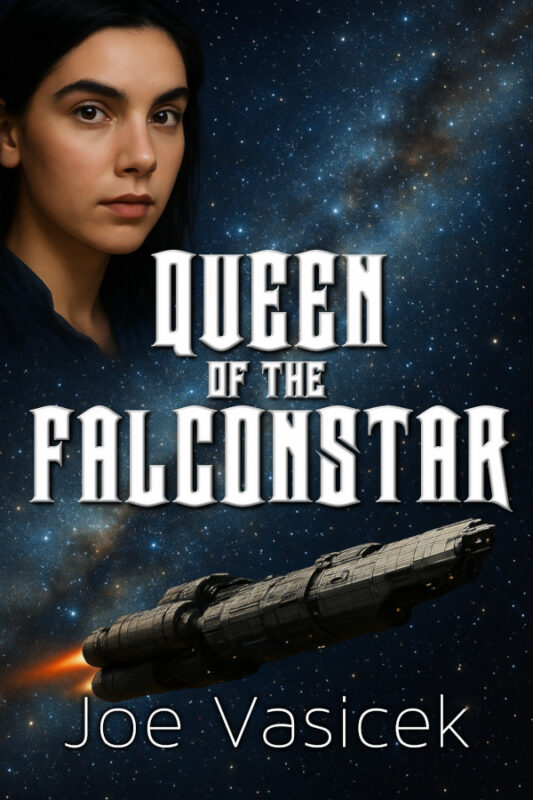
I’ve been playing around some more with ChatGPT, working on cover art for the Falconstar Trilogy. The best way to do it, I’ve found, is to make the art with AI, but to do the typography myself.

Anyhow, here are the test covers. What do you think?

The one that I feel most ambivalent about is Queen of the Falconstar. I really like how Zlata turned out, and the Falconstar looks pretty cool too, but the background… let’s see if I can fix that:

Anyhow, what do you think?

Fantasy from A to Z: Y is for Yearning

What kind of fantasy books do you hope to see more of in the next few years? What direction do you hope the genre goes next?

Personally, I would like to see the genre return to its roots. But that probably isn’t a surprise, if you’ve read the other blog posts in this series. I’ve invoked Robert E. Howard and J.R.R. Tolkien in almost all of them. Those two men are the grandfathers of modern fantasy: Howard from the sword & sorcery side, and Tolkien from the epic fantasy side. Until just the last few years, most fantasy authors stood on the shoulders of those great authors.

I’m not opposed to rules-based magic on principle. I do think that it can be done quite well, such as with Brandon Sanderson’s earlier work. But I would like to see a revival of more traditional fantasy magic systems, which aren’t really “systems” at all, but mysterious forces of nature rooted in folklore and mythology. With its overemphasis on game-like dynamics and quirky rules-based magic systems, much of modern fantasy seems to have lost sight of the ancient archetypes that gave the works of Tolkien and Howard their staying power.

As the modern world drifts further from its roots, forgetting all the stories that were handed down to us from countless generations past, so too has our fantasy lost sight of its roots, thinning out to the point where it’s little more than an aesthetic—a bundle of tropes and caricatures that evoke a nostalgia not of our pre-modern past, but of other popular fantasy stories. Thus, with each new work in this vein, the genre is diluted just a little bit more, becoming a pale shadow of what it once was.

That is why I would like to see fantasy return to its roots. I would like to see more fantasy that draws deeply from the well of history and mythology, not just to create an aesthetic, but to embed those themes and archetypes deeply into the story itself. I don’t care whether that mythology is European or not (though as a pan-European mutt, that is the culture that resonates most with me), but I do want to read books that do more than file the serial numbers off of another culture and wear it like a skin suit. 

It’s not so much that I’m worried about “cultural appropriation”—hell, as the son of medieval vikings, cultural appropriation is my culture—but if that’s what you’re going to do, you should damn right do it well. There’s a reason why we all got sick and tired of all the Tolkien clones. If we’re going to take fantasy back to its roots, we’ve got to do more than copy all the greats who came before us. We’ve got to understand, in a deep and visceral way, just what exactly they were trying to build, and then build upon it with something new.

Fantasy and science fiction are all about evoking that sense of wonder. Science fiction evokes that wonder by looking to the future; fantasy evokes that wonder by looking to the past. Our modern world has forgotten far too much of its cultural heritage. I want to see more fantasy that brings it back.

Get ready for the anti-AI witch trials…

Really interesting news story about an artist at Dragoncon who was forcibly removed from the convention, with the cops getting called and everything, for allegedly selling AI-generated art. So even though the artist bought the table and everything, the convention threw them out. It’s unclear whether the table was refunded, but I’m guessing it probably wasn’t.

Of course, as JDA rightly points out, if you do AI well then it’s impossible for anyone to tell whether it’s AI or human, so what this really does is set the precedent that merely accusing someone of using AI in their art is sufficient to cause serious damage to someone’s business. A lot of these artists make most of their money at conventions like this, and Dragoncon is one of the top-tier sci-fi media conventions, right up there with San Diego Comic-con and FanX Salt Lake.

How long is it going to take before an artist is falsely accused of using AI and ruined because of it? Has that already happened? How many more artists are going to be thrown out of conventions like this? How many artists are going to decide that it just isn’t worth it to attend these sorts of conventions, whether or not they use AI? How long before we find that some of the artists leading these witch hunts are themselves using AI to create their art?

In the end, when AI has been normalized and no one (not even in fannish circles) blinks an eye at AI-assisted art, we’re going to look back at this time with much the same dismay that we look back at the Salem witch trials. But that may not be for another ten or twenty years. Do we really need to go through all this madness first? This is why we can’t have nice things.

August reading recap

Not a ton of reading this month, since we were moving for most of it, but I still managed to finish (and DNF) a few books here and there.

Books that I finished

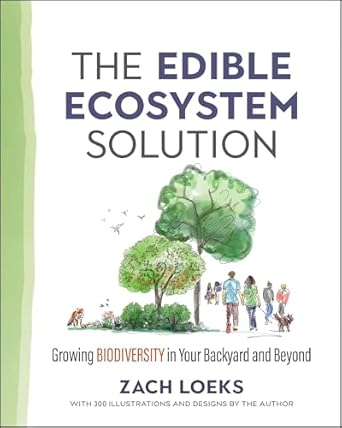
The Edible Ecosystem Solution by Zach Locks

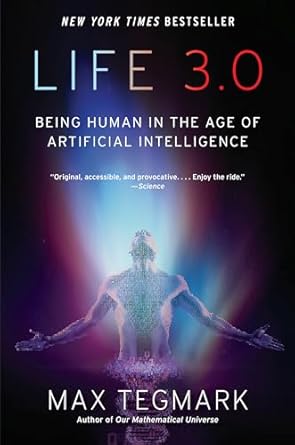
Life 3.0 by Max Tegmark

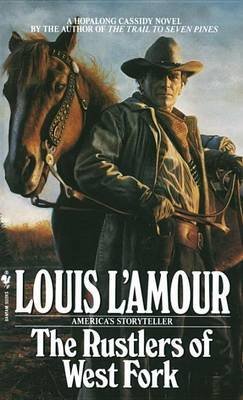
The Rustlers of West Fork by Louis L’Amour

The Optimist by Keach Hagey

Passin’ Through by Louis L’Amour

The Revolt of the Elites by Christopher Lasch

Books that I DNFed

  • The AI Mirror by Shannon Vallor
  • Captain Vorpatril’s Alliance by Lois McMaster Bujold
  • Science Fictions by Ritchie Stuart
  • In Covid’s Wake by Stephen Macedo & Frances Lee
  • Girl on Girl by Sophie Gilbert

Why should a man be scorned?

Why should a man be scorned if, finding himself in prison, he tries to get out and go home? Or if, when he cannot do so, he thinks and talks about other topics than jailers and prison-walls?

J.R.R. Tolkien, “On Fairy Stories.”

Fisking 1-star reviews bashing AI

They say that authors should never respond to one-star reviews. That’s generally good advice, and for most of my career, I’ve studiously kept it. However, I’ve recently begun to get a new kind of one-star review that baffles me—reviews that essentially say: “the book was good, but it was written with AI so I hate it.”

Here’s an example:

This book is written with AI. Incredibly disappointing as a reader to give a book/author a chance and then to get to the end of the book only for the “author” to then announce the AI card. If I could give zero stars, I would for this alone. I also didn’t appreciate that this use of AI was not announced until the ending Author’s Note. If “authors” are going to cut corners and put their name to computer-generated mush, they should be willing to put that information on the front cover. The book struggled to find its pace, and some parts read as though they were written for a child’s short story competition while others felt as though the writer was snorting crushed up DVDs of Pirates of the Caribbean as they wrote.

Let’s break it down:

This book is written with AI. Incredibly disappointing as a reader to give a book/author a chance and then to get to the end of the book only for the “author” to then announce the AI card.

Yes… but I can’t help but notice that you got to the end of it. In other words, you finished the book. Also, from the way you tell it, it seems that you didn’t realize the book was written with AI until you got to the very end. So based on your own behavior, it doesn’t seem that quality was the issue.

I also didn’t appreciate that this use of AI was not announced until the ending Author’s Note. If “authors” are going to cut corners and put their name to computer-generated mush, they should be willing to put that information on the front cover.

Okay… but if my book was just “computer-generated mush,” why did you finish it? And why were you surprised when you learned that it was written with AI-assistance?

I can understand the objection to books that were written solely with AI, with little to no human input. But that’s not how I write my AI-assisted books. Instead, I outline them thoroughly beforehand, write and refine a series of meticulously detailed prompts (usually using Sudowrite), and generate multiple drafts, combining the best parts of them to make a passable AI draft. And then I rewrite the whole thing in my own words, using the AI draft as a loose guide with no copy-pasting.

Why would I go through so much trouble? Because of how the AI drafting stage gives me a bird’s eye view of the book, allowing me to identify and fix major story issues before they metastasize and give me writer’s block. Before AI, that’s where 80% of my writer’s block came from, and it often derailed my projects for months, so that it took me well over a year to write a full-length novel. But with AI, I’m no longer so focused on the page that I lose sight of the forest for the trees. So even though generating and revising a solid AI draft adds a couple more steps to the process, it’s worth it for the time and trouble that it saves.

That’s the way I use generative AI in my writing process. But there are many other ways—and I hate to break it to you, but most authors use AI in one way or another. If an author uses Grammarly to fix their spelling and grammar, should they disclose that on the cover? If they use MS Word? What if they used a chatbot to brainstorm story ideas, but went on to write it entirely themselves? Should that also be disclosed?

The book struggled to find its pace, and some parts read as though they were written for a child’s short story competition while others felt as though the writer was snorting crushed up DVDs of Pirates of the Caribbean as they wrote.

Yes… but again, I can’t help but notice that you finished the book. And after you finished it, you were surprised to learn that it was written with AI. So with all due respect, I’m going to call BS on your objections here. I think you only decided you hated the book after you learned it was written with AI, and you came up with these objections after the fact. Whatever.

I think a lot of the people who object to AI are really just scared and angry. They claim to have principled, ethical objections to the technology, but few of them follow through to implement that principled stance into every area of their lives. After all, if you use Grammarly, Google Docs, or MS Word, you are using generative AI just as surely as I am using ChatGPT and Sudowrite. For most people, the ethical objections are just a smokescreen for their general fear of change. They’re fine with embracing the convenience the technology offers them in their own personal lives, but they insist that everyone else—including me—live according to their principles, no matter how inconvenient or difficult it may be.

As an example of that, check out this one-star review:

The arts! Whether visual, performance, or literary—my haloed experience has been the act of creating and sharing a connection to the profound or sublime. Why, then, would any artist—musician, dancer, sculptor, painter, or author—offload (abdicate) the act of creation to AI? Process versus product. Mr. Vasicek included an afterword for this volume, describing his workflow and the efficiency of collaboration with AI: a 6,624-word day! another volume completed! Mr. Vasicek obviously owns the skills to weave rich character development and scenes. Perhaps Mr. Vasicek’s AI collaboration explains why these characters, the plot, the narrative—and subsequently, the entire story— are so flat and undeveloped. Although his lead male shows some undeveloped promise, the mother’s too-oft used “dear” and “my love,” and the daughter’s clutching at her mother’s apron are cringe-inducing. Perhaps Mr. Vasicek might eschew AI-assisted writing, seeking a future of quality over quantity.

Let’s break it down:

The arts! Whether visual, performance, or literary—my haloed experience has been the act of creating and sharing a connection to the profound or sublime. Why, then, would any artist—musician, dancer, sculptor, painter, or author—offload (abdicate) the act of creation to AI?

Because for some of us, writing is more than a “haloed experience”—it’s an actual job. It’s what we do for a living. And if you want to do your best work, you need to use the best tools. We used to build houses with plaster and lath and wrought-iron nails, using hand tools and locally-sourced lumber. But today, you’d be a fool not to use power tools and materials sourced from a building supply store, or your local Home Depot. If that makes your building experience less profound or sublime, so be it.

Process versus product. Mr. Vasicek included an afterword for this volume, describing his workflow and the efficiency of collaboration with AI: a 6,624-word day! another volume completed!

I’m not gonna lie: there is a certain degree of tension between art-as-product and art-for-art’s-sake. But the two are not mutually exclusive. A house can still be a beautiful work of art, without taking as long as a cathedral to build it. Likewise, a book can still be a beautiful work of art, without taking as long as Tolkien’s Lord of the Rings.

Again, you’re trying to pidgeon-hole me into your “haloed” idea of what a “true artist” should be. Which would make it absolutely impossible for me to make a living at this craft. If all of us writers followed that path, there are a lot of wonderful books that would never get written. And I doubt that the overall quality of the books that do get written would rise.

Mr. Vasicek obviously owns the skills to weave rich character development and scenes.

Now we get to the interesting part. I checked this reviewer’s history, and this was the only review they’ve written for any of my books. Therefore, I can only assume that this is the only book of mine that they’ve read. But if that’s the case, how do they know that I have “the skills to weave rich character development and scenes”? If the book I wrote with AI was pure trash, why would they say that I obviously have some skill?

Once again, we’ve got a case of “I enjoyed this book, but it’s written with AI so I hate it.” In other words, it’s not the book itself that you hate, so much as the way I wrote it. You object to the idea of authors using AI, not to what they actually write with AI.

Perhaps Mr. Vasicek’s AI collaboration explains why these characters, the plot, the narrative—and subsequently, the entire story— are so flat and undeveloped. Although his lead male shows some undeveloped promise, the mother’s too-oft used “dear” and “my love,” and the daughter’s clutching at her mother’s apron are cringe-inducing.

Finally, some specific and legitimate criticism. And while I do think there’s a degree of retroactively looking for faults after enjoying the book, I’m totally willing to own that these criticisms are valid. This particular book (The Widow’s Child) was one of my first AI-assisted books, and I was still learning to use these AI tools as I was writing it. I did the best I could at the time, but if I were to write it today, I could probably do a lot better, smoothing out the annoying AI-isms that you’ve pointed out here.

But the book is currently sitting at 4.4 stars on Amazon (4.1 on Goodreads). And the other readers do not share your objections. Here is another review, pulled from the same book:

Since waiting a year or more to read the next book in a sequel is hard on my stress levels, I’m liking this AI. It means talented authors like Joe Vasicek can churn out an outline faster. Then he can bring in his talented ideas, such as the content of this heart-stopping adventure of The Widow’s Child, to fill out the nitty gritty in record time.

Clearly, it’s not the case that all (or even most) readers feel the same way about AI as you do.

Perhaps Mr. Vasicek might eschew AI-assisted writing, seeking a future of quality over quantity.

Why can’t we have both? Why can’t we have quantity with quality? Why can’t AI make us more creative, instead of replacing our human creativity?

This is all giving me flashbacks to the big debate between tradition vs. indie publishing, back in the early 2010s. Back then, the debate was between purists who said that indie publishing would destroy literature by flooding the market with crappy books. Indies argued that removing the industry middlemen would create a more dynamic market that would give readers more choices and allow more writers to make a living. Both were right to some degree, and both were also wrong about some things. In the end, we reached a middle ground where “hybrid publishing” became the norm.

The same kind of debate is happening right now between human-only purists and AI-assisted writers. The biggest difference is dead internet theory. In the early 2010s, the ratio of bots to humans on the internet was still low enough to allow for a lively debate. Today, there’s so much bot-driven outrage on the internet that most of us are just quietly doing our own thing and avoiding the debate.

That same bot- and algorithm-driven outrage is driving a lot of peole to be irrationally angry or afraid of AI. With that said, I can understand why so many people are upset. And I do think there are a lot of valid criticisms about this new technology, including its environmental impact, copyright considerations, how the models were trained, and the societal impact it’s already starting to have. But if we don’t have an honest and good-faith debate about these issues, we can’t solve any of them. And we can’t have a good-faith debate if one side is coming at it from a place of irrational anger or fear.

In any case, I find it super annoying when readers who clearly found some value or enjoyment in my books turn around and give it a one-star review merely because they don’t like how I used AI. And at the risk of going viral and soliciting more one-star anti-AI reviews, I think its worth voicing my views on the subject and opening that debate. So what are your thoughts on the subject? How do you feel about using AI as a tool to help write books? Can we have quantity with quality? Can AI help us to be more creative, not just more productive? What has been your experience?

Going full-tilt on The Soulbound King

I’ve decided to put The Road to New Jerusalem on the back burner and focus instead on my epic fantasy series, The Rise of the Soulbound King Trilogy. If I push, I think I can finish the AI draft of book 1 in the next two weeks. I’ve also nearly finished the outline for book 2, and will probably have a rough AI draft for that one by the end of September.

I would really like to publish this series in 2026, but I don’t want to launch it until I’m ready to rapid release the first three books. And since these books are all epic fantasy, it’s going to take a lot of time and effort to write them. Without AI, it would probably take me something like two or three years for each book. I’m not a very fast writer, and I tend to get stuck in the middle, even when I have a solid outline. With AI, I think I can shorten that to 6-8 months.

These books are probably going to range between 150k and 200k words, so not super long for epic fantasy (for comparison, Mistborn: The Final Empire is about 214k words, and The Way of Kings is about 384k words). That’s much longer than most genre books, though, including most of the books I’ve written until now. And writing difficulty doesn’t scale linearly with book length; it scales logarithmically. So while it may take only 1-2 months to write a Sea Mage Cycle book, those are only about 1/3rd the length of a Soulbound King book.

My long-term goal, though, is to pivot to epic fantasy, to the point where that’s mostly what I write. And if you read my science fiction novels, you’ll find that they’re much more like epic fantasy, with multiple viewpoints, grand galactic empires, wars and political machinations, and a universe that has its own character arc. So while this may superficially seem like a huge pivot, it’s actually not.

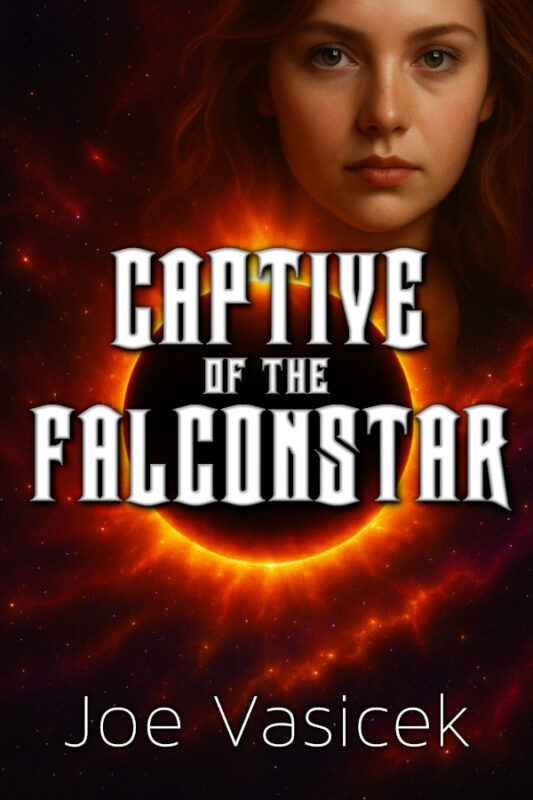
There are three science fiction books that I need to write before I can pivot entirely to writing fantasy: Captive of the Falconstar, Lord of the Falconstar, and The Return of the Starborn Son. Those are the only outstanding science fiction series that need finishing (and I will finish them, I promise—I’m not going to pull a GRRM). I also need to finish the Twelfth Sword Trilogy, the epic fantasy series I started in the 2010s while I was still mostly writing science fiction.

Realistically, the only ones of those books that are going to be finished between now and the end of next year are the Falconstar books, since I need to juggle all of these with the Soulbound King epic fantasy books that I’m also writing. But I think I can finish the Falconstar books, and also write and publish a Sea Mage Cycle book or two within the next year. I’ve found that it often helps to take week-long breaks to work on other projects, which allows me to approach a larger and more challenging WIP like The Soulbond and the Sling with new eyes. So I will probably alternate between working on the Soulbound King books and working on Falconstar and Sea Mage Cycle for the forseeable future.

But my goal for the next two weeks is to go full steam ahead on The Soulbond and the Sling, until it is finished. And with luck, I will also have a few excerpts to share with you soon!