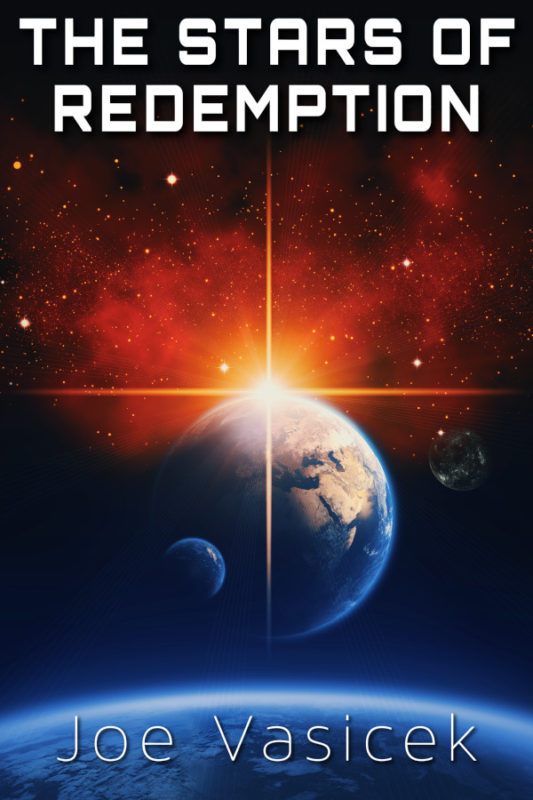
Breaking the Time Paradox in The Stars of Redemption

What if the deadliest threat humanity ever faced wasn’t an alien invasion or a rogue AI… but a mistake we keep repeating that always ends with the destruction of Earth? The Stars of Redemption, the last book in my young adult science fiction trilogy, explores this question.

At its core, The Stars of Redemption is about the struggle to break a closed time loop, stop a rogue superintelligence, and rewrite a future that seems unchangeable. This makes The Stars of Redemption a classic time-loop science fiction story, built around temporal paradoxes, fate-versus-free-will dilemmas, and the struggle to break a repeating extinction cycle. It is a story about escaping destructive cycles, choosing hope, and fighting for a future that isn’t predetermined.

Where the Idea Came From

The idea for this theme grew out of my long, tangled journey to finish the trilogy. As I write in the author’s note, the trilogy stalled until I became a husband and father. Holding my newborn daughter for the first time made me realize that the story needed to be about cycles—time loops, family patterns, repeating trauma—and the hope that they can be broken. Only then did I understand how to write about ending the loop and choosing a new future.

How Breaking the Time Paradox Shapes the Story

The entire plot of this sci-fi book revolves around a temporal paradox created by a wormhole, a derelict starship, and a fragmented AI superintelligence. The ghost ship is both the catalyst and the prison of a machine intelligence born from the loop—a being that believes humanity must be wiped out to prevent another cycle of suffering. Every conflict Estee and Khalil face—from warped corridors to shifting timelines—exists because they are trapped inside this repeating extinction loop.

For Estee, breaking the time loop becomes a confrontation with her family’s past and her people’s future. She must decide whether humanity deserves redemption and whether history can be changed. Khalil must confront his own emotional loop: guilt, self-sacrifice, and the belief that his fate is fixed. Together, they face a question at the heart of all time-loop fiction:

Are we doomed to repeat our worst mistakes, or can we rewrite the future?

What the Time Paradox Says About Us

Time loops are powerful metaphors because we all face cycles—personal, cultural, generational—that feel impossible to escape. The paradox in this story mirrors the real world: destructive systems repeat unless someone chooses differently. By facing a machine intelligence convinced that humanity is irredeemable, the characters confront the fear that our past defines us. The book suggests a hopeful alternative: the future changes when we do.

Why This Theme Matters to Me

I didn’t truly understand this story until I became a father. My daughter made the theme real: breaking cycles isn’t abstract—it’s something we do for the next generation. That moment of holding her and realizing this is her story now, not yours helped me finish the book. The Stars of Redemption is my way of saying that even in the darkest timelines—even in repeating loops—hope is possible, and the future can be rewritten.

Where to Get the Book

Related Posts and Pages

Explore the series index for the Genesis Earth Trilogy.

Visit the book page for Genesis Earth for more details.

Find out if The Stars of Redemption is for you.

See all of my books in series order.

Is The Stars of Redemption for You?

The Stars of Redemption brings the Genesis Earth Trilogy to its heartwarming conclusion, weaving together cosmic mystery, high-stakes adventure, and the emotional journey of a family caught between past and future. In this character-driven science fiction novel and grand finale of the Genesis Earth Trilogy, the secrets of the ghost ship, the wormhole, and humanity’s long-lost Earth collide, pushing Terra, Michael, Estee, and Khalil toward a destiny that tests their courage, their bonds, and their hope.

What Kind of Reader Will Love This Book?

If you like…

  • Character-driven science fiction where relationships matter as much as the big ideas
  • High-stakes adventure rooted in loyalty, courage, and found family
  • Deep-time, big-concept SF (time paradoxes, shattered superintelligences, dead Earth, existential threats)
  • Teens thrust into danger who must grow up fast without losing their humanity
  • Stories where the emotional journey hits as hard as the plot twists

…then The Stars of Redemption is exactly the kind of story you’re looking for.

What You’ll Find Inside

The Stars of Redemption follows Estee and Khalil as they ride a mysterious ancient ghost ship run by a fractured AI. The two young adults now know the truth about the time travel paradox that created it, but they aren’t sure how to stop it from going back and annihilating the human race. But solving the paradox will create an alternate timeline—one where many of their loved ones have lived totally different lives. The result is a tense, emotional, wonder-filled journey that blends survival, mystery, love, grief, and cosmic terror into a finale that feels both epic in scope and heartwarmingly personal.

What Makes It Different

Fans of classic time-paradox stories and authors like Arthur C. Clarke, Becky Chambers, or Michael Crichton will recognize the sense of cosmic mystery, but The Stars of Redemption takes those ideas in a uniquely human direction. Where many time-loop or AI-disaster stories focus on spectacle, this one leans into relationships, trauma, and the fragile bonds that hold people together when everything else collapses. And unlike most YA or near-YA science fiction, it refuses to sacrifice scientific wonder or thematic depth—holding the line on both heart and hard SF ideas.

What You Won’t Find

If you’re looking for grimdark nihilism, sexually explicit romance, or nonstop action with minimal character growth, this isn’t that book. But if you prefer science fiction grounded in hope, heart, survival, and meaning, with characters who feel real enough to bleed, you’ll feel right at home here.

Why I Think You Might Love It

I wrote The Stars of Redemption shortly after becoming a young father, and that life-changing experience deeply informed the conclusion of the Genesis Earth Trilogy. Starting a family of my own made Estee and Khalil’s found family more vivid, as well as Estee’s need to fill the hole left by losing her parents. This became the most mature and thoughtful book in the trilogy—the kind of story I always wanted to write but couldn’t until I’d lived a little more myself.

If you loved the high-concept wonder and emotional heart of Genesis Earth and Edenfall, I think you will find The Stars of Redemption to be a thoroughly satisfying, deeply meaningful conclusion to the trilogy!

Where to Get the Book

Related Posts and Pages

Explore the series index for the Genesis Earth Trilogy.

Visit the book page for Genesis Earth for more details.
Read about breaking the time paradox in The Stars of Redemption.

See all of my books in series order.

The Loss of Innocence in Edenfall

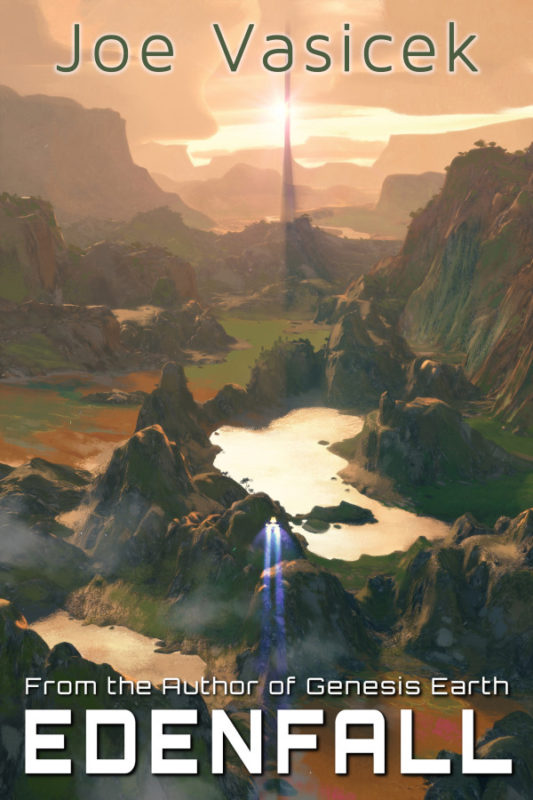
Edenfall is a young adult first contact science fiction story about a paradise that doesn’t fall to invasion, but awakens to adulthood. Set on an isolated colony world, it blends coming-of-age, alien-world survival, and military first contact, telling a story where the shock isn’t meeting the unknown—it’s realizing that humanity is the unknown.

All of us are born innocent, but none of us can grow up and stay that way. What happens when innocence is shattered by forces beyond our control? Can lost innocence ever be reclaimed—or does the very act of reclaiming it make it something else?

These were my thoughts as I wrote Edenfall. From those seeds grew a story about childhood, family, first contact, coming of age, and the tragedy of how confronting evil forces us to grow up.

Where the Idea Came From

After I wrote Genesis Earth, I knew I wanted to turn it into a trilogy someday. I also knew that Michael and Terra’s idyllic paradise would not remain isolated forever. So I began to ask myself: what would happen when their children—raised entirely outside of human civilization—encounter humanity for the first time, with all of its violence, possessiveness, flaws, and messiness?

As the ideas came together, I realized that I was writing a different kind of first contact story—not a story of discovery, but a first contact science fiction story of intrusion and loss, told through the eyes of a girl who never knew humanity included armies, geopolitics, militarization, or hidden agendas. In other words, I was writing a story about the loss of innocence.

How the Loss of Innocence Shapes the Story

In Edenfall, every choice Estee makes is a response to the forces that ultimately shatter her world. The adults think in terms of strategies, secrets, and keeping their family safe, but Estee and her siblings have no concept of these things. Instead, the children ask themselves things like: why do we have to go away? What are my parents trying to hide? Who are these people, and why do Mommy and Daddy fear them?

Estee’s journey is not merely one of survival, but the collapse of everything she thinks she knows. By the time things get violent, her world has already ended, because contact itself changed the rules of innocence. That tension—between wonder and dread, belonging and displacement—drives every emotional beat of the book.

What the Loss of Innocence Says About Us

We live in a world where children inherit consequences they did not choose for themselves. Edenfall reflects the quiet tragedy of that handoff: that sometimes the most precarious moment in life is not the arrival of the monsters, but the arrival of adults who aren’t immediate members of our family.

All of us lose our innocence at some point in our lives—and once it is lost, we can never gain it back. That is the tragedy of growing up. But even though we cannot reclaim our innocence, we can become pure again—and purity is stronger and more resilient than innocence. As Estee struggles with the trauma of betrayal and violence, she ultimately learns this lesson as well.

Why This Theme Matters to Me

For many years, I tried to write this book but found it just wouldn’t come. Then I became a father, and suddenly everything just clicked. I think a large part of that had to do with this theme of the tragedy of innocence lost, and the importance of family to guide and protect us through that. This was something I couldn’t fully understand until I had gained that life experience, and I think it made the book much richer as a result.

n the end, Edenfall became a young adult science fiction story about first contact, not as a moment of discovery, but as a moment of collision. It is a coming-of-age novel where paradise is not lost through rebellion or choice, but through the arrival of the wider human world—with all of its fear, power, and politics. In many ways, Edenfall is a first contact story where the aliens are us, and growing up means realizing that the universe is bigger, darker, and far more complicated than childhood ever prepared us for.

Where to Get the Book

Related Posts and Pages

Explore the series index for the Genesis Earth Trilogy.

Visit the book page for Genesis Earth for more details.

Find out if Edenfall is for you.

See all of my books in series order.

Is Edenfall for You?

Edenfall continues the Genesis Earth Trilogy through the eyes of sixteen-year-old Estee Anderson, a girl raised in isolation on a mysterious alien world. Character-driven and emotionally grounded, it explores innocence, family bonds, and self-discovery under rising danger. Like the first book, it favors quiet depth over spectacle—only this time, the world is larger, the threats are sharper, and childhood ends faster.

What Kind of Reader Will Love Edenfall?

Edenfall is for readers who want hope-filled science fiction where wonder comes with consequences, and survival depends on courage, loyalty, and family. It is especially for readers who:

  • Love character-driven science fiction with emotional stakes and family at its core.
  • Enjoy exploration of alien worlds, survival, and first contact that feels personal rather than technobabble-heavy.
  • Appreciate worldbuilding that leans on atmosphere and mystery rather than dense scientific exposition.
  • Enjoy stories where children are real people—not plot devices: capable, flawed, curious, and heroic.

In other words, Edenfall is for readers who want science fiction that feels personal before it feels cosmic, with characters of quiet courage who rely on their family as they face the world. Like Genesis Earth, it’s a coming of age story of self-discovery, but with stronger family bonds.

What You’ll Find Inside

Edenfall begins when a military expedition arrives to investigate the anomaly that Estee’s parents were sent to explore. When one of the generals decides to take over and make the planet his own personal fiefdom, Estee must learn who she can trust in order to face the rising threat to her family, even as she grapples with trauma and loss of innocence.

In Edenfall, readers will find:

  • A young protagonist in isolation (Estee) who must navigate danger with wits, courage, and instinct.
  • A slow-burn planetary mystery involving ancient alien megastructures, lost history, and hidden data.
  • A human-versus-human first contact with catastrophic misunderstanding.
  • Nuanced moral ambiguity—leaders driven by fear, idealism, or ambition; soldiers who follow orders but question them.
  • Strong family themes: parental sacrifice, sibling bonds, and the pain of leaving childhood behind.
  • A lush, “wild-world” setting filled with dangerous fauna, hidden canyons, ancient ruins, and an ancient megastructure (the space elevator) stretching into the sky.

What Makes Edenfall Different

There is no chosen one, no prophecy, no love triangle, and no convenient mentorship arc. There are no precocious prodigies or destiny-driven heroes—just an unprepared girl trying to survive the collision between her family and the dangers of a world she doesn’t understand. The first contact story is human on human, told from both points of view, with all of the accompanying messiness and misunderstanding. The result is an intimate story that feels mythic, human, and fresh.

What You Won’t Find

This is not a book for readers who want love triangles or steamy romantic elements. There is no explicit sexualization, and the romance is very low-key and slow-build. It also avoids graphic violence and heavy militaristic fetishization. While there is some violence and some of the characters die, the tone ultimately leans toward resilience, curiosity, and hope rather than gritty cynicism. This is hope-forward science fiction, not despair-driven dystopia.

Why I Think You Might Love Edenfall

It took me more than ten years to finish this book. Ultimately, it wasn’t until I had a child of my own that I was finally able to write it. The experience of becoming a father and having my own family made it possible for me to write about family bonds with the sort of emotional depth that Edenfall required.

If you loved the characters, the heart, and the driving sense of wonder in Genesis Earth, I think you will enjoy Edenfall even more!

Where to Get Edenfall

Related Posts and Pages

Explore the series index for the Genesis Earth Trilogy.

Visit the book page for Genesis Earth for more details.

Ponder the loss of innocence in Edenfall.

See all of my books in series order.

The Meaning of Home in Genesis Earth

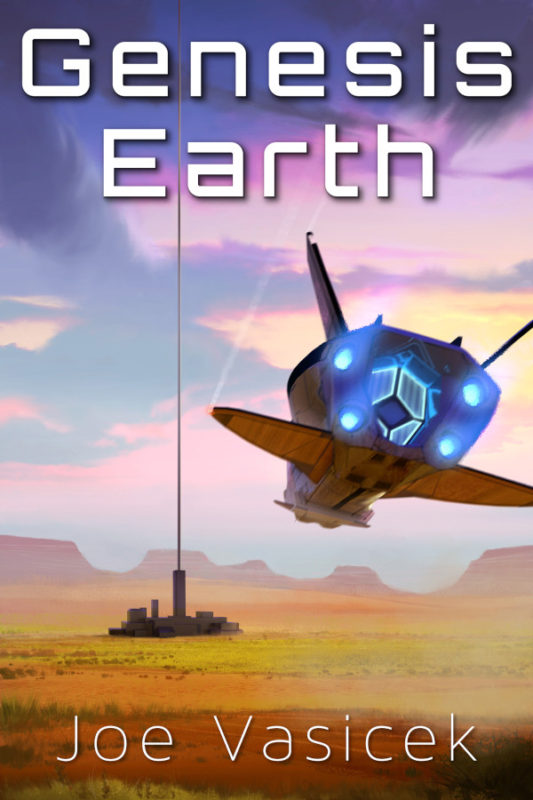
Genesis Earth is a thought-provoking science fiction novel about humanity, isolation, and the search for home in a vast and empty universe. In this post, I explore the deeper themes behind the story—how the meaning of home shapes the characters, and what that says about us as human beings.

What does it mean to be human when everything familiar—home, society, the Earth itself—is gone? What does it mean to lose one’s home, or to never really have a home in the first place?

In Genesis Earth, a work of existential science fiction, the story of Michael and Terra explores what it means to be human when isolation pushes the boundaries of identity and connection. Michael and Terra grew up away from Earth, isolated and estranged from humanity’s homeworld.

Their need to be rooted in something (or someone) drives the core theme of belonging and identity in the book. The mission is supposed to be about discovery, but what they truly discover is themselves—how fragile, lonely, and deeply human they are.

Where the Idea Came From

The central concept of Genesis Earth is that humanity has created an artificial black hole and opened a wormhole to some unknown part of the universe. In order to create that black hole, though, they would need to travel far from Earth, on the fringes of our Solar System—hence the isolated colony mission where Michael and Terra grew up. And because of the long distances from the wormhole to the star system on the other end, their mission would isolate them even further, not only in space but in time. Everyone would be gone by the time they got back home, if they could even call it “home” by then.

All of this drove me to explore the meaning of home, and how it would play out for these characters who are so isolated and separated from the rest of humanity.

How the Meaning of Home Shapes the Story

In Genesis Earth, Michael begins as a dutiful scientist. He’s loyal to “the Mission,” but that loyalty is hollow—he’s chasing a ghost of Earth rather than living for anything real. His arc is about realizing that meaning doesn’t come from data or duty, but from connection.

The story strands two people—Michael and Terra—alone in deep space. The physical isolation mirrors their emotional one. Their arguments, awkward silences, and gradual trust-building drive the tension far more than the alien mystery.

The “alien ship” and “new Earth” they find are really reflections of humanity’s own legacy: ruins of a civilization that destroyed itself but left behind traces of what it once was. This discovery forces Michael to see that knowledge without empathy leads nowhere. The universe is full of dead monuments to reason untempered by love.

In the end, the story is less about finding Earth again—or finding home—as it is about beginning it anew, through human love and connection.

What the Meaning of Home Says About Us

Michael and Terra inherit a civilization that has mastered the stars but lost its soul. Their journey shows that intellect without empathy leads to extinction. We can map galaxies, but if we forget why we exist or who we’re doing it for, all that brilliance turns sterile and meaningless.

It’s a mirror to our own age: we’ve never known more, but we’ve rarely been lonelier. And ultimately, the message of Genesis Earth is that we are not defined by where we come from, but by whom we choose to love and what we choose to build. Heart and home matter more than hubris and knowledge.

Why the Meaning of Home Matters to Me

After I left home, I spent nearly two decades of my young life as something of a modern nomad, rarely living in one place for more than six months. During this time, my parents moved not once but twice, so I lost all connection to my childhood home.

This personal loss of home and sense of being uprooted was a major influence in the writing of this book, though I didn’t realize it at the time. And the conclusion that Michael and Terra ultimately come to—that “home” isn’t found in a place so much as it is in the depths of the connections with the people in your life—was something I experienced as well, as I ultimately settled down and started a family of my own.

Where to Get the Book

Related Posts and Pages

Explore the series index for the Genesis Earth Trilogy.

Visit the book page for Genesis Earth for more details.
Read more to learn if Genesis Earth is for you.

See all of my books in series order.

Is Genesis Earth for You?

Genesis Earth is an introspective, awe-driven, charactor-anchored YA science fiction novel. It’s not a laser-blasting space opera; rather, it’s a quiet, psychological odyssey through the cosmos, through the eyes of a lonely young explorer haunted by the memory of Earth. Through this book, readers will experience the loneliness of deep space, the mystery of first contact, and the fragile human connection between two young scientists flung far from home.

What Kind of Reader Will Love Genesis Earth?

This book is perfect for readers who:

  • Love hard SF stories of space exploration rooted in both plausible science and human emotion,
  • Enjoy classic SF from authors like Clarke and Asimov—thoughtful, concept-driven, but with relatable, human characters,
  • Appreciate slow-burn tension and stories that make them think, long after they set the book down,
  • Are fascinated by themes of first contact, isolation, coming-of-age, and the psychological cost of human exploration, and
  • Crave science fiction that feels possible, where the sense of wonder comes from realism, not fantasy.

If any of that describes you, then you should definitely give Genesis Earth a try!

What You’ll Find Inside

Genesis Earth follows a young scientist, Michael Anderson, and his mission partner Terra as they explore a dangerous anomaly on the far side of a wormhole, that could either threaten or hold the key to humanity’s future. The result is an immersive and contemplative book that starts as a psychological drama and turns into a story of discovery, both cosmic and personal: what it means to be human when Earth is a ghost and “home” is light-years away.

What Makes Genesis Earth Different

Fans of classic science fiction will recognize the trope of the lonely astronaut or scientist setting out to explore the unknown, but where most protagonists in classic hard SF are seasoned professionals, the explorers in Genesis Earth are barely adults, raised in isolation on board a space colony, and psychologically unprepared for what awaits them. The story explores beyond the question “can humanity survive?” and asks “what happens to the human soul when it’s untethered from home?”

Distinctive features include:

  • Psychological depth: The fraught relationship between Michael and Terra gives the story an undercurrent of tension and unease that’s rare in classic hard SF.
  • Tone: Quiet, human, and melancholic—more existential wonder than space adventure.
  • Perspective: Told through a deeply personal first-person lens, with an almost diary-like immediacy.
  • Balance: Seamlessly blends scientific authenticity (cryonics, wormholes, planetary science) with literary emotion.

What You Won’t Find

This book is not for readers seeking:

  • Fast-paced, action-heavy sci-fi with constant battles, explosions, or villains.
  • Romantasy or sexually explicit romance plots — while there is emotional tension, it’s subtle and cerebral, not sensual or melodramatic.
  • Soft or mythic sci-fi full of alien empires or space wizards — the story stays grounded in realism.
  • Hard nihilism or grimdark — while introspective and serious, the book is ultimately hopeful, not bleak or cynical.
  • Readers who dislike slow builds or introspective narration.

If you’re looking for Star Wars, this isn’t it. If you’re looking for Arthur C. Clarke’s emotional heir, you’ve found it.

Why I Think You Might Love Genesis Earth

I wrote Genesis Earth when I was a lonely, single young college student trying to find my place in the world. That personal struggle in my own life definitely affected the conflict and themes of the book. I read a lot of classic SF in this time, including books by Arthur C. Clarke, Isaac Asimov, Ursula K. Le Guin, Robert Charles Wilson, and Orson Scott Card, and I wanted to create something that was just as awe-inspiring and thought-provoking as the great books by those classic authors.

If you’re looking for a book that sticks with you long after you’ve read it, and helps you to find your own place in the world, you should definitely give Genesis Earth a try!

Where to Get Genesis Earth

Related Posts and Pages

Explore the series index for the Genesis Earth Trilogy.

Visit the book page for Genesis Earth for more details.

Discover the meaning of home in Genesis Earth.

See all of my books in series order.

Zero G by Dan Wells

I saw this a couple of months ago when it was free, and I recognized Dan Wells as the guy who wrote the I Am Not a Serial Killer books, so I decided to pick it up. Since Dan Wells tends to write mostly horror, I wasn’t sure how good his science fiction would be, but I was pleasantly surprised!

This was a really fun book. It’s definitely middle grade, so a lot of concepts familiar to veteran sci-fi readers get lengthy explanations, especially toward the beginning, which is great for younger readers but a little tedious for us old-timers. Once all the science is sufficiently explained, however, the story really gets going. The characters are delightful, especially Zero, who comes up with a bunch of clever ways to fight back against the pirates. Think Home Alone meets Gravity.

It’s a short book for an audiobook, but the production is really top rate, with a soundtrack and a cast of voice actors who really do a fantastic job. The production quality gets five stars easily. I picked it up as a free Audible Original, but I wouldn’t have regretted spending a credit on this.

Overall, a very fun book. This is the kind of story I’d want to share with my kids to introduce them to science fiction. Very clean and not too scary, but with just enough of a sense of danger to really draw you in. Well done!

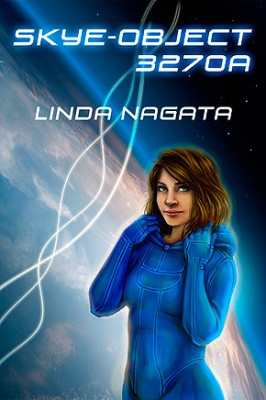
Skye Object 3270a by Linda Nagata

It’s not easy being a teenager in the orbital colony of Silk–especially when all the adults are functionally immortal and anyone under one hundred is considered an adolescent.  To make matters worse, Skye fell to the city in an escape pod when she was just a baby, with no idea who she is, where she’s from, or how long she was drifting in space.

Fortunately, she’s a tough girl with several close friends and a determined spirit.  One way or another, she’ll find out where she’s from–and whether there are any of her people still out there.  

I thoroughly enjoyed this book.  It combined the best of both science fiction and young adult: likeable teenage characters struggling to find their place in a high-tech alien world.  In particular, I found it fascinating how the widespread nanotech shaped both the society and the universe.

But the story isn’t about the technology, it’s about the characters, their adventures, and the friendships that form between them.  This was what really made the story come alive for me.  There’s a small amount of wish fulfillment, which may or may not be your thing, but overall I found the characters to be both believable and likeable.  It was a lot of fun to watch them grow and learn together.

At times, though, it felt as if the characters weren’t challenged enough.  The friendship and relationship issues were well done, but it wasn’t until the end that they started to have any significant try-fail (or try-almost fail) cycles in their adventures.  Also, while the ending was quite satisfying, it was also a little abrupt.

Those didn’t detract much from the rest of the story, though.  Overall, I thought it was a very satisfying read–the sort of book I wish I’d found when I was twelve or thirteen.  If I wasn’t already hooked on science fiction by that age, I have the feeling that this book would have turned me into a lifelong fan.

As a footnote, I’d like to add that this is EXACTLY the kind of book that indie publishing was made for.  It’s a great story, but the science-fictional setting is so unconventional that most publishers wouldn’t take a chance on it.  Even houses like Tor and Baen are focusing more on sub-genres like urban fantasy and military sf, which both have large, proven readerships.  For something that’s a little more niche or experimental, it’s good to see that there’s still a way to get it out to readers who would love it.

So yeah–if you like young adult books and you’re not turned off by space elevators, nanobots, or alien planets, you should totally try out this book.  I think it will surprise you just how much you enjoy it.

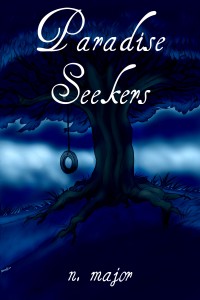
Paradise Seekers by Nathan Major

Haven–a land where no one knows who they are, where they’re from, or how they got there.  A place where everyone has a different recurring dream every night, which gradually grows in intensity until it drives them to madness.  A place where everyone has only a short amount of time to find Paradise, before they perish.

When Sam first comes to Haven, he thinks he’s found an idyllic utopia.  However, as he slowly uncovers the gruesome secrets of the place, he realizes he’s in a race against time to make Atonement and escape.

But how can he do that, when he can’t even remember who he is?  And how can he save the girl he loves, when she has only days before her dreams drive her into madness?

A few weeks ago, I said I’d start reviewing indie books on this blog.  This is my first one.  As a disclaimer, Nathan Major is a fellow Utah writer and a friend of mine, and I received a copy of the book for free, with the agreement that I would review it.

I genuinely enjoyed this book.  It’s a very compelling story, with a mysterious dystopian world and an intriguing premise.  Nathan is very good at building suspense and keeping the reader hooked, and the ending fully lived up to its potential.

As far as editing goes, I noticed only minimal spelling and grammatical errors.  However, the copy I read had some major formatting issues, such as wacky indents and an auto-generated table of contents that missed a few chapters.  Nathan assures me he’s fixed those issues, but I can’t vouch for the most recent copy.

As for the story, while I enjoyed it, it did feel as if it had been published too early.  More than once, I wanted to scream at the characters for doing something stupid, and the romance was occasionally over-the-top sappy.  The level of melodrama was on par with most anime, which is great if you can stand it.  Still, the story kept me hooked, and while I occasionally had to put the story down just to cool off, I always came back to it, right up to the very satisfying end.

If you like dystopian YA, I think you’ll like this book.  It reminded me a little of The Giver, with the urgency and sense of danger of a thriller.  Like I said, it also had a bit of an anime flair to it, so if you’re a fan of anime and manga, the issues I had with it probably won’t be as bad for you.

Overall, I rate Paradise Seekers at 3.5 stars.  If the formatting issues were fixed, I would rate it at 4.  Nathan has a natural talent at good storytelling, and I expect we’ll see many good things from him in the future.

Paradise Seekers is available for .99c from Amazon and free on Smashwords.

Genesis Earth 5.0 is finished!

That’s right; the fifth draft of Genesis Earth is complete. It was a quick, easy edit, but there were quite a few problems with the last draft, mostly having to do with the physics and timing/distances.

Anyway, here are the stats:

ms pages: 335
words: 71,500
file size: 164 KB
chapters: 16, prologue & epilogue
start date: 2 Nov 2010
end date: 20 Nov 2010

And the wordle:

Wordle: Genesis Earth 5.0

I used to describe this novel as a “hard sf romance,” but after this last revision I can see that it’s not hard sf at all–though the science (or pseudo-science) plays an important role, the story really is driven by the characters.

Thanks to some of my recent first readers, I also realize now that Genesis Earth is solidly YA. Based on their recommendations, I lowered the age of the protagonists to sixteen and seventeen, and made some adjustments to the query letter.

I’m not sure what this means for agent hunting, since it seems that many YA agents do YA exclusively, and while this novel is definitely YA, my other ones are much more adult (at least in terms of content and character).

Anyway, the song that was playing when I finished this draft was The Mummer’s Dance by Loreena McKennit, one of the songs from the soundtrack that Charlie put together a couple years ago. I think it’s very appropriate, especially for the last scene with the Icarian natives before the epilogue:

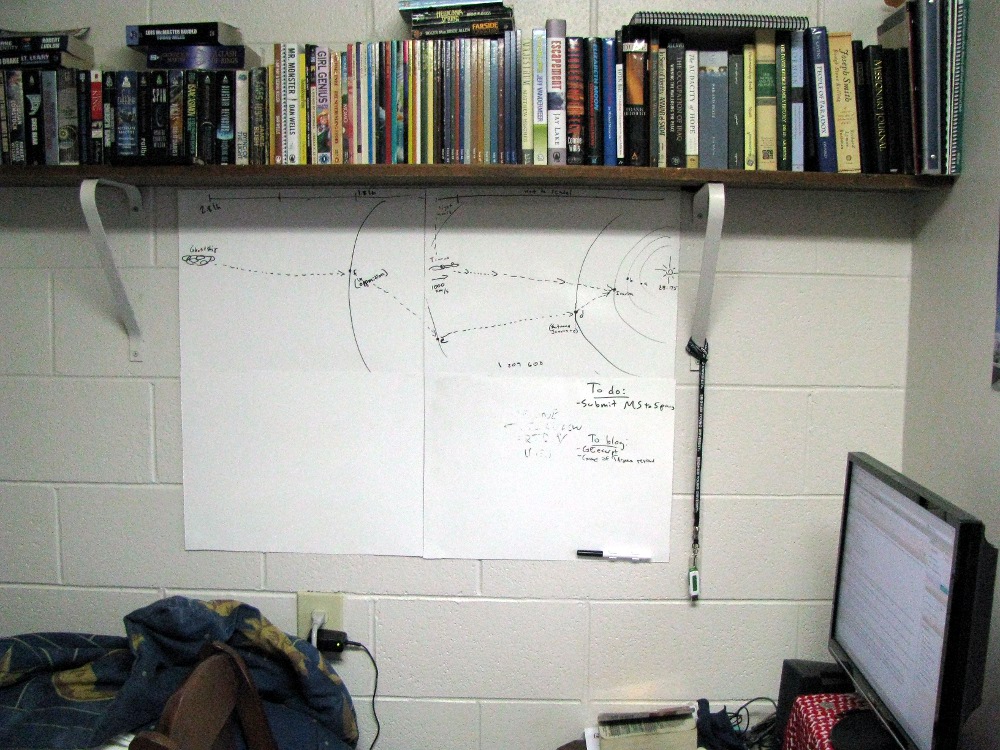
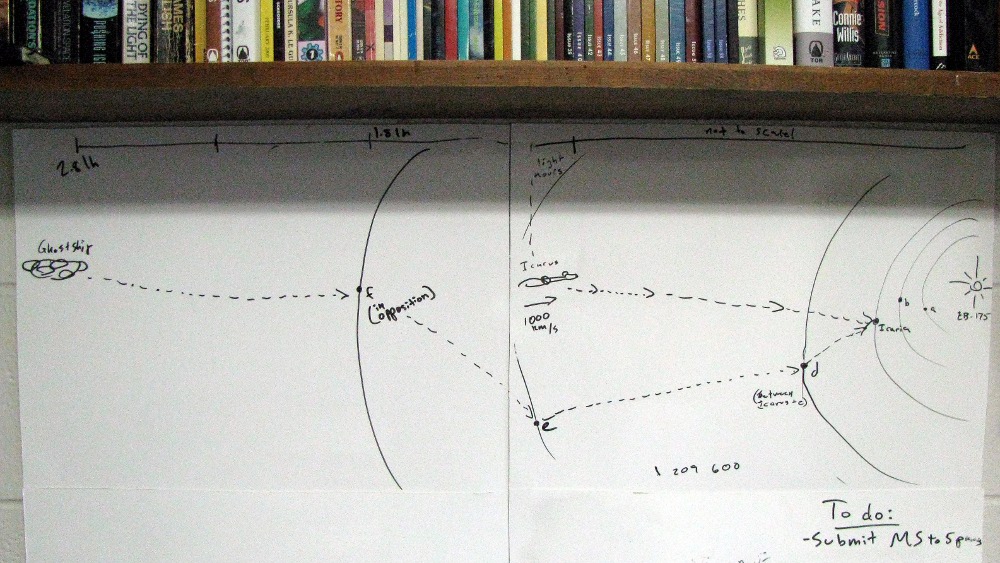
Finally, I thought you guys might want to see the “map” of the Icarian star system that I drew out on the whiteboard on my bedroom wall. Man, you have no idea how much I’ve been geeking out to this in the past few days. It’s a map…of a star system!