Trope Tuesday: Neutral Evil

Have you ever encountered a villain who you just hated? One who only cares about himself (or herself), who has no real loyalties and will sell out his friends, or even his master?  One who treats people as means to an end, and will use whatever means necessary to achieve those ends?  Chances are, that villain is a Neutral Evil.

From magnificent bastards to dirty cowards, from card carrying villains to seductresses and bounty hunters, this character alignment can take many different shapes and forms.  The one thing they have in common, however, is that they’ll do just about anything to further their own evil ends–including pitting the other villains against themselves.  Like the Chaotic Neutral, the Neutral Evil always looks out for #1–though entirely out of pure selfishness, as opposed to a love for free will and individuality.

From the easydamus character alignment page:

A neutral evil villain does whatever she can get away with. She is out for herself, pure and simple. She sheds no tears for those she kills, whether for profit, sport, or convenience. She has no love of order and holds no illusion that following laws, traditions, or codes would make her any better or more noble. On the other hand, she doesn’t have the restless nature or love of conflict that a chaotic evil villain has.

Of all the alignments, Neutral Evil can be the most dangerous because characters with this alignment have no qualms about doing whatever needs to be done to achieve their evil goals.  However, characters with this alignment also tend not to become evil overlords, because they backstab each other too much and don’t have what it takes to run a large organization.  Within their limited spheres of influence, however, they can be deadly.

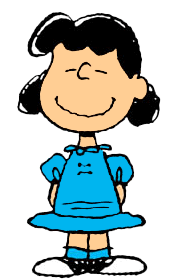
There are a lot of Neutral Evils who I love to hate, but Lucy van Pelt from Peanuts is definitely near the top of the list.  Saruman is another one, though he’s less of a magnificent bastard than Sephiroth (Why did you have to kill Aeris?  WHY???).  And of all the Neutral Evils, Voldemort is probably the most ambitious.

In my own works, my favorite Neutral Evil would have to be Shira from Desert Stars.  Man, I hated her so much…once I got her character down, it was a real joy to write. 🙂 From Bringing Stella Home / Sholpan, Borta is definitely a Neutral Evil.  Qasar leans more to the lawful side, while Gazan leans to the chaotic, but Borta is squarely neutral–and she’s vicious.  Genesis Earth and Star Wanderers, however, are generally feel-good stories, so they don’t really have anyone with this character alignment.

Trope Tuesday: Lawful Evil

If the term “villain” applies to anyone, it applies to the Lawful Evil.  Whether the evil overlord, his trusted right-hand man, or one of his devoted minions, these characters are dedicated wholeheartedly to their cause, whether they believe it will lead to a better world or not.  Taking over the world is often a major obsession, because hey, someone’s got to do it.  A staple of the evil empire, these guys often turn their country into an industrialized wasteland, though they often have propaganda machines to take care of any bad press.  Bonus points if they can transform into a freakish monster in battle.

From the easydamus character alignment page:

A lawful evil villain methodically takes what he wants within the limits of his code of conduct without regard for whom it hurts. He cares about tradition, loyalty, and order but not about freedom, dignity, or life. He plays by the rules but without mercy or compassion. He is comfortable in a hierarchy and would like to rule, but is willing to serve. He condemns others not according to their actions but according to race, religion, homeland, or social rank. He is loath to break laws or promises.

While Lawful Evils believe in following rules and keeping their word, they’re not above emotional manipulation, negotiating unfavorable contracts, or following the law in letter only.  Even so, they tend to suffer from genre blindness and bureaucratic stupidity (as well as megalomania–but hey, that’s part of the job description).

According to tvtropes, Lawful Evils come in four types:

  1. The supreme ruler, dedicated to establishing and maintaining a civic order that is itself evil.  A good example of this would be Sauron from The Lord of the Rings.
  2. A zealot or übermensch whose moral code falls outside of established social norms.  Khan from The Wrath of Khan is a pretty good example of this, as is Tyler Durden from Fight Club (though your mileage may vary).
  3. The Dragon or other minion who may have their own goals, but answers to the big bad.  Darth Vader is probably the most well-known example.
  4. A complete monster who is dedicated to the destruction of free will and liberty.  The Mormon conception of Satan fits this perfectly.

The scary thing about this trope is that it actually exists in real life.  In fact, outside of our sheltered middle-class, liberal democratic existence (a relatively recent and unusual development in the eyes of history), this type of overlord tends to be the rule and not the exception.  You don’t have to look any further than North Korea, Burma, or Syria for examples of this–which is to say nothing of the Soviet Union, the Third Reich, or the British Empire.

My favorite example of this trope is probably Darth Vader, not just because of how badass he is, but because of his heel face turn at the end of Return of the Jedi.  Ignoring how bad episodes I, II, and III were, his character arc really is the thing that makes that story.  And while we’re on the subject of history, let’s not forget this epic showdown between Stalin and Hitler.  Seriously, click that link.

In my own work, the best example of a Lawful Evil would probably be Qasar from Bringing Stella Home / Sholpan.  He’s more of the affable type than a true evil overlord, though; that would be Tagatai, who doesn’t really come to power until Stars of Blood and Glory. A much more sinister example would be Emile from Heart of the Nebula, or the villain I have planned for Edenfall–I’d better finish those!  And of course, there’s Sheikh Sathi from Desert Stars, though he’s mostly a type 3 Lawful Evil under the thumb of his Neutral Evil wife.

Perhaps one of the reasons I haven’t done a truly despicable Lawful Evil yet is because I’ve been kind of sheltered here in the states.  It will be interesting to see how my writing changes after spending some time in Eastern Europe; Georgia, after all, is the homeland of Stalin.

Darth Vader helmet taken from this site.

Trope Tuesday: Space pirates with Kindal Debenham

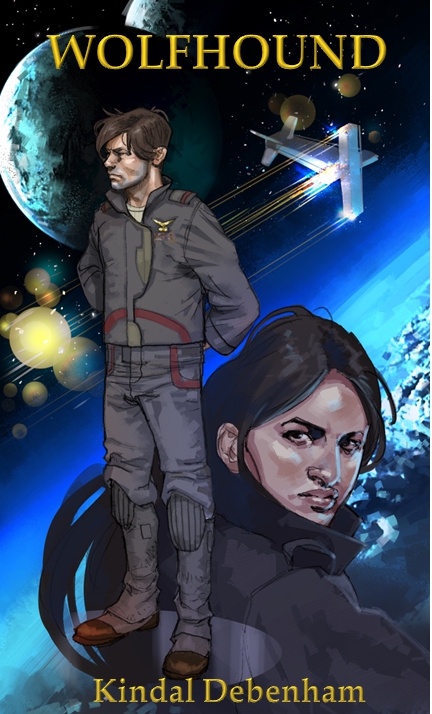
For today’s Trope Tuesday post, I thought it would be fun to bring on my friend Kindal Debenham to speak about one of the tropes in his new book, Wolfhound.

Kindal and I were in the same writing group in college, and attended Brandon Sanderson’s English 318 class together.  I just picked up a copy of his book, and it’s pretty good–definitely the kind of science fiction that I love.  You can currently find Wolfhound on Amazon, as well as Kindal’s self-publishing site.

So anyhow, here’s Kindal’s discussion of space pirates in Wolfhound.

==============================

Space pirates are kind of a staple in science fiction. We’ve seen them in all sorts of different forms since the genre came into being. As the trope states, though, there are basically two main classes. The first class is basically a bunch of violent criminals on a spaceship, kind of mirroring the behavior of modern day pirates in Somalia or Southeast Asia. The second are a corny recycled in space variant of the eighteenth century Caribbean pirate with robotic peg legs and a space parrot. Obviously one is a bit more realistic than the other. 🙂

The version I went for leans a lot more heavily on the first class of space pirates rather than the second. I wanted a smaller scale conflict in order to introduce my main character, and pirates seemed to be a good opponent to use for that purpose. Since the ship that Jacob Hull is on was partially based on the USS Constitution, I decided that I could use some of the pirates that ship fought during its history: the Barbary pirates.

These pirates weren’t your clichéd corsairs with parrots and a desire for plunder. The Barbary pirates were a collection of raiders that operated out of northern Africa. Their motivation was to support their nations by taking ships and capturing crews, which they then added to their fleet and put to work as slaves. In addition to raiding ships, the Barbary pirates also went on slave raids throughout southern Europe. They would accept tribute to ignore the ships of certain countries (think ‘protection money’ for a mob equivalent). The US had to pay about a fifth of the early national budget in tribute to these pirates until the politicians decided that guns were cheaper to buy—which led directly to the creation of the USS Constitution.

Building off of those ideas, I created the Telosian pirates. Vicious, more interested in valuable ransom for prisoners and well armed ships than simple cargo, and willing to do just about anything to satisfy their greed. With an utter ruthlessness only matched by their subtle plots, they made quite a good enemy for Jacob Hull and the rest of Wolfhound’s crew, and they were a much more interesting enemy to fight than a stereotypical Pirate-with-an-Eyepatch would have been. In my opinion at least, though I’m a little biased.

So those are the bad guys of Wolfhound—at least, they’re the majority of the bad guys—and believe me, they live up to their reputation as nasty pieces of work. Hope you guys enojoyed the background, and I hope I didn’t get too history nerd on you guys. See you around!

Trope Tuesday: Scarpia Ultimatum

How far would you go to save the one you love?  Would you sacrifice your life?  Suffer an irreparable blow to your reputation?  Or would you sleep with your lover’s would-be killer?

Scarpia Ultimatum is when the villain threatens to kill the hero (or, alternately, a basket full of kittens) unless the romantic interest gives him some sort of  sexual favor or gratification.  It doesn’t have to explicitly involve the physical act, though if it does, it tends to take the story in a very dark direction.  G-rated examples of this trope tend to revolve around marriage or some sort of emotional commitment instead.

The standoff can end in one of the following ways:

  • The romantic interest submits to the villain’s demands.  Since the ultimatum involves a fundamental betrayal of fidelity, this rarely ends well.
  • The romantic interest decides she’s not all that interested in the hero after all.  Alternately, she does the villain’s job for him.
  • One of the side characters offers to go in the romantic interest’s place, and the villain consents.  IIRC, something like this happened in Enchanted.
  • The romantic interest submits to the villains demands, but the hero escapes and rescues her at the last minute.  Can be difficult to pull off, since it basically consists of having your cake and eating it too.
  • The romantic interest comes up with a third option that saves the hero without forcing her to give herself up to the villain.  By far, this is the most common solution.

At the heart of this standoff is the fact that both choices involve a betrayal.  If the romantic interest refuses, she lets the hero die.  If she submits, she becomes unfaithful.  Even if the standoff is over a basket full of kittens, it almost always involves a choice between two morally reprehensible options.

My favorite example of this trope is from Phantom of the Opera, where the Phantom forces Christine to choose between her freedom and Raoul’s llife.  She takes the third option and kisses the Phantom, making him have compassion on her because no one else had ever shown him such affection.  What makes this a crowning moment of awesome, for me at least, is the way that it empowers Christine without doing anything to diminish Raoul.  He shows himself willing to make a truly heroic sacrifice, while she proves that love is more powerful than violence.

As a way to add a moral dilemma to your story, this trope is highly effective.  The stakes are high, the options are limited, and the moral choices are far from black and white.  If your characters do take a third option, however, it should probably make some sort of commentary on the ethical questions raised–otherwise, it’ll probably come across as an ***-pull.

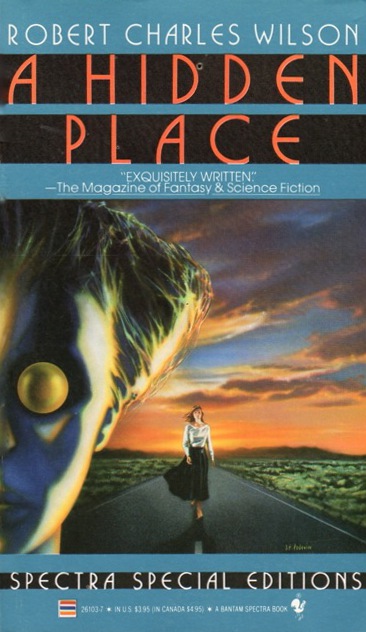
A Hidden Place by Robert Charles Wilson

Travis Fisher is an outsider in most places, but nowhere more than the small midwestern town of Haute Montagne.  But when his mother dies, leaving him parentless and jobless in the midst of the Great Depression, his stern aunt and uncle are the only ones who will take him in.

When Travis falls in love with Nancy Wilcox, the rebellious daughter of the Baptist Ladies Association president, things become worse.  With murderous transients roaming the countryside, Haute Montagne closes ranks, casting them out.

In this moment of distress, a mysterious yet hauntingly beautiful woman reaches out to them with a cry for help.  Stranded in the small midwestern town, she is a being from another world, and she is dying.  Only the two young lovers can help her, but to do so, they must find her dark, masculine half–and in so doing, confront the demons that threaten to tear them apart.

This is one of Robert Charles Wilson’s earlier novels, and I enjoyed it quite a bit.  It’s very short, yet well crafted and beautifully written.  Wilson’s prose is extremely evocative, and his descriptions of Haute Montagne brought back childhood memories from when I lived in the Midwest.  The story was also done well, and had a very satisfying ending.

While this is a good book, though, I wouldn’t say that it’s Wilson’s best.  His characters were interesting, but not nearly as compelling as those in Spin. The baptists were a little too villainous, though Travis’s aunt and uncle were individually more complex.

In spite of all this, however, the story was structured so well that the poignance of it largely overcame these flaws.  As a writer, that’s what I found most interesting about this book–how the masterful way the story was constructed made the whole greater than the sum of the parts.  Call it the monomyth, the hero’s journey, or whatever else, but something about this story made it reverberate in a powerful way.

I suppose that this is what all great stories do: echo some greater, universal story that is in all of us.  It’s the same echo that I felt when I read Spin, or Ender’s Game, or The Neverending Story, albeit a little softer.  It’s something that I hope my own stories evoke, this sense of clarity and wholeness, of returning to some great truth that we lost somewhere between birth and adulthood.

I don’t know if I’m making any sense, but those are my thoughts.  It’s a short read, and I enjoyed it quite a lot.  If you can find it, it’s a good one to pick up.

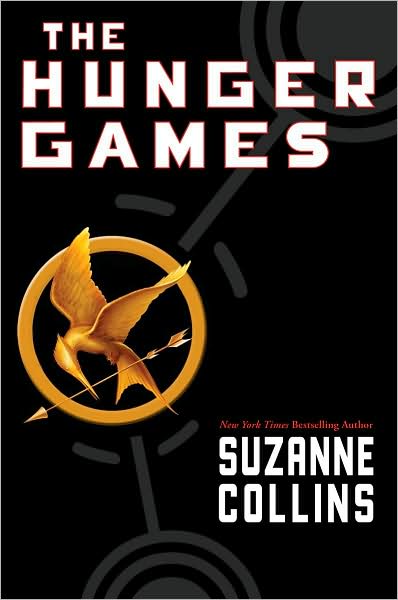
The Hunger Games by Suzanne Collins

This book review is going to be a bit unconventional, so please bear with me.

Normally, I only review books on my blog if I feel I can recommend them.  They might not be perfect, but overall, the praise outweighs the criticism. However, for me personally, The Hunger Games was a huge disappointment.

I’m not going to do a little book blurb like I usually do, because I want to spend all the available space on this post explaining the reasons why I was so disappointed.  Also because of that, this post will be full of spoilers.  Consider yourself warned.

First, let me say that I don’t think this book was all bad.  Suzanne Collins is very good at plot and pacing, and she knows how to keep a reader hooked.  In that way, this book reminded me of the old Michael Crichton thrillers that I devoured as a kid.

However, two crucial things killed about half of the suspense for me: the fact that this book was the first in a series, and the first person viewpoint.

From the very beginning, we know that Katniss isn’t going to die.  We know it, because she’s narrating the story to us directly (in present tense, which personally irks me, but I won’t go into that).  Unlike other gladiator-style heroic fantasies, where the major draw is to see who lives and who dies, we have that spoiled for us.

Of course, the argument in favor of the first person is that it helps the reader feel a closer connection with the viewpoint character.  The problem is, I never did.  At the end of the book, Katniss still feels like an outsider to me; I never felt like I got inside her head well enough to know who she really is.  When I try to imagine her, all I can envision is a wide-eyed mannekin.  She just didn’t come alive to me.

Why? Because the whole time, she’s only got one thing on her mind: survival.  I don’t see anything but fragmentary glimpses of her other motivations, and those are never fully fleshed out.  Her experiences growing up were just so traumatic that I can’t relate to her, and Suzanne Collins never provides a reference point outside of the awfulness of Katniss’s crapsack world.

Which is another thing that got to me: the setting.  Every time I opened the book, I dreaded going back to Collins’ world–and not in a good, “ooh, this world is so creepy/frightening” way, but in a “man, this place just makes me depressed” kind of way.  It wasn’t even that original–Panem is basically the USA as North Korea (though it could take place anywhere, for all the details Collins gives us).

What’s more, the setting is full of inconsistencies.  The people are starving to death, but the forests are full of game and wildlife.  In North Korea, people raze the forests for fuel and timber, driving all the game out.  Yes, I know the people of District 12 mine coal, but all of it presumably goes to Capitol, just like in District 11 all the grain goes to Capitol and the people still starve. Which makes me wonder: why are all the districts specializing in only one commodity?  That’s just stupid.

Which brings me to another thing: the sheer idiocy of the rulers of Panem.  If the Hunger Games are supposed to remind the people of how subjugated they are, why allow the tributes the opportunity to do something like pull a romance stunt?  Why spend all that time primping and preening them, interviewing them, and giving them an opportunity to manipulate the crowds?  When the people of District 11 sent Katniss the bread, why didn’t a government censor stop that from happening?  And finally, when Katniss and Peeta were the only ones left standing, why give them the opportunity to upstage the games by falling on each others’ swords?

Seriously, that last point got to me more than any of the others.  When they announced the rules change, that Peeta and Katniss were supposed to kill each other after all, why couldn’t the GM see the potential for things to go wrong?  Seriously, having them both kill each other–or refuse to kill each other–was such a blatantly obvious choice, I saw it the moment the rule change came into play.  The fact that the villains didn’t just threw me out of the story.

But that wasn’t the first thing that threw me out of the story.  The first thing was the parade, with Katniss and Peeta marching into the arena with their flaming cloaks.  All this time, Katniss has been set up as the underdog–she isn’t pretty, she isn’t strong, she’s mildly sympathetic for volunteering in place of her sister, but the audience in that arena is looking for blood, not sympathy.  So when the crowd goes wild for her and Peeta, I just didn’t buy it.

It only got worse as things went along.  When the tributes did the skill check, Katniss–who, from the beginning of the story, has been set up as the underdog–scores higher than anyone else.  Every time she’s in front of an audience, everyone is oohing and ahhing.  It made me want to gag.

Honestly, you know what it seemed like?  It seemed like Suzanne Collins fell in love with Katniss so much that she wanted to spoil her, even though the story required her to keep up the pressure.  She made sure to torture Katniss in the games–so much so that it felt downright melodramatic at times–but while they were still in Capitol, waiting for the games to start, Katniss felt like a spoiled Mary Sue.

And as for the romance, it fell completely flat from the beginning.  Katniss was nothing but a manipulative faker from the beginning–granted, because she needed to in order to stay alive, but the least she could have done was coordinate that with Peeta.

And that’s another reason why I had such little sympathy for her–she’s a callous, manipulative, lying little heartbreaker, like far too many women in this world.

So yeah, The Hunger Games was, in my opinion, a huge disappointment.  I can partially see why it did so well (strong female protagonist, excellent plot structure and pacing, lots of hooks and cliffhangers), but personally, I don’t think it deserves half the praise it’s gotten.  And after what friends have told me about the rest of the series, I can guarantee that I won’t be reading them.