Trope Tuesday: Chaotic Neutral

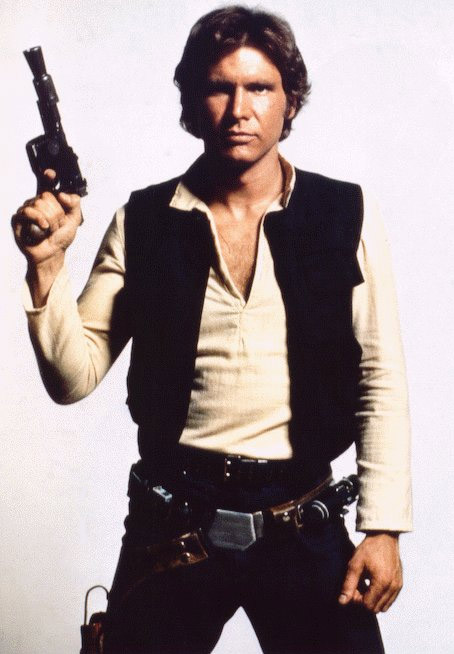
Look, I ain't in this for your revolution, and I'm not in it for you, Princess. I expect to be well paid--I'm in it for the money.

If you’ve ever read a space adventure with smugglers and pirates, or a sword & sorcery with rogue thieves and master-less swordsmen, or a western with gritty outlaws and mountain men, you know this character alignment.  If you’re a fan of any of these genres, chances are you love him, too.

The Chaotic Neutral‘s one consistent rule is to always look out for #1.  Beyond that, he’s a free spirit who believes in individuality and resists anyone or anything that tries to control him.  Rebellious spirits and lovable rogues tend to fall into this alignment, but so do tricksters and wild cards.  Their resistance to any form of personal restriction makes them unreliable allies, despite what Jack Sparrow says.

From the easydamus alignment page:

A chaotic neutral character follows his whims. He is an individualist first and last. He values his own liberty but doesn’t strive to protect others’ freedom. He avoids authority, resents restrictions, and challenges traditions.

A lot of characters start out as this but tend to shift as the story progresses.  Han Solo, for example, shifts from Chaotic Neutral to Chaotic Good as he becomes more and more involved with the Rebellion.  The Jägers from Girl Genius are Chaotic Neutral until they have a Heterodyne to lead them.  But in other stories, such as Pirates of the Caribbean and Schlock Mercenary, the Chaotic Neutral serves as an anchor.

My favorite Chaotic Neutral is probably Waylander from David Gemmell’s Drenai series.  The Jerusalem Man is another good one–in fact, just about every one of his books has a Chaotic Neutral that I love.  Haruhi Suzumiya is an excellent example of a female Chaotic Neutral–in fact, she’s probably the queen of this particular character alignment.

In my own work, the best example of a Chaotic Neutral would probably be Tamu from Bringing Stella Home / Sholpan.  Even though she’s technically a slave, she doesn’t really mind it because she has everything she wants and doesn’t have to be beholden to anybody (not even Qasar, really, since she’s his favorite).  Amina from Desert Stars is also Chaotic Neutral, in contrast with Surayya, who is more of a Lawful Neutral, though sometimes it’s hard to tell.  And in Genesis Earth, Terra is definitely a Chaotic Neutral at the beginning, though she shifts a little somewhere around the middle.

I’m hesitant to admit this, but when I took the character alignment test for myself, I tested out as a Chaotic Neutral.  As to what that means, exactly…I’m not going to say. o.0
Trope Tuesday: Neutral Good

Arguably the best of the good-aligned characters, the Neutral Good can always be counted on to do the right thing, whether that means working within the system or rebelling against it.  Whether young or old, soft or shrewd, nice or not so nice, these are the guys (and girls) most likely to save the world and defeat the enemy with love.

From the easydamus character alignment page:

A neutral good character does the best that a good person can do. He is devoted to helping others. He works with kings and magistrates but does not feel beholden to them.

The Neutral Good is not devoid of weaknesses, of course.  Although they are devoted to good, their lack of commitment to law means that they are not always willing to enforce it.  Also, for those who just want to get things done, this alignment can be somewhat limiting, in the way that a commitment to any higher ideal usually is.

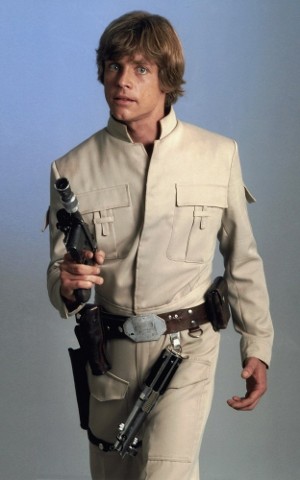
Interestingly, this is a very common alignment for heroes in space opera stories.  Case in point, Luke Skywalker: even though he’s young and reckless, he’s not above learning the ways of the force and joining the Jedi order.  Miles Vorkosigan from Lois McMaster Bujold’s Vorkosigan series also falls squarely into the Neutral Good camp.  Moving on to manga and webcomics, Alphonse and Winry from Fullmetal Alchemist both fall under this alignment, giving balance to Edward’s more chaotic outbursts.  Agatha from Girl Genius is also a Neutral Good…at least, when there aren’t any wrenches nearby.

There are quite a few characters with this alignment in my own work.  Even though she’s a mercenary captain, Danica from Bringing Stella Home falls squarely into this alignment; she’s got a tough outer shell, but she’ll do anything for her men, even…well, I don’t want to ruin Stars of Blood and Glory. 😉 Also from Bringing Stella Home / Sholpan, Stella is solidly Neutral Good, which is part of why the ending is so deliciously twisted.  In Star Wanderers, Jeremiah falls into this alignment mostly through default, which is good for Noemi because the circumstances of the novel put her totally at his mercy.  And in Desert Stars, this is probably Mira’s alignment, though she’s easily manipulated by her Neutral Evil mother.

What can I say?  I’ve got a soft spot for Neutral Goods.  Considering how well this kind of a hero fits in to a classic space adventure, it shouldn’t come as any surprise.

Trope Tuesday: Lawful Evil

If the term “villain” applies to anyone, it applies to the Lawful Evil.  Whether the evil overlord, his trusted right-hand man, or one of his devoted minions, these characters are dedicated wholeheartedly to their cause, whether they believe it will lead to a better world or not.  Taking over the world is often a major obsession, because hey, someone’s got to do it.  A staple of the evil empire, these guys often turn their country into an industrialized wasteland, though they often have propaganda machines to take care of any bad press.  Bonus points if they can transform into a freakish monster in battle.

From the easydamus character alignment page:

A lawful evil villain methodically takes what he wants within the limits of his code of conduct without regard for whom it hurts. He cares about tradition, loyalty, and order but not about freedom, dignity, or life. He plays by the rules but without mercy or compassion. He is comfortable in a hierarchy and would like to rule, but is willing to serve. He condemns others not according to their actions but according to race, religion, homeland, or social rank. He is loath to break laws or promises.

While Lawful Evils believe in following rules and keeping their word, they’re not above emotional manipulation, negotiating unfavorable contracts, or following the law in letter only.  Even so, they tend to suffer from genre blindness and bureaucratic stupidity (as well as megalomania–but hey, that’s part of the job description).

According to tvtropes, Lawful Evils come in four types:

  1. The supreme ruler, dedicated to establishing and maintaining a civic order that is itself evil.  A good example of this would be Sauron from The Lord of the Rings.
  2. A zealot or übermensch whose moral code falls outside of established social norms.  Khan from The Wrath of Khan is a pretty good example of this, as is Tyler Durden from Fight Club (though your mileage may vary).
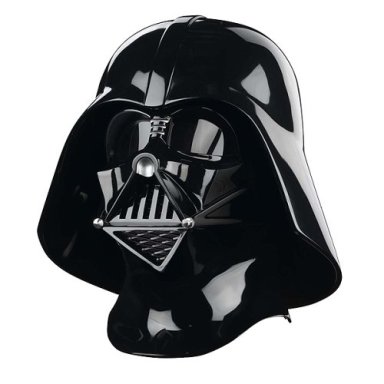
  3. The Dragon or other minion who may have their own goals, but answers to the big bad.  Darth Vader is probably the most well-known example.
  4. A complete monster who is dedicated to the destruction of free will and liberty.  The Mormon conception of Satan fits this perfectly.

The scary thing about this trope is that it actually exists in real life.  In fact, outside of our sheltered middle-class, liberal democratic existence (a relatively recent and unusual development in the eyes of history), this type of overlord tends to be the rule and not the exception.  You don’t have to look any further than North Korea, Burma, or Syria for examples of this–which is to say nothing of the Soviet Union, the Third Reich, or the British Empire.

My favorite example of this trope is probably Darth Vader, not just because of how badass he is, but because of his heel face turn at the end of Return of the Jedi.  Ignoring how bad episodes I, II, and III were, his character arc really is the thing that makes that story.  And while we’re on the subject of history, let’s not forget this epic showdown between Stalin and Hitler.  Seriously, click that link.

In my own work, the best example of a Lawful Evil would probably be Qasar from Bringing Stella Home / Sholpan.  He’s more of the affable type than a true evil overlord, though; that would be Tagatai, who doesn’t really come to power until Stars of Blood and Glory. A much more sinister example would be Emile from Heart of the Nebula, or the villain I have planned for Edenfall–I’d better finish those!  And of course, there’s Sheikh Sathi from Desert Stars, though he’s mostly a type 3 Lawful Evil under the thumb of his Neutral Evil wife.

Perhaps one of the reasons I haven’t done a truly despicable Lawful Evil yet is because I’ve been kind of sheltered here in the states.  It will be interesting to see how my writing changes after spending some time in Eastern Europe; Georgia, after all, is the homeland of Stalin.

Darth Vader helmet taken from this site.

Trope Tuesday: Chaotic Evil

If a character in a story scares the hell out of you, chances are he’s a Chaotic Evil.  From ax-crazy psychopaths to nightmarish clowns, from cold-hearted monsters to eldritch abominations, these guys are known for their complete lack of empathy, their nihilistic outlook on life, and their sick sense of humor.

From the easydamus character alignment page:

A chaotic evil character does whatever his greed, hatred, and lust for destruction drive him to do. He is hot-tempered, vicious, arbitrarily violent, and unpredictable. If he is simply out for whatever he can get, he is ruthless and brutal. If he is committed to the spread of evil and chaos, he is even worse…it represents the destruction not only of beauty and life but also of the order on which beauty and life depend.

According to tvtropes, characters who fall under this alignment can be categorized by five types, in decreasing order of redeemability:

  • A Chaotic Good who took things a little too far and inadvertently fell into evil.  Can usually be brought back with a heel realization if they haven’t already crossed the moral event horizon.  Scar from Fullmetal Alchemist is a good example of this type (incidentally, he’s also my favorite character from that series).
  • A character with a very feral nature who believes that everyone is out to get him and thus ends up killing everyone in order to protect himself.  Often manipulated by the Big Bad to do his dirty work.  He doesn’t really kill out of malice, though, so there may still be a possibility of redemption.
  • Committed to chaos before evil.  Can be convinced to team up with the heroes, if only because they happen to share the same enemy.  For these characters, their freedom is the most important thing–though don’t trust them too much, or else you’re liable to end up with a knife in your back.
  • Committed to evil before chaos.  These guys will never team up with the heroes, but they may team up with the Big Bad, even becoming one of his mooks if it gives them more opportunities to unleash fiery mayhem of death on the world.
  • True Chaotic Evil.  These are the most dangerous, because they have absolutely no loyalties and absolutely no compunction.  The best you can hope for is to kill them before they wipe out your entire civilization.

Fortunately, the Chaotic Evil’s weakness is his inability to put together a competent organization. If he has any plans, they’ll usually fizzle out because they’re too haphazard.  When the Chaotic Evil overlaps with the Chessmaster, however, things can get really, really dangerous.

My favorite Chaotic Evil is definitely the Joker from the Dark Knight.  He is, without a doubt, the most dangerous incarnation of this trope that I’ve ever seen.  Running a close second is Kefka from Final Fantasy VI.  Best final fantasy villain of all time, hands down–he totally owns Sephiroth.

I have to admit, I haven’t used this trope much in my own work yet.  Gazan from Bringing Stella Home probably falls under this character alignment, but he’s more of the third type than a true Chaotic Evil.  As a race, the Hameji initially fall under this trope, but they have reasons for everything they do, so once they overthrow the established order, they shift more to Chaotic Neutral.

One day, though, I’m going to write a character with this alignment.  One day…

Trope Tuesday: Chaotic Good

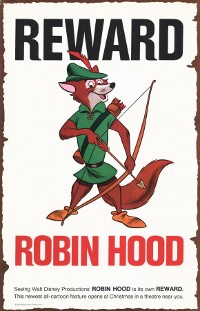
A pox on the phony king of England!

Wherever you find the evil empire, dirty cops, or a misguided crusade, chances are there’s a Chaotic Good somewhere in the shadows fighting against it.  From barbarian heroes to freedom fighters, rebellious princesses to ethical sluts, these free-spirited, noble-minded rebels are constantly at war with the man, robbing the rich to give to the poor.

From the easydamus character alignment page:

A chaotic good character acts as his conscience directs him with little regard for what others expect of him. He makes his own way, but he’s kind and benevolent. He believes in goodness and right but has little use for laws and regulations. He hates it when people try to intimidate others and tell them what to do. He follows his own moral compass, which, although good, may not agree with that of society.

Interestingly, once the evil bad guys are gone, the balance between Good and Chaotic is even more difficult to keep than the line between Good and Lawful.  For that reason, Chaotic Goods often make extremely poor rulers after the war is over.  When they win, they usually do one of the following:

Of all the character alignments, this one is my favorite.  It fits my own sensibilities almost perfectly.  Whenever a character of this type has to give up their old life to accept their new responsibilities, I can’t help but feel a little wistful and sad (maybe that’s why I haven’t settled down and married yet…hmm…).

This trope is extremely prevalent in manga and anime, with Edward Elric from Fullmetal Alchemist my personal favorite.  Agatha and Gil from Girl Genius are also really awesome–it’s going to be interesting to see how Gil shifts now that his father is out of the picture.  In science fiction, Captain Kirk is probably the most beloved character of this type, though almost all of Heinlein’s protagonists also fit the bill.

In my own work, Tiera Al-Najmi from Desert Stars is probably the best example of this trope.  She stands alone against the restrictive norms and hypocrisy of her society, urging Mira to do what’s right instead of what’s expected.  In Bringing Stella Home, James McCoy fits this trope too, though you could also make an argument that he’s more of a Neutral Good.  In Heart of the Nebula, however, he’s definitely Chaotic Good, which puts him squarely at odds with Lars, a Lawful Good who appears in all of the Gaia Nova novels thus far.

Trope Tuesday: Lawful Good

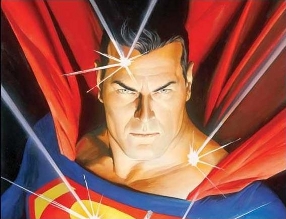
Lawful Good is the character alignment that is the most unambiguously heroic.  These are the white hats, the caped crusaders, the knights in shining armor who fight for Truth, Justice, and the American way.  They might not always be smart, and they might not always be nice, but you can always count on them to do the right thingalways.

From the easydamus character alignment page:

A lawful good character acts as a good person is expected or required to act. He combines a commitment to oppose evil with the discipline to fight relentlessly. He tells the truth, keeps his word, helps those in need, and speaks out against injustice. A lawful good character hates to see the guilty go unpunished.

Although most Lawful Good characters are unambiguous, their conflicts are often quite complicated.  This is because their dedication to the moral code is itself a weakness which an intelligent villain can exploit.  Typically, this is done by putting them in a situation where they have to choose between being lawful (catching the bad guys) or being good (saving all the innocent people who will die in the process).  A smart Lawful Good character, however, will come up with a third option that turns the ethical dilemma on its head, though it might require a heroic sacrifice.

Very often, these kinds of characters appeal to us because they represent some higher ideal which we wish we could follow.  However, that’s not always the case, especially in more cynical works like A Game of Thrones, where the most lawful good characters also tend to be the most stupid.  Ultimately, it all comes down to the bias of the writer; even when you’re trying not to be didactic, it’s hard not to use the Lawful Good character as a vehicle for some sort of message.

A shallow Lawful Good will be little more than a paragon for whatever virtue they’re meant to represent.  A more nuanced Lawful Good will have some sort of a flaw (besides the backhanded ones), or some sort of internal conflict connected with their moral code to make them more human and relatable.

My favorite Lawful Good would probably be Sir Galahad from Le Morte d’Arthur, but mostly because of the sharp counterpoint he provides next to all the thugs and criminals other Knights of the Round Table.  Carter from Halo: Reach is a pretty cool Lawful Good, though he wasn’t my favorite (that would be Jorge).  And even though he’s a complete idiot, Ned Stark is still the only adult character from A Game of Thrones that I found remotely likable.

In my own work, Jalil from Desert Stars starts out as Lawful Good, though he shifts to Lawful Neutral in the middle and up to Neutral Good by the end.  In Bringing Stella Home / Sholpan, Lars and Narju definitely fall under this alignment, putting a lot of pressure on Stella to live up to their ideals.  I explore Lars’s idealistic character a bit further in Heart of the Nebula, a direct sequel to Bringing Stella Home which I hope to release later this year.  And in Star Wanderers, Noemi tends to fall under this alignment–though the story is not so much about saving the world as it is about saving each other.

Trope Tuesday: Character Alignment

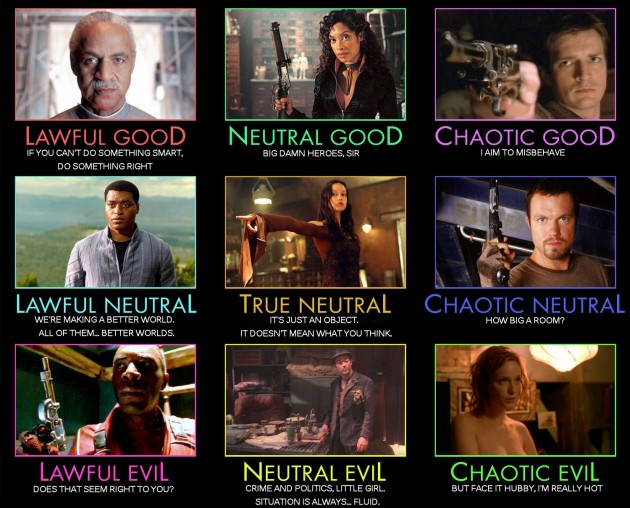
Alternate versions put 20th Century Fox in the Lawful Evil slot.

I love personality tests.  There’s something immensely satisfying about putting yourself on a grid that tells you something new and insightful about yourself and the people around you.  My personal favorite is the Meyers-Briggs test (I’m an ENTP), but I like playing around with others as well.

Character alignment is what you get when you combine fictional characters with the role they’re supposed to play in the story.  It’s a way to categorize the different ways they react to problems and ethical dilemmas, and to see which are inclined to be enemies and  which are inclined to be allies.

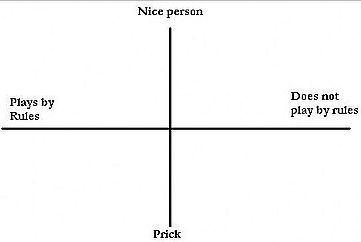
These systems initially arose out of RPG systems like Dungeons and Dragons, which use numbers, charts, and statistics to turn a story into a playable game.  There are many different kinds of alignments, but the most well-known is probably the one used by D&D, which charts characters along a good-evil axis and a lawful-chaotic axis.  In practice, the result looks a little like this:

Of course, that’s a very simplified version.  The tvtropes page goes into much greater depth, but I’ve personally found that this page right here does a much better job explaining the concepts behind the chart.

The horizontal axis, law vs. chaos, describes how much the character values order and authority vs. their own independence and freedom.  Lawful characters value honor and obedience, while chaotic characters value innovation and rebelliousness.  Characters who are neutral with regards to law and chaos generally respect authority, but put their own interests first and go against the established norms when that’s the best way to further their own ends.

The vertical axis, good vs. evil, describes how well (or poorly) characters tend to treat other people.  Good characters are altruistic and make sacrifices to protect the defenseless, whereas evil characters will kill, rob, or torture the innocent simply for the evulz.  Characters who are neutral with regards to good and evil don’t like to hurt others, but are not above pursuing questionable means to achieve their own goals.

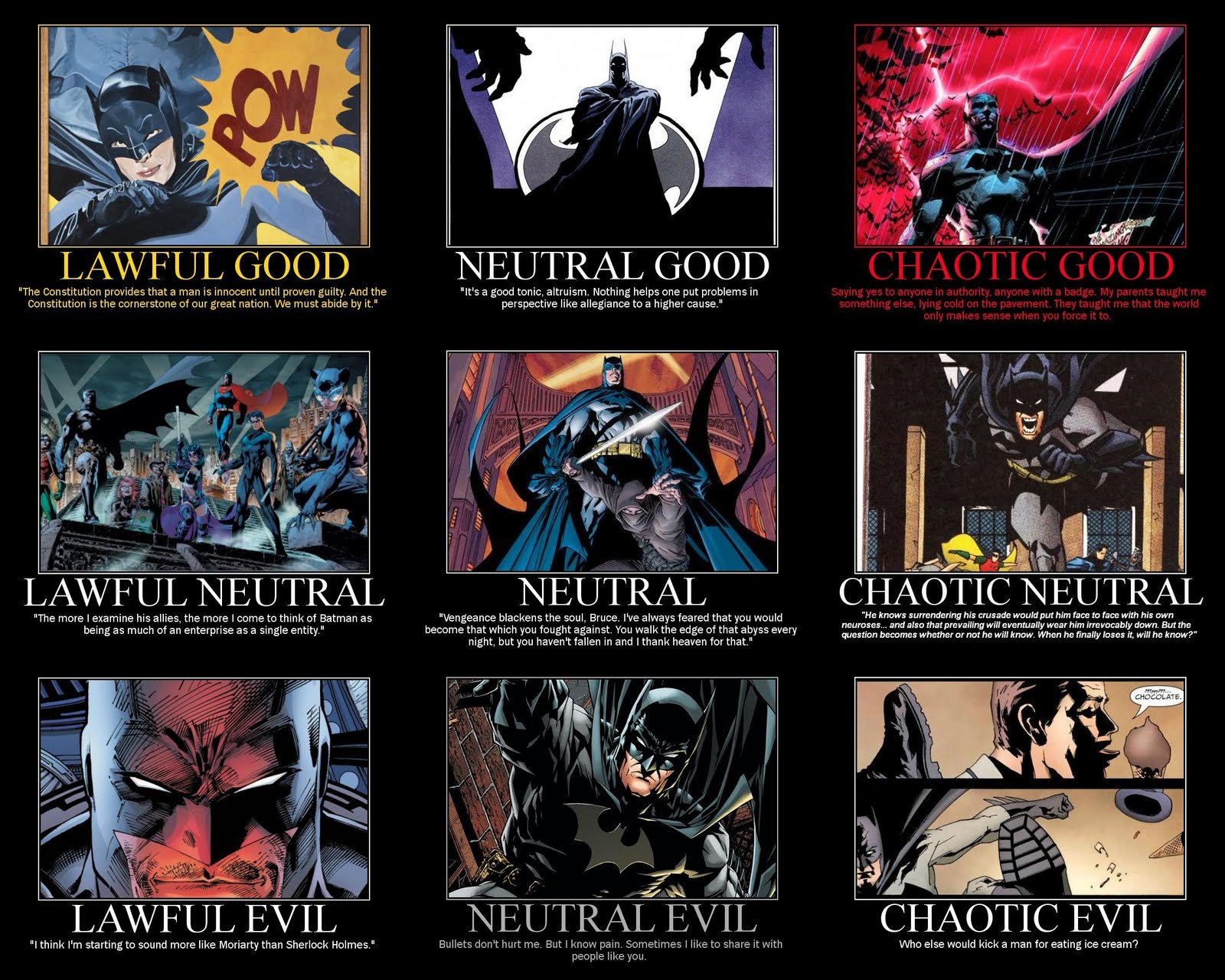
Put together, the alignments create a 9-square chart, like the one at the top of the post.  While it’s certainly not obligatory to fill every slot, doing so can add a greater degree of depth to your story, as it certainly did with Firefly.

As with any formula, however, there is danger in holding too closely to the chart and becoming inflexible.  In real life, people switch alignments all the time, just as personalities can change and evolve (in high school, for example, I was an INTP).  Not only that, but some characters even fulfill all the possible roles, depending on the incarnation and the story.

Because I'm BATMAN!

The point is, character alignment is just a tool, not a hard-and-fast rule that needs to be used with every story.  If it’s a helpful way to think about your characters and set them up with interesting conflicts, great.  If not, don’t sweat it; Homer and Shakespeare were telling great stories long before this chart.

I’m going to be going overseas soon, so I expect my internet access is going to be spotty for the next couple of months.  Because of that, I’m going to write up a bunch of Trope Tuesday posts on each of the nine alignments and schedule them to post automatically.  So stay tuned for more!

Trope Tuesday: Big Damn Heroes

You know the drill.  The clock is ticking down to zero, the evil hordes are swarming through the gates, the virgins are about to be sacrificed and the damsel in distress is about to be lost forever–and then the  heroes show up in all their glory to save the day.

This happens all the freaking time, which means that if you want to make a living telling stories, this is not a trope that you should ignore.  And with good reason.  Not only does it give the writer ample opportunity to play with suspense and action, but it arguably lies at the very core of what makes a hero a hero:

David Gemmell, according to this interview with Ian Graham, defined a hero simply as “someone who does heroic things.” They might not always take the right side, or they might not even care about doing what is right, but when the universe conspires to bring them to a moment of decision, they make the choice that all of us would like to think that we would take and do something extraordinary.

I like this definition of a hero.  It strikes me as a lot more honest than the perpetual do-gooder whose only motivation is Truth, Justice and the American Way (though those characters can–and do–have Big Damn Hero moments of their own).  Also, it means that true heroism is not contingent upon actually winning.  History may be written by the victors, but that doesn’t cheapen the experience of those who actually lived it.

Of course, if the heroes don’t save the day, it’s pretty hard to pull off a crowning moment of awesome without bringing in the Bolivian Army.  Either the heroes find out that they’re too late, or they make things worse, or (as is so common with Othar Tryggvasson of Girl Genius) they just prove that their ego is too big for its own good.  When taken to the extreme, the heroes may even be in danger of turning to the dark side.

The biggest danger with this trope is turning it into a Deus Ex Machina.  The thing that makes Big Damn Heroes so incredibly satisfying is the sense of climax when they show up to save the day.  Thus, proper foreshadowing is key.  Yes, the rule of cool still applies, but if that’s all you rely on, you’re not going to be able to pull it off to maximum effect.

One of my favorite examples of this trope is Liam Neeson in Taken.  Plenty of action movies are more violent, but few are more satisfying.  It’s the perfect pick-me-up after a long crappy day at the office–not that I work in an office anymore.  I wonder why…

In any case, this is a great trope to look out for, and definitely one to master, especially if you’re writing any sort of action-adventure story.

Trope Tuesday: Xanatos Speed Chess

Well, I can’t say any of this mess was part of my original plan, but it’s all working out so beautifully that I can’t complain.

Tarvek, Girl Genius.

The Xanatos Gambit is when a character plans out a scheme such that all possible outcomes (including abject failure) ultimately benefit that character.  Named after David Xanatos from Gargoyles, it is most often used by villains who are very good at evading karma.

Xanatos Speed Chess, on the other hand, is when the character relies not on setting up an only-win scenario from the beginning, but on being able to adapt and change their plans quickly enough to pull off a victory even after their first few attempts inevitably fail.  For this character, the important thing is not to keep everything from falling apart, but to outsmart their opponent even after everything already has.

Both heroes and villains can play at this game, but the heroes generally tend to be better at it.  Part of the reason for this is that try-fail cycles are much more conducive to Xanatos speed chess than the Xanatos gambit.  The heroes might lose a pawn or two, or even the queen, but that doesn’t stop them from turning defeat into victory.  In fact, depending on the story, it may provide exactly the sort of dramatic tension that makes the ending so awesome.

A good example of this in recent cinema would probably be the new Mission: Impossible movie.  Over and over, the mission falls apart–and the characters respond either by changing the mission or by crafting a new one.  It’s one of the things that makes it such a great spy thriller: the tension is always high, because you never know how they’re going to pull it off.

The opposite of this trope is the Indy Ploy.  This is because Xanatos speed chess is still chess; even though the plans are dynamic, they are still plans, and involve a large degree of calculation and forethought.  With the Indy ploy, the character is just wingin’ it, jumping into the thick of things and making it up as they go along.

The main reason I’m interested in this trope is because my current project, Stars of Blood and Glory, has a strong military plot, and I want one of the characters to be a magnificent bastard.  Let’s just say that if Bringing Stella Home is the Mongol conquests in space, Stars of Blood and Glory is the Battle of Ayn Jalut.  It’s going to be challenging to pull it off, but that’s part of what makes writing so much fun…

Trope Tuesday: New Year Has Come

Just like a story, every year has a beginning and an end.  For this reason, New Years has become a time to celebrate change, renewal, and the setting of impossible goals which we will all probably break by March.  Over time, this tradition has become so ingrained in our culture that it’s only natural for it to pop up in our fiction.

Most stories that feature a New Year subplot are episodic, such as cartoons, comics, anime/manga, and television shows.  They usually reflect real-world holiday traditions, such as the practice of setting New Year’s resolutions.  Because all stories need conflict (but also because fiction sometimes reflects reality), the characters in these stories are often just setting themselves up for failure in some hilarious way.

At first glance, this might seem depressing.  After all, if most of us will never reach our goals, why do we even bother setting them?  Why torture ourselves with guilt when, in all likelihood, we’re just setting ourselves up for failure?

In some ways, I think it comes down to this quote from David Gemmell:

May all your dreams come true save one; for what is life without a dream?

One of the things that makes us human is that we all need to have some impossible dream to strive for, some sense of hope for the future.  Through our New Year’s resolutions, we tap into that sense that anything is possible, and that we can change who we are and become better people.

For some of us, those resolutions are an effective tool to turn their lives around.  For those of us who lack that kind of will or self-discipline, the act of setting resolutions still helps us reflect on our lives and change in ways that perhaps we don’t immediately perceive.  After all, the truest measure of success isn’t whether you’ve accomplished all your goals, but how much you’ve changed through striving to meet them.

That’s my take on it, anyway.  In any case, a New Year’s story is a great way to give your characters some time for reflection, since it’s probably the most introspective holiday in our Western culture.  It’s a time for beginnings, endings, and chasing impossible dreams.

Happy New Year!