W is for Writing the Next One

If you want to make a living as a writer, you’ve got to write a lot of books. One book is not sufficient to make a career, unless you’re the exception that proves the rule. But that’s okay, because writing is probably the thing that made you want to do this as a career in the first place. I mean, if writing is the thing that you love, wouldn’t you jump at the chance to do it more?

Sadly, I think a lot of writers put way too much pressure on themselves to produce the next book, and too often that takes all the fun out of the writing process itself, turning it into a miserable slog. I’ve certainly been there myself, and I have to say, the whole thing was just ridiculous. As soon as I regained my own confidence, I abandoned all those silly rules and metrics and just decided to write my own way, no matter whether it was right or not.

I used to keep a detailed spreadsheet where I tracked my daily word count, making all these pretty graphs to show how much work I was producing. Then I went overseas for a year, and the stress of living abroad made it difficult to keep up.

I found myself writing or revising stuff just to boost my word count, and abandoning projects at the first sign of a snag just because I knew that if I didn’t keep my momentum, the stresses of living in a foreign country would force me to take a break. It actually threw me into a funk for a while–not because I wasn’t creating stories, but because I wasn’t keeping my word counts.

So I decided to toss all that stuff out the window, and in the last 2-3 weeks before I went home for the summer, I wrote Star Wanderers: Dreamweaver (Part V) from start to finish. Once the pressure was gone, the story practically wrote itself.

Some writers thrive on external pressures like word counts, timers, and the like. Others think that they thrive, but they really don’t. They cling to writing rules and writing metrics out of habit, or because they’re familiar, or because someone with more experience told them that they should. The truth, though, is that every writer is different, and what works to keep one motivated might just get in the way of another.

It can change over the course of your career, too. The chief advantage of using these metrics is that it gives you a sense of progress, which can buoy you up substantially when you’re first starting out. It can be a real challenge getting through your first novel, or even your second or third, so having a way to measure your day-to-day work can be extremely helpful. But after you’ve written a few books and gotten your feet underneath you, those metrics can get in the way, especially if they make you feel guilty.

Of all the kinds of guilt out there, writerly guilt is probably the stupidest. There is nothing immoral or taboo about not hitting your daily word count. It does not make you a bad person or violate the laws of the universe. Why would you put that burden on yourself? It’s not like anyone else is putting it on you. Life is too short to beat yourself up for not writing.

Instead, learn to channel all the things that make writing fun. It can be, after all–that’s how we all got started in the first place! If you can learn to capture the thing that makes writing fun for you, and not lose sight of that, then even when the going gets tough and the writing becomes a slog, you can still get through it and come out with something that you feel proud of.

Not every part of the writing process is fun, just like not every process of climbing a mountain is fun. But taken as a whole, it’s exhilarating and awesome. I mean, check out this video of these two guys climbing Shkhara, the highest mountain in Georgia. There were moments in that expedition that were tough, but the challenge only made it more worthwhile. It’s the same with writing.

I love writing. I want to write more than a hundred books before I die, and I’m already well on my way. Writing an awesome story is its own reward, even though there are many other rewards that often come afterward. Having people read and enjoy your stories is the greatest reward of all, and it more than pays for all of the hard parts that come before.

On an episode of Writing Excuses, Tracy Hickman once said that no matter how many books you write, it’s important to believe that you haven’t written your best book yet. I’ve definitely found that to be true. That’s not to discourage you that the stuff that you’ve written is bad, but to encourage you that your next one will be even better. And more often than not, it will!

Y is for Yesteryear

Star_wars_oldThey say that the golden age of science fiction is about twelve years old.  That’s definitely true for me.

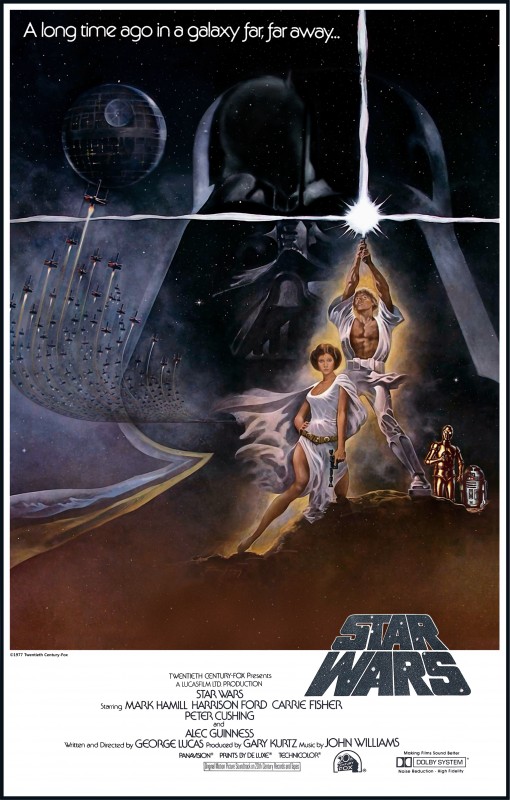
My first exposure to the genre was Star Wars: A New Hope.  I saw it when I was seven, right around the height of my dinosaur phase.  Everything about the movie completely blew me away, from the Jawas and Sand People of Tatooine to the stormtrooper gunfights and lightsaber duels.  After watching Luke blow up the Death Star, I spent the next few hours running around the yard pretending to fly my own starfighter.

In a lot of ways, I’ve never really stopped.

My parents made me wait until I was nine to watch The Empire Strikes back, because it was rated PG.  Without any exaggeration, I can say that those were the longest two years of my life.  I was literally counting down days by the end, and to pass the time without going crazy, I read up on all the books about space that I could possibly find.

My father bought the original X-wing flight simulator game somewhere around then, and I soon became totally engrossed in it.  Since the 386 was our only entertainment system (no Super Nintendo–I had to visit a friend’s house for that), X-wing became the defining game of my childhood.  I spent hours and hours on that game, to the point where I knew exactly which simulated missions the characters from the books were flying and how to complete them faster and easier.

I thought The Empire Strikes Back was a little slow the first time I saw it, but it’s since grown on me, to the point where now it’s my favorite film in the whole series.  Thankfully, my parents let me watch Return of the Jedi the next day, and for the next few months my life felt utterly complete.

Around this time I discovered the Star Wars novels and soon immersed myself in them.  The Courtship of Princess Leia by Dave Wolverton soon became one of my favorites, as well as the Heir to the Empire trilogy by Timothy Zahn and the X-wing series by Michael A. Stackpole.

But it was Roger Allen McBride who first introduced me to a different flavor of science fiction with his Corellia trilogy.  As I mentioned in V is for Vast, those books had just enough of a touch of hard science to intrigue me about the other possibilities of the genre.  That was the last Star Wars series that I read before branching out into other works of science fiction.

The Tripod trilogy by John Christopher was my first introduction to the dystopian / post-apocalyptic genre, depicting an enslaved humanity after an alien invasion.  Those books really captured my imagination for a while.  The Giver was also quite interesting and thought provoking, though since it didn’t involve spaceships or aliens it wasn’t nearly as compelling.

I read a lot of fantasy in my early high school years, including Tracy Hickman, Lloyd Alexander, and (of course) J.R.R. Tolkien.  While I enjoyed those books and immersed myself in them for a while, my true love was still science fiction.  For almost a year, I watched Star Trek: Voyager religiously with my dad.  And every now and again, I’d pick out a science fiction book from the local town library and give it a try.  That’s how I discovered Frank Herbert’s Dune.

In eleventh grade, my English teacher had us choose an author and focus our term papers solely on their books for the entire year.  She suggested I choose Orson Scott Card, but I chose Cormac McCarthy instead.  I’m not sure if that was the worst decision of my high school career, or the best decision, since assigned high school reading tends to make any book feel like it sucks.  I discovered Ender’s Game the following summer, and finished it in a delirious rush at 3am the morning after checking it out from the local library.

More than any other book, Ender’s Game cemented my love for the genre, and showed me just how powerful and moving the genre could be.  It opened so many insights into the world and human nature, reading that book made me feel like I’d opened a pair of eyes that I didn’t even know I’d had.  Looking back, that was probably the moment when I knew I would be a science fiction writer.  I’d known I was going to be a writer ever since I read A Wrinkle in Time at age eight, but to be a science fiction writer specifically, that goal was probably cemented by reading Orson Scott Card.

After high school, I served a two year mission for my church, during which I didn’t read any novels or watch any TV or movies.  When I came back, though, Orson Scott Card and Madeline L’Engle helped me to ease through the awkwardness of adjusting back to normal civilian life.  When I left for college, I expanded my horizons even further, starting with Isaac Asimov’s Foundation series and Edgar Rice Burrough’s Princess of Mars.

When I discovered Pioneer Books in downtown Provo, I knew I’d found my favorite bookstore in Utah Valley.  I have so many fond memories sitting cross-legged on the floor in the science fiction section, browsing through the musty used books for hours at a time.  That’s where I discovered C.J. Cherryh, Arthur C. Clarke, Robert A. Heinlein, Ursula K. Le Guin, and numerous other authors who are among my favorites today.

When I discovered Spin, Robert Charles Wilson soon became one of my favorites.  I picked up that novel as a free PDF from Tor, and read it over the summer while studying abroad in Jordan.  Once again, that same hard sf sensibility I’d gotten from Roger Allen McBride touched me in an unforgettable way.  But it was the human element of that book that really moved me–in fact, it’s always been about the human element.  The world building in Downbelow Station was great and all, but the romance of Merchanter’s Luck had a much more lasting impact.  Starship Troopers had some good ideas, but it was Mandella’s personal journey in The Forever War that moved me almost to tears.  The intrigue of the Ender’s Shadow series was quite entertaining, but it was Ender’s Game and Speaker for the Dead that really taught me what it means to be human.

I finished my first novel, Genesis Earth, shortly after returning from that study abroad, and tried to capture the same sensibility from Spin as well as the intimately human element.  Since then, I’ve written several more sci-fi novels, some of them tragic, some triumphant, but in all of them I’ve tried to get as close as I can to the personal lives of the characters.  I don’t know if I’ll ever write a character portrait so intimate as Shevek’s in Ursula K. Le Guin’s The Dispossessed, but I certainly hope to someday.

For me, science fiction started out as a wonderfully exciting entertainment and turned into something much more meaningful.  If there’s anything the genre has taught me, though, it’s that the two aren’t mutually exclusive–that you can have your adventure and learn what it means to be human as well.  Indeed, the more imaginative the adventure, the greater the truths I’ve taken from it.

Because of that, even though I’m almost in my thirties now, I can’t possibly foresee a time when science fiction isn’t a major part of my life.  It’s a love affair that’s grown just as much as I have, and continues to grow with each new author I discover and each new book I write.  When I’m old and grizzled and pushing eighty, I’m sure there will still be a part of that twelve year old boy in me, still running around the yard flying his starship.

LTUE 2013

Man, LTUE 2013 was this weekend, and it was AWESOME.  One of the best conventions I’ve ever attended.  I spoke on my first panel, attended my first book signing event as an author, and got to meet up with some old friends, as well as some amazing new people.

Since I live tweeted most of the panels I attended, I thought it might be interesting to repost a few of those here, with some additional thoughts.  So…here goes!

THURSDAY

I believe this was Scott Parkin from the “What Do You Write?” panel. Good advice. Megan Whalen Turner also had some very interesting things to say on the subject of genre, which I have since forgotten. But I recorded it, and the recording will eventually be made publicly available in the LTUE conference archives, or so I’ve been told.

This one was from the “What Is ‘Punk’ Literature and Its Many Genres?” panel. David Butler and Larry Correia were HILARIOUS. Nearly got into a wrestling match right in front of us.

And when the esteemed Mr. Butler began to describe his book, I swear, a choir of steampunk angel Moronis somewhere began to sing a heavenly chorus. I mean, he had me with Edgar Allen Poe faking his death to become a secret agent, but Orson Pratt’s phlogiston guns? Eliza R. Snow as chief counterintelligence officer for the Kingdom of Deseret? I will definitely be checking out this book, City of the Saints (which is apparently a finalist for the 2013 Whitney Award).

David Butler is also a way cool guy. I hung out with him a bit in the dealer’s room, chatting about Mormon history, Lyman Wight (“shoot and be damned!”), Sir Richard Francis Burton’s expedition to Salt Lake City, and all sorts of other crazy zany stuff. And the whole time, he was playing a guitar. So yeah, definitely a way cool guy.

This discovery CHANGED MY LIFE. Also, it helped me to save immensely on lunch money, as well as join in on some way cool conversations with other panelists as they desperately tried to escape their fans. Okay, not really, but the green room was AWESOME.

Howard Taylor’s presentation on teasers was tremendously insightful. In a nutshell, he said that a teaser (aka book description on Amazon / back cover) should have or at least point to the following things:

  1. The inciting incident
  2. Character action
  3. Conflict
  4. Hook

We then went over a few examples, including some good ones that broke these rules, and finished up by doctoring a couple of teasers volunteered from the audience. Howard Taylor admitted to me later that he wasn’t entirely satisfied with the way he presented it, but I get the impression that he’s never entirely satisfied with anything less than perfection. It was a great workshop.

From “Engaging the Reader.” Great panel. Lisa Mangum described the planning / drafting / revising process for each of her first three novels, and they were all wildly different. With seven novels under my belt so far, I can definitely relate. Some, like Genesis Earth and Stars of Blood and Glory, practically write themselves. Others are like having a c-section with a hacksaw. And others…yeah, I’m not going to go there.

FRIDAY

Okay, maybe I said one useful thing: when there’s a language barrier, little things become big obstacles. One of the other panelists, Anna Del C. Dye, also had a bunch of stories about adapting to a foreign language and culture (in her case, the United States).

Overall, the panel was really, really fun! I also had some cards out for Star Wanderers: Outworlder, and a bunch of people came up afterward to get them. Guess I must have said something interesting. I hope you guys enjoy the book!


From “Current Trends in SF.” Great panel–it totally wasn’t just another over-hyped discussion about what’s hot right now. I asked how the panelists think the trend cycle will change in the age of self-published ebooks, and they had some very interesting things to say. They all agreed that speed to market, while it may give some advantages, isn’t a make-or-break game changer, or even really a good strategy (unless you really love the trend you’re writing to). Some things change, others remain the same. It will be interesting to give this one a re-listen.


From “Creators in the Community.” Probably one of the best panels of the entire convention. Tracy Hickman is really on top of the changes in the publishing world, and had a lot of interesting things to say about it in all of his panels. As for the subject of writerly communities, much wisdom and insight was shared by all of the panelists. Definitely look for this one.

Man, I’d forgotten how cool the guys at Dungeon Crawlers Radio are! They interviewed me back in 2011, when I was just getting ready to publish Genesis Earth. This time, we talked about space opera, sci-fi romance, language barriers in marriage and all the crazy things I have to look forward to, and a bunch of other stuff. I also shared some of my thoughts and opinions on self-publishing myths, especially regarding the “tsunami of crap.” We coined a new word, “nerdaissance,” to describe all the awesome new stuff that’s coming out now, thanks to the ease of self-publishing.

So yeah, it was a great interview! I’ll definitely be cross-linking once it goes live.

From “Effective Book Covers.” Great panel with some very good artists and cover designers, including Isaac Stewart who does all the maps for Brandon Sanderson. Although some parts were geared toward illustrators, most of the advice was for writers (especially self-pubbing writers) who are looking to design their own covers. Lots of great and insightful perspectives from the visual arts side of things.

FRIDAY NIGHT BOOK SIGNING

Okay, I’ve got to be honest: when I went into the mass signing with my cardboard box of CreateSpace POD novels, I didn’t expect to sell anything. I figured that was just my ticket to get a seat at a table and hand out cards for Star Wanderers: Outworlder to some of the casual book browsers.

Well, I was pleasantly surprised! An uncle of one of my old mission companions was impressed enough to buy a couple of copies. I think he’s one of these guys who likes to buy things from new authors to help encourage them. It’s great to see people like that. He told me to keep writing, and I told him I definitely would!

Lots of people snagged the card for Outworlder, and I came up with a pretty decent pitch: “it’s about a starship pilot who accidentally marries a girl who doesn’t speak his language.” That raised a lot of eyebrows! A lot of people were really happy to see a science fiction story, especially a space adventure. I get the impression that there’s a craving for this kind of stuff in the market that isn’t currently being satisfied. So yeah, that was very encouraging!

After things wound down a bit, I wandered around the signing checking out some of the other books. Saw a couple that I recognized from the Kindle Boards, which was interesting. Chatted with them, as well as a bunch of geeky guys about chain mail, Halo, Frank Herbert, and all sorts of awesome stuff. Man, the best part about sci-fi/fantasy conventions is the chance to just talk with people! So much interesting stuff. It was great.

SATURDAY


From “Write For the Market or Write What You Know?” Another great panel. Definitely will be re-listening to that one.

From the main address with Megan Whalen Turner. She talked about book censorship and the need to teach children how to make their own reading choices, rather than keeping them sheltered and making the choice for them. She pointed out how every time a New York Times article comes out bemoaning some YA book for inappropriate content, it’s kind of hypocritical because there are so many other books they miss. The Golden Compass, for example, didn’t even pop up on their radar until the movie came out. Kids don’t magically become mature, well-adjusted adults when they turn 18–we have to teach them to make these choices (and mistakes) for themselves.

From “How Does Your Story Mean?” Great discussion on the writing process. Saw a lot of other good live-tweets during this one.

Okay, I take back what I said about the best panel of the convention. THIS was definitely the best. “The Engines of Exploration,” with Howard Taylor, Megan Whalen Turner, Roger White, James Owen, Kevin Evans, and Charles Stanford–the panel was packed. It basically turned into a round-robin discussion of which commodities are most essential to modern civilization, which ones will be the most valuable in the event of a societal collapse, and which ones will take us to the stars. The eventual consensus on each of these eventually came down to goats. Seriously. GOATS!


From “Writing Romance Without Erotica.” Lots of delicious awkwardness, as well as some really interesting thoughts and perspectives on the subject of romance. One of the panelists talked about the importance of “character penetration” without realizing about halfway through the panel how hilarious that phrase sounded in this context. But yeah, there was also a lot of wisdom in there as well. There are a lot of strong opinions about sex and romance floating around in this part of the world, so it was a very spirited and interesting panel.


The last panel of the convention (technically, symposium, but whatever) was “eBook Publishing” with some highly successful indies like Michaelbrent Collings. As you can tell from the tweets, it was a bit controversial, but very, very interesting. Questions were flying all over the place, on subjects ranging from formatting to building an audience. The biggest shock to me was that none of the panelists (none of them!) are on Smashwords. It’s a wild, wild west out here in indie-land. Makes me wonder, maybe I should publish to iTunes through another venue? Hmmmm…

So yeah, that was pretty much the whole convention/symposium. I finished it out by playing Alhambra with a bunch of friends from Kindal Debenham’s writing group who came down from Seattle and Idaho. Good, good times–it was actually kind of sad to say goodbye. Definitely worth coming 11 time zones to attend.

All I can say is that I am STOKED for Conduit!
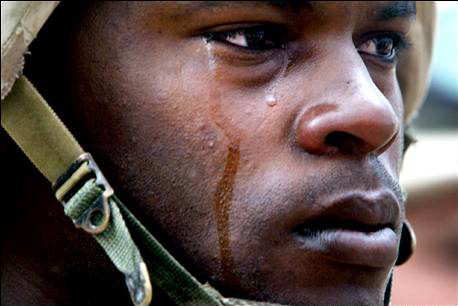
When men cry, or in defense of damaged characters

I recently read an amazing blog post by Shannon Hale titled “Why boys don’t read girls (sometimes).” In it, she makes a number of excellent points about how our society stigmatizes boys who read “girlie books,” and why that’s harmful.

Perhaps the most moving part of the post was at the end, where she described an experience at one of her book signings where she saw a boy hanging back and asked him if he would like her to sign one of his books.  The boy’s mother jumped in and said “yeah, Isaac, would you like her to put your name in a girl book?” The boy’s sisters all laughed at him, shaming him for reading anything that ran against their strictly defined gender roles.

In direct contrast to Shannon Hale, Dave Farland released a “daily kick” newsletter a couple of days ago where he advises writers to never let their characters cry.  In it,  he states:

Whatever problem [the character has]—whether terminal disease or sociopathic neighbor or anything else—the problem must be faced with courage. This means that your character can’t cry about it, no matter what the source of pain…Any time that a character breaks down, we as an audience may cast judgment upon that character.

Now, I have nothing but respect for Dave Farland.  I’ve been following his “daily kick” emails for years, attended dozens of his convention panels, and even interviewed him once for an online magazine.  He’s been a very influential writer to me personally, and his advice has had a huge impact on my writing.

But on this issue, I think he’s dead wrong.

Even if you don’t have any problem with the idea that men should never cry–a disturbing belief that harms men by forcing them to hide their true feelings, and harms women by teaching men that compassion and empathy are signs of weakness–even if you’re comfortable living in a culture that accepts this belief, there are still instances where having a man cry in your story can be both moving and poignant.

Cross his woman, and he’ll blow your brains out–quoting scripture while he does it.

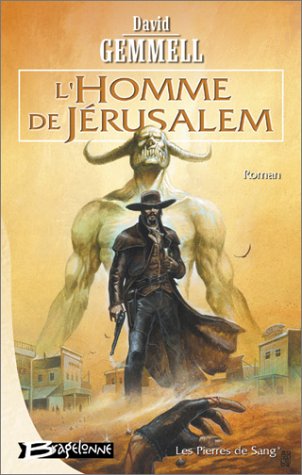
The best example of this that I can think of comes from David Gemmell’s The Jerusalem Man.  No one–and I mean no one–writes manlier heroes than David Gemmell.  And among his characters, Jon Shannow ranks as one of the manliest.

In The Jerusalem Man, Jon Shannow is a lone gunman roving the post-apocalyptic wastelands of Earth on a spiritual quest for the city of Jerusalem.  Near the beginning of the book, he comes across a frontier woman under attack from bandits.  He stops to defend her homestead, and she shows her gratitude by inviting him into her bed.

Jon Shannow is a middle aged man, but because of the post-apocalyptic setting, this is his first sexual experience, and it moves him to tears.  For me, that was one of the most poignant moments of the book.  It didn’t take away anything from his masculinity throughout the rest of the story–indeed, it added significantly to it when the woman got kidnapped and he determined to rescue her.

I’m sure there are other examples that you can think of.  Certainly in real life, this notion that men should never show their feelings is both harmful and outdated.  To say that in fiction, no characters should ever cry–female characters as well as male characters–that’s just so wrong it’s infuriating.  If crying is so taboo that it’s even forbidden in the pages of a book, then something is wrong with the culture, not the story.

In 2008, I attended a fascinating panel at LTUE in which Tracy Hickman and a number of romance and fantasy writers discussed how to write romance in science fiction and fantasy.  Tracy explained that in all the novels he writes with Margaret Weis, she does the fight scenes and he does the romantic ones.

He then went on to talk about how there’s a whole side of life that our culture has shut men off from–a feminine side which is present in all of us, men as well as women.  The way he explained it, romance is not just the “kissy bits,” but a vital and enriching way to see the world–a paradigm that infuses everything with feeling and passion.

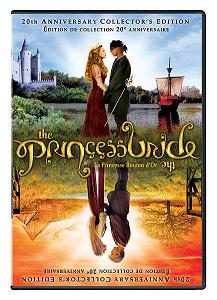
It makes me think of The Princess Bride, where even the action scenes with Inigo Montoya have a certain romantic flair to them.  In the old days, the term “romance” described not only love stories, but action & adventure stories as well.  In modern times, we seem to have forgotten all the old qualities like honor, love, sacrifice, loyalty, heroism, and compassion–even though they still make for the best stories.

Of course, our characters need to have courage.  But courage is not the absence of fear–it’s pressing on in spite of it.  And crying is not always a sign of weakness–it can actually be a sign of great emotional strength.  And if it’s true that the best literature helps us to see our world in a new light, giving us a greater understanding and appreciation for the human condition, how is it “courage” for anyone to hide their true feelings?

So do the characters in my stories cry?  Hell, yeah!  I don’t have them hide their feelings just because some readers might look askance.  Some of them cry more than others, and many of them don’t hardly cry at all, but those who do cry do so because the story demands it.

Even though I write science fiction, I do my best to infuse my stories with romance–not just the “kissy bits,” but that depth of feeling and passion for life that made me fall in love with books and reading in the first place.  Star Wanderers is a great example of that, and so is Desert Stars.

And yes, in case you’re wondering, I’ve read a lot of “girlie books.” They’re some of my all-time favorites.

No more word counts and other paradigm shifts

This August, it will be five years since I decided to start writing on a professional level.  A lot of things have changed since then, and in some ways they’re changing even faster now.

For example, in May 2009 I started a spreadsheet to keep track of my daily word counts.  I’ve been keeping it diligently ever since then, with graphs and everything.  But just recently, I’ve decided to stop doing that.  Word count is a very shallow indicator of progress: it only measures quantity, and often leads to unnecessary angst or diverts attention from more important things.

Instead, I’m going to focus more on deadlines and work to develop some other, better indicators.  Number of books published per year is probably a key one, as well as number of manuscripts finished.  But deadlines are probably going to be the most important drivers from here on out: publishing deadlines as well as writing deadlines.

Another thing that’s shifting is my revision process.  I know that a lot of beginning writers hate Heinlein’s rules, but almost all the long-term professionals swear by them–especially the ones with careers that I would like to emulate.  This makes me think that I need to scale back on the revisions and develop more trust in my creative voice.

Just as a point of reference, Heinlein’s rules are:

  1. You must write.
  2. You must finish what you write.
  3. You must refrain from rewriting, except to editorial order.
  4. You must put the work on the market.
  5. You must keep the work on the market until it has sold.

I’m currently on the second draft of Stars of Blood and Glory, and what I’ve found so far is that the overall story is actually pretty good.  Some of the scenes are a little out of order, and some of the plot-lines are missing elements that need to be added in, but aside from a few chapters where I got lost for a couple of pages, not a lot needs to be changed.

Of course, I could spend a draft or two tweaking every other sentence, tossing out most of what I wrote in the heat of my creative passion–but would that really make the story any better?  I recently had Kindal’s writing group critique my first chapter–the one that I revised pretty heavily in April–and they found all sorts of problems that weren’t in the original draft, as I wrote it back in December.

Don’t get me wrong–I do think there is an important place for revision.  But I think it’s best epitomized by Tracy Hickman in this episode of Writing Excuses:

We write from the heat of our passion, but we edit to see the fire through the smoke.

And even Tracy only does three drafts.

The other thing that’s changing is how I look at alpha reading.  I used to have different tiers of alpha and beta readers–most of whom were writers in other genres, and not really fans of  science fiction.  I asked them to give me as much feedback as they could, and bugged them for weeks or months at a time asking if they’d read my story.  I then compiled all their line-by-line comments into one giant master-file, which I kept open on the left side of my screen as I made the changes to my manuscript on the right.

Well, I’ve started to realize that there’s a huge difference between reading for criticism and reading for enjoyment.  Because of that, a lot of the things my alpha and beta readers pointed out were things that most regular readers probably wouldn’t have noticed.  Towards the end, I started to get wise on this, and only followed about a third of the criticism that I received.

Don’t get me wrong–I do appreciate the feedback.  A lot of it helped me to see and fix problems that I’d otherwise missed.  But a lot of it came out in casual conversations with my readers after they’d finished the story–not in the line-by-line comments on the original draft.

For those reasons, I think I’m going to change the way I ask for feedback.  Instead of alpha and beta readers, I’m going to go with a handful of “test readers”–readers who enjoy the kind of science fiction I like to write, but who may or may not be writers themselves.  Instead of asking for a detailed, line-by-line critique, I’m going to ask them three things:

  1. Did you enjoy the story?
  2. If you stopped reading it, where did you stop?
  3. Did you enjoy it enough to pay for it?

I’ll ask them to give it three chances, and if they still can’t finish, that’s okay–just let me know where the hangups were.  And if they do finish it, I might have some questions for them–but then again, I might not.  It all depends on the story.

Compared to where I was when I started out–or even where I was three months ago–those are some pretty huge paradigm shifts.  I have no idea how it’s going to turn out.  I’ve grown a lot as a writer recently, and I hope that this is moving me in the right direction, but I won’t really know until I’ve tried it out for a while.

In any case, this post is long enough.  I’d better get back to writing.

“…and I am doing my best to leave traditional publishing behind.” –Tracy Hickman

Those were Tracy Hickman’s exact words today at CONduit.

He said it as part of his introductory remarks at his first panel, “To Cliche Or Not To Cliche,” and reiterated it on all of the panels he was on for the rest of the day.

For those of you who don’t know, Tracy Hickman has built a career spanning over thirty years, and has 56 novels still in print.  He is an incredibly successful and prolific author.  What’s more, he is quite possibly the most humble and sincere person at the convention: extremely approachable, and very accommodating towards his fans.  He is an amazing man, and I hope to have a career like his someday.

He’s not the only big name author talking about epublishing either.  I heard this secondhand so it’s not admissible in court, but L.E. Modesitt apparently had a lot to say about Kristine Katherin Rusch‘s recent blog posts concerning the disturbing changes in traditional publishing.  Rusch is one of the voices at the epicenter of the indie publishing movement, along with her husband Dean Wesley Smith.

The initial shock wave of the ebook revolution has hit Utah, and people all over CONduit are talking about it.  In fact, I think I spent more time today in the hall talking about ebooks than I did attending panels.

You have no idea how invigorated this makes me feel.  I’ve been going around signing up bloggers for my Genesis Earth blog tour, and the sense of ownership I feel for my career is thrilling.  On my way back to Provo, I made a connection between two ideas for my current work-in-progress, and I literally screamed for two minutes straight.  I don’t know if I’ve ever been more excited to be a writer.

In his last panel of the day, Tracy Hickman closed with the following bold statement: if you master the art of story structure, have the dedication to work hard, and are willing to do what it takes to learn your craft, you will not only write a successful book, you will build a successful career in this world of new media.

That, my friends, is exactly where I want to be.

LTUE 2011

So LTUE (BYU’s science fiction and fantasy symposium) was last weekend, and it was awesome.

The venue was the BYU Conference Center just north of where DT used to be, and in my opinion this was a much better place to hold it than the student center, where it’s always been.  It felt a lot more professional, and allowed for better interaction.

It felt like there were a lot more people there this year, including two editors: Lisa Mangum from Shadow Mountain, and Stacy Whitman from Tu.  I didn’t try to pitch to either of them, since I don’t think they really publish what I write, but they were on a few interesting panels.  Tracy Hickman, Howard & Sandra Tayler, and Jessica Day George were also very awesome on all the panels they attended.

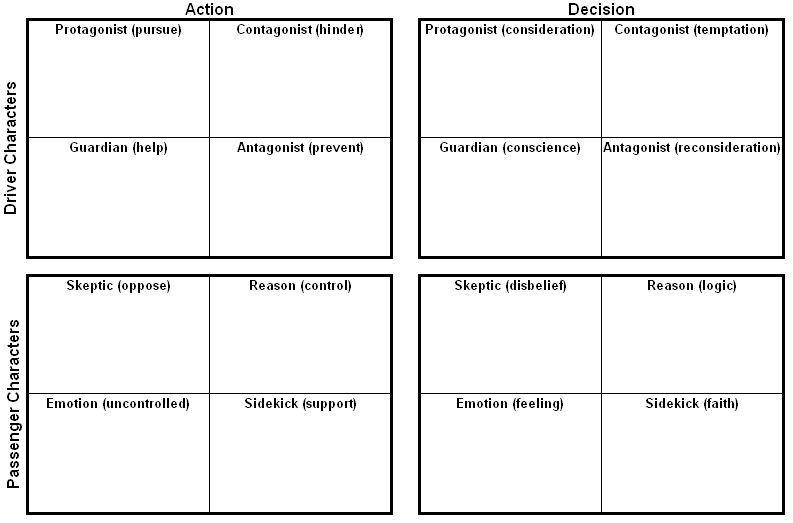
One of my favorite panels was the presentation by Tracy Hickman on Lord of the Rings.  He basically took it apart using Dramatica theory, showing how the series is composed of several distinct subplot, where each character (even the minor ones, like Eowyn) is literally the hero of their own story.

The presentation inspired me to go through some of my own novels and use the basic character archetypes from Dramatica to outline my own novels.  I wrote out the names of all the characters in WAFH and GE on notecards, then on the back wrote down which archetype they fulfilled based on who was the protagonist.

There were several other excellent panels as well.  I got a ton out of the “Can your dreams pay the bills?” one, with Sandra Tayler moderating.  She sure knows her stuff when it comes to the practical business aspects of a creative career.

I dunno; a lot of my writing friends claim to be at a point where panels at cons are less useful for them.  While I can see why they say that, I still find them helpful.  While a lot of the advice is stuff I’ve heard before, every once and a while someone will have a fascinating insight on things.  It’s like stories, I guess; even though there’s nothing new under the sun, everyone has a different way of making it their own, which is ultimately what makes the whole enterprise valuable.

Also, I had an awesome first this year: I signed my first autographed story!  Leading Edge had a booth in the hall, and while I was hanging out there, I mentioned to Eric James Stone how I had a short story published and joked around about signed copies.  To my surprise, he bought the issue and asked for me to sign it!

So yeah, my first signed copy of anything ever goes to Eric–thanks for the support!  Now I’ll see what I can do to make that signature actually worth something someday…

Oh yeah, one more thing: Dan Wells is going to name a character in one of his books after me!  According to Dan, the character (Gabe Vasicek) is “a big guy who wields a minigun.” Hehehe…can’t wait to read it!

Anyhow, LTUE was awesome this year, just as I’d expected.  The panels were enlightening and entertaining, the guests were gracious and easy to talk with, and the overall experience was just a lot of fun.

Adventures in Sci Fi Publishing is back!

I’ve been meaning to post this for a while, but about a month ago, I noticed something awesome in my podcast catcher: a new episode of Adventures in Sci Fi Publishing!

AISFP is an awesome podcast about the sf&f publishing world–one of the best podcasts on writing and publishing that I’ve found.  It’s hosted by Shaun Farrell, a playright and aspiring writer, and Sam Wynns, who runs the independent bookstore Mysterious Galaxies.  Each show runs about an hour, where they discuss news from the publishing world and typically interview a published author (ocassionally some big names, like Terry Goodkind and Tracy Hickman).

I can’t tell you how helpful I’ve found these interviews: Shaun Farrell knows all the right questions to ask, whether it’s about the writing process, the publication process, where the writers get their ideas, their personal experiences with writing, etc.  Awesome stuff–very useful for an aspiring writer like myself.

A while ago, the podcast went on hiatus (oh no!  not another awesome cast podfading into oblivion!), but now they’re back!  If you haven’t done so, you really should check them out: here is the podcast feed.

In one of the latest episodes, they interviewed author Greg Van Eekhout, who’s debut novel Norse Code is out in stores.  In order to spread publicity about the podcast (and the book), they decided to throw a blogging contest where they give away five copies of the novel.  To be honest, that’s why I’m writing this post–but it’s not the only reason.  Let me tell you about this novel, and I think you’ll see why.

Normally, I don’t usually get interested in a book because of a blurb or a description–especially if the author himself (or herself) gives it.  But Mr. Eekhout’s description of his novel on the show grabbed my attention.  Basically, Norse Code is a story about the Norse legends of the end of the world–Ragnarok–except that they’re all  coming true in our day and age, in Los Angeles.  All the Norse Gods are characters in the novel, including several minor gods, and some mortals as well, including a college student who dies and becomes a valkyrie.  All the major gods know that they’re going to die, but several of the minor gods are destined to survive and rebuild the world after the apocalypse.  Also, the novel has talking, scheming crows–how cool is that?

So yeah, you should check it out.  Also, if you’re an aspiring writer like me, you really should  check out Adventures in Sci Fi Publishing, and I’m not just saying that because of this contest.  I’ve been listening to this podcast since freshman year of college, and it is one of the best writing podcasts I’ve heard.  I’d definitely put it up there with Writing Excuses as one of the essential podcasts I subscribe to.  So check it out!

LTUE 2009 mp3s

Alright, like I promised, here are the mp3s of the panels I recorded at Life, the Universe, and Everything 2009. I can’t promise that the sound quality will be perfect, and there might be a few jarring noises when I had to pick up the audio recorder to move it somewhere else, but for the most part I think they are all listenable. Also, FYI, the first two minutes of the main address is a ridiculous conversation I had with my friends just before the panel started.

I think my server can handle all the people who want to download this stuff, but to reduce the strain please download and save them to your own computer, rather than opening the file through your browser each time you want to listen to it.

Also, I’m making these recordings available publicly through a creative commons license. For more information, check out the link at the bottom of the post.

Enjoy!

Life, the Universe, and Everything 2009

Thursday, 19 February 2009

Looking Through a Glass Darkly: Cautionary Tales and Post-apocalyptic Fiction

Reality in Science Fiction

Friday, 20 February 2009

Latter-day Saints and Science Fiction & Fantasy

Putting Romance into Your Fantasy

Writing Romance

The Principles of Suspense

Podcasting for Writers

Blurb Boiling 101

Following Through on Your Plot Promises

Making a Living as an Artist

Saturday, 21 February 2009

Current Trends in Science Fiction & Fantasy

The Problem of Sequels

Keynote Address: Creative Reading 201

What Every Writer Needs to Know about Archaeology

How to Fill 100,000 Words and Not Be Boring

Worldbuilding 101

The Golden Age of Science Fiction

Editing Do’s and Don’t’s

Creative Commons License
This work is licensed under a Creative Commons Attribution-Noncommercial-Share Alike 3.0 United States License.

LTUE 2009

Wow. Life, the Universe, and Everything 2009 is over, and it’s hard to believe that only three days have passed. It feels as if this symposium has been going on for a week, and that’s a good thing. Friday and Saturday, I spent practically every waking moment in the Wilk, the student center where the symposium was held. By the end, I think some of the professionals there were starting to recognize me and strike up conversations with me instead of the other way around. Kind of interesting. Way fun. Loads and loads of helpful advice and information to process. I’ll be lucky if I can soak it all in before the end of the year.

I’m glad to say I was able to open up and talk with a lot of people these past few days–in fact, I got a chance to talk with just about everyone who was on a panel that I’d attended. It was fun to shake their hands, compliment them on what they said, and strike up a conversation around that. It was surprisingly non-threatening, to be honest. I definitely feel more prepared for World Fantasy 2009 now–definitely.

By far, my favorite part of the convention was Tracy Hickman’s main address. It was titled Creative Reading 201, and it was all about how the reader and the writer are both collaborators in the creative experience, something that’s fascinated me for a long time. The implications of this simple fact are tremendous. First of all, it means that a story does not come to life until it is read. Anyone can get published, especially with the technology today, but all of those words are empty symbols until someone takes the time to read it. Second, it means that the spirit speaks to us in the white spaces between the lines. Just as people with different needs take the unique message they need from the scriptures through the power of the holy spirit, so each work of fiction speaks differently to us. Finally, all of this means that stories change as we change, even as they inevitably change us. As we grow, the stories that touched us the most simultaneously grow with us even as they help us to become better people.

Tracy Hickman then shared an incredible story about a book signing he and collaborator Margaret Weis had recently at a veteran’s home. A man in a wheelchair came up to them with an extremely tattered copy of one of their earlier works, about a knight who sacrifices his life in battle to save the order, even though all of his fellow knights in the order look down on him as less than a true knight. This wounded soldier then told them that this tattered book had traveled with him in his pocket throughout his military career, through parajumps, underwater operations, and into war theaters like Afghanistan. While fighting in Afghanistan, this soldier was shot in the lower back. As he went down, his first thought was “what would the knight in Tracy’s book do?” He saw the Taliban forces setting up a mortar on the opposite ridge, and in spite of his wounds and the risk to his life, he took down the enemy and saved twelve of his fellow soldiers fighting in that battle. The soldier then presented his purple heart and bronze star to Margaret Weis and Tracy Hickman, for writing the story that inspired him to be a hero.

Sometimes, as I’m sludging away with my writing and wondering what I’m going to do in 2010 when I finally graduate, I wonder if I’m somehow being lazy. I worry that I’m somehow being irresponsible by not going into some other profession, some kind of respectable 9 to 5 job in an office, the kind of thing that everyone else goes into. I wonder if I’ll ultimately become some kind of a parasite on society, trying to make it big as a writer. In the worst moments, I worry that even if I make it big, I’ll still be some kind of parasite, not really producing anything respectable or useful. After all, fiction is entertainment, especially in genre fiction–don’t we have enough of that already?

Then I remember the impact that one good book can have on people–the way it changes us, the way it opens our eyes and helps us to become better people than we were before we picked up the book. Then I realize: what could possibly be more respectable than telling good, honest, life-changing stories? And then, as I think about it a little more, I realize that that 9 to 5 office job isn’t what I think it is. I realize that I’m not slacking off by trying to be something more than a cog in the corporate machine, producing widgets.

If I strive to tell the truth as a storyteller, and to write the kinds of stories that truly inspire people to do marvelous things and become better people, what greater career is there than that? Teaching, I suppose, comes close to having a similar impact, as well as some kinds of therapy work. Certainly there are other careers that have tremendous opportunities to sacrifice and have a meaningful impact on one’s fellow men. However, my talent is in writing and telling in stories–and it’s a talent that I cannot suppress, from which I cannot escape. So long as I live, I will always tell stories–it’s just hardwired into who I am. Certainly I can use this talent to serve my fellow men in a way that is both respectable and meaningful. And really, for me personally, what else could be better?

It doesn’t mean that it isn’t scary. However, thanks to LTUE this year, I feel that I’ve learned a lot that can help me break in and make it. Whether it was something said in one of the panels or just the experience of attending, it was a truly awesome experience for an aspiring writer like myself.

As far as the files, I’ll post links to the audio files from the conference after I get them uploaded. I should be able to do that sometime within the next 24 to 48 hours, so look out for that.