Scientists from UC Santa Cruz announced today the discovery of Gliese 581g, the first planet discovered in the habitable zone of its star. Let me repeat: the first planet discovered in the habitable zone of its star.
In this habitable zone, temperatures are just right to support life as we know it here on Earth–that’s why it’s known as the “habitable zone.” Of course, there are several other conditions that need to be met before we can know whether the planet is truly habitable, but one of the most important criteria has already been met.
According to the report, this planet sounds like one of the rainbow worlds from Isaac Asimov’s Foundation trilogy. It’s tidally locked to its star, which means that one side of the planet is always in day, while the other side is always in night. If life as we know it exists on this world, it’s probably limited to the narrow band of twilight between the extremely hot day zone and extremely cold night zone.
The scientists calculate that the planet is about three times as massive as Earth, which means that if it’s a rocky world (as opposed to an ocean world), gravity on the surface would be about 1.2 times that of Earth. The host star, Gliese 581, is only twenty lightyears from Earth–the 86th closest star to our solar system.
But the best part is that the scientists feel that there are many, many more worlds like this out there. They detected Gliese 581g using the radial velocity method, which uses the star’s wobble to detect the planets tugging on it. Typically, this method is only good for discovering “hot jupiters”–very massive gas giants in extremely tight orbits (sometimes with a period of only a few Earth days). However, by the fact that scientists were able to find a planet in the habitable zone using this method, they predict that similar Earth-like planets are extremely common.
That is so cool, I don’t know what to say other than “the revolution has begun.” And truly, it’s a revolution. When we start discovering hundreds of Earth-like planets, and find that several of them have conditions perfect for supporting life (or better yet, actual evidence of life present), it’s going to change everything about how we think of our place in the universe.
This is an incredibly exciting time to be alive! Now if only I could live long enough to join the first colonization mission to one of these worlds…
I witnessed a friend of mine propose to his girlfriend today…at one of the weekly meetings of The leading Edge. It was awesome.
We have this quirky tradition among Leading Edge slushpile readers (well, several actually). On the whiteboard, someone will write “Today is _____ day,” and then that person or someone else will fill in the blank with a different colored marker.
Well, when I showed up around 7:45, the message on the board was “Today is Multiple days,” with an asterisk that said “will be explained later.” Like most of the people there, I shrugged and didn’t think too much of it.
Well, around 8:15, Neal got up and said “I think it’s time to explain what I mean by ‘Multiple days.'” He then went up and started explaining how it’s harvest day, some other day, something else…
To be honest, we all kind of lost interest. Then he wrote down “the twist that no one saw coming,” and I think we cracked some kind of joke at it, but most of us still weren’t paying attention.
Then he wrote “Nyssa will you marry me?” and got down on his knees with a ring.
It was fantastically awesome. She screamed and went crazy, one of the girls got up with Neal’s phone and started taking pictures, and everyone clapped. Some of the editors came over to see what was going on, and when they saw it, their eyes just went wide. It was awesome.
Man, this science fiction and fantasy stuff at BYU leads to so many marriages. I can count at least half a dozen from Quark, and I’m sure there are a ton of others that were before my time. I think the main reason for it is that these sf&f clubs and events bring us together in a low-pressure environment where we can all just be ourselves and have fun. Friendships naturally lead to more-than-friendships when you don’t feel forced to date someone from the group every week (which is why Quark has just as many marriages, if not more, than most BYU singles wards).
Anyhow, congratulations Neal and Nyssa! I wish you both the best of luck! May all your children grow up to be just as geeky as you both!
Man, so much has been happening, but now that I’m working an eight to five job, I never have the time to blog about it. It’s 2am and I’m running on only four hours of sleep from the previous night. Oh well, it’s a weekend. Here goes.
I passed the 50k mark for the rewrite of Mercenary Savior. I’m surprised how much I’m changing the draft. I’m especially finding a lot of slow chapter beginnings and thinly veiled expository lumps–not of scene descriptions so much as worldbuilding. Gotta remember the iceberg concept (to only include about ten percent or less of your worldbuilding in your story’s narrative).
I interviewed a few more people for the article on the “class that wouldn’t die.” Good stuff, all around. I met with Cara O’Sullivan today, and she had a very interesting comment about why there are so many LDS writers of science fiction and fantasy.
In her opinion, Mormon literary culture tends to push the more talented writers into sf&f because of the extreme lack of freedom in other genres of LDS writing. In mainstream and literary LDS fiction, there are so many expectations for the writers: for example, that the story will have a clear message, or that it will contain a certain brand of Mormon sentimentalism, etc. In science fiction and fantasy, OTOH, there’s much more freedom; therefore, LDS writers tend to gravitate that way.
I also had a phone interview for the wilderness job last Thursday. I think it went well, but we’ll find out at the end of the month, I suppose. Questions that caught me off guard include: “how do you define success?” and “how would you respond to something you heard secondhand about an employee from another shift?”
Finally, I recently got hooked on an old abandonware DOS game called Princess Maker 2. It is so freaking awesome. Basically, you are the father of this ten year old girl, and you have to raise her from childhood to adulthood.
There are so many possible ways to do this: build her fighting skills and send her on adventures, build her artistic skills and have her win dancing/painting contests, build her refinement and send her to court to build her social reputation, etc etc. There are over 70 different possible endings, including some really weird and crazy ones!
And yes, I know, it seems strange that I’d go for a game this girly–but dude, you have no idea until you try it out. It’s like being a father, but with magic and knights and dragons and stuff! So totally awesome!
The flipside is that I spent almost the entire day playing this game. Yeah…still got in 2.5k words, but I was hoping to put in somewhere around 6k or 7k. Man, I haven’t been this addicted since Alpha Centauri. Will it last? I don’t think it will, but then again, I don’t know. The bigger question is whether this is a game I can play in moderation (like Star Control II). I certainly hope it is, but I don’t know.
In the meantime, I’ve got five weeks to write 70k words. Lets go!
Tuesday Sept 11th, 2001
Day of the Terrorist Attacks on the WTC and Pentagon
Today has been an incredible day. In describing the events that happened today, one of the teachers said that “the world has changed significantly from what it used to be.” There’s no doubt that that’s true. It’s so strange, I’m still having trouble computing it; it seems almost like a dream; that tomorrow we’ll get up and nothing will be different.
On September 10th, 2001, I resolved to keep a daily journal for one full year (and actually followed through on it until June the next year). That journal turned into a detailed account of my personal reaction to the 9/11 terrorist attacks, the most historic, world-changing event to happen in my lifetime.
September 11th was the first day of school for my junior year in high school.
I first heard the news in 2nd period, which was AP US History with Mr. Gunn. I was excited to see his class, see what the year would be like, etc. Everyone was scrambling for a test. He came in a bit late, and was visibly shaken. He told us that the test was cancelled, and then broke the news to us.
I don’t think anyone computed it right then. I know I didn’t. I heard about it, and immediately my love of storms, breaking news, and perilous events kicked in. But I knew that what had happened was big – and not cool one bit.
I choked down the impulse to get excited, but I did want to know more – a lot more. I asked several questions about what had happened, but there wasn’t much info right then. I had no idea what the incredible magnitude of the event was; I still have trouble, it’s like something from a movie or something.
Needless to say, that was the weirdest first day of school I’ve ever had. Classes went on as scheduled, except for the last period of day, which was canceled for an impromptu school-wide assembly. Everything was upside down, with teachers and students trying simultaneously to launch another school year while doing everything they could to find out what the hell was happening on the news.
I didn’t get to a TV until the mid-afternoon, during my lunch break.
CNN was on, and they were showing footage of the Trade Center and the second plane ripping through it. They showed the buildings on fire and the scene around the buildings. It was incredible; eerie…it was really then that I started to comprehend the sheer magnitude of what had happened.
I watched footage of the Trade Center as the building collapsed – that was incredible. I watched the footage reels play over and over again. There was one of someone at the very foot of the building shooting the building as it burned, then caught it as it began to collapse, and then it started jiggling around as the guy and everyone around him scrambled as fast as they could to get out of there!
It was surreal. In the middle school just across the street, kids burst out laughing when they watched the second plane hit the other tower–then looked around in frightened disbelief as they realized that it was real. I remember looking at the photographs from the New York Times the next day and thinking I was reading a superhero comic, not the newspaper. It just didn’t compute.
I had a ton of questions on my mind that day, and they generally went in this order:
1) Was anyone I personally know hurt or killed in the attack?
2) Were any of the victims friends or family of people I know?
3) Is there going to be a war?
We’re going to remember this day for years and years, it’s incredible. The world has changed; I can feel it. It seems tonight like the stuff on the news is amazing and true, but it doesn’t seem real – not in the sense that I think any of us fully understand everything that’s gone on – everything about everyone who’s been affected by this, including ourselves.
For me, it feels exciting and horrifying at the same time, and I almost feel as if it’ll be gone tomorrow, or at least people will still be reporting on it and nothing will have changed from tonight’s events. Of course, that’s not true.
Interestingly enough, I had been watching the news on an almost daily basis for over a year, waiting for something like this to happen. When the second Palestinian intifada began in 2000, I spent all my free time at school on the internet, checking on the latest developments in the Middle East. When the nightly news stopped covering it, I became so disgusted I stopped watching TV news.
So I already knew who Osama Bin Laden was. I knew all about the Taliban and their egregious human rights abuses in Afghanistan. I heard about the USS Cole only hours after it was attacked, and I was disgusted that the US government wasn’t doing more to defend us from terrorism.
So when the 9/11 attacks happened, I felt simultaneously excited and guilty. Finally, after months and months of slow news, something BIG is happening! But people are dying, too–thousands of people. Is it wrong to be excited? But I’m sad too–does that make it all right? How should I feel about this?
I’m not scared, I’m not terrified like the terrorists want, I’m not angry about all this – I’m just in shock, waiting to see how it all plays out. This is BIG!
Of course, the mental and emotional impact of the attacks were much larger than I understood at the time. I didn’t feel a sense of peace in my life until sometime the next week, when I watched a special LDS devotional broadcast from the Mormon Tabernacle in Salt Lake City. Even then, the impact of the attacks continued to transform me in ways that I didn’t fully understand.
Before the end of the school year, I wrote a short story that amalgamated all of the ways that the events of that year had changed my life. It was my first creative writing project since elementary school that I’d actually finished, and I found it surprisingly cathartic. If you care to read it, you can download it here:
The writing is terrible, the plot is cheesy, and it gets a little preachy towards the end, but it’s more honest and genuine than anything else I can possibly say.
After the shock and horror and fear and sadness, the events of that day ultimately brought me closer to God and the people around me. It also led to a lifelong fascination of Middle Eastern cultures alien to my own–and the desire to show that no matter our background or culture, we are all equally human.
That’s the best way to defeat evil–become a better person because of it.
An Arabic speaker asked, in a youtube comment, for a translation of the recent Antoine Dodson rapist song meme. Since I didn’t have anything better to do was already busy procrastinating, I went ahead and made a rough translation. Here it is:
ومن الواضح أن لدينا في لينكولن بارك مغتصب انه يتسلق في شباككم انه يخطف اهلكم حتى محاول ان يغتصبهم فتحتاجوا إلى إخفاءوا أطفالكم ، إخفاءوا زوجاتكم وإخفاءوا أزواجكم لان ثم يغتصبون جميع الاشخاص هنا أنت لست بحاجة إلى أن تأتي وتعترف ، سنبحث عنك سنوجدك, سنوجدك فيمكنك ان تسار وتقول ذلك ،يا وحش عندنا تي–شيرتك وبصماتك الاصابع وخيرها انت غبي كثير ,ولا غبي كثير, انجد حصل الرجل بعيدا متارك وراءه أدلة أنا تعرضت لهجوم من قبل احمق في المشاريع غبي غبي غبي غبي
And if you’re not confused enough already, here’s the song:
Now excuse me while I start being productive for a change. Ahem.
Over the summer I worked part time at a local call center. At the time, it was just what I needed: a flexible job that helped me pay the bills while figuring out where I wanted to go next. That said, I learned very quickly that call center work is not the sort of thing I want to do for large portions of my life.
I’m glad to say I quit my job on good terms with the management, and was one of their more productive interviewers. I don’t harbor any hard feelings against the company I worked for or any of the particular employees.
However, I do want to reflect a bit on the nature of the work itself, which was less than awesome, as well as some of the things I learned about myself in the process. Since this has nothing to do with the company itself, I’m not going to mention it by name. Also keep in mind that the things I have to say are heavily influenced by my own opinions, so they may not apply to you.
That said, here are some of the things I learned from working in a call center:
1) In the long run, jerks only punish themselves.
I spoke with a lot of incredibly rude people in this job. I also spoke with a lot of people who were courteous and well-meaning. Without exception, the jerks seemed overstressed and miserable, while only the courteous people ever seemed genuinely happy and content with their lives.
I think the way we treat others says more about ourselves than anything else. People who are mean and nasty to each other are never truly happy.
2) A small amount of patience makes most things go faster and smoother.
I hated it when people told me “just put ten for everything.” As an interviewer, I couldn’t do that–I was required to ask every question verbatim. Those who were patient enough to let me do that got through the survey quickly and painlessly, while the impatient people who tried to rush things almost always got upset.
I think it’s safe to say that this has a general application as well. When we’re patient enough to let things happen the way they’re supposed to, things happen faster and more smoothly. When we try to rush things that shouldn’t be rushed, we screw up.
3) The ability to genuinely listen is a rare skill.
I can’t tell you how many times I asked a simple question on a survey, only to find the person on the other line answering something completely different. I didn’t expect anyone to drop everything and devote their full attention to me, but how much effort does it take to answer a simple question?
I’ve known for a long time that listening is a skill that requires work to cultivate, but apparently, it’s also one that few people have truly mastered. If you can’t understand a straightforward question well enough to give a yes or no answer, how can you understand something as complex as another person’s feelings?
4) Political campaigns are evil.
This is a little tongue in cheek, but I stand by it one hundred percent. Every survey we conducted for a political campaign asked questions that were clearly geared toward developing negative campaign ads and manipulating public perception. None of them asked how the government could best serve the people.
5) Having a flexible work schedule makes writing both easier and harder.
It makes it easier because you can plan your time around other things that are going on; it makes it harder because your days generally have less structure.
I think I hit a pretty good balance by working in the morning and writing in the afternoon, then going in to work again in the evenings if I needed the hours. Call centers are always looking for people to work in the evenings.
6) Reducing everything to numbers makes human interactions meaningless.
This was, by far, the thing I found most frustrating about my work. I talked with hundreds of people from all over the country and didn’t connect with hardly any of them on a personally significant level. It was all about checking off boxes, where each completed survey was just another number in the system.
This tended to be more true of the short surveys, less true of the longer ones. For that reason, I loved it when I got a survey that took twenty or thirty minutes to complete. It’s very hard to talk with someone for thirty minutes without making some kind of a connection with them, however fleeting.
7) If you have a love of learning, find a job that lets you use your mind.
To be perfectly honest, I never felt completely satisfied at my work. A robot with sufficiently advanced voice recognition software could probably have done my job as well as I could (at least for the ninety second surveys). Over time, I felt like my work was turning me into a robot.
That’s ultimately why I felt I had to get out. Maybe I have a problem with authority, but I can’t stand being just another cog in the corporate machine. There’s got to be a way to pay the bills and still live life meaningfully.
Wow. I just finished In the Realm of the Wolf by David Gemmell a couple hours ago, and it was AMAZING. So amazing, in fact, that I want to write a post examining my reaction to it before I write the review.
You know that ecstatic, otherworldly feeling you get when you finish an amazingly good book? Where you feel like you just came home from a long, epic journey and you can’t stop thinking about it? Where your mind is racing with all sorts of new and beautiful ideas, as if you’ve opened your eyes for the first time?
That’s how I felt after finishing this book.
As a writer, I want more than anything for my readers to have the same experience when reading my books. I don’t expect everyone will, but I want to be able to connect with a good chunk of my readers this way. David Gemmell does this for me, and my main question is therefore: how does he do it?
Looking back, I’ve got to say that the book started good and steadily got better, right up until the awesome finish. The first two chapters were good, but around the third chapter, my expectations started to be exceeded. It wasn’t until the last half of the book that I realized just how much I was connecting with the characters, and when the climaxes hit, I found myself rooting for them more than I usually do.
So I guess escalation had something to do with it. Gemmell starts with a pretty simple plot: Waylander has to evade a bunch of guild assassins out to kill him, but he doesn’t want to because his wife just died and he’s depressed. Then more and more characters get involved, and the stakes steadily grew until the fate of global empires hung in the balance.
Yet throughout it all, the focus was always on the personal conflicts and the impact of the events on the individual characters. The vast armies sweeping the land were more of a background setting element than anything else; the real story lay in the choices the characters made and why they made them. And when the characters started confronting their demons, I rooted for them as if they were my close, personal friends–or more than friends.
Yet Waylander himself is very much a larger-than-life character. He’s a better hunter and tracker than the Sathuli tribesmen, a better swordsman than most of his opponents, by far the best crossbowman in the Drenai saga, and a cold, efficient killer with a body-count of hundreds. Not only is he rich enough to support the bankrupt king of Drenai singlehandedly with his vast financial assets, but in each of the three books in his trilogy, he plays the most pivotal role of any character in the rise and fall of nations and empires.
And yet…I can still connect with him. Why is that?
Maybe it’s because he’s far from perfect. He vanquishes hundreds of soldiers, assassins, monsters, and demons, but he doesn’t escape uninjured. In Realm of the Wolf, his less-than-perfect swordsmanship is a key element of the plot.
It’s the internal conflict, however, that really makes me connect with him. Don’t get me wrong–I’m not a cold, unfeeling killer, nor have I lost my whole family to roving bandits–but I can understand his struggle to find happiness in the face of so much evil, both within him and without.
Or maybe it’s not so much that I understand him as that I’m fascinated by him, and I don’t know why. It certainly helps that he has a soft side–that he’s not a complete monster. In all the books, his quest is always to save lives, not just to take them, and every once and a while he does something to keep my sympathy. The way he spared the Sathuli scout in Realm of the Wolf, for example.
Overall, though, I think it’s the characters and their conflicts that made this book come alive. Waylander is basically an adventure tale with some interesting characters; In the Realm of the Wolf is also an adventure tale, but the personal stakes are much higher, and the focus is more on the characters than on the rise and fall of empires.
Anyways. I still feel like there’s something elusive that I’m not quite getting, but those are my thoughts after finishing this book. If you didn’t find it helpful, I hope you at least found it interesting. And if you have the chance, read the trilogy! It’s goood!
Today was an awesome day, which is weird considering everything that happened. Woke up at 4:45 am to catch an early morning flight back to Utah, took public transport back to Provo, and ran around on errands until attending the midnight Way of Kings signing at the BYU Bookstore.
Yet it was awesome. Why?
First, I got a lot of writing done on the plane. Normally I can’t write much while traveling, yet today it was really flowing. Maybe it’s because I love revising, maybe it’s because the chapter I was working on was already pretty decent to begin with. Whatever the reason, writing was fun and productive.
Second, I started an AWESOME book by David Gemmell. Holy crap, I love David Gemmell! It is my life’s ambition to acquire a signed first edition hardback copy of his debut novel, Legend. I just started In the Realm of the Wolf, and it’s even better than the first Waylander book. It’s got all the standard awesomeness you’d expect from a Gemmell book, plus some very interesting plot turns at the beginning that widened the scope beyond what I was expecting. Very awesome.
As a side note, I think these Gemmell books are influencing my writing style for the rewrite of Mercenary Savior. I’m not sure if that’s a good thing, but I tend to think it is. Gemmell’s style is very terse, very blunt, and cuts right to the action without much description. I’ll probably have to watch that I don’t skimp out on descriptions too much, but the other elements seem to be helping. I hope.
Third, I had lunch with my grandparents. That was great. I don’t see them all that often, even though they live up in Salt Lake City–maybe once every other month or so. I need to visit them more. Anyway, it was good to see them.
Fourth, even though it took about two and half hours to take the public transit to Provo, those two and a half hours were quite productive. Read more Gemmell and made some satisfying edits to a pivotal scene. I also discovered that I only need to charge my netbook for one hour to recover 50% of its battery capacity. Sweetness.
Fifth, while running errands after I got back, I talked with my sister over the phone and solidified our vacation plans. Looks like we’re going on a road trip! Yay! Also, while chatting with my new roommate, whom I barely know, I found out that he’s written a fantasy novel. How awesome is that?
Sixth, the Way of Kings signing at the BYU Bookstore. I’m currently too poor to buy it in hardcover (still need to find a steady job), but it was still a ton of fun to hang out and see friends. Brandon did a Q&A before the signing, and there was this stunningly attractive and generally awesome fangirl…whom I chatted with…briefly…didn’t get her name or contact info…hope I see her again.
Besides heckling Brandon, which is always good fun, I chatted with another local writer going to World Fantasy 2010, and found out he’s got room in his hotel room if I want to split it. That’s great–I need to figure out my travel and accommodation plans for that convention, since it’s coming up quick.
So yeah, it was an all around awesome day. Now I need to take a shower and crash before the lack of sleep catches up to mmzzzzZZzzzZZZzz…
WARNING: This post contains spoilers for Inception and Neuromancer.
So I just saw Inception for the first time today, and I couldn’t help but notice the uncanny similarities between between it and Neuromancer by William Gibson. It made me wonder if Inception represents some kind of reincarnation of cyberpunk.
Before I go on, I should confess that I’m not an expert on cyberpunk. I’ve read Neuromancer, seen Blade Runner, and read a couple of books that are on the borderline (such as On My Way to Paradise). That’s about it.
However, Inception and Neuromancer have too many parallels to be just a coincidence. For example, in both stories:
1) the main character is a “hacker,” or someone with an uncanny ability to control or manipulate the virtual reality, 2) the main character gets entangled with hostile corporate entities that threaten his life and are far more powerful than himself, 3) the main character agrees to work for the corporate entities in an illegal, high-stakes heist involving private interests, 4) the main character is haunted by memories of a dead love interest from a past relationship and ultimately confronts that love interest in the virtual reality, 5) the main character rejects the objective reality for the virtual reality.
There are other, broader similarities as well: the near future dystopian setting, corporations weilding more power than governments, significant portions of the population abandoning the objective reality for the allure of the virtual reality, etc. In particular, the ending of Inception reminded me of the ending of Neuromancer, in terms of ambiguity as well as the emotional twist.
So what does all this mean? I see I’m not the only one to notice this–apparently, the discussion is already underway. Is this the next incarnation of cyberpunk, and if it is, what can we expect to see come out in the next few years?
Note: All material in this post is under full copyright. Do not use without permission.
About a month ago, I was walking out of the plasma center when inspiration smacked me square in the face. Two character voices, both of which I’d never heard before, started having the most fascinating argument.
Knowing that I would immediately forget everything if I didn’t stop and record it RIGHT THAT MOMENT, I pulled out my story notebook, sat down next to my bike, and started writing. This is more or less what I jotted down:
1st voice: All of us live in the world of our own choosing.
2nd voice: What are you talking about?
1st: I mean that all of us choose the world we live in. All of us live in a world of our own construction.
2nd: That’s crazy.
1st: Yes, but it’s true.
2nd: It can’t be. How can it be?
1st: Because that’s who we are. It’s what we do. We create worlds–if we didn’t, we wouldn’t be human.
2nd: Now you’re just being crazy.
1st: In the world you choose to live in, yes, I’m crazy.
2nd: Look, that can’t be true. We all live in the same world. We see the same things, not different things. I can’t just choose to look out the window and see a red sky, can I?
1st: No, but you can choose whether or not the day is beautiful to you.
2nd: Yeah, okay, but the sky is the same color for all of us, isn’t it? It’s still the same sky. I can’t live in a world without a sky, can I?
1st: Actually, most people never look up to see it. They live in a world where the sky over their heads is irrelevant–as if it didn’t exist.
2nd: Yeah, but look, if we were to take the same exact thing–say, a rock–and look at it under a microscope, we’d see the same elements, wouldn’t we? The molecules and atoms are all the same, right?
1st: Of course.
2nd: Right! So that means we live in the same world, not different worlds. Everything is the same.
1st: My friend, you don’t understand. A world is so much more than the sum of its atoms. Those are just the building blocks–the true essence lies in how they’re put together. It lies in the story we tell ourselves to explain it all. You see a rock and think, “huh, just another rock.” It doesn’t fit into your story–into your world–except as another set piece. A boy, however, would see the perfect, skipping stone; a geologist would see a remnant from the age of the dinosaur. A pilgrim to Mecca would see the rock with which he will smite Shaitan. Different worlds, my friend–their worlds are all very different from yours.
2nd: Okay, maybe that’s true. We attach different meaning to things–I can accept that–but that doesn’t mean that we live in separate worlds.
1st: On the contrary, my friend. You’re presuming that cold, objective reality is more important to us than subjective truth, and that’s obviously false, because none of us–absolutely none of us–can absorb objective reality without fitting it into some kind of story. We cannot observe anything objectively, for in the very act of observation, we attach meaning to what we see, just to make sense of it.
2nd: Yes, but–
1st: This is what it means to be human. We take pieces of the reality we observe and make up stories to explain it. We all tell ourselves thousands of stories every day, simply through the act of living. It comes so natural that most of the time, we barely notice it.
2nd: Whatever.
1st: The tragedy, my friend, is that most of us don’t realize that we choose the world we live in. We make critical choices every day and aren’t even aware of most of them. We each have the capability to change our world by changing the way we see it, yet most of us never realize it. We go on living in a world that makes us miserable, looking for some outside force to change it, when really, change is no further than our mind.
2nd: That makes no sense.
1st: Only because you refuse to open your eyes and see it.
2nd: Yeah–because what you’re saying is impossible.
1st: Exactly! That’s exactly what I’m talking about!
2nd: What?
1st: I’m talking about the impossible–the things that, in your world, could never happen. But what if they’re only impossible because you refuse to believe in them? Because they have no place in the carefully ordered reality you’ve constructed for yourself?
2nd: I–
1st: My friend, if only you can let go of the comfortable delusion of certainty and take one step into the darkness, you’ll soon find entire worlds of possibilities opening up to your view. All you need to do is open your mind and take that terrifying first step.
There you have it. A little rough, certainly, but that’s not important–what matters are the ideas behind it all. And to me at least, the ideas are quite fascinating.
I tried to use some of these ideas in Worlds Away from Home, but I don’t think any of them came across very clearly. I probably have to let the story stew a bit in my mind in order to figure out what it’s really about. Maybe I’ll insert a slightly edited version of this dialog in there somewhere, but I won’t force it.
In the meantime, what do you think? Did any of this resonate with you, or does it sound like so much philosophical hogwash? Tell me–I want to know!
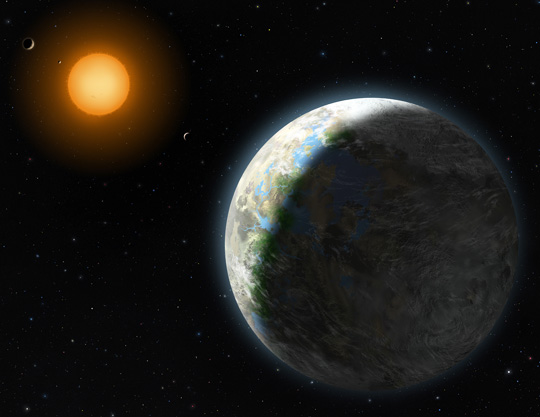 My friends, the revolution has begun.

 Today was an awesome day, which is weird considering everything that happened. Woke up at 4:45 am to catch an early morning flight back to Utah, took public transport back to Provo, and ran around on errands until attending the midnight Way of Kings signing at the BYU Bookstore.