Another overseas adventure?

About a year ago, I blogged about how I need to get out of Provo before I went stir-crazy. Well, it’s been a year, and I haven’t gone anywhere yet. My love/hate relationship with Provo has mellowed out a bit–I’m not as anxious to get out as I used to be–but still, it would be good to change things up and go on another adventure.

This time, I’m thinking quite seriously about going to the Czech Republic. My sister is working to become a certified genealogist, and she keeps a fairly intensive blog on Czech family history research. If I were to go over there, I’m sure she would have all sorts of fun places for me to check out–places where our ancestors used to live. She’s already contacted a fifth cousin of ours, descended from the side of the family that didn’t emigrate, and she has a lot of other contacts over there as well. It would be an amazing life experience to live and travel over there.

Until now, every time I’ve gone overseas I’ve been a part of some sort of program. Even in Georgia, where I didn’t speak the language, didn’t know anyone, and barely knew anything about the country at all, the TLG program still had a fair amount of support infrastructure for us to fall back on whenever we ran up against a wall. I suppose I could find a similar sort of program in the Czech Republic, but that’s not what I want to do. This time, if I do go over, I want to go over on my own.

I’m still kind of on the fence about this, because it is kind of a big leap from where I am right now. But I’m earning enough with my book royalties that I could probably support myself on that income alone. From what I’ve heard, living costs in Prague can run as low as 450-600 USD per month, though most expats spend more in the 800-1200 USD range. That’s certainly doable. If I don’t need to take a TEFL job to support myself, why should I? Better to spend that time writing and/or seeing the country.

Of course, without making any concrete plans, this is still just a crazy dream. So here’s what I would need to do to make it happen:

  • Save up for plane tickets and a reasonable cash reserve, at least 150% the cost of a ticket back to the states. It looks like tickets to and from JFK and Prague run about $1,500, so I’d probably have to save up at least $4,000 (not including what it would take to get to New York from Utah).
  • Look up the rules for getting a visa, housing contract, insurance, etc (my Slovakian friend tells me that health insurance in the Czech Republic is mandatory).
  • Connect with the expat community online and figure out what the support network would look like. This would include stuff like couchsurfers, Kate’s contacts, the local church community, etc.
  • Learn some basic Czech, starting with the alphabet.
  • If possible, figure out some sort of housing arrangement in advance. Better yet, find a travel buddy.

I think those are all the big ones. And honestly, they’re all fairly doable. The hardest one would be to save up the money, but if I can find a short-term job on top of my writing that pays fairly well, I could do it in a few months. Since I plan to attend LTUE and Westercon this year, I probably won’t go overseas until mid-July at the earliest.

So yeah, that’s what I’m thinking at this point. It’s definitely something to work toward, and I think it could be another awesome life changing adventure. What do you guys think? Is there anything glaringly obvious that I’m missing? Got any tips or advice? Please share–I’m definitely open to feedback and suggestions!

So what should I work on next?

Now that Star Wanderers: Deliverance (Part VIII) is published, I’m back in the position of trying to figure out what to write next.  Usually, I just do this on my own, but this time I thought I’d run it by my readers and see what you guys have to say.  Here are the options:

Heart of the Nebula — This is a direct sequel to Bringing Stella Home.  It follows James, Lars, Stella, and several new characters as they struggle to keep the Colony from falling apart following the collapse of the New Gaian Empire.  This one is mostly a space opera story, with lots of action and political intrigue.  It also explores the wolf/sheepdog analogy that Danica brought up in Bringing Stella Home, with Lars’s rebuttal.

Mercenary Savior — Another Gaia Nova novel, this one showing the origins of Danica Nova and her band of Tajji mercenaries.  I’ve got a lot of ideas for this one, though I’ve only written the prologue so far.  This is going to be a military sci-fi story, with lots of action, lots of violence, and (hopefully) a few heart-wrenching moments as well.  Danica, Roman, Mikhail, Artyom, and several of the other mercenaries will appear in this one.

Empress of the Free Stars — Yet another Gaia Nova novel, this one a direct sequel of Stars of Blood and Glory.  It brings back Princess Hikaru, now the Empress of Shinihon, and shows her struggle to ensure the safety and freedom of her people in the face of a Federation that is fast transforming into an autocratic, totalitarian empire.  Colonel Webb is at the heart of the political intrigue in this one, and the stakes are as high as they’ve ever been.

Sons of the Starfarers — This is the spinoff series I’m writing to follow up Star Wanderers.  It takes place in the same universe as the Gaia Nova novels, except a thousand years before, and will eventually show the origins of the Hameji and tie all of these books together.  This is the one I’m most excited to write, as it brings back a bunch of characters from Star Wanderers and puts them into some interesting situations.  Hopefully, it will have the same stuff that made Star Wanderers so great while adding a bit more action/adventure stuff into the mix.

Edenfall — This one is the sequel to Genesis Earth, and the second book in what will eventually become a trilogy.  Basically, about fifteen years after Michael and Terra settle down on Icaria, a military expedition arrives from Earth, shattering the idyllic life they’ve made for themselves.  They try to convince the military people that there is no alien threat, but before they can do that, the ghost ship comes back, throwing everything out of balance.  This story is mostly from the point of view of Estee, Michael and Terra’s daughter, whose whole world is changed when the other humans appear.

Lifewalker — I’ve mentioned this one only a couple of times on my blog, but everyone who’s read the first chapter tells me that they want more.  This one is a completely different project from anything else I’ve done.  It’s a post-apocalyptic tale told from the point of view of a man who lives out his natural life where everyone else is infected with a disease that kills them at age 25.  After the first chapter, the he starts down the ruins of I-15 with a bible, a bicycle, and a copy of Brandon Sanderson’s Mistborn, searching for the mythical city of light known by the forefathers as Lavegas.  Little does he know, that place is now populated by cannibals.

The Sword Bearer — An epic fantasy about an ancient brotherhood of sentient swords who pass down the knowledge and skills of each bearer down through the generations.  The brotherhood has been broken, and the few swords that haven’t been lost have driven their bearers insane to the point where they’re now amassing an army to conquer and enslave the whole world.  The only sword who hasn’t gone down that path is the one prophesied to be wielded in the final battle to defeat this great evil, but it hasn’t taken a bearer for almost a thousand years–that is, until a curious young tavern girl from the mountains accidentally stumbles upon it.

Those are pretty much all the major options.  I have a couple ideas for other books, but nothing that I’ve really started.  Even though I have my preferences, I could go almost any way depending on what you guys want to read.  So if there’s one or two that you really want me to work on next, feel free to let me know!

Trope Tuesday: Curiosity is a Crapshoot

curiosity
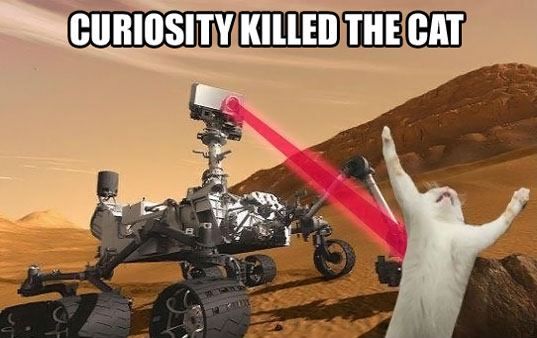
Is there life on Mars? NOT ANYMORE!

Is curiosity a bad thing?  Well, it depends how genre savvy you are.  It seemed to work out pretty well for Alice, but not quite so well for Pandora (or the rest of the ancient Greek world, for that matter).  Curious monkeys seem to come out all right, and their constantly curious counterparts also seem to do okay in the end, but anytime you run into schmuck bait you know that things aren’t going to turn out well.

The truth is, for just about every stock Aesop warning about the perils of being overly nosy, you can find another one exalting it as a virtue.  In fact, you could say that curiosity is a crapshoot.

But what is curiosity exactly?  The Merriam-Webster dictionary defines it as “desire to know,” and “interest leading to inquiry.” As you can imagine, there are situations where this could be good or bad.  Thus, what a story says about curiosity often changes depending on its genre.

For example, in most horror stories, curiosity and nosiness are usually bad, leading the protagonists to go places where they shouldn’t and uncover things that should never have been uncovered.  At the same time, a lack of curiosity can also be fatal … in fact, a lot of things can be fatal in a horror story.

In mythology and folklore, curiosity is often even worse.  From Pandora to Eve, Psyche to the proverbial cat, curiosity leads to Very Bad Things.  Perhaps this is because these kinds of stories are mostly tales of warning, passed on from generation to generation as a way to preserve our collective knowledge about the dangers of the world, rather than inspire us to go out and face them.

(As a side note, there are a few exceptions in the realm of folklore.  In the Bluebeard myth, curiosity killed off all of Bluebeard’s previous wives, but combined with cleverness, faith, and friendship, it saved the last one’s life.)

In fantasy, curiosity is often a mixed box bag.  For example, take the hobbits: most of them are perfectly content to live out their lives in the shire, but the few who are inquisitive enough to venture outside end up saving the world in a way that the elves, dwarves, and humans never could.  At the same time, it puts them through a great deal of pain, even after the world is saved–neither Bilbo nor Frodo are ever able to be content in the shire again.

Curiosity, in other words, is complicated.  It’s not just a quirk or a character flaw–it’s an underlying quality of the hero’s journey.  Without curiosity, either of the world around him or the internal struggles within, the hero would be content to live out an unremarkable life.  Certainly he wouldn’t have the capacity for the cleverness, guile, wisdom, and sensitivity that he needs in order to descend into the darkest dungeon, face his own nadir, and return with the elixir of life.  Curiosity may lead to sorrow, pain, or even death, but it also leads to adventure.

As a subgenre of fantasy, many of these issues carry over into the realm of science fiction.  And yet, as a genre unto itself, science fiction has a distinctly positive view of curiosity compared to other genres.  Science is nothing if not the primary process of human inquiry, where curiosity is not only a virtue but the virtue, one of the most important aspects of humanity.  Consider these words from Adam Steltzner, one of the leading engineers of the NASA Mars Curiosity mission:

Likewise, curiosity is a staple of science fiction.  In Star Trek, it’s the basis of the entire mission: “to explore strange new worlds, to seek out new life and new civilizations, to boldly go where no one has gone before.” In Doctor Who, it’s how the Doctor finds his companions.  In Babylon 5, it’s Delenn’s curiosity about the humans that ultimately saves all the alien races.  And in 2001: A Space Odyssey, it’s the gift from the black monolith that helps monkeys to turn bones into space stations (well, not literally, but you get the idea).

Curiosity isn’t a central theme in most of my books, but it is a major part of Genesis Earth.  If anything, that book is about the importance of balancing curiosity about our universe with curiosity about ourselves and what it means to be human.  In Star Wanderers, Noemi’s curiosity is a huge part of her story, helping her to turn around a horrible (not to mention awkward) situation.  In Desert Stars, curiosity is complicated; it leads Jalil far away from home and puts a schism between him and the girl who loves him, but it also leads him to discover the truth about who he is, giving him the strength to return.

In general, I suppose it all comes down not only to genre, but to the underlying worldview of the author of the story.  Since I have a very positive and enthusiastic view of curiosity, it usually works out for the best in the stories that I write. Then again, perhaps that’s why I’m drawn to science fiction … how about you?

Do you like your chapters named or numbered?

There’s an interesting article linked on The Passive Voice blog about the importance of a table of contents, especially in ebooks.  The article is geared mostly for non-fiction, which is a whole different beast from novels and novellas, but the discussion on TPV got me thinking: for ebooks, is it better to name chapters or to merely number them?

In the comments section on TPV, Jamie makes an interesting point:

With e-books in particular I think there needs to be more care taken with the TOC. I can easily find my place with a print book even without a book mark, but with an e-reader, it’s possible to lose your place very easily, and “loc 4950″ is not going to be committed to my memory banks. I know what happens in the chapter titled “His Grace of Avon Takes Command of the Game,” but I’m not sure if that was chapter 16 or 15 “loc 1730″ or what. I won’t remember the number.

For organizational purposes for my own use I title my chapters, and I believe that readers will appreciate that habit, too, and will be more forgiving if they use the Look Inside feature and see those headers vs. if they just see “1, 2, 3.”

I try to make sure the titles are enticing and pique the curiosity of anyone who would see them in a TOC. They’re not spoilers, because unless you’ve made it to the end of the previous chapter, you’ll likely have no idea what the next chapter’s title is referring to (and if it is obvious, it simply increases the suspense/curiosity). The titles Makes Sense in Context (TM).

When I first learned how to make an ebook, the concept of a table of contents for a novel seemed pretty weird.  I was used to reading print books, which you can flip through much easier and find what you’re looking for just from the feel of the pages.  But with ebooks, obviously that’s much different.  A table of contents is more than just a list of chapters, it’s an important navigational tool that can’t be overlooked.

But if chapter hyperlinks are perhaps the only way to flip through the middle of the book, does that mean that merely numbering the chapters is insufficient?  I have to admit, the concept of naming each chapter seems a bit old-fashioned, but the technology has changed and as writers, we need to change with it.

In the context of a hyperlinked table of contents, numbers are practically meaningless.  They can even be quite ugly, if there’s a huge list of them that sprawls beyond the screen.  Chapter titles can sprawl even more, but they at least provide some idea of what lies on the other side of the link.

I’ve done it both ways.  For example, the table of contents for Genesis Earth looks like this:

Table of Contents

Copyright Page
Table of Contents

The Wormhole | The Mission | Terra | Cryothaw | The Ghost Ship | Trust and Deception | Betrayal and Discovery | Arrival | First Contact | Call and Answer | Earth | Rescue | Emotion and Reason | Planetfall | The Natives | Origin and Destiny | A New Genesis | Epilogue

Author’s Note | Acknowledgments

Most of the chapter titles are pretty mysterious, but I was kind of going for that.  And in any case, is it possible to make them completely unambiguous without spoiling key parts of the story?  It seems like the art of naming chapters is much subtler and more complex than you’d think at a first glance.

In contrast, the table of contents for Desert Stars looks like this:

Table of Contents

Copyright Page
Table of Contents

Prologue
Book I: Dome and Desert
1 | 2 | 3 | 4 | 5 | 6 | 7 | 8 | 9 | 10
Book II: Sand and Stars

11 | 12 | 13 | 14 | 15 | 16 | 17 | 18 | 19 | 20 | 21 | 22

Author’s Note | Acknowledgments

I kept the numbers for the chapters, but divided the novel into two sections or “books” and listed the numbered chapters as minimally as possible, to save space.  I suppose it looks all right, but as a guide to navigating the book, I’m not sure how useful it is–not to mention how hard it can be to click on a hyperlink that’s only one character long, especially on a touchscreen.

For Journey to Jordan, there were so many entries that I didn’t bother listing them all in the table of contents.  Instead, I divided each part into sections based on location, then listed the locations in the table of contents and the posts/chapters at the head of each section, complete with hyperlinks.

As a side note, it’s actually pretty amazing how internal hyperlinks can change the experience of the book.  For one thing, it opens up all sorts of possibilities for alternate endings and “Choose Your Own Adventure” type stories.  Is it possible to list a chapter in the <manifest> without including it in the <spine>?  I don’t think it is (at least, not in a well-formatted ebook), but if you could find a way to do that, you could add all sorts of hidden content and Easter eggs …

In any case, for my shorter Star Wanderers novellas, I think I actually prefer numbered chapters.  The stories are short enough that the numbered subdivisions still have meaning, and the chapter lists aren’t long enough to look too cluttered.  Besides, I’ve already started the series in this particular format so I think it will be better to keep it this way.

But for future books and future series … I don’t know.  What do you think?  Are ebook chapters better off named or numbered?

I need to get out of Provo, but where to live next?

ProvoLogo_FullColor
… yeah, no thanks.  Not yet, anyway.

It’s been almost six months since I moved back out to Provo, and I don’t think I’ll be staying here much longer.  It’s a great place if you’re a Mormon college student in your early twenties, or married with kids and looking for a nice, quiet place to settle down, but for everything in between it’s just not the greatest.

So where am I going to go next?  Honestly, I don’t have a clue.  Probably somewhere in the United States, but I’m not ruling out the possibility of another overseas adventure.  In fact, that’s exactly the sort of thing that I’d love.

But I’ve got to be honest here: I came back to the States mostly to find a girl.  I don’t know about getting married or not–that’s like step twenty-five, while I’m still on step three–but I do know that next time I go overseas, I want to go with someone, preferably someone special.  That’s what I learned while I was living in the Caucasus mountains, that an adventure is like ten times better when you have someone to share it with.

I may be opening up a little bit in this post, and I don’t want to give the wrong impression to the people I know who read it.  It’s not that I’m uninterested in any of my female friends here, but so far, nothing has really worked out.  Some of that is because I’m not as interested as I thought I was, but the reverse is probably just as true.  Nothing wrong with that, and I still value all of my friendships.  And hey, you never know–things can always change.  But when you start to get sick of a place, that’s probably a good time to move on.

So what am I looking for?  Ideally, a place with a lot of Mormons in their late twenties / early thirties, most of them young professionals or recent graduates.  A place with a decent art scene, or that sort of vibe to it, where I can meet up with other artists / entrepreneurs like myself and be a part of that community.  I really want to live in a place with mountains–my sister is moving to a town just out of Des Moines, and omigosh just from looking it up on Google Earth I know I could never live there.  Barring that, I really love deserts, so I wouldn’t mind living in Arizona or New Mexico.

I’ve heard good things about Salt Lake City, so that’s pretty high on the list.  I’ve got a couple of friends up that way, and lots of family as well.  Other than that, I wonder if Saint George or Cedar City might be good places for a guy in my situation to live.  I really love Utah, so if I could find another place out here besides Provo, that would be ideal.  Moab, perhaps?  Seems like a tourist town more than anything.  Though if I could score a job at a hostel out there, that could be a lot of fun.

Texas is also fairly high on the list.  Beautiful place, Texas.  I’ve always loved driving through that country.  Lots of Mormons too, apparently, though where I’d want to go exactly, I have no idea.

One place I absolutely do not want to go is Washington DC.  I HATE that place, especially after my internship experience.  It’s a great place to visit, and the museums and cultural stuff are amazing, but I never want to live there again.

Other than that … I’ve got a couple of friends who suggested Portland, but I dunno.

And honestly, a not insignificant part of me wants to go somewhere crazy, like Mongolia or the Czech Republic, or even back to Georgia.  I’m making enough on my book sales right now that I could probably get a small apartment in Tbilisi and support myself entirely off of my ebook royalties alone.  Better yet, I could arrange a long-term boarding situation back in the village, or out in Kutaisi, or maybe even up in Svaneti … but that’s probably just me missing the place.  I miss it almost every day.

All I know for sure is that I absolutely cannot stay here in Provo much longer.  If I do, I’ll either go crazy or get old and fat and complacent, and I’m not sure which is worse.  I’ll stay here through the summer, just to save up some money, but when September comes around, I am getting out of here.

New book teaser — what do you guys think?

SW-VI Benefactor (thumb)I’m getting ready to publish Star Wanderers: Dreamweaver over the weekend, but first I need to finalize the teaser / book description for Benefactor so that I can include it in the back.  Here’s what I’ve got so far:

IN A COLD AND LONELY UNIVERSE, A SIMPLE ACT OF GRACE CAN RESONATE ACROSS WORLDS.

Jakob is entrapped in a life he never made for himself. A one-time starfarer, now he struggles to provide for his family of starbound refugees. With the recent Imperial takeover of Oriana Station and the worsening economic situation, it’s only a matter of time before they’re forced to move on—again.

To make matters worse, his wife’s resentment has been growing ever since he sent their two sons away to seek their fortunes across the stars. She claims that he stole them from her, when all he wanted was to give them a chance at a better life. Without her support, it’s not clear how long the family can hold together.

When a young man and woman with an unusual story show up from his wife’s home world, he agrees to take them in, if for no other reason than that they remind of his sons. They soon become part of the family, though this adds even more to the burden he can barely carry on his own.

An outworlder is nothing if not fiercely independent, and Jakob is no exception. He’ll sacrifice everything before he asks for help—even if the only other way out lies through an open airlock.

What do you think?  Does it sound interesting?  What works, and what do you think needs to be cut?

Also, a quick update on the situation with Star Wanderers and Smashwords.  I’ve discovered that the updating problems aren’t just restricted to iTunes, but all of the sites that I distribute to through Smashwords (Sony, Diesel, and Barnes & Noble (for Outworlder)).  We haven’t been able to get the books fixed, so I’ve decided to pull them all and republish.

What this means is that the first four Star Wanderers novellas will be temporarily unavailable from these sites, probably for a week or two.  If you got your copy from Smashwords, you should still be able to access it there–the books have been updating just fine on Smashwords, it’s only with the other retailers that I’ve been having problems.  For Dreamweaver, there shouldn’t be any problems though (I hope).

Thanks for your patience while I get this mess sorted out!

Alright, hit me up…

I’m just about ready to release Star Wanderers: Part II–the story’s been revised and proofread, the cover art is finished, the formatting is ready to go–all that’s left is figuring out the book blurb.  Which is where I could use your help!

Here’s what I’ve got so far.  What do you think?

IS FIDELITY WORTH THE PRICE OF FREEDOM? CAN LOVE TAKE ROOT BEYOND THE STARS?

Oriana Station: a bustling frontier settlement between the Outworlds and the Coreward Stars. A popular port-of-call for free traders and independent starfarers alike—and the latest target in the aggressively expansionist plans of the Gaian Empire.

Life was simple for Jeremiah and Noemi before they arrived. Though neither of them speak the same language, they’ve reached an understanding of each other that goes beyond words. But when the colonial authorities make them into second-class citizens of a fractured empire, even that might not be enough.

Their newfound friends in the immigrant community can only do so much. With Noemi and her people depending on him, Jeremiah must find a way back to the Outworlds—before they lose everything that they came for.

I’m going with the family on vacation at the end of the week, but if all goes well, I should have it released before then. Newsletter subscribers will be able to download it for free on Smashwords for the first two weeks, and I’ll make Part I available for free while pricing Part II at $2.99.  When Part III comes out, I’ll drop the price to $.99.

In other news, I typeset and formatted Bringing Stella Home for CreateSpace this morning, and ordered the proof just a few hours ago.  With luck, it should come in the mail by the end of the week.  This is the third book I’m releasing in print, and the last one for the rest of this year.  I’ll be sure to post pics and links for where to get it once it’s ready.

In still other news, the Mars landing was totally worth staying up for last night.  A truly awesome moment for the whole human race.  And yes, I’ve been using this excuse all day.

Hey, at least I got the blurb done! :p

Managing time and mental space in a foreign country

Some of you asked for a writing update, so I figure I might as well do a quick post on my current projects and where they are.  I’ve also been experimenting with my daily schedule a bit, so it would probably be good to blog about that as well.

Right now, the main project taking up all of my attention is the 3.0 draft of Heart of the Nebula.  It’s a direct sequel to Bringing Stella Home, and continues the story from James McCoy’s point of view, five years later.  I’m making a lot of changes, toning down the romantic subplot and emphasizing the more interesting social and ethical issues.  When I’m through, I think it will be completely different from the first couple of drafts, but in a way that’s truer to the spirit of the first book.

I’ve only been managing about 500 to 1,500 words per day, though, which is abysmally low compared to my usual word count.  Part of that is because I’m throwing out entire sections and drafting new ones from scratch, but the more significant part is that I don’t have as much mental space for writing as I did back in the States.

Basically, moving to a foreign country and starting a new career has taken a lot more out of me than I thought it would.  I teach 18 lessons per week, some with as many as 30 or 35 kids, across grades 1 through 12.  Culturally, everything is completely different too.  So far, the shock hasn’t been too bad–I really love it out here in Georgia–but it’s made the writing a little bit more difficult than I’d expected.

I have a lot of free time, though, so that’s not a problem: the problem is clearing my mind and keeping the creative juices fresh.  Here’s how I’m going to do it:

  1. Limit internet time.  As tempting as it is to turn to the familiarity of the internet, it’s a huge time-suck and doesn’t really do anything for the culture shock.  A much better thing for that would be to spend more time reading.  From now on, I’m going to limit myself to one internet session per day, no longer than 2 hours (more if there’s something I actually need to do).
  2. Get out more.  I get cabin fever very easily, and it’s only gotten worse now that I’m in a foreign culture.  Fortunately, there are tons of places to explore, and in my local neighborhood I’m kind of a celebrity (hey look, it’s the American!  Let’s chase him and shout ‘hello’!).  The prime time for this is the late afternoon, when everyone’s out and things are still open.  If I check the internet right after school and get out immediately after, I think that will help me better to focus.
  3. Get up early to write in the morning.  I tried this last week, and it was a great way to get focused and build more momentum.  Even if I only manage a couple hundred word, it gets me thinking about the story for the rest of the day, which makes it easier to pick up in the afternoon and evening.

So that’s the plan for now.  My goal is to finish Heart of the Nebula before the end of May, which is going to require a significant change of pace.  It should be pretty straightforward, though, and after this draft it shouldn’t need too many more revisions before it’s ready to publish.  If all goes well, I foresee a publishing date sometime in the fall or winter.

Do you have any other ideas for ways to manage creativity in a totally foreign culture?  If so, I’d love to hear it–that’s my biggest struggle right now.

Quick update and Star Wanderers cover previews

First off, I’m happy to say that Stars of Blood and Glory is coming along quite nicely.  I’m currently finishing up with the last couple of chapters, and should have the first draft done by the middle of next week.  Hopefully by then I’ll know if and when I’m starting my TEFL job overseas, but I’m sure I’ll have it finished before then.

This first draft is pretty rough, so I’m sure it’ll be a while before it’s up and ready for you to read.  For some reason, this draft is extremely short–I doubt it’ll be much longer than 80,000 words.  I don’t know if that means my writing has gotten tighter since Bringing Stella Home, or if I’ve unintentionally left too much out.  I’ll probably let it simmer for a few months, do a quick revision, and send it out to some first readers, just like I’ve done for Heart of the Nebula.

In the meantime, I’m getting really excited to pick up work again on Star Wanderers. I’ve been workshopping part II in Kindal’s writing group, just to get some reactions.  I’ll probably revise that part while I’m writing parts III and IV, getting it ready for publication after I hear back from Writers of the Future according to the serial model I outlined previously.

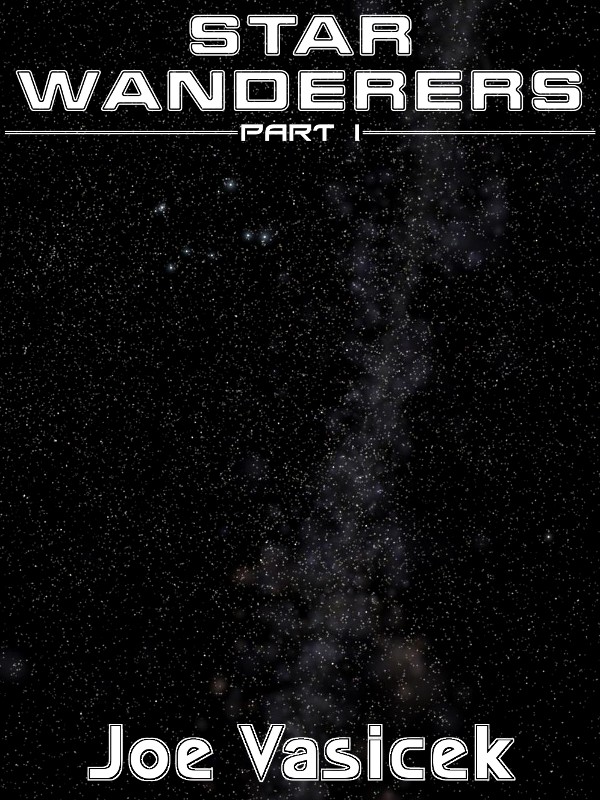
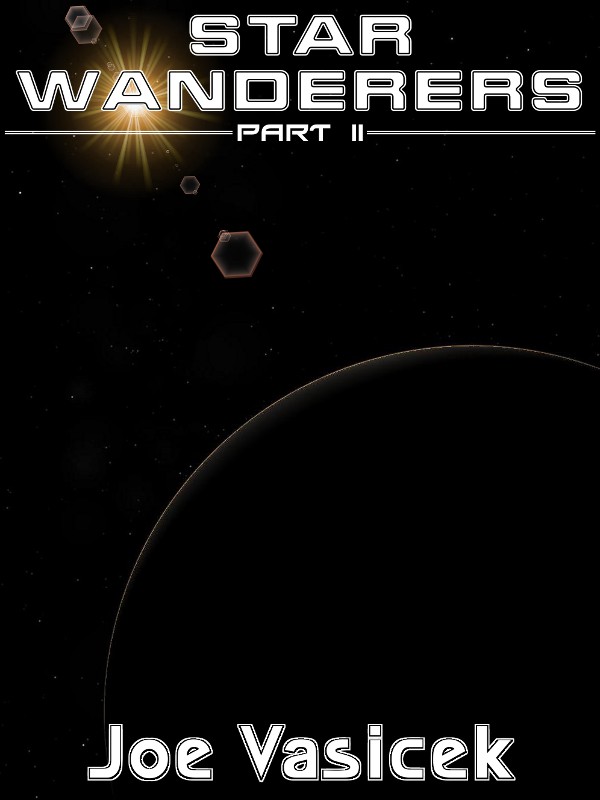
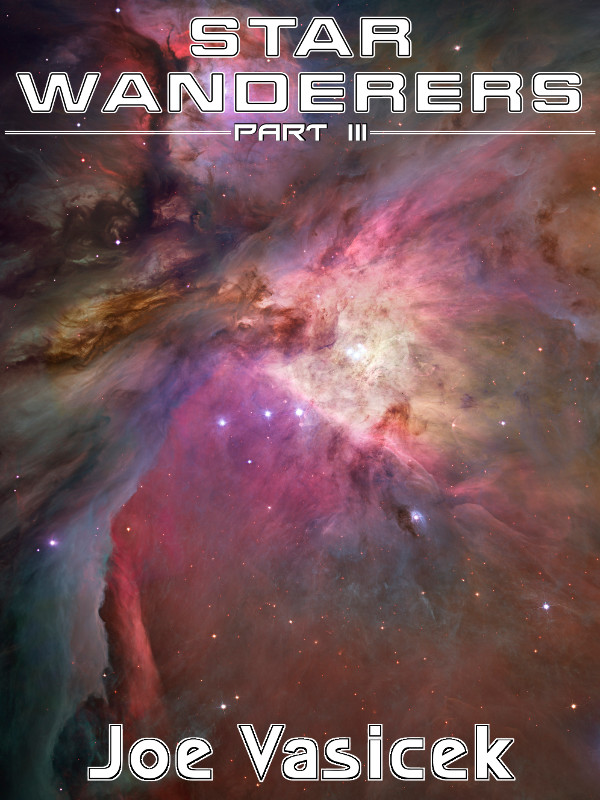
I’m so excited, in fact, that I went ahead and made some mock-ups for the cover art!

Pretty cool, huh?  These make me sooo happy. 🙂

I’m not quite sure if this is the right design, though.  Star Wanderers is very much a science fiction romance, and while these covers definitely scream “science fiction!” they don’t really seem to say “romance!”

My original idea was to use these as backgrounds and commission an artist to do some character portraits from the waist up, using one portrait each for the foreground.  But then again, that might make the covers a bit too complicated.  I can always redo the first one to get rid of the planet, keeping the galaxy–the other ones probably wouldn’t be so bad with a character in the middle.  But then again…

I don’t know.  What do you guys think?  If you saw one of these covers while browsing for ebooks, what kind of impression would it give you, and would you be interested in checking it out?

(By the way, I made the covers with Celestia.  Coolest.  Space simulation.  Ever.)

EDIT: I decided to redo the first cover; the planet wasn’t quite doing it for me.  I’m not sure if that means I should redo the cover for the third part, since that one is a heck of a lot more colorful than the others…hmm.  We’ll have to see.

Trope Tuesday: Walking the Earth

Oh there’s sober men in plenty
And drunkards barely twenty
There are men of over ninety
That have never yet kissed a girl.
But give me a wandering rover
From Orkney down to Dover
We will roam the country over
And together we’ll face the world.

When a character decides to walk the Earth, they leave behind friends, family, and earthly possessions to wander from town to town in search of adventure. In real life, we think of these people as bums, but in fiction these characters are often the protagonists–or if not, then some sort of wise figure or noble adversary.

There are two character archetypes that tend to fill this trope: the drifter (or “the stranger” as Joseph Campbell called him) and the knight errant. For the knight errant, walking the Earth is simply part of the job description: always in search of evil to slay and damsels to rescue, he cannot stay in one place for long. It’s the same with the drifter, though he might not have the same skill set or code of honor.

As you can imagine, this trope tends to be most prevalent in Westerns, with the knight errant transformed into a gunslinger and the drifter wandering the wide frontier. American culture has definitely embraced this trope; what else did you expect from the nation that invented cars, highways, and the road trip? However, it’s also quite prevalent in East Asia as well, with the ronin and other wuxia archetypes.

Of course, this trope is only possible in a society that has a long tradition of sacred hospitality; otherwise, the wandering hero will almost certainly starve. That’s one way to spot stories where this trope is done poorly: if the wanderer has no visible means of support, yet appears clean and well-fed, the author hasn’t connected the dots. Also, characters who walk the earth are almost always male, since women who travel alone are more likely to get raped or assaulted.

One of my favorite examples of this is Van Hoenheim from Full Metal Alchemist. <SPOILER: highlight to read>After he unwittingly helps the first humunculous to sacrifice the population of Xerxes to make two giant philosopher’s stones, Hoenheim sets off to wallk the Earth as an immortal being, his sorrow too great to allow him to settle down. However, while the humunculous uses his stone to acquire even greater power, Hoenheim becomes familiar with every damned soul trapped in his and enlists their help. In the final battle, we learn that Hoenheim has used his centuries of walking the Earth to bury the damned souls in such a way to counter the humunculous’s transmutation circle, thus saving the people of Amnestria.</SPOILER>

There’s a dark side to this trope, however: the flying dutchman, cursed to wander the earth forever. By definition, every adventure must come to an end; when it doesn’t, it becomes instead a sentence of exile. Perhaps this is why characters who walk the Earth in a post-apocalyptic setting (like the wandering Jew in A Canticle for Leibowitz) tend to lean more towards this: after the world ends, there is no going home.

Which makes me wonder: in order for this trope to be positive, is it necessary for the main character to have the option of settling down whenever he wants to? Certainly there are those who choose a life of eternal adventure, but that implies that they have a choice. Even if they would have chosen not to settle, when that option is taken from them does that always make the story darker and less hopeful?

Either way, this trope intrigues me. Expect to see it in my own work soon.

Lyrics from “The Ramblin Rover” by Silly Wizard.