Financialization is what happens when the people-in-charge “create” colossal sums of “money” out of nothing — by issuing loans, a.k.a. debt — and then cream off stupendous profits from the asset bubbles, interest rate arbitrages, and other opportunities for swindling that the artificial wealth presents. It was a kind of magic trick that produced monuments of concentrated personal wealth for a few and left the rest of the population drowning in obligations from a stolen future. The future is now upon us.
…
Quite a bit of that wealth was extracted from asset-stripping the rest of America where financialization was absent, kind of a national distress sale of the fly-over places and the people in them. That dynamic, of course, produced the phenomenon of President Donald Trump, the distilled essence of all the economic distress “out there” and the rage it entailed. The people of Ohio, Indiana, and Wisconsin were left holding a big bag of nothing and they certainly noticed what had been done to them, though they had no idea what to do about it, except maybe try to escape the moment-by-moment pain of their ruined lives with powerful drugs.
And then, a champion presented himself, and promised to bring back the dimly remembered wonder years of post-war well-being — even though the world had changed utterly — and the poor suckers fell for it. Not to mention the fact that his opponent — the avaricious Hillary, with her hundreds of millions in ill-gotten wealth — was a very avatar of the financialization that had turned their lives to shit. And then the woman called them “a basket of deplorables” for noticing what had happened to them.
…
The accumulated monstrous debts of persons, corporations, and sovereign societies, will be suddenly, shockingly, absolutely, and self-evidently unpayable, and the securities represented by them will be sucked into the kind of vortices of time/space depicted in movies about mummies and astronauts. And all of a sudden the avatars of that wealth will see their lives turn to shit just like moiling, Budweiser-gulping, oxycontin-addled deplorables in the flat, boring, parking lot wastelands of our ruined drive-in Utopia saw their lives rendered into a brown-and-yellow slurry draining clockwise down the toilet of history.
I especially got a kick out of that last part.
Seriously, though, this guy hits the nail squarely on the head. We’re headed toward a massive economic reset, which is going to transform the world as we know it. I was in high school when the 9/11 terrorist attacks happened, and the Great Recession had a much bigger impact on my life. When the Greater Recession hits, it’s going to be a lot worse.
That said, I disagree that the only thing we can do is to sit back and watch the world burn. Every problem is also an opportunity. The bigger the disaster, the more opportunities that open up after it.
Without a doubt, though, now is the time to prepare.
How did Trump become the leader of the most powerful nation on Earth?
A lot of people are asking that question, while a lot of other people already know (hint: it wasn’t the Russians). But I want to get beyond the circus that is Washington DC, and answer that question by asking another:
Can politics solve our nation’s greatest problems?
I think there is a dawning realization among Americans that it doesn’t really matter who lives on 1600 Pennsylvania Avenue. Republican or Democrat, the outcome is pretty much the same.
Never at any point in living memory have we been so politically divided, but the party distinctions have become increasingly meaningless. Trump campaigned on providing universal healthcare. Clinton campaigned on escalating our military involvement in Syria. Which one was the Republican, and which one was the Democrat?
I am convinced that the grand key to understanding United States history in the 20th century—and by extension, current events in the 21st—is a deep knowledge of monetary policy and the financial system.
What is that system?
It is a system of debt. Pure and simple. We have turned our debt into money, and made every other form of money illegal. And the rest of the world has followed us gleefully off the cliff.
So if Washington is bankrupt, why haven’t they declared bankruptcy? Because they can just keep printing money through the Federal Reserve.
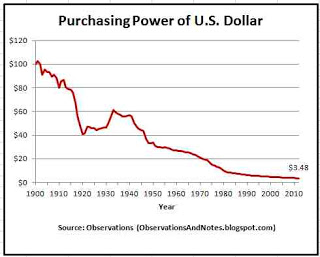
Because of this, the US dollar has lost about 97% of its value since the Federal Reserve system was established in 1913. A time traveler from the new Wonder Woman movie couldn’t buy $5 worth of stuff with $100 of our dollars today. And to keep up this Ponzi scheme we call “money,” Washington has gone nearly $20 trillion in debt.
How much longer can we keep that up?
If we could grow our economy fast enough, and never stop growing, we could keep up the Ponzi scheme for a very long time. But growth is no longer a solution, because the debt is bigger than the economy. The debt is the reason we can’t grow.
If we could innovate fast enough, we could lower the cost of living so much that the poor don’t realize that they’re poor. To some extent, we’ve already done that. But the effects are too uneven: startphones and computers are super cheap, but houses and health care are practically unaffordable.
Which brings us to serfdom.
Let’s go back in time a couple thousand years. Before the days of the empire, the Roman dream was that every family would have their own plot of land, making them independently wealthy, and the head of every family would take up arms in defense of his country whenever called upon by the state. This was not all that different from the Jeffersonian ideal of the yeoman farmer.
Then the Punic wars happened, which, for the Mediterranean world, was basically the ancient WWI and WWII. As Rome became a major world power, the military-industrial complex made a few select elites fabulously wealthy, who kept the masses pacified with welfare handouts.
But the endless cycle of foreign wars came at a heavy cost. Decades of budget deficits and an unsustainable national debt forced the Romans to debase their currency, which completely collapsed. Trade halted, the middle class lost everything, and the 1% became fantastically wealthy, buying up all the real estate and forcing everyone else out. The Roman dream was dead, replaced by a form of bondage called serfdom.
Serfdom came in a number of different flavors:
Slaves, who had always existed in the Roman world and continued for some time in the Medieval. Landlords got tax benefits for holding slaves.
Villeins, who were bound to the land and worked for the landlords. In exchange, they enjoyed protection and tax relief. Theoretically.
Coloni, or sharecroppers, who leased land in exchange for labor and a portion of their harvest. They were eventually taxed out of existence.
Freemen, who technically weren’t serfs, but were only a raid or a bad harvest away from becoming one. They were basically renters.
The corvée was a tax, paid in labor, that non-landowners owed by law. Basically, for every XX days out of the year, you worked for the state. It continued even after the abolition of serfdom, until the revolutions of 1848. My Czech ancestors paid the corvée, which is probably one of the reasons they and their children emmigrated to the United States.
But wait—we pay the corvée too! It’s called the federal income tax: for XX days out of the year, you work for the state. The taxes are even higher if you’re self-employed or a small business owner.
Except… not everyone pays the income tax. In fact, nearly half of Americans pay no income tax. Why? Because the politicans know that they can use the welfare system to buy votes. If you’re on welfare, who are you going to vote for: the guy who plans to cut your handouts, or the guy who says that the wealthy should pay their “fair share”?
And sitting at the top of it all are the central bankers.
The medieval serfs were bound to the land and worked for the landlords. In contrast, modern debt-serfs are bound to their debt—national debt, student loan debt, mortgages, consumer debt—and work for the banks.
So I ask again: can politics solve this problem? Can we find a political solution to our national debt?
Unfortunately, there is only one political solution: default on the debt. If we default on entitlements like social security, there would be chaos, riots, and anarchy… and we still wouldn’t pay down hardly any of the debt. If we defaulted on our treasury bonds, it would send a ripple of financial panics across the world, destabilizing the flashpoints in Europe and Asia before returning to our shores. Stocks, mutual funds, and pensions would all be wiped out. Almost the entire savings of the Baby Boomer generation, gone.
But there is another option, though it’s hardly a “solution”: kick the can a little further down the road. Print the money, devalue the debt, and inflate the currency to oblivion.
This is the path we’ve been on since 1913. This is the reason why our dollars buy a little less each year. And this is the reason why we, as a nation, are backsliding into serfdom.
We’ve seen this happen before. Rome fell because of it. Europe came under the yoke of serfdom as a result of it. Our ancestors fled to this country to escape it. And now, we are repeating it.
This isn’t a political problem: it’s a math problem. The numbers just do not add up. The next financial crisis could very well be the “extinction level event” that puts the final nail in the coffin of the US dollar, throws the world into a global war, and sends the United States into its greatest existential crisis since the Civil War. The Republicans don’t have the solution, and neither do the Democrats, because the problem is not political.
This is what the end of politics in America looks like. We’re watching it happen in real-time. Our politicians have become the clowns in the bread-and-circuses routine. Meanwhile, the central bankers are shackling us in chains with every dollar that passes through their hands.
It could have been much worse. There could be more than a dozen dead congressmen right now. We could be in a national crisis as severe as 9/11, or more.
This was a premeditated and carefully planned act of domestic terrorism. It is clear that the attacker was politically motivated. Millions of Americans share his extreme views. Thousands, perhaps even hundreds of thousands, believe that his actions were justified.
It is only by the grace of God that the attack was thwarted. As Congressman Loudermilk said, “God was there.”
I believe in a God who is intimately concerned with the details of our individual lives. I believe that His hand guides the events that shape us, and that He takes a particular interest in the course of the United States.
He has given us our individual agency, the freedom to choose between good and evil. That is a gift that He will never take away. No matter how violent we are toward one another, no matter how much anger and hatred fills our hearts, He will not violate our agency nor revoke that Liberty wherewith He has made us free, but will leave us to our devices until we return on our knees to Him.
This attack was a warning. We would do well to heed it.
Several months ago, I came to the conclusion that the United States is between three and fifteen years away from an existential crisis as great as the Civil War. Will this crisis turn into a second civil war? I believe there’s a significant chance that it will. Certainly we are on that path right now.
Wake up, America! You talk of wars in far off countries, but you know not the hearts of men in your own land. Even now, the voices of evil speak louder in your ears than that which will shake the Earth. Treasure up wisdom, and remember: if you are prepared, you shall not fear.
I am convinced that the grand key to understanding United States history in the 20th century—and by extension, current events in the 21st—is a deep knowledge of monetary policy and the financial system.
In 1913, two things happened: Congress established the Federal Reserve, and the Constitution was amended to allow for an income tax. This established a new monetary system in direct opposition to the gold standard, which in turn had replaced the bi-metallic standard established by the Constitution. In time, the Federal Reserve system would replace the gold standard altogether, becoming our sole form of legal tender.
Before the Federal Reserve system, every dollar represented a fixed weight of gold—a real, physical asset. Today, what does a dollar represent?
Dollars are created when Washington runs a deficit. The government spends more money than it takes in through taxes, so it has to borrow the difference. It does this by issuing treasury bonds, which it sells to the banks. The Federal Reserve then buys them, but with money that it creates by issuing a check against an account with nothing in it. In other words, the Fed creates money out of nothing to buy our national debt.
These dollars, called “base money,” then trickle down into the banking system as government contractors deposit their money. Through fractional reserve banking, this base money multiplies by ten-fold, or even a hundred-fold or more.
In other words, every dollar in existence represents a dollar’s worth of debt. Some of it is our national debt, owed by current and future generations of taxpayers. The rest of it is owed by private citizens in the form of mortgages, car loans, student loans, credit cards, etc.
But if every dollar represents a debt, where do you get the money to pay the interest?
You borrow it, of course. The only way to create more money is to create more debt. This is why the US dollar has lost 97% of its value since the creation of the Federal Reserve. This is why inflation has been a fact of life for the past century. This is why income inequality has widened so dramatically. And this is why our politics have become so insane.
I titled this post “The end of politics in America” because I’ve come to realize that the greatest problem facing this country is not political, and that no political solution can fix it. The problem is economic. It’s financial.
Our country has bought into a massive Ponzi scheme that we like to call “money.” We measure our wealth in a debt-based currency that steals prosperity from future generations and transfers wealth and power to an elite class of unelected bankers and bureaucrats. As with every Ponzi scheme, it only works so long as new capital enters the system. This happens in three ways: growth, innovation, and serfdom.
Growth is obvious. So long as our economy is growing, debt isn’t a problem because we’re creating more wealth to pay it off with. This is where debt actually makes sense: when it goes towards building future prosperity. An example of this that people often point to are the infrastructure projects of the 1950s.
Unfortunately, when your debt level reaches a certain point, it goes from stimulating growth to inhibiting it. Our debt-to-GDP ratio is now 104.17%. That means that if we took the sum total of all the goods, services, investments, tax revenue, deficit spending, and net exports, and we spent it ALL on paying off the debt, we still couldn’t pay it all off.
Think about that. Your entire paycheck. Warren Buffett’s paycheck, and all the millions he made last year on his investments too. All of the money spent on Amazon. All of our grocery bills. All of the ticket sales for every blockbuster movie, and the production costs as well.
Even with a whole year of that, you still couldn’t pay off the national debt.
Ever since the Great Recession, our GDP has never seen more than 3% annual growth. This, in spite of deficit spending that from 2009 to 2012 was higher than the deficit we ran in World War II! We have gone even deeper into debt than we did to defeat the Nazis, and all we got was this crappy economy.
We’re not going to grow our way out of this debt burden. The debt is the reason the economy can’t grow.
Innovation is, in some ways, another form of growth. Instead of making more mousetraps, you’re building better ones. This is why computers are cheaper now than they were in the 1980s. This is why we have no idea how people survived before mobile phones.
Twenty-five years ago, data storage cost nearly $10,000 per gigabyte. Email was a novelty. Mobile phones were revolutionary. Only the military had GPS. Satellite imagery was top secret spy stuff. “Facebook” was a printed directory of addresses and phone numbers for your local college or high school.
And yet, with all of these incredible innovations in just the past few decades, does it feel that your life has gotten any easier? Is it any easier to make ends meet? Have we entered the leisure society yet?
The truth is that we’re caught in a tug-of-war between inflation and innovation. In some areas, innovation is winning. This is why computers and smart phones are getting cheaper. In other areas, inflation is winning. This is why cars and housing are so much more expensive.
Can we innovate our way out of our national debt burden? Not without fundamentally changing our monetary system first. Until then, we’re just putting patches on a broken operating system. We can delay the inevitable collapse for a while, but not forever.
Which brings us to the third way our Ponzi money stays afloat: serfdom.
I have a lot more to say, but this post has gone long enough and already sucked up way too much writing time. I’ll post part 2 sometime next week, taking the risk that events in Washington will make me regret the post title. But I don’t think that they will. Hopefully you’ll soon see why.
Here’s a post I originally wrote in 2012. Given how most political commentary tends to lose relevance over time, it’s remarkable when something from the past is even more relevant now than when it was written.
Not that this post is overly political: more just a series of observations, including some red flags that, at the time, were still on the distant horizon. In recent months, those flags have drawn much closer.
Such a crazy world we live in. Stay safe, and thanks for reading.
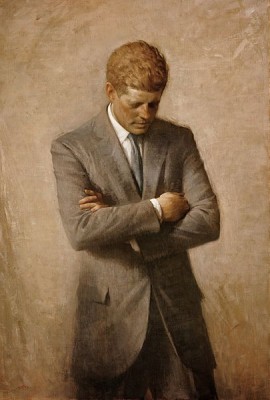
I just watched a fascinating interview with a 1960s White House intern who claimed to have an eighteen month affair with President John F. Kennedy. But the most interesting thing wasn’t the affair itself, but the way the President’s staff, the “fourth branch” of government (AKA the media), and the entire general public of 1960s America seemed more intent on keeping the secret than on facing the truth about JFK’s many affairs.
It seems that my parents’ generation had so much trust in their government that nobody would even raise the question—that to raise doubts about the integrity of the man who held the highest office in this country would itself be unconscionable. Rather than face the facts, the American public seemed unwilling to do anything that would shatter the gilded image of the man who led the free world. And that, quite frankly, is a mindset that I simply cannot understand.
In contrast, my own generation has very little trust in our government. We’ve been raised in an age of ambiguity, where the enemy doesn’t wear a uniform or pledge allegiance to a flag, but live quietly among us, until they strap a bomb to their bodies or turn a commercial airplane into a weapon of terror. Or at least, that’s the excuse our government gives us for an increasingly invasive security regime that infringes on our basic liberties, enables the military to hold us in detention indefinitely, and sends our soldiers overseas to fight increasingly senseless wars to “liberate” the people of oil-rich nations who don’t even want us there. As if that weren’t enough, the economic crash has taught us that all that stuff our parents taught us about equality and opportunity is really just a pack of lies—that the rich get bailouts while the rest of us foot the bill, and all that stuff about changing the world and being whatever you want to be… yeah. Lies, all of it.
My Dad had an interesting rebuttal to all this, though. He said that it wasn’t his generation that put the president on a pedestal—it was his generation that tore the pedestal down. During the 60s and 70s, the Vietnam era and the rise of the hippy movement, his generation fought back and made it acceptable for us to question the president, or to criticize the government, or to do all the things that we take for granted today. In fact, he said that we’re the ones who are backsliding into complacency, with our deafening echo chambers, our social media inanities, our reactive attachment to corporate brands and advertising, and our almost religious sense of entitlement.
I’m not totally convinced he’s right, but I do think there’s a fundamental gulf between these three generations. Our grandparents’ was the silent generation, where people were expected to keep to their own business and not rock the boat. Our parents’ generation was one of top-down media, where ABC, NBC, and CBS ruled the airwaves and told us all what to think, buy, and believe. Ours is a much more peer-to-peer generation, but I worry that we’re turning into a collection of mindless herds who are turning the culture wars into a messy riot where we abandon civil dialog and rational thinking for a much more destructive mob mentality that isn’t really building anything, but tearing it all down.
Sometimes, it gets so frustrating that it makes me yearn for the days of the frontier, when you could leave it all behind and reinvent yourself somewhere out in the west. That’s probably why I’m so drawn to science fiction, where space is the final frontier. There really are times when I wish I could go to the stars and escape to it all. Writing about that is the next best thing.
Maybe that’s why I feel so compelled to write Star Wanderers. It’s not all rosy, of course—space can be a cold, dark, and lonely place—but so can this world, when you’re lost and you don’t really know what you’re doing with your life.
I don’t know if I recognize anywhere as my own country anymore. Like Van Gogh, all I can say is the sight of the stars makes me dream.
Are you currently on active duty in the armed forces of one of the Allied nations, or a member of a partisan resistance movement within Nazi occupied territory?
Is the Nazi whom you want to punch currently engaged in combat operations against you?
If you answered “no” to any of these questions, then the answer is:
This is worse than the gang that pulled the Trump supporter out of his car and beat him in the middle of the street. It’s worse than the abusive mother who pretended to kick out her own son because he voted Trump in the mock elections at his elementary school.
This is barbarism. I don’t care what side of the aisle you fall on. It is barbarism, pure and simple. Civilization cannot exist unless people like this are exiled, executed, or locked behind bars.
Happily, all four of the alleged kidnappers and torturers have been arrested by the police, and the victim has been treated for his wounds and is now with family. So at the very least, this story ends happily.
I cannot express how furious this makes me. To keep this post from turning into a barely coherent rant, I’ll forbear.
It’s also very tempting to analyze this from a political angle: to see it as either vindicating or condemning certain political views. I could go for a long while about how we as a country got to this point, and who is to blame for it. Such a post would rally the people who agree with me politically and alienate the people who don’t.
But the truth is that this is so much larger than just politics. Fascism thrives when society enables the worst elements of human nature, which exist on both the Left and the Right. We can see those elements here. The problem is not the other side, whether that’s blacks, whites, Progressives, Conservatives, Liberals, Republicans, or whatever. The problem is the cycle itself, which feeds the worst in all of us.
We really need to move beyond this madness. But unless we come together, this nation will never heal. I hope we can all come together in condemning this for what it is: a heinous act of barbarism.
I know we disagree on a lot of things. We live in troubled times, and many of you are scared for the future. I can see it in your eyes. I can hear it in your voices.
There’s a very real temptation now to glory in victory, or to swear vengeance and foment revolution. But that only perpetuates a cycle of hatred. The people who opposed President Bush were not all unpatriotic. The people who opposed President Obama were not all racists.
Obamacare will collapse and be repealed within the year. We will not move to a single-payer healthcare system. There will be chaos in the short-term, but healthcare costs will go down for most people.
Black Lives Matter, which was always a front for the nationalization of the police, will drift into irrelevance.
Washington will stop backing the so-called “moderate” rebels in Syria, and the proxy war will come to an end. ISIS will be swiftly defeated.
President Trump will appoint a special investigator to the Clinton scandals, and HRC will ultimately face justice.
Scalia’s replacement on the Supreme Court will be another originalist.
The Bad:
Within three months, we will learn that the United States is officially in a recession. When President Trump takes office in January, we will learn that the economic numbers are far worse than the Obama administration led us to believe.
Not all of President Trump’s protectionist policies will be enacted, but enough of them will pass to depress global trade even more than it has already been depressed. This will be compared to the Smoot-Hawley Tariff Act, and Trump will be blamed for the subsequent collapse.
Unfortunately, the global collapse is unavoidable at this point. It is rooted in our flawed post-Nixon Bretton Woods monetary system, which is already coming apart. However, the Left will use the crisis as an opportunity to pin the blame on Trump, and the Republicans will pay a bitter price politically.
Riding the coattails of Trump’s movement, radical nationalist parties will sweep Europe in the 2017 and 2018 elections. This will lay the groundwork for war.
The Ugly:
Obama will try to pardon Hillary Clinton or otherwise grant her immunity, but will fail. She may attempt to flee the country.
The Clinton scandals will drag on for several years, ultimately surpassing Watergate in sheer breadth and scope. Democrats will circle the wagons for a while, but the insiders and moneyed interests will abandon her, and she will ultimately fall. This will do nothing to unite the country.
With Clinton gone, the civil war within the Republican Party will resume, and expand to include Independents and even some Democrats. There will be a massive political realignment, and individual fortunes will dramatically rise and fall. The current two-party system will pass through it intact, but the parties that emerge on the other end will have little resemblance to what they were only a decade ago.
In the next six months, DeutscheBank will fail and Germany will fall into a recession. Germany will bail them out, but this will sound the death knell for the European Union. There is a very good chance that the EU will collapse before the Brexit negotiations are complete.
The US economy will temporarily rebound as the rest of the world collapses faster than us, sending capital to our shores. However, neither Trump nor the Fed will correctly interpret the indicators, and will not prepare us for the coming storm.
Within 5-10 years, the dollar will collapse and the United States will default on its debt. This may or may not happen on President Trump’s watch, but he will fail to adequately prepare us for it. The middle class will be utterly gutted, paving the way for the resurgence of the radical Left in 2020 and 2024. They are already sharpening their swords for that day.
TL;DR
We have about 1-2 months of schadenfreude/mourning (depending on which side of the aisle you fall), followed by two years of breathtaking political upheaval. After falling briefly into a recession, the economy will temporarily rebound before SHTF in a way that makes the Great Recession look like a walk in the park.
In other words, the election just gave us four more years to buy guns, gold, and food storage. Never say I’m not an optimist.
 This attack was a warning.
 I just watched a fascinating interview with a 1960s White House intern who