The timelessness of novels

Every few months, an article about the “death of the novel” makes the rounds on the internet. This subject, the impending doom of one of literature’s most enduring forms, is a perennial favorite for bookish handwringers everywhere. If it isn’t ebooks that’s going to kill the novel, it’s millennials, the internet, our dwindling attention spans, or one of a hundred other things.

As a professional writer, though, I am awestruck by the timelessness of the novel. Think about it:

From its origin with Don Quixote in 1605, the modern novel has endured through social and political upheaval, global pandemics, the collapse of numerous societies, the most devastating war the world has ever seen, genocide and holocaust on an industrial scale, and rise and fall of half a dozen global empires. The world today would be unrecognizable to a person from Cervantes’ time, yet the novel has endured.

Movies didn’t kill the novel. Television didn’t kill the novel. Video games didn’t kill the novel. On the contrary—numerous franchises from Star Trek to Halo have a thriving line of novel tie-ins. When the ebook revolution was just getting started, people thought that so-called “enhanced novels” would dominate the marketplace. They failed to realize that all of the added audio-visual content was a distraction for most readers. Plain text is not a bug, it’s a feature.

It’s important here to make a distinction between novels and other literary forms, such as novellas and short stories. The other forms have endured as well, but not with anything approaching the popularity of the novel. Short stories are great for exploring an idea, but not so good at immersing the reader into another world. Novellas are great for telling an intimate story about two or three characters, but not nearly as good at conveying scope or intrigue.

There’s something about a novel-length story that captures the imagination in a way that other forms just can’t. Whether it’s the large cast of characters, the intricate world-building, or the interplay of numerous subplots, novels are more immersive, and therefore have the capacity to be much more satisfying. Little wonder, then, that the novel has endured.

I’ve seen this in my own books, too. Over the years, I’ve done relatively little to promote my full-length novels, and yet they still chug along with a steady month-to-month trickle of sales. When I do promote them, such as with this month’s free run of Genesis Earth, the results are astounding. My full-length novels also tend to receive much higher reviews.

In my second year of self-publishing, I got impatient and switched to novellas. While I don’t think that was a mistake, it did not provide the foundation for a lasting career. The Star Wanderers novellas did well for a couple of years, but I don’t think they’re going to endure in their current form.

I love writing novellas, but the books that I’m proudest of are all novels. Where novellas entice, novels satisfy. Where novellas tell an intimate story, novels possess greater depth. As such, I think it’s time for a change.

In the next couple of months, I’m going to prune back my catalog a bit. The Star Wanderers series will still all be up there, but I’m going to remove the individual novellas from sale, keeping the omnibus editions instead. This will pave the way for a sequel novel, Children of the Starry Sea, which I’ve already started work on.

I will probably remove most of my older short stories, and some of the derivative works. I don’t want to clutter my book pages with my earlier practice work, or anything that looks too obviously self-published.

I’m not sure what I’m going to do with Sons of the Starfarers just yet. I’ll definitely finish the series, but I’m not sure whether to do the other two omnibus editions or to just release each individual book in print. I’m toying with the idea of releasing the last four books in rapid succession, to build some momentum for the series, but it would take some time to write them, which means that Patriots in Retreat (Book VI) would be delayed for maybe a year.

I’m definitely going to turn Genesis Earth into a trilogy. No idea when the next book, Edenfall, is going to come out, but I’m going to do as thorough a job with that book as I did for Genesis Earth, which means it may take a while.

Novels take a lot longer for me to write than shorter books, but the end result is generally worth it. The trouble is that without a busy release schedule, sales tend to dwindle as you fall out of readers’ minds. I’ll try to make up for that by upping my marketing game and running more free and group promotions. In the meantime, anything you guys can do to spread the word would help!

I’ve got a couple of really awesome projects that should be coming out before the end of the year: The Sword Keeper, Gunslinger to the Stars, and a bunch of other stuff that’s really going to branch out my catalog. I’ve also got a couple of short stories that should be appearing in some new markets soon. Be sure to keep an eye out, and let me know what you think!
Thoughts after finishing The Last Full Measure by Jeff Shaara

WOW.

This was an amazing book. A highly memorable book. A book I will return to again and again in the future.

There comes a moment when reading a truly amazing book when you don’t think that it can possibly get any better. It’s a ten out of ten, easily five stars. And then … it gets even better.

The Last Full Measure by Jeff Shaara was one of those books. It’s the third book in a trilogy that technically starts with Gods and Generals, but really it started with the middle book, The Killer Angels, which was written by the author’s father, Michael Shaara.

The Killer Angels covers the events of the Battle of Gettysburg, and is definitely one of the best Civil War novels ever written. Years later, Jeff Shaara decided to write a prequel to his father’s book, showing all the events of the war leading up to Gettysburg. The Last Full Measure picks up immediately where The Killer Angels leaves off, and follows the war to its conclusion at Appomattox and the beginning of the Reconstruction.

This book is amazing. It really made me feel like I was there, from the bloody confusion at the Wilderness to the brutal hand-to-hand combat at Spotsylvania, from Grant’s terrible mistake at Cold Harbor to the long, hard siege of Petersburg. And then, at the very end, when Brigadier General Lawrence Chamberlain surveyed the monuments from Little Round Top just before the fiftieth reunion of Gettysburg, I realized that I actually have been there!

It was such a crazy moment, to read about something in a novel and then have it merge with my own memories of the place. It made the whole thing come alive in a way that was just fantastic.

There were a lot of other amazing moments in the book. When General Lee finally surrendered, it very nearly brought me to tears. And later, when Chamberlain accepted the arms of the Army of Northern Virginia and had his men salute the Confederate soldiers in a show of brotherhood and respect, it was amazingly touching.

Chamberlain’s storyline in general was fascinating throughout the whole trilogy. His father wanted him to be a soldier and his mother wanted him to be a priest, but he chose a career in academia instead at the insistence of his wife. But the academic lifestyle left something unfulfilled in him, and he didn’t realize it until the war broke out. He volunteered without telling anybody, not even his wife, and was soon swept up in some of the bloodiest battles in the war. At Fredericksburg, he spent the night on the bloody fields within sight of the enemy lines, shielded and kept warm by the bodies of his men.

Then, at Gettysburg, there was that was that glorious charge on Little Round Top that saved the Union flank, and quite possibly the entire battle. When he came home from that, he’d gained something that he’d never had before in his life: his father’s respect and approval. From Gettysburg, he rose to command a battalion, but at Petersburg the ineptitude of the Union command left him without support at a critical moment, and he was nearly killed. But he came back, taking command of a brigade upon his recovery, and turned the tide of battle at Five Forks and Appomattox.

By the time the war was over, not only had he won great honor and glory, he’d tested and proven himself, learned something about his inner character that he would always take with him, and that would always give him strength. The afterword starts with a quote from Lawrence Chamberlain that sums it all up amazingly well:

War is for the participants a test of character; it makes bad men worse and good men better.

I’m not going to lie: this book almost made me wish that I could go off to war like Chamberlain did. It’s not that Jeff Shaara glorified the Civil War war–just the opposite, in fact. The horrors and brutality and awful tragedy were all depicted in full measure, with the pain and death and suffering. It wasn’t glamorized at all. But there’s something deep, something primal about going through an experience like that–something that strips away all the luxuries, all the securities of modern life and forces you to find out who you really are, what you’re really made of. For all the horrors that those soldiers went through, I envy them for that part of their experience.

I feel like I’ve been channeling that recently in some of my short stories, like that orc story I wrote recently. I have an idea for another one that I’ll probably write while I’m out at Cape Cod. It’s also what drives me to heroic fantasy, to stuff like David Gemmell’s Drenai series. There’s something about taking up a sword, or an ax, or a musket and charging headlong into battle that rouses the spirit–that makes you feel truly alive.

I would love to write a book as good as this one; it’s one of those things that I dream of. I’m not sure if it’s possible to pull off a story as tremendous as this in short story or novella form, though. Maybe, but all of the stories that have had this powerful of an impact on me were all novels. The shortest one that I can remember was The High King by Lloyd Alexander, but that was the fifth book in a series (and it was still a novel). Short stories and novellas are great, but at some point I need to return to novels.

In any case, those are some of my thoughts after reading The Last Full Measure. There were a lot more, but this post is already starting to ramble so I’ll cut it short here. I’ll leave you with the opening credits from the movie Gods and Generals, a great piece that really captures what so many of the common soldiers were fighting for: home.

Take care and be well.

“It was too short.”

This, by far, is the number one criticism I seem to get in my negative book reviews. I never quite know what to think of it. On the one hand, a reader wouldn’t say something like that unless they thought it was good, since if they hated the book completely they would say something like “it was blessedly short” (and yes, I have gotten reviews like that). On the other hand, some of them really get worked up about it, to the point where I doubt they’ll ever read anything I write ever again.

Just to be clear, I’m not opposed to negative reviews, and I’m not responding to any of my reviews in particular. As a matter of principle, I believe that reviews are for readers and not for writers. I don’t generally respond to reader reviews except in very rare cases, and never to tell the reviewer that they’re wrong.

With that out of the way, what does “too short” actually mean? I can’t speak for all readers, but for me, when a book is too short it usually means that something in the story itself felt unsatisfying. In other words, something felt undeveloped, or rushed, or cut short without ever coming to a conclusion (or, in the case of cliffhangers, at least to a natural stopping point). In other words, “too short” isn’t a function of words or of pages, but of the story itself.

I’ve read short books that felt like they fit their length perfectly. A Short Stay in Hell comes immediately to mind. That book is a thin novella, barely more than a hundred pages in print, and yet it comes together so masterfully that I honestly don’t know what else could be added to make it longer. I would love to have more time to explore that particular world, but as it is, the story comes together perfectly within its own length.

That said, there are other books that I felt were too short even though they did fit their own length. That Leviathan Whom Thou Hast Made is an example of an award-winning book–clearly well written, clearly well constructed–that left me unsatisfied because it felt too short. Here, though, it was less a problem with the story itself and more just that I wanted more time to explore the alien culture of the swales. I would love to read a full-length novel set in the same universe, if for nothing else than for the fascinating world-building.

This makes me wonder: are there certain forms of fiction that tend to get more ire from readers just because of the constraints of the form? Do some readers hate novelettes just because they’re novelettes, or serials just because they’re serials? Judging from my own reviews, that seems to be the case. Even if I wrote the best novelette in the world, they would hate it because it’s not a novel.

So what am I supposed to do when readers tell me that my books are too short? Should I set a minimum word count and not publish anything unless it goes over that word count? I really don’t think so, because that sounds a lot like padding. Instead, the only solution that I can see is to focus on telling the best story and to not even worry about the length until it’s finished (and even then, only to know whether to label it a novel or a novella).

In the case of series, sometimes it can be difficult to tell whether to bring a certain thread to a conclusion or to leave it unresolved as part of the overall series arc. Certainly, each individual story needs to have an arc of its own, even if it ends on a cliffhanger. I’m still learning as I go, especially when it comes to writing series. But it’s certainly a lot of fun for me, and I hope it’s fun for you too as a reader.

In short, there’s not much I can do other than keep telling stories as best as I know how, and learn what I can from each story in order to tell better ones in the future. If “too short” means that something was unsatisfying, I’ll do my best to learn from it. But I’m not going to pad my novellas into novels just to hit a certain page count. The story itself should determine its own length.

Operation SB #4: The Curse of the Lifewalker

Title: The Curse of the Lifewalker
Genre: Post-Apocalyptic
Word Count: 4,340
Time: 1 day (sort of)

So after “L’enfer, c’est la solitude,” I was kind of in a short story mood for a couple of days and decided to bang out another one. This one is actually an adaptation from my novel Lifewalker, a post-apocalyptic tale where a global pandemic kills everyone older than 25. The story takes place several hundred years after the apocalypse, where a society of children and teenage adults has evolved to fill the void left over by the collapse. It’s told from the point of view of a “lifewalker,” someone who is naturally immune and lives out a normal lifespan. Normal to us, at least–not to anyone else in the new society.

It actually wasn’t that hard to adapt the first chapter to a short story. It very much has its own narrative structure, with a beginning, middle and end. Obviously, it finishes on a rather open-ended note, but I think I was able to turn it around and focus on the premise: “when all the world is afflicted by the plague, sometimes the greater curse is to be whole.” Touched up the first couple of pages quite a bit, setting the stage for a short story and not a full novel, then went over the rest of it with a light pass and wrote a summation paragraph at the end to wrap things up.

Obviously, it took me more than one day to write the bulk of the chapter–in fact, I think it’s been through a couple of drafts now. But the adaptation to short story form went fairly well, and I’m quite pleased with the result.

Since I’ve already got stories at the top three markets (Writers of the Future, Asimov’s, Analog) and Clarkesworld is on cool-down, I sent the story to the next magazine on the list, Fantasy & Science Fiction. They only take snail mail, though, so I had to print out the story, print out a cover letter, take it to the post office, buy a letter envelope, stamp, manila envelope, fill out the SASE, etc etc. It was like a blast from the 00s or something.

Anyway, as I was walking over to the post office, I had this AWESOME epiphany in which the end of the novel came to me. It’s SO MUCH BETTER than what I’d originally had in mind, and actually got me excited to work on Lifewalker again. I probably won’t pick it up until I’ve finished the first three Sons of the Starfarers books, but now I have an awesome, amazing ending to work toward.

All I have to do is write it. 😛

Operation SB #1: The Infiltrator

Title: The Infiltrator
Genre: Science Fiction
Word Count: 3,945
Time: 2 days

For my first story for Operation Short Blitz, I took a story idea that’s been bouncing around in my head for some time: that one of the best way for aliens to spy on us without being detected would be to send an infiltrator disguised as a homeless person.

I tried to do something with this idea before, but like many of my short story attempts, it turned into something longer.  For that one, I tried to tell the story from the point of view of a normal twenty-something single guy living in an apartment close to where the alien infiltrator had his base.  But then it started turning into a story about the guy, leaving the alien as the impact character, and the story became about something else.  I eventually lost interest and trunked it.

For this one, I kept it simple, telling it straight from the point of view of the alien.  I resisted the urge to put in extra subplots and instead focused on the core idea itself, making sure that everything in the story was directly connected to it.  That definitely helped to keep it short and focused.

I think it turned out pretty well.  It was hard not to self-edit as I wrote it, which was part of the reason it took two days to write instead of one.  I started it on Saturday, tried to finish it but went for a two-hour midnight walk instead.  Picked it up on Monday and finished it up then.

So now, after doing a quick proofread to fix typos and grammer, I’m going to put it on submission, sending it to Writers of the Future first and working my way down.  I don’t expect it to place, but maybe it will get honorable mention, which would be cool.  And who knows?  Nothing ventured, nothing gained.

Why I love writing novellas

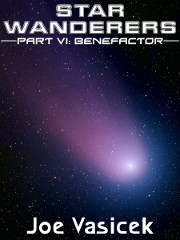
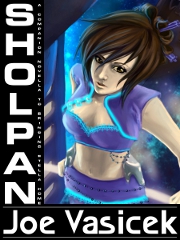
Star Wanderers I (thumb)Star Wanderers II (thumb)Star Wanderers III (thumb)Star Wanderers IV (thumb)SW-V Dreamweaver (thumb)SW-VI Benefactor (thumb)thumb (Sholpan)

For the first half of this year, almost every project I’ve worked on (with the exception of an unfinished short novel) has been a novella.  It’s not a form I was familiar with when I first started writing, but I’ve come to enjoy it immensely, and look forward to writing much more in the future.

The technical definition of a novella is pretty simple, at least according to SFWA.  It mainly has to do with word length:

  • Novel — 40,000 words or more
  • Novella — 17,500–39,999 words
  • Novelette — 7,500–17,499 words
  • Short Story — 7,499 words or fewer

That one simple distinction leads to a host of other differences, though, since words and story length are so crucial to the different types of stories you can tell.

Short stories tend to be more situational.  A good short story writer (which I am not) can use the form to explore all sorts of other story elements, but there’s always something of a tradeoff.  A good short story will have strong characterization but a simplistic or nonexistent plot, or center around a compelling concept but not provide an immersive setting.  It’s a very minimalistic form–there’s always something of a sacrifice.

A good short story can pack a real punch, but it doesn’t really immerse you in another world.  It might resonate for a long time after you read it, but you finish it almost as soon as you start it.  It’s a form that I enjoy in audio form, but don’t actually read very much.  It’s great for the commute or a road trip, but not so great when I’m curled up in the lovesack looking to get lost in a book.

That’s just me, at least.  And as for writing them, I need a lot more practice before I have anything useful to say on that.

With novels, it’s exactly the opposite.  They are so expansive that they tend to have multiple viewpoints, subplots, character arcs, and setting elements all woven together in one sprawling whole.  There are differences, of course, between a 200k word fantasy epic and a short 60k word thriller, but complexity is an important part of the form.  It’s not enough to have an interesting situation, or a single mind-blowing idea–you have to have several, and they have to work together.

When done well, the effect can be tremendous.  A good novel is much more than just the sum of its parts, and the climactic moments when everything comes together can be truly spectacular.  They’re incredibly immersive, too–I’m pretty sure that some of my childhood memories are things that never happened except in the pages of a book.

But sometimes, it can be hard to get into a novel, either because it starts off slow or because from the very beginning it’s so complex.  Also, it requires much more of an investment, especially in time.  I can’t tell you how many novels I’ve checked out from the library, only to return a few weeks later with a hefty overdue fine on my account–not because I didn’t like them, but because I just couldn’t find the time to finish.

In terms of writing, all of that storytelling complexity can make the task positively gargantuan.  It depends on the length of the novel, of course, but the longer it gets, the harder it is to keep everything straight.  And when something is off and the story just doesn’t seem to be coming together, it can be incredibly difficult to figure out exactly what is broken.  Even if it’s small, or something that’s easy to fix, you can easily find yourself revising in circles.

The novella falls more or less in the “Goldilocks” zone of these other forms.  It’s long enough to give you the space you need to play with things on a novelistic scale, but short enough that you don’t have to worry about bringing all that complexity to the page.

Generally, I’ve found that there isn’t much of a difference between novellas and novelettes.  I’ve dabbled with both, and found that the difference has more to do with brevity and less to do with actual structure or form.  A well-written novelette can do all (or at least most) of the things a novella can do, just in a slightly more economical fashion.  And of course, the differences in all of these forms is subjective and fuzzy.  Your experience could very well be different.

But personally, I find novellas (and novelettes) much more fun to write because it allows me, sometimes even forces me, to get a lot more intimate with my characters and their individual points of view.  A situation or idea alone is not enough to carry the story for the required length, but exploring multiple viewpoints (or at least more than two) tends to push the story too far.  Consequently, I find myself really diving into my characters and trying to see things from their perspective.

It’s similar with novels, but without all the other subplots or character arcs, there are fewer distractions–and fewer ways to screw up.  I can stay in the character’s head without having to break out to fix something else.  Also, my first drafts tend to be a lot cleaner, with less need for massive substantial revisions.  And even if the draft is irredeemable, I can toss it out and rewrite from scratch with a lot less pain, since it’s only 30k or 40k words.

So yeah, I really love writing novellas, which is something that would have surprised me only three or four years ago.  There aren’t a whole lot of traditional markets to sell them to, but that doesn’t matter because they’re perfect for ebooks and self-publishing.  It’s also a lot easier to take a loss on a perma-free novella than it is on a full-length novel.

I’ve found that I can write a good first draft of a novella in anywhere between two and six weeks.  I wish I could do it quicker, but I’m not a very fast writer, so thirty days is a pretty good cap for a deadline.  And because they’re shorter, they tend to be quicker to revise, and easier to hand off to alpha readers who will give you a good turn-around time for feedback.

For those of you who prefer more long-form stories, don’t worry–I haven’t given up on writing novels.  In fact, I’ve got a half-finished epic fantasy novel that I’ll probably work on next, once Star Wanderers: Benefactor (Part VI) has gone through a major revision pass.  But if you enjoy reading novellas as much as I enjoy writing them, then you’ve got a treat, because I’ve got a bunch of Star Wanderers novellas that will be coming out in the next few months!

And after that?  Who knows …

Star Wanderers: four novelettes or a novel in four parts?

So my plans to publish Star Wanderers have run into a little snag…Part II was rejected for distribution to iTunes, Sony, and other retailers, with an order to unpublish both parts and republish them as one work.  The order probably came because of this clause in the Smashwords Terms of Service:

9d. You further warrant the book represents a complete work:
• this is not a work-in-progress;
• the uploaded file is not a partial sample or sample chapter, or is not a collection of sample chapters, or not simply a catalog advertising other books
• the uploaded book represents a complete story with a beginning, middle and end; not a short serial

Now, I do not believe that I have knowingly violated any part of the agreement.  Each installment of Star Wanderers is a complete 15,000 to 17,000 word novelette with its own arc, including a beginning, middle, and end.  I have finished all four installments and only need to revise them before publishing, hopefully in a couple of months.  None of them contain sample chapters from any other work.

However, up until now I have seen this story mainly as a novel published in four parts, kind of like how Tolkien originally intended Lord of the Rings to be one giant book, published in three parts.  In my mind, “a novel in four parts” and “a series of four novelettes” are not mutual exclusive.  Apparently, Smashwords doesn’t think so.

All this makes me wonder, though: should I just drop my plans to publish this as a whole novel and instead keep it as four separate novelettes?  I intend to write a parallel series of the same events from Noemi’s point of view, and may expand that to include other viewpoint characters.  Maybe I should wait to novelize this series until I can include other scenes and chapters, turning it into a substantially different work.

This kind of puts me in an awkward position, though.  I’d originally planned to drop the price of Part II to $.99 after Part III comes out, and Part III to $.99 after releasing Part IV.  The idea was to keep the total price of all four parts below $4.95, the price point I’ve chosen for all my other novels.  But if Star Wanderers in its current form remains a series of four novelettes, it doesn’t make a lot of sense to drop the price of any one of them below $2.99 (except for the first one, which I still intend to make permanently free).

If I have to make a choice between unpublishing parts I and II of Star Wanderers and publishing it as one novel, or simply repackaging the parts that are out as separate and distinct works, I’d much rather do that.  It seems a truer reflection of the overall story structure, and gives me a lot more flexibility to add more in the future.

This is a pretty big shift, though, and I worry it may offend readers who expected me to drop the price according to the previous plan.  I really don’t have any excuse for that: it’s entirely my fault for misreading the Smashwords TOS, and I apologize.

For newsletter subscribers, though, I still plan to make each subsequent release available for free for the first two weeks following publication.  That’s a promise I made to my readers, and I’m not going to go back on it, no matter what I end up doing.  And if I do repackage Star Wanderers as a series of novelettes instead of a novel in four parts, I’m not going to make any substantial changes to the actual story of Part I or Part II–just the titles, and possibly the author’s note at the end.

All of this is still in the air, though, so if you have any ideas or suggestions to offer, I would very much like to hear them.  I still have a lot to learn as a writer, and the publishing landscape is changing so quickly that I really have no idea what I’ll be doing even a year from now.

The only thing I know for sure is that I’ll still be writing.

Just following my bliss

They say the way you know you’re a writer is if you can’t not write.  Well, last week I had the gratification of experiencing that again firsthand.

For all of August, I was more or less betwen projects and not writing a lot of new material. I’d just epublished Bringing Stella Home and was busy getting Sholpan ready for epublication.  Then Worldcon happened, and my writing dropped off precipitously.  I tried to get back in a groove, but found it difficult to choose between projects, none of which seemed to fit my writing schedule.

And then the creative half of my brain said “screw it” and ran off on an idea that came from practically out of nowhere.

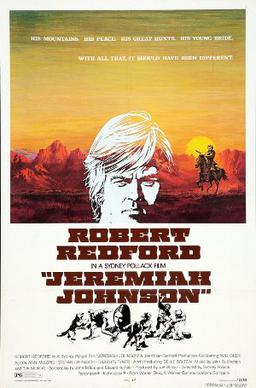
It all started when I was taking a power nap after a long day at work.  For some reason, my mind wandered to Jeremiah Johnson, an old Western with an awesome love story.

In the movie, Robert Redford unkowingly insults an indian chief by giving him several captured scalps.  The chief must return with a gift of equal or greater value, and so gives Redford his daughter, who doesn’t speak a word of English.  At first, things are hilariously awkward, but over time they grow into a beautiful and touching relationship.

Well, as I lay there thinking about the movie, I wondered: what if the same basic storyline were set in space?  Instead of a mountain man, the protagonist would be a space explorer / interstellar merchanter.  Instead of an indian chief’s daughter, the female protagonist would be the daughter of a station master whose colony is facing severe famine and widespread starvation.  When the merchanter boy unwittingly shows up at the doomed colony, the station master coerces him into taking his daughter to save her life.  And so, for the next two months, the boy finds himself crammed into a tiny little ship with a girl who doesn’t speak his language.  Hilarity ensues.

At first, I thought I’d keep it as a short story, but…yeah, that didn’t last long.  The more I run with it, the more ideas keep coming to me–ideas that I haven’t played with in a couple of years.  The story is set in the same universe as Gaia Nova and Bringing Stella Home, but about a thousand years earlier, back when things were, shall we say, more primitive.  I still don’t know where this story is going to take me, but I can tell it’s going to be a lot of fun.

The best part is that even if I expand this into a full length novel, the first part stands on its own so well that I could probably submit it to Writers of the Future.  That never happens!  It’s been years since I submitted to the contest; I always wanted to send something, but all I could ever write was novels with long, complex beginnings that couldn’t be cut off at the 17,000 word mark.

Anyhow, the working title of the novel is Star Wanderer (I can’t believe it’s not already taken), and it’s probably going to end up around 80k words or so.  I only have a vague idea at this point, but it’s much more intimate and personal than epic in scope, so I don’t expect it to go much longer.  I’ll probably finish the first part sometime next week and start looking for some first readers.  I’d like to finish the rough draft before I start the Desert Stars revision in October, but we’ll see whether that works out.

As for Edenfall, don’t worry, I’m still working on that project too.  One of the advantages of writing longhand is that it’s much easier to pick up and just go; instead of having to stop and think about what needs to happen next, the physical act of writing is slow enough that the ideas come much more organically.  I might not finish it before October, but if I can juggle it with Star Wanderer, I can probably juggle it with Desert Stars.  In any case, it’ll be good to work on new material and keep my writing sharp while I’m doing the revision.  We’ll see how it turns out.

So that’s what I’ve been up to in the last week.  I only wish I were doing this full time, so that I could spend all day working on these stories.  Soon, inshallah.

Hmm…short stories?

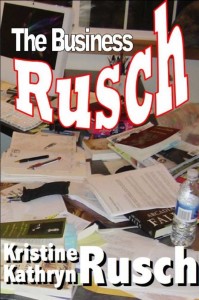
Kris Rusch has another excellent Thursday post up on her blog, and this one deals with the effect of the ebook revolution on the short story format.  Synopsis: short stories stand to EXPLODE in the next few years, and this is good for everybody, especially indie writers.

Getting a story published in a magazine 1) builds a writer’s cred, 2) attracts new readers to the writer’s other works, and 3) pays decently well without giving up copyright for longer than a couple of years.  Basically, it’s like getting paid to advertise.

I have to admit, I’m not much of a short story writer, but if Kris’s predictions are right (and they sure make a lot of sense), I might have to take some time and rework my short form game.

To start, I should probably read short stories voraciously.  Fortunately, I have like twenty back issues of Leading Edge on my shelf (the best short story I have ever read is “When She Grows a Soul” by Patrick Weekes in issue 46; I reread it on my lunch break today and it made me cry.  Seriously).  I’ve also subscribed to Clarkesworld magazine, which is only $1.99 per month on the Kindle.

Once I’ve finished the current draft of Desert Stars, I may or may not take off some time to focus on writing short fiction.  I’m a little hesitant to do that, though; novels are my first love, and will probably be my bread and butter as this writing career takes off.  Still, I need a lot of work on my short form, so maybe it would be worth taking a month or so…not sure yet.

In any case, I discovered via the Kindle Boards that if you release an ebook/estory for free on a competing vendor’s site, Amazon will price match and drop the price to free.  Since I probably won’t be able to sell the short stories I’ve epublished, I figure I ought to give that a try.  I never really planned to make much money off of them, and “selling” them for free will hopefully attract readers who will buy my novels.

In the meantime, I really should get back to writing.  Whether novels or short stories, my bread and butter lies with putting words to paper–electronic or otherwise.

WOTF rejection

So a couple days ago, I got a phone call from my Mom.  A piece of mail had come in from the Writers of the Future contest.

Yeah, it was a standard form rejection.

Well, everyone puts in their time.  I guess this counts toward that.  A modified version of this story did well in the Mayhew contest, so I know it’s not utterly bad.  But I can see, in retrospect, how it wouldn’t do well with WOTF.

The main body of the piece was a scene I took from the middle of my novel–really, it was more of a scene than a coherent, unified story.  I threw on a beginning and an end, to try to fix that problem, but it probably didn’t mesh well with the real meat of it.  Which is fine, because it was originally meant as a scene, not a short story.

The thing is, I’m just not much good at short stories.  I don’t usually read them, and I don’t generally write them.  Novel writing is my craft–every time I try to write a short story, I end up writing a novel.  Once and a while, something clicks and a short story pops out (kind of like a Polaroid), but it’s not the usual thing.

So I’m not discouraged by this rejection from submitting to WOTF again, it’s just that it’s going to be kind of sporadic.  I have one more short piece that I could submit to the contest right now, but I don’t expect it to go far.  Still, it’s better than letting it sit in my hard drive.

In the meantime, I should probably submit that WOTF piece elsewhere, see what happens.  That’s probably what I’ll do.

What I really need to do, though, is work on my novel.  World Fantasy is coming up!