I enjoyed The Aeronaut’s Windlass. It was a fun steampunk adventure, sort of like a mashup between Horatio Hornblower and the Bioshock games. It’s also very unlike most books to be nominated for the Hugo, probably because it was nominated by the Sad Puppies. After this year, the people who run the Hugo Awards rewrote the rules to allow them to disallow “slate voting,” which was how they disqualified the majority of ballots in the 2023 Hugo Awards, including almost all of the ballots cast by Chinese fans. But guys, it’s the Puppies who were totally the racists.
All of the other books were pretty terrible, in my opinion. I’ve already written about The Fifth Season at length, so I won’t go into that rant here. I’ve also written at length about Ann Leckie’s obsession with fake transgender pronouns, and since Ancillary Mercy is basically just another book about pronouns, I won’t waste any more time on that subject.
I wanted to like Uprooted, since I loved Spinning Silver so much, but both times I tried to read it, I ended up DNFing it midway through. Partly that’s because the fantasy retelling of Beauty and the Beast was not as interesting to me, but there was also a scene where the main character and her mentor randomly started making out after casting a spell together, with a graphic description of digital penetration. The whole thing came so totally out of the blue that it threw me out of the book, and I had no desire to finish it after that.
I’m also really conflicted about Seveneves. I’m not a huge fan of Neal Stephenson generally, especially after the neon orgy scene at the end of Diamond Age, and Seveneves is loooong… like, over 800 pages long. Which would be fie, if Stephenson had the economy of words of a true master like Louis L’Amour, but Stephenson really doesn’t. Around 100 pages or so, I skipped to the last chapter and read a spoiler-filled synopsis just to see if it was worth pressing on, and I decided that it really wasn’t, because 1) it’s apparently never explained why or how the moon exploded, and 2) the Hillary Clinton analog becomes absolutely insufferable, and I really didn’t want to slog through four hundred pages of that. Seveneves has an interesting premise, but if you cut out half the words it would be a better book.
2011 was the only year in which I actually attended Worldcon and voted in the Hugos. This was, of course, before the Sad Puppies and before I became totally disillusioned with the awards. I have to confess that I didn’t actually read any of the novels, though I did get the free ebooks in the voter packet and tried to read a couple of them. Mostly, I voted based on whether I recognized the author’s name, and whether or not the book descriptions appealed to me. I remember that I voted for Blackout and All Clear in the top slot, but I don’t remember how the rest of the ballot shook out.
If I had to do it again, I would still put Blackout and All Clear at the top of the ballot (which are two separate books, though they form a duology and were published in the same year, which is why they appear together). However, I ended up DNFing all of the other books, and because Feed and The Hundred Thousand Kingdoms struck me as being horrible enough to warrant a No Award vote, I couldn’t merely abstain from voting positively for any of the others.
But first, Blackout and All Clear is a delightful time travel story from Connie Willis’s Oxford University Time Travelers series. Unlike The Doomsday Book, the story is quite a lot of fun with an upbeat and hopeful ending, and unlike To Say Nothing of the Dog, the time travelers find themselves in some very real peril when their time machine breaks down. The first book was okay, but the second book was fantastic, and wrapped things up very nicely. A fun and uplifting read.
I DNFed Feed for a number of reasons, but the main reason was that I couldn’t stand the sexual innuendo between the brother and sister. Yes, I know that technically they’re supposed to be step-brother and step-sister, and yes, I know that meaningless and gratuitous sex is supposed to be a trope of zombie fiction, but still. Yuck. I could be wrong about this, but the vibe I got was that the author is addicted to pornography, and that’s just not a mind I want to spend any time with. Also, the world makes no sense: the zombie apocalypse has brought our country to a state of collapse, but 1) basic infrastructure like electricity and internet still operates without any problems, and 2) bloggers need to get a permit from the federal government in order to blog? Sorry, but I just can’t buy any of it.
I don’t remember much from The Hundred Thousand Kingdoms, since it’s been several years since I first tried to read it, but I think the main reason I DNFed this one was because all of the characters struck me as being terrible people, and I frankly didn’t care what happened to any of them. For the same reason, I didn’t read A Song of Ice and Fire past book one (though there were other reasons I DNFed that series, most of them content related). And I think there were some content-related issues in this one too, which is also why I would place it under No Award, as opposed to merely abstaining.
I really wanted to like Cryoburn, since I enjoyed many of the other Vorkosigan Saga books, especially Young Miles and Barrayar. But this one takes place when Miles is middle-aged, and powerful enough that he’s not really threatened at all. Instead, we follow the story of a misfit street urchin who’s trying to earn his freedom, or something like that, and I frankly didn’t find his story or his character all that interesting or compelling. About four or five hours into the audiobook, I just got bored of it, which I wasn’t expecting at all.
The Vorkosigan Saga is different from most other series, in that all of the books are basically standalones linked only by the recurring characters, and the fact that Bujold has written it completely out of order, basically dropping books randomly into the chronology however it suits her fancy. The latest book, Gentleman Jole and the Red Queen, was such a disappointment to my wife that the way she described it to me made me feel totally disillusioned. I haven’t gotten around to reading it yet, so I can’t say for sure that it’s terrible, but it definitely took the series in a direction I wish it had never gone. I suppose that the lesson from all this is that it’s possible to draw out a series way too far, especially a non-linear one. The early Vorkosigan books are great… the later ones, not so much (and by “earlier,” I mean the ones that Bujold wrote earlier, not necessarily the earlier ones in the chronology).
As for The Dervish House, it was fine. Very pretty and well written, I guess. It just wasn’t for me. I got bored about a hundred pages in and dropped it. I suppose I could be convinced to give it another shot, but from what I can tell, it’s not really my kind of book.
If there’s any book on this list that I’m open to changing my mind on, it’s Death’s End by Cixin Liu. enjoyed The Three Body Problem, though it did have a lot of long sections of exposition, which comes across as amateur writing in English (and probably doesn’t in Chinese). But the characters held my interest, and the ideas in the book were absolutely fascinating. Also, there was absolutely none of the wokery that has come to saturate our Western culture in recent years, which made the novel feel very refreshing. So I enjoyed the first book in the series quite a lot.
However, things got really weird in the second book, and I didn’t connect with the characters nearly as much, so when the long sections of exposition began to feel like they were droning on, I decided to DNF it. I’ll probably try this series again at some point, but since I DNFed the second book, I can’t really say that I’d vote for the third book if the awards were held again. But I do need to give this series a second chance.
The book that won this year was the second book in N.K. Jemisin’s Broken Earth trilogy, which I didn’t read because I hated the first book so much. Since it’s going to be a while before I get to the 2016 Hugos (I’m currently rereading Uprooted by Naomi Novik, which I DNFed before, but the library loan for the audiobook expired so I’m back on the waitlist again—just too many audiobooks I guess), I’ll briefly give my take on The Fifth Season and why that book made me DNF not only the series, but N.K. Jemisin as an author.
I believe that abortion is the defining moral issue of our times, just like slavery was the defining moral issue for 19th century America. Future generations will probably look on us the same way we look on the abolitionists and slaveholders of the antebellum era, and I suspect they will judge us just as harshly for failing to stand up for the rights of the unborn. After all, we hold these truths to be self-evident, that all men are created equal, that they are endowed by their Creator with certain unalienable rights, and that among these are life, liberty, and the pursuit of happiness. For the 19th century, the defining issue was liberty, and the good guys won. For the 20th century, it was life, and the good guys lost, but the 21st century is shaping up to be a rematch (though based on the unbridled narcissism of today’s culture, the pursuit of happiness is giving it a run for its money, but on the abortion issue the two are aligned).
N.K. Jemisin is a very talented author. She wrote large sections of The Fifth Season in second person, and made it work. That’s a little like running a three minute mile in an era when most people thought it was impossible. Of course, she knows that she’s talented, which lends her voice a degree of arrogance, but she’s not the first author to have an oversized ego—in fact, you could argue that Orson Scott Card is much more obnoxious when it comes to that, and Card wrote the second-best book to ever win a Hugo (Ender’s Game. The best Hugo-winning book, IMHO, is Hyperion by Dan Simmons).
[Spoilers ahead]
However, it’s not the prose or the writing of The Fifth Season that I take issue with, but the underlying message. The book starts with an infanticide, where the main character comes home to find out that the father of her child has murdered her child and run away. Of course, this creates a massive amount of sympathy for the main character. The rest of the book alternates between flashbacks to the MC’s past, establishing her backstory, and the present, where she eventually acquires enough power to destroy the world. However, at the very end of the book, we learn that the MC’s backstory culminated in her killing another one of her children to prevent that child from becoming a slave. In other words, the big reveal is that the MC committed infanticide herself, on one of her own children, and the whole novel is carefully crafted to not only make us sympathize with her, but root for her when she does it.
I know that there were slaves in places like Haiti who killed their own children for similar reasons. However, there were also many other slaves who took the exact opposite view on the value of human life, such as Harriet Jacobs in Incidents in the Life of a Slave Girl. N.K. Jemisin has ancestors who were slaves, but she herself is a rich, progressive black woman living in New York City who is as far removed from slavery as I am (after all, there’s a reason why my people are called “slavs”).
But it wasn’t Jemisin’s views on slavery that I took issue with, so much as on using it as a justification for infanticide. It’s the same argument that we hear on the pro-abortion side of the issue, how it’s actually more merciful to slaughter an unborn child in the womb than to let that child be born into a life of poverty—never mind that our modern era is so fantastically wealthy that our poor are more likely to be obese than starving. In other words, the message of The Fifth Season is an antithesis to A Canticle for Leibowitz, which is not only a superior book, but is also on the side of the good guys in the defining moral conflict of our times, while N.K. Jemisin is on the side of the bad guys—or as I prefer to call them, the Death Cult.
So that is why I DNFed The Fifth Season and decided to never read anything that Jemisin ever writes (unless, of course, she comes to the light and changes her position on the right to life). It is also why I will always vote No Award on any ballot that includes Jemisin as one of the authors.
I started All the Birds in the Sky but didn’t finish it. To me, it felt like the author was trying too hard to be cutesy and childlike, but I personally found it off-putting. It’s been a while since I read it, and for some reason I can’t find it in my reading journal, but I seem to remember that there were some content issues, too—which would explain why I found it off-putting, given then childish tone.
I didn’t read A Closed and Common Orbit because I DNFed the series with the first book. Here is the entry for it in my reading journal:
This seems like the kind of book that would be right up my wheelhouse, but on closer inspection it really isn’t. The whole thing is one big cultural diversity parade, and the central question of the story half the time is whether the humans are using the right pronouns for the aliens. Also, you’ve got your obligatory super sex positive aliens and your nymphomatic, porn-addicted mechanic who’s played as the adorable one. So yeah, not at all for me.
I’ve written before about Ninefox Gambit, but I might as well include an excerpt from my reading journal on that one as well:
The story never really hooked me, and the action at the beginning felt disjointed without any conflict or characters for me to care about. Also, there were a lot of info dumps… But the thing that made me decide to DNF was when the main character turned out to be a lesbian. I don’t know that this book will follow the “all true love is LGBTQ love” trope, but I didn’t want to stick around to find out.
I suppose I could be convinced to try this one again, though. At the time, I was reading a lot of other award-winning and nominated books, which was why I had little patience for another woke lesbian love story. Seriously, I DNFed 27 books that month, most of them for similar reasons.
Finally, Too Like the Lightning was another book that I DNFed for obnoxious wokery. If I remember correctly, it takes place in a far future where gender is something that everyone intentionally ignores. It wasn’t quite as bad as Ann Leckie’s books, but it was definitely going for the same kind of woke nonsense. Also, there were some religious proscriptions that the author seemed to think would make for a much better society, but that I personally found super dystopian, and not in a good way.
I liked Six Wakes. It was a fun murder mystery on a spaceship, with cloning technology that led to some interesting twists (for example, everyone wakes up to discover their dead bodies floating everywhere, and the murderer doesn’t actually remember know who he/she was, because those memories weren’t uploaded to the database in time). It’s not up there with Dune or Hyperion, but it was a good read, with interesting world building and better-than-average attention to detail. There were a couple of passages that a conservative reader might consider woke, but it wasn’t enough to bother me.
Everything else from this year is pretty much terrible, in my opinion. I skipped The Stone Sky,Provenance, and Raven Strategem because those were all series that I had already DNFed. I could probably be persuaded to try Yoon Ha Lee’s Machineries of Empire series again (the first book was just too confusing and absurdly violent), but I have no desire to go back to Jemisin’s Broken Earth Trilogy or Leckie’s Ancillary Justice universe. Short version: Leckie’s entire career at this point seems to be premised on creating fantasy genders and playing to our culture’s current transgender moment, while Jemisin’s trilogy is the most anti-life (anti-pro-life?) thing I think I have ever read. Also, she’s suuuper anti-racist, which makes me think of this:
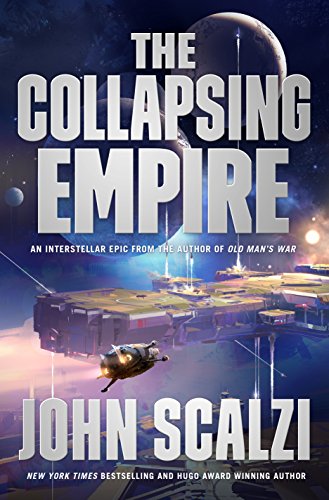
The Collapsing Empire was where I decided to give up on reading any more Scalzi. It’s basically an inferior clone of Star Trek, with random meaningless sex thrown in, which Scalzi somehow manages to make boring. I haven’t read Starter Villain and I don’t intend to, but many of this BookTuber’s criticisms of Scalzi’s writing apply to The Collapsing Empire too:
As for New York 2140, I DNFed after the first couple of pages when Robinson began to wax political, and not in a good way. I know that Kim Stanley Robinson is supposed to be one of the great SF writers of our time, but the only book of his that I’ve managed to get through was Red Mars (and that was over a decade ago). He’s one of those writers who wears his politics on his sleeve, and preaches more than he entertains. Also, he will occasionally throw in stuff that’s uncomfortably weird, like the Mars colonists having secret sex cult orgies in the farm modules. There was a time when the sex and the politics didn’t bother me as much, but it does now, so I’ve put him on my “skip this author” list, along with Ann Leckie, John Scalzi, and N.K. Jemisin.
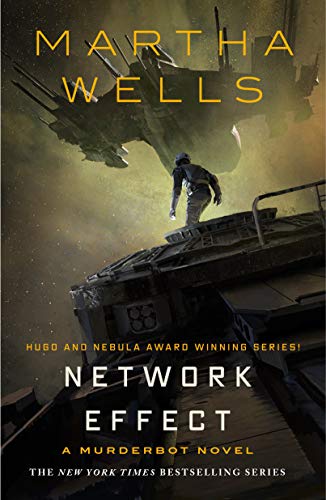
Network Effect was pretty good. In fact, it’s my favorite Murderbot book. There was a little bit of wokery, mostly in the form of the polyamorous relationships of the humans, but that didn’t bother me as much because part of the point of the Murderbot books is that the humans are (for the most part) aggravatingly dumb and slow, so the polyamory kind of blended into the rest of the nonsense that muderbot constantly has to deal with. But I can see how it would bother some readers.
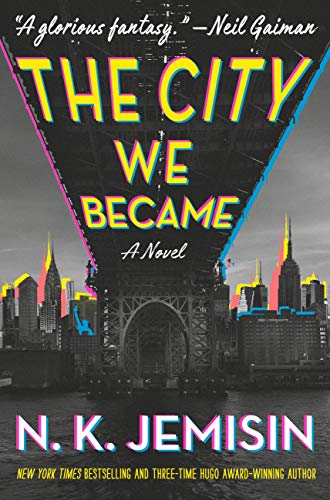
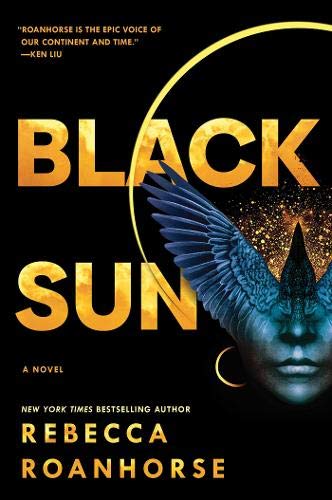
I DNFed all the other books, but I didn’t want to lump Piranesi in with all the others because it just wasn’t my kind of book. All the other ones had woke themes or tropes or other issues that turned me off immensely. I DNFed the first Lady Astronauts book when it turned into a story about the brave little woman that could and her band of misfit minorities fighting back against Captain Patriarchy. The City We Became dropped half a dozen f-bombs in the first chapter, and I think it had a gay rape scene too. Also, I have no love whatsoever for New York City. As for Black Sun and Harrow the Ninth, they both suffer from the trope that I call “death is chic.” At best, it’s an aesthetic that turns me off, and at worst it’s just a cover for outright nihilism and a pro-death, anti-life worldview that undergirds everything that I hate about our current culture.
As a side note, I just want to say that when it comes to book blurbs, Neil Gaiman is one of the best contrarian indicators for my own personal tastes that I’ve found. He may have blurbed a book or two that I actually enjoyed, but for every book or author that I can remember, if he gave them praise, I not only didn’t like it, but actively hated it. He may actually be a better indicator for me than the Hugo Award itself, since I actually enjoyed the book that won this year—but I cannot think of a single book that Neil Gaiman blurbed that I didn’t despise.
My 2022 Reading Resolution: Read or DNF every novel that has won a Hugo or a Nebula award, and acquire all the good ones.
I was going to keep track of my reading resolution this year by mentioning each book and what I liked or didn’t like about it, why I DNFed it if I did, etc… and then I thought about it a little more and realized that that’s a terrible idea. Perhaps if I weren’t an author myself, I could risk bringing down the wrath of the internet by broadcasting everything that I really think about these books, but that’s still a really stupid thing to do—not to mention, a great way to burn a bunch of bridges that, as a writer, I really shouldn’t burn.
Instead, I’m going to post a monthly update where I list all of the books that I read and want to acquire, all the books that I read and probably won’t acquire, and all of the books that I DNFed, without any book-specific commentary. I do think that having some public accountability will help me to keep this resolution, and I do intend to keep it. But because I anticipate DNFing a lot of books that have very, um, merciless fans, this seems like a better way to do it.
So here is how things stood on the morning of January 1st, 2022:
Books that I read and want to / have already acquired:
Double Star by Robert A. Heinlein (1956 Hugo)
Starship Troopers by Robert A. Heinlein (1960 Hugo)
A Canticle for Leibowitz by Walter M. Miller Jr. (1961 Hugo)
The Man in the High Castle by Phillip K. Dick (1963 Hugo)
Dune by Frank Herbert (1966 Hugo and Nebula)
The Left Hand of Darkness by Ursula K. Le Guin (1970 Hugo and Nebula)
The Dispossessed by Ursula K. Le Guin (1975 Hugo and Nebula)
Downbelow Station by C.J. Cherryh (1982 Hugo)
Neuromancer by William Gibson (1985 Hugo and Nebula)
Ender’s Game by Orson Scott Card (1986 Hugo and Nebula)
Speaker for the Dead by Orson Scott Card (1987 Hugo and Nebula)
Barrayar by Lois McMaster Bujold (1992 Hugo)
Mirror Dance by Lois McMaster Bujold (1995 Hugo)
The Mule (included in Foundation and Empire) by Isaac Asimov (1946 Retro Hugo, awarded in 1996)
Harry Potter and the Goblet of Fire by J.K. Rowling (2001 Hugo)
Farmer in the Sky by Robert A. Heinlein (1951 Retro Hugo, awarded in 2001)
Fahrenheit 451 by Ray Bradbury (1954 Retro Hugo, awarded in 2004)
Spin by Robert Charles Wilson (2006 Hugo)
The Sword in the Stone by T.H. White (1939 Retro Hugo, awarded in 2014)
Network Effect by Martha Wells (2021 Hugo and Nebula)
Books that I read and don’t plan to acquire:
The Demolished Man by Alfred Bester (1952 Hugo)
The Forever War by Joe Haldeman (1975 Hugo and Nebula)
Gateway by Frederik Pohl (1977 Hugo and Nebula)
Red Mars by Kim Stanley Robinson (1993 Nebula)
American Gods by Neil Gaiman (2001 Hugo)
Books that I did not finish:
The Moon is a Harsh Mistress by Robert A. Heinlein (1966 Hugo)
Flowers for Algernon by Daniel Keyes (1966 Nebula)
Lord of Light by Roger Zelazny (1967 Hugo)
Ringworld by Larry Niven (1970 Hugo and Nebula)
Rendezvous with Rama by Arthur C. Clarke (1973 Hugo and Nebula)
Green Mars by Kim Stanley Robinson (1993 Hugo)
Blue Mars by Kim Stanley Robinson (1996 Hugo)
Forever Peace by Joe Haldeman (1997 Hugo, 1998 Nebula)
The Fifth Season by N.K. Jemisin (2015 Hugo)
The Obelisk Gate by N.K. Jemisin (2016 Hugo)
The Stone Sky by N.K. Jemisin (2017 Hugo and Nebula)
If you are white, and you write science fiction or fantasy, it is only a matter of time before you are cancelled.
This is the logical end of intersectional identity politics, which is really just the resurrected, zombified corpse of Marxism. White people are the oppressors. People of color are the oppressed. All white people are racist, and the only way to fight racism is with more racism. Black lives matter. White lives don’t.
The United States of America is currently engaged in a violent struggle that will determine whether this hyper-racist intersectional ideology will defeat the populist uprising that has its champion in Trump, or whether the country will reject this new form of Marxism and come back from the brink of insanity. But in science fiction and fantasy, the war is already over, and the intersectionalists have won. It is now only a matter of time before they purge the field of everything—and everyone—that is white.
The last chance for the SF&F community to come back from the brink was probably in 2015. The intersectionalists were ascendant, but they hadn’t yet taken over the field. (That happened in 2016, when N.K. Jemisin, an avowed social justice warrior and outspoken champion for anti-white identity politics, won the Hugo Award for best new novel for the next three consecutive years.) A populist uprising within fandom known as the Puppies attempted to push back, and were smeared as racists, sexists, misogynists, homophobes, and Nazis. Whatever your opinion of the Puppies (and there were some bad eggs among them, to be sure), they did not deserve to be silenced, ridiculed, shouted down, and threatened with all manner of violence and death threats for their grievances. After the Puppies were purged, the intersectionalists took over and began to reshape the field in their image.
The John W. Campbell Award for Best New Writer wasn’t renamed the Astounding Award because Campbell was a racist (even though he was). His name was stripped from the award because the people who renamed it are racists—not in the bullshit way the intersectionalists have redefined it, but in the true sense of the word: discrimination based based on race.
Before I get smeared as a white supremacist for writing this post, I want to make it absolutely clear that I welcome racial diversity in science fiction and fantasy. I’ve been very pleased to read some excellent stories from people of color in Lightspeed Magazine recently, including “Miss Beulah’s Braiding and Life Change Salon,” and there have been several excellent stories from Chinese authors in Clarkesworld recently as well. I just don’t think it’s necessary to tear down white authors in order to make space for non-white ones. That’s the racism of intersectionality, and I reject it.
It is much easier for these intersectional racists to cancel you after you’re dead, but they’ll come after you while you’re still alive if they can. That’s what’s happening to George R.R. Martin right now. Frankly, I would have a lot more sympathy for him if he hadn’t made his bed with these people back during the Puppygate debacle. Behold your “true fans,” Mr. Martin. The fact that you’re the biggest name in epic fantasy right now isn’t going to save you.
But if the intersectionalists are all anti-white racists, why are so many of them white? Because for decades, crunchy liberal white folks have been taught that everything bad in the world is their fault, and the world would be better off without them. Climate change. Racism. Colonialism. It’s the white man’s burden 2.0. I know, because I was raised in this milieu. I was forced to read Howard Zinn’s People’s History of the United States in high school, and I know just how false and dangerous it really is. Besides, the revolution always eats its own. If you think you’re going to get a pass because you’ve read How to Be an Anti-Racist, you’ve posted a black square to your social media, and you’ve donated money to any of these social justice causes, you’re deluding yourself.
If you’re white, they’re coming for you. It’s not just your “whiteness” that they want to purge—that’s just a motte-and-bailey tactic to make their racism less overt and more palatable. The only thing they need to know about you is the color of your skin. If they know that, they think they know everything else about you, because they are the true racists—and in the world they’re trying to create, everything white must be purged.
The good news is that the cultural tides are turning, and the racist ideology that drives these folks is at or near its zenith. Marxism always fails, and cancel culture cancels itself in the end. If you play your cards right, getting cancelled can actually boost your career, rather than destroy it.
But the next ten years are going to be very tricky to navigate. Even if the intersectionalists lose on the national level, as I hope and pray that they do, they have already taken over the SF&F field so thoroughly and completely that the only way forward is to abandon all the old institutions and rebuild them from scratch. The indie publishing revolution has made this much more possible, but Amazon still dominates the indie publishing world, and they’ve already donated tens of millions of dollars to these Marxist causes. How much longer do we have before the intersectional ideologues within Amazon rewrite the algorithms according to their ideology? It’s only a matter of time.
Fortunately, if you are resilient enough, time is on your side.
This author’s note originally appeared in the February 6th edition of my email newsletter. To sign up for my newsletter, click here.
It has been an eventful week in American politics. Impeachment, State of the Union, Iowa Caucuses… don’t worry, I’m not going to go off on a rant about politics (much as I’m tempted to do so). I recognize that of the three main factions that exist in the United States—Team Red, Team Blue, and Team “I don’t want to talk about politics”—the vast majority of my readers belong to the latter. That probably includes you.
I wonder sometimes about the rest of the science fiction community, though. I read Locus Magazine each month, and while I think the editors generally do a good job of allowing all their contributors to offer their own views, you can hardly turn the page sometimes without an underhanded jab or a snide remark at the people on Team Red. Most of the time, they don’t seem to even realize that they’re doing it.
Does the science fiction genre rightly belong to the people who hold the “correct” political views? Should it? I don’t think so. If science fiction is truly the genre of ideas, then there needs to be a place in the genre for all ideas, even the really bad ones. Why? Because eventually, the people who decide which ideas are good or bad will be the absolute worst people to do so, if we give them that power.
That’s why I still read Locus Magazine, and why I’m still subscribed to all the SF&F short story podcasts (even if I don’t always listen to them). There was a real stinker of a story by N.K. Jemisin on Lightspeed last month: a barely disguised political screed arguing that tolerance is not enough, that free speech shouldn’t be a right, and that “some people are just fucking evil.” I didn’t finish that one. However, Lightspeed has put out some really tremendous stories in the past, and I’m sure they will again in the future.
Is this a frustration that you’ve had with some of the other authors you read? Do you ever feel that they, like many of our politicians, just aren’t listening to you? I think the main reason for all of the outrage in our politics these days is that everyone wants to talk and no one wants to listen. From what I can tell, that’s not just true in the United States, but in Europe, the United Kingdom, France, Hong Kong—pretty much everywhere else as well.
When I was in the Boy Scouts, I did a team-building ropes course during summer camp one year. One of the obstacles took us forever because everyone was screaming at everyone else, telling them what to do. For the next obstacle, our coach told us that the only people who could speak were the ones who had said nothing in the previous obstacle. I thought that we were going to fail. Instead, the quiet kids figured it out faster than any of the rest of us, and with their direction we were able to finish the course faster than I thought possible.
That experience taught me that it’s just as important to listen as it is to speak. Often, even more so. One of the reasons I deleted my social media was because I felt that I was becoming addicted to hearing myself speak, and consciously or not, surrounding myself with people who enabled that addiction.
If science fiction is truly the genre of ideas, then the best way to defeat the bad ideas isn’t to silence or cancel them, but to push them out with better ideas. As for the people who are “just fucking evil,” the best way to deal with that is to take a good, hard look in the mirror. That’s what I try to do. I just wish our politicians would do the same.