Should I split my epic fantasy series into two trilogies?

So I’m working on the first book in a new epic fantasy series, called the Soulbound King. It’s basically a fantasy retelling of the life of King David, loosely adapted from the biblical stories about his life. I’ve already outlined the first book and generated a rough AI draft, which came in at 153k words. The final draft will likely be longer than that, but I think it’s very likely that I will be ready to publish it before the end of the year.

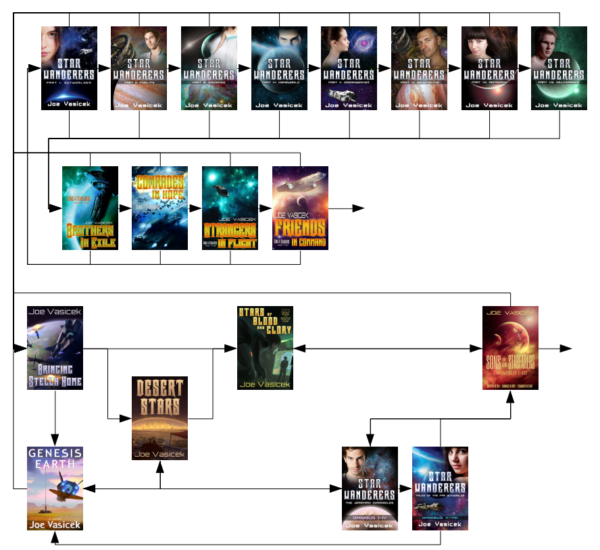
The question I’m currently grappling with is whether to keep it as a seven book series, or to release it as two trilogies with a bridge novel in the middle. Frank Herbert did a similar thing with his Dune books: the first three books (Dune, Dune Messiah, and Children of Dune) were a trilogy, and the next book, God Emperor of Dune, was supposed to be a bridge novel setting up the second trilogy—except he died before finishing the last book, so his son Brian Herbert got together with Kevin J. Anderson to write it, and then they blew it up into a franchise… point being, stuff like this has been done before.

Now, I’m reasonably confident that I’m not going to die before finishing the last book. In fact, I’ve already made a 7-point outline for all seven books, so I know exactly where they start and end, with the inciting incident, midpoint, climax, etc. I’m also writing these books with AI assistance, which is making it possible for me to write these books much faster than I otherwise would have been able to write them. For the first book, The Soulbond and the Sling, I anticipate that it will only take between six to nine months of total work to go from story idea to finished draft.

But the trouble with writing a seven book epic fantasy series is that a lot of readers aren’t going to bother picking it up until all seven books are out. This is because so many readers have been burned by authors like George R.R. Martin and Patrick Rothfuss, who have not and likely will never finish their bestselling series. I can’t really blame the readers for that (though I can and do blame the authors), but it creates a market reality that I need to anticipate and plan for.

So here’s what I’m thinking: instead of making it a seven book series, I’ll make it two trilogies with a bridge novel in-between. The first three books will complete one arc, and the last three books will complete another arc. I’ll wait to release the first book until after I’ve completed the AI draft of the third book, so that way I can release all of the books in the first trilogy within 1-3 months of each other. And after the first trilogy is complete, I’ll market it as a trilogy while working on the last four books, probably releasing each of those a year apart, as I finish them.

The reason I’m thinking about this now is because a strategy like this is going to influence how I write all of these books. If I’m going to split the series into two trilogies, the last thing I want to do is end the first trilogy on a cliffhangar. It has to hold together as a complete story, with only one or two loose threads. But since I’m still in the early writing stages of the first book, I still have enough room creatively to make that kind of adjustment. I just have to decide if that’s truly the plan.

By the way, the first trilogy ends with the fantasy equivalent of the Battle of Mount Gilboa, where the Saul and Jonathan characters die in an epic battle and the David character becomes king (I know that in the Bible, there was a gap of several years between those two events, but I’m combining them for purposes of this book). So it is a rather natural stopping place, even if it does end on a massive downer, followed by a false victory (the second trilogy begins with David and Bathsheba).

Anyways, what do you think of this plan? Does it sound like a good idea, or is there a compelling reason I haven’t thought of yet for why I shouldn’t do it?
New plan for the newsletter

So my fiancee helped me to put together a proper newsletter template for my email list, and it looks pretty good! Much better than the template I wrote myself, and I’m not a programmer (she is).

This gives me the opportunity to make some changes to the way I do things, and I’ve decided to grab the bull by the horns. I’m going to write a proper newsletter, not just a simple “here’s some book deals and a couple of promos to check out!” Here’s the new format:

Welcome

A short, 1-3 sentence “Hello, dear reader! I hope this email finds you well,” etc etc. Kind of like I already do.

Featured Book

The main call to action, put at the top for the casual readers who don’t have a lot of time or interest for much else. This may be a preorder, or a new release, or a special offer. Or it may just be a full-price book that I want to feature, for whatever reason. I’ll have to play around with it and see what works.

I’ve decided to go back to the two-button approach: one that says BUY ON AMAZON and goes directly to Amazon, albeit without an affiliate link, and one that says ALL OTHER STORES and goes to the book page here on my blog. For some reason, Amazon won’t let you put affiliate links in emails, which makes this a tough either/or. I’ll get more click-through and sales with a direct link, which is going to cost affiliate income, but I think it’s more important to focus on my own books than it is to game the affiliate system—at least in this section.

Writing Update

This is a brief, 1-2 paragraph section just below the featured book, where I give an update on my current WIP, along with a status bar. Basically, an accountability section, as well as something to keep the fans up-to-date on my writing progress.

Author’s Note

This is the meat of the newsletter, where in 3-5 paragraphs I share something personal with my readers: either a story or insight from the writing process, a behind-the-scenes look at what I do, or something else. In a recent newsletter, I talked about my grandfather and how his entrepreneurial spirit has rubbed off on me. Stuff like that.

From time to time, I also plan to share book recommendations. With my fiancee’s help, I may design a second template with an Author’s Note section that’s better set up for that.

The goal is to provide my readers with a personal connection and something of value that goes beyond “buy my book!” I already do this in the back of all of my novels, and have from the very beginning, so it will be fun to do something similar in my email newsletter.

Book Promotions

This is where I put all the links to all the promotions that I’m currently participating in, usually with other authors. I already do this in my newsletters, and it seems to be fairly popular, so it seems like something I should integrate into its own section, probably towards the bottom so as to incentive readers to scroll down.

Parting Quote

This is something new: a pull quote from the featured book to close out the email. Nothing too long; just enough to give my readers a taste and hopefully leave them intrigued, or thoughtful, or otherwise interested in reading more.

Farewell

The standard “so long, and thanks for reading!” that I always end on. Not a bad catch-phrase for a writer, I suppose.

So that’s the new format. Because I plan to share frequent writing updates in my newsletter, I’ll probably leave off sharing those updates here on my blog. Besides, that’s not really the strength of this medium: blogging is much better suited for community building, brand engagement, and public discussion. I may still share major updates, but not regularly.

That’s pretty much it. If you have any suggestions or other opinions, feel free to share. Also, you can sign up for my newsletter here if you haven’t already done so. That’s going to be the best way to keep up with me from here on out.

Take care, and thanks for reading!

What I’m up to these days

It’s been a while since I blogged about what I’m doing. In spite of the relative blog silence, I’ve actually been up to quite a lot behind the scenes here.

My career has had a lot of ups and downs lately, so for the past month or so I’ve been working to retool some things and reinvent some others. I’m experimenting a bit with different prices, especially for the Star Wanderers series, and trying to find more effective ways to market my books.

Now that I’ve set up my blog with a My Books page and individual pages for each of my books, complete with purchase links, book description, linked Goodreads reviews and everything, I’m in a good position to do some things that I couldn’t before. The most significant thing is that I can now put links to my books in the backs of other books. Without a dedicated page on my blog for each book, I couldn’t really do that, since Apple will take down your ebook if it has a link to Amazon, as well as Kobo, and Kobo probably will too… etc etc.

Screenshot from 2015-05-28 12:01:47

Point is, now I can put links to my books in the back-matter of each book, instead of just a teaser. So I’ve been going through and reformatting for that, which honestly isn’t too difficult, but it can be a little tedious. While I was at it, I made a dedicated page for my email list sign-up form, and put front-matter links in all my books for that.

After that’s finished, the plan is to release a second edition of Science Fiction from A to Z, this time with inline text links to the book pages for all of my books. Many of the chapters finish by saying “this is how I played with this trope in this book,” so adding the links should be a fairly organic and non-obtrusive way to do some marketing. And when the new version is out, I plan to give it away as an incentive to join my email list.

So that’s what I’ve been up to on the publishing end. On the writing end, I’m taking a bit of a break to work out some projects in my head before I put them down on paper. I want to shift away from science fiction for a while and work on some fantasy, starting some new series and building new universes. More on that in later posts.

Friends in Command (Sons of the Starfarers: Book IV) is set to release on July 1st, so in the lead-up to that, I’ll post a few excerpts. And I have some more ideas for the Self-Sufficient Writer series—just putting together some pictures for that. But for now, I need to get back to writing.

Things I want to learn in 2015

I was going to follow up my retrospective 2014 post with another one, but instead I want to look ahead at the things I hope to learn in 2015. Of course, I’m sure that many of the things I’ll learn are things that I couldn’t have foreseen, but it helps to have some direction to start out with. Here goes!

How to consistently sell books outside of Amazon

If I learn nothing else this year, I want it to be this. In 2014, about 90% of my sales were through Amazon, and when they came out with their Kindle Unlimited subscription service, my income took a big hit (Amazon requires all books in KU to be exclusive, so none of my books qualified). If I can grow my non-Amazon sources of income to more than 50% of my total revenue, that would be fantastic.

So far this year, I’m off to a good start. I have a book featured in Apple’s ongoing First in a Series Free promotion, and that’s given my books on iBooks a huge boost. In fact, I wouldn’t be surprised if I sell more books on iBooks this month than I will on Amazon. But the key here is to sell consistently on the other platforms. Right now, I have no idea how to do that—but I definitely want to learn!

How to turn readers into lifelong fans

I’ve been publishing for the last four years now, and I’ve picked up a few fans along the way, but I get the sense that most of the people who read my books are just casual readers who find my books interesting but tend to move on after they’ve read them. Perhaps this is normal, but I would like to take things a step further and build a strong fanbase around my books.

Up until now, I’ve mostly focused on writing books, not in connecting with the people who actually read them. But I want to do a lot more of that next year—not only in order to sell more books, but also to connect with the fan community in general and make a more lasting contribution to the genre.

How to write (harder) better faster (stronger)

If I could write 10,000 words a day—good words, publishable words—that would absolutely fantastic. So far, the most I’ve managed in a single day is about 5,000. Right now, I’m lucky if I hit 2,000. It’s aggravating, because I feel like I’m so ridiculously slow, and the stuff that I do write usually needs some cleaning up before it’s publishable … basically, I just want to be a robot unicorn who farts rainbows and writes a bestselling novel every 72 hours.

Barring that, I’d just like to learn how to overcome some of the things that get in the way of writing.

How to write memorable characters that readers fall in love with

Of all the areas of craft that I’d like to work on, this is the one that probably needs improvement the most. I’ve had lots of readers tell me that a particular story resonated with them, but I’ve never had a reader tell me that they were crazy about a particular character. I think I’m reasonably good at writing characters that are complex and three-dimensional, but that’s a separate thing from writing a character that readers fall in love with.

I think I’ll stop here for now. There are other things that I’m sure will be good to learn, but these are the ones I especially want to learn in 2015.

Things I learned in 2014 (Part 1)

Last week, Kris Rusch wrote an interesting blog post reflecting on 2014 and things she observed that indie writers learned, so I thought I’d do something similar and reflect on some of the things that I learned last year about the business and the craft. Here goes!

Readers of SF&F want longer books.

I did a lengthy blog post about this earlier, but the basic gist of it is that readers in my genre want longer, more immersive books. There’s a place for the short stuff, especially for high concept sci-fi, but most readers of speculative fiction want worlds they can get lost in with characters that become their best friends. It’s practically impossible to do that in a story that takes less than an hour to read, so to satisfy those readers, you’ve got to write long.

You can’t have a healthy career with only one income stream.

Between 80% to 90% of my income in 2014 came from Amazon. Times were good in the spring and summer, but then Amazon launched their ebook subscription service (Kindle Unlimited). None of my books were enrolled in KU, but because of the way that Amazon skews the rankings to favor KU books, my Amazon royalties took a huge hit.

I knew back in 2011 when I started that I needed to cultivate multiple income streams if I wanted to have a steady career, but I’d gotten complacent. Since my Amazon earnings were paying all the bills, I figured I was doing all right. But you can’t measure the healthiness of a career in just the revenue it’s bringing in right now; you’ve got to look at contingencies for the future, including the worst case scenario.When most of your revenue comes from a single client, that makes your career far too brittle.

So looking to the future, I can’t say that I have a healthy, steady career until I’m earning at least as much from all my other income streams as I am from Amazon.

I’ve been relying far too much on Amazon’s algorithms.

Related to the last point, I learned that I’ve been relying far too much on Amazon to sell my books. In fact, I can say that the Amazon algorithms were the linchpin of my marketing strategy (inasmuch as I actually had one, heh).

Amazon has the best book recommendation engine in the industry by far. It’s done a lot for my career, connecting my books with many readers who have gone on to become fans. But what the algos give, the algos can take away. To build a career with staying power, you have to constantly work to find new readers in a variety of different ways.

I’ve always believed that cream rises to the top. That said, if you’re starting at the bottom of the ocean, you’ve got a long, long way to rise. Up until now, I’ve been operating under the belief that readers will find me without me making much of an effort to find them. I learned this year that you’ve got to meet in the middle. You don’t have to hand sell every book (thank goodness!), but you do have to make an effort to make your books visible somehow.

A well-articulated negative review does more to sell books than a blasé positive one.

This one surprised me. When I published Brothers in Exile (Sons of the Starfarers: Book I), it garnered a fairly painful two-star review on Amazon about a week or two after launch. The review had some positive things in it, but it also had some negative things that were pretty spot on. Being the angsty writer that I am, I thought my chances had tanked. Instead, sales of the book immediately shot up, and stayed fairly high for about a month.

Readers aren’t stupid. They understand that not everyone has the same tastes in books, and parse their reviews accordingly. A negative review that is articulate and well-reasoned will lend a lot more credibility and cultivate a lot more interest than a string of positive reviews that lack any real substance. It sounds counterproductive, but it’s often the negative reviews that sell the book.

Sometimes you actually can get the best results by doing it yourself.

When I redid the covers for the first three Gaia Nova novels, I decided at first to hire a cover designer. For various reasons, though, that didn’t work out, so I decided to do them myself. I’d done the typography myself on the old ones, and let’s just say they left something to be desired.

The reason I wanted to hire the work out was because I didn’t think I’d get the best work if I did it myself. I figured that if I hired someone who was an expert in it, it would turn out so much better. Instead, when I did it myself, I discovered that my own skills had improved to the point where I could produce really good work myself.

It is possible, especially in self-publishing, to become so skilled at every aspect of the production process that you can do it all yourself and still produce a quality book. The learning curve is so sheer that it’s practically a cliff, but you can do it. And even if the work that you produced at the start of your career wasn’t all that good, you can improve to the point where your work is on par with that of professional designers.

The trouble is, it takes so much time and effort to get to that point that you may be better off hiring the work out. It takes a certain type of personality to DIY everything and produce a quality product without feeling overstretched. I’m pretty sure that’s my personality type, though of course I still have a lot to learn. But just because it’s DIY doesn’t necessarily mean it’s going to be of an inferior quality.

There are other things I learned in 2014 about the craft and business of writing, but this post is starting to get long so I think I’ll table it for the next post. Take care!

Thoughts on declining sales and the summer slump

According to conventional bookselling wisdom, summer is the slowest time out of the year for book sales. But is that really the case? I’ve heard David Gaughran and Ed Robertson argue that that’s just a myth perpetuated by New York publishers who are completely out of touch with their readers. Sales don’t fluctuate with the season so much as with promotions and new releases, so the argument goes.

Well, it’s been three years since I started self-publishing, and I still have no idea whether there’s a slump or not. June was my best month ever, but sales have fallen off sharply since then and it looks like August is going to be the worst month of the year. I wish I could blame that on the summer slump, but last year, June was also my best month, and sales after that held more or less steady.

It’s a hard thing to watch your main source of income fall more than 50% over the course of seven or eight weeks. More than anything else, it’s reinforced to me that I cannot afford to rely on just one income stream. Most of my sales come through Amazon, but I need to figure out ways to promote and market my books on the other venues. Relying almost exclusively on Amazon is like putting all your officers in the same shuttlecraft.

How much of the decline has to do with the launch of Kindle Unlimited last month? I don’t know, but it’s making me nervous. None of my books are available through KU because Amazon requires exclusivity in order to be enrolled in the program. That’s not something I’m willing to give them, at least with my already published books. But I may enroll one of my future books in the program, just to see what it’s about.

Honestly, though, I think the slump has more to do with my own lack of promotion and the fact that I haven’t had a new release for two months. When Strangers in Flight (Sons of the Starfarers: Book 3) comes out next month, I hope that will change things around.

I think it’s also good to remember that books don’t spoil. In a certain sense, it doesn’t matter when a book comes out–when a reader discovers a book for the first time, to them, it’s something new. My Star Wanderers series has been out for a while, but there are still a lot of people who have never heard of it and would probably enjoy it. I’ve got to find ways to get at least the first book into those people’s hands.

I really, really suck at marketing though, as you can probably tell from the fact that I’m blogging about writerly business stuff that isn’t all that interesting to the average fan. 😛 Until now, I’ve been relying mainly on the strength of my writing to sell itself, but that probably isn’t the best strategy.

And that’s one of the other problems with the idea of the summer slump–it lulls you into thinking that things will pick up on their own once the summer is over. Well, that’s one rude awakening that I’d rather avoid if I can help it. In this case, the path of least regret is to assume that the slump is a myth and get back to work, dammit. Because even if it isn’t, it’s not like the extra marketing is going to hurt you.

Enough with the boring business stuff. Here’s Grant Thompson doing the ALS ice bucket challenge with dry ice. Enjoy!

M is for Marketing

Whenever indie writers get together to talk shop, the discussion almost always turns to marketing. How to sell more books and get more readers–that’s what everyone wants to know.

Honestly, I’m not much of a marketing expert. My approach to marketing can basically be summed up in one sentence: “figure it out later.” That is not a good long-term strategy! And yet, in a weird and crazy way, it’s actually kind of worked.

A lot of people say that you have to market your books–that if you don’t spend XXX amount of time on it, or do XXX number of things, or hit XXX goal, that you’re doing it wrong. And because most writers have this weird sort of guilt complex built around how we work, we absorb these “rules” into the list of other things we feel guilty about and beat ourselves up for not doing it–or worse, spend way too much time and effort doing things that aren’t really working, simply because we feel that we have to.

Right from the start, I figured that that mindset was just silly. Good marketing isn’t about following rules, it’s about doing things that bring results. When I first started out, I figured I didn’t have enough books out to warrant any sort of a marketing push. What good is it to bring a bunch of people to your store if the shelves are all empty? So for the first several years, I focused almost entirely on writing more (and better) books.

That’s not to say that I didn’t do any marketing at all. Here are some of the things I’ve tried out so far, and whether I decided to keep them or not:

  • Putting sample chapters at the end of each book — I eventually realized that doing this pads the end of your book and makes readers feel cheated when they hit the 85% mark and realize that the story is over. Instead, I now put a short teaser and a picture with the cover.
  • Exchanging short blurbs with other writers — I tried this out with my friend Kindal Debenham, where we both inserted book teasers for each other at the end of our books. I have no idea whether it’s worked or not, but it’s something I’d do again with my fellow author friends.
  • Making a couple of books permanently free — Free is an awesome way to move a large number of books very quickly, but in order for it to boost the sales of other books, I’ve found that 1) it has to be a complete story, 2) it has to be its own unique story, not just based on an excerpt, and 3) it has to be directly connected with the other books in some way, such as the first book in a linear series. Of course, that’s just my own experience–I’m sure there are people who manage to make it work doing it differently. Free is great because it takes off a lot of the pressure and makes your book a much easier sell, not just for you, but for your fans to share with their friends.
  • Going on blog tour — I did a couple of small blog tours for my first couple of books, and while I didn’t see a huge explosion of sales from it, it’s something that I would do again. In general, though, I think that blog tours are better for retaining existing fans and keeping you fresh in their minds than it is for acquiring new ones.
  • Ending every book with an author’s note — I’ve found that this is a great way to build relationships with your fans–to become more than just another name on a book to them. The fan mail I’ve gotten from readers who mention the notes is great, and I think it’s converted at least a few casual readers into genuine fans. That said, I have gotten some negative feedback too, so these days I try to keep them short and unobtrusive for those who don’t care to read them.
  • Being active on social media — When my Star Wanderers books first really started to take off, I was teaching English in a developing country where my internet access was limited. Consequently, I’m extremely skeptical of any marketing advice as it relates to social media. That said, I think it’s a great way to connect with your fans if it’s a platform that you enjoy. I’m not really keen on Facebook, but I do enjoy Twitter, so that’s a good place to find me (my handle is @onelowerlight).
  • Keeping an email list for new releases — This is one thing that other successful indies seem to encourage the most. My list is only about a hundred strong right now, which is not enough to lead to a huge explosion of sales, but the results are direct and measurable. It’s definitely something that I’ll continue to do.
  • Participating in a group promo with other authors — I’ve had mixed results with this. In 2012, I did one that resulted in several thousand downloads and boosted my Star Wanderers series to a whole new level. But in 2013, I did another one that completely fizzled. In general, if the group promo seems pretty well organized, I’ll participate in it, but if it seems that the organizers don’t really know what they’re doing, I’ll back out.
  • Advertising on a site/newsletter like Bookbub, Kindle Books & Tips, Ereader News Today, etc. — This is something I’ve just started to try out, and the results have been astounding. Some sites will give a much bigger boost than others, but the ones that do work can work extremely well. Of course, I’ve only tried this with Star Wanderers: Outworlder (Part I), which is free–I’m not sure how effective it would be at moving paid books.

If there’s one thing that I’ve learned, it’s that marketing doesn’t have to feel sleazy. In fact, when you’re doing it right, it almost never does. For every book that you write, there is someone out there who would love to read it–good marketing is about connecting those people with your books, helping them grow into their natural audience.

Marketing is definitely important, but it’s not something that you have to guilt yourself over or treat like a chore. In fact, it can actually be a lot of fun! I’ve certainly made my own fair share of mistakes, but I’m learning from them and trying out new things. So long as you base your marketing decisions off of measurable results and not a particular dogmatic position or someone else’s opinion, you’ll be in good shape–even if your plan is to figure it out later.

D is for Discoverability

If there’s one thing that indie writers like to talk about when they talk shop, it’s “discoverability”–how to make their books stand out so that readers can discover them. You don’t have to spend much time on author blogs or writing forums to find some pretty intense discussions about this topic. For those of us trying to make a living at this gig, it’s something we constantly obsess about.

So what’s the best way to boost your discoverability? What works, and what doesn’t? If I had the answers to those questions, I could probably make a lot more money writing “how-to” books! However, here are a couple of books I’ve found that do an excellent job answering this question.

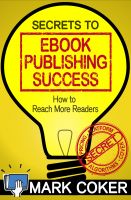
The Secrets to Ebook Publishing Success is an excellent resource for ebook marketing ideas that won’t cost you an arm and a leg. The book won’t cost you, either–it’s available on Smashwords for free. The author, Mark Coker, is the founder and CEO of Smashwords, and he wrote this book to help Smashwords authors succeed. Definitely worth giving a read.

Let’s Get Visible is the other book on discoverability that I’d recommend. For this book, David Gaughran collaborated with a number of other indie writers from KBoards to figure out the best ways to work with Amazon’s algorithms. It’s an excellent book that explains some of the best practices for free giveaways, price pulsing, and choosing keywords and categories.

Those are the two books I’d recommend. There are other good ones I’m sure, but there are also a lot of scammy marketing books that are just out there to take your money. These ones aren’t scam books at all. Without getting any benefit from the authors of these books for saying it, I can vouch from experience that their advice is pretty solid.

So what’s worked for me personally? I can point to a few things:

  • Writing in a series. If your books are grouped together by series, then readers who enjoy one of those books are more likely to try out another. They’re less likely to read one book and forget about it because all of the books are connected. In this way, each of your books helps readers to discover the others.
  • Give some books away. Readers love free books. They’re a lot more likely to try out a book by an unknown writer if it’s free than if it costs any money at all–even as little as $.99. I know a lot of writers don’t like giving away their books for free, but if you’ve got ten other books that readers go on to buy after reading the first one, it’s worth a lot more than having eleven full-price books that no one ever buys.
  • Make the first book in a series permanently free. That’s what I did for Star Wanderers, and the strategy has worked extremely well. Before that, I had a couple of short stories and non-series books that were perma-free, but none of them gave my other books much traction. But with Star Wanderers, it’s easy to see that the first book leads to the second book, the second book leads to the third book, etc.
  • Don’t let your price become an obstacle to new readers. The principle behind perma-free + series that makes it work is the sales funnel, where you try to spread some of your books as widely as you can in order to funnel people to your other books. But if your first book is free and all the other books are priced so high that price becomes an obstacle, readers are bound to get irked and drop out. I’ll say more about this in P is for Pricing, but one thing I’ve learned is that it really helps if you’ve got a lot of low-priced books that readers can move on to after picking up your free stuff and before moving on to the higher priced stuff.
  • Write and publish lots of books. It wasn’t until I had maybe fifteen books out that I started to notice that my entire catalog was working together. When my Star Wanderers books sold well, I saw more sales of my other books too. When you have enough books out, they work together to sell each other. I wouldn’t be surprised to find that on average, one person with fifteen books out sells more than fifteen people with one book each.
  • Book blurb, cover, metadata. That’s the trifecta–if you don’t hit all three of those, nothing else you do may ultimately matter.

And of course, there’s the most important thing of all: write a damn good book. If your book sucks, all the discoverability in the world isn’t going to save it.

When you’re an indie writer, it often feels as if publishing a book is like tossing a message in a bottle out into a churning sea. You have no idea where your book is going to end up, and the marketplace is as wide and as menacing as a stormy ocean. Lots of books sink to the bottom of that ocean, where no one ever finds them. But plenty of other books stay afloat, selling a copy here or a copy there–just enough to stay up at the surface. And eventually, the winds of the marketplace cast it up on a distant shore, where it’s discovered by a fan.

But here, the analogy breaks down. Because unlike a beachcomber who finds a message in a bottle, a fan doesn’t have to wait for your next book to come to them–they can go out and find them directly. So the more books you have out there, the greater the likelihood that they’ll eventually be discovered. And if they’re out in the marketplace for long enough–out where the potential fans can discover them–then eventually they will grow into their natural audience.

That’s been my experience, at least. There are a lot of other things that I’m experimenting with now, but these are the things that I know work for sure–at least for me.

Novella woes and farmers markets

Today I wrote about 2.6 words in my current WIP (Sons of the Starfarers), which didn’t really feel like it because I was constantly getting distracted.  Still, 2.6 words is pretty solid–it’s about mid-range for me.  If I can hit that every day from here on out (which is doubtful, but hey), the rough draft should be finished before the end of the month.

The crazy thing is that I just hit the inciting incident at the end of today’s writing session, after passing the 6k word mark.  For a mid-sized novella, that’s pretty late.  In the classic three act structure, the inciting incident usually hits between the 12%-15% mark, but this one is well past 20% for a 30k word novella–and just barely at 16% for a 40k.

So in layman’s terms, how long is this book going to be?  Probably longer than any of the Star Wanderers stories, but not quite as long as Genesis Earth.  It probably won’t turn into a full-fledged novel, since there’s only one viewpoint character, but I can already tell that it’s going to flirt with the line between novella and novel.

We’ll see how it turns out.  I’m still really excited about this story, and even though I don’t have a clear idea how to write the ending, I do know exactly how it’s going to end, if that makes any sense.  I’ve got a clear idea of the series arc that this book is going to set up, but I don’t yet have a clear idea of the book’s self-contained arc.  Once I figure that out, maybe I’ll be able to trim it down to a 30k novella after all.

============================================================

I visited the Stadium Farmer’s Market in Provo for the first time today.  It was pretty neat–lots of great produce, a nice community atmosphere, and a few quirky things like Jalapeno Jelly and tie died baby jumpers that you can’t really find in a mainstream grocery store.  I came away with some excellent peaches and a hankering to come back next week for more.

Anyhow, the trip got me thinking how indie publishing is kind of like a farmer’s market.  You’ve got everything from the guys who sell their produce out of unmarked paint buckets (writers who toss their books up to amazon with hardly a thought) to the local farm operations with pretty banners, pretty baskets, and laminated fact sheets drilling down on every possible difference between Elberta and Briscoe peaches (writers who go to great lengths to organize their own small presses and become Facebook/Twitter/Blogging personalities).

Almost everyone gives away free samples, which actually does a lot to drive sales.  In a similar way, most indie writers either have a couple of perma-free titles or free-pulse their books.  Everyone at the farmer’s market tries to be friendly and reach out to the customers (kind of like authors on Facebook and Twitter), but for me personally this kind of drives me away.  A good entertaining sales pitch, though, can be quite interesting.  I listened to the guy selling honey for almost twenty minutes, going on and on about his wares.  It’s clear he’s in a business that he loves.

Even though the fruit in the farmer’s market tends to have more blemishes than the stuff you find in the mainstream store, it is WAAAY more fresh and delicious.  Similarly, the stuff from the mainstream presses might be a lot more edited and polished, but the true innovation and formula-breaking stuff is happening in the world of self-publishing.  Publishers want things to be more predictable and formulaic so that they can have a better idea how something is going to sell, but indies are free to try almost anything.

Those aren’t the only parallels, either.  The more I think about it, the more it seems that being a self-published indie writer (or “author-publisher,” a newer term that I think I actually prefer) is a lot like being a local small farmer.  I’m sure there are differences, but the similarities are quite striking.

And now I’m really wishing I’d bought some of that honey.

Why I am not afraid of the Noise part III

These days, it seems as if everyone is terrified by the fact that anyone can publish a book.  Indies, self-published writers, authors with traditional book contracts–it doesn’t matter.  Everyone is mortified by the sheer volume of crap books coming out nowadays, as if Sturgeon’s Law is a new thing.  The assumption is that all this noise is making it harder to get noticed–that readers have to slog through all the crap to find the good stuff.

I’ve blogged about this twice before, here and here.  My views haven’t changed–I still think that the flood of crap ebooks is nothing for writers or readers to fear.  However, I’ve found a new way to think about it.

Message in a Bottle Washed AshoreIt’s been almost two years since I tested the waters of self/indie publishing.  Since then, I’ve learned that an ebook is like a message in a bottle, floating in the midst of a stormy sea.  Readers make up the ocean, and the vicissitudes of the market are the storms that rage across it.

A good book will tend to float, whereas a bad book will tend to sink.  Gimmicks like Select freebies and other promotional activities may pull the bottle back up to the surface, but they won’t make it float.  And maybe, if a bottle sinks to the bottom of the ocean, someone will come trawling for sunken treasure and haul it up, but more likely than not it will just stay there.

Most readers don’t go to the bottom of the ocean to find their books.  They go to the beaches, where the bottles eventually wash up. These represent communities like book clubs or Goodreads, or just groups of friends who like to talk about books.  When a bottle does wash up on a beach, that represents a book coming into its natural audience.  It might take years, but if the book is good enough to float, eventually it will wash up somewhere.

As long as the bottle floats, it doesn’t matter how deep the ocean is beneath it.  Similarly, as long as a book is selling a handful of copies a month, it doesn’t matter that there are ten million bazillion crap ebooks on Amazon, or Smashwords, or Kobo, or wherever.  Those books are all at the bottom of the ocean, where the waters are calm and cold.

When I was a kid, I was terrified of deep water.  Then I had a swimming instructor who told me that it didn’t matter how deep the water was–so long as I could swim, the ocean could be a mile deep and it wouldn’t matter.  Since then, I’ve swum in some pretty deep waters, and I can say with complete confidence that my swimming instructor was right.

Discoverability and visibility are challenges for authors everywhere, but the problem is not the flood of crap that everyone always worries about.  It doesn’t matter how deep the ocean is, or how many ebooks are being published.  Instead, the problem is making sure that your writing is good enough to float.  If it is, then with enough courage and perseverance, you’re going to make it.

Right now, I feel like most of my books are floating on the face of that stormy ocean.  A couple of them have sunk, mostly the short stories.  I’m not much of a short story writer, though, so that makes sense–I still have a lot to learn in that area.  But the novels and novellas are all selling, with no promotion other than the first title in the series set to perma-free.  That tells me that they aren’t crap.  So long as I can keep telling good stories, I’m confident that my books will find their audience.  When and where they’ll wash up, I have no idea, but one thing is certain: all the crap at the bottom of the ebook ocean isn’t going to keep me from making it.

Image taken from this site here, which I recommend checking out.  Interesting stories!