Q is for Quark

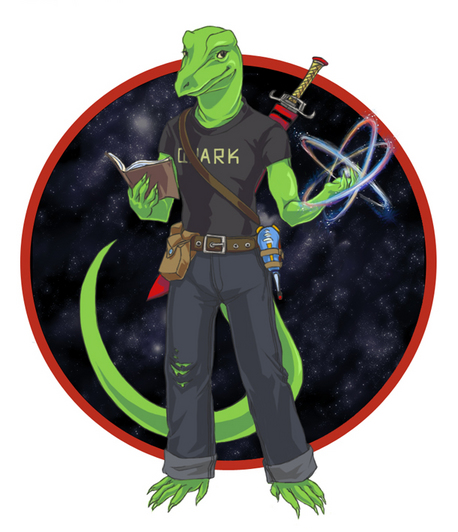
Quark_Mascot_by_OrphneIf it takes a village to raise a child, does it take a group of like-minded creative souls to raise a writer? I don’t know, but in my case, having a writing community around me really helped.  That community was Quark, BYU’s Science Fiction & Fantasy club.

I joined Quark my second semester of college.  I’d heard about the writing group, and on a whim I decided to check it out.  This was when Ben Hardin was the writing group leader, back before the current iteration of the club was really well-organized.  Aneeka Richins had basically built the writing group from scratch only a year or two before, and Kindal Debenham and Annaliese Lemmon had each spent a year as president shortly after that.  They were all still around, workshopping their stories and adding to the community.

We met on the second floor of the Harold B. Lee library, in one of the study rooms way in the back near what is now the classical music area (2520 was the room number, I think).  Looking back, it seemed like a weird place to meet, since we were always so LOUD.  However, back in those early days Quark didn’t get a lot of respect from the BYU student administration (BYUSA, known more familiarly as BYUSSR), so we kind of organized under the radar.

The spring semester of 2007 was a lot of fun!  I fit in very well with the group, and made a lot of friends.  It wasn’t until they made me the writing group president that I started attending regularly, though.  In retrospect, accepting that post was probably the best extracurricular decision I could have made.  I lead the writing group for two years, from fall of 2007 to spring of 2009, and that’s when I really became a writer.

When I first started back in 2007, I had a couple of hobby projects kicking around here and there, but the main thing I wanted to write was a Final Fantasy VI fanfic.  At the same time, I had a great idea for an original novel, but I’d never written a complete novel before, so I wasn’t sure what to do.  Aneeka convinced me to go with my own project, and that became The Lost Colony, also known as Ashes of the Starry Sea.

Around that time, I also started this blog, mostly so my writing friends could keep me honest.  I finished the first draft in 2008–a whopping 168k word manuscript that barely held together.  After coming back to the US from a study abroad program in the Middle East, I started revising it, but soon decided to trunk it in order to work on other projects.  Shortly thereafter, I finished the first draft of Genesis Earth, and the rest is history.

I later wrote up a detailed post on the origins of Quark, one that was published in a short-lived magazine called Mormon ArtistYou can find that article here.  Orson Scott Card himself commented on it, which really made my inner fanboy squee. 😀 For me, though, Quark was all about surrounding myself with like-minded friends who could foster my natural sense of creativity.  I probably would have become a writer anyway even without them, but it would have happened a lot later, and the road would have been much more rocky.

And now that we’ve all graduated and moved on, I’m happy to say we still keep in touch!  Kindal is a self-published indie writer much like me, with some excellent books out there.  He’s organized an online writing group that is mostly made up of us old-time Quarkies.  Aneeka’s got her webcomic, which seems to be fairly successful, and the others who chose to go a more traditional path are having success there as well.  But mostly, it’s just great to keep in touch.

After my time as president, Quark really exploded in popularity and became officially sanctioned by the BYUSA.  It’s really thriving right now, with a book club, a board/video gaming group, a film forum, and a bunch of other stuff.  Most of that was there when I was in the writing group, but it was floundering, and the writing group was much more autonomous.  But the guys who have carried on the torch seem to have done a great job making things even better, and that’s encouraging.

B is for Space Battles

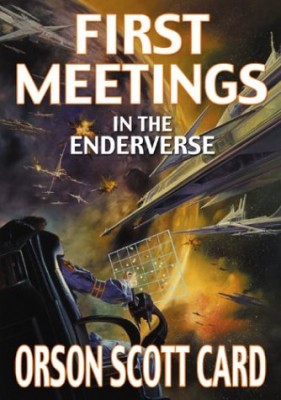
osc_first_meetingsIf you fell in love with science fiction when you were twelve, chances were it was because of the awesome space battles.  That was certainly the case with me.  When I saw Star Wars for the first time, I spent hours running around the house pretending I was flying my own starfighter.  In some ways, I’ve never really stopped. 😛

Ever since space opera became its own subgenre, space warfare has featured prominently in it, probably for the same reasons that Homer and Tolstoy framed their sprawling epics with a tale of war.  Where else are you going to find enough drama to fill volumes?  The fact that it’s set in space makes it so much cooler.

There are a lot of things about the space setting that make war stories different from those set here on Earth.  For one thing, there’s a huge element of exploration and unknown.  Even before we took the first photographs of Earth from space, there pretty much isn’t any corner on this planet that hasn’t been discovered by somebody.  In space, though, it’s still possible to stumble on a hidden planet, or find a mysterious alien artifact that can turn the tide of the war (Halo, anyone?).

For another thing, the dynamics of battle are completely different.  Sure, some stories treat space like an ocean, and there’s certainly a place for that kind of story, but the more interesting ones (at least to me) take into account all the profound differences.  For one thing, the zero gravity means that there is no “up” or “down,” which means that you have to deal with the possibility of attack coming from any direction, not just along a horizontal plane.  That concept alone drives the battles in Orson Scott Card’s Ender’s Game series, where “the enemy’s gate is down.”

One thing that really tickles me is when the story takes things a step further and incorporates things like orbital mechanics and delta-v.  I haven’t seen many books or games that do this, but the ones that do have really engrossed me by making the world feel that much more real.  Glen Cook did it in Passage At Arms, and the new Battlestar Galactica did it in the viper dogfights (though I’m not sure if they did it on the ship-to-ship scale).

The implications of real-world space physics on warfare are quite fascinating.  Rocketpunk Manifesto is an excellent blog that’s almost entirely dedicated to exploring them all, with all sorts of fascinating discussions on what the “plausible mid-future” may look like.  But even if all you’re looking for is an entertaining romp through space, the story telling possibilities are so much greater when you take the constraints of physics into account.

For example, if it takes months or even years to travel between planets, and orbital trajectories are fairly straightforward to figure out, how does it affect things if you can see the enemy fleet coming at your planet that long in advance?  If escape velocity from a gravity well like Earth is so difficult to achieve, what does that mean about the possibility of long-term planetary sieges?  And if starships are so far apart and moving so fast as to make full-on broadsides unlikely, how does that shape the battle tactics and strategy?  In spite of the physical constraints (or indeed, perhaps because of them), the possibilities are endless.

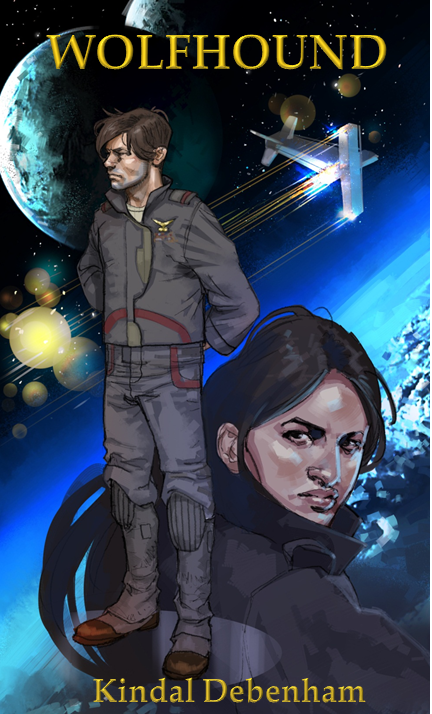
Man, I love me some good space battles.  One of my recent sci-fi favorites that features some epic battles is Wolfhound by my friend Kindal Debenham.  In my own work, you’ll find lots of them, especially in the Gaia Nova series (Bringing Stella Home, Stars of Blood and Glory, and to a lesser extent Desert Stars).  They say that the golden age for science fiction is about twelve years old, and that’s definitely true for me.  Expect to see lots more space battles from me in the future.

LTUE 2013

Man, LTUE 2013 was this weekend, and it was AWESOME.  One of the best conventions I’ve ever attended.  I spoke on my first panel, attended my first book signing event as an author, and got to meet up with some old friends, as well as some amazing new people.

Since I live tweeted most of the panels I attended, I thought it might be interesting to repost a few of those here, with some additional thoughts.  So…here goes!

THURSDAY

I believe this was Scott Parkin from the “What Do You Write?” panel. Good advice. Megan Whalen Turner also had some very interesting things to say on the subject of genre, which I have since forgotten. But I recorded it, and the recording will eventually be made publicly available in the LTUE conference archives, or so I’ve been told.

This one was from the “What Is ‘Punk’ Literature and Its Many Genres?” panel. David Butler and Larry Correia were HILARIOUS. Nearly got into a wrestling match right in front of us.

And when the esteemed Mr. Butler began to describe his book, I swear, a choir of steampunk angel Moronis somewhere began to sing a heavenly chorus. I mean, he had me with Edgar Allen Poe faking his death to become a secret agent, but Orson Pratt’s phlogiston guns? Eliza R. Snow as chief counterintelligence officer for the Kingdom of Deseret? I will definitely be checking out this book, City of the Saints (which is apparently a finalist for the 2013 Whitney Award).

David Butler is also a way cool guy. I hung out with him a bit in the dealer’s room, chatting about Mormon history, Lyman Wight (“shoot and be damned!”), Sir Richard Francis Burton’s expedition to Salt Lake City, and all sorts of other crazy zany stuff. And the whole time, he was playing a guitar. So yeah, definitely a way cool guy.

This discovery CHANGED MY LIFE. Also, it helped me to save immensely on lunch money, as well as join in on some way cool conversations with other panelists as they desperately tried to escape their fans. Okay, not really, but the green room was AWESOME.

Howard Taylor’s presentation on teasers was tremendously insightful. In a nutshell, he said that a teaser (aka book description on Amazon / back cover) should have or at least point to the following things:

  1. The inciting incident
  2. Character action
  3. Conflict
  4. Hook

We then went over a few examples, including some good ones that broke these rules, and finished up by doctoring a couple of teasers volunteered from the audience. Howard Taylor admitted to me later that he wasn’t entirely satisfied with the way he presented it, but I get the impression that he’s never entirely satisfied with anything less than perfection. It was a great workshop.

From “Engaging the Reader.” Great panel. Lisa Mangum described the planning / drafting / revising process for each of her first three novels, and they were all wildly different. With seven novels under my belt so far, I can definitely relate. Some, like Genesis Earth and Stars of Blood and Glory, practically write themselves. Others are like having a c-section with a hacksaw. And others…yeah, I’m not going to go there.

FRIDAY

Okay, maybe I said one useful thing: when there’s a language barrier, little things become big obstacles. One of the other panelists, Anna Del C. Dye, also had a bunch of stories about adapting to a foreign language and culture (in her case, the United States).

Overall, the panel was really, really fun! I also had some cards out for Star Wanderers: Outworlder, and a bunch of people came up afterward to get them. Guess I must have said something interesting. I hope you guys enjoy the book!


From “Current Trends in SF.” Great panel–it totally wasn’t just another over-hyped discussion about what’s hot right now. I asked how the panelists think the trend cycle will change in the age of self-published ebooks, and they had some very interesting things to say. They all agreed that speed to market, while it may give some advantages, isn’t a make-or-break game changer, or even really a good strategy (unless you really love the trend you’re writing to). Some things change, others remain the same. It will be interesting to give this one a re-listen.


From “Creators in the Community.” Probably one of the best panels of the entire convention. Tracy Hickman is really on top of the changes in the publishing world, and had a lot of interesting things to say about it in all of his panels. As for the subject of writerly communities, much wisdom and insight was shared by all of the panelists. Definitely look for this one.

Man, I’d forgotten how cool the guys at Dungeon Crawlers Radio are! They interviewed me back in 2011, when I was just getting ready to publish Genesis Earth. This time, we talked about space opera, sci-fi romance, language barriers in marriage and all the crazy things I have to look forward to, and a bunch of other stuff. I also shared some of my thoughts and opinions on self-publishing myths, especially regarding the “tsunami of crap.” We coined a new word, “nerdaissance,” to describe all the awesome new stuff that’s coming out now, thanks to the ease of self-publishing.

So yeah, it was a great interview! I’ll definitely be cross-linking once it goes live.

From “Effective Book Covers.” Great panel with some very good artists and cover designers, including Isaac Stewart who does all the maps for Brandon Sanderson. Although some parts were geared toward illustrators, most of the advice was for writers (especially self-pubbing writers) who are looking to design their own covers. Lots of great and insightful perspectives from the visual arts side of things.

FRIDAY NIGHT BOOK SIGNING

Okay, I’ve got to be honest: when I went into the mass signing with my cardboard box of CreateSpace POD novels, I didn’t expect to sell anything. I figured that was just my ticket to get a seat at a table and hand out cards for Star Wanderers: Outworlder to some of the casual book browsers.

Well, I was pleasantly surprised! An uncle of one of my old mission companions was impressed enough to buy a couple of copies. I think he’s one of these guys who likes to buy things from new authors to help encourage them. It’s great to see people like that. He told me to keep writing, and I told him I definitely would!

Lots of people snagged the card for Outworlder, and I came up with a pretty decent pitch: “it’s about a starship pilot who accidentally marries a girl who doesn’t speak his language.” That raised a lot of eyebrows! A lot of people were really happy to see a science fiction story, especially a space adventure. I get the impression that there’s a craving for this kind of stuff in the market that isn’t currently being satisfied. So yeah, that was very encouraging!

After things wound down a bit, I wandered around the signing checking out some of the other books. Saw a couple that I recognized from the Kindle Boards, which was interesting. Chatted with them, as well as a bunch of geeky guys about chain mail, Halo, Frank Herbert, and all sorts of awesome stuff. Man, the best part about sci-fi/fantasy conventions is the chance to just talk with people! So much interesting stuff. It was great.

SATURDAY


From “Write For the Market or Write What You Know?” Another great panel. Definitely will be re-listening to that one.

From the main address with Megan Whalen Turner. She talked about book censorship and the need to teach children how to make their own reading choices, rather than keeping them sheltered and making the choice for them. She pointed out how every time a New York Times article comes out bemoaning some YA book for inappropriate content, it’s kind of hypocritical because there are so many other books they miss. The Golden Compass, for example, didn’t even pop up on their radar until the movie came out. Kids don’t magically become mature, well-adjusted adults when they turn 18–we have to teach them to make these choices (and mistakes) for themselves.

From “How Does Your Story Mean?” Great discussion on the writing process. Saw a lot of other good live-tweets during this one.

Okay, I take back what I said about the best panel of the convention. THIS was definitely the best. “The Engines of Exploration,” with Howard Taylor, Megan Whalen Turner, Roger White, James Owen, Kevin Evans, and Charles Stanford–the panel was packed. It basically turned into a round-robin discussion of which commodities are most essential to modern civilization, which ones will be the most valuable in the event of a societal collapse, and which ones will take us to the stars. The eventual consensus on each of these eventually came down to goats. Seriously. GOATS!


From “Writing Romance Without Erotica.” Lots of delicious awkwardness, as well as some really interesting thoughts and perspectives on the subject of romance. One of the panelists talked about the importance of “character penetration” without realizing about halfway through the panel how hilarious that phrase sounded in this context. But yeah, there was also a lot of wisdom in there as well. There are a lot of strong opinions about sex and romance floating around in this part of the world, so it was a very spirited and interesting panel.


The last panel of the convention (technically, symposium, but whatever) was “eBook Publishing” with some highly successful indies like Michaelbrent Collings. As you can tell from the tweets, it was a bit controversial, but very, very interesting. Questions were flying all over the place, on subjects ranging from formatting to building an audience. The biggest shock to me was that none of the panelists (none of them!) are on Smashwords. It’s a wild, wild west out here in indie-land. Makes me wonder, maybe I should publish to iTunes through another venue? Hmmmm…

So yeah, that was pretty much the whole convention/symposium. I finished it out by playing Alhambra with a bunch of friends from Kindal Debenham’s writing group who came down from Seattle and Idaho. Good, good times–it was actually kind of sad to say goodbye. Definitely worth coming 11 time zones to attend.

All I can say is that I am STOKED for Conduit!
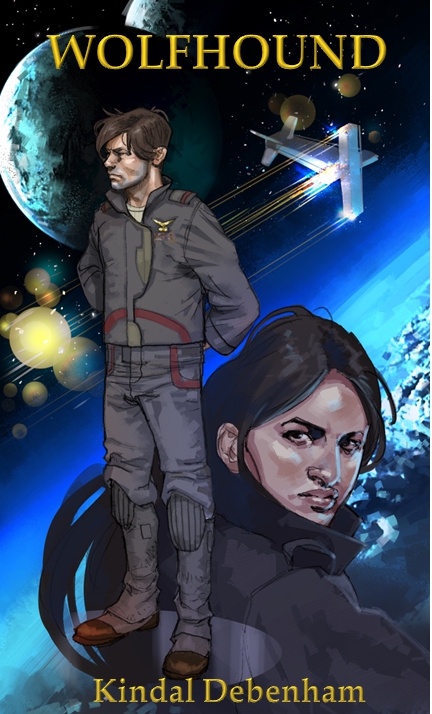
Wolfhound by Kindal Debenham

Jacob Hull may be just a spacer’s son, but he’s not afraid to dream big.  As an ensign in the Celostian Navy, his biggest dream is to pilot a destroyer like the Wolfhound, the brand new ship on which he receives his first assignment.  But when pirates attack on their training exercises and drive them far from the rest of the Celostian fleet, Hull realizes that his dream might be more than he asked for…

Full disclosure: Kindal Debenham is actually a good friend of mine–we were both members of Quark in college and still keep in touch as alpha readers for each others’ books.  That’s not why I’m saying that I loved this book, though.  I’ll admit, I had a few doubts when I first started it.  The descriptions are a little wordy, the formatting isn’t perfectly clean–but none of that really matters, because the story is AWESOME.

Why is it so awesome?  Because it’s full of characters you want to root for, facing one impossible conflict after the other, each one bigger and more daunting than the one before.  The story gets off to a decent start, but it really starts to take off after the first third or so, and just keeps getting better and better right up to the end.

Seriously, this is the kind of book I used to hunt for in the library as a kid.  It reminds me a little of the old Star Wars novels by Timothy Zahn, Kevin J. Anderson and Michael A. Stackpole.  Forget dark, dystopian futures and boring, high-concept stuff–this is some rip-roaring space opera, with stations you wish you could visit and starships you wish you could fly.

So yeah, I loved this book.  Great read; once I got into the second half, I couldn’t put it down.  If you’re a fan of space adventure stories, you should definitely check out this book.  It’s available from both Amazon and Smashwords as an indie published ebook, and it’s actually holding it’s own quite well on the Amazon bestseller lists.  It definitely deserves the spot!  Oh, and if you want to check out Kindal’s blog, you can find him here.

Quick update and Star Wanderers cover previews

First off, I’m happy to say that Stars of Blood and Glory is coming along quite nicely.  I’m currently finishing up with the last couple of chapters, and should have the first draft done by the middle of next week.  Hopefully by then I’ll know if and when I’m starting my TEFL job overseas, but I’m sure I’ll have it finished before then.

This first draft is pretty rough, so I’m sure it’ll be a while before it’s up and ready for you to read.  For some reason, this draft is extremely short–I doubt it’ll be much longer than 80,000 words.  I don’t know if that means my writing has gotten tighter since Bringing Stella Home, or if I’ve unintentionally left too much out.  I’ll probably let it simmer for a few months, do a quick revision, and send it out to some first readers, just like I’ve done for Heart of the Nebula.

In the meantime, I’m getting really excited to pick up work again on Star Wanderers. I’ve been workshopping part II in Kindal’s writing group, just to get some reactions.  I’ll probably revise that part while I’m writing parts III and IV, getting it ready for publication after I hear back from Writers of the Future according to the serial model I outlined previously.

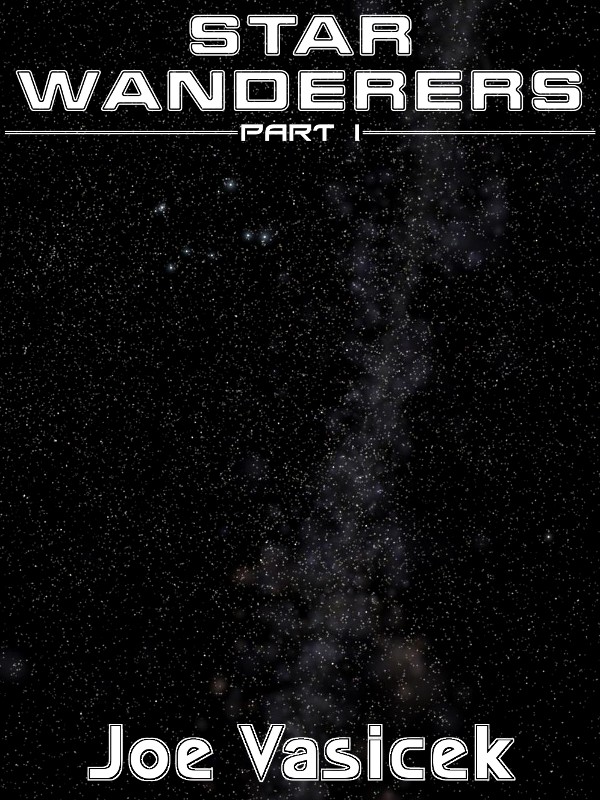
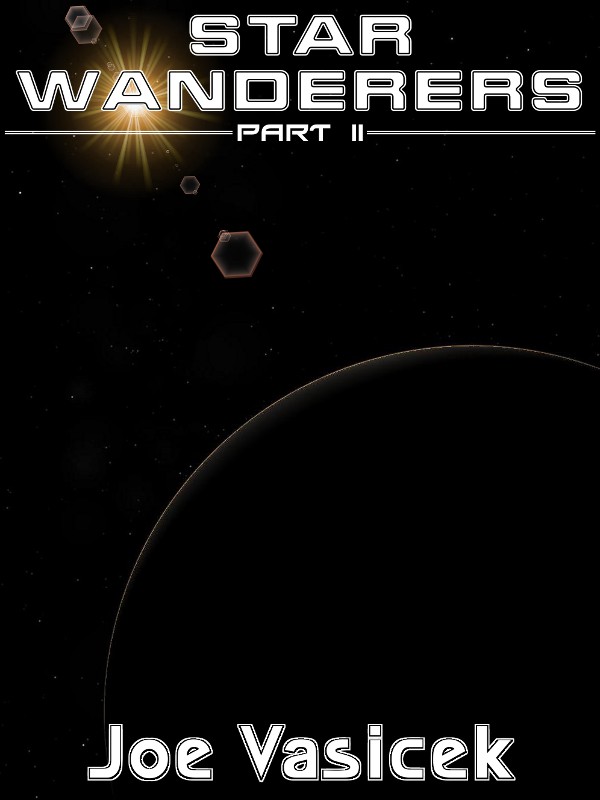
I’m so excited, in fact, that I went ahead and made some mock-ups for the cover art!

Pretty cool, huh?  These make me sooo happy. 🙂

I’m not quite sure if this is the right design, though.  Star Wanderers is very much a science fiction romance, and while these covers definitely scream “science fiction!” they don’t really seem to say “romance!”

My original idea was to use these as backgrounds and commission an artist to do some character portraits from the waist up, using one portrait each for the foreground.  But then again, that might make the covers a bit too complicated.  I can always redo the first one to get rid of the planet, keeping the galaxy–the other ones probably wouldn’t be so bad with a character in the middle.  But then again…

I don’t know.  What do you guys think?  If you saw one of these covers while browsing for ebooks, what kind of impression would it give you, and would you be interested in checking it out?

(By the way, I made the covers with Celestia.  Coolest.  Space simulation.  Ever.)

EDIT: I decided to redo the first cover; the planet wasn’t quite doing it for me.  I’m not sure if that means I should redo the cover for the third part, since that one is a heck of a lot more colorful than the others…hmm.  We’ll have to see.

Trope Tuesday: Space pirates with Kindal Debenham

For today’s Trope Tuesday post, I thought it would be fun to bring on my friend Kindal Debenham to speak about one of the tropes in his new book, Wolfhound.

Kindal and I were in the same writing group in college, and attended Brandon Sanderson’s English 318 class together.  I just picked up a copy of his book, and it’s pretty good–definitely the kind of science fiction that I love.  You can currently find Wolfhound on Amazon, as well as Kindal’s self-publishing site.

So anyhow, here’s Kindal’s discussion of space pirates in Wolfhound.

==============================

Space pirates are kind of a staple in science fiction. We’ve seen them in all sorts of different forms since the genre came into being. As the trope states, though, there are basically two main classes. The first class is basically a bunch of violent criminals on a spaceship, kind of mirroring the behavior of modern day pirates in Somalia or Southeast Asia. The second are a corny recycled in space variant of the eighteenth century Caribbean pirate with robotic peg legs and a space parrot. Obviously one is a bit more realistic than the other. 🙂

The version I went for leans a lot more heavily on the first class of space pirates rather than the second. I wanted a smaller scale conflict in order to introduce my main character, and pirates seemed to be a good opponent to use for that purpose. Since the ship that Jacob Hull is on was partially based on the USS Constitution, I decided that I could use some of the pirates that ship fought during its history: the Barbary pirates.

These pirates weren’t your clichéd corsairs with parrots and a desire for plunder. The Barbary pirates were a collection of raiders that operated out of northern Africa. Their motivation was to support their nations by taking ships and capturing crews, which they then added to their fleet and put to work as slaves. In addition to raiding ships, the Barbary pirates also went on slave raids throughout southern Europe. They would accept tribute to ignore the ships of certain countries (think ‘protection money’ for a mob equivalent). The US had to pay about a fifth of the early national budget in tribute to these pirates until the politicians decided that guns were cheaper to buy—which led directly to the creation of the USS Constitution.

Building off of those ideas, I created the Telosian pirates. Vicious, more interested in valuable ransom for prisoners and well armed ships than simple cargo, and willing to do just about anything to satisfy their greed. With an utter ruthlessness only matched by their subtle plots, they made quite a good enemy for Jacob Hull and the rest of Wolfhound’s crew, and they were a much more interesting enemy to fight than a stereotypical Pirate-with-an-Eyepatch would have been. In my opinion at least, though I’m a little biased.

So those are the bad guys of Wolfhound—at least, they’re the majority of the bad guys—and believe me, they live up to their reputation as nasty pieces of work. Hope you guys enojoyed the background, and I hope I didn’t get too history nerd on you guys. See you around!

Tag and such

So my cousin Angela tagged me in this cross-linking truth-or-dare blog game, and it looks fun so I figured I’d participate.  Here goes:

Do you think you’re hot?

I suffer from no illusions as to my ability (or rather, lack thereof) to carnally attract the opposite sex.  That’s not to say I’m ugly, but when you apply the Pareto principle to dating (and let’s be honest, it’s really more of a 90/10 split), I don’t make the cut.

And you know what?  I’m fine with that.  Because it only takes one…

What is  your current desktop wallpaper?

This glorious image from APOD (Astronomy Picture of the Day).  It’s enough to make me want to move to Iceland, and that’s saying something.

When was the last time you ate chicken?

I made some awesome fajitas last week, and the chicken was on sale at Maceys.  I always cook my own chicken; I hate the precooked frozen stuff.

What were you thinking as you were doing this?

Who comes up with these things anyway?  Hmm, I wonder if I could start one…

Do you have nicknames?

I have two internet screen names, which are probably the only nicknames of mine that are still in use (besides the ones people use behind my back).  The first is “onelowerlight,” and it’s all over the place.  The second I use only on deviant art and a certain fan-fiction site, and it is and shall remain a closely guarded secret.

Tag eight blogger friends…

Alright, let’s do this.  LEEERRROYYY…

Gods, Witches, Space & Stars
Kate in Katy
Myself as Written
One Modern Mormon
Truthiness
Fertilizer
Not A Villain (technically a webcomic not a blog, but hey she’s an old friend)
سفريات أنثون

Who’s listed as number one?

My old writing friend Laura, who just got back from an LDS mission in Armenia.  Has a lot of interesting and insightful things to say, such as her last post on the difference between strong female characters who are independent vs. strong female characters who are interdependent.

Say something about number five.

Sarah is one of my little sisters, and she just had a baby!  Also, she worked for a couple years in a survivalist-oriented wilderness therapy program, and knows how to make traps, kill and eat animals, and make fire with sticks and a bow.  Oh, and she’s also hilarious.  If I’m ever stranded on a desert island, she’s my first pick for who I’d want with me.

How did you get to know number three?

Chuck?  I think she showed up at a writing group meeting when I was VP of Quark.  She was never really active in the club, but we also took Sanderson’s 318 class a couple times and went to CONduit in 2008 together.  Meh; she’s alright, I guess (jk!).

How about number four?

(who comes up with these questions?)

Mykle is my geekiest brother in law, at least in terms of books and sf&f fandom (linux, that would be Danny).  He married Sarah two months after meeting her and I think it was the best decision either of them ever made.  He doesn’t blog much, but when he does, it’s always thoughtful and interesting.

Leave a message for number six

Thanks Kindal for the feedback on Worlds Away! Blunt as always but quite helpful.

Leave a lovey-dovey message for number two

For my sister?? Ewwwww…

Seriously Kate, I love your blog.  And you have the freaking cutest daughter on the face of the planet.  Thanks for making me an uncle!

Do number seven and number eight have any similarities?

Yes, in fact.  Aneeka (no. 7) spent a couple years teaching English in Japan; Anthon (no. 8 ) hasn’t spent more than a week or two in the same place (or more than a month or two on the same continent) for the last two years.  Let me just say, I am in awe of these world travelers and hope to do likewise at some point in the future.

That’s it folks.  At least I have chicken.

Story Notebook #3 (part 1)

I’m not sure whether this notebook is #3 or #2. There’s a lot of notes from English 318, which would put it in the winter, but I don’t know if it’s from ’08 or ’09.

Not that that matters; ideas are ideas.  And here they are!

An empty parking garage with no exit.

Covered this already in a previous post. Strangely, it’s one of the most popular posts on this blog. I constantly get search engine traffic from people googling “empty parking garage” and other such stuff. Who googles “parking garage”? Weird.

Telepathy through instant messaging between microchips interfaced with the brain.

Also covered in the same post.

And they all lived evily ever after.

Bwahahah! I’ve got Jakeson to thank for this line–specifically, from a conversation at LTUE. Good times!

A TV show where the viewers vote between ads what should happen next.

I’m pretty sure I got this idea from an Escape Pod story–one of the Hugo short story nominations from ’06 or ’07, IIRC.

What if the human mind, which we think is so great, is ridiculously broken?

After all, isn’t it true that we only use a tiny fraction of our brain’s capacity during our lifetime? What if the true potential of the human mind far outstrips anything we could possibly imagine?

What if the human brain was manifested as some sort of library / processing building, with short term, easy access, and archival memory sections manifested as bookshelves and long rooms? And there were flies or insects or parasites of some sort that fed on the archives, causing forgetfulness? And you were trapped in there?

I’m pretty sure I was tripping out on the Brain Science podcast at this time, combined with an old Roger Allen McBride novel about time travel and terraforming. Good times.

What would it be like to be God’s intern?

FREAKING HARD.

If perfect, instantaneous communication is possible, doesn’t this blur the individual identities of those speaking, so that they become simply voices in one mind? If so, does this mean that our individuality is based on the ways we misunderstand each other?

At its core, this idea is a take on the whole perfection vs. personality debate: the question of whether our individual personalities disappear as we approach Godlike perfection. I’ve come to the conclusion that this is not the case, but that’s a discussion for my other blog (which I have not updated in a ridiculously long time, dangit).

A middle aged mom at a children’s book fair in Utah who has a tattoo partially showing from under her sleeve

I saw this in the Wilk one day, and started wondering about this woman. Who is she? Where did she get the tattoo? Why is she at a Utah Children’s Book Fair, which is about as far removed from tattoos and tattooed society as you can get?

A robot that was made to suffer, as part of an experiment.

It makes you wonder what ‘suffering’ actually is. Do inanimate objects suffer? Do the rocks and clouds and sky and stars suffer? Do they weep for us?

On that trippy note, I’ll cut this short and finish reviewing the notebook in a later post. Until then, stay awesome.

Chomping at the bit

It’s 1:30 am where I am, and I just finished reading through the second draft of Bringing Stella Home and all of my first readers’ comments.  I don’t know how to describe what I’m feeling right now, but I am so ready to make this story shine!

First of all, the story itself is incredibly powerful, at least to me.  True, the current draft is full of problems (some of them so embarrassing I cringe just to think that I allowed other people to read it) but at its core, there is definitely something poignant and moving.  One of my first readers is on active duty right now in Afghanistan, and it actually inspired him to write a poem.

Of course, a reader can be “moved” in bad ways as well as good, and some of the feedback on the current draft’s problems brought out a side of my friends that I didn’t know even existed (yes, Kindal, I’m talking about you).  Seriously, reading those comments was like getting gutted and filleted with a rusty fishing knife.  If I’d had problems with my self esteem, I probably would have cried.

Oh well.  At least it wasn’t boring. 🙂

But harsh or not, the comments were all useful–surprisingly useful, actually.  In a story this big, it’s easy to miss things (even big things like character motivations), but after reading through all my reader comments, I feel confident that I’ve got a solid outline for the revision.

Some of the suggestions were pretty dang good, too.  Usually, I only adopt about half (or less) of the proscriptive comments my readers give me, but this time, I’ll probably end up taking quite a few more.  I don’t know if it’s because I was an idiot when I wrote the first draft or because my readers were getting into the story a lot more than usual, but the advice this time opened me up to all kinds of new ideas.

I probably can’t say much more without spoiling my own story, and I definitely don’t want to do that.  Let me just finish by saying that I believe this story may be the one that breaks me into publishing.  I hope this doesn’t sound conceited or arrogant, because I don’t mean it that way at all.  I just think that this story has some serious potential, and that if I treat it right, it will end up in print someday.

Inshallah, someday soon!

In the meantime, I’m going to put everything into revising this next draft–that is, everything short of secluding myself in a white room and starving myself (or graduating and not looking for a job, which is a more realistic possibility).  This story is calling to me–it needs to be told.  It needs to be fixed.  It needs to be polished and shared with other readers.

It needs a lot of work.  But now it’s 2:00 pm, and I’d better get to bed.  Another exciting day of photocopying newspaper clippings and compiling spreadsheets of data on press freedom in Turkey awaits me.  Excuse me if I sound too excited.

The end of an era

Today was my last writing meeting as Quark writing vp. :'(

It’s been a good run, two years as leader of the Quark Writing Group at BYU. I remember how it was when I started–I was still just a hobby writer, with a nebulous interest in getting published someday but without any real goals or plans. I heard about the group from some friends, but didn’t really start going until winter of ’07, as Reigheena and Aneeka were graduating. One day, I showed up after the meeting was finished (but everyone was still hanging around chatting) and Reigheena was like “so, you want to be writing vp next year?”

I was kind of nervous but really excited that first semester, with lots of ideas to try out. We posted our fliers around all the freshman dorms the first couple days of class (most of the members were graduating and/or moving on), and we got quite a few new members, as well as curious English majors who came for a couple of times before moving on.

Those first days, meetings were two hours long, the submissions were up to 4,500 words, and we did four of them every meeting. We met in the basement of the BYU library, in one of the study rooms, and we crammed between ten and fifteen people down there each meeting. Pretty intense! Two hours was not enough time to comfortably cover everyone’s story, and we always felt rushed. We held meetings every other week (or, more accurately, every 1.5 weeks) on a weird schedule that only I really had figured out.

Well, after that first semester, we made a few changes. Reduced the submissions length to 2,500 words, the number of submissions to 3, and the length of the meetings to one hour instead of two. I think we also started meeting weekly, instead of the weird Tuesday–Saturday–Tuesday schedule. We also got a real room, over in the Talmadge building.

Things have definitely changed. This past year, we didn’t really do much to get new members, but we have started to bring in people from the other sections of Quark. A lot of other old timers have moved on–Drek moved up to Draper, so I doubt we’ll see much of him, and Jakeson and Gamila have been coming less and less as they move on to the next stage of their lives. Still, it’s been fun, holding our weekly writing meetings each Saturday.

While I always tried to encourage everyone to be frank and honest with their criticism, we’ve also done a good job diffusing that tension with humor. Here are some of my favorite quotes from my time as writing vp:

“He has two guns in the office and he wants to give Autumn a talking-too for having a knife in her boots?”
“She’s an intern.”

“Other than that, I thought it was just good ol’ fashioned fantasy violence.”

“I don’t remember anything about your characters right now, but I remember when I was reading your story that they were very distinct and I knew who they were.”

“I’m trying to think of something I can say that doesn’t sound like a critique.”
“Your writing is…legible”

“I have a friend that had a way to hide a knife in her hair.”
“I want a wife like that!”

“Some books don’t have chapters, they have acts.”
“We have a name for those. We call them… ‘plays’.”

“As always, your writing was legible.”
“No, wait, it wasn’t! It was courier!”

“If this was meant as a short story and not the beginning of a novel, “defenestration” will suddenly become a useful word in your vocabulary.”

“Maybe I should write a prologue about a writer who’s writing a prologue and realizes that nobody ever reads them.”

“It doesn’t have to be functional, it can just be like ‘hey, we make gears.'”

“The love in Twilight is all based on scent: he smells nice and she smells delicious.”

“The goatee gives me programming x2.”

“Missions…”
“The first six months…”
“The first two years…”

“I like getting to the exciting event within a page of the story.”
“Frodo, see this ring? Destroy it!”

“I loved how flat your characters were!”
“You’re so good at poor writing!”

“Maybe ‘MacBeth’ could be a title. Like, the leader is known as ‘The Macbeth.'”
“Yeah! And all the lower downs would be ‘the Duncans.'”

“Wait… I did write something good… at the very end!”
“Like, ‘Oh good, it ended!”
“You are putting words into my criticism!”

“Then I thought, what would my characters be like if they were alive? And then I was afraid.”

Ah, the good times. It’s so sad to log onto the Quark forums now and not have moderator privileges, to know that I won’t be sending out those weekly emails, moderating things, doing all that other stuff. It’s the end of an era for me. My duties as writing vp for Quark have been a major part of my college experience here at BYU, and I won’t forget it.