How I Would Vote Now: 2000 Hugo Awards (Best Novel)

The Nominees

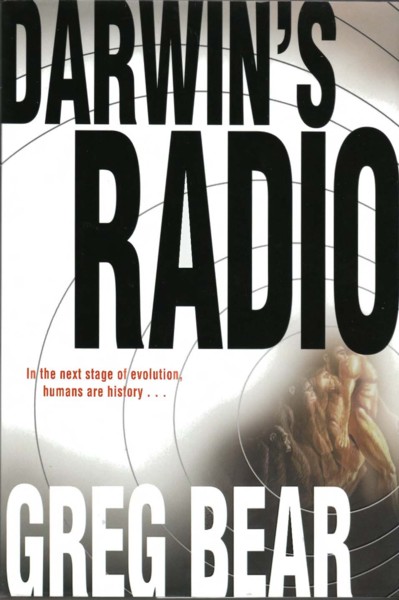
Darwin’s Radio by Greg Bear
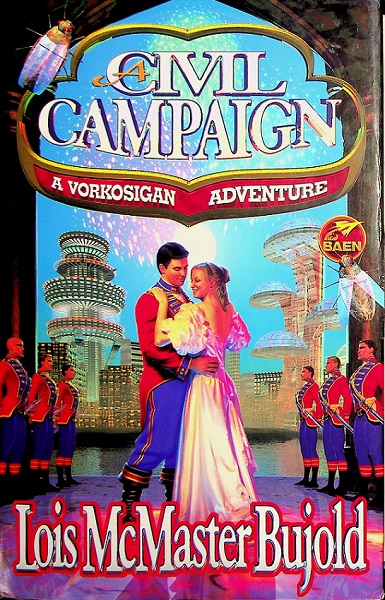
A Civil Campaign by Lois McMaster Bujold

Harry Potter and the Prisoner of Azkaban by J. K. Rowling
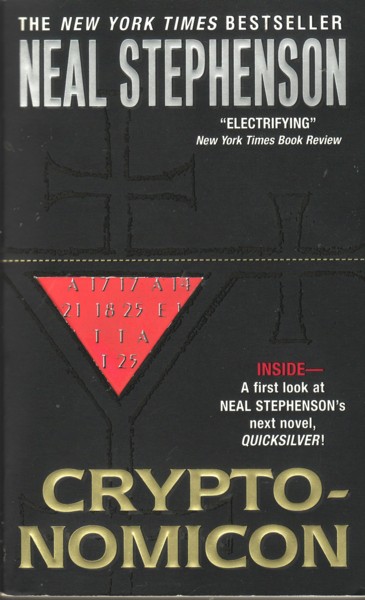
Cryptonomicon by Neal Stephenson

A Deepness in the Sky by Vernor Vinge

The Actual Results

  1. A Deepness in the Sky by Vernor Vinge
  2. A Civil Campaign by Lois McMaster Bujold
  3. Cryptonomicon by Neal Stephenson
  4. Darwin’s Radio by Greg Bear
  5. Harry Potter and the Prisoner of Azkaban by J. K. Rowling

How I Would Vote Now

  1. Harry Potter and the Prisoner of Azkaban by J. K. Rowling

Explanation

It’s been a long time since I read any of the Harry Potter books, but I thoroughly enjoyed Harry Potter and the Prisoner of Azkaban and would have no issue voting for it in one of these awards. But I DNFed all of the other books on the ballot for this year, so I couldn’t bring myself to vote for any of them.

I really wanted to enjoy A Deepness in the Sky, and will probably read it again at some point, especially since my wife really enjoyed this one and gives me a hard time for DNFing it. Also, it’s the kind of science fiction that’s right up my wheelhouse, so I kind of feel bad about not finishing it.

So what’s the deal? The first time I tried to read it, I got caught up in this enormous subplot where the good guys, after having been mentally enslaved by the bad guys, try to figure out a way to break them all free. It goes on for over 100 pages, with an elaborate plan that involves secretly drilling into an asteroid and taking enormous risks. I got really into it, rooting for them to succeed… only for the whole thing to fail miserably, to the point where all of the characters involved in the actual escape attempt to die horribly, and everyone else who was enslaved (including a 14 year old girl, a major character in the book, who is sexually exploited by the villain of the novel) to go on about their happy little mentally enslaved lives without even realizing what had happened.

After that enormous letdown, I just couldn’t get back into the book. The stuff with the aliens was really cool, and I enjoyed that very much, but all of the stuff with the humans just made me want to stop reading the book. It was a little bit like my experience with Children of Time by Adrian Tchaikovsky, except with that book, there was never the false hope that the humans were on the verge of heroically saving themselves; things just kept getting progressively worse and worse until the alien and human storylines converged, in an awesome and thoroughly satisfying way. And maybe that happens in A Deepness in the Sky too, but I don’t know if I’ll ever find out. Maybe someday.

I enjoyed the first few Vorkosigan Saga books, especially The Warrior’s Apprentice. I even enjoyed some of the spinoff novels that aren’t about Miles Vorkosigan, like Ethan of Athos. But the later books in the series just feel too much like a soap opera rehash of the characters from the earlier books. That was why I couldn’t really get into A Civil Campaign.

It also doesn’t help that I read a bunch of the books out of order, partially because they were written out of order and partially because the order of the books isn’t clearly labeled (and how can they be, with how Bujold is always skipping around writing in different parts of the timeline?) Whenever I start a new series, I always try to read it in chronological order, not publication order, but in every Vorkosigan novel I read, it seems that Bujold refers to at least half a dozen things that happened in some previous book that I haven’t read. Some of these, apparently, are books she hasn’t written yet (or books that she hadn’t yet written at the time when I was reading).

So my whole experience of the Vorkosigan Saga has just been very confusing all around. And looking back, I can say that neither the publication order nor the chronological order is the right way to read the series. Shards of Honor and Falling Free really aren’t the best books to start out with, even though they happen first chronologically, but a part of me wishes I’d read Barrayar before The Warrior’s Apprentice, since that would have made a lot of the political intrigue much more satisfying.

Honestly, though, it seems to me that the Vorkosigan Saga has just gone on way too long in general. Which is probably why I couldn’t get into A Civil Campaign.

As for Cryptonomicon, it was way too dense and raunchy. The first chapter has more homoerotic innuendo than explicit gay sex, but it was still just too much for me, and the writing was so dense that I never really got into the novel itself. Neal Stephenson’s writing has always been like that for me, and I’ve read enough of his other books to know that he definitely crosses the line in terms of explicit sexual content. I’ve never been able to finish anything he’s written. I was tempted to put Cryptonomicon beneath No Award, but I decided it didn’t quite cross that line for me. It’s close, though.

I forget why I DNFed Darwin’s Radio, but I think it mostly had to do with how I really didn’t care about any of the characters. I think the main character was having an affair or something, too, which made me really not like him. That’s the thing about high-concept science fiction: the plot or characters are often not nearly as well thought out, and since that’s what I often read for, I sometimes find it really difficult to get into those kinds of books. But it wasn’t terrible, just not my kind of story.
Reading Resolution Update: Before 2022

My 2022 Reading Resolution: Read or DNF every novel that has won a Hugo or a Nebula award, and acquire all the good ones.

I was going to keep track of my reading resolution this year by mentioning each book and what I liked or didn’t like about it, why I DNFed it if I did, etc… and then I thought about it a little more and realized that that’s a terrible idea. Perhaps if I weren’t an author myself, I could risk bringing down the wrath of the internet by broadcasting everything that I really think about these books, but that’s still a really stupid thing to do—not to mention, a great way to burn a bunch of bridges that, as a writer, I really shouldn’t burn.

Instead, I’m going to post a monthly update where I list all of the books that I read and want to acquire, all the books that I read and probably won’t acquire, and all of the books that I DNFed, without any book-specific commentary. I do think that having some public accountability will help me to keep this resolution, and I do intend to keep it. But because I anticipate DNFing a lot of books that have very, um, merciless fans, this seems like a better way to do it.

So here is how things stood on the morning of January 1st, 2022:

Books that I read and want to / have already acquired:

  • Double Star by Robert A. Heinlein (1956 Hugo)
  • Starship Troopers by Robert A. Heinlein (1960 Hugo)
  • A Canticle for Leibowitz by Walter M. Miller Jr. (1961 Hugo)
  • The Man in the High Castle by Phillip K. Dick (1963 Hugo)
  • Dune by Frank Herbert (1966 Hugo and Nebula)
  • The Left Hand of Darkness by Ursula K. Le Guin (1970 Hugo and Nebula)
  • The Dispossessed by Ursula K. Le Guin (1975 Hugo and Nebula)
  • Downbelow Station by C.J. Cherryh (1982 Hugo)
  • Neuromancer by William Gibson (1985 Hugo and Nebula)
  • Ender’s Game by Orson Scott Card (1986 Hugo and Nebula)
  • Speaker for the Dead by Orson Scott Card (1987 Hugo and Nebula)
  • Barrayar by Lois McMaster Bujold (1992 Hugo)
  • Mirror Dance by Lois McMaster Bujold (1995 Hugo)
  • The Mule (included in Foundation and Empire) by Isaac Asimov (1946 Retro Hugo, awarded in 1996)
  • Harry Potter and the Goblet of Fire by J.K. Rowling (2001 Hugo)
  • Farmer in the Sky by Robert A. Heinlein (1951 Retro Hugo, awarded in 2001)
  • Fahrenheit 451 by Ray Bradbury (1954 Retro Hugo, awarded in 2004)
  • Spin by Robert Charles Wilson (2006 Hugo)
  • The Sword in the Stone by T.H. White (1939 Retro Hugo, awarded in 2014)
  • Network Effect by Martha Wells (2021 Hugo and Nebula)

Books that I read and don’t plan to acquire:

  • The Demolished Man by Alfred Bester (1952 Hugo)
  • The Forever War by Joe Haldeman (1975 Hugo and Nebula)
  • Gateway by Frederik Pohl (1977 Hugo and Nebula)
  • Red Mars by Kim Stanley Robinson (1993 Nebula)
  • American Gods by Neil Gaiman (2001 Hugo)

Books that I did not finish:

  • The Moon is a Harsh Mistress by Robert A. Heinlein (1966 Hugo)
  • Flowers for Algernon by Daniel Keyes (1966 Nebula)
  • Lord of Light by Roger Zelazny (1967 Hugo)
  • Ringworld by Larry Niven (1970 Hugo and Nebula)
  • Rendezvous with Rama by Arthur C. Clarke (1973 Hugo and Nebula)
  • Green Mars by Kim Stanley Robinson (1993 Hugo)
  • Blue Mars by Kim Stanley Robinson (1996 Hugo)
  • Forever Peace by Joe Haldeman (1997 Hugo, 1998 Nebula)
  • The Fifth Season by N.K. Jemisin (2015 Hugo)
  • The Obelisk Gate by N.K. Jemisin (2016 Hugo)
  • The Stone Sky by N.K. Jemisin (2017 Hugo and Nebula)

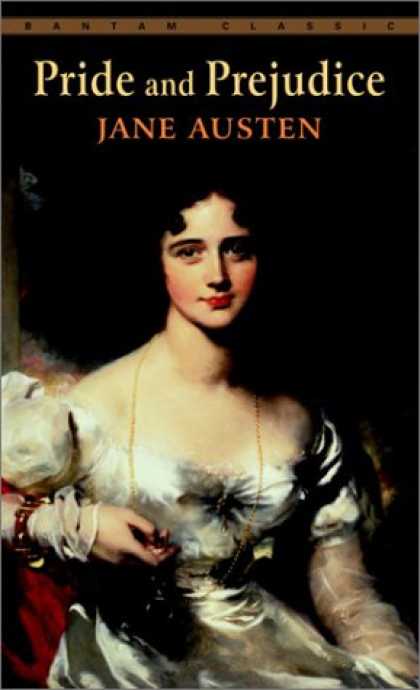
Pride and Prejudice by Jane Austen

I think the first line of this novel sums it up better than I ever could:

It is a truth universally acknowledged, that a single man in possession of a good fortune, must be in want of a wife.

I’ve been familiar with the story of Pride and Prejudice for a long time, but this was the first time I’d read the original.  Even though I don’t usually go for Regency romances, I have to say that I enjoyed this book very much!

Jane Austen has a genius for character.  She knows exactly what little mannerism to show or what description to give to make her characters come alive.  At several points in the book, I paused and said “holy cow, that’s just like so and so,” or “haha, I know exactly what this person is like.” At no point did I feel hit over the head or dragged through a long info dump explaining this or that character’s background.  Of all the possible details she could share, Austen always chooses the exact ones you need to get a clear, distinct picture–no more, no less.

Austen drives her story with some snappy, entertaining dialogue.  Far from being sappy or sentimental, her main character, Elizabeth, is snarky and spirited, and she clashes with a lot of people in ways that are much more interesting (and mature) than typical girl drama.  Be that as it may, I found it entertaining to compare Elizabeth’s dating/relationship experiences with my own.  As different as things were back then, in some very interesting ways they are still the same.

I did feel that the novel slowed down a bit in the middle, probably because that was when Elizabeth went on the tour of Derbyshire with her relatives and left behind most of the other characters that interested me.  Also (since I am a straight guy), Mr. Darcy didn’t really turn me on much, so Elizabeth’s gradual change of mind as she toured his house wasn’t as engaging to me.

One thing that confuses me, having read this book, is why women all over the place set up Mr. Darcy as the ideal male.  What exactly is his appeal?  He’s a little rough around the edges, has an independent streak, speaks his mind even when doing so would be rude, and is constantly aloof from everyone else.  Is this what women find so appealing about him?  I can see how the “Beauty and the Beast” syndrome can also be a turn-on–Elizabeth essentially wins him over by taming him–but that has less to do with who he is than how Elizabeth changes him.  Do women go for a guy who they have the power to change?  Is that what it is?  I’m still a bit confused.

One thing made me a little mad, and it had nothing to do with the book at all; it had to do with the blurb on the back.  It reads:

One of the most universally loved and admired English novels, Pride and Prejudice, was penned as a popular entertainment.  But the consummate artistry of Jane Austen (1775-1817) transformed this effervescent tale of rural romance into a witty, shrewdly observed satire of English country life that is now regarded as one of the principal treasures of English literature.

Austen’s “consummate artistry” transformed this novel from “popular entertainment” to “one of the principal treasures of English literature”?  Come on.  That statement is as pompous as it is illogical.  Once her book came out in print, Austen “transformed” nothing–the only thing that changed was the way people looked at it.  It started out as a popular genre novel, like anything by Rowling or Steele or Grisham or King, and when the literati decided to claim it, they rebranded it as something else.

What irks me is this idea that “popular entertainment” is somehow inherently devoid of literary worth.  Come on, people–virtually all the “great authors” before 1920 were well-read and well-loved in their day, among the masses as much as the literary elite.  It’s not a sin to make money writing books.

Overall, I enjoyed this book very much.  Just as Lord of the Rings is the quintessential fantasy novel, Pride and Prejudice is probably the lodestar of the romance genre.  I was pleased to find that it’s not a book that only women can enjoy!