How I Would Vote Now: 1992 Hugo Awards (Best Novel)

The Nominees

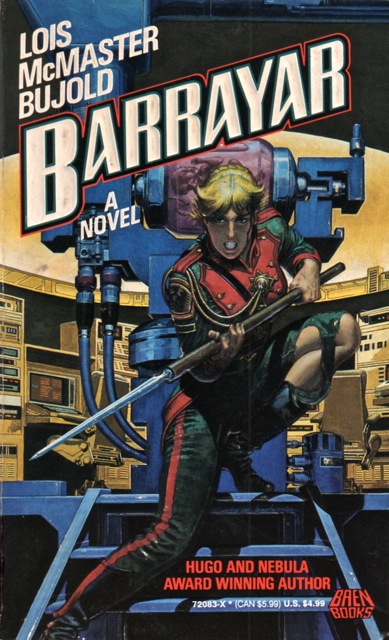
Barrayar by Lois McMaster Bujold
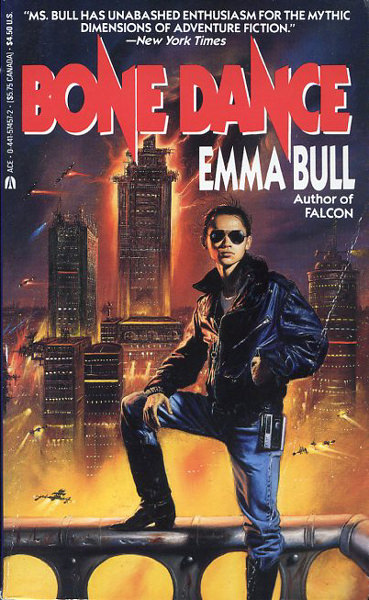
Bone Dance by Emma Bull
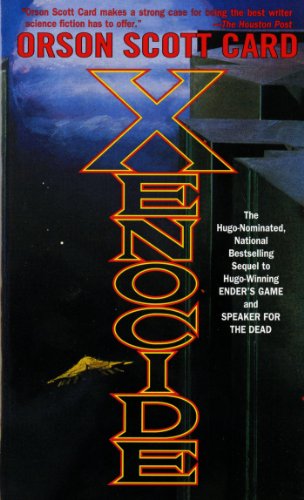
Xenocide by Orson Scott Card
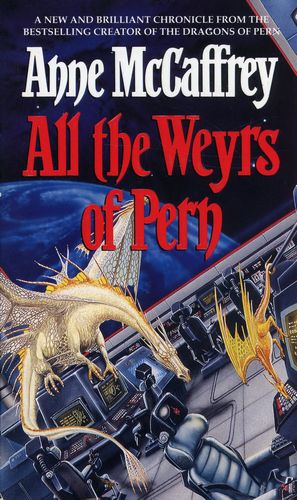
All the Weyrs of Pern by Anne McCaffrey
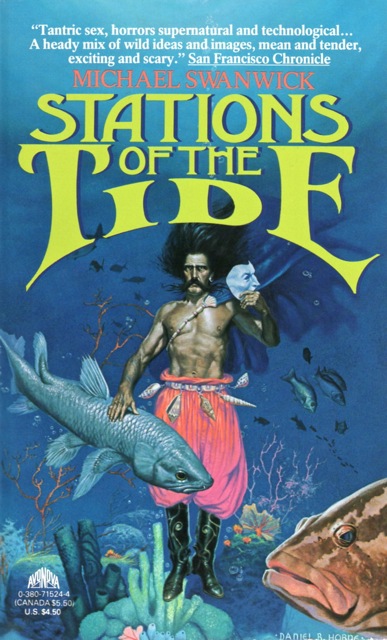
Stations of the Tide by Michael Swanwick
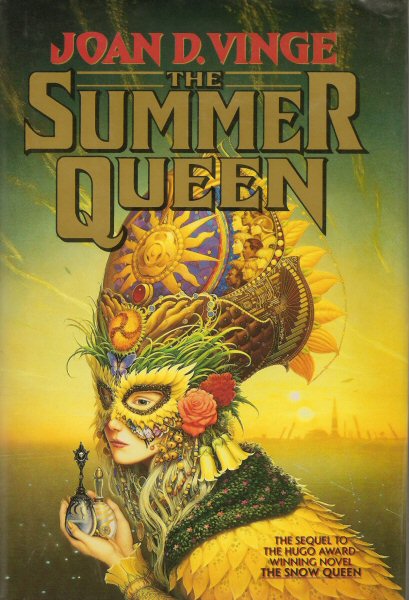
The Summer Queen by Joan D. Vinge

The Actual Results

  1. Barrayar by Lois McMaster Bujold
  2. Bone Dance by Emma Bull
  3. All the Weyrs of Pern by Anne McCaffrey
  4. The Summer Queen by Joan D. Vinge
  5. Xenocide by Orson Scott Card
  6. Stations of the Tide by Michael Swanwick

How I Would Have Voted

  1. Xenocide by Orson Scott Card
  2. Barrayar by Lois McMaster Bujold

Explanation
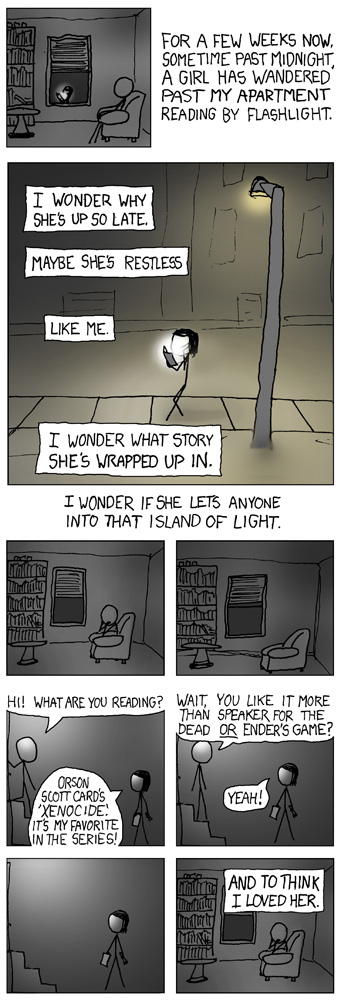
I have a confession to make. That girl from the XKCD comic who loves Xenocide more than the first two books in the Ender’s Game series? …yeah, that’s totally me. Ender’s Game is a science fiction classic, and one of the best books to ever win a Hugo Award (second only to Dan Simmon’s Hyperion, in my opinion), and Speaker for the Dead is a worthy sequel that is superior in many ways to the first book. But Xenocide totally blew me away when I read it back in college. The superintelligent AI Jane, who lives in the ansible connections between planets, is one of my favorite sci fi characters of all time. Also, the concept of the philotic web is one of the most fascinating and exciting sci fi elements I’ve ever wrapped my head around. I also thought it was really fascinating how the post-Earth humans have developed a heirarchy of alienation, and how that influences the ethical decision of whether to make peace or make war with the aliens they encounter.

In short, there was lots of really high concept stuff in Xenocide that blew my mind in just the right way. Also, the story had me hooked from the first page, and the characters are some of the best I’ve ever read. Orson Scott Card has a lot of strengths, but his greatest strength is in writing characters, and he was definitely on his A game with this book. So yeah, go ahead and slam the door in my face—Xenocide is my favorite book in the Ender’s Game series.

Barrayar is classic Bujold, and one of the best books in her Vorkosigan saga. Even though it doesn’t feature Miles directly, Cordelia is such a badass that she more than makes up for his not-quite absence (after all, she is pregnant with Miles while all the action goes down). The political intrigue is everything you’d expect from a good Vorkosigan book, and there’s no shortage of action or things blowing up. But the thing that makes it most satisfying is how everything ties into the later books—in fact, I would go so far as to say that Barrayar is the best place to start with the Vorkosigan Saga, followed by The Warrior’s Apprentice, and then maybe Shards of Honor just to get a little more background before going on with the rest of the series. I definitely wish I’d started with Barrayar. And if you can, listen to the audiobooks, because Grover Gardner’s narration of them is quite excellent.

So those were the books from this year’s ballot that I enjoyed. As for the others, I DNFed them all, though I didn’t even pick up The Summer Queen because I had already DNFed the first book in the series, for reasons that I’ve since forgotten. I’ll try to refresh my memory when I cover The Snow Queen in How I Would Vote Now: 1981 Hugo Awards (Best Novel). Maybe it’s one I should try to pick up again.

I also didn’t pick up All the Weyrs of Pern, because I DNFed that series with the second book. I read the first Dragonriders of Pern book way back in college, and thought it was okay, but it didn’t really hook me enough to read the rest of the series. Last year, I tried to pick up the second book, and was totally blown away by how overpowered the dragons are. Seriously—they can teleport anywhere instantaneously through space and time? How can anything possibly threaten them? Then the book started turning into a soap opera between the dragonriders, and I mentally checked out.

(As a side note, I would say that the Dragonriders of Pern books are the kind of grim-bright books that tend to do well in a second turning, and not a fourth turning. Even though the characters are literally saving the world as part of their job description, they’re so OP that the world is never really in any danger of falling, so the books are a lot more slice-of-life and cozy escapist fantasies. Check out my blog post on the generational cycles of fantasy and science fiction for a more in-depth discussion of this sort of thing.)

Stations of the Tide never really hooked me, and had some weird sexual content that turned me off pretty fast, if I remember correctly. Overall, it felt like the sort of book that was written primarily for the author, and not for any actual reader—kind of like how a movie studio will sometimes let a director make a pet project that no one but the director really likes, just so they can get them to make the blockbusters that everyone goes to see.

As for Bone Dance, it seemed like an interesting post-apocalyptic novel, but the main character was so androgenous that I just had no desire to read past the second chapter. I know this wasn’t typical of books written in the 90s, but these days it’s become so trite to write women who think, act, and look like men that I really have no desire to read that sort of thing. I’d much rather read about manly men and womanly women. Also, I don’t really want to read about lesbians in Minnesota. There’s a reason why Minnesota is now the California of the midwest.

How I Would Vote Now: 1974 Hugo Awards (Best Novel)

The Nominees

The People of the Wind by Poul Anderson

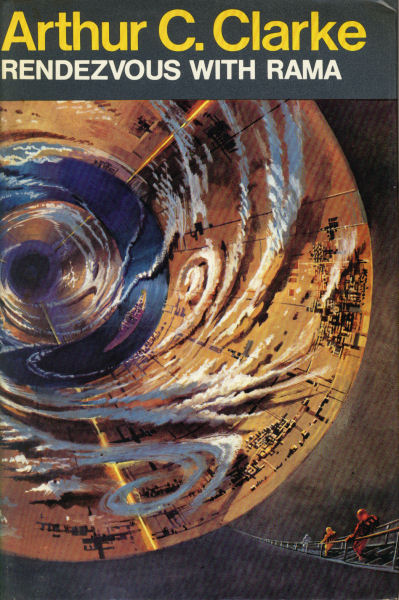
Rendezvous with Rama by Arthur C. Clarke

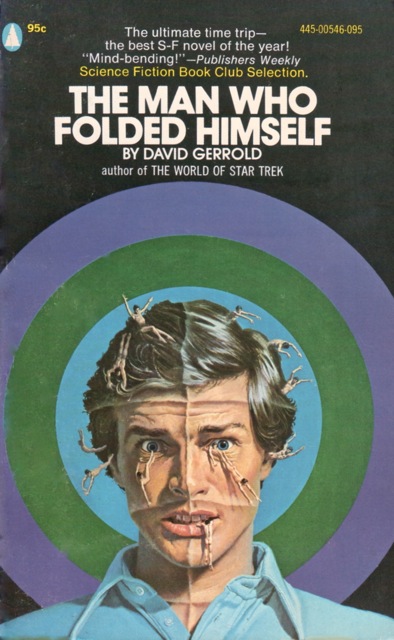
The Man Who Folded Himself by David Gerrold

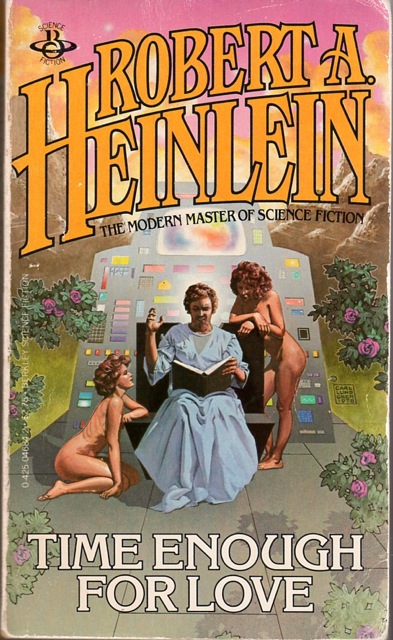
Time Enough for Love by Robert A. Heinlein

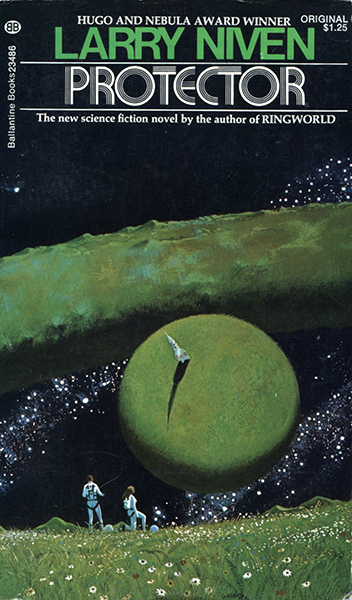
Protector by Larry Niven

The Actual Results

  1. Rendezvous with Rama by Arthur C. Clarke
  2. Time Enough for Love by Robert A. Heinlein
  3. Protector by Larry Niven
  • The Man Who Folded Himself by David Gerrold
  • The People of the Wind by Poul Anderson

How I Would Have Voted

  1. Protector by Larry Niven
  2. No Award
  3. Rendezvous with Rama by Arthur C. Clarke
  4. The People of the Wind by Poul Anderson

Explanation

I really enjoyed Protector. It was a great sci-fi space opera novel, with interesting characters, fun worldbuilding, an intriguing premise, a deep sense of wonder, lots of suspense, and some really unexpected twists and turns. It was also a very good hard SF novel, where the rigorous scientific accuracy actually drove the story and made it even stronger. That can be a very difficult thing to pull off, since in the hands of an unskilled author, the harder the science fiction elements become, the more dry and cerebral the story tends to become as well, but Larry Niven is a very skilled author and he pulled it off quite well in this one. In particular, the long-distance space battle that covered the last hundred pages or so had me thrilled right through to the end.

In contrast, Rendezvous with Rama was the kind of hard SF that tends to bore me. There was nothing wrong or objectionable about the story, but it was kind of slow, and didn’t build up very much suspense, aside from the central premise, which was basically “ooh, an abandoned alien starship—and we get to go inside!” I should probably try to read it again, though, because Arthur C. Clarke is definitely not an unskilled author, and Rama is one of the classics.

Poul Anderson, though… I don’t know what it is, but reading his books is like trying to walk through a brick wall. The parts that I have the most questions about, he doesn’t explain at all, and the aspects of his stories that I care about the last (particularly the worldbuilding elements) he explains in soporific detail. His characters all feel like wooden marionettes, and whenever they move, they seem off or contorted in some way, doing and saying things in ways that I would least expect.

Maybe it’s just me, but I’m beginning to think that Poul Anderson just isn’t a very good writer, and his success was mostly due to the good fortune he had to be writing in a time when any book with a rocketship on the cover was guaranteed to be snapped up by hungry science fiction fans. I’ll try a couple more times to read him, but at this point I’m just about ready to give up on this author.

I did not even try to read Time Enough for Love. I’ve been burned enough by Heinlein to know that anything of his that 1) is longer than his juveniles, or 2) has a half-naked (or in this case, fully naked) woman on the cover is guaranteed to turn me off. Time Enough for Love fails both of those counts, so it got a hard skip.

I know that a lot of people love Heinlein, especially the kind of science fiction reader who otherwise aligns with my own reading tastes. But my own experience with Heinlein is all over the map: some of his books, like Farnham’s Freehold and Citizen of the Galaxy, I absolutely loved, and even count as major influences on my own writing. Others, however, like Stranger in a Strange Land and The Moon is a Harsh Mistress, I just couldn’t stand at all. With some, like Double Star, I was glued to the page all the way through, while others, like Have Space Suit, Will Travel, never really hooked me at all (if I weren’t listening to that one on audio, I don’t think I ever would have finished it). So at this point, I’ve more or less decided to limit my reading of Heinlein to his juveniles, unless it comes with a strong recommendation.

Which brings me to The Man Who Folded Himself, which is one of the most disgusting Hugo-nominated books I have ever DNFed, and the main reason why I put No Award on the ballot for this year. A better title would be The Man Who Fucked Himself, since that is both more memorable and more accurate to the story. It starts out as a delightful little time travel novel, but soon turns into a homo- / mono-erotic sexual fantasy. I quit just before the money shot, but I am 100% convinced that Gerrold is a pederast, if not an outright pedophile. Disgusting!

In fact, I had such a horrible experience with The Man Who F***ed Himself that I have started a ChatGPT thread specifically for the purpose of screening these Hugo-nominated books for woke and explicit content. If ChatGPT gives me a synopsis that doesn’t pass my smell test, I’m going to pre-emptively skip it, since I don’t want to expose myself to anything like The Man Who F***ed Himself again. Any book that I skip in this way will get ranked below No Award, and I’ll include ChatGPT’s synopsis in the review.

On the plus side, that probably means I’ll get through this How I Would Vote Now blog series a lot faster.

How I Would Vote Now: 1989 Hugo Awards (Best Novel)

The Nominees

Falling Free by Lois McMaster Bujold

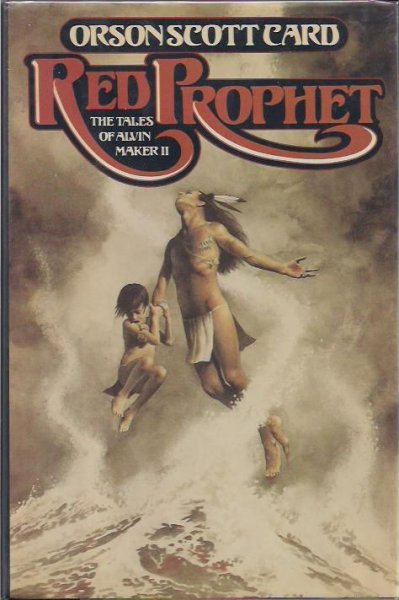
Red Prophet by Orson Scott Card

Cyteen by C.J. Cherryh

Mona Lisa Overdrive by William Gibson

Islands in the Net by Bruce Sterling

The Actual Results

  1. Cyteen by C.J. Cherryh
  2. Red Prophet by Orson Scott Card
  3. Falling Free by Lois McMaster Bujold
  4. Islands in the Net by Bruce Sterling
  5. Mona Lisa Overdrive by William Gibson

How I Would Have Voted

(Abstain)

Explanation

Another year where the books were fine, but not to my personal liking (or else they were, but… we’ll get to that). I found no reason why I should give “no award” a vote over any of these books, but I DNFed most of them, though I could be persuaded to try some of them again. But overall, there was nothing in this year’s ballot that really blew me away (except… we’ll get to that shortly).

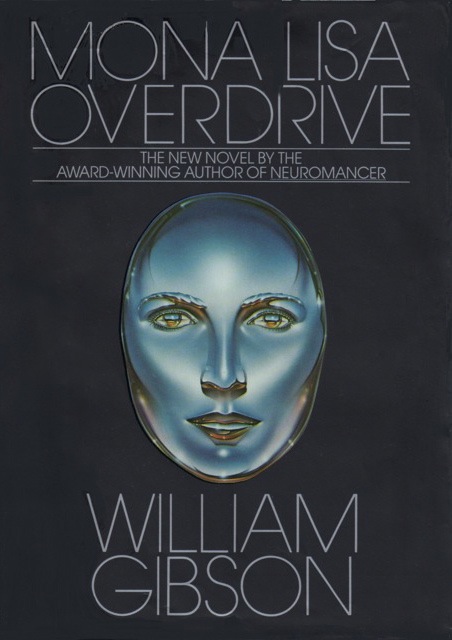
First, I didn’t read Mona Lisa Overdrive because it was the third book in a trilogy, and I DNFed the series with the second book. The first book, Neuromancer, I read back in college, and while I enjoyed it at the time, even back then I felt that it was right on the edge of being too explicit. Today, I would certainly find it too explicit—in fact, that’s why I DNFed the second book. These days, I just really don’t want to read a book with lots of sex, drugs, and pointless violence. Just not interested in any of that.

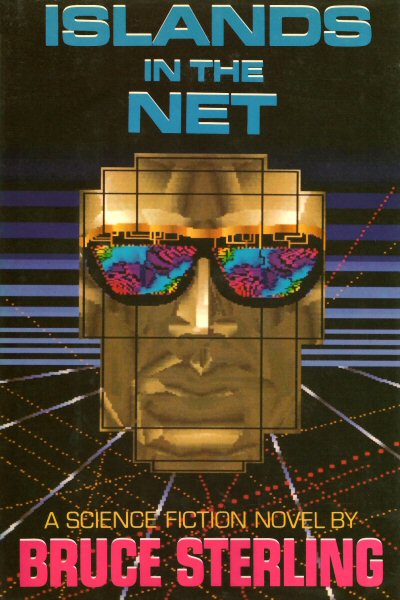
Islands in the Net is another gritty cyberpunk novel, but I actually didn’t find it too explicit at all. Perhaps that’s because the two main characters were married and had a family. In fact, compared to Neuromancer, or even The Matrix, it didn’t feel all that gritty at all to me. But reading it in the 2020s, all of the future predictions just made me laugh, especially the idea that internet piracy would allow the quasi-failed states of South and Latin America to get super, super rich, by hacking into the banking networks and siphoning off everyone’s money. Also, while I can understand (and even, to a degree, agree with) the idea that corporations would exercise more power over people’s lives than their own governments, I don’t think Sterling portrayed it in a realistic way. He should have studied East Asian history and society, particularly the Yakuza, to see what that would really look like.

Ultimately, though, the story just slowed down so much that I decided to skip to the end, and I’m glad I did, because the married couple broke up for the stupidest reason in the world, and the big bad turned out to be a bunch of terrorists stealing a nuclear submarine and threatening to launch their nukes and end the world… which is honestly such a boomer trope that it made me role my eyes. Don’t get me wrong—I’m very sanguine about the threat of nuclear war, especially with what’s going on in Ukraine right now (hopefully things haven’t gone nuclear by the time this post goes live), but it’s a uniquely boomer trope to think that history will end when the first nuke of the war goes off, and that all stories have to have clear good guys and bad guys (or at least clear bad guys) and that the whole story can be reduced to “stop that nuke!”

Anyways, I don’t know if that mini-rant makes any sense, but the point is that Islands in the Net didn’t impress me. It wasn’t terrible, but it didn’t hold my interest or blow me away.

I DNFed Cyteen because I got bored around the second or third chapter, though I probably could be persuaded to try it again. I’ve enjoyed many of Cherryh’s other Alliance-Union books, especially Merchanter’s Luck and Voyager in Night, but it’s been years since I read any of them. Just couldn’t get into this one.

Of all the books from this year, Falling Free is the one that I should probably try again. I forget why I DNFed it, which probably means that I just lost interest, or didn’t connect with any of the characters. Also, this was around the time that I was becoming disillusioned with Lois McMaster Bujold, after my wife DNFed Gentleman Jole and the Red Queen and told me all about that one. I used to really love all of Bujold’s novels, and still do enjoy the early Vorkosigan books. But this one, while technically in the same universe, isn’t really a Vorkosigan novel, which is probably a big reason why I just lost interest. But I could be persuaded to try it again.

Which brings us to Red Prophet by Orson Scott Card…

I thoroughly enjoyed this book. It’s definitely a worthy sequel to Seventh Son, and while it had some minor issues, especially toward the end, it definitely ranks up there with Card’s best.
However… this is book two of a seven book series, where the first book came out in 1987, nearly forty years ago… and the seventh book hasn’t even been written yet! In fact, it’s been twenty-one years since book six came out—in fact, more time has passed since the sixth book came out than between the publication of the first book and the publication of the sixth!

What the heck, Card? It’s bad enough that you probably won’t ever finish your Women of Genesis series—will you never finish your flagship fantasy series either? At this point, you’re worse than George R.R. Martin, since at least Martin has only dropped the ball on one fantasy series, not two.

For that reason, I refuse to read any more Alvin Maker books until the last book has finally come out. Also, if the 1989 Hugo Awards were held today and I got to vote on them, I would not vote for Red Prophet, even though it’s a fantastic book. I just can’t justify voting for an author who lets multiple decades go by without doing the damn work to finish what he’s started.

(And yes, I know I have a couple of unfinished trilogies of my own. I’m working on it. Captive of the Falconstar and Lord of the Falconstar should come out next year, and I will probably start work on The Sword Bearer and Return of the Starborn Son in just a few months. In my defense, though, I haven’t let more than a decade pass since I published the last book in any of those series.)

How I Would Vote Now: 2003 Hugo Awards (Best Novel)

The Nominees

Kiln People by David Brin

The Scar by China Mieville

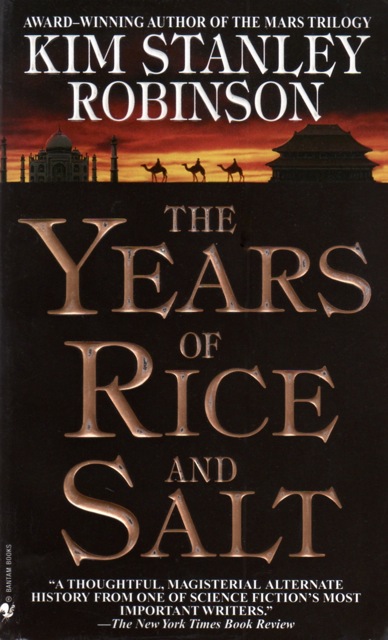
The Years of Rice and Salt by Kim Stanley Robinson

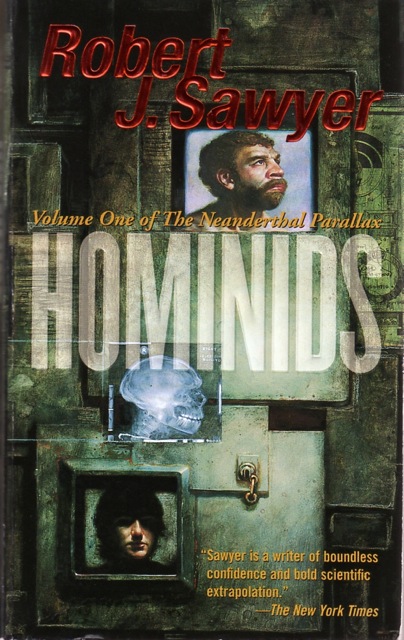
Hominids by Robert J. Sawyer

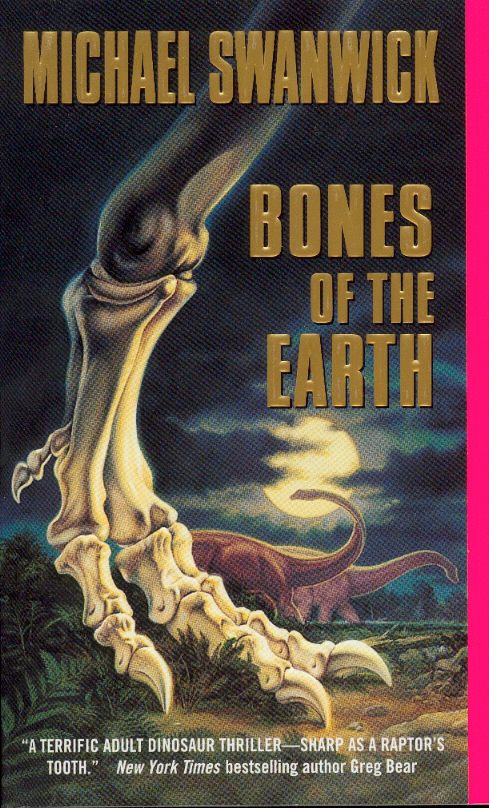
Bones of the Earth by Michael Swanwick

The Actual Results

  1. Hominids by Robert J. Sawyer
  2. Kiln People by David Brin
  3. Bones of the Earth by Michael Swanwick
  4. The Scar by China Mieville
  5. The Years of Rice and Salt by Kim Stanley Robinson

How I Would Have Voted

(Abstain)

Explanation

None of these books were so bad/woke that I felt No Award merited a vote for this year. In fact, if my memory serves me, few of these books were woke at all (or else they were just a lot better at hiding it. Whatever.) But at the same time, I didn’t enjoy any of them enough to feel that I could affirmatively vote for any of them. In fact, I ended up DNFing all of them, for various reasons (that’s right, China Mike—I didn’t feel it was necessary to finish any of these books to know how I would have voted).

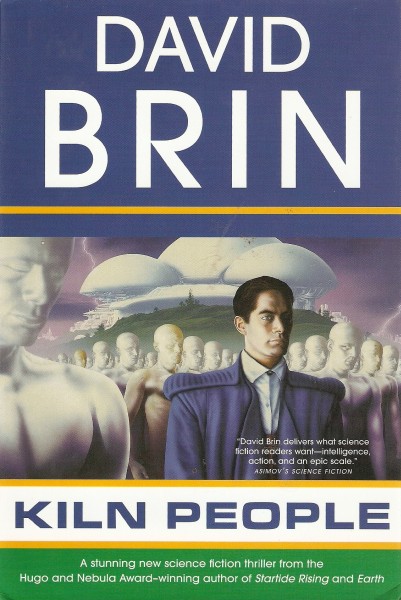
Kiln People and The Years of Rice and Salt were both books that I didn’t bother to pick up, because I’ve read enough from each author to know that I don’t care to read anything they write. Way back in high school, I read Red Mars by Kim Stanley Robinson, but I never felt compelled to finish the rest of the series, and DNFed the second book when I picked it up years later, as well as every other Hugo-winning book he’s written. With David Brin, I started his first Uplift Trilogy book but DNFed it about a hundred pages in, and decided to DNF him as an author after throwing The Postman across the room.

For both of these authors, my reason for DNFing them has less to do with their politics (though I’m sure we have irreconcilable differences there) as it does with their dogmatic, almost fanatical adherence to materialism: the view that everything in the universe is reducible to physical, material phenomena, and that if something cannot be measured it might as well not exist. You can see this in the dismissive way that they treat religion in all of their books, especially Christianity—as if faith, in any form, is a delusion that ought to be beneath all clear-thinking and enlightened people. From long experience, I’ve learned that authors with this particular worldview almost never write anything that I feel is worth reading. Hence, I didn’t feel it was necessary to read either of their books.

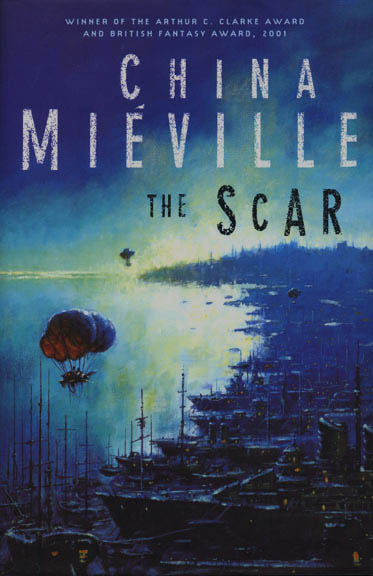
The Scar is book two of China Mieville’s New Crobuzon series, and since I DNFed the first book, I didn’t read the rest of the series. I’ll explain my reasons more when I write up my post for how I would vote now in the 2002 Hugo Awards, but it basically comes down to the sex scene in the first chapter, which was too graphic for my tastes. Call me a prude, but I prefer to avoid graphic sex scenes. I suppose I could be persuaded to try the series again, though, on a strong enough recommendation.

I forget why I DNFed Hominids. I read it back in 2002, when I made—and kept—my resolution to read (or DNF) all of the Hugo and Nebula award-winning novels. I think it came down to getting bored with the story, or not really liking any of the characters. I could probably be persuaded to try it again, though I doubt the results would be different a second time around.

Lastly, Bones of the Earth was my biggest disappointment from the books on the ballot this year. I had previously DNFed Swanwick’s Station of the Tide, which struck me as the sort of thing an author writes when they don’t really care what readers think of it and they just want to wallow in their own self-indulgent fantasies. Also, there was a lot of weird sex stuff that I found off-putting.

But Bones of the Earth started out really well. It’s basically about a bunch of time traveling paleontologists, and the bureaucracy built around the time travel machinery to keep all the timelines from falling into contradiction and paradox. Think Jurassic Park meets The Adjustment Bureau. The first half of the book was really well done, to the point where I started wondering why I’d never heard of this book before, or why it hadn’t gotten more commercial traction.

Then I found out why.

The inciting incident happens when a creationist terrorist sends a bomb out to a group of paleontoligists somewhen in the Cretaceous period, killing one of them, destroying their time beacon, and stranding them in time. I wasn’t actually bothered at all by the creationists being the bad guys, since 1) several of the paleontologists were various stripes of Christian, and 2) I can totally believe that radical fundamentalist creationists would resort to sabotage, or even terrorism, to derail the whole project. But about midway through the book, after the band of marooned time travelers go through some pretty hefty forming and storming, as they just start to enter the norming phase, they all decide, at the same time and on a total whim, to throw off their clothes and have a group orgy together.

I can believe that there are people in this world who would do that sort of thing. I can even believe that a group of randomly selected people might consist entirely of this sort of person. I just don’t want anything to do with them. I’ve been in a fair amount of group situations, and the worst ones I’ve ever had to endure were the ones where everyone either wanted to all get drunk together, or all get sexy together (thankfully, none of them turned into an actual orgy like the one in this book).

But frankly, the impression I got while reading it was that the author was a little too sex-deprived (if not an outright pervert) and indulged in that scene purely as an act of wish fulfilment. Any editor worth her salt would have told Swanwick to remove or totally rework that scene, so the fact that it’s still in the book probably means that he’s too bull-headed for his own good—which is a shame, because the book probably would have sold better if he’d cut that scene out. The orgy scene added very little and certainly alienated more readers than it brought in.

One of the things I’m trying to be more careful about, as a writer, is writing books for other people, not just myself. I was a lot more self-indulgent in my early career, which is probably a major factor in why many of my older books haven’t gained much traction outside of a small readership. While it’s important not to try to write for everybody, authors who write only for themselves are too often inaccessible to anybody.

How I Would Vote Now: 1956 Hugo Awards (Best Novel)

The Nominees

The End of Eternity by Isaac Asimov

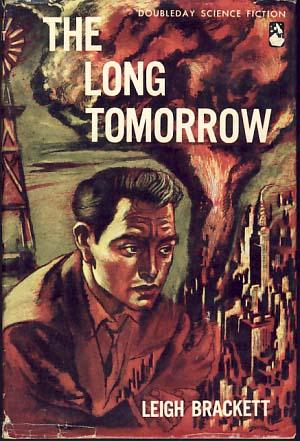
The Long Tomorrow by Leigh Brackett

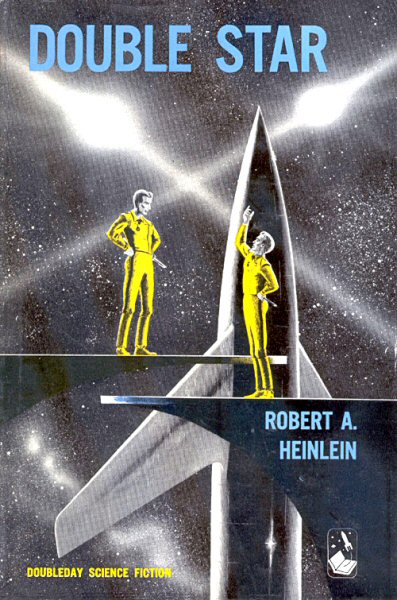
Double Star by Robert A. Heinlein

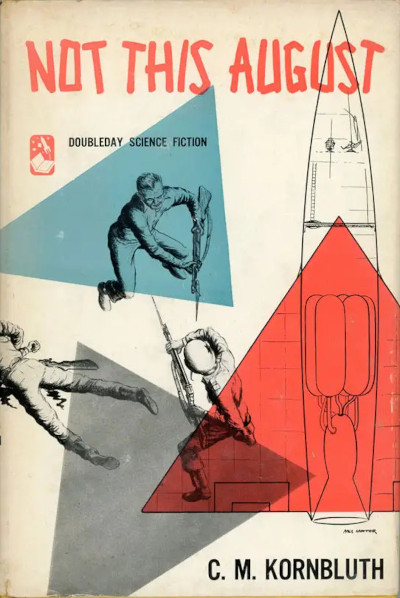
Not This August by C.M. Kornbluth

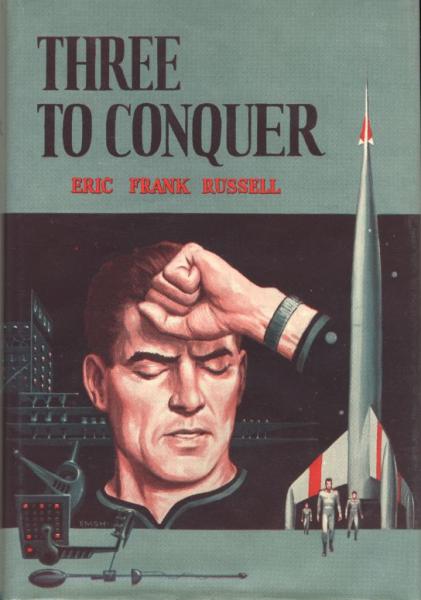
Three to Conquer by Eric Frank Russell

The Actual Results

  1. Double Star by Robert A. Heinlein
  • The End of Eternity by Isaac Asimov
  • The Long Tomorrow by Leigh Brackett
  • Not This August by C.M. Kornbluth
  • Three to Conquer by Eric Frank Russell

How I Would Have Voted

  1. The Long Tomorrow by Leigh Brackett
  2. The End of Eternity by Isaac Asimov
  3. Double Star by Robert A. Heinlein
  4. Three to Conquer by Eric Frank Russell
  5. Not This August C.M. Kornbluth

Explanation

This was a really good year for science fiction.

I’ve read every one of these books from start to finish, and I love them all. Even the lesser ones I’d put up above most of the Hugo-nominated books from the last couple of decades. And the best—well, let’s go there.

First, Not This August. This was really more of an early Cold War political thriller, with frightening near-future space technology since, at the time this was written, Sputnik was freaking everyone out in a major way. The technology itself is moderately science fictional, but if a book like this were written today, it would probably be shelved as a technothriller—which makes me wonder if the conservative science fiction writers of the 60s and 70s didn’t just migrate to the thriller genre as science fiction was increasingly taken over by the left. But that’s a subject for another blog post.

In any case, Not This August is very much a cautionary tale, kind of like 1984, but set only a decade or two after WWII. Basically, China and the USSR launch a joint invasion of the US that succeeds, but an underground resistance movements works to finish this American superweapon: an orbital military base armed with nuclear weapons that is undetectable by the surface and can bomb anywhere on the planet.

Since it was written in the early part of the 50s, it plays very much on fears that the world wars would shortly resume, and that the US would never recover economically from the wars. Such fears later proved to be unfounded, but at the time, there were very good reasons to think we were caught in a vicious cycle—and in some ways (such as with Eisenhower’s warnings of the Military-Industrial complex), perhaps we were.

In some ways, it was a difficult read, not because of the writing itself, but because of how dark it was. However, like any good thriller, it built up the suspense quite nicely, and I finished the last hundred pages at a sprint. With that said, it hasn’t aged nearly as well as 1984, and reading it from the perspective of the 2020s it seems much more like an historical curiousity than a true cautionary tale. But I enjoyed it.

Three to Conquer was much lighter, and a fun, quick read. It’s about a man who is secretly a telepath, who stops on the side of the road to help a stranded motorist and discovers that some hostile alien body-snatchers have come to Earth after infecting three returning astronauts, and are now trying to takeover all of humanity before we realize that they’re even here. It’s a race against time to find and kill all of the zombified humans before they infect everyone else, with a cute little love story thrown in for good measure, between the main character and his secretary. A fun if somewhat forgettable read. I did really like how the main character had a sharp mind and was quick on his feet.

Now, to the really good ones.

Double Star is a fantastic book, and just because I’ve put it at third place on my ballot, you should not think that means that I thought it was mediocre at all. In fact, I’d put it above probably 60% or 70% of the novels that have won the Hugo. It’s quite good, showcasing Heinlein at some of his best (though I do think Farnham’s Freehold is better). It was a really compelling story about a man who overcomes his prejudices and shortcomings to grow into the role that has (quite literally) been cast for him. It also makes me very, very glad that I’m not an actor. Highly recommended.

The End of Eternity is one of the best time travel novels I’ve ever read. It’s about this bureaucratic organization called Eternity, which exists to shepherd humanity safely through 75,000 centuries of history. Basically, the technicians of Eternity calculate all the best ways to tweak the timeline with “reality changes” in order to avoid all of the worst catastrophes, like pandemics, global wars, etc. But after the 75,000th century, there’s a long period of “hidden centuries” that are somehow inaccessible to them, followed by a world where humanity is extinct. The main character is a technician who falls into forbidden love with a woman in Time, whose existence is going to be wiped out by a reality change. He conspires to save her by bringing her into Eternity, and sets off a series of events that threaten to wipe out Eternity itself.

I really enjoyed this book. Toward the end, I wondered if this book would have a happy ending, since I couldn’t think of any way to pull that off without making it kind of sappy and cliche. Then the twist happened, and everything changed… but we still got the happy ending, which fit in perfectly with the world-changing twist. Just a really brilliant book by an all-time science fiction master. Classics like this are the reason why Isaac Asimov hasn’t been canceled yet, and hopefully never will be.

As I said above, I genuinely enjoyed all of these books. But as good as they all were, none of them blew me away nearly as much as Leigh Brackett’s The Long Tomorrow.

The Long Tomorrow is a post-apocalyptic story about a future America, after the atomic wars, where cities are a thing of the past, the Constitution has been amended to restrict the size of towns (in order to prevent them from becoming potential targets for a nuclear weapon), and most of the population has reverted back to 19th century tech and an Amish or Amish-adjacent lifestyle. But there are legends about a secret city called Bartorstown, where the old technology hasn’t been lost, and people still live lives full of wonder and wealth, just like the old days.

The story follows two boys who run away from home in order to find Bartorstown, tracing their adventures and coming of age, until they finally learn the terrible truth about what Bartorstown actually is, and grapple with what that means for all of them. It’s a pretty basic plot, but what really blew me away was the depth of character and how brilliantly Brackett’s writing and storytelling drew me into their lives, making them come alive. Consequently, the story really came alive, raising all sorts of questions that left me thinking and wondering long after I’d put it down. There are some really heavy themes in this book, but like the best sci-fi, it doesn’t feel like “message” fiction at all.

It’s a little bit sad, though, because Brackett wrote this book just as the hydrogen bomb transformed foreign policy with the threat of mutually assured destruction, thus making her post-apocalyptic future into something totally implausible. The Long Tomorrow only works in a world where total nuclear war doesn’t result in the utter annihilation of humanity. From what I can tell, that’s the main reason this book never really took off. Also, I’m guessing that Brackett didn’t have as many fans as Heinlein or Asimov, and since the Hugos have always essentially been a popularity contest (these days, among an increasingly narrow and snobbish clique), that’s probably the main reason why The Long Tomorrow didn’t win the Hugo this year, even though I personally think it’s the most deserving book on the ballot.

But as I said above, 1955 (the publication date) was a really good year for science fiction, and all of these books are really good—some of the best, in fact. I highly recommend them all!

The state of science fiction is as bad as Australian breakdancing

It seems like most of the internet is talking about the hilariously bad breakdancing performance given by Australia at the Paris Olympics. Apparently, the “athlete” in question is actually a university professor named Rachael Gunn who specializes in breakdancing studies, or some such nonsense, and the main reasons she got the nod to compete are 1) the Australian breakdancing scene is woefully small, 2) she’s (allegedly) an LGBTQ+ woman, with all the right political opinions, and 3) her husband was on the committe that made the decision to qualify her. Taking advantage of those three factors, she’s apparently made a name for herself in Australia, even winning some local competitions—because who would dare criticize such a stunning and brave LGBTQ+ woman? So of course, she went on to compete on the international scene… and made such a mockery of herself and her sport that the judges awarded her straight zeroes, and the Olympics committee pulled breakdancing from the 2028 Los Angelos Olympics. Wah wah.

While this story is rightly hilarious, and proves the eternal truth that wokeness ruins everything, I can’t help but notice the parallels between the state of Australian breakdancing, that someone so inept and untalented could leverage a “studies” degree to dominate it, and the current state of science fiction. Specifically, this is the comment that made me think about this, which is worth reading in full:

The relevant part is this:

Rachael represents so much of what is totally lecherous about cultural studies academics. Pick a subject area that will be under-studied in your context, so you can rise through the ranks quickly (how many break dancing academics will there be in Australia?), and wreak absolute havoc in lives of the people you want to study. There is no limit to the sheer disrespect they will dole out, purely for self-advancement.

Now, I don’t think science fiction was ruined in quite the same way, ie by being dominated and colonized by academia through “studies” degrees. Science fiction was probably too large to be overtaken that way. However, the pattern is still similar, and from what I can tell, it goes something like this:

Step 1: Take over the institutions in the field that are primarily responsible for determining and evaluating excellence.

In Australia, the breakdancing field was small enough that academia was able to dominate and (for lack of a better word) colonize it, becoming the arbiters of excellence within that art. It certainly helped that the professor who had carved out this academic niche for herself was married to one of the judges in the committee that was tasked with determining excellence. This created an incestuous (and ultimately nepotistic) relationship between academia and the judging panels.

In science fiction, something similar happened with SFWA and the Hugo and Nebula awards. I’ve written before about how SFWA ruined science fiction, so I won’t repeat all that here. But the basic gist of it is this: as science fiction became more established, the organizations and publications that talked about science fiction became more authoritative on the subject of the genre than the actual writers themselves. Because of this, achieving recognition for excellence became less about creating works of actual merit, and more about gaining the approval of the people who had built their careers talking about science fiction, rather than actually creating it. And the best way to gain their approval was to join those institutions yourself, rising up in the pecking order until everyone else was beneath you.

This basically describes the career trajectories of John Scalzi and Mary Robinette Kowal, two insanely woke authors who leveraged their tenure as SFWA president for award nominations. Both of them seem to have spent at least as much time and effort talking about science fiction as they have in actually creating it: Scalzi through his blog, which he leveraged to get his first book deal, and MRK through both her blog and the Writing Excuses podcast.

Step 2: Purge those institutions until they are ideologically pure.

This step is critical. So long as the instutitions are focused on merit, the only way to climb the ranks is by creating something of merit. But once the institution has become ideologically possessed, with all of those who reject the dominant ideology being purged from positions of power, then merit no longer matters, and the way to the top becomes clear. Those who are the most ideologically pure, as demonstrated by their virtue signalling, will rise to the top. This has the added benefit of quelling all merit-based criticism, since those beneath you fear having their own ideological purity called into question.

From what I can tell, this is how Rachael Gunn rose to prominence in the Australian breakdancing scene. After all, once academia had colonized the field, who would dare question the merits of such a stunning and brave LGBTQ+ woman? In a similar manner, Scalzi and MRK rose to the top of SFWA by virtue signaling their own ideological purity and intersectional victimhood status, squelching any criticism by labeling their critics racist, sexist, bigots, homophobic, etc.

Step 3: Redefine excellence in your own image.

In the Australian breakdancing scene, this was accomplished through the combination of Rachael Gunn’s academic work and her husband’s position in the committee that qualified the Olympic competitors. And while it probably isn’t quite so blatantly nepotistic in the science fiction world, the pattern still holds true when you look at what the Hugos and Nebulas have become. This was what the Sad Puppies controversy was actually about, and because the Puppies lost, the Hugo and Nebula awards have been insufferably woke ever since:

Step 4: Use the captured institutions to purge the field of potential rivals.

The final step in this projection is to squash all of those people who represent a threat to your domination, because they have merit and you do not. Ignoring her perhaps overly generous assessment of Australian breakdancing, this is what Hannah Berrelli is talking about when she mentions all the “hundreds of Australian athletes who will have dedicated their entire lives to athletic excellence” whose blood, sweat, and tears were overshadowed and rendered irrelevant by Rachael Gunn’s Olympic stunt.

In science fiction, we see this in the fact that David Weber has never been nominated for a Hugo or a Nebula, or that Jim Butcher’s sole Hugo nomination lost to No Award. Both of these men are far better writers than the majority of award-winning authors, especially in our current era. You could make a solid argument that Dan Simmons or Orson Scott Card were superior, but Scalzi? Jemisin? Kingfisher?

And what about all of the new and relatively unknown authors? At least Weber and Butcher already have large followings, which they have rightfully earned through their merit. But when merit is no longer the determining factor in recognizing excellence within the field, what chance do talented up-and-coming authors have if they aren’t willing to play the ideological purity games? Answer: not a hell of a lot.

So while you laugh at how ridiculous Australia’s breakdancing performance was at the Olympics, understand that the same dynamic has been playing out in modern science fiction for years. And honestly, the results are no less ridiculous.

How I would vote now: 1972 Hugo Award (Best Novel)

The Nominees

To Your Scattered Bodies Go by Philip Jose Farmer

The Lathe of Heaven by Ursula K. Le Guin

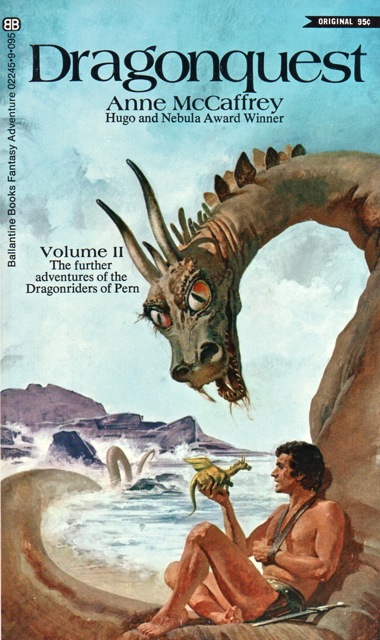
Dragonquest by Anne McCaffrey

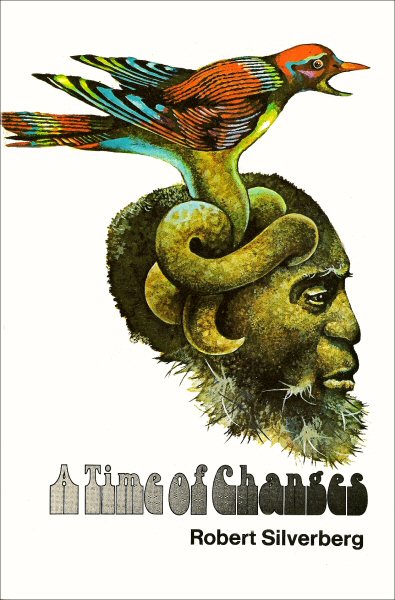
A Time of Changes by Robert Silverberg

Jack of Shadows by Roger Zelazny

The Actual Results

  1. To Your Scattered Bodies Go by Philip Jose Farmer
  2. The Lathe of Heaven by Ursula K. Le Guin
  3. Dragonquest by Anne McCaffrey
  4. Jack of Shadows by Roger Zelazny
  5. A Time of Changes by Robert Silverberg

How I Would Have Voted

  1. The Lathe of Heaven by Ursula K. Le Guin

Explanation

Cover art was so terrible in the 70s. Those are all the original edition covers for each book. They’ve all been reworked in later years, and most of them got a significant upgrade.

The Lathe of Heaven isn’t Ursula K. Le Guin’s greatest work, but I did find it to be decently good. The ending was a little too pat, but the set up was good, and the story itself was quite intriguing. In some ways, I feel that it would have worked better as a movie, maybe an animated feature by Studio Ghibli. It definitely had that kind of a dreamlike feel.

The rest of these books are not that great, to be honest. To Your Scattered Bodies Go and A Time of Changes were too pervy for me, with Farmer indulging in some really weird and disturbing treatment of children, and Silverberg indulging in pages and pages of navel gazing, all written very beautifully and signifying almost nothing, which is typical of Silverberg.

Jack of Shadows was confusing: I got about two thirds of the way in before I realized that I had no idea what was happening, and I didn’t really like any of the characters. I wonder if the real reason this book got nominated was because so many people enjoyed Nine Princes in Amber, the first Chronicles of Amber book, which came out in 1970 and was actually quite excellent. But he was writing and publishing the Chronicles of Amber all through this time period, and none of them ever got nominated for a Hugo, which seems really strange to me. With Zelazny, the only books I’ve found that I enjoyed are his Chronicles of Amber, and everything else is a huge miss for me. It’s weird.

As for Dragonquest, I know that the Dragonriders of Pern books have lots of fans, and I don’t find anything too objectionable with them (aside from the naively libertine Boomer attitudes toward sex, which is par for the course for this era and for Anne McCaffrey in general), but I just couldn’t get into this book. I read the first Dragonriders of Pern book in college, when I wasn’t nearly so cynical, and I thought it was okay, but it wasn’t compelling enough to go out and read the rest of the series immediately, and over the years I literally forgot everything that happened in that first book. So I read a synopsis before picking up book 2, and I just have to say that the dragons are way, way, way too OP. Seriously, they can teleport instantly through space AND time? That’s just too much. So I went into Dragonflight without feeling any real sense of peril, and right away, the novel turned into a giant soap opera about the various dragons and dragonriders: who had feelings for who, who was sleeping with who, etc etc. So after a couple of chapters, I just got bored and checked out.

So the only one of these books that I can positively vote for is The Lathe of Heaven, even though I think it pales next to Le Guin’s other work. But I wouldn’t actually put any of these books beneath No Award, since most of it is probably just a matter of my own personal taste. The perviness of To Your Scattered Bodies Go almost makes me want to put it below No Award: there’s a lot of graphic nudity, a lot of innuendo, and some innuendo / torture porn directed toward children, which was why I DNFed it. But it doesn’t cross over into outright pornography, and it’s not ideologically possessed in the way that most of the stuff coming out today tends to be. Also, the premise is pretty interesting: it’s in the execution where it all falls apart.

The 70s was a really weird time for science fiction. I wonder how many of the Worldcon attendees in 1972 were high on drugs—or whether some of these artists weren’t off their gourds when they wrote some of this stuff. I’ve heard stories about some of the orgies that Asimov used to hold in his con suite. It was a very different time.

How I would vote now: 2016 Hugo Award (Best Novel)

The Nominees

The Aeronaut’s Windlass by Jim Butcher

The Fifth Season by N.K. Jemisin

Ancillary Mercy by Ann Leckie

Uprooted by Naomi Novik

Seveneves by Neal Stephenson

The Actual Results

  1. The Fifth Season by N.K. Jemisin
  2. Uprooted by Naomi Novik
  3. Ancillary Mercy by Ann Leckie
  4. Seveneves by Neal Stephenson
  5. The Aeronaut’s Windlass by Jim Butcher

How I Would Have Voted

  1. The Aeronaut’s Windlass by Jim Butcher
  2. No Award
  3. Uprooted by Naomi Novik
  4. Seveneves by Neal Stephenson

Explanation

I enjoyed The Aeronaut’s Windlass. It was a fun steampunk adventure, sort of like a mashup between Horatio Hornblower and the Bioshock games. It’s also very unlike most books to be nominated for the Hugo, probably because it was nominated by the Sad Puppies. After this year, the people who run the Hugo Awards rewrote the rules to allow them to disallow “slate voting,” which was how they disqualified the majority of ballots in the 2023 Hugo Awards, including almost all of the ballots cast by Chinese fans. But guys, it’s the Puppies who were totally the racists.

All of the other books were pretty terrible, in my opinion. I’ve already written about The Fifth Season at length, so I won’t go into that rant here. I’ve also written at length about Ann Leckie’s obsession with fake transgender pronouns, and since Ancillary Mercy is basically just another book about pronouns, I won’t waste any more time on that subject.

I wanted to like Uprooted, since I loved Spinning Silver so much, but both times I tried to read it, I ended up DNFing it midway through. Partly that’s because the fantasy retelling of Beauty and the Beast was not as interesting to me, but there was also a scene where the main character and her mentor randomly started making out after casting a spell together, with a graphic description of digital penetration. The whole thing came so totally out of the blue that it threw me out of the book, and I had no desire to finish it after that.

I’m also really conflicted about Seveneves. I’m not a huge fan of Neal Stephenson generally, especially after the neon orgy scene at the end of Diamond Age, and Seveneves is loooong… like, over 800 pages long. Which would be fie, if Stephenson had the economy of words of a true master like Louis L’Amour, but Stephenson really doesn’t. Around 100 pages or so, I skipped to the last chapter and read a spoiler-filled synopsis just to see if it was worth pressing on, and I decided that it really wasn’t, because 1) it’s apparently never explained why or how the moon exploded, and 2) the Hillary Clinton analog becomes absolutely insufferable, and I really didn’t want to slog through four hundred pages of that. Seveneves has an interesting premise, but if you cut out half the words it would be a better book.

How I would vote now: 2011 Hugo Award (Best Novel)

The Nominees

Cryoburn by Lois McMaster Bujold

Feed by Mira Grant

The Hundred Thousand Kingdoms by N.K. Jemisin

The Dervish House by Ian McDonald

Blackout and All Clear by Connie Willis

The Actual Results

  1. Blackout and All Clear by Connie Willis
  2. Feed by Mira Grant
  3. Cryoburn by Lois McMaster Bujold
  4. The Hundred Thousand Kingdoms by N.K. Jemisin
  5. The Dervish House by Ian McDonald

How I Would Have Voted

  1. Blackout and All Clear by Connie Willis
  2. No Award
  3. Cryoburn by Lois McMaster Bujold
  4. The Dervish House by Ian McDonald

Explanation

2011 was the only year in which I actually attended Worldcon and voted in the Hugos. This was, of course, before the Sad Puppies and before I became totally disillusioned with the awards. I have to confess that I didn’t actually read any of the novels, though I did get the free ebooks in the voter packet and tried to read a couple of them. Mostly, I voted based on whether I recognized the author’s name, and whether or not the book descriptions appealed to me. I remember that I voted for Blackout and All Clear in the top slot, but I don’t remember how the rest of the ballot shook out.

If I had to do it again, I would still put Blackout and All Clear at the top of the ballot (which are two separate books, though they form a duology and were published in the same year, which is why they appear together). However, I ended up DNFing all of the other books, and because Feed and The Hundred Thousand Kingdoms struck me as being horrible enough to warrant a No Award vote, I couldn’t merely abstain from voting positively for any of the others.

But first, Blackout and All Clear is a delightful time travel story from Connie Willis’s Oxford University Time Travelers series. Unlike The Doomsday Book, the story is quite a lot of fun with an upbeat and hopeful ending, and unlike To Say Nothing of the Dog, the time travelers find themselves in some very real peril when their time machine breaks down. The first book was okay, but the second book was fantastic, and wrapped things up very nicely. A fun and uplifting read.

I DNFed Feed for a number of reasons, but the main reason was that I couldn’t stand the sexual innuendo between the brother and sister. Yes, I know that technically they’re supposed to be step-brother and step-sister, and yes, I know that meaningless and gratuitous sex is supposed to be a trope of zombie fiction, but still. Yuck. I could be wrong about this, but the vibe I got was that the author is addicted to pornography, and that’s just not a mind I want to spend any time with. Also, the world makes no sense: the zombie apocalypse has brought our country to a state of collapse, but 1) basic infrastructure like electricity and internet still operates without any problems, and 2) bloggers need to get a permit from the federal government in order to blog? Sorry, but I just can’t buy any of it.

I don’t remember much from The Hundred Thousand Kingdoms, since it’s been several years since I first tried to read it, but I think the main reason I DNFed this one was because all of the characters struck me as being terrible people, and I frankly didn’t care what happened to any of them. For the same reason, I didn’t read A Song of Ice and Fire past book one (though there were other reasons I DNFed that series, most of them content related). And I think there were some content-related issues in this one too, which is also why I would place it under No Award, as opposed to merely abstaining.

I really wanted to like Cryoburn, since I enjoyed many of the other Vorkosigan Saga books, especially Young Miles and Barrayar. But this one takes place when Miles is middle-aged, and powerful enough that he’s not really threatened at all. Instead, we follow the story of a misfit street urchin who’s trying to earn his freedom, or something like that, and I frankly didn’t find his story or his character all that interesting or compelling. About four or five hours into the audiobook, I just got bored of it, which I wasn’t expecting at all.

The Vorkosigan Saga is different from most other series, in that all of the books are basically standalones linked only by the recurring characters, and the fact that Bujold has written it completely out of order, basically dropping books randomly into the chronology however it suits her fancy. The latest book, Gentleman Jole and the Red Queen, was such a disappointment to my wife that the way she described it to me made me feel totally disillusioned. I haven’t gotten around to reading it yet, so I can’t say for sure that it’s terrible, but it definitely took the series in a direction I wish it had never gone. I suppose that the lesson from all this is that it’s possible to draw out a series way too far, especially a non-linear one. The early Vorkosigan books are great… the later ones, not so much (and by “earlier,” I mean the ones that Bujold wrote earlier, not necessarily the earlier ones in the chronology).

As for The Dervish House, it was fine. Very pretty and well written, I guess. It just wasn’t for me. I got bored about a hundred pages in and dropped it. I suppose I could be convinced to give it another shot, but from what I can tell, it’s not really my kind of book.

How I would vote now: 2024 Hugo Award (Best Novel)

The Nominees

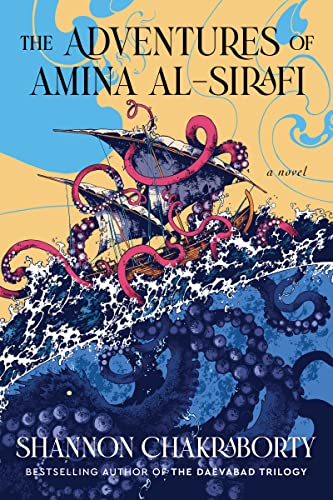
The Adventures of Amina al-Sirafi by Shannon Chakraborty

The Saint of Bright Doors by Vajra Chandrasekera

Translation State by Ann Leckie

Starter Villain by John Scalzi

Some Desperate Glory by Emily Tesh

Witch King by Martha Wells

The Actual Results

(To be determined…)

How I Would Vote

  1. No Award

Explanation

For reasons that should be obvious after last week’s rant, I will not be voting in the actual Hugo Awards this year, principally because there’s no way in hell that I’m going to let these snobby wokescold blowhards have any of my money. But if I were going to vote in the 2024 Hugos, this is what my ballot would look like.

I did not even attempt to read Starter Villain by John Scalzi, because I knew that I would hate it, since 1) it was written by John Scalzi, the most insufferable former SFWA president (an impressive achievement), and 2) Daniel Greene did such a brutal takedown of the novel that I felt no need to read it afterward. But all of the other books I picked up and started, even though I ended up DNFing them all for various reasons.

The one that I feel most conflicted about is Some Desperate Glory by Emily Tesh, a debut novel. It didn’t hook me hard enough to push on past the red flags, but it did have an interesting start that made me want to read more. However, there were a lot of signs that this was the sort of book that I would throw across the room in disgust (“strong” female characters, fascist caricatures, anti-natalist Malthusian vibes (though I may be wrong about that), etc). Even after I read a spoiler-filled online synopsis, though, I still couldn’t tell if that would be the case. The thing that ultimately convinced me to DNF it, though, was the blurb that called it a “queer coming of age story.” A synonymous phrase for that would be “sexual grooming of a minor,” which I have absolutely no desire to read.

The one that I feel least conflicted about is Translation State by Ann Leckie. To demonstrate why, here is everything I read right up to the moment when I decided to DNF it:

Enae

Athtur House, Saeniss Polity

The last stragglers in the funeral procession were barely out the ghost door before the mason bots unfolded their long legs and reached for the pile of stones they’d removed from the wall so painstakingly the day before. Enae hadn’t looked back to see the door being sealed up, but sie could hear it

Yet another novel from Ann Leckie where the fake transgender pronouns are the most interesting and compelling thing about her characters, and also the basis for the entire book. Hard DNF.

The Adventures of Amina al-Sirafi had an interesting start, but like Some Desperate Glory, there were enough red flags to make me reluctant to keep reading, so I read a spoiler-filled synopsis and discovered that one of the characters who is central to the plot decides that she’s a boy instead of a girl, and socially transitions her gender as a major plot point. Which means that Chakraborty, a liberal white woman who converted to Islam, is writing less for a Muslim readership (which could have actually been interesting) and more for a woke white liberal woman readership, which is probably how this book got nominated for the Hugo in the first place. These days, if there are no lesbians, it’s gotta be trannies. Hard pass.

The Saint of Bright Doors is a textbook case of two tropes that I cannot abide in contemporary science fiction: “a profane and vulgar childhood” and “all true love is LGBTQ love.” In real life, childhood innocence is something that should be sacred and pure, but in fiction that purity is often sullied deliberately for purposes of plot and character development. Which is fine if it happens occasionally, or with a nod to the tragedy of it—if all of our characters had perfect lives, there would be no conflict worth writing about. But these days, it seems like every child in every book has a screwed up childhood, to the point where the authors seem to treat it with casual indifference. As for “all true love is LGBTQ love,” homosexual relationships are so overrepresented in fiction these days that the moment it’s casually dropped that the main character has a gay lover, my guard immediately goes up. Call me a homophobe if you want to. I don’t really care.

Witch King frankly just bored me. There was nothing about the main character that I found interesting or compelling, which is a shame, because Murderbot from Martha Wells’s series of the same name is one of the most interesting and compelling characters I’ve read in recent years. Also, there was just too much worldbuilding information dropped in the first couple of chapters, before I was really hooked to the story, that I found it difficult to follow. I had the same problem with Wells’s early fantasy novels, where it felt too much like work just to read them. If I’m going to do the work to get invested in a complex fantasy world, I want to know that there’s going to be a payoff at the end, and if the initial hook is weak, I have very little faith that the author can pull it off. Granted, Wells did pull off a satisfying ending with her murderbot novel, Network Effect, but the last two installments in the Murderbot series have disappointed me.

So who is actually going to win the Hugo Award this year?

Probably not Scalzi, because he’s a straight white male.

Vajra Chandrasekera has a much stronger position, given that 1) he’s brown, 2) he edited Strange Horizons for several years when it was a contender for the Hugos, and 3) The Saint of Bright Doors won the Nebula Award last year. However, his LGBTQ characters are of the vanilla variety, which works against him, and he’s not openly LGBTQ on any of his bios.

Martha Wells can probably pull a lot of votes from her Murderbot fans, but she’s also straight and white, which works against her.

Ann Leckie is also white, but she’s really inovative with those fake transgender pronouns, which gives her an edge… I suppose it depends on whether our current transgender moment is waxing or waning. And even if it is waning in the culture generally, science fiction has been so thoroughly captured by the wokescolds that it may still be enough to push her over the top.

S.A. Chakraborty is a straight white woman, which works against her, but she’s also a convert to Islam, which may give her an edge if she can play to the anti-semitic pro-Palestinian hysteria that’s the Current Thing right now. Even that might be a bit of a stretch, though, and I don’t see anything else that gives her an edge.

As for Emily Tesh, she’s more or less the dark horse in this race: an author so new that she doesn’t have a Wikipedia page yet, and she’s already won the Astounding Award and a World Fantasy Award. If her bio declared that she’s a lesbian, I would bet that she’s the favorite, since Arkady Martine pulled the same dark horse trick in 2019. But if she’s just another straight white woman, that dampens her odds considerably.

My prediction is that the Hugo will go to Vajra Chandrasekera for The Saint of Bright Doors, just because it’s already won the Nebula, and the same people who vote for the Nebulas also vote for the Hugos—even more so as the Hugos become increasingly irrelevant. Also, he’s the only non-white author on the ballot, and there’s probably going to be a lot of virtue signalling angst after the obvious racism that happened with the Hugos last year.

But the book with the best cover art is definitely Some Desperate Glory, followed closely by The Adventures of Amina al-Sirafi. The other covers are either mediocre or garbage (especially Translation State, which looks like 70s diarrhea).