Trope Tuesday: It Has Been an Honor

If there ever was a phrase that invoked manly tears, it’s this one.

It has been an honor” is pretty much the go-to catch phrase for any Heroic Sacrifice or Bolivian Army Ending.  It’s often a precursor to a Crowning Moment of Awesome, and as far as last words go, it ranks right up there with “I die free,” “I die as myself,” and “I regret nothing.” Expect to hear it a lot from blood knights, members of the proud warrior race, or anyone who belongs to a martyrdom culture.

Occasionally, you’ll hear a villain say this when he acknowledges the hero as a worthy opponent.  In such cases, the villain may evolve into a friendly enemy or a fire-forged friend. Or, if the trope is played straight, they just die.

One time you won’t hear this phrase is when someone is trying to play More Hero than Thou.  In that case, two or more good guys in a friendly rivalry basically argue over who has to bite the bullet, so the honor becomes a point of competition between them.

In my opinion, the heart and soul of this trope is the idea that some things are worth dying for.  Obviously, a character facing death is not going to say this unless he values his honor more than his life.  What exactly constitutes “honor” may be up for debate (with the potential for some unfortunate implications, especially in real-life martyrdom cultures like Japan), but the core element here is that the hero is fully willing to give up his life for something greater than himself.  Bonus points if he starts out as a coward and this trope marks the conclusion of his growth arc.

While this phrase often leads to a death of some kind, that isn’t always the case.  The cavalry can still show up to save them, or one of the characters can ultimately survive (either the one who says this phrase, or the one to whom it is said).  The important thing, though, is that the characters face death in a meaningful way.  Without that, this phrase doesn’t have nearly as much power.

In my own work, this trope tends to pop up a lot, especially in the more military sci-fi books in the Gaia Nova series.  It shows up multiple times in Stars of Blood and Glory, and also in Bringing Stella Home, though more in a posthumous way than anything else.  I suppose you could also say it happens in Star Wanderers: Homeworld, if you use a broader interpretation.

But either way, I’m definitely a big fan of this trope.  Expect to see it many more times in my own work in the future.

As a final note, it’s worth pointing out that the bandmaster’s violin from the real-life Titanic has recently been recovered and confirmed genuine.  It’s now on display in Belfast, less than two miles from where the Titanic was built.
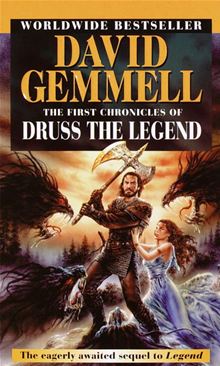
The First Chronicles of Druss the Legend by David Gemmell

druss_chroniclesBefore Dros Delnoch, before Skeln Pass, before the Legend there was a seventeen year old woodsman and his young bride Rowena.  They lived a happy, simple life until slavers attacked their village and carried her away.
But Druss would stop at nothing to save her.  With the demon-cursed blade Snaga, he crossed oceans and continents, fighting corsairs, brigands, armies, empires, even chaos beasts to find her.  And with each battle, the legend grew.

But the greatest challenge Druss would face was not a warrior or a monster, but an old family curse from beyond the land of the living.

Oh man, it’s been far, far too long since I’ve read a David Gemmell book.  Far too long.  And this one was perfect.  It had everything you could possibly ask for in a book by David Gemmell: honor, glory, blood, war, mystics and evil sorcerers, monsters from beyond the grave, great empires and epic sieges, and even a good deal of romance.  And Druss himself is such an awesome character, an unassuming, simple hero who may be brash and may have a temper, but is never completely corrupted by evil.

That said, this is a brutal, brutal book.  The pithiest way I can describe it is Taken meets Lord of the Rings.  People get killed.  Women get raped.  In fact, I think most of the women in the book get raped.  Certainly, more than 50% of the characters die, most of them in a grisly, violent way.  And not everyone is redeemed.  In fact, some of the noblest characters fall.

But man, this is a good book.  Where other fantasy books start off with the lore of the world, painting an exquisitely detailed picture of the world and the magic and the history, Gemmell just throws you right in and grabs you with the story.  Things happen, and they happen quickly.  From the beginning, he snags his hooks in you.

But more than anything, the story means something.  Not in the sense that there’s some kind of underlying moral, or the characters are all black and white.  They aren’t.  People do good things for the wrong reasons, and bad things for the right reasons.  Some of the most despicable characters rise up to do heroic things, while some of the noblest and most honorable characters end up fighting for evil through no fault of their own.  But through it all, there’s so much truth, so much insight, that you can’t help but come away feeling like you’ve been through life and death, and seen the best that both have to offer.

I’m gushing, I know.  This book is INCREDIBLE.  Definitely on par with Gemmell’s best.  I wish he could have written a hundred novels just like it.  I would have read them all.

This is the second to last book in the Drenai series that I’ve read.  The only one that I haven’t gotten to yet is The Legend of Deathwalker, and I plan to get to that one right away.  After that, I’ll probably move on to the John Shannow novels, and then the Rigante series.  In three years, I wouldn’t be surprised if I’ve read every book that David Gemmell has ever written.  He’s just that kind of an author to me.  And if he were still alive, you can bet I’d be ravenously devouring every new book that comes out…

Sadly, the number of David Gemmell books in the world is finite.  But still, there’s quite a few left before I read them all.  And one day, somewhere in the far-off future, I hope to write books as incredible as his.  To one day surpass him would be an impossible dream…but as the Ventrians say, may all your dreams come true save one, for what is life without a dream?

Awesome, awesome book.  If you’re a fantasy reader and brutal stuff like rape doesn’t trigger you, you definitely need to give the Drenai Series a try.  Start with Legend, but get to this one shortly thereafter.  It’s an amazing, incredible read.

Trope Tuesday: Hoist By His Own Petard

One of the most satisfying ways to defeat the villain is to have his own nefarious scheme bring about his downfall.  In Hamlet, Shakespeare described this as “hoist by his own petard,” or blown up by his own bomb.  Basically, it’s a self-deposing villain whose evil plans have gone horribly right.

Not only is this a delicious form of death by irony, it’s also a satisfying way to show cosmic justice in action while allowing the heroes to keep their hands clean.  When done best, the villain keeps the tension notched up to eleven and only commits his fatal mistake after the heroes have made their last stand.  Bonus points if the petard takes the form of a minion who decides to switch sides.

Perhaps unsurprisingly, you’ll often find this trope in stories geared towards a younger audience, which generally try to avoid messy endings and shades of gray.  In some ways, it almost resembles a Disney Villain Death, in that the heroes often come out with clean hands and an unambiguously clear conscience.

However, this isn’t always the case–sometimes, it’s precisely because of the shades of gray that the villain’s plans become self-defeating.  Case in point, Pride and Kimblee from Fullmetal Alchemist: Brotherhood.  You’d think that both characters are totally evil–and perhaps they are–but that doesn’t stop the one from undermining the other at just the right moment.

When done right, this is an incredibly satisfying way to defeat a bad guy.  When done poorly, however, it undermines the villain altogether, or turns the story into just another Aesop.  As always, your mileage may vary, so when writing one of these stories it’s important to keep your audience in mind.

In my own books, it’s probably more common for this to happen to the heroes, which probably makes it a form of Two Rights Make A Wrong or Nice Job Breaking It, Hero.  I do enjoy hoisting the villains as well, though, and will almost certainly use this trope in the future.

Trope Tuesday: Neutral Good

Arguably the best of the good-aligned characters, the Neutral Good can always be counted on to do the right thing, whether that means working within the system or rebelling against it.  Whether young or old, soft or shrewd, nice or not so nice, these are the guys (and girls) most likely to save the world and defeat the enemy with love.

From the easydamus character alignment page:

A neutral good character does the best that a good person can do. He is devoted to helping others. He works with kings and magistrates but does not feel beholden to them.

The Neutral Good is not devoid of weaknesses, of course.  Although they are devoted to good, their lack of commitment to law means that they are not always willing to enforce it.  Also, for those who just want to get things done, this alignment can be somewhat limiting, in the way that a commitment to any higher ideal usually is.

Interestingly, this is a very common alignment for heroes in space opera stories.  Case in point, Luke Skywalker: even though he’s young and reckless, he’s not above learning the ways of the force and joining the Jedi order.  Miles Vorkosigan from Lois McMaster Bujold’s Vorkosigan series also falls squarely into the Neutral Good camp.  Moving on to manga and webcomics, Alphonse and Winry from Fullmetal Alchemist both fall under this alignment, giving balance to Edward’s more chaotic outbursts.  Agatha from Girl Genius is also a Neutral Good…at least, when there aren’t any wrenches nearby.

There are quite a few characters with this alignment in my own work.  Even though she’s a mercenary captain, Danica from Bringing Stella Home falls squarely into this alignment; she’s got a tough outer shell, but she’ll do anything for her men, even…well, I don’t want to ruin Stars of Blood and Glory. 😉 Also from Bringing Stella Home / Sholpan, Stella is solidly Neutral Good, which is part of why the ending is so deliciously twisted.  In Star Wanderers, Jeremiah falls into this alignment mostly through default, which is good for Noemi because the circumstances of the novel put her totally at his mercy.  And in Desert Stars, this is probably Mira’s alignment, though she’s easily manipulated by her Neutral Evil mother.

What can I say?  I’ve got a soft spot for Neutral Goods.  Considering how well this kind of a hero fits in to a classic space adventure, it shouldn’t come as any surprise.

Trope Tuesday: Lawful Good

Lawful Good is the character alignment that is the most unambiguously heroic.  These are the white hats, the caped crusaders, the knights in shining armor who fight for Truth, Justice, and the American way.  They might not always be smart, and they might not always be nice, but you can always count on them to do the right thingalways.

From the easydamus character alignment page:

A lawful good character acts as a good person is expected or required to act. He combines a commitment to oppose evil with the discipline to fight relentlessly. He tells the truth, keeps his word, helps those in need, and speaks out against injustice. A lawful good character hates to see the guilty go unpunished.

Although most Lawful Good characters are unambiguous, their conflicts are often quite complicated.  This is because their dedication to the moral code is itself a weakness which an intelligent villain can exploit.  Typically, this is done by putting them in a situation where they have to choose between being lawful (catching the bad guys) or being good (saving all the innocent people who will die in the process).  A smart Lawful Good character, however, will come up with a third option that turns the ethical dilemma on its head, though it might require a heroic sacrifice.

Very often, these kinds of characters appeal to us because they represent some higher ideal which we wish we could follow.  However, that’s not always the case, especially in more cynical works like A Game of Thrones, where the most lawful good characters also tend to be the most stupid.  Ultimately, it all comes down to the bias of the writer; even when you’re trying not to be didactic, it’s hard not to use the Lawful Good character as a vehicle for some sort of message.

A shallow Lawful Good will be little more than a paragon for whatever virtue they’re meant to represent.  A more nuanced Lawful Good will have some sort of a flaw (besides the backhanded ones), or some sort of internal conflict connected with their moral code to make them more human and relatable.

My favorite Lawful Good would probably be Sir Galahad from Le Morte d’Arthur, but mostly because of the sharp counterpoint he provides next to all the thugs and criminals other Knights of the Round Table.  Carter from Halo: Reach is a pretty cool Lawful Good, though he wasn’t my favorite (that would be Jorge).  And even though he’s a complete idiot, Ned Stark is still the only adult character from A Game of Thrones that I found remotely likable.

In my own work, Jalil from Desert Stars starts out as Lawful Good, though he shifts to Lawful Neutral in the middle and up to Neutral Good by the end.  In Bringing Stella Home / Sholpan, Lars and Narju definitely fall under this alignment, putting a lot of pressure on Stella to live up to their ideals.  I explore Lars’s idealistic character a bit further in Heart of the Nebula, a direct sequel to Bringing Stella Home which I hope to release later this year.  And in Star Wanderers, Noemi tends to fall under this alignment–though the story is not so much about saving the world as it is about saving each other.

Trope Tuesday: Big Damn Heroes

You know the drill.  The clock is ticking down to zero, the evil hordes are swarming through the gates, the virgins are about to be sacrificed and the damsel in distress is about to be lost forever–and then the  heroes show up in all their glory to save the day.

This happens all the freaking time, which means that if you want to make a living telling stories, this is not a trope that you should ignore.  And with good reason.  Not only does it give the writer ample opportunity to play with suspense and action, but it arguably lies at the very core of what makes a hero a hero:

David Gemmell, according to this interview with Ian Graham, defined a hero simply as “someone who does heroic things.” They might not always take the right side, or they might not even care about doing what is right, but when the universe conspires to bring them to a moment of decision, they make the choice that all of us would like to think that we would take and do something extraordinary.

I like this definition of a hero.  It strikes me as a lot more honest than the perpetual do-gooder whose only motivation is Truth, Justice and the American Way (though those characters can–and do–have Big Damn Hero moments of their own).  Also, it means that true heroism is not contingent upon actually winning.  History may be written by the victors, but that doesn’t cheapen the experience of those who actually lived it.

Of course, if the heroes don’t save the day, it’s pretty hard to pull off a crowning moment of awesome without bringing in the Bolivian Army.  Either the heroes find out that they’re too late, or they make things worse, or (as is so common with Othar Tryggvasson of Girl Genius) they just prove that their ego is too big for its own good.  When taken to the extreme, the heroes may even be in danger of turning to the dark side.

The biggest danger with this trope is turning it into a Deus Ex Machina.  The thing that makes Big Damn Heroes so incredibly satisfying is the sense of climax when they show up to save the day.  Thus, proper foreshadowing is key.  Yes, the rule of cool still applies, but if that’s all you rely on, you’re not going to be able to pull it off to maximum effect.

One of my favorite examples of this trope is Liam Neeson in Taken.  Plenty of action movies are more violent, but few are more satisfying.  It’s the perfect pick-me-up after a long crappy day at the office–not that I work in an office anymore.  I wonder why…

In any case, this is a great trope to look out for, and definitely one to master, especially if you’re writing any sort of action-adventure story.

Trope Tuesday: Bittersweet Ending

WARNING! CONTAINS SPOILERS FOR AMERICAN GODS, LAGAAN, LORD OF THE RINGS, TREASURE ISLAND, AND CROUCHING TIGER HIDDEN DRAGON.

And he sang to them, now in the Elven-tongue, now in the speech of the West, until their hearts, wounded with sweet words, overflowed, and their joy was like swords, and they passed in thought out to regions where pain and delight flow together and tears are the very wine of blessedness.

Tolkien, J.R.R. The Return of the King.

I love bittersweet endings.  I love stories that warm my heart even as they make me cry.  There’s something about reading them that makes me feel alive, and something about writing them that makes me feel like I’ve truly told a story worth telling.

The tvtropes page claims that bittersweet endings fall more to the cynical side of the sliding scale of idealism vs cynicism, but I disagree.  Without tasting the bitter, how can we know the sweet?  Too many of our modern stories are like high fructose corn syrup, where everything gets tied up with a pretty bow and the characters remain essentially unchanged.  I firmly believe that it’s only through sacrifice that we can know true joy, and stories that follow this often end up being bittersweet on some level, even if they are idealistic.

The tvtropes page lists six types of bittersweet endings, which are:

  • Did Not Get the Girl: When the hero either loses the girl or has to give her up to win the day.  American Gods is a good example of this, I think: Shadow never actually gets back with Laura, even though he spends most of the book looking for a way to bring her back.
  • The Greatest Story Never Told: When the hero fades into obscurity after winning the day.  Lagaan, one of my favorite Bollywood movies, is an excellent example of this.  The last line of the movie is the narrator explaining how after the events of the story, the village faded into history until it was forgotten.
  • End of an Age: When the triumph over evil transforms the world so completely that there is no going back to the way things used to be.  Lord of the Rings is the best example of this: after the one ring is destroyed, all the other rings lose their power, and the elves must pass into the west.
  • Heroic Sacrifice: When victory comes only after the death of many or all of the main characters.  This is basically every David Gemmell book ever written, which is why I can’t get enough of him.
  • Only the Leads Get a Happy Ending: Where life is great for the main characters but everyone else ends up suffering.  I can’t think of any examples where this is done well; it’s probably just bad storytelling.
  • Karma Houdini: When the bad guy doesn’t get what’s coming to him.  The best example of this is probably Treasure Island, where Long John Silver gets away with the treasure in the end, leaving the good guys to say “I can almost find it in my heart to hope he makes it.”

It’s important to point out that this trope is not simply a tragic tale with a heart-wrenching twist.  Crouching Tiger Hidden Dragon, for example, is a straight up tragedy: even though Mu Bai confesses his love to Shu Lien, he promptly dies, and Jen commits suicide.  It’s an awesome ending to an awesome story, but there is no sweet in it.

When done poorly, a bittersweet ending can feel confusing or anti-climactic.  When done well, however, I think it adds a wealth of depth and feeling, as well as a degree of believability and realism.  After all, how many of our victories are complete?  How often do we have to give up something good for something greater?

So yeah, I love this trope.

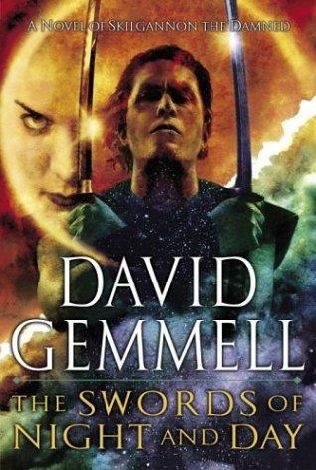
The Swords of Night and Day by David Gemmell

A thousand years ago, a young warrior named Skilgannon helped the princess Jianna escape an attempt on her life.  They became lovers, and when she retook her throne, she made Skilgannon her chief general.  When she ordered the abject annihilation of her enemies, he loved her too much to refuse her–and thus became Skilgannon the Damned.

Now, the wizard Landis has recalled Skilgannon back from Hell to defeat the tyrant queen known as the Eternal.  For hundreds of years, the Eternal has ruled the world, using the arcane arts of a fallen civilization to achieve immortality and crush all who oppose her.

When the Eternal learns of Landis’s treachery, the only hope for freedom lies with Skilgannon, the axeman Harad, the huntress Askari, and the Drenai ranger Alahir.  But how can they defeat an enemy who commands nearly all the armies of the world?  Who has lived a dozen lifetimes and simply steals the bodies of her clones whenever she is killed?

But most of all, how can Skilgannon defeat the Eternal when she is none other than Jianna, his beloved?

The Swords of Night and Day is a direct sequel to White Wolf, the first David Gemmell novel that I read.  I have to admit, I wasn’t particularly impressed with White Wolf; it meandered a lot and didn’t seem to have any clear direction.

That is most certainly not the case with The Swords of Night and Day, however.  I was hooked from the very beginning, and could hardly put it down until the shocking, mind-bending twist at the end.  It tied up all the loose ends from White Wolf and completed Skilgannon’s character arc in a surprising yet satisfying way.

One of the reasons I think I love David Gemmell so much is because he captures so perfectly the experience of being a man.  In that, I suspect that Gemmell is to me what Jane Austen is to most women.

But even though Gemmell’s characters might be crass, vulgar, chauvanistic, and downright detestable at times, there is always something heroic deep inside of them–something worth redeeming.  And when he does redeem them, it surprises me how powerful it is–even when he redeems someone I don’t want him to.

With The Swords of Night and Day in particular, one of the things that particularly fascinated me was the fictional cosmology of the Drenai universe.  With magic that can resurrect people’s spirits from hell, the story must inevitably deal with questions of the afterlife.  Yet even so, there’s still enough ambiguity and latent potential that it never felt stilted or labored.  If anything, it felt a bit like Tolkien’s cosmology in The Silmarillion, where all the stuff about gods, angels, and the undying lands only added to the sense of wonder.

I love just about all of David Gemmell’s books, but this one in particular was well worth the time and experience reading it.  I wouldn’t recommend starting with this one, though: better to read Legend, White Wolf, and The King Beyond The Gate first.  But if you’ve read and enjoyed those ones, you will DEFINITELY love this one.  I certainly did.

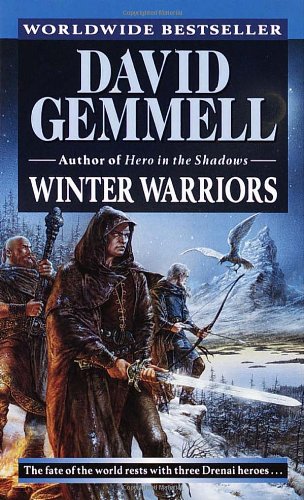
Winter Warriors by David Gemmell

Eons ago, in the Days of Fire, demons feasted upon the souls of men the way that men feast on cattle.  Those days ended when the second most powerful demon betrayed his people, damning them to purgatory so that men could inherit the Earth.

Four thousand years have passed, and the demons are beginning to come back.  The dread Kreyakin, advance guard to the demon invasion, have already passed into the world of men.  In order to open the portal to the other world, however, they must cast a spell requiring the lives of three kings.

Two of the kings have already been sacrificed.  The third lies within the womb of the Princess Axiana.

The fate of the mortal world now lies in the hands of three aged warriors–Nogusta the swordsman, Kebra the bowman, and Bison the brute–and a handful of unlikely fugitives.  Together, they must stand against the dread Kreyakin and all the forces of hell.

Alright, my attempt at a jacket blurb really doesn’t do this book justice.  I want to say it was one of the best Drenai books I’ve ever read, but the truth is it’s just like every other book in the Drenai saga, which is to say that it’s awesome.

I think I’ve figured out why I love David Gemmell’s books so much.  It’s because his books so perfectly capture what it means to be a man.  Women read Twilight because it perfectly captures the experience of being a teenage girl in love, and Gemmell’s books–all of them–capture what it means to be a man.

I’m not just talking about the platonic ideal of manhood–I’m talking about the everyday reality as well. Two men sitting together in “companionable silence.” A warrior who scoffs when his commander sends some lesser men to accomplish a mission, then after getting chided says “I spoke in haste,” and the matter is dropped.  Guys who tackle problem after problem, from fighting duels to fleeing from armies from helping the inexperienced princess with her messy childbirth, and do so without flinching, because hey, someone’s got to do it.

But the ideal is definitely there too, because in every single one of Gemmell’s books, circumstances conspire to push his characters right up to the very limits of their abilities.  When that happens, their true character shines out, and the most unlikely ones rise to great feats of heroism, often sacrificing their lives in the process.

Indeed, if there’s one underlying theme in all of Gemmell’s books, it’s about heroism and what makes a true hero.  It’s awesome.

The best part, though, is how Gemmell redeems even the darkest characters.  I can’t say much about this book without giving away the ending, but let me just say it was extremely satisfying.  Evil is not some slimy b-movie monster–it’s a quality that everyone possesses in varying degrees, alongside the potential for greatness.

In this way, I think Gemmell is the antithesis of George R. R. Martin.  While both authors write in shades of gray, Martin emphasizes how even the noblest, most honorable people have an ugly black stain somewhere in their character, whereas Gemmell focuses on the potential within all of us to rise above the darkness in our souls and accomplish feats of greatness.  His heroes are dark and gritty, but at the end of the day, they are heroes nonetheless.

In short, this book was awesome. If you’ve ever read a book by David Gemmell and loved it, I guarantee you’ll love this one.  I certainly did.

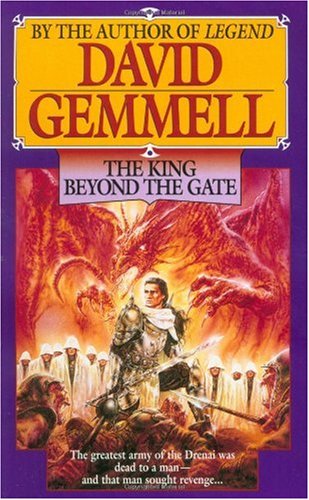
The King Beyond the Gate by David Gemmell

Tenaka Khan was a child of two nations and an outsider to both.  Half Nadir, half Drenai, the only home he ever knew was in the ranks of the Dragon, the elite fighting forces of the Drenai.  But now, a mad dictator rules the land, and the Dragon has been destroyed.

With all his friends dead at the hand of the evil Drenai emperor, Tenaka has only one desire: to steal into the palace and assassinate him.  Along the way, however, he makes a number of friends, all of whom seek the same thing, but all for different reasons.  As they join forces with the Skoda rebels, Tenaka realizes that he not only has something to die for–he has something to live for.

But in order to defeat the mad emperor, the rebels must fight the Joinings–terrible creatures made from man and beast, who slaughtered the Dragon years before.  Only the Nadir can save them–but the Nadir want nothing more than to ravage the Drenai.

If  you’ve read my review of David Gemmell’s Legend, you know why I love his books.  This one was no less incredible.  Parts of it were just as poignant as anything in Legend, and the ending, while bittersweet, was no less satisfying.

It’s really fascinating to me, because Gemmell’s books are not particularly flowery or well written.  His descriptions are sparse, his prose is unassuming, his characters, while distinguished from each other, sound more or less the same, and his viewpoint is often inconsistent.  But in terms of raw storytelling, his books are unequaled by anything else I’ve ever read.

He makes me fall in love with his characters: I cheer for them when they rise to the heroic deeds that circumstances demand of them, I cry when they fall short of what they could have been, and I weep when they give their lives in the service of something greater than themselves, which is almost invariably the case.

My favorite part of any David Gemmell book has got to be the order of warrior priests known as the Thirty.  They don’t show up in every book, but they show up in many of them, and they always share the same characteristics.  The warrior priests are dedicated to the Source (Gemmell’s equivalent of God in his Drenai universe), and have the supernatural abilities to speak telepathically, put thoughts into others’ minds, shield their comrades from the magic of the Chaos brethren, and leave their bodies to fly across the world and do battle in other dimensions beyond the grave.

The way the order is run is absolutely fascinating.  One person is the mouth, the other the ears, the other the heart, etc.  The most unlikely characters always fill the particular roles–but always for good reason.  They fight to defend the innocent and pure, but more than that, they always have some great destiny to perform–a destiny that invariably pits them against the forces of Chaos in some great, decisive battle.  In that battle, all of them invariably die, except for the weakest among them, who goes out to found the next order of the Thirty.

I don’t know about you, but this kind of stuff, just makes me want to jump up and down.  This is fantasy at its best–good versus evil, warriors facing death, and the most unlikely heroes rising to the level of greatness that war and honor demand of them.  Throw in a little magic, a brotherhood of evil sorcerers bent on crushing all that is good in the world, and terrible monsters the likes of which exist only in nightmares, and I am so there, man–I am so there.

In short, this book was nothing less than awesome.  If you love any book by David Gemmell, I think you’ll enjoy this one.  It’s got everything you could possibly expect from heroic fantasy, and more.