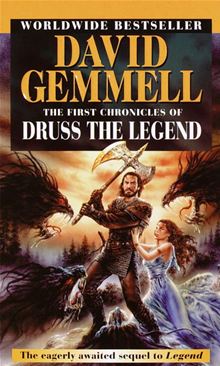
The First Chronicles of Druss the Legend by David Gemmell

druss_chroniclesBefore Dros Delnoch, before Skeln Pass, before the Legend there was a seventeen year old woodsman and his young bride Rowena.  They lived a happy, simple life until slavers attacked their village and carried her away.
But Druss would stop at nothing to save her.  With the demon-cursed blade Snaga, he crossed oceans and continents, fighting corsairs, brigands, armies, empires, even chaos beasts to find her.  And with each battle, the legend grew.

But the greatest challenge Druss would face was not a warrior or a monster, but an old family curse from beyond the land of the living.

Oh man, it’s been far, far too long since I’ve read a David Gemmell book.  Far too long.  And this one was perfect.  It had everything you could possibly ask for in a book by David Gemmell: honor, glory, blood, war, mystics and evil sorcerers, monsters from beyond the grave, great empires and epic sieges, and even a good deal of romance.  And Druss himself is such an awesome character, an unassuming, simple hero who may be brash and may have a temper, but is never completely corrupted by evil.

That said, this is a brutal, brutal book.  The pithiest way I can describe it is Taken meets Lord of the Rings.  People get killed.  Women get raped.  In fact, I think most of the women in the book get raped.  Certainly, more than 50% of the characters die, most of them in a grisly, violent way.  And not everyone is redeemed.  In fact, some of the noblest characters fall.

But man, this is a good book.  Where other fantasy books start off with the lore of the world, painting an exquisitely detailed picture of the world and the magic and the history, Gemmell just throws you right in and grabs you with the story.  Things happen, and they happen quickly.  From the beginning, he snags his hooks in you.

But more than anything, the story means something.  Not in the sense that there’s some kind of underlying moral, or the characters are all black and white.  They aren’t.  People do good things for the wrong reasons, and bad things for the right reasons.  Some of the most despicable characters rise up to do heroic things, while some of the noblest and most honorable characters end up fighting for evil through no fault of their own.  But through it all, there’s so much truth, so much insight, that you can’t help but come away feeling like you’ve been through life and death, and seen the best that both have to offer.

I’m gushing, I know.  This book is INCREDIBLE.  Definitely on par with Gemmell’s best.  I wish he could have written a hundred novels just like it.  I would have read them all.

This is the second to last book in the Drenai series that I’ve read.  The only one that I haven’t gotten to yet is The Legend of Deathwalker, and I plan to get to that one right away.  After that, I’ll probably move on to the John Shannow novels, and then the Rigante series.  In three years, I wouldn’t be surprised if I’ve read every book that David Gemmell has ever written.  He’s just that kind of an author to me.  And if he were still alive, you can bet I’d be ravenously devouring every new book that comes out…

Sadly, the number of David Gemmell books in the world is finite.  But still, there’s quite a few left before I read them all.  And one day, somewhere in the far-off future, I hope to write books as incredible as his.  To one day surpass him would be an impossible dream…but as the Ventrians say, may all your dreams come true save one, for what is life without a dream?

Awesome, awesome book.  If you’re a fantasy reader and brutal stuff like rape doesn’t trigger you, you definitely need to give the Drenai Series a try.  Start with Legend, but get to this one shortly thereafter.  It’s an amazing, incredible read.

Up to my elbows in book surgery

That’s probably the best term for what I’m doing with Heart of the Nebula right now.  Basically, I let some of my darlings live, and they grew some extra limbs and started drooling acid without my realizing it.  But now, I’ve put enough distance between myself and the first draft that I have no qualms about grabbing the axe and chopping off heads.

Don’t worry; this is all a normal part of my creative process.  Maybe someday, stories will burst fully formed from my head like Athena from the brow of Zeus, but for now, my ideas are a lot more like baby turtles–if I’m lucky, one or two out of a dozen will actually reach the water and survive.  Protip: don’t follow the lights.

Speaking of ancient mythology, I’m reading the Argonautica right now, and I can’t help but notice that it would make a really, really, REALLY awesome science fiction story.  No, seriously–think about it.  A group of legendary heroes sets out on an epic voyage in search of some applied phlebotinum macguffin, have all sorts of adventures on strange and distant planets, get the girl to fall in love with the captain, and bring her back with them to their homeworld.  It would also work well as a heroic fantasy, but space is so much more awesome.

Incidently, Kutaisi was the capital of ancient Colchis, where Jason and the Argonauts came seeking the golden fleece.  People still speak of Medea as if she were a real person–generally, they think she was a dirty traitor who sold out her own people.  But people still enjoy the love story, and if you keep your eyes open you can see restaurants and hotels named after her.

So yeah.  Ancient Greek mythology + science fiction = win.  You can definitely expect to see some more of that in my own writing in the future.

In other news, I recently did an interview on fellow indie author Ty Johnston’s blog.  In it, I talk a little about my travel writing, what draws me to speculative fiction, my favorite number (hint: it’s 12), and my insights into the ancient Mayan calendar and the 2012 apocalypse.  It was a lot of fun–you should definitely check it out.

If you would like to host me for an interview on your blog, shoot me an email!  I’m always up for stuff like that.  Otherwise, I’d better roll up my sleeves and get back to hacking up operating on my book.

Trope Tuesday: The Cavalry

Things look bleak: the Big Bad is on the verge of conquering the world, and the heroes have gathered for one last stand.  Just when it looks like all hope is lost, a horn sounds in the distance, and the cavalry arrive to save the day.  Whether a ragtag bunch of minor characters, an army of unlikely heroes, or the ultra-heroic Eagle Squadron, the timely reinforcements use their overwhelming force to crush the villains and save the day.

When done right, this trope can be one of the defining moments of greatness of the entire work.  When done wrong, however, it becomes little more than a Deus Ex Machina of the most unsatisfying kind.  How, then, can this moment be done right?

As with any Deus Ex, one of the keys is to adequately foreshadow the end.  This often takes the form of Gondor Calls For Aid, when the heroes petition the cavalry for assistance before going into battle. To make things interesting, the relationship between the two parties is often complicated and ambiguous, making it doubtable that the cavalry will actually show up.

However, I think it goes deeper than this.  In order for the arrival of the cavalry to be satisfying, it needs to not invalidate everything that the heroes have already gone through.  If the cavalry shows up after the heroes have defeated the Big Bad, and essentially rescue them from a heroic sacrifice, that’s satisfying.  If the heroes are still fighting the Big Bad and the cavalry comes out of nowhere to hand them an unearned victory, that’s cheap.

In English 318R, Brandon Sanderson often used the film versions of the Lord of the Rings Trilogy to illustrate this.  The Battle of Helm’s Deep was satisfying, because the entire premise was to hold out until the third day.  When Eomer arrived with the Rohirrim on the morning of the third day and swept away the Uruk-Hai, that didn’t invalidate King Theoden’s efforts because all he was trying to do was survive.

In the Battle of Minas Tirith, however, Aragorn’s arrival with the unbeatable army of the dead was kind of cheap, because the premise was to defeat the orcs, not to hold out for reinforcements.  Gondor could have just stood down and let the orc army capture the city, and they still would have won in the end.

The two genres where you’re most likely to see this trope are westerns (trope namer) and heroic fantasy. Just about every David Gemmell novel involves a cavalry moment of some kind, and I looove it.  It’s also quite common in military science fiction, too–basically, any story where war is a major part of the narrative.

The variations on this trope are also quite fascinating.  For example:

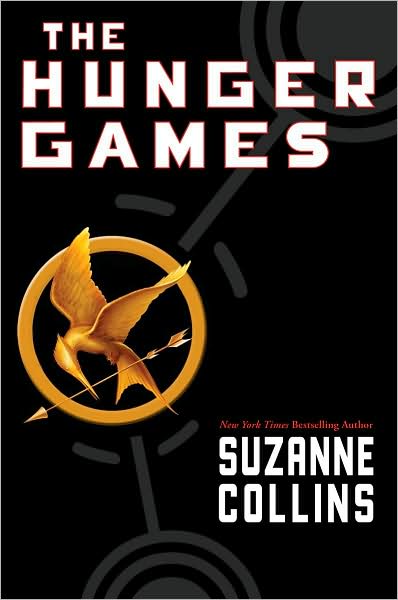
The Hunger Games by Suzanne Collins

This book review is going to be a bit unconventional, so please bear with me.

Normally, I only review books on my blog if I feel I can recommend them.  They might not be perfect, but overall, the praise outweighs the criticism. However, for me personally, The Hunger Games was a huge disappointment.

I’m not going to do a little book blurb like I usually do, because I want to spend all the available space on this post explaining the reasons why I was so disappointed.  Also because of that, this post will be full of spoilers.  Consider yourself warned.

First, let me say that I don’t think this book was all bad.  Suzanne Collins is very good at plot and pacing, and she knows how to keep a reader hooked.  In that way, this book reminded me of the old Michael Crichton thrillers that I devoured as a kid.

However, two crucial things killed about half of the suspense for me: the fact that this book was the first in a series, and the first person viewpoint.

From the very beginning, we know that Katniss isn’t going to die.  We know it, because she’s narrating the story to us directly (in present tense, which personally irks me, but I won’t go into that).  Unlike other gladiator-style heroic fantasies, where the major draw is to see who lives and who dies, we have that spoiled for us.

Of course, the argument in favor of the first person is that it helps the reader feel a closer connection with the viewpoint character.  The problem is, I never did.  At the end of the book, Katniss still feels like an outsider to me; I never felt like I got inside her head well enough to know who she really is.  When I try to imagine her, all I can envision is a wide-eyed mannekin.  She just didn’t come alive to me.

Why? Because the whole time, she’s only got one thing on her mind: survival.  I don’t see anything but fragmentary glimpses of her other motivations, and those are never fully fleshed out.  Her experiences growing up were just so traumatic that I can’t relate to her, and Suzanne Collins never provides a reference point outside of the awfulness of Katniss’s crapsack world.

Which is another thing that got to me: the setting.  Every time I opened the book, I dreaded going back to Collins’ world–and not in a good, “ooh, this world is so creepy/frightening” way, but in a “man, this place just makes me depressed” kind of way.  It wasn’t even that original–Panem is basically the USA as North Korea (though it could take place anywhere, for all the details Collins gives us).

What’s more, the setting is full of inconsistencies.  The people are starving to death, but the forests are full of game and wildlife.  In North Korea, people raze the forests for fuel and timber, driving all the game out.  Yes, I know the people of District 12 mine coal, but all of it presumably goes to Capitol, just like in District 11 all the grain goes to Capitol and the people still starve. Which makes me wonder: why are all the districts specializing in only one commodity?  That’s just stupid.

Which brings me to another thing: the sheer idiocy of the rulers of Panem.  If the Hunger Games are supposed to remind the people of how subjugated they are, why allow the tributes the opportunity to do something like pull a romance stunt?  Why spend all that time primping and preening them, interviewing them, and giving them an opportunity to manipulate the crowds?  When the people of District 11 sent Katniss the bread, why didn’t a government censor stop that from happening?  And finally, when Katniss and Peeta were the only ones left standing, why give them the opportunity to upstage the games by falling on each others’ swords?

Seriously, that last point got to me more than any of the others.  When they announced the rules change, that Peeta and Katniss were supposed to kill each other after all, why couldn’t the GM see the potential for things to go wrong?  Seriously, having them both kill each other–or refuse to kill each other–was such a blatantly obvious choice, I saw it the moment the rule change came into play.  The fact that the villains didn’t just threw me out of the story.

But that wasn’t the first thing that threw me out of the story.  The first thing was the parade, with Katniss and Peeta marching into the arena with their flaming cloaks.  All this time, Katniss has been set up as the underdog–she isn’t pretty, she isn’t strong, she’s mildly sympathetic for volunteering in place of her sister, but the audience in that arena is looking for blood, not sympathy.  So when the crowd goes wild for her and Peeta, I just didn’t buy it.

It only got worse as things went along.  When the tributes did the skill check, Katniss–who, from the beginning of the story, has been set up as the underdog–scores higher than anyone else.  Every time she’s in front of an audience, everyone is oohing and ahhing.  It made me want to gag.

Honestly, you know what it seemed like?  It seemed like Suzanne Collins fell in love with Katniss so much that she wanted to spoil her, even though the story required her to keep up the pressure.  She made sure to torture Katniss in the games–so much so that it felt downright melodramatic at times–but while they were still in Capitol, waiting for the games to start, Katniss felt like a spoiled Mary Sue.

And as for the romance, it fell completely flat from the beginning.  Katniss was nothing but a manipulative faker from the beginning–granted, because she needed to in order to stay alive, but the least she could have done was coordinate that with Peeta.

And that’s another reason why I had such little sympathy for her–she’s a callous, manipulative, lying little heartbreaker, like far too many women in this world.

So yeah, The Hunger Games was, in my opinion, a huge disappointment.  I can partially see why it did so well (strong female protagonist, excellent plot structure and pacing, lots of hooks and cliffhangers), but personally, I don’t think it deserves half the praise it’s gotten.  And after what friends have told me about the rest of the series, I can guarantee that I won’t be reading them.

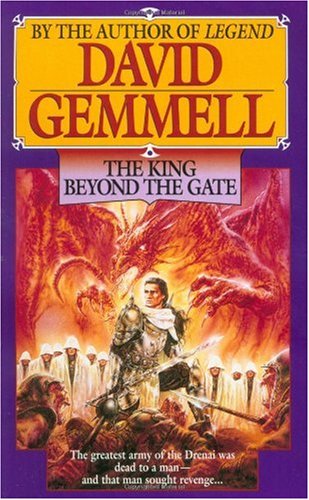
The King Beyond the Gate by David Gemmell

Tenaka Khan was a child of two nations and an outsider to both.  Half Nadir, half Drenai, the only home he ever knew was in the ranks of the Dragon, the elite fighting forces of the Drenai.  But now, a mad dictator rules the land, and the Dragon has been destroyed.

With all his friends dead at the hand of the evil Drenai emperor, Tenaka has only one desire: to steal into the palace and assassinate him.  Along the way, however, he makes a number of friends, all of whom seek the same thing, but all for different reasons.  As they join forces with the Skoda rebels, Tenaka realizes that he not only has something to die for–he has something to live for.

But in order to defeat the mad emperor, the rebels must fight the Joinings–terrible creatures made from man and beast, who slaughtered the Dragon years before.  Only the Nadir can save them–but the Nadir want nothing more than to ravage the Drenai.

If  you’ve read my review of David Gemmell’s Legend, you know why I love his books.  This one was no less incredible.  Parts of it were just as poignant as anything in Legend, and the ending, while bittersweet, was no less satisfying.

It’s really fascinating to me, because Gemmell’s books are not particularly flowery or well written.  His descriptions are sparse, his prose is unassuming, his characters, while distinguished from each other, sound more or less the same, and his viewpoint is often inconsistent.  But in terms of raw storytelling, his books are unequaled by anything else I’ve ever read.

He makes me fall in love with his characters: I cheer for them when they rise to the heroic deeds that circumstances demand of them, I cry when they fall short of what they could have been, and I weep when they give their lives in the service of something greater than themselves, which is almost invariably the case.

My favorite part of any David Gemmell book has got to be the order of warrior priests known as the Thirty.  They don’t show up in every book, but they show up in many of them, and they always share the same characteristics.  The warrior priests are dedicated to the Source (Gemmell’s equivalent of God in his Drenai universe), and have the supernatural abilities to speak telepathically, put thoughts into others’ minds, shield their comrades from the magic of the Chaos brethren, and leave their bodies to fly across the world and do battle in other dimensions beyond the grave.

The way the order is run is absolutely fascinating.  One person is the mouth, the other the ears, the other the heart, etc.  The most unlikely characters always fill the particular roles–but always for good reason.  They fight to defend the innocent and pure, but more than that, they always have some great destiny to perform–a destiny that invariably pits them against the forces of Chaos in some great, decisive battle.  In that battle, all of them invariably die, except for the weakest among them, who goes out to found the next order of the Thirty.

I don’t know about you, but this kind of stuff, just makes me want to jump up and down.  This is fantasy at its best–good versus evil, warriors facing death, and the most unlikely heroes rising to the level of greatness that war and honor demand of them.  Throw in a little magic, a brotherhood of evil sorcerers bent on crushing all that is good in the world, and terrible monsters the likes of which exist only in nightmares, and I am so there, man–I am so there.

In short, this book was nothing less than awesome.  If you love any book by David Gemmell, I think you’ll enjoy this one.  It’s got everything you could possibly expect from heroic fantasy, and more.

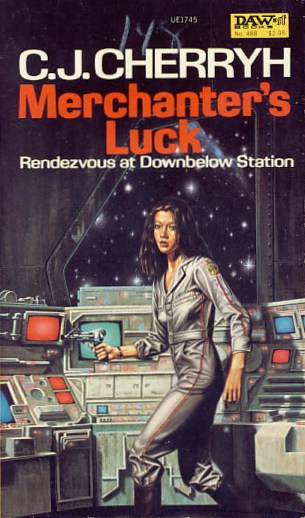
Merchanter’s Luck by C. J. Cherryh

He was a down and out merchanter, the captain, crew, and sole proprietor of a run-down bucket of bolts spacecraft.  She was a daughter of one of the finest starfaring clans, with seven hundred cousins standing between her and the one thing she wanted more than anything else: command of a starship.

They met at Pell during the height of the Company War–the key strategic point on the border between Union and Earth.  Their fateful meeting would affect not only the outcome of the war, but the course of their own lives–for the starship Lucy of Wyatt’s Combine was not at all what she seemed to be.

Before I review this book, I need to issue a disclaimer: you probably aren’t going to enjoy it very much unless you’ve already read Downbelow Station.  Cherryh isn’t the best at easing her readers into her worlds, and without the background on Union, Alliance, and the Company War, you’ll probably be hopelessly lost.

That said, I absolutely loved this book.

The premise is so awesome.  Space adventure hardcore, with a beautiful love story set amidst an epic interstellar war, where alliances are constantly broken and no one can be trusted…oh man, I LOVED this book!

While the premise seems pretty standard, C. J. Cherryh transcends the well-worn tropes and cliches of her genre by intimately developing her characters and working their motivations into the story until they are the ones driving the plot, and not the other way around.

Every character is unique, and though they act in ways that may seem strange to our modern sensibilities, there are always reasons for everything they do, cultural or otherwise.  As windows into their far-future spacefaring culture, they give the reader a wonderful view of Cherryh’s unique and marvelously constructed universe.

The thing that surprised me the most, however, was the sharp contrast between this book and Downbelow Station. While Downbelow Station traces the epic arc of the Company War through the viewpoints of a large cast of characters, much like Tolkien or Dune, Merchanter’s Luck focuses more on the characters themselves, in much the same way as David Gemmell or Ursula K. Le Guin.  In other words, while Downbelow Station is comparable to “high” or epic fantasy, Merchanter’s Luck would fall closer to “low” fantasy or sword & sorcery.

The interesting self-realization I took from the book was that I’m much more interested in the intimately personal stories than the sweeping epic tale of the Rise and Fall of cultures and civilizations.  I suppose that’s why I’m more of a David Gemmell nut than a Tolkien fanatic, and perhaps why I’m more into space opera and military sf than epic fantasy.  In all of my novels, the focus is always on the individual characters and their personal conflicts, and whenever I get sidetracked and focus too much on the overworld story, it always falls apart. 

Merchanter’s Luck definitely doesn’t get sidetracked, and that’s why I loved it so much.  I fell in love with the characters almost from the very first page–from the blurb on the back cover, even.  And most of all, I fell hopelessly in love with the starship Lucy:

You know you’re doing science fiction right when your readers bemoan the fact that they weren’t born in the 26th century, when they could command their own spaceship.  C. J. Cherryh is an amazing writer, and if I had the chance, I would teleport into her Union-Alliance universe in a heartbeat.

If you love well-crafted far-future worlds and stories about the people that live in them, check out Downbelow Station (or really, just the first chapter–that’s all you need for a solid grounding) and read this book!

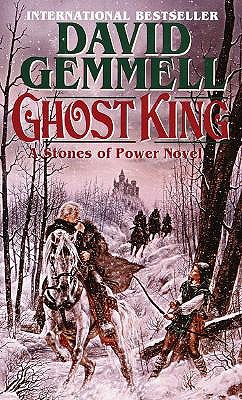
In the Realm of the Wolf by David Gemmell

Never leave home without a weapon, Dakyras taught his adopted daughter Miriel.  Though they live a quiet life alone in the mountains, death is never far from the man known as Waylander.

When the Assassin’s Guild puts out a high price on Waylander’s head, both Waylander and Miriel find themselves on the run.  With them come two ill-fated gladiators from Drenai: the loyal and steady Angel, and the arrogant and reckless Senta.  Both men vie for Miriel’s hand–and both are honor bound to kill each other.

But in the face of the evil hunting Waylander, Angel and Senta must lay aside their vendetta and take up arms against the Gothir army hunting the Wolf clan, tribe of the prophesied chieftain that will one day unite the Nadir.  For deep in the realm of the Wolf lies a castle more ancient than the three empires–a castle whose dark secrets threaten to upset the global order forever.

This book was awesome.  I loved every moment of it.  With each page, the story just got better and better, right up to the climactic finish.  If you’re looking for a rousing adventure, you can’t go wrong with David Gemmell.

One of the things I loved the most about this story was the love triangle between Miriel, Angel, and Senta.  At first, I thought I knew who was good, who was bad, and which one she’d end up with, but then things changed and I wasn’t too sure.  Even though I hated Senta at first, I spent most of the book vacillating with my feelings on him.  And the way things ended–I wasn’t disappointed.  Not one bit.

Even though the overall story conflict was much, much larger than life, Gemmell’s characters always felt very real.  Perhaps it has to do with the way their true nature always seems to come out in battle–and Gemmell gives them plenty of opportunity to show their true nature.

It also has to do with the things they’re fighting for, though–the stakes are always clear for each character, and when they’re confused what they’re fighting for, that’s made clear too.  Though the conflict itself is larger than life, the stakes for each individual character never are.

The ending really took the cake for me, though.  When I finished the book, I couldn’t help but smile.  Gemmell is a master at writing endings that make you want to stand up and cheer.

As awesome as this book was, though, the last book in the trilogy, Hero in the Shadows, is so much better.  The last scene of that book stands out so much more to me, now that I know everything about Waylander’s past.  So.  Freaking.  Epic.

But do yourself a favor: don’t read the last book first, like I did.  Start with Waylander, which is a good book–not great, but good–and read through the trilogy.  If you love stories about true heroes and epic adventures, you won’t be disappointed.

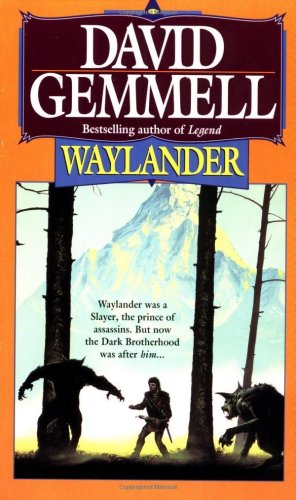
Waylander by David Gemmell

The Drenai lands have been overrun, and the Vagrian conquerors, led by Kaem and the Dark Brotherhood, are laying waste to all that lies before them.  Only the stronghold at Purdol withstands them, but unless the Drenai can rally a counterattack, all will be lost.

In these trying times, a strange old man visits the assassin Waylander and urges him to go to the sacred Nadir mountain of Raboas and retrieve the legendary Armor of Bronze.  With this armor, the Drenai commander Egel can rally the army that will save the kingdom.

But Waylander is a hunted man–a man of dark secrets and many enemies.  Kaem wants him dead for killing his son.  The Nadir want him dead for violating their lands.  And the Drenai want him dead for assassinating their king.

I love David Gemmell.  When you pick up one of his novels, you know exactly what you’re going to get: gritty, complex characters, bloody battles, ruthless villains, and difficult moral decisions that transform even the most depraved individuals into true heroes, if only for a few moments before they die.  Waylander is no exception.

Perhaps the most interesting part of the book is the story behind the founding of the Thirty.  When the young Source priest named Dardalion forsakes the pacifism in order to save the lives of his fellow countrymen, twenty nine fellow priests join him to form the band of legendary warrior monks.  This religious order goes on to play a pivotal role in some of Gemmell’s best works.

Waylander himself is also an interesting, memorable character.  During the events of Waylander, he’s basically hit rock bottom, but as he learns again what it means to love and fight for what he loves, he climbs out of that dark place.

I really enjoyed this book.  My only complaint is that the ending felt a little rushed.  All the plots and subplots get tied up, but some of them so abruptly that there’s little room to savor the emotional impact.  Still, the novel was quite satisfying overall.  I look forward to reading the next book in the Waylander saga.

Quest for Lost Heroes by David Gemmell

It has been forever since I read this book.  Still, I really should review it.  Here goes.

At Bel-Azar, four friends held out against hopeless odds, only to be spared by the Nadir Khan.  Known by the Nadir as the “ghosts yet to be,” they enjoyed the fame of heroes for a time, but now live in obscurity in their own kingdom.

When a band of slavers raze a village and carry off the women, however, a young, reckless boy named Kiall calls upon the forgotten heroes to help him free his unrequited love.  And so the “ghosts yet to be” join together for one last quest, only to find that the stakes are much higher than any of them could have forseen…

David Gemmell writes awesome fantasy!  Some of the best I have ever read.  This one, while not quite as deep and meaningful as others like Legend, had its moments.  Let me just say, Gemmell knows how to kill off his characters.

The story started off very well, with some interesting introductions.  It felt a bit like a cowboy movie, where the heroes are all outcasts, unable to find their place in mainstream society.  I immediately took a liking to the main character, Chareos–Gemmell knows how to write heroic characters, even dark heroic characters.

The action began immediately, with blood and battle in every chapter.  As usual, Gemmell did an excellent job getting to the meaning (or lack thereof) of it all, but at times, it felt a little bit superficial.  Not very much, but sometimes, it seemed that he threw the action in just to keep the story interesting.  It didn’t pack quite the same punch as Legend, which was a much superior book.

It took me a few chapters to feel that the story was progressing–Gemmell isn’t always strong on plot–but once I did, it really took off.  I finished the last hundred or so pages at a sprint, and the ending, like all of Gemmell’s endings, did not disappoint.

Overall, I’d say this book is more fan action-adventure story than anything else–light reading, compared to Gemmell’s other work.  Still, it was definitely entertaining, and much deeper and well-written than your typical thriller.  If you like heroic adventure stories with lots of action, you’ll love this book.

Hero in the Shadows by David Gemmell

Waylander gave up his dark life as an assassin years ago–or so he thought.  When an ancient magic gateway begins to break down and evil beings from another world set out to reconquer the lands of Kydor, Waylander finds himself caught up once again in the cycle of war and bloodshed.

Waylander joins forces with Kysumu, a rajnee warrior who has been training all his life to be the best swordsman, and Ustarte, an escaped  changeling experiment who has come from the demon world to organize a resistance.  But when the spirit of Qin Chong comes from the past to aid the fledgling resistance, he comes to the unlikeliest person of all–the ditch-digger Yu Yu Liang.  As Kysumu wrestles with envy over the spirit’s choice, he comes to understand what it truly means to be a hero.

This book was good. Way good.  Not only was it a thrilling action/adventure story, it was full of deep, wonderful insights into the nature of courage and cowardice, life and death, good  and evil, and true heroism.  David Gemmell’s books are full of wonderful insight, and deliciously complex in the way they deal with life’s most important and meaningful questions.

I read the last hundred pages at a breathless sprint.  So many of the characters died!  Yet even though the story was very violent, I didn’t feel that it was excessively so.  The violence always had a reason to be there, and added something to the story.

What really surprised me was how Gemmell redeemed even some of his most evil characters.  Just when you think one of the main antagonists is soulless and outright evil, he shows you another side of the character and makes you rethink him/her entirely.  Amazing.

Not only where the “good guy” characters imminently likeable, they were surprisingly relatable.  I felt like I understood exactly how Kysumu felt, having spent his whole life training to be the best warrior, only for the spirit of Qin Chong to choose a clumsy, shameless commoner.  As he struggled with his  jealousy, I felt I knew exactly what he was going through.  Interesting stuff.

Waylander, too, was very interesting.  Even though he was the best warrior out of anyone in the book, he was far from invulnerable or perfect.  He had a dark side that was very believable–not too gritty or over the top.  In fact, I think Waylander was originally an antagonist in the earlier books in the series.

When I read White Wolf, I had issues with the plot structure and excessive use of flashbacks.  Not so with this novel.  The plot progressed wonderfully, keeping me engaged and interested the whole time.  The twist ending was delicious!  Wonderfully satisfying.

Above all else, this is a book that means something, that actually says something.  I came away from this book satisfied, not only because of the excellent, entertaining story, but because of the way the story made me think.  Gemmell is an expert at creating depth to his characters and his stories, pulling you beneath the surface to glimpse at things that are really important and meaningful.