“…History will call us wives.”

“Think on it, Chani: that princess will have the name, yet she’ll live as less than a concubine—never to know a moment of tenderness from the man to whom she’s bound. While we, Chani, we who carry the name of concubine—history will call us wives.”

Frank Herbert, Dune (last line)

Should I split my epic fantasy series into two trilogies?

So I’m working on the first book in a new epic fantasy series, called the Soulbound King. It’s basically a fantasy retelling of the life of King David, loosely adapted from the biblical stories about his life. I’ve already outlined the first book and generated a rough AI draft, which came in at 153k words. The final draft will likely be longer than that, but I think it’s very likely that I will be ready to publish it before the end of the year.

The question I’m currently grappling with is whether to keep it as a seven book series, or to release it as two trilogies with a bridge novel in the middle. Frank Herbert did a similar thing with his Dune books: the first three books (Dune, Dune Messiah, and Children of Dune) were a trilogy, and the next book, God Emperor of Dune, was supposed to be a bridge novel setting up the second trilogy—except he died before finishing the last book, so his son Brian Herbert got together with Kevin J. Anderson to write it, and then they blew it up into a franchise… point being, stuff like this has been done before.

Now, I’m reasonably confident that I’m not going to die before finishing the last book. In fact, I’ve already made a 7-point outline for all seven books, so I know exactly where they start and end, with the inciting incident, midpoint, climax, etc. I’m also writing these books with AI assistance, which is making it possible for me to write these books much faster than I otherwise would have been able to write them. For the first book, The Soulbond and the Sling, I anticipate that it will only take between six to nine months of total work to go from story idea to finished draft.

But the trouble with writing a seven book epic fantasy series is that a lot of readers aren’t going to bother picking it up until all seven books are out. This is because so many readers have been burned by authors like George R.R. Martin and Patrick Rothfuss, who have not and likely will never finish their bestselling series. I can’t really blame the readers for that (though I can and do blame the authors), but it creates a market reality that I need to anticipate and plan for.

So here’s what I’m thinking: instead of making it a seven book series, I’ll make it two trilogies with a bridge novel in-between. The first three books will complete one arc, and the last three books will complete another arc. I’ll wait to release the first book until after I’ve completed the AI draft of the third book, so that way I can release all of the books in the first trilogy within 1-3 months of each other. And after the first trilogy is complete, I’ll market it as a trilogy while working on the last four books, probably releasing each of those a year apart, as I finish them.

The reason I’m thinking about this now is because a strategy like this is going to influence how I write all of these books. If I’m going to split the series into two trilogies, the last thing I want to do is end the first trilogy on a cliffhangar. It has to hold together as a complete story, with only one or two loose threads. But since I’m still in the early writing stages of the first book, I still have enough room creatively to make that kind of adjustment. I just have to decide if that’s truly the plan.

By the way, the first trilogy ends with the fantasy equivalent of the Battle of Mount Gilboa, where the Saul and Jonathan characters die in an epic battle and the David character becomes king (I know that in the Bible, there was a gap of several years between those two events, but I’m combining them for purposes of this book). So it is a rather natural stopping place, even if it does end on a massive downer, followed by a false victory (the second trilogy begins with David and Bathsheba).

Anyways, what do you think of this plan? Does it sound like a good idea, or is there a compelling reason I haven’t thought of yet for why I shouldn’t do it?

How I Would Vote Now: 1964 Hugo Awards (Best Novel)

The Nominees

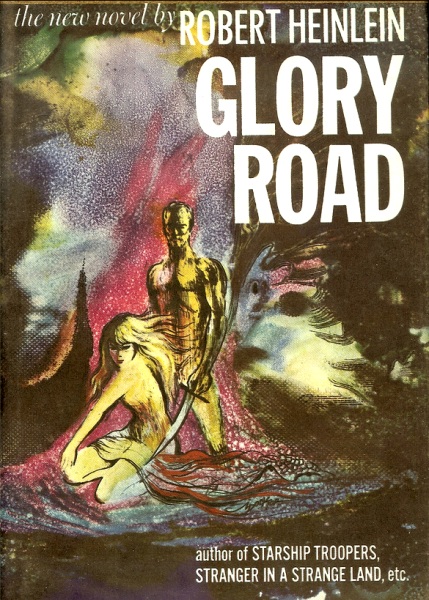
Glory Road by Robert A. Heinlein

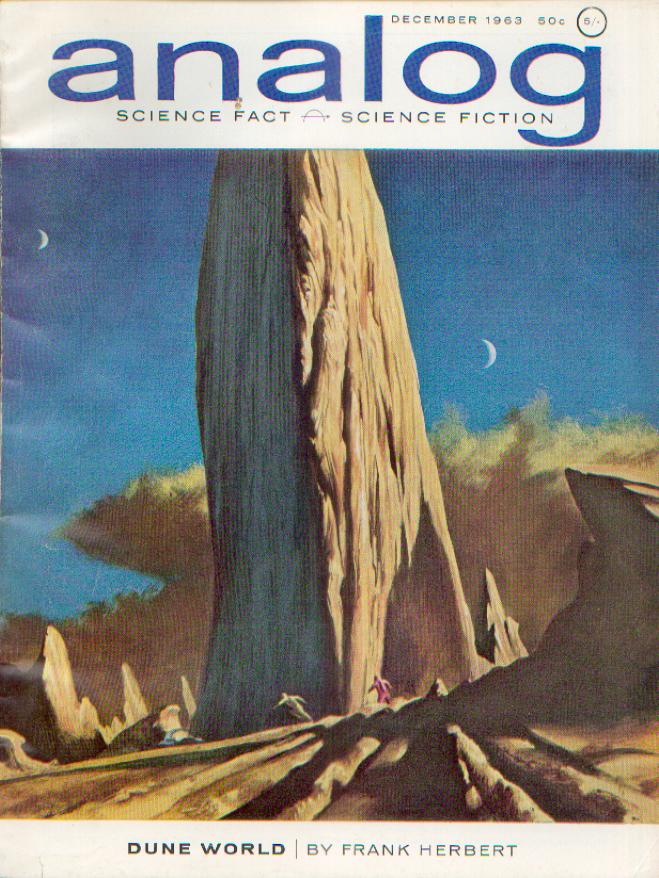
Dune World by Frank Herbert

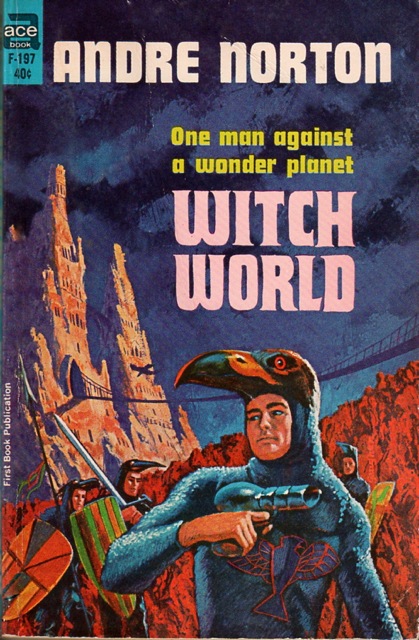
Witch World by Andre Norton

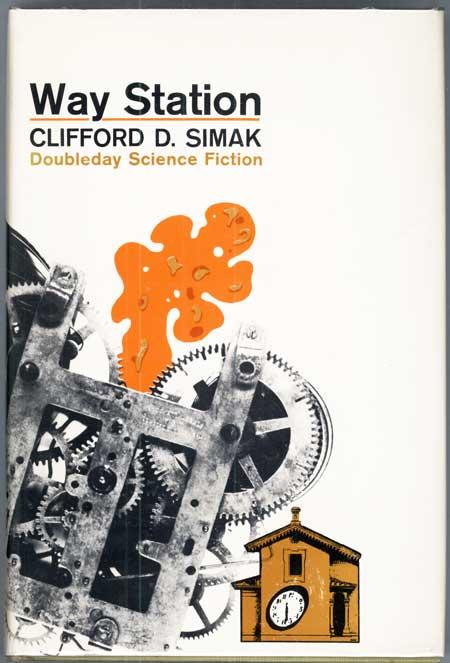
Way Station by Clifford D. Simak

Cat’s Cradle by Kurt Vonnegut, Jr.

The Actual Results

  1. Way Station by Clifford D. Simak
  2. Glory Road by Robert A. Heinlein
  3. Witch World by Andre Norton
  4. Dune World by Frank Herbert
  5. Cat’s Cradle by Kurt Vonnegut, Jr.

How I Would Have Voted

  1. Dune World by Frank Herbert
  2. Way Station by Clifford D. Simak
  3. Witch World by Andre Norton

Explanation

This was a pretty decent year, though I didn’t enjoy all of the novels. Still, I thought they were all good, even if not all of them were to my particular taste.

I really enjoyed Way Station by Clifford Simak. It’s about a civil war soldier who has quietly been living in the back country for the last hundred years, right up to the 60s, when someone in the government begins to notice how weird it is that this guy is still around, and still going daily to his mailbox on the country lane, carrying his old musket. When we learn what’s actually going on with the guy, and how he’s connected with the aliens who are deliberately keeping their existence secret from most of humanity, things get really interesting.

The ending could have been stronger, but the novel has a lot of heart, and I really enjoyed reading it. With that said, however, I would still put the serialized early draft of Dune higher, just because Dune is such a well-deserved classic, and the ending to Way Station did feel a little weak. But the ideas in the novel were absolutely fantastic, and very well explored.

I also enjoyed Witch World, though I don’t think I’ll follow up with the rest of the series. It was an interesting portal fantasy / adventure tale, though the fantasy world itself never really held my interest. Maybe it was the weird blend of science fiction with fantasy, or maybe it was Norton’s particular writing style, which almost rose to Shakespearean diction at points. I did like the characters enough to read to the end of the story, but not enough to follow them into the next book.

As for Glory Road and Cat’s Cradle, I DNFed both of them. Cat’s Cradle was just too stylistically dense for me to enjoy—it’s much more of a literary novel, and that’s not really my thing. Glory Road was alright, but it very quickly got explicity with the nudity and sexuality, and I have learned from personal experience that whenever Heinlein goes off about sex, the book is not for me.

How I would vote now: 1977 Hugo Award (Best Novel)

The Nominees

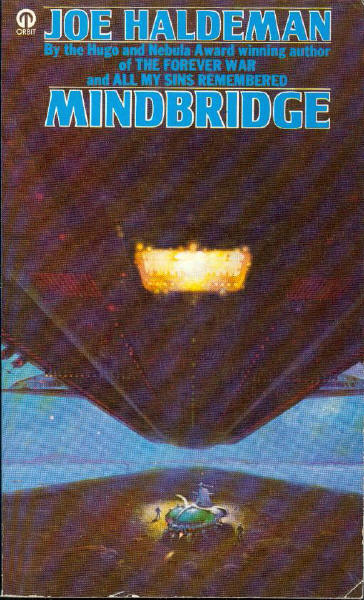
Mindbridge by Joe Haldeman

Children of Dune by Frank Herbert

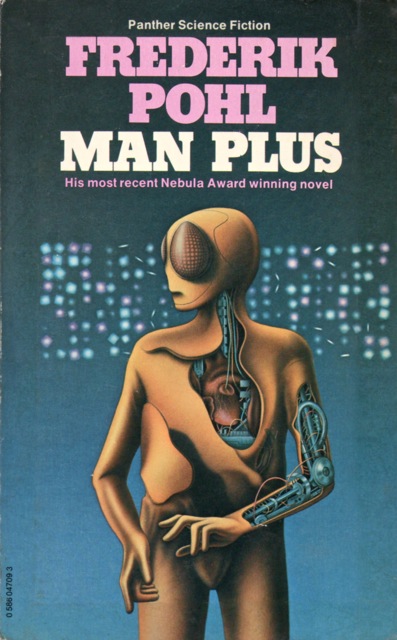
Man Plus by Frederik Pohl

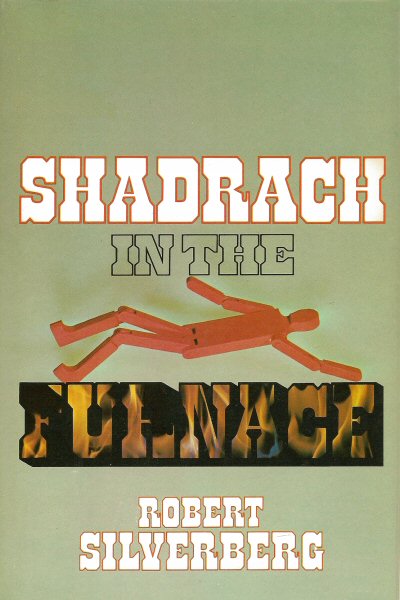
Shadrach in the Furnace by Robert Silverberg

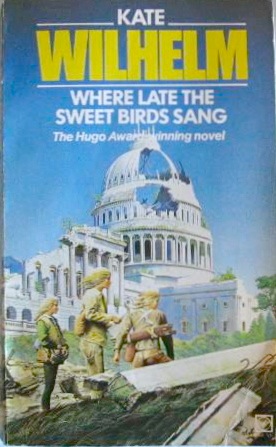
Where Late the Sweet Birds Sing by Kate Wilhelm

The Actual Results

  1. Where Late the Sweet Birds Sing by Kate Wilhelm
  • Children of Dune by Frank Herbert
  • Man Plus by Frederik Pohl
  • Mindbridge by Joe Haldeman
  • Shadrach in the Furnace by Robert Silverberg

How I Would Have Voted

  1. Children of Dune by Frank Herbert
  2. No Award
  3. Man Plus by Frederik Pohl
  4. Shadrach in the Furnace by Robert Silverberg

Explanation

It’s interesting to see which of these books hold up after nearly fifty years, and which of them really don’t. Of the five here, I think Children of Dune is the only one that still has any lasting cultural relevance, and that only because of the first book, Dune.

Children of Dune is also (perhaps not surprisingly) the only book that I would consider worthy of voting for. It’s nowhere near as good as Dune, but of the Dune sequels, it’s the best one I’ve read so far (though the way Leto transformed into a… whatever really seemed to come out of nowhere). Man Plus and Shadrach in the Furnace weren’t terrible, but I didn’t finish them. I can’t speak to Mindbridge, because I didn’t bother reading it: I’ve read enough Haldeman to know that he has a penchant for nihilism that really rubs me the wrong way.

As for Where Late the Sweet Birds Sang, it was really awful. I don’t remember the plot exactly, but the book is full of leftist 70s doom porn regarding climate change and Malthusian resource shortages, combined with a resurgence of The Patriarchy that forces all the female characters into becoming breeders. It’s dark, dystopian, and apocalyptic in all the worst ways, with a very strong political bent to it that holds up about as well as all of the end-of-the-world predictions that the climate cultists have been peddling since the 70s. Basically, Where Late the Sweet Birds Sang is why I’d vote “No Award” after Children of Dune.

Man Plus had some interesting writing, but it didn’t really hold my interest, probably because of all the Malthusian and Freudian undertones. It wasn’t insufferably political, though, which is why I would actually affirmatively vote for it after “No Award.” I would certainly rather that Man Plus had won out over Where Late the Sweet Birds Sang. Same with Shadrach in the Furnace, which isn’t terrible, though it does have some weird communist power fantasies in it. I really love the way Silverberg writes, but the things he chooses to write about just seem totally pointless to me.

The 70s was a very weird time for science fiction… and probably a weird time for the world in general. As you can probably tell, I’m not a huge fan of New Wave science fiction (with a few notable exceptions). Things got a lot better after Reagan’s Morning in America, not just for the country, but for science fiction as well. Then we hit the 90s, which the Zoomers tend to look on as a simple, idyllic time when all was bright and wonderful in the world, which strikes me as hilarious because I remember it as a time of rampant school shootings and MTV-driven cultural decay. But that’s a subject for another post.

Third Dune Trailer is out!

I am so incredibly stoked to see this movie. Dune is, in my opinion, the most perfect science fiction novel ever written, and Dune: Part 1 was perhaps the most perfect adaptation of the novel that could have been made, let alone the best adaptation. And this trailer is one of the best that I’ve ever seen. Really looking forward to seeing the sandworms on the big screen!

An interesting personal discovery

I just made a very interesting personal discovery, gleaned from the data on my reading of the Hugo and Nebula winning books. Of the 110 novels that have won either award, I have now read all but 16 of them, which is enough data to get some reprentative results.

One of the best predictors that I will DNF a book is whether the author is a childless woman. Of the 18 books written by childless women, I have DNFed all but three of them (Downbelow Station by C.J. Cherryh, which I read years ago and would probably DNF today, and Network Effect by Martha Wells, which is a genuinely entertaining read, and Jonathan Strange & Mr. Norell by Susanna Clarke, which I haven’t read yet). For childless men, it’s a little bit more of a crapshoot: of the 31 books written by childless men, I’ve DNFed 16 of them and read 11, but only 6 of those are books I thought were worth owning.

Conversely, one of the best predictors that I will enjoy a book is whether the author is a mother. Of the 20 books written by mothers, I have DNFed only 6 of them and read 8, all of which I think are worth owning. Of the six remaining books that I haven’t read yet, I will almost certainly finish four of them, and may finish all six. The only book by an author I haven’t already read and enjoyed is The Speed of Dark by Elizabeth Moon, which I am currently reading and will probably finish next week.

For fathers, it’s more of a mixed bag. Of the 40 books written by fathers, I have DNFed 19 of them and read 16 (12 of which I think are worth owning). Of the five that I haven’t read yet, I’ll probably DNF at least one or two, so it’s safe to assume that there’s only a 50/50 chance I’ll enjoy a book if it’s written by a father, a little better than if it’s written by a childless man but not by much.

So there’s something about female authors that makes me much more likely to enjoy their books if they’ve decided to have children, and much less likely to enjoy them if they haven’t.

But I have to couch this discovery by saying “one of the best,” because so far, the best predictor that I will DNF a book is whether it won a Nebula without also winning a Hugo. Of the 31 books that have only won the Nebula, I have DNFed a whopping 23 and finished only 3 of them, none of which I thought was worth owning. Of the remaining five, however, I will probably finish at least another three of them, and all are books that I will probably decide are worth owning (Falling Free by Lois McMaster Bujold, The Speed of Dark by Elizabeth Moon, and Powers by Ursula K. Le Guin—all of them written by mothers). If that is the case, then the child-rearing status of the author (provided that she’s a woman) will indeed be the best predictor as to whether I’ll enjoy the book.

As for the decade in which the book came out, I’m slightly more likely to enjoy it if it was written between the mid-40s (counting retro-Hugos) and the mid-60s. From the mid-60s through the 70s, I thought almost all of the award-winning books were terrible (the only exceptions were Dune by Frank Herbert, which is more a creation of the early 60s, and The Left Hand of Darkness and The Dispossessed by Ursula K. Le Guin).

I haven’t yet read all of the books that came out in the 80s and 90s, but it generally looks like a 50/50 split, slightly favoring books from the mid-80s and disfavoring books from the late 90s. For the 00s, there isn’t enough data right now to say one way or the other. It’s the one decade left where most of the Hugo and Nebula award-winning books are still on my TBR.

But starting in 2010, the books all seem to become terrible again. The only exceptions are Blackout and All Clear by Connie Willis (whose heyday for the awards was really more in the 80s and 90s), The Three-Body Problem by Cixin Liu (a Chinese author who isn’t caught up in all of the culture war baggage here in the West), and The Network Effect by Martha Wells, which once again seems to be the exception that proves the rule.

DUNE!

So Mrs. Vasicek and I saw the new Dune movie in theaters last weekend, and let me just say, it was awesome in every sense of the word!

Speaking as someone who’s read the novel three times and fervently believes it to be the most perfect science fiction book ever written, this movie did not disappoint. Not only is it the best movie adaptation of the book, hands down, but it may be the best adaptation that it’s possible to make of the book. Denis Villeneuve has done for Dune what Peter Jackson did for Lord of the Rings. It’s incredible.

With all of that said, I’m not sure if the movie would make much sense to anyone who hasn’t already read the book first. Dune is really a story within a story within a story, and while the movie captures that aspect quite well, it also touches very, very lightly on the outlying stories, which could be confusing for someone who isn’t already familiar with the novel. Even in my first read, I didn’t fully appreciate the complexity: it took two rereads before I began to grasp the full significance of all of the moving parts.

At its heart, Dune is about the struggle of Paul Atreides (the Chosen One) to push back against his destiny, because he knows that his success will be far more devastating, for him and for the galaxy, than his failure. In that, it’s a brilliant subversion (in the truest sense) of the hero cycle. But all of that takes place within the story of the Bene Gesserit and their quest to create the Kwisatz Haderach, a super-human who can see the past, present, and future all at once. But the Bene Gesserit scheming is all happening within the political intrigue of the Great Houses and the Imperium, specifically with the feud between House Atreides (which presents the greatest threat to the emperor) and House Harkonnen—and all three stories converge on the planet Arrakis, amidst the struggle of the Fremen to terraform their desert world into a lush, green paradise when all of the powers of the galaxy want to exploit it for the spice that is so important for interstellar space travel.

For someone who is already familiar with all of that from the book, the movie hits on all of those nested stories perfectly, without getting bogged down or missing the most important story of all: Paul’s internal struggle with his own destiny. But for someone who is new to all of that, the movie might be really confusing. It will be really interesting to hear what my Dad thinks of it, because he’s never read the book and he plans to stream the movie over Thanksgiving break. I’ll report back when I hear his reaction.

Some people are criticizing the movie for ending at the wrong place, but I actually think it ended at the exact right spot: where Paul becomes one of the Fremen by killing his first man in a duel. It’s subtle, but the whole movie builds up perfectly to that moment, making Paul’s character arc the central driving story arc. For me, it didn’t feel at all like I’d only gotten half a movie, or that the director was drawing the story out to make it into a trilogy. It felt very natural to end the story there, and a great set-up for the sequel, which should wrap up Dune itself. The third movie will conclude Paul’s story by giving us Dune Messiah, which should be really interesting, since the first movie actually did a lot to set that up. If the second movie is as good as the first, then the third one may actually be better than the book.

It’s become very fashionable these days to cast a major character as an ethnic minority, which can be really annoying. However, I wasn’t all that bothered by the decision to cast Doctor Kynes as a black woman. It did some interesting things for the character that I thought worked really well for the story, and for Paul’s relationship with Kynes. So even though that was the movie taking license from the book, I felt like it was a really good call.

One criticism that I do tend to agree with is that the characters feel a lot more like archetypes than like real people. That’s fair, not only for the movie, but for the book. My wife says that’s the main reason why she didn’t like the book, because none of the characters felt “real” to her. But that focus on archetypes is something I really enjoyed about the book, so it wasn’t as big of a problem for me with the movie.

Another point of criticism that my wife had was that neither the movie nor the book have a whole lot of joy. That’s also fair: the movie does tend to hit the same emotional notes over and over, without much variation. The most humorous part was where the Reverend Mother tells Paul “farewell, young human. I hope you live,” which wasn’t actually meant as a joke (and Mrs. Vasicek and I are totally going to use that line on our own baby from now on).

But it really did hit the sense of wonder quite spectacularly, not just with the big things like the desert and the sandworms, but the fine details like the control systems of the ornithopters, or the grittiness of the stillsuits and the spice mining equipment. It really does stick with you long after you’ve watched the movie, and makes you want to watch it over and over.

All I can say more is that I’m really, really, really looking forward to the next one!

2020-02-20 Newsletter Author’s Note: Thoughts on the History and Future of Science Fiction (Part 1)

This author’s note originally appeared in the February 20th edition of my newsletter. To sign up for my author newsletter, click here.

One of the projects I hope to get to someday is to make a podcast on the history of science fiction. I’m a huge fan of podcasts, and subscribe to almost 100 of them, and some of my favorites are history podcasts like Hardcore History, History of Rome, Revolutions, The Cold War: What We Saw, etc. At this point in my life, I don’t think it’s the right time to get into podcasting, but at some point in the next few years I’d really like to try my hand at it.

I have thought a lot about what this History of Science Fiction podcast would look like, though, and it’s led to some interesting thoughts about the future direction of the genre. Let me explain.

Modern science fiction began with Mary Shelley’s Frankenstein, which laid the groundwork for just about everything else. Authors like Jules Verne and H.G. Wells picked up the torch, launching “scientific romance” as its own literary genre. Many of the conventions and tropes of science fiction were set during this era, which lasted from the 1820s through the early 1900s.

The next major era of science fiction was the era of the pulps, which experienced its heyday in the 1920s and 30s. The publishing innovations that had made the penny dreadfuls possible only a generation earlier now led to a proliferation of novels and short story magazines, opening up all sorts of opportunities for new writers.

This was the era of bug-eyed aliens and scantily-clothed damsels in distress, as frequently displayed in the cover art. Science fiction, mystery, western, adventure, and true crime stories were all mashed up together. Major names from this era include Edgar Rice Burroughs and Hugo Gernsback, who coined the term “scientifiction” to distinguish the stories that would later be called under the name “science fiction.”

The pulps laid the groundwork for the golden age, which lasted through the 40s and 50s. It was greatly influenced by John Campbell’s tenure as editor of Astounding Science Fiction, and the authors that he mentored. This was when science fiction really came into its own. Major authors from this era include Isaac Asimov, Robert A. Heinlein, Arthur C. Clarke, George Orwell, and Ray Bradbury.

The next major era was the New Wave, when authors like Ursula K. Le Guin, Michael Moorcock, Frank Herbert, and Phillip K. Dick broke out of the conventions established by Campbell and other golden age figures, experimenting with new styles and creating new tropes. This was when we began to distinguish between “hard” science fiction that revolved around the hard sciences like physics and math, and “soft” science fiction that revolved instead around things like political science and social studies. The political radicalism of the 60s and 70s also influenced the science fiction of this era.

At this point, most histories of science fiction point to an era called “cyberpunk” or “the digital age,” which emerged in the 80s and defines the period that we’re currently living through. However, I don’t think this is correct. Instead, I think that literary science fiction went through a dark age from the mid-80s to the late 00s, and only recently began to emerge from it. Let me explain.

In film, TV, and video games, the 80s and 90s were a golden age. For books, however, it was exactly the opposite. The rise of the big box stores like Borders and Barnes & Noble drove independent booksellers out of business, which caused many local distribution companies to collapse. This, in turn, led to a period of mergers and consolidation within the publishing industry, giving rise to the “big six”: Hachette, HarperCollins, Macmillan, Penguin, Random House, and Simon & Schuster.

At the same time, the rise of the internet led to a massive and precipitous decline across newspapers and periodicals, including traditional short story magazines such as Analog and Asimov’s. Most of the science fiction magazines folded, unable to adapt their business models to the changing world. This would later change as podcasting and crowdfunding, but before those innovations would later revolutionize the industry, many considered short stories to be dead.

The effect of all of this was that literary science fiction entered a period of managed (and sometimes catastrophic) decline. As the publishing houses merged and consolidated, their offices all moved to New York City in order to pool talent and resources into one geographic center. However, this also led to problems like groupthink as publishing fell in an echo chamber.

Science fiction began to balkanize. The proliferation of cyberpunk, steampunk, deiselpunk, biopunk, and all the other _____punk subgenres is emblematic of this. Furthermore, as all of the major editors became caught up in the echo chambers of progressive, blue-state politics, they increasingly overlooked red state authors from “flyover country.” Baen, whose offices are in North Carolina, has never suffered from this, but Tor and the other New York publishers really have.

I think Orson Scott Card really bookends this period. In the 80s, he was the first author to win the Hugo and the Nebula in the same year. In the 00s, he was all but excommunicated from the canon for his allegedly homophobic views. Science fiction had transformed from the big tent genre of the 50s, 60s, and 70s to something so balkanized, elitist, and radical that “wrongthink” had unironically become a crime in the very genre that had invented the term.

And then indie publishing happened.

This author’s note is getting long, and there are other things (including writing) that I have to do today, so I’ll have to end on that note. I’ll follow up in my next newsletter with my thoughts on current trends in the science fiction genre, and where we’re heading from here. I think the 20s will see some massive creative destruction, but ultimately I’m hopeful that the best is yet to come. The dark age is over, and there’s never been a better time to be a reader—or a writer!
2020-01-16 Newsletter Author’s Note

This author’s note originally appeared in the January 16th edition of my email newsletter. To sign up for my newsletter, click here.

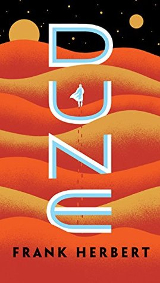
For my birthday last year, Mrs. Vasicek got me the first three books in the Dune series by Frank Herbert. I looove the new cover art, which is mostly why I wanted them, but I’ve only ever read the first book. Since the other books are on our shelves now, I pretty much have to read them, but it’s been years since the last time I read it.

So that’s why I’m reading Dune for the third time, and wow, it is so much better than I remembered. Part of that is because there is so much going on that you have to reread it two or three times just to get it all. The first time I read Dune, I thought it was okay but not all that great—certainly not on par with Lord of the Rings, which everyone compares it to. In reality, though, most of the story went right over my head. I read it again a couple of years later, after catching up on some of the lore, and that time I was much better able to appreciate it.

My own book Desert Stars takes place on a desert planet in a far distant future, but that’s basically where the similarities end. The politics of empire, with the emperor, the great houses, and the spacing guild; the Mentat human supercomputers and secretive Bene Gesserit with their megalomanaical breeding program; the Fremen, the spice, and above all else the transcendant leap in evolution, perfected in Paul Atreides, that allows certain people to see past this dimension into the future. Dune may just be the most perfect science fiction novel ever written.

Having said that, I should point out that Mrs. Vasicek doesn’t really like it. She feels that the characters fall flat, that their near-superhuman abilities strain credulity and make them much less interesting, and that the omniscient point of view makes the book too dense. In the seven months that we’ve been married, I’ve learned that I shouldn’t dismiss her judgment too quickly. Not only does it go a long way toward promoting marital tranquility, but more often than not, she’s actually right.

Then again, she’s only read Dune once. When I read it for the first time, I had many of the same criticisms. And while new things did stand out on my first rereading of it, including things about the characters, it wasn’t like they leaped off the page or the prose itself became any less dense. Mostly, it was all the other things that really stood out: the world building, the politics, and the statement the book makes about mankind’s ultimate destiny.

My new year’s resolution for 2020 is to read 100 books. When I told my sister that, she said “you should read at least 100 of them before the baby is born.” Dune is such a massive brick of a book that I’m already a couple of weeks behind, but I don’t care. It’s really, really good. I’m looking forward to the other ones!

Extra Sci-Fi S3E8: Dune – Maud’dib

I thought this was a really good episode, though I’m not convinced that it’s better (or even possible) to lead through ideas rather than charisma. You need both, and I would argue that principles are more fundamental to human society than ideas. But still.

The part about the Harkonnens ruling through decadence and indulgence was particularly interesting. I see a fair bit of that in society today. Ten-plus years of suppressed or negative interest rates, with trillion-dollar deficits during a supposed economic boom? If that isn’t decadent, I don’t know what is. But I digress.

Everything rises and falls on leadership. A shitty job with an awesome supervisor can be amazing, but even a dream job can be ruined by a really shitty supervisor. I learned that the hard way.

My favorite example of charismatic leadership is probably Genghis Khan. I totally mean that, too. Genghis Khan’s story is amazing. He went from abject poverty and slavery to founding the largest land empire in history, all through the strength of his leadership. Extra History did a series on him, but the best version of his story that I’ve found thus far is from the History of China podcast:

The series is still ongoing, which is why the last two episodes don’t have links. You can find them in the podcast feed, though.

Now, I don’t necessarily advocate making Genghis Khan a role model. The man was responsible for a lot of death and destruction, and his empire did not endure. That said, it’s impossible to question that he was one of the most charismatic and effective leaders in the history of the world. As to whether he was a positive leader, well…

My favorite example of a positive leader is probably Shackleton. Endurance was a fantastic book. The biggest thing that blew my mind was the fact that he hired his crew entirely on the basis of five minute (or less) interviews, where they basically shot the breeze. He was so good at reading people that he could hand-pick a crew that would survive and pull together under the harshest conditions of the planet, and he did it entirely by hanging out with them for a couple of minutes. That’s incredible.

And it gets back to the tension between ideas, principles, and charisma. You need all three. Charisma is basically people skills, and all of the best ideas in the world won’t avail you much as a leader if you suck with people.

Everything rises or falls on leadership.