Rethinking some things

So I had an extremely vivid dream last Friday night where I got cancer and learned that I had only a month to live. Among other things, I found myself asking: “What am I going to do about my writing career? Who is going to finish all these books? Are they going to fade into obscurity, or will someone promote them so that my family will benefit from them after I’m gone?”

The whole thing made me feel like the race was suddenly over, and I hadn’t finished it, but had to hand off the baton to someone else who would. So instead of spending that final month of my life writing, I would have to spend it outlining things in such a way that the person who carried it all after me would be able to do it right.

(And then, hilariously, when I told my friend and cowriter Scott Bascom that I had terminal cancer, his response was: “So what? Get back to writing.” And when I told him IRL about that dream, his reaction was: “Well, was I wrong?”)

Obviously, it was an incredibly sobering and emotional dream, for reasons that had nothing to do with my writing. But it also got me to thinking about some things I’ve taken for granted about my writing process, and how I ought to change them or at least experiment with other ways of doing things.

For example, for the last fifteen years—really, since I started writing professionally—I’ve just sort of assumed that I would 1. work on one novel WIP at a time, and 2. write that novel sequentially from start to finish, rather than hopping around.

In the early years, I experimented with doing things differently and decided that I just wasn’t wired that way. But that was also when I thought I was a 100% discovery writer and didn’t have any sort of outlining process. Basically, I tried to keep the whole novel in my head, a nearly impossible task even for a veteran writer.

Now, I have a much more rigorous outlining process that divides each novel WIP into chapters and scenes, so that instead of trying to keep an entire novel in my head, I can eat the elephant one small bite at a time. So I’ve actually got the infrastructure in place right now to experiment with those things, in a way that I didn’t before.

Another thing that I’ve always taken for granted is that in order to be a working professional, I need to set strict deadlines for each project and schedule those deadlines at least a year in advance. Never mind that I have never kept an original deadline that I’ve made for a project, or kept to those schedules. Instead of finding a better way, however, those deadlines and schedules always just keep getting pushed back.

I’ve also been trying to find a way to write a novel all the way through from start to finish, without getting stuck in the middle and feeling like I need to put it aside for a while (on the “back burner,” as I used to say). In fact, that was one of the main reasons why I developed my outlining process in the first place. But even with a well-developed outline that still has some flexibility to adapt to a changing story, I still can’t write a novel straight through without having to take a break.

Another thing I’ve always failed at is hitting my daily word count goals consistently. Instead, I typically write in starts and fits, especially when I’m in the messy middle of whatever novel WIP I’m working on at the moment. However, I did have some success with those nanowrimo challenges where I worked on short stories—in other words, where I hopped from project to project.

Also, until this year, I could never manage to read very consistently. I’d go through phases where I’d read a lot, followed by long reading droughts where I’d read almost nothing. But then, I discovered some reading hacks that completely changed everything, and now I’m reading between one and two dozen books a month (most of them just the first and last chapters, but about 6-10 of them all the way through).

One of those reading hacks was—wait for it—reading more than a dozen books simultaneously and hopping from book to book. And the thing that made that possible was my reading log, which provides some structure and helps me to see how much I need to read from each book to not just totally drop the ball.

So why don’t I try something similar with my writing? What if, instead of working on one novel WIP at a time, I used these outlines to break them all up into scenes and just skipped around, writing whatever stands out as the most interesting thing to write at the moment? The outlines will help to keep it all straight, so I don’t have to keep an entire novel in my head. And when I inevitably get stuck with one WIP, I don’t have to lay it aside for months on end—instead, I can jump to something else, since I’m already jumping around in the first place.

It sounds kind of crazy, but I’ve found that my ADHD brain actually works better that way, at least when it comes to reading. So why not writing as well? It’s worth a shot, at least. And maybe one of the upsides will be that I won’t have to angst so much about those deadlines. If the focus is on hitting daily word count instead of staying on deadline for my current WIP, then solving the first problem will ultimately solve the second one, once I hit my stride.

So that’s what I’m going to experiment with: hopping from project to project, with a goal of hitting my daily word count goal rather than advancing a single project to an arbitrary deadline.

In order to do that, I need to make some outlines. Here are all of my unfinished novel(ish) WIPs that I haven’t trunked yet:

  • The Sword Bearer (Twelfth Sword Trilogy #2)
  • The Sword Mistress (Twelfth Sword Trilogy #3)
  • Captive of the Falconstar (Falconstar Trilogy #2)
  • Lord of the Faconstar (Falconstar Trilogy #3)
  • Children of the Starry Sea (Outworld Trilogy #2)
  • Untitled (Outworld Trilogy #3)
  • A Brotherhood of Swords (First Sword Trilogy #1)
  • Untitled (First Sword Trilogy #2)
  • Untitled (First Sword Trilogy #3)
  • The Lifewalker Chronicles (standalone)
  • Starship Lachoneus (standalone, may be a collection)
  • The Justice of Zedekiah Wight (collection)
  • The Mercy of Zedekiah Wight (collection)
  • Christopher Columbus, Interstellar Explorer (collection)

Of those, only Children of the Starry Sea and Captive of the Falconstar are fully outlined. So I’ve got a lot of work to do.

Instead of taking time off to outline all of these, however, I’m going to prioritize hitting word count, and work on the outlines on the side, in my voluminous spare time </sarc>. It’ll probably take a while, but I’ll eventually get it done—and that will provide some extra motivation to hit word count each day.

Also, I plan to outline all of them, even the book 3s where book 2 still hasn’t been written. The reason for that is so that I’ll have something to hand off to another writer, in case that crazy dream comes true. I don’t think that it will, but I’m gonna go sometime, so it’s better to get into the habit of doing that now. Besides, it may be helpful to skip ahead to the next book and write a few scenes: give me something to write toward.

TL;DR: I’m going to be doing a lot of experimentation in the next couple of months, skipping around in all of my WIPs instead of focusing on one at a time. It’s going to be crazy, but hopefully in a productive way. And a fun way too.
The thousand year view

How will your life impact the world in a thousand years?
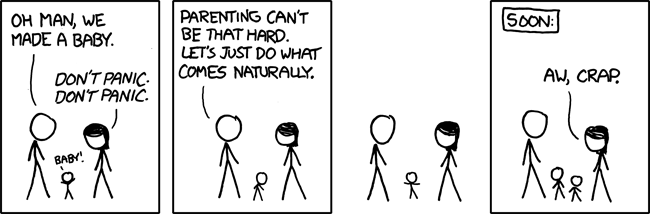
It’s an easy question to dismiss. After all, how can one person possibly shape the course of history? Even if we accept the impact of certain great men, how can we have the hubris to think that we might one day join them?

But the truth is that our lives have more impact than we realize. Each one of us is literally a product of our ancestors. Their decisions, for good or for evil, have put us where we are today. We also have a hand in shaping the people we come into contact with. That impact can be felt through multiple degrees of separation—and how many degrees does it take to encompass the world?

In the year 1017, Europe was rising out of the ashes of the Viking age. Kievan Rus was ascendant in the east, vying with the Romans who dominated the religion and commerce of Europe (we know them today as the Byzantines). However, tensions were rising between Constantinople and the bishopric of Rome, where one of the last vestiges of the Roman state in the West would soon break communion and form the Catholic Church. Meanwhile, an apocalyptic Muslim death cult known as the Fatimids had swept from North Africa all the way to Baghdad, the cultural and scientific capital of the world. From the harsh steppe wilderness of central asia, the Seljuk Turks were building an empire that would save Baghdad from destruction, while in China, the Song dynasty had invented the first paper currency.

In short, it was a completely different world. How different will things look a thousand years from now?

By the year 3017, we will probably have established an independent colony on Mars. Other parts of the solar system will probably also be colonized, and we may have even begun our expansion to the stars. After all, faster than light starship drives are about as fantastic to us as cars, airplanes, and space stations would be for medieval serfs.

It is highly unlikely that the United States—or any other country, for that matter—will exist with its current borders. In fact, it’s highly unlikely that the majority of countries extant today will even exist at all. China is probably an exception, but let’s not forget that China is a civilization pretending to be a country.

Pessimists will say that there’s a good chance humanity won’t exist at all. They point to things like climate change, pandemics, and global war as challenges we may not overcome. But in the last millennium, we faced all those challenges and rose above them (little ice age, Mongol hordes, black plague). Same with the millennium before (extreme weather and crop failures of 535-536, Muslim conquests, plague of Justinian).

So how will your life impact the world a thousand years from now? What sort of impact do you want your life to have? How have the things you’ve done today brought you closer to leaving that legacy?

I’ve thought about this a lot over the past few weeks. I want to impact the world through my books, but it’s unlikely that most of my books will still exist. My family and descendants will, though. I want to leave them with the best foundation I can. Here’s how I plan to do it:

Step One: Master the Basics of Provident Living

Provident living is more than just learning how to do your laundry and keep up with the maintenance of your car. It’s learning how to live sustainably, with a degree of self-reliance that can see you and the ones you love through hard times. It’s all the stuff I’ve been writing about in the Self-Sufficient Writer blog series.

I’ve made a lot of progress in this area, but there’s still a lot of progress left to make. Here are the next few steps I want to take in this area:

  1. Establish a rotating 90-day food storage for dry goods.
  2. Establish a herb garden.
  3. Expand food storage to canned goods.
  4. Buy a chest freezer and expand to meats and dairy.
  5. Plant a garden and expand to fresh fruits and vegetables.
  6. Learn how to can.
  7. Learn how to hunt.
  8. Begin keeping livestock (chickens, goats, etc).

A lot of these steps are going to have to wait until I have my own land, which brings us to:

Step Two: Live Debt-Free and Own the Place Where You Live

When you live on someone else’s land and owe them a portion of your labor, that’s a form of serfdom. In both historic and modern times, this has been the norm for the vast majority of people.

It shouldn’t be.

When my ancestors came from Europe to the United States, one of the first things they did was buy land. There was a reason for this. In the old country, they were serfs. They paid the corvée. They were not free.

They knew that unless they lived on land that they owned, in a home that was theirs, their children would not be free either.

We’ve enjoyed a century of prosperity in the United States. It’s led us to believe that home loans and mortgage payments are normal. They aren’t. When your home is the collateral for a loan you’ve taken from the bank, and you spend most of your adult life paying it back to the tune of 250%, that is a modern form of serfdom.

Until you own it outright, your house is a liability, not an asset. And in some places, true ownership is impossible. After all, if the government has the power to seize your house for non-payment of taxes, did you really ever “own” it to begin with?

It’s a similar thing with debt. All debt is a form of bondage. “Leverage” is when someone else has control over you or something that belongs to you. Unless you can get out from under it, you will never truly be free.

If most of your life is spent in serfdom and bondage, the thousand-year impact of your life will be muted.

The Habsburg dynasty started with a small castle on the top of a hill. From that starting point, the family went on to shape the development of Europe into the modern world. The castle was so important in that effort that the family took their name from it.

I know how to live debt-free. I’ve been doing it for several years. But I do not currently live in a place that I own. That is my overriding goal: to own the place where I live within ten years.

The government isn’t making it easy. Neither are the central banks. A decade of 0% interest rates has ravaged the middle class. As a direct consequence, home ownership rates are dropping to historic lows. 70% of Millennials have less than $1,000 saved for a down payment on a house, while at the same time, the helicopter money from the Fed has inflated a new housing bubble larger than the one that burst in ’08. In California, Google employees with six-figure incomes are living out of RVs because they can’t afford to buy a house.

It’s brutal. These are the same economic pressures that led to the rise of medieval serfdom in Europe. But there are also opportunities, for those who know how to take advantage of them. Which leads to:

Step Three: Build Multi-Generational Wealth

Poor people buy luxuries. Middle class people buy necessities. Rich people buy investments. If I want to leave something behind for my children and descendants, I need to master the skills of investing and managing wealth.

This goes back to the thousand-year view. The biggest impact I’m probably going to make on the world is going to be through my children and descendants. Raising them will be the most important investment I can ever make. I want to give them a life of opportunity, so that they, like me, can make a thousand-year impact on the world.

This is what my ancestors did for me. My Mormon ancestors crossed the plains in the Willie handcart company so that their descendants could grow up in Zion. My first-generation immigrant Czech ancestors invested in Texas farmland that still pays a small dividend to their descendants (greatly increased now because of oil royalties). There are many other countless others who made great sacrifices so that I could enjoy a life of privilege and opportunity. I’m sure that’s not unique to me.

We seem to have forgotten, here in the United States, how important it is to make sure that our children enjoy better lives than we have. To some generations much is given, while of others much is required. I fear that we are transitioning from the former to the latter. Nations are born stoic and die epicurean, surrounded by mountains of debt.

This is why it is so important to build wealth: not for your own personal consumption, but for the security of your children and descendants.

The most important investment you can make is in your education. If I’m going to develop these skills, that’s what I need to do: invest in my own financial education.

I also need to learn by experience, so I’m taking $100 of my book earnings each month and investing them. I’ll probably experience a couple of big losses, but that’s called paying tuition. The knowledge I gain from doing this will hopefully help to accomplish this goal: to build wealth that will bless the lives of my children and descendants for generations to come.

A lot of things fall into perspective when you take the thousand-year view. When you focus on the challenges of the present, it’s easy to become pessimistic, but when you take a clear-eyed look at the future—not just the immediate future, but the long-term future as well—you cannot help but take an optimistic view.

How will your life impact the world in a thousand years?

My next impossible dream

If I keep doing what I’m doing, writing and publishing my books, and building a steadily growing readership, eventually I’m going to come into some money. My readership will reach a critical mass, one of my books will hit the market in just the right way, and I’ll find myself riding the rocket to career heights that were previously unthinkable. Writing is very much a feast or famine thing, and the feast years will come if I keep at it long enough.

When the money comes, I will invest it in something more stable, like a rental property. Provo is a college town with a high demand for student housing, so it shouldn’t be too hard to find a couple properties and improve them myself. The DIY aspect is crucial, because everything that comes next will build on it.

Once I’ve got a couple rental properties that are producing a steady income stream, I’ll use that money to buy some cheap land. This land will be deep in the mountains a couple of hours southeast of here, far enough to be in the middle of nowhere, but close enough to grow in value as the cities along the Wasatch Front expand. The land will be pretty much useless for anything except future development, which will actually make it fairly valuable in fifty or so years, so long as things go well.

If things don’t go well—if the economy collapses and the country falls apart, our runaway national debt catches up to us, a fascist tyrant comes to power, a war devastates us, cyber-terrorists take down the electical grid, or a massive pandemic breaks out—if any of these things happen, this property will be an ideal place for a bug out location. That’s important. When crap hits the fan, I want to be like the father in Farnham’s Freehold, with a cool-headed plan. I want to be able to rebuild civilization with my family if I have to.

Of course, in the event that things don’t get that bad, it will still be really great to have a vacation home way up in the mountains. This home will also double as a cabin for writing retreats and weekend getaways. When I die, my kids can either keep it in the family or sell it for a tidy profit, after all the improvements I intend to make.

The first year, I plan to build a small hangar shed and dig a well. I’ll install a thousand gallon tank, which I’ll use for storing water until I can build a proper cystern (at which point I’ll probably convert the tank into a septic tank). I’ll plant several fruit and nut trees, since the best time to plant a tree is twenty years ago (but the second best time is today). I’ll build a modular watering system and plant at least ten trees each year thereafter.

In either the first or second year, I’ll buy some heavy earthmoving equipment and keep it in the shed. I’ll use that equipment to start improving the property, laying the foundation for things to come.

The first thing will be a tiny house, maybe 200 or 300 square feet, with solar power, a composting toilet, a small water tower hooked up to the well, and another tower for cellular internet. This house will have a loft for mom and dad, roll-out cots for the kids, a living/kitchen/everything room, and shelves built into the walls for food storage. In a lot of ways, it will basically be the dream house I wrote about here.

There will be several garden plots, though they will probably lay fallow unless crap hits the fan and we have to move in permanently. If I can afford it, though, it would be really cool to set up some self-regulating aquaponics systems, with computer monitoring that can alert me remotely if anything goes wrong. The property will be close enough for a weekend visit, so it won’t be hard to make a trip up if I have to. However, the idea is to design it in such a way that it can be mothballed until needed.

When the tiny house is complete, my dream will be mostly realized. However, I don’t plan to stop there. With the skills I’ve learned from improving the rental properties, and with help from some of my contractor plans, I’ll use the heavy equipment to build a proper house. This house will be off-grid just like the tiny house, with solar powers, well-water and rainwater collection, a root cellar, a greenhouse, a couple of freezers full of game meat, etc. etc. It will be the ideal mountain cabin, serving not only as a bug out location, but as a place for weekend getaways, writing retreats, long family vacations, and perhaps even a retirement home.

I plan to be as self-sufficient as possible on this property. Everything will be designed with self-reliance in mind. Rainwater collection, greywater reclamation systems, solar power, a wood-fired oven and furnace—it will be rustic and self-sufficient, satisfying all of my family’s needs.

I don’t know how bad it’s going to be when crap hits the fan. There are some scenarios (Yellowstone caldera) that kill everyone pretty much instantly. Others are so long and drawn out that the sheltered elites may deny that it’s even happening (sounds like the Great Recession, eh?). Regardless, it will be good to have a castle that I can retreat to, along with my family.

That’s the dream right now: to make it big enough to get the ball rolling on this project. It’s going to take decades to reach full maturity, but even after just a few years, it will start to bear fruit.

And who knows what will happen in future? If you’d told me fifteen years ago that I’d be where I am today, writing for a living and selling books all over the world, I’d get all bug-eyed just thinking about it. A lot can happen in ten to fifteen years.

Whatever else happens, I’ll still be writing.

The Self-Sufficient Writer: Lifestyle Choices

Before I go on with this series, I feel I should take a step back and discuss the topic of lifestyle choices.

The Merriam-Webster dictionary defines lifestyle as “the typical way of life of an individual, group, or culture.” According to Wikipedia, this includes “interests, opinions, behaviors, and behavioral orientations,” and is constrained by things like demographic background, personal values, preferences, and outlooks.

In other words, your lifestyle is the way you choose to live your life within the constraints of your own circumstances. Some circumstances can be more constraining than others, but still, lifestyle is fundamentally a choice. Even in abject poverty, there are people who choose to live differently than others.

So what sort of constraints does a writing career place on your lifestyle? Well, let’s talk shop for a minute.

If you’re a writer, you’re going to need the tools of the trade. Today, that normally means a computer with a word processor, though you can also use a typewriter or pen and paper. If you have a publisher, you’re going to need some way to contact them, either by snail mail or email. If you are your own publisher, you’ll need an internet connection, a bank account, and a computer with basic formatting and image editing software (Calibre, Gimp, Blender, etc).

In other words, all you really need to be a professional writer is a computer, an internet connection, and a bank account. You may need more depending on what you’re writing and who you’re writing it for, but those are the basic tools.

So what does this mean in terms of lifestyle choices? It means that writers have a lot of options. For most careers, your income earning potential gets lower the farther out you live from a large city. Not so for writing. You could actually live in rural Mongolia with nothing but a backpack and a horse, and so long as you can come into Ulaanbataar every couple of months and find an internet cafe, you can self-publish just like anyone else.

In other words, there is no “writing lifestyle.” There are only writers who have adapted their writing careers to the kind of life they want to live.

On one hand, every single one of my ancestors going back billions of years has managed to figure it out. On the other hand, that's the mother of all sampling biases.This makes it all the more important to consciously choose what sort of lifestyle you’re going to live, rather than letting circumstance choose it for you. If you don’t, it won’t be long before you find yourself in your underwear, eating nutella straight out of the jar, sitting in front of a grease-stained monitor clicking through an endless loop of Youtube videos. Just like no one is going to force you to meet your deadlines or write everyday, no one is going to force you to put your life in order.

Self-sufficiency is a lifestyle choice. It’s not a life hack, or a weird trick, or something you can learn in an afternoon. It takes work. It requires change. You will have to pay tuition by making mistakes along the way. And even though it can be fun, it can also be frustrating and painful.

When making a lifestyle change, it’s generally a good idea to take a step back first and figure out your goals and vision. By having a vision of what you want for your life, you’re much more likely to get there. This vision will be a reflection of your values and your deepest desires. Specific, measurable goals will help you to translate this vision into action, and provide the direction that you need to achieve your vision.

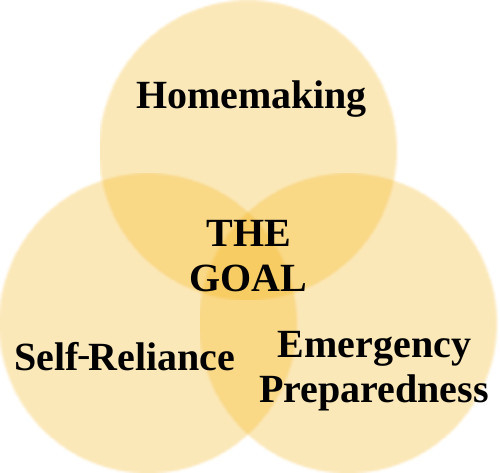
I have three main goals for the kind of lifestyle I hope to live. I haven’t achieved these goals yet, but I’m working toward them and hope to achieve them in the next three to five years.

Goal 1: Prepare my family well enough to survive any disaster and rebuild.

Emergency preparedness is a very important thing to me. It gives me both a sense of security and a sense of independence to know that if crap ever hits the fan, I won’t be a helpless victim.

Disasters come in a variety of flavors. There are natural disasters like hurricanes and earthquakes, man-made disasters like an economic collapse, and personal disasters like bankruptcy or the unexpected death of close family members. While it’s important to have contingency plans for each one, it’s also important to recognize that every plan falls apart upon contact with the enemy.

I plan to blog extensively about preparedness later on in this series. In the meantime, I’d recommend checking out Listening to Katrina for some very interesting perspectives on this subject. I learned a lot from reading that blog.

One of the most important things I learned is that prepping is about more than just surviving the disaster: it’s about surviving it well enough to rebuild. As much as I love reading post-apocalyptic stories, I don’t want to be stuck in a fallout shelter eating canned beans forever. We invented civilization for a reason, and if it ever falls, I want to be one of the guys who helps to rebuild it.

As a writer, I feel that emergency preparedness is even more important because the likelihood of facing a personal disaster is that much greater. If my writing career ever takes a wrong turn and falls out from under me, I want my family to be able to survive that long enough for me to successfully reinvent myself. According to Kristine Katherine Rusch, it’s common for working writers to face a major career crisis every ten to fifteen years or so, and I don’t think I’ll be an exception to that rule.

Goal 2: Develop a home economy that can provide for my family’s basic needs.

Most households in the United States produce consumer debt and not much else. If the US dollar became worthless and we all had to live off of what we had at home, within a couple of weeks, most of us would be screwed.

In a previous post, I talked a little bit about the concept of a home economy and how I experienced that concept while living overseas. It’s one of the things that I hope to implement once I have a family of my own. Instead of producing nothing but debt, I want my home economy to produce food, water, and even things like electricity and heating if it ever becomes necessary.

For me, one of the most important components of self-sufficiency is being able to produce most, if not all, of the food my family eats. Growing a garden, keeping chickens, baking bread, making cheese and yogurt—these are all things that I hope to do, and am working now to learn.

Two books that helped me get started on this path were The Forgotten Skills of Self-Sufficiency and More Forgotten Skills of Self-Sufficiency by Caleb Warnock. I’m also sharecropping this season with a local friend, building garden plots in his yard and growing cabbage, peas, radishes, broccoli, tomatoes, peppers, and zucchini. In a few weeks, we’ll build a chicken coop and get some bantams, which should make for an interesting blog post.

The goal here is not to become 100% self-sufficient in absolutely everything, but to produce enough that we can barter for the things we can’t produce on our own. For example, I don’t expect to ever own my own cow, but I do want to produce enough of a surplus of other things that I could barter with someone who does. Also, while I might not own the cow that produces the milk, I do want to have the capacity to turn that milk into things like cheese and yogurt.

This goal also encompasses being able to live off-grid. At some point, I’d like to switch to solar and become energy self-sufficient. Here in Utah, it’s legal to own and operate your own solar panels, so long as you don’t sell back so much energy to the grid that your electricity bill becomes negative. In other states, though, you have to lease your roof to a third party that technically owns the panels. I’m still learning up on all that, so I’ll probably invite a friend who knows more than me to come on with a guest post.

Goal 3: Make my home a refuge from the world where my family can feel close to God at all times.

This is the most important thing, and the one that will probably make everything else come together. Wherever I live, I want it to actually feel like a home, not just the place I live. I want it to be a safe zone for everyone in my family—a place apart from all of the bad things happening elsewhere. Most importantly, I want it to be a place of love where we can all feel close to God.

I grew up in a home that was very much like this, so for a large part of my life, it’s something that I’ve taken for granted. Having lived on my own for more than a decade and moved on average two or three times each year, I know that it’s something you’ve got to work towards.

Homemaking is often considered to be a womanly thing, but that’s exactly what this goal encompasses. At some point, I’d like to have a woman in my life who could help out with that aspect, but it’s something that I’m sure we’ll both be working on together. In the meantime, I have a sister whose brain I can rack whenever I have a question on the subject.

goalSo that is the kind of self-sufficient lifestyle that I personally want to live. As you can probably tell, family is one of the main themes running through everything. I’m single right now, but I do want to have a family of my own and that’s what I’m working towards.
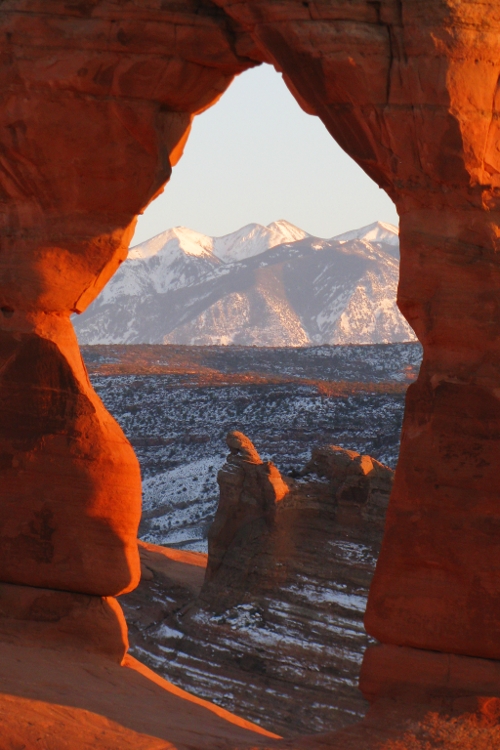
And while my writing career isn’t explicitly mentioned in any of those goals, it’s definitely wrapped up in all of them. As a writer, my income earning potential is not dependent on how close I live to a major city. That means I can live a little farther out in the country, where we can have enough land to support a substantial home economy. Also, the flexibility of a writing career means that I can be home to spend time with my family, or still have an income if a major disaster happens and we have to bug out.

It’s quite a journey that I’ve set out on. I stumbled onto the path rather accidentally, but have since decided that this is what I want to do—that this is the kind of life I want to live. Your goals will probably look different, based on your own values and desires. If there’s anything about these goals that you find interest, though, I hope you’ll stay for the rest of this blog series where I share some of the more specific aspects of self-sufficiency that I’ve learned and how it all ties in to being a writer.

The Self-Sufficient Writer (Index)

The next big dream

When I graduated from college, my goal for my writing career was this: to make a living telling stories that I love. It seemed, at the time, like an impossible dream–something so far out of my reach that I couldn’t possibly achieve it without years and years of constantly frustrated effort.

Well, guess what? For the past six months or so, I’ve more or less been doing it. I live below the poverty line in a basement with two other guys, and I have to donate plasma to cover the difference in my expenses each month, but writing is my main gig and I’m making enough to pay all my bills with it. Barely.

There’s more to life than making a living, though, even doing something that you love. My current month-to-month lifestyle isn’t particularly well suited for anything except, well, living month-to-month. So I need to make some changes, and to do that, I first need to dream a little bigger:

A really good dream should be–or at least seem to be–a little bit impossible. That way, you don’t have to worry about achieving it too soon. At the same time, it shouldn’t be too impossible. If you can’t see myself ever achieving it, then what’s the point?

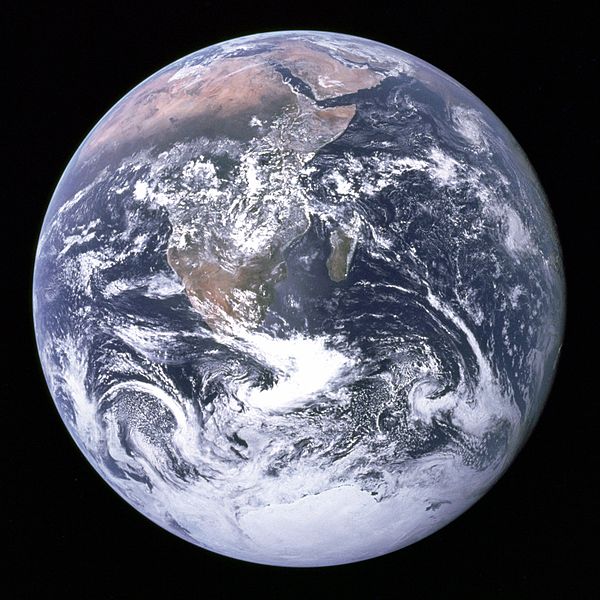
For example, one of my bucket list goals is to look down on this planet from space. With the awesome advances in spaceflight that companies like SpaceX and Virgin Galactic are making right now, I can totally see that happening in my lifetime. But setting foot on an alien world? Nah, I don’t think that’s in the cards for me.

(Then again, if we figure out how to live forever, maybe it could actually happen. Even just adding another 50 or 100 years to my life would probably let me live to see a permanent base on the Moon or Mars. So maybe impossible is actually better–I don’t know.)

A friend of mine is building a business that he hopes will one day make him a cool seven figures. His mom makes six figures, but her name is also on six mortgages, so she’s pretty much tied to her job. One of his big dreams is to pay off all those mortgages for her so that she can retire.

When that happens, he’s going to celebrate by getting a bunch of friends together on a road trip to Texas. We’ll take a big refrigerated meat truck down there and go wild boar hunting until it’s packed full of pork. Then we’ll come back to Utah and have the mother of all barbecues. 😀

That’s the kind of dream I need to shoot for: something specific and personal that sounds kind of crazy but is still just barely within reach. In other words, it should be something that’ll make a good story when I finally achieve it. Or maybe I won’t achieve it–maybe the dream itself be so awesome that just the act of striving for it will make all the difference. As David Gemmell once wrote:

May all your dreams come true save one, for what is life without a dream?

It’s going to take more than one blog post to figure this whole dream thing out, so I’ll just leave that here for now. It’s definitely going to be on my mind for the next little while. If you have any impossible dreams of your own, please do share!

X is for Expectations

What sort of expectations should or shouldn’t you have when you start self-publishing? What is plausible, and what is unrealistic?

Honestly, it’s probably a good idea to go into it with expectations that are fairly low. Most books don’t sell more than a handful of copies, and there’s no way to tell what will and will not take off (if there was, publishing would be a whole lot more lucrative). There’s nothing wrong with dreaming, but it will save yourself a lot of trouble and heartbreak (not to mention, money) if you go in expecting things to be kind of rough for the first few years.

When I started out with “Memoirs of a Snowflake” and a couple of other shorts, they didn’t hardly sell at all. Then I published Genesis Earth, and while I saw maybe 50 sales in the first three months, after that they fell off to single digits for the next two years (and yes, zero is a digit). I made my shorts free for a while, and they got tens of thousands of downloads, but that didn’t really translate into sales.

I didn’t expect to be a runaway bestseller right out of the gate, so I wasn’t too disappointed, but still it was kind of a blow. It was worse when Bringing Stella Home only got about ten sales in its first month before falling off to single digits just like Genesis Earth. I suppose things could have gone differently if I’d promoted a bit more aggressively, but that seemed like such a crap shoot that I channeled that energy into writing instead.

And it paid off eventually. When Star Wanderers took off, it generated some interest in all of my other books–not as much as I was expecting, but enough to bring them up to double digits every other month or so. My Star Wanderers books are all selling in the double and triple digits, and I couldn’t tell you why other than that the story just seems to strike the right chord with enough people. Those books would probably be doing better if I promoted them more, and since it looks considerably better than a crap shoot now, that’s something that I plan to be more aggressive about.

I think there’s an important difference between dreams and expectations. Dreams can suffer through setbacks considerably better, and help to maintain a sense of optimism that is perhaps one of the most important things an indie writer can have. Expectations, though, are much more practical and down to Earth, and can provide a useful yardstick for measuring progress. They can also provide an anchor in the face of uncertainty. Those are important things for an indie writer to have as well.

Expectations can be negative, though. If you don’t expect a book to do well, then perhaps you won’t put as much effort into it, sabotaging and self-rejecting your own work to the point where it really can’t do well. If you expect a book that hasn’t been selling at all to continue not to sell, you may lose sight of important opportunities to put it in front of the people who are most likely to fall in love with it.

Every genre is different, every book is different, and every writer is different. Because of this, no one can tell you exactly what to expect–including me. Like me, you might be stuck making nothing but pizza money for the first two years–or your books might take off fantastically well right from the start. There’s no way to know what will happen until you get your feet wet.

No new books this month, but the next few should be stacked.

I’m working on Star Wanderers: Deliverance (Part VIII) right now, and it’s coming along swimmingly.  Where the other novellas are pretty much character dramas in a space opera setting, this one is more space adventure with the character / relationship stuff under the surface.  It’s all about Mariya and Lucca, how they meet and end up falling for each other in some very extreme circumstances.  I think they crash-land on Zarmina in chapter 3, and things just get crazier from there.  Today, I wrote a scene with some giant reptilian bird-monsters, and I think I pounded out 1,000 words in 20 minutes.

So yeah, I’m having a lot of fun with that.  The next one I’m going to publish, though, is Benefactor (Part VI), and I still have to do a lot of revisions on that one.  So it probably won’t be out until next month sometime, probably closer to August–I want to make sure it’s as good as I can make it.  But since the first draft of Reproach (Part VII) is already finished, it (hopefully) shouldn’t be much longer than that for it to come out, maybe in August.  And Deliverance should come out soon after that.

For now, my goal is to finish Deliverance this week, and start the revisions for Benefactor immediately after that.  It would be awesome to get these books out in July > August > September, though it might be more like July > September > October.  Definitely, I’ll have Part VIII out before the holidays, perhaps even Part IX or X as well.

In the meantime, I just started typesetting the print edition of Stars of Blood and Glory and set Desert Stars and Genesis Earth for expanded distribution through CreateSpace.  There’s been some interesting developments in print-on-demand in the past few months, which may make it possible to get my books in bookstores through that venue.  I still need to do some research on that end, but I do want to get the print versions out there at least.  My first priority, though, is definitely writing.

There’s been a great deal of interest in my Star Wanderers ebooks, not at blockbuster levels but certainly more than I was expecting.  And it’s growing, too–June is already my best month ever sales-wise, and most of the reviews have been quite positive.  If the momentum keeps up with the next few books in the series, I might (might!) be able to go full-time before the end of the year.  Worldcon 2013 is definitely looking like a possibility, and if I can find some friends to room and/or drive down with, chances are good that I’ll be going.

So yeah, thanks for all your support and interest!  This has been my dream for a long, long time, so it’s really gratifying to see it finally within my grasp.  I definitely don’t take it for granted, so I will do all I can to write more and better stories for you guys.  My goal is to write more than a hundred novels & novellas, and I’m already on track to do so!

I’ll leave you with this video from Georgia, which I still miss almost every day.  Man, I need to find another place that I can fall in love with as much as I did with that country.  A small part of me wants to say “screw it all” and go back … in any case, here’s the video:

Naxvamdis!

Someday…

Someday I will settle down, probably in southern Utah or somewhere else in the American West.  I will live with my wife and kids in a small house in the country, one that I’ve built with my own hands. It won’t be larger than 1,000 square feet, but we’ll have at least five acres of land–a small house with a big yard.

We will keep a sizeable garden and grow at least half of the food we eat.  We’ll start with tomatoes, peas, cucumbers, and zucchini, then move on to other crops as our tastes change and our gardening skills improve.  We will keep live chickens, and maybe a cow if it’s not too difficult.  We will eat what we love, love what we eat, and live by the maxim: “Eat food.  Not too much.  Mostly plants.”

In the winter, we’ll stay warm with a wood burning stove.  Everything in our house will all be centered around one main room, which will help to keep our family close.  We’ll sleep in the loft, with the kids on the other side.  Daddy’s writing space will be off in the corner, but not cut off from the rest of the family.

Our house will be well-insulated, so it will be warm in the winter and cool in the summer.  We’ll get our water from a well on our property.  Like good old-fashioned Mormons, we’ll grind our own wheat and bake fresh bread every week.  We won’t own a lot of material things, but we won’t waste anything either.  The people in our lives will always be more important than the things.

When we aren’t at home, we’ll be on the road.  Our children will see the whole country, from the rolling hills of New England to the oil fields of West Texas, from the orchards of California to the skyscrapers of New York.  My wife and I will have seen the world together, and we’ll visit our international friends as often as we can.

Above all else, we will be independent.  No one will own us, and we’ll stay out of debt as much as possible.  Our failures will be our own, as well as our successes.  And when our friends and family need us, we’ll be there.

All of this will happen someday.  That’s my dream.  Someday soon, I’ll find a girl who shares this dream, and together we’ll make it a reality.

Trope Tuesday: Dreaming of Things to Come

When a character in a story has a dream, there’s almost certainly a reason for it.  If it’s not thrown in just to show how scarred or tortured he is (or alternately, how repressed he is), chances are good he’s dreaming of things to come.

I’m a huge fan of this trope, as you may be able to tell if you’ve read any of my books.  It’s a special form of foreshadowing that lends a mystical, otherworldly flavor.  It’s also something that we can relate to: how often have you had a dream that was so powerful, so moving, that it just had to mean something?

When played straight, this trope often implies some sort of all-seeing being who sent the dream on purpose.  However, this doesn’t have to be the case.  I often find it much more satisfying when we don’t know where the dream came from.  It’s very easy to shatter the sense of wonder by over-explaining things, especially when it comes to the dream world.

Of course, the character doesn’t just have to dream of things to come to capture that sense of wonder.  They can also dream of times gone by, discovering something previously unknown about the past, or dream of the truth, working through a previously unsolvable problem in their sleep.  The mystical, otherworldly flavor still holds true for all of them.

As you might expect, this is a fairly common trope in fantasy.  Some prominent examples include:

  • Lord of the Rings
  • The Silmarillion
  • A Game of Thrones
  • The Black Cauldron
  • American Gods
  • Most of the Redwall books
  • Dragonsflight
  • Watership down

Why is so popular?  Even though dreaming is such a common, universal experience, it’s still shrouded in mystery.  It resonates deeply with us because we can all relate to it, and at the same time it opens all sorts of windows into the fantastic because there is so little we understand.

Like I said before, this is sort of a pet trope for me.  Consciously or not, I tend to throw in at least one dream sequence in every book I write.  It seems to have worked pretty well so far, so I don’t think I’ll be changing that anytime soon.

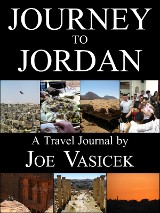
Journey to Jordan is now up on Amazon and Barnes & Noble!

That’s right–my travel journals from the 2008 study abroad to Jordan are now up on Amazon, Barnes & Noble, and almost everywhere else!  Here’s a complete list:

Kindle | Kindle UK | Kindle DE | Kindle FR | Kindle ES | Kindle IT | Nook | Smashwords | Kobo | Diesel | Xinxii | Sony | iTunes

Kobo, Xinxii, and Sony should be coming in the next couple of weeks.

I initially set the price for the illustrated version at $4.95, but the transaction fees are a lot less than I thought they would be, so I’ve decided to drop it down to $2.99 with the unillustrated version.  The changes should be reflected on Amazon and Barnes & Noble in a few hours.

I had an amazing, life-changing experience in Jordan, and after coming home, I had big dreams of turning my travel journals into a book.  Because of ebooks and indie publishing, that dream is now a reality.  From the description:

In 2008, Brigham Young University partnered with the University of Jordan to organize a summer study abroad program for its Arabic students. Scattered across West Amman in home-stays coordinated with Amideast, these students spent the summer living, studying, playing, and adventuring in the Middle East.

This is the travel journal of one of those students, and gives a detailed and intensely personal account of his time there. Besides the cultural experience of living with a Palestinian family in an Arab country, it tells the story of a critical juncture in his life, and how traveling across the Middle East helped to shape his personal growth, his spirituality, and his love for a people far from his American home.

Kind of cheesy, but yeah. 🙂 I hope you like it–please share it if you do!

I’m about to embark on another adventure, so this probably won’t be the last travel journal I do.  Who knows–maybe a year or two from now, I’ll be doing a book like this on my experiences in Georgia.  Or better yet, I’ll make it back to the Middle East and do a before-and-after.  Whatever I do, I’ll be sure to keep you guys updated frequently–so definitely stay in touch!