How I would vote now: 2017 Hugo Award (Best Novel)

The Nominees

All the Birds in the Sky by Charlie Jane Anders

A Closed and Common Orbit by Becky Chambers

The Obelisk Gate by N.K. Jemisin

Ninefox Gambit by Yoon Ha Lee

Deaths’ End by Cixin Liu

Too Like the Lightning by Ada Palmer

The Actual Results

  1. The Obelisk Gate by N.K. Jemisin
  2. All the Birds in the Sky by Charlie Jane Anders
  3. Ninefox Gambit by Yoon Ha Lee
  4. A Closed and Common Orbit by Becky Chambers
  5. Too Like the Lightning by Ada Palmer
  6. Deaths’ End by Cixin Liu

How I Would Have Voted

  1. No Award
  2. Deaths’ End by Cixin Liu

Explanation

If there’s any book on this list that I’m open to changing my mind on, it’s Death’s End by Cixin Liu. enjoyed The Three Body Problem, though it did have a lot of long sections of exposition, which comes across as amateur writing in English (and probably doesn’t in Chinese). But the characters held my interest, and the ideas in the book were absolutely fascinating. Also, there was absolutely none of the wokery that has come to saturate our Western culture in recent years, which made the novel feel very refreshing. So I enjoyed the first book in the series quite a lot.

However, things got really weird in the second book, and I didn’t connect with the characters nearly as much, so when the long sections of exposition began to feel like they were droning on, I decided to DNF it. I’ll probably try this series again at some point, but since I DNFed the second book, I can’t really say that I’d vote for the third book if the awards were held again. But I do need to give this series a second chance.

The book that won this year was the second book in N.K. Jemisin’s Broken Earth trilogy, which I didn’t read because I hated the first book so much. Since it’s going to be a while before I get to the 2016 Hugos (I’m currently rereading Uprooted by Naomi Novik, which I DNFed before, but the library loan for the audiobook expired so I’m back on the waitlist again—just too many audiobooks I guess), I’ll briefly give my take on The Fifth Season and why that book made me DNF not only the series, but N.K. Jemisin as an author.

I believe that abortion is the defining moral issue of our times, just like slavery was the defining moral issue for 19th century America. Future generations will probably look on us the same way we look on the abolitionists and slaveholders of the antebellum era, and I suspect they will judge us just as harshly for failing to stand up for the rights of the unborn. After all, we hold these truths to be self-evident, that all men are created equal, that they are endowed by their Creator with certain unalienable rights, and that among these are life, liberty, and the pursuit of happiness. For the 19th century, the defining issue was liberty, and the good guys won. For the 20th century, it was life, and the good guys lost, but the 21st century is shaping up to be a rematch (though based on the unbridled narcissism of today’s culture, the pursuit of happiness is giving it a run for its money, but on the abortion issue the two are aligned).

N.K. Jemisin is a very talented author. She wrote large sections of The Fifth Season in second person, and made it work. That’s a little like running a three minute mile in an era when most people thought it was impossible. Of course, she knows that she’s talented, which lends her voice a degree of arrogance, but she’s not the first author to have an oversized ego—in fact, you could argue that Orson Scott Card is much more obnoxious when it comes to that, and Card wrote the second-best book to ever win a Hugo (Ender’s Game. The best Hugo-winning book, IMHO, is Hyperion by Dan Simmons).

[Spoilers ahead]

However, it’s not the prose or the writing of The Fifth Season that I take issue with, but the underlying message. The book starts with an infanticide, where the main character comes home to find out that the father of her child has murdered her child and run away. Of course, this creates a massive amount of sympathy for the main character. The rest of the book alternates between flashbacks to the MC’s past, establishing her backstory, and the present, where she eventually acquires enough power to destroy the world. However, at the very end of the book, we learn that the MC’s backstory culminated in her killing another one of her children to prevent that child from becoming a slave. In other words, the big reveal is that the MC committed infanticide herself, on one of her own children, and the whole novel is carefully crafted to not only make us sympathize with her, but root for her when she does it.

I know that there were slaves in places like Haiti who killed their own children for similar reasons. However, there were also many other slaves who took the exact opposite view on the value of human life, such as Harriet Jacobs in Incidents in the Life of a Slave Girl. N.K. Jemisin has ancestors who were slaves, but she herself is a rich, progressive black woman living in New York City who is as far removed from slavery as I am (after all, there’s a reason why my people are called “slavs”).

But it wasn’t Jemisin’s views on slavery that I took issue with, so much as on using it as a justification for infanticide. It’s the same argument that we hear on the pro-abortion side of the issue, how it’s actually more merciful to slaughter an unborn child in the womb than to let that child be born into a life of poverty—never mind that our modern era is so fantastically wealthy that our poor are more likely to be obese than starving. In other words, the message of The Fifth Season is an antithesis to A Canticle for Leibowitz, which is not only a superior book, but is also on the side of the good guys in the defining moral conflict of our times, while N.K. Jemisin is on the side of the bad guys—or as I prefer to call them, the Death Cult.

So that is why I DNFed The Fifth Season and decided to never read anything that Jemisin ever writes (unless, of course, she comes to the light and changes her position on the right to life). It is also why I will always vote No Award on any ballot that includes Jemisin as one of the authors.

I started All the Birds in the Sky but didn’t finish it. To me, it felt like the author was trying too hard to be cutesy and childlike, but I personally found it off-putting. It’s been a while since I read it, and for some reason I can’t find it in my reading journal, but I seem to remember that there were some content issues, too—which would explain why I found it off-putting, given then childish tone.

I didn’t read A Closed and Common Orbit because I DNFed the series with the first book. Here is the entry for it in my reading journal:

This seems like the kind of book that would be right up my wheelhouse, but on closer inspection it really isn’t. The whole thing is one big cultural diversity parade, and the central question of the story half the time is whether the humans are using the right pronouns for the aliens. Also, you’ve got your obligatory super sex positive aliens and your nymphomatic, porn-addicted mechanic who’s played as the adorable one. So yeah, not at all for me.

I’ve written before about Ninefox Gambit, but I might as well include an excerpt from my reading journal on that one as well:

The story never really hooked me, and the action at the beginning felt disjointed without any conflict or characters for me to care about. Also, there were a lot of info dumps… But the thing that made me decide to DNF was when the main character turned out to be a lesbian. I don’t know that this book will follow the “all true love is LGBTQ love” trope, but I didn’t want to stick around to find out.

I suppose I could be convinced to try this one again, though. At the time, I was reading a lot of other award-winning and nominated books, which was why I had little patience for another woke lesbian love story. Seriously, I DNFed 27 books that month, most of them for similar reasons.

Finally, Too Like the Lightning was another book that I DNFed for obnoxious wokery. If I remember correctly, it takes place in a far future where gender is something that everyone intentionally ignores. It wasn’t quite as bad as Ann Leckie’s books, but it was definitely going for the same kind of woke nonsense. Also, there were some religious proscriptions that the author seemed to think would make for a much better society, but that I personally found super dystopian, and not in a good way.

How I would vote now: 2020 Hugo Award (Best Novel)

The Nominees

The City in the Middle of the Night by Charlie Jane Anders

The Ten Thousand Doors of January by Alix E. Harrow

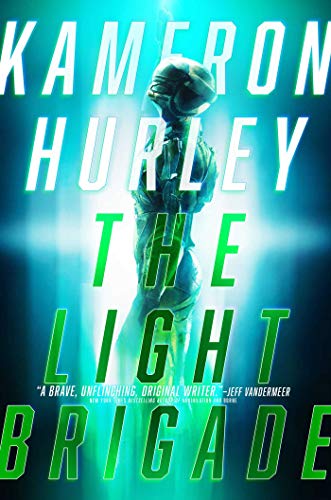
The Light Brigade by Kameron Hurley

A Memory Called Empire by Arkady Martine

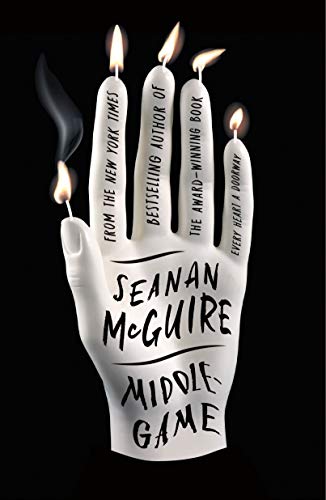
Middlegame by Seanan McGuire

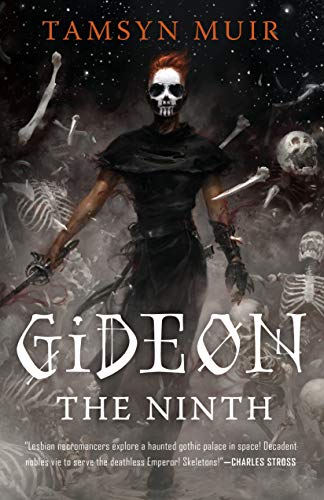
Gideon the Ninth by Tamsyn Muir

The Actual Results

  1. A Memory Called Empire by Arkady Martine
  2. Middlegame by Seanan McGuire
  3. Gideon the Ninth by Tamsyn Muir
  4. The Light Brigade by Kameron Hurley
  5. The City in the Middle of the Night by Charlie Jane Anders
  6. The Ten Thousand Doors of January by Alix E. Harrow

How I Would Have Voted

  1. No Award

Explanation

The wokery was strong this year.

I have a list of tropes that I cannot stand anymore, to the point that I will usually DNF any book that uses them. All of the nominated books this year fell fell into at least one of those tropes, including:

  • All true love is LGBTQ love
  • A profane and vulgar childhood
  • Death is chic
  • Life is not worth saving
  • Badass woman warrior, slay!

One of these days, I’ll write a blog post describing all of these tropes. If they weren’t so common in fiction these days, I would have more tolerance for them, but I’ve seen them all so much that they get an immediate “nope” whenever I see them.

The City in the Middle of the Night was like something written by a mental patient, and not in a good way. If I wrote a parody of a book written by a leftist, it would read no differently than this book.

I forget why I DNFed The Ten Thousand Doors of January, but I think it was because of the trope I call “a profane and vulgar childhood,” where children lose (or are never really allowed to experience) their innocence before they grow up, and the author doesn’t treat this like the tragedy it truly is. There may have also been an anti-racist / anti-colonialist bent that turned me off, if I remember correctly.

I wanted to like The Dark Brigade, because I enjoy reading Kameron Hurley’s op-eds in Locus Magazine, but the book was way too dark and profane. Also, it suffered from “all true love is LGBTQ love” and “badass woman warrior, slay!” which I am just so tired of reading.

A Memory Called Empire is one of those sprawling space operas about a massive galactic empire, but it read too much like something written by an English major with little to no understanding of how geopolitics actually works. Also, the “all true love is LGBTQ love” was strong with this one.

Finally, Middlegame and Gideon the Ninth are both prime examples of “death is chic,” a trope which plays right into the death cult that currently dominates our culture. But even if the macabre obsession with death is just an aesthetic, it’s one that I personally cannot stand. With that said, though, I think it goes beyond the aesthetic for both of these books—but I didn’t stick around long enough to find out.

For all of these books, the characters fell completely flat for me. One of the things I need in order to connect with a character is to get a sense right off the bat that they’re a good person—or, if they’re a bad person, that needs to be lampshaded clearly as a flaw. But in so many books that are published these days, the characters are just downright awful people who care only for themselves, and rarely is this pointed out as a flaw.

Increasingly, it seems that we live in a world where the culture tells us that nothing is true and everything is permitted. Screw that.

Why books written by mothers are better than books written by childless women

I never know which posts of mine China Mike Glyer is going to pick up for his pixel scroll, or whatever he calls the daily bucket of chum that he feeds the folks over at File 770 (the ones who aren’t Chinese bots, anyway). I’ve written at much greater length about my 2022 reading resolution here, and my insights and impressions gained through the experience here and here, but for some reason the post he decided to pick up was the last one. Perhaps he thought that it would be better at ginning up outrage than the other posts? But if that were the case, surely he would have picked up the one before that instead. It was practically written for ginning up outrage among the File 770 crowd (or at least the ones who aren’t Chinese bots).

So when I got the pingback last night, I glanced over the post over at File 770 and saw this comment from Cora Buhlert:

I have to admit that whether or not writers have children is not a characteristic I pay the slightest bit of attention to. Never mind that it is difficult to tell, because even today, not every writer chooses to talk about their family or private life.

But I guess that Joe Vasicek is the sort of person for whom people without children, particularly women without children, are by definition evil.

Cora is an indie writer from Germany that I used to interact with a lot on the KBoards Writer’s Cafe, and some other indie author hangouts. She’s earned the ire of Larry Correia a couple of times, and she has a bad tendency to straw man any opinions or perspectives that challenge her worldview. On one thread, we went back and forth over whether Hitler was a creation of the political right or the political left. I tried to explain that “left” and “right” mean different things in the US than they do in Europe, but it was like trying to have a discussion with a brick wall.

So it doesn’t surprise me in the least that she’s completely mischaracterized me in the comment above. I do not believe that childless women are evil—if I did, I would not have served in the bishopric of a mid-singles ward (a mid-singles ward is a Latter-day Saints congregation of unmarried and divorced people in their 30s and 40s. I was the ward clerk—basically, the guy who handled all the finances and other paperwork for the congregation). My faith teaches me that people are not evil, but are all children of God, no matter who they are born to or what their life choices may be.

In fact, my interest in the parental status of the Hugo and Nebula winning authors has nothing to do with religion or morality, and everything to do with life experience. I didn’t get married until almost a decade after I had started to write professionally, and the experience of becoming a father was so completely lifechanging that it’s transformed my writing as well: what I choose (and don’t choose) to write about, who I choose (and don’t choose) to write for, as well as the themes and ideas that I explore in my books.

You can see this transformation if you read my Genesis Earth Trilogy. Genesis Earth was my first novel, but it wasn’t until almost nine years later—after I’d met my wife and was engaged to be married—that I felt I had the life experience necessary to write the sequel, Edenfall. And the final book, The Stars of Redemption, was not the sort of thing I was capable of writing until after I had become a father and knew what it was like to help bring a child into the world.

When my daughter was born, the very first thought that came into my mind was “this is her story now, not yours.” We all like to say that we’re the hero of our own story, and in a very basic way, that’s true. But when you become a parent (assuming that you’re a responsible parent, and not a scumbag), you’re no longer living just for yourself, but for your children. “He who findeth his life shall lose it: and he that loseth his life for my sake shall find it.”

Having a child changes your perspective on everything. Among other things, you have a much deeper and more personal investment in the future, since you know that your child will inherit that world. Your perspective on your own family history changes too, as you have become a link in the generations, not merely a byproduct of it. Life becomes a lot harder, but it also becomes more meaningful. Things that took up a great deal of your time and attention when you were single suddenly become trivial, and other things that didn’t make much sense to you about people before suddenly click into place.

So that was why, when I decided to read all of the Hugo and Nebula winning novels, I was curious about the parental status of the authors. I wanted to know if the experience of being a parent had affected the quality of their writing, since I know it’s affected mine. And honestly, it’s not that hard to look up: almost all of these authors have Wikipedia pages with a section about their personal lives. Obviously, the details about their children are sparse, but the only thing I cared about was whether or not they had any.

(As a side note, there were other stats that I decided to track, such as the age of the author when they won the award. That hasn’t seemed to have impacted my taste, except that I have not enjoyed a single award-winning novel by an author who was in their 20s at the time that they won. The only exception was Isaac Asimov with the retro-Hugo for The Mule (Foundation and Empire), but that wasn’t awarded until after he was dead. There are also three authors whose age I was unable to determine from a quick internet search: Michael Swanwick, Sarah Pinsker, and Charlie Jane Anders.)

(As another side note, I’ll be the first to admit that I may have made some errors in my research. For example, if a five-minute internet search on an author didn’t tell me anything about their kids, I assumed they didn’t have any. It’s entirely possible that they just prefer to keep that information private. Also, I didn’t bother to look up when they had their children, so it’s possible that they were still childless at the time they won the award.)

Why should I be interested in this sort of thing? Why look at things like an author’s age, gender, or parental status?

Two reasons. The first is that I wanted to do a deep dive on the Hugos and the Nebulas, the two awards which represent themselves as representing the very best of the science fiction genre. Since that is the genre that I write, I want to understand not just the kind of books that win these awards, but the kind of authors who win them. The goal is to have a deeper understanding of the genre, and to look for trends and movements within it.

Second, and more importantly, I want to have a better understanding of my own reading tastes. All of this is subjective, of course, since the act of reading is always a collaboration between the reader and the writer. I’m sure that some of the books I think are terrible are considered by others to be the best in the world, and vice versa. My goal is to look for patterns that will tell me whether I’m likely to enjoy a book (or an author), so that I can find the best books more efficiently. I don’t do this for all of the books that I read, but since the Hugo and Nebula winning books are supposed to be the very best, I figured it was worth it to do a deeper analysis—especially since my goal is to read all of them.

The thing that surprises me is that it isn’t parental status that matters, but gender + parental status. I can think of a couple of reasons why this would be the case. The most obvious is that it’s easier for me to empathize with a childless man, since that was me for such a long time. And I do think that’s a major part of it.

But I also think that there’s something specifically about being a mother—or deliberately choosing not to be one—that’s also a factor. And yes, I’m talking about biological essentialism. I mean, I’m not a biologist, but I know that I will never be able to be a mother—that’s a life experience that I will never be able to have. Conversely, I will never be able to deny my potential motherhood, an equally major life decision. Both of those experiences are bound to have a major impact on an author’s writing, either way.

I also think this factor is what lies at the heart of Roe v. Wade, the worst decided Supreme Court case since Dred Scott v. Sanford. Certainly the cultural impact of that decision has profoundly influenced how our society views children and motherhood. It’s also why I am sooo looking forward to Matt Walsh’s documentary What Is a Woman? coming out in two weeks:

With all of this in mind, I find it fascinating that every Hugo Award for best novel after 2015 (the year that the Sad Puppies had their high water mark) was won, as far as I can tell, by a childless woman. It would be interesting to see if that trend extends to nominees, or to the other categories like best short story, best novelette, and best novella. Maybe I’ll look that up sometime.

And now that I’ve referenced Roe v. Wade, I’m sure that Cora Buhlert (if she’s reading this) is saying to herself: “yup, he just thinks that all childless women are evil.” And to the extent that File 770 is read by humans and not bots, they’re no doubt picking and choosing those parts of this post that confirm their prejudices (if China Mike Glyer even has the balls to cross link to a post that includes that trailer—do it, China Mike! I dare you!)

But I don’t really care either way, because now I have a much better understanding of my own personal reading tastes, and how they contrast with the Hugo/Nebula crowd. For me, the best books are those that are written by authors who have had the life experience of being a mother, and the worst books are by those who have chosen to deny themselves that path. Apparently, the Hugo/Nebula crowd takes the opposite view. Good to know.

Reading Resolution Update: January

My 2022 reading resolution: Read or DNF every novel that has won a Hugo or a Nebula award, and acquire all the good ones.

I had expected to DNF a lot of these books, but I was a little dismayed at how terrible they are. Or rather, how some of them can be so well-written and yet so idelogically possessed.

For a while, I worried that I was pre-judging some of these books too harshly, based on my opinions of the author. After all, shouldn’t art be treated separately from the artist? But then I decided that it would be better to lean into that bias, and trust my intuition. After all, it’s impossible to approach reading without a personal bias—and even if it were possible, it wouldn’t be advisable.

One of the key things I’m hoping to take away from reading these books is a better understanding of my own personal tastes. Toward that end, it’s much better to DNF early and often, since that tells me something valuable about my own tastes. I’ll get much more out of this exercise if I pay attention to that than whether or not I’m being “fair” to a particular book or author.

As for how my bias against an author might prejudice me against a book, I don’t think that’s too much of a problem so long as I’m aware of those biases. Yes, it makes it more likely that I’ll read a book with a critical eye, and not in the way that I typically read for enjoyment, but that goes both ways, since if I do enjoy a book, that’s going to improve my opinion of the author (or at least make me reconsider my opinion). So long as I’m aware of my biases and make sure that they aren’t set in stone, I think it should be fine

Besides, it’s not like I have anything to prove. Sure, China Mike Glyer might pull out an excerpt from this post to use as content (hi China Mike!), but I couldn’t care less what that particular corner of fandom thinks about my public ruminations. I will know if I’m being too “unfair” to a book or an author, and the only criterion that really matters is whether I have a clear reason for DNFing the book, separate from my biases about the author.

And honestly, what I’ve found so far is that my biases are pretty spot on. Authors who behave insufferably in public or on the internet tend to write some pretty insufferable books, especially if they’re woke.

Fortunately, I have found a few new-to-me books and authors who are really fantastic. And my decision to DNF early and often is helping to keep it from becoming too much of a slog, which is good. It also means that I may complete this resolution a lot sooner than I’d expected, at which point I’ll probably move on to the Dragons or the Prometheus awards.

In any case, here are all the Hugo and Nebula awared-winning novels that I read or DNFed in January 2022:

Books that I read and plan to / have already acquired:

  • Way Station by Clifford D. Simak (1964 Hugo)
  • Foundation’s Edge by Isaac Asimov (1983 Hugo)
  • The Vor Game by Lois McMaster Bujold (1991 Hugo)
  • Annihilation by Jeff VanderMeer (2015 Nebula)

Books that I read and don’t plan to acquire:

  • None

Books that I did not finish:

  • The Big Time by Fritz Leiber (1958 Hugo)
  • A Case of Conscience by James Blish (1959 Hugo)
  • The Wanderer by Fritz Leiber (1965 Hugo)
  • The Einstein Intersection by Samuel R. Delany (1968 Nebula)
  • Stand on Zanzibar by John Brunner (1969 Hugo)
  • Rite of Passage by Alexei Panshin (1969 Nebula)
  • Man Plus by Frederik Pohl (1977 Nebula)
  • Dreamsnake by Vonda N. McIntyre (1979 Hugo and Nebula)
  • A Deepness in the Sky by Vernor Vinge (20000 Hugo) (My wife recommended this one, and I will probably try it again, since I took a break midway through and forgot who all of the characters were. But for now, I’m counting it as a soft DNF.)
  • Camouflage by Joe Haldeman (2006 Nebula)
  • The Windup Girl by Paolo Bacigalupi (2010 Hugo and Nebula)
  • Redshirts by John Scalzi (2013 Hugo)
  • Ancillary Justice by Ann Leckie (2014 Hugo and Nebula)
  • All the Birds in the Sky by Charlie Jane Anders (2017 Nebula)
  • The Calculating Stars by Mary Robinette Kowal (2019 Hugo and Nebula)
  • A Memory Called Empire by Arkady Martine (2020 Hugo)
  • A Song for a New Day by Sarah Pinsker (2021 Nebula)