“Lizzie-99XT” published in Serial Magazine!

It’s another week, and I have another short story out, this time in Serial Magazine! Here’s what the editor has to say about it:

We kick off ISSUE TWELVE with “Lizzie-99XT” by Joe Vasicek. This futuristic sci-fi tale follows a half-human, half-AI space pilot as she travels the galaxy to fight in an interplanetary war. She’s doing all she can to protect the lives down on Earth, but what type of life can this pilot truly have if most of it is spent lightyears away from those she loves?

“Lizzie-99XT” is a hard military SF piece about a starfighter pilot whose consciousness merges with the starfighter’s AI in order to fly it. She’s tasked with saving the world from a horde of alien invaders, but when battles are fought at near-light speeds, everything can change in an instant, and the home that she returns to may not be one that she recognizes.

Basically, it’s a cross between Neon Genesis Evangelion and Joe Haldeman’s The Forever War, except more uplifting. Probably. Also, it’s a short story, not a novel (or an anime series… yet). If that sounds intriguing, pick up a copy and read it today!

Trope Tuesday: The Beach Episode

I’m so glad my Mom doesn’t read this blog.

I’m at Cape Cod this week, at a condo that doesn’t have internet, so it’s going to be a quick and dirty Trope Tuesday post this week (no, not like that) because I’d rather be on the beach than at the Dennisport Public Library.  Speaking of beaches …

One of the commonest beach tropes, at least for most anime and TV shows, is to take the cast of characters and put them on the beach for an episode.  This rarely has anything to do with the actual plot of the show, and is usually just an excuse to parade the characters in swimsuits and/or give the audience a little fanservice.

Actually, that’s not entirely fair.  There’s a bunch of ocean related recreational activities that the characters may participate in, such as beach volleyball (or other games), surfing, making sand castles, burying each other in sand, and getting a suntan (or an embarrassingly painful sunburn).  There may even be a single-episode romantic subplot that results in a beach kiss.

Basically, the beach episode is a chance for the audience to take a breather from the main story arc and hang out with their favorite characters at the beach.  Because really, who doesn’t like to go to the beach every now and then?  And if you can tag along with a bunch of fictional characters who have come to feel like friends, so much the better.

I’ve got to admit, most of the books and series that I’m a fan of don’t really have a beach episode.  The only one that comes to mind is the Melancholy of Haruhi Suzumiya, and that one’s a bit unusual because the beach episode(s) turn into a murder mystery that actually ties in pretty well with the main plot.  Also, the episode is based off of one of the original Japanese novels, so it’s a lot closer to canon than what you’ll see in most anime adaptations from manga (or so I’ve heard).

The beach episode doesn’t pop up in science fiction or fantasy a whole lot, probably because of the secondary world aspect.  I’m sure there are beaches on Middle Earth, but if I see a bunch of hobbits playing beach volleyball in bikinis, I’m sorry but I’m going to have to throw up.  Most fantastical worlds don’t have room for modern-style vacations, because so much of the setting is so far removed from the world we live in.  The last thing you want to do is throw your reader out of the story, so for most sci-fi and fantasy, a trip to the beach is probably a bad idea.

Of course, there are exceptions, depending on the story and the appropriateness for such an excursion in the fictional universe.  If you guys have any favorite examples, please let me know.

Needless to say, since most of my stories take place on alien worlds in the far-distant future, you won’t usually find this trope in my own stories.  However, there is a beach chapter in Desert Stars, where Mira spends some time out in nature, walking along the ocean and taking in the gulls and the waves.  She doesn’t wear a swimsuit, though.  In Stars of Blood and Glory, there’s a planet that’s nothing but ocean, with giant floating cities populated by people who are half Japanese, half Polynesian.  Not any beaches, though–at least, not natural ones.

Trope Tuesday: Chaotic Neutral

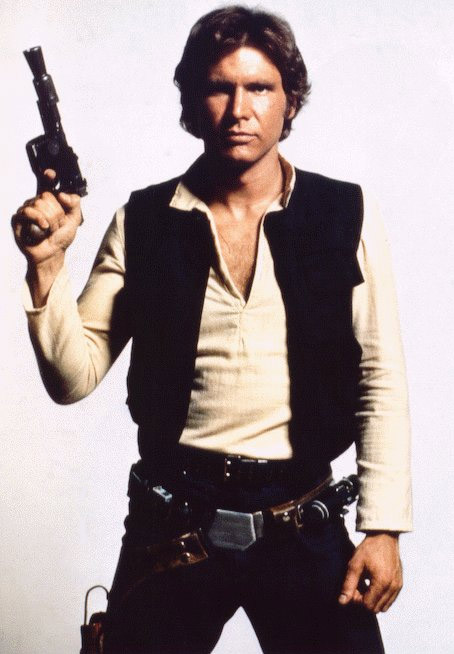
Look, I ain't in this for your revolution, and I'm not in it for you, Princess. I expect to be well paid--I'm in it for the money.

If you’ve ever read a space adventure with smugglers and pirates, or a sword & sorcery with rogue thieves and master-less swordsmen, or a western with gritty outlaws and mountain men, you know this character alignment.  If you’re a fan of any of these genres, chances are you love him, too.

The Chaotic Neutral‘s one consistent rule is to always look out for #1.  Beyond that, he’s a free spirit who believes in individuality and resists anyone or anything that tries to control him.  Rebellious spirits and lovable rogues tend to fall into this alignment, but so do tricksters and wild cards.  Their resistance to any form of personal restriction makes them unreliable allies, despite what Jack Sparrow says.

From the easydamus alignment page:

A chaotic neutral character follows his whims. He is an individualist first and last. He values his own liberty but doesn’t strive to protect others’ freedom. He avoids authority, resents restrictions, and challenges traditions.

A lot of characters start out as this but tend to shift as the story progresses.  Han Solo, for example, shifts from Chaotic Neutral to Chaotic Good as he becomes more and more involved with the Rebellion.  The Jägers from Girl Genius are Chaotic Neutral until they have a Heterodyne to lead them.  But in other stories, such as Pirates of the Caribbean and Schlock Mercenary, the Chaotic Neutral serves as an anchor.

My favorite Chaotic Neutral is probably Waylander from David Gemmell’s Drenai series.  The Jerusalem Man is another good one–in fact, just about every one of his books has a Chaotic Neutral that I love.  Haruhi Suzumiya is an excellent example of a female Chaotic Neutral–in fact, she’s probably the queen of this particular character alignment.

In my own work, the best example of a Chaotic Neutral would probably be Tamu from Bringing Stella Home / Sholpan.  Even though she’s technically a slave, she doesn’t really mind it because she has everything she wants and doesn’t have to be beholden to anybody (not even Qasar, really, since she’s his favorite).  Amina from Desert Stars is also Chaotic Neutral, in contrast with Surayya, who is more of a Lawful Neutral, though sometimes it’s hard to tell.  And in Genesis Earth, Terra is definitely a Chaotic Neutral at the beginning, though she shifts a little somewhere around the middle.

I’m hesitant to admit this, but when I took the character alignment test for myself, I tested out as a Chaotic Neutral.  As to what that means, exactly…I’m not going to say. o.0

Trope Tuesday: Chaotic Good

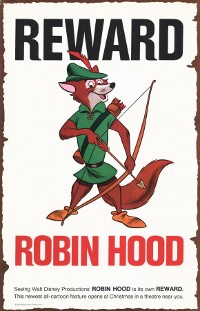
A pox on the phony king of England!

Wherever you find the evil empire, dirty cops, or a misguided crusade, chances are there’s a Chaotic Good somewhere in the shadows fighting against it.  From barbarian heroes to freedom fighters, rebellious princesses to ethical sluts, these free-spirited, noble-minded rebels are constantly at war with the man, robbing the rich to give to the poor.

From the easydamus character alignment page:

A chaotic good character acts as his conscience directs him with little regard for what others expect of him. He makes his own way, but he’s kind and benevolent. He believes in goodness and right but has little use for laws and regulations. He hates it when people try to intimidate others and tell them what to do. He follows his own moral compass, which, although good, may not agree with that of society.

Interestingly, once the evil bad guys are gone, the balance between Good and Chaotic is even more difficult to keep than the line between Good and Lawful.  For that reason, Chaotic Goods often make extremely poor rulers after the war is over.  When they win, they usually do one of the following:

Of all the character alignments, this one is my favorite.  It fits my own sensibilities almost perfectly.  Whenever a character of this type has to give up their old life to accept their new responsibilities, I can’t help but feel a little wistful and sad (maybe that’s why I haven’t settled down and married yet…hmm…).

This trope is extremely prevalent in manga and anime, with Edward Elric from Fullmetal Alchemist my personal favorite.  Agatha and Gil from Girl Genius are also really awesome–it’s going to be interesting to see how Gil shifts now that his father is out of the picture.  In science fiction, Captain Kirk is probably the most beloved character of this type, though almost all of Heinlein’s protagonists also fit the bill.

In my own work, Tiera Al-Najmi from Desert Stars is probably the best example of this trope.  She stands alone against the restrictive norms and hypocrisy of her society, urging Mira to do what’s right instead of what’s expected.  In Bringing Stella Home, James McCoy fits this trope too, though you could also make an argument that he’s more of a Neutral Good.  In Heart of the Nebula, however, he’s definitely Chaotic Good, which puts him squarely at odds with Lars, a Lawful Good who appears in all of the Gaia Nova novels thus far.

Trope Tuesday: Walking the Earth

Oh there’s sober men in plenty
And drunkards barely twenty
There are men of over ninety
That have never yet kissed a girl.
But give me a wandering rover
From Orkney down to Dover
We will roam the country over
And together we’ll face the world.

When a character decides to walk the Earth, they leave behind friends, family, and earthly possessions to wander from town to town in search of adventure. In real life, we think of these people as bums, but in fiction these characters are often the protagonists–or if not, then some sort of wise figure or noble adversary.

There are two character archetypes that tend to fill this trope: the drifter (or “the stranger” as Joseph Campbell called him) and the knight errant. For the knight errant, walking the Earth is simply part of the job description: always in search of evil to slay and damsels to rescue, he cannot stay in one place for long. It’s the same with the drifter, though he might not have the same skill set or code of honor.

As you can imagine, this trope tends to be most prevalent in Westerns, with the knight errant transformed into a gunslinger and the drifter wandering the wide frontier. American culture has definitely embraced this trope; what else did you expect from the nation that invented cars, highways, and the road trip? However, it’s also quite prevalent in East Asia as well, with the ronin and other wuxia archetypes.

Of course, this trope is only possible in a society that has a long tradition of sacred hospitality; otherwise, the wandering hero will almost certainly starve. That’s one way to spot stories where this trope is done poorly: if the wanderer has no visible means of support, yet appears clean and well-fed, the author hasn’t connected the dots. Also, characters who walk the earth are almost always male, since women who travel alone are more likely to get raped or assaulted.

One of my favorite examples of this is Van Hoenheim from Full Metal Alchemist. <SPOILER: highlight to read>After he unwittingly helps the first humunculous to sacrifice the population of Xerxes to make two giant philosopher’s stones, Hoenheim sets off to wallk the Earth as an immortal being, his sorrow too great to allow him to settle down. However, while the humunculous uses his stone to acquire even greater power, Hoenheim becomes familiar with every damned soul trapped in his and enlists their help. In the final battle, we learn that Hoenheim has used his centuries of walking the Earth to bury the damned souls in such a way to counter the humunculous’s transmutation circle, thus saving the people of Amnestria.</SPOILER>

There’s a dark side to this trope, however: the flying dutchman, cursed to wander the earth forever. By definition, every adventure must come to an end; when it doesn’t, it becomes instead a sentence of exile. Perhaps this is why characters who walk the Earth in a post-apocalyptic setting (like the wandering Jew in A Canticle for Leibowitz) tend to lean more towards this: after the world ends, there is no going home.

Which makes me wonder: in order for this trope to be positive, is it necessary for the main character to have the option of settling down whenever he wants to? Certainly there are those who choose a life of eternal adventure, but that implies that they have a choice. Even if they would have chosen not to settle, when that option is taken from them does that always make the story darker and less hopeful?

Either way, this trope intrigues me. Expect to see it in my own work soon.

Lyrics from “The Ramblin Rover” by Silly Wizard.

Pulling along

Just a quick post, because it’s 3:30 am and I’ve got a TON of stuff to do tomorrow, such as:

1) cleaning checks
2) replace the air filter in my car
3) go running with my bro in law
4) finish Genesis Earth 5.0
5) band practice
6) watch Inception with a bunch of friends at the dollar theater

Yeah, tons of stuff.  So anyways…

I’m amazed at how quickly I’m pulling through Genesis Earth.  Yesterday I revised through 11.7k words, and today I did about 14.1k.

At this point, most of the work is sentence and paragraph level, and has more to do with voice and rhythm than actual story.  There were a few science issues, mostly having to do with distances and velocities, but thanks to Logan I think I’ve caught most of those.  Thanks so much!

I’m also finding out that this story is much better than I used to think it was.  With all the form rejections I’ve been getting for it, I wondered for a while whether I should put it back in the trunk and let it quietly die.  Now, however, I can see that it has a lot more promise than I’d previously thought.  Even if it isn’t published as my first novel, I really do believe that this story deserves a home.

At the same time, though, I’ve noticed some major differences between my writing in this piece and my writing in the stuff I’ve written more recently.  I’m not sure exactly how to put it, but I think it has something to do with voice.  I don’t want to say that Genesis Earth is more choppy, but it does seem a lot more…matter of fact, if that makes sense.  There are also a lot more rhetorical questions, but I think that’s an artifact of the 1st person perspective.

But even if the voice in this piece is different from my voice now, it’s different in a good way.  It feels more…YA?  I’m not exactly sure, but it seems to work.  The sequels, if/when I write them, will probably be in 3rd person (ala Spin and Axis by Robert Charles Wilson), and that’s going to create a much different feel than this book.

It worked for Axis, though, so I think I can pull it off–that is, if/when Genesis Earth gets picked up by a publisher.  I don’t want to write the other two books in this trilogy until I know the first one is sold.

In unrelated news, I had a job interview today.  It was with a wilderness therapy company, the same that wait listed me for the January training.  I really hope I get in–more than anything at this point in my life, I feel that I need to gain some major life experience.  Probably the biggest stumper question was “what three words would you use to describe yourself in your last job, and what three words would your supervisor use to describe you?” A difficult question, particularly when all your recent jobs have been temp jobs.  I think I did alright, though–now, we just need to wait and see.

In other unrelated news, I threw an awesome movie night tonight.  We watched Scott Pilgrim vs. The World, and maybe fifteen people showed up–most of them from Quark, but a couple of friends from some other places too.  Man, that Scott Pilgrim movie is epic. So hilarious, so entertaining, and at the same time, so true.  And then, we went to Dairy Queen and hung out until midnight hanging out.  It was great.

In still other unrelated news, I recently ordered the anime series Planetes on DVD.  It was at a good price, and I knew I’d buy it eventually, so I allowed myself to splurge.  I am so happy I did, because the science fiction elements are done surprisingly well.  All the little details, from the zero gravity handholds in the walls to the way the stations spin, are surprisingly true to real life, and the show’s vision of 2075 is not beyond the realm of our own possible future.  In other words, Planetes is quite possibly the best rocketpunk anime show out there, and a great source for inspiration.

Well, that’s enough for now.  Tomorrow, I will finish this novel and send it out to the agent who requested it.  In the meantime, though, it’s 4:00 am and I must sleep.

Dog dead workdays and killing your characters

This post is going to be super quick because I’m dead tired.

Due to power surges and computer glitches, I had to work overtime today and yesterday at the warehouse, so I really haven’t had time for anything except writing and a little socializing at Leading Edge.  However, things are going well.  I’ll get the extra hours off on Friday, which means a big chunk of free time to do whatever I want.

I broke 3k words today in Mercenary Savior. It was awesome.  I love revision–taking something good and making it really shine.  Just hit some major climaxes and killed off a side character, which is always exhilarating if you do it right.

As a footnote to that, I’m reading George R. R. Martin’s Game of Thrones, and I just reached the part where he kills off the first major character.  What’s more, he was my favorite character in the book so far!!! AAUGGH!  Why, Mr. Martin?  Why???  Yet I must confess, killing him was necessary to take the story to the next level of awesomeness <grumble>.

I’ve been thinking a lot about killing characters recently, and I figure the best way to do it is to recognize that everyone has to go sometime (in real life if not always in fantasy), and to write accordingly.  We tend to ignore our own mortality, when really, there can be so much meaning to it.  After all, to die for something is to make the ultimate sacrifice.  If you make sure your characters die for a reason–either heroic or tragic (or both)–then I think that’s the key to make it work.

The Book Academy Conference at UVU was great; I’ll do a writeup on that soon, probably over the weekend.  I probably won’t post the audio files, but if you want them, just email me and I’ll send you the link.

I’ve been waking up early each day this week, and it’s been great. I’m so much more productive in the morning, writing wise.  It’s like a computer: when you first boot up, your desktop is so clean. With only the startup programs running in the background, everything feels uncluttered.

At the end of the day, though, it’s the exact opposite. You’ve got maybe a dozen applications running, and it’s all too easy to get distracted by switching from one to the other. What’s more, you just don’t have the energy to get things done.

The downside (if you can call it that) is that it’s only midnight and already I’m about to collapse.  Oh well–guess I’ll just have to go to bed earlier.

In closing, let me leave you with this really weird, slightly disturbing anime clip I found on youtube of a vegetable committing seppuko. I guess it has something to do with the rest of the post, seeing as I went on a tangent about killing characters. Anyhow, this is the friendship among vegetables…

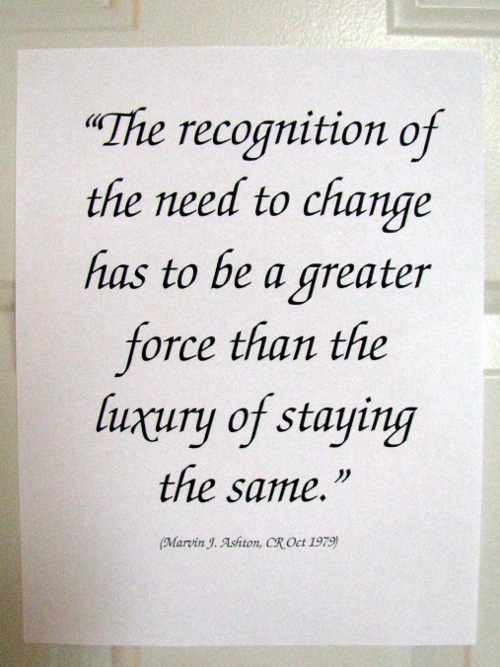
The need to change

I picked up this sign at institute last Wednesday. The lesson was on our desires; specifically, how the thing that we truly desire deep down is often the thing that we get.

The main reason I posted this sign on the door was to motivate me to get a better job than my current one.  However, it applies to so many other things as well.

Take writing, for example: if I’m going to actually turn this writing thing into a full time career, I’ve got to bust my butt to make it happen.  Writing a paltry 250 words each day on a novel you’ve been working on for the past twenty years just isn’t going to cut it.

I got two form rejections today, and that made me realize that I need to be more serious about submitting my work.  So instead of working of working on Worlds Away From Home, I researched a slew of agents, rewrote my query letter for Genesis Earth, and sent out four carefully prepared and researched submissions.  I don’t want to spend any more time bouncing around from job to job than I have to–I want to break in and make this writing career take off.

So far, I’ve gotten approximately 14 rejections for Genesis Earth: ten form rejections, one personalized rejection, one rejection after the partial was requested, and two that I haven’t heard back on but have been out for so long they’ve probably been rejected.  Interestingly enough, rejection itself is not that hard for me to deal with: it’s building the motivation and nerve to submit to the next place that’s tough.

But I’ve got to do it.  I feel kind of like Hachimaki from the anime series Planetes, who quits his job without taking the severance package when he applies for the Jupiter mission.  If he has the safety net, he knows that he’ll get lazy, so breaks goes out on his own, even sleeping on the streets for a while during the initial tryouts.

I haven’t quite fallen that low yet–I’ve got an apartment, a bike, and a job, even if it’s only a subsistence level one.  But when it comes to long term careers, I’m putting everything into my writing right now–there isn’t anything else.

It’s still discouraging to get rejected, but I’m still very optimistic that things will work out.  Even if everyone rejects Genesis Earth, I’ll have Mercenary Savior ready to submit before the end of the year.  It’s just a matter of time–I just hope it happens soon.

In the meantime, here’s the opening sequence from Planetes.  Such an awesome series–I’d take a job with Debris Section in an instant!  Even garbage collecting is cool when it’s IN SPAAACE!!