Random late night thoughts

I’ve been going on a lot of late night walks lately, just wandering restlessly around Provo.  Tonight I had some interesting thoughts about how much I’ve changed in the last year.  Surprisingly, I’ve grown a lot.

Last  year at this time, I was all geared up for World Fantasy Convention.  I had just finished Bringing Stella Home, and I my thoughts went something like this: “if I’m lucky, maybe I’ll find an agent, and they’ll like my pitch enough to see it, and after they read it they’ll want to represent me, and then they’ll sell my book somewhere, so that maybe, just maybe, I can make a living as a writer in ten years.”

Now, I don’t want to get into the whole indie vs. traditional debate, because I think it’s ultimately a false dichotomy.  However, now that I’ve gone ahead and published my own work independently, I feel like I’ve taken charge of my career in a way that I hadn’t before.  I’m no longer waiting on someone else to make my hopes and dreams come true, I’m going out and pursuing them myself.

That’s the big thing that I think has changed in the past year: I’ve gained a lot more confidence.  A year ago today, I was working a temp job in a costume company warehouse, fretting and worrying over how to make ends meet and where to find a stable job.  I had considered freelancing as a translator and teaching English in another country, but hadn’t actively pursued those options because frankly they terrified me.  And as for writing, that was the impossible dream that might come true someday, but not today.

Now, writing is still the impossible dream, but at least I’m on a path that doesn’t involve lottery thinking like the old one.  None of my books have really taken off yet, but at least I have them published and available for readers to discover, so when I do start to get some traction I’ll be in a much better position to succeed.  And either way, I’ve taken charge of my own career.

So yeah, I can say I’ve grown a lot in the past year–which is surprising, considering all I did was stay in my old college town and work odd jobs.  At least I didn’t move back in with my parents–which makes me part of an elite 15%.  But now, I think I’ve just about reached the limit of how much I can grow here in Provo.  If something doesn’t change, I worry that I’m going to start stagnating.

So in a year, where will I be?  Who knows, but if I’ve grown as much as I have since October 2010, I’ll count that as a success.

Worldcon 2011: Thursday

Wow, the last couple days have been packed with awesome con-stuff, but I’ve got a short break so I thought I’d blog about it.

Thursday was great, attended a few panels but mostly just wandered around meeting people.  I’m a little surprised with how many people read this blog.  Got Brandon to sign my Kindle, and he was really supportive about my decision to epublish.  I seem to be one of the only Utah writers going full-steam with indie publishing, but a handful of others are considering it, though for now they’re in the minority (which surprises me).

Anyhow, Thursday had a couple of really notable panels.  The first was on faith and science fiction, and had both Eric James Stone and Moshe Feder on it, among others.  Excellent discussion, though a couple of the commenters tried to derail it.

I found it surprising that the panelists didn’t have a good answer to my question: how do you reconcile far future sf with millenialist religions?  That’s exactly what I’m trying to do with my Gaia Nova universe–create a far future epic that isn’t incompatible with the major western religions (Islam, Christianity, Judaism, etc).  From the after-panel discussion, I got a strong recommendation to read C.S. Lewis’s space trilogy, so I’ll definitely be checking that out soon.

The other notable Thursday panel I attended was on ebook art, and featured John Picacio and Lou Anders, among others.  John feels pretty strongly that indie writers are seriously devaluing cover illustration, and within the first ten minutes someone in the audience literally told him to f___ off!  Wow, talk about tension–but even though it almost fell apart, the panel turned out to be very enlightening.

Let me just take a moment to say that I’m very impressed with what Lou Anders is doing over at Pyr.  While the rest of the publishing world seems to have their heads in the sand when it comes to the ebook revolution, Lou is one of the few who sees it more as an opportunity than a threat.  I’m not currently looking for a publisher, mostly because I’m waiting to see how things shake out, but I would be very surprised if Pyr is one of the publishers that goes under.

The parties in the evening were pretty good–as always, the Tor party was literally packed.  Brandon saw a group of us clustering together, so he broke us up and sent us off to talk with editors and agents.  He tried to point me out to an agent, but…you know, I’m not really looking for one right now.  Brandon keeps telling me not to believe DWS when it comes to agents, and while I’m certainly not fundamentally opposed to them, I feel that I can better build my career by going in other directions.  At some point in the future, maybe, but for now…not so much.

Speaking of Dean, I spent the whole evening hunting for him, then gave up around midnight only to find out the next day that he showed up at the SFWA suite fifteen minutes after I left (nooo!). And now that it’s 9pm in Reno and the parties are just getting started, I think I’ll cut this blog post here and recap Friday sometime later.

See you around!

T minus 24 hours and counting…

That’s right!  After much wrangling, I formatted it this morning and published it to Amazon this afternoon.  In less than 24h hours, it should be up for sale!

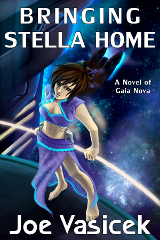
In many ways, Bringing Stella Home is a lot different from Genesis Earth.  For one, the scope is much larger, with the rise and fall of galactic empires and a war leaving billions dead in its wake.

At the same time, however, the stakes are very personal.  It’s not about turning the tide of human history or saving millions of lives; it’s about one boy who doesn’t want his world to fall apart, and will do anything to save the people he loves.

I put a content warning in the description because there’s a lot of darkness in this book.  It’s not for everyone; I know that some of my friends would find it shocking and offensive.  However, it isn’t my intention to glorify evil or celebrate immorality; rather, by portraying it honestly, I hope to make the struggle against it that much more meaningful.  There is, after all, an opposition in all things.

Writing this book was a watershed moment for me.  Not only is it the first book in a series which I hope to continue across many books, but it marked a shift in my writing.  Before the rise of indie publishing, I thought this would be the one that finally broke through the iron gates of the publishing industry and made my debut.  Perhaps that was why I was so reluctant to send it out; I didn’t want to experience the crushing blow of rejections from agents who didn’t think they could sell it, or editors who think that science fiction is dead.

But now, I don’t have to break through those iron gates; now, I can send this story out into the world and let the readers decide whether it’s any good.  And that’s exactly what I intend to do.

For all those of you who have helped bring this project up to this point, I want to sincerely thank you by giving you a free copy of this ebook.  I’ll be sending it out tomorrow, most likely; if for some reason I miss you, please email me and I’ll correct the mistake.  They say that writing is a solitary art, but this day and age, that’s no longer true.  So once again, thank you.

It’s been an exciting journey thus far, and something tells me that it’s only getting started.  I can hardly wait to see what the future will bring!

Buy me lunch and I’ll teach you how to make an ebook

Okay, this is insane.  For a long time, I’ve kept up with Writer Beware as a source for quality news about publishing scams, but now…huh?

Recently, Dean Wesley Smith and Kristine Katherine Rusch have been giving a TON of warnings about “agent-publishers” –agents who are electronically publishing their clients when they’re supposed to represent their clients’ interests to publishers.

DWS and KKR have both been unequivocal about this–any agent doing this is running a scam and should be avoided like the plague.  And you know what?  I believe them.  Why?  Because using entirely free and/or open source software, I can create a professionally formatted ebook from any of my manuscripts in less than an hour. 

Less than an hour.

And I’m not a computer expert either, just a blogger who knows some basic html (which you, too, can learn free of charge at w3schools).

Well, just today I read a post on Writer Beware about these agent-publishers that made my jaw drop.  Summary: agents who ran publishing operations used to be considered scammers, but things have changed so that that’s legit now.  The phrase that really got to me was “unimpeachably reputable agencies.”

Huh?

According to DWS and KKR, these “unimpeachably reputable agencies” become scammers the moment they start publishing their clients’ works.  Clearly, someone is wrong, and my own experience tells me it isn’t DWS or KKR.

Making a professional looking ebook is literally easier than writing a query or a synopsis.  Light years easier.  Paying someone a commission for doing it is like writing the boy down the street who mows your lawn into your mortgage contract.  It makes literally no business sense.

And yet people still think that this agent-publisher things is legitimate?  Wha…?

Okay, you know what?  If you’re a writer in the Provo/Orem area, I’ll show you everything I know about making an ebook if you’ll buy me lunch.  Heck, if you live in Salt Lake and are willing to take me to this awesome Lebanese place, I’ll make a special trip just for you!

I’ll show you what you need to download, install it for you, teach you how it works, and run you step by step through the formatting process until you have a beautiful ebook on your hard drive.  I’ll teach you everything I know (which honestly isn’t that much), and I’ll do it all for the price of lunch.  Just email me at joseph [dot] vasicek [at] gmail [dot] com, and I’ll write you into my schedule.

Why would I take the time out of my day (and away from my own writing) to do this?  Well, for one, I really like Lebanese food.  But more importantly, it’s in all of our interests as writers that none of us get caught up in these crazy scams.  They don’t benefit us and will actually hurt us all in the long run, if we let them happen.

So yes, once again, if you’re a writer living anywhere between Provo and Salt Lake City, I will show you everything I know about formatting ebooks if you will buy me lunch. I’m not even joking.

And I love Lebanese food.  Once we’re finished, I think you will too.

Disappointment and a shift in direction

So the latest round of judging for the 2011 Amazon Breakthrough Novel Award came out today…and Genesis Earth didn’t make the cut.

Oh well, at least I made it to the quarter finals.  Most of the reviews were encouraging, though the one from Publisher’s Weekly made me wonder if the reviewer had something against science fiction in general (or was perhaps underpaid and overworked, as seems to be common in traditional publishing these days).

I did notice that none of the previous years’ winners (or finalists, so far as I could tell) were science fiction–which is not to put down their quality, or the quality of the semifinalists.  It does make me wonder, however, whether part of the reason Genesis Earth didn’t move on was because of the tastes of the audience.

I’m not discouraged though.  My novel has garnered a lot of positive feedback, not only from alpha readers, but from agents and editors as well.  I know it’s got potential; just hasn’t come into its own yet.

The thing is, Genesis Earth is a YA science fiction romance novel, and the YA market is much harder to break into without an agent than adult sf&f.  I could probably find an agent if I queried around long enough, but after reading Dean Wesley Smith’s series Killing the Sacred Cows of Publishing, I’m convinced not to go that route.

At the same time, ebooks are revolutionizing the publishing world much faster than anyone had predicted.  We may pass the 50% mark in the next few months, if indeed we haven’t already.  Combine that with increasingly unfavorable contracts with traditional publishers and some disturbing accounting discrepancies at the major houses, and self-publishing is looking better and better every day.

So I’ve decided to put up Genesis Earth as my first indie published novel.  Expect to see it sometime this summer, probably in June or July.

If you’re an editor and would like to hire out your services, send me an email at joseph [dot] vasicek [at] gmail [dot] com.  I’ll send out a few test pages and ask about your rates (preferably per word).  I don’t have a whole lot of money, but I’m willing to pay for professional quality work.

If you have any ideas for cover art or a cover artist, let me know as well.  I’ll be spending a lot of time trawling Deviant Art and old Leading Edge issues, as well as analyzing traditional book covers to get a feel for that end of the business.  I’m a firm believer in the tradition of high quality science fiction and fantasy art, and want my own work to be a part of that, even if it costs a little extra.

I felt uneasy with going indie a few months ago, but right now it seems, if nothing else, like a very smart calculated risk.  The worst that can happen is that it takes a long time to find its audience, leaving me out a few hundred bucks in freelance costs until it does.  The potential benefits, on the other hand, are tremendous.

In the meantime, I’ll keep blogging about the process to share what I’m learning.  And if you want to support me, feel free to pick up one of my short stories on the Kindle and review it / blog about it / share it with a friend. The links are on the sidebar.  In the next couple of weeks, I’m going to put them up on Smashwords and B&N, so if you prefer those formats, they’ll be available soon too, I promise.

In unrelated news, my cousin Angela just got a publishing deal for her poetry chapbook!  Awesome!  I’m glad to see that someone else in the family is having some publishing success–good luck!

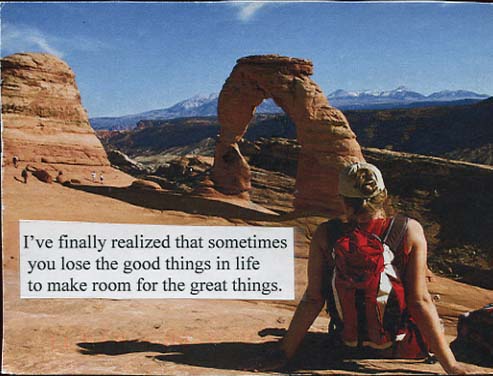
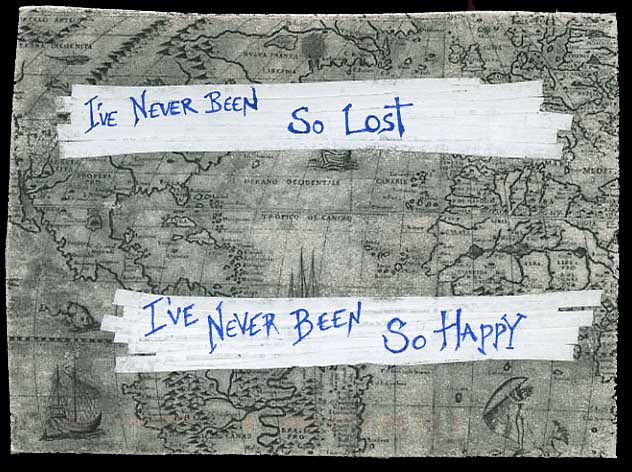
(Image courtesy postsecret)

Killing the sacred cows while doing data entry

Sorry for the lack of blog posts; I’ve been working 40 hours a week at this temp job, which doesn’t leave a lot of time for other things outside of writing.  I’m still plugging along at about 1k to 2k words per day, but a lot of other stuff is falling behind.  Fortunately, the job only lasts another two weeks, and that should earn me enough to take the next month off and focus on writing.  I’m really looking forward to that.

This job isn’t too bad; it’s tedious, but I can read blogs and listen to podcasts and music while I do it, so I’ve been catching up on a lot of business research.  Last week, I read all of Kris Rusch’s The Business Rusch Publishing blog series, and right now I’m working my way through Dean Wesley Smith’s Killing the Sacred Cows of Publishing.

Let me just say, this stuff is pure gold.  Every post (and a surprising number of the comments, especially those by Laura Resnick) have been extremely eye opening.  At the outset, almost everything Dean or Laura say about the industry seems absolutely blasphemous…but it all makes so much sense.

Like the post about how agents shouldn’t be giving authors any career advice… because they’ll usually advise you to write to the market, not to what you’re passionate about (and can therefore write well). Or how if you’re a midlister, it’s usually in the agent’s best interest to side with the editor, since they may have ten or more clients at stake in this house and you only represent a $3k annual revenue stream to them (or less).

The best piece of advice across the whole series so far comes from Dean:

Don’t listen to rules (myths) and do what works for you and if it doesn’t work, try something else, and when that stops working, try something else. Don’t do it my way or Larry Brooks way or Laura’s way or Harlan’s way. Steal parts from all of us and do it your way.

The thing I find most gratifying, however, is the fact that I figured out on my own that submitting to agents first probably isn’t the best way to break in. But man, there is so much awesome, paradigm-shifting stuff in these posts, it is amazing.  Pure gold.

In the meantime, Into the Nebulous Deep is going surprisingly well.  I should have it finished by mid-May, and though it will probably need some serious revision (unlike Dean, my creative mind gets more fired up in the revision process than the drafting process), the major story arc is coming along very nicely.

I wonder if that has to do with the fact that ITND will be my fifth completed novel.  My first one, Ashes of the Starry Sea, was mostly smooth to write, but it was also a practice novel and as such royally sucks.  Genesis Earth went through an EXTREMELY convoluted writing process, but it was good enough to get to the quarter-finalist stage of the 2011 ABNA contest (and in two days, I’ll find out if it made the semi finals…<fingers crossed>).  Bringing Stella Home was also pretty tough to write, as was Worlds Away from Home, though the revisions have been more straightforward so far.

So does this mean I’m starting to come into my stride as a novelist?  I hope so, because I want to start pushing myself.  After ITND, I want to revise WAFH in six weeks or less–and I’ll probably throw out 1/3 to 1/2 of the material and completely rewrite it.  After that, I want to do Sholpan in two or three weeks–but that shouldn’t be hard, because the material is mostly there already.  Whether Genesis Earth wins or loses the ABNA contest, I’ll want to write Edenfall–before August, if I can manage it.  And then, there’s always that post-apocalyptic blight project…

Anyhow, sorry for the rambling.  The point is, I want to take my writing to a new level this summer, and after this temp job is finished, I’ll be in a great position to do it.  In the meantime, I’ll merrily watch Dean kill the sacred cows while I fill out UPS shipping data for the next two weeks.

And now, here’s some candy for your ears:

Paradigm shifts and finding balance

Yesterday, I was going to write a post about how pathetic this past week was: I only wrote about 1.5k per day (while unemployed), and spent most of my time on the internet reading blogs.

However, after reading some more of Dean Wesley Smith’s blog series, Kililng the Sacred Cows of Publishing, I have to admit that this week wasn’t a total loss.  Because of what I’ve read this week, I’m starting to have a major paradigm shift about the publishing world, and that likely will have a huge impact on my writing career, hopefully for the better.

If I can sum up how my views have changed into one statement, it would be this: that in order to succeed in this business and avoid the common pitfalls, I need to learn how the entire publishing system works as a whole, so that I can game it to my advantage.  A lot of the hard and fast “rules” of the industry are actually myths that make for bad business, for writers as well as editors and agents.  But when you look at the system from a rational choice perspective, the flaws become obvious.

Take, for example, the “rule” that editors only accept unagented submissions.  What does that do for the industry?  It turns agents into the first tier of gatekeepers that new writers need to get past.  But agents don’t pay writers; they get a 15% commission off of the books they manage to sell (which, according to DWS, is excessive, but that’s another topic).  And they don’t get paid at all for reading slush.

So agents are spending more of their time doing things that pay less money, pressuring them to take less risks and work only with what they “know” will sell.  This leads them to ignore the fresh, unconventional voices that turn the tropes on their heads and have the power to take the market by storm.

Furthermore, because of their newly christened gatekeeper status, they make their writers rewrite their manuscripts until they read just like clones of Harry Potter or The Davinci Code.  And when the agents’ three or four closest buddies turn the book down, they come back to the writer and tell them to write something else.

It’s an extreme view, for sure, but it has a few good points.  The incentives are all in the wrong places, with too many opportunities for the gems to fall between the cracks.  And while the response from everyone in publishing is to cling to the myth and scream “the system works!” I have to wonder, does it really?

This comment from one of the threads struck me with particular force:

“The biggest mistake you can make is giving complete power over to someone who will never care as much as you do.”

Youch.  And yet, it makes so much sense.  How many writers’ careers have been ruined by doing just that?  Ceding too much power to people who simply don’t care as much as they do, all in the name of some “rule” of publishing?

Of course, that’s not to say that the publishing industry is full of cheats and sleazebags.  I’ve spent some time with professionals at World Fantasy and other conventions, and I’ve been very impressed with all of them.  It’s just to say that writing is a business, and that writers need to approach their careers in the same way as anyone who’s self-employed.  Certainly it’s important to work with other professionals, but that doesn’t mean handing over the fate of your business to them.

So anyways, what with all the business research I’ve been doing, I suppose the last week isn’t a total loss.  However, I definitely feel a need to get back into writing.  My deadline for WAFH is in two weeks, and the next 40k are going to require the biggest changes.  So here’s my plan for the next two weeks:

  • Get up at 7 am every day.
  • Write at least 2.5k words per day (500 during LTUE).
  • Fill out at least 5 job applications per day.
  • Take a week-long Halo fast.

Probably the single biggest thing killing my creativity right now is the angst that comes from money woes.  I redid my budget yesterday and realized I can get by this month without dipping too deeply into reserves, but still, that’s no substitute for a reliable source of income.  Trouble is, it’s hard to find motivation to apply for jobs when most employers don’t even respond to your application, but hopefully a concrete goal will make that easier.

As for Halo, as much as I love the game, I just don’t have time for it right now.  Personal writing deadlines are coming up, LTUE is just around the corner, and I’m falling too far behind to spend my time on video games.

I’m also going to make a concerted effort to get up earlier.  If I stay up past midnight, I’m usually just dicking around on the internet, whereas my mornings are almost always productive.  Plus, I hate sleeping in–hate it.  Gotta get up earlier.

So anyhow, that’s the plan.  Now, if you’ll excuse me, I’ve got some writing to do…

Thoughts on traditional vs. indie publishing

In case you didn’t know, the publishing industry is in the throes of a major revolution.  With the growing popularity of e-books and the collapse of distribution channels and chain bookstores such as Borders, traditional business models are proving simply untenable.

I’ve been perusing several internet sources to make sense of all the craziness, among them Joe Konrath’s blog (a midlister who is now making six figures via ebooks), Writer Beware (which still emphasizes caution with self-publishing), the Adventures in Sci Fi Publishing podcast (which has recently started interviewing several successful indie authors), Dean Wesley Smith’s blog, and his wife Kristine Rusch’s series on the changing business of publishing (which I highly recommend–seriously, if you read nothing else, read this).

Some of these people predict the imminent collapse of the big publishers, and have selected (ironically enough) 2012 as the predicted date of the collapse.  Others agree that many traditional publishers will collapse, but believe that most will survive and evolve into something different (the “dinosaurs evolved into birds” theory vs. the giant meteor).  All of them agree, however, that whatever new form the publishing industry takes, ebooks will dominate.

For someone in my position–a budding author looking to break in in the next few years–all of this is simultaneously thrilling and unnerving.  Should I venture into indie publishing and risk having my work lost in the flood?  Or should I spend the next five years toiling endlessly to break into traditional publishing, only to see my rights get tied up in a bankruptcy?

Thus far, my strategy has been to a reputable agent, or a new agent at a reputable agency.  I’ve been holding back from submitting directly to publishers, out of fear that getting rejected from publishers would make it difficult for an agent to do her job.

That was the orthodox model under the traditional system, when the big six (HBGUSA, HarperCollins, McMillan, Penguin, Random House, and Simon & Schuster) dominated the industry.  For the time being, they still dominate, but I’m wondering whether it’s such a good idea to go with them.

The big six have been swallowing up independent presses and imprints for years, and as a result, they’re now major corporations.  As such, they aren’t looking for moderate midlisters who sell consistently–those kinds of writers would drive them bankrupt.  No, in order to support their corporate expenses (like multimillion dollar office space and executive bonuses), they need bestsellers like Stephen King or J.K. Rowling.

Trouble is, they often lose when they gamble on new writers, which means that the next bestseller needs to be even more spectacular than the first.  And with the ebook revolution underway, they’re getting desperate.

Agent Kristin Nelson recently lambasted McMillan for claiming rights to all “derivative works” in their new boilerplate (a bad faith move comparable, IMO, with the worst scams on Writer Beware), while Kristine Rusch recently noted how the big publishers are becoming increasing hostile to new writers.  Advances as low as $1,500, or single book only contracts, or nebulous clauses that ensure publishers keep ebook rights for decades, even with the author barely making $20 per year on royalties?

How am I ever going to make it full time in a business like this?

Well, according to Joe Konrath, every day my books aren’t up as indie published ebooks, I’m losing big money.  His views are pretty extreme, but he makes a very compelling argument, especially for someone in my position.  Yes, there will be a flood of crap, but good stuff inevitably rises to the top.  Yes, sales start out slow, but that’s simply part of the new model–and they build over time.  For a minimal investment of time and money, I could launch my books and start earning an income from them now.

But money (such as I may or may not make as an indie) isn’t everything in this business.  At this point in my career, gaining prestige and making a name for myself is just as much if not more important than income.  Granted, I can build some prestige through indie publishing if my books sell enough, but I don’t want to have to depend on that, especially if it takes years for sales to build.

For the science fiction and fantasy genres, the professional standard is set by SFWA, or the Science Fiction & Fantasy Writers of America.  In order to become a member, you have to have your work published in one of their approved markets.

Last night, I did some research on those publishers.  Of those that specialize specifically in science fiction and fantasy, seven of them are affiliated with the big six (Tor, Ace, Baen, Bantam Spectra, Roc, Del Ray, and Orbit).  Thirteen others are independent presses that might conceivably be interested in my work.

Now, just because a science fiction and fantasy imprint is affiliated with the big six doesn’t mean it’s a bad idea to submit to them.  Tor, after all, is the undisputed king of the genre–the company has won the Hugo for “best publisher” every year since 1988.  I also tend to think (though I have no data to support it) that the bad contracts are more common with mainstream fiction.  Science fiction, after all, has always been small potatoes to the rest of the publishing world.

But precisely because science fiction is so small, I’m starting to wonder if it’s a bad idea to submit to agents first.  Agents go where the money is–in LDS publishing, virtually every author is unagented.  While there’s still a national market for science fiction, it’s definitely a small one, and all the agents I’ve found always tend to list it as an afterthought, focusing instead on YA/MG, thrillers, romance, or the ubiquitous “commercial fiction.”

In other words, I think that part of the reason agents have been so reluctant to pick me up, even after showing some interest, is that they just don’t see enough money to justify taking a risk on me.  Granted, it may also be the quality of my work, but the bulk of the rejections I’ve accrued seem to point more to subjective factors, like the agent’s personal tastes (the ubiquitous “I don’t feel I’m the right agent for this work”).
Which is not to say that I don’t think it’s a good idea to get agent–not at all.  Even Amanda Hocking, who has turned down several big publishing deals, has an agent.

No, what I’m saying is that in today’s market, it might be easier for a science fiction writer to attract an agent by getting picked up by a publisher, rather than attract a publisher by getting picked up by an agent.

And, of course, the only big reason to do any of this is to make a name for myself.  At some point, I will go indie, even if only with a few of my works.  The revolution has arrived, and I’d be a fool not to capitalize on it–the only question is when, and how.

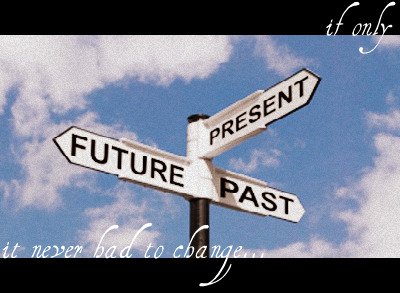
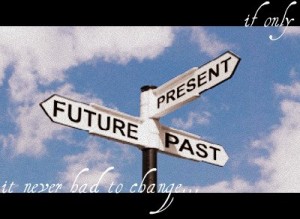
(images from Postsecret)
Got a bite!

Just yesterday, I got a response to a query for Genesis Earth that I emailed to an agent at Nelson Literary Agency, LLC.  Apparently, my query piqued their interest and they wanted to see the first 30 pages of my manuscript!

It’s not a huge development, of course–they haven’t requested the full, just a partial–but it’s comforting to know that my query letter is decent.  Enough, at least, to lead to the next step, and that’s all that matters.

Writing query letters is hard. There are so many ways to screw them up.  I queried another agent over the weekend with a similar (but different) letter, and I got a standard rejection…within the hour.  Ouch.  I was kind of worried something was wrong with the pitch, but with the other agency’s response, I’m not quite so worried.

Submitting is something that I have to get better at doing.  I’ve started putting together a personal database of agents and editors, but still, it takes guts to put your stuff out there.  I still get chills whenever I slip that envelope into the mail slot, or hit send on the computer.  It’s hard to say exactly what that thrill is–fear of rejection?  Fear of failure?  I think it’s more complex than that, but I’m not sure exactly what it is, or how to put it.  I’ll let you know when/if I figure it out.

I read an interesting post on agent Nathan Bransford’s blog about sending out queries.  He suggested the best strategy is to submit in little spurts, rather than all at once–that way, if you only get form rejections, you can figure out what’s wrong and fix it while still having places to send it.

That sounds like a good strategy, but to really make it work, I should probably set a goal to send out a certain number of queries a month.  Not sure how many that is, but since my main goal is to have a publishing deal by 2015 (and making a full-time living at this by 2020), it should probably not be a small number.  Maybe eight or ten.

I don’t know.  I’ll figure it out.  In the meantime…here’s to hoping!

Trading old hangups for new ones

So I started my internship with the Washington Institute for Near East Policy last week, and it’s been quite interesting.  Trying to figure out the new routine while starting a new novel has been quite challenging, but somehow, I’ve written at least something every day (except Sunday–I try not to write Sundays now).

I can tell, though, that it’s going to be just as difficult to juggle writing and work as it’s been to juggle writing and school.  There is NO room for procrastination–when I succumb to other things on my to do list instead of forcing myself to pound out the next scene, the day goes by and nothing gets written.

There is one thing I’ve been putting off for almost a month, though, and that’s the query letter for Genesis Earth. I recently received a very encouraging rejection letter from Eddie Schneider, where he basically said “this is good, but I’m not the right agent for it because it doesn’t excite me enough.”

I’ve written the book, polished it, made the writing solid–now, all I have to do is find an agent who’s passionate enough about it to take the project on.  That’s the last hurdle–most of the difficult work is already finished!  All I have to do is write a solid query letter and send it to the dozen or so agents I’ve researched…but yeah, I’ve been putting it off.  Query letters are…difficult.

For that reason, I’ve decided to set a new goal: submit Genesis Earth to at least 12 agents/editors by February 1st.

The only way that’s ever going to happen is if I write a query letter in the near future–as in, sometime this weekend.  When I do, I’ll post it up here and ask what you think.  Queries are very tricky–they are extremely different from novels, and otherwise good writers often botch them up.  We’ll see how this one goes.

So look out for an “I need your help!” post here in the near future!  Thanks!