Projects, projects everywhere …

… and not a clue where to start.

Seriously, I feel like that guy in the Russian proverb who’s chasing two rabbits.  Except, in my case, it’s more like a dozen.  Here’s what I currently have to choose from:

Stars of Blood and Glory — This one is in publishing mode, and should be out in a week or two.  I’ve gone through all the line/copy edits from my editor, finalized the book teaser–all that’s left is the formatting and cover art.  The preliminary sketches look really good, so it shouldn’t be too much longer before it’s ready to go.  Of course, it’s more of a publishing thing than a writing thing, but still important.

Lifewalker — This is a rough draft that’s only about 15% to 20% finished.  It’s in a totally different genre than I’m used to writing (post-apocalyptic / weird western), but so far it seems to be coming along fairly well.  I hit a block a couple of weeks ago and put it on the back burner for a while, but I may be ready to pick it up again.

Star Wanderers: Benefactor — This is another rough draft, about 35% to 40% finished.  It’s a parallel novella to Star Wanderers: Fidelity, except from Jakob’s point of view.  Right now, I’m in the phase where everything sucks and I don’t know where to go with it.  It’ll probably turn out just fine, but I may have to put it on hold for a while.  However, if I could just push through and finish the damn thing, that would be preferable.  It’s only another 15,000 words …

Star Wanderers: Dreamweaver — This is a first draft that I need to revise.  Last night, I looked over it for the first time in eight months.  Opening the file was like pulling out an unopened bottle of wine that’s been sitting for years in the back corner of the wine cellar.  So far, it seems pretty good, but I’m going to wait until I hear back from one of my first readers before doing any serious revisions.  After that, maybe run the first chapter through Kindal’s writing group, and if everything seems good, I’ll probably publish it sometime in April/May.

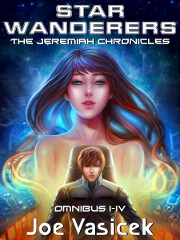
Star Wanderers: The Jeremiah Chronicles — This is purely a publishing project.  Basically, I want to bundle the first four Star Wanderers stories and release them as an omnibus.  To do this right, though, I’d have to commission some cover art, which takes time and money.  Since it’s not a writing project, and I already have enough publishing projects on my plate, I’ll probably put this one off until Dreamweaver is out.

Mercenary Savior — Long term followers of this blog might recognize this as the old title for the novel that became Bringing Stella Home.  Well, I plan to recycle that title, as well as the original prologue, in a prequel novel that basically tells the origin story of Danica Nova and her band of mercenaries.  So far, I’ve got the prologue and the beginnings of the first chapter.  Haven’t looked at it in a few months, but if I get stuck on these other projects, I just might pick it up again.

Heart of the Nebula — A second or third draft that needs a deep revision.  This is probably going to consume all my writing time for six to eight weeks, and I’d rather do it all at once rather than in chunks.  It’s been on the back burner long enough that I can probably pick it up again, but I want to finish a rough draft first.

The Sword Keeper — I’ve still got this one on the current projects bar, but it’s been a while since I’ve worked on it, so it’s pretty much on the back burner.  I think it’s at about the 40% mark, though honestly I have no idea.  It’s an epic fantasy novel, a bit outside my usual scope, and it’s turning into a beast of a book.  The story is pretty solid, though, so I’ll probably finish it before the end of the year–that is, unless the muse drops an anvil on me (which has definitely happened before).

Empress of the Free Stars — An unwritten novel that’s been kicking around in my head ever since I finished Stars of Blood and Glory.  Basically, it’s a direct sequel from Hikaru’s point of view … except that I can’t really discuss it without giving away spoilers (TO A BOOK THAT ISN’T EVEN OUT YET).  In any case, the prologue has been beating on me to get written, and I finally caved and started it last night.  I’ve got a pretty good idea for what’s supposed to happen in this novel, but there’s still a whole lot of room for the story to surprise me.

Edenfall — Ah, Edenfall … this is probably my most neglected story.  I started it a little over a year ago, but hit a block, and then Star Wanderers happened.  I’ll pick it up eventually, but to really do it justice, I feel like I need to go backpacking in the wilderness for a week or two.  The weather isn’t good for that right now, so it will probably have to wait until spring.  Or maybe I’m just making things too complicated.  We’ll see.

Star Wanderers; Wanderlust — A Star Wanderers story from Samson’s point of view.  This one is going to be tricky, but I’ve actually got the whole thing plotted out already.  However, I don’t want to write it just yet, because there’s still a bunch of other Star Wanderers stories that need to come first.  Or maybe I will write it, and let it sit for a while until I write the others.  Maybe it’s better to finish it first and let it sit for a while, just to be safe …

Those are pretty much all the projects with titles that are floating around in my head right now.  There are a few others, like parts VII and VIII of Star Wanderers (from Mariya and Lucca’s points of view, respectively), but those aren’t quite ready to start.  With all of these, I’ve at least got some words on the page.

So now that I’m in that frustrating space between projects, I think I’m going to take a week or two to just let my creative mind do whatever the heck it wants.  Hopefully, I’ll get excited enough about one of them to see it all the way through.  I’m not going to stress about word counts so much as putting time in at my chair, doing something.

Man, I wish my creative side weren’t so scatterbrained.  Though as long as I’m still finishing stuff, I guess it’s all right.

And now that I’ve procrastinated long enough by writing this blog post, it’s time to go hang out with my friends and procrastinate some more.  Later!

Trope Tuesday: Mexican Standoff

rsz_standoff_9776In a typical standoff, such as a hostage situation, two characters face off without immediately shooting at each other.  One or both of them may be using a human shield, or be reluctant to shoot first for fear that the other will take them with him.  A Mexican standoff, however, takes that up to a whole new level.

Perhaps the best explanation is the one from Wikipedia:

A Mexican standoff is most precisely a confrontation among three opponents. The tactics for such a confrontation are substantially different than for a duel, where the first to shoot has the advantage. In a confrontation among three mutually hostile participants, the first to shoot is at a tactical disadvantage. If opponent A shoots opponent B, then while so occupied, opponent C can shoot A, thus winning the conflict. Since it is the second opponent to shoot that has the advantage, no one wants to go first.

Basically, it’s Mutually Assured Destruction (MAD) on the level of individuals rather than nations.  The classic example is the finale from The Good, the Bad, and the Ugly.  Clint Eastwood’s character rigged it, though, so the outcome was never really in dispute.  Elsewhere, things rarely end so cleanly.

If the Cavalry doesn’t show up to save the day, these situations tend to lead to a messy free for all.  Heck, that may happen even if someone from the outside comes to save the hero.

If the resulting fight has a little more thought and strategy to it, though, you’ll get a Mêlée à Trois.  This happens in The Hobbit with the Battle of Five Armies, and in Downbelow Station with the stationers, merchanters, and Captain Mallory.  It also tends to happen a lot in A Song of Ice and Fire, with the various factions in that world.  Heck, it happened in real life during the Lebanese civil war, and is probably happening right now between the Christians, Sunnis, Shia, and Alawites of Syria.

When the fight has room for a little more scheming, you’ll often see things like a gambit pileup or a kingmaker scenario.  This is where things get really tricky, and the intrigue becomes positively delicious.  It isn’t enough just to have two parties duking it out–you’ve got to have lots of characters and factions, each with their own agenda.  That way, even the weakest party can win if they can convince everyone else to fight each other.

All of that happens after the Mexican standoff, though.  The standoff itself is the moment of tension and uncertainty before the crap hits the fan.  When done well, it’s an awesome moment of tension that can really boost the suspense.  When done poorly (or just for laughs), it’s over-the-top crazy, like Duke Nukem meets Scooby Doo.

I haven’t played around with this trope too much yet.  Stars of Blood and Glory has a little more intrigue than some of my other works, but I can’t think of a specific Mexican standoff moment in the book.  The situation near the end of Desert Stars is kind of like this, but with relationships and marriage alliances rather than guns.  I’m sure that’s a different trope, but I’m not sure which one.

Yet another reason to keep trawling tvtropes…

Why I am not afraid of the Noise part III

These days, it seems as if everyone is terrified by the fact that anyone can publish a book.  Indies, self-published writers, authors with traditional book contracts–it doesn’t matter.  Everyone is mortified by the sheer volume of crap books coming out nowadays, as if Sturgeon’s Law is a new thing.  The assumption is that all this noise is making it harder to get noticed–that readers have to slog through all the crap to find the good stuff.

I’ve blogged about this twice before, here and here.  My views haven’t changed–I still think that the flood of crap ebooks is nothing for writers or readers to fear.  However, I’ve found a new way to think about it.

Message in a Bottle Washed AshoreIt’s been almost two years since I tested the waters of self/indie publishing.  Since then, I’ve learned that an ebook is like a message in a bottle, floating in the midst of a stormy sea.  Readers make up the ocean, and the vicissitudes of the market are the storms that rage across it.

A good book will tend to float, whereas a bad book will tend to sink.  Gimmicks like Select freebies and other promotional activities may pull the bottle back up to the surface, but they won’t make it float.  And maybe, if a bottle sinks to the bottom of the ocean, someone will come trawling for sunken treasure and haul it up, but more likely than not it will just stay there.

Most readers don’t go to the bottom of the ocean to find their books.  They go to the beaches, where the bottles eventually wash up. These represent communities like book clubs or Goodreads, or just groups of friends who like to talk about books.  When a bottle does wash up on a beach, that represents a book coming into its natural audience.  It might take years, but if the book is good enough to float, eventually it will wash up somewhere.

As long as the bottle floats, it doesn’t matter how deep the ocean is beneath it.  Similarly, as long as a book is selling a handful of copies a month, it doesn’t matter that there are ten million bazillion crap ebooks on Amazon, or Smashwords, or Kobo, or wherever.  Those books are all at the bottom of the ocean, where the waters are calm and cold.

When I was a kid, I was terrified of deep water.  Then I had a swimming instructor who told me that it didn’t matter how deep the water was–so long as I could swim, the ocean could be a mile deep and it wouldn’t matter.  Since then, I’ve swum in some pretty deep waters, and I can say with complete confidence that my swimming instructor was right.

Discoverability and visibility are challenges for authors everywhere, but the problem is not the flood of crap that everyone always worries about.  It doesn’t matter how deep the ocean is, or how many ebooks are being published.  Instead, the problem is making sure that your writing is good enough to float.  If it is, then with enough courage and perseverance, you’re going to make it.

Right now, I feel like most of my books are floating on the face of that stormy ocean.  A couple of them have sunk, mostly the short stories.  I’m not much of a short story writer, though, so that makes sense–I still have a lot to learn in that area.  But the novels and novellas are all selling, with no promotion other than the first title in the series set to perma-free.  That tells me that they aren’t crap.  So long as I can keep telling good stories, I’m confident that my books will find their audience.  When and where they’ll wash up, I have no idea, but one thing is certain: all the crap at the bottom of the ebook ocean isn’t going to keep me from making it.

Image taken from this site here, which I recommend checking out.  Interesting stories!

Trope Tuesday? Oh yeah, about that…

I’ve been so hard at work on the edits and book teaser for Stars of Blood and Glory that I completely forgot about Trope Tuesday.  In addition, I’m working a two week job that runs 8 to 5, with a half hour lunch break.  Sorry for those of you who enjoy this feature, but it looks like Trope Tuesday will be on hold for a week or two.

I haven’t forgotten about it, though.  If there’s any particular trope you’d like me to cover, I’m open to requests.  Just mention them in the comments below.

In the meantime, here’s a good example of the cannon fodder trope.  After watching this video, no explanation should be necessary.

Take care!

Book teasers are HARD…

…but I think I’m on to something with this one.  What do you think?

THE ONLY HOPE FOR THE LAST FREE STARS NOW LIES ON THE PATH OF BLOOD AND GLORY.

The princess of Shinihon could not have picked a worse time to run away. The galaxy is at war, and the massive Hameji battle fleets threaten to overrun the last of the free stars. Only the boy emperor Katsuichi dares to stand against them, but with his sister gone missing, the burden of command may be too much for him to bear.

The job falls on Captain Danica Nova and her band of mercenaries to bring the princess safely home. Among them, Master Sergeant Roman is one of the few still old enough to remember the homeworld. But he’s an old cyborg, and his humanity is fading. Death is a mercy he doesn’t expect to find on this mission.

They aren’t the only ones after the princess, however. Sholpan’s son Abaqa is eager to win honor and glory by making the girl his slave. Though only a boy, he’ll stop at nothing to prove himself to his Hameji brethren.

With the Federation in disarray, the bloody end of the war may come too soon for some of them. But one thing is certain—not all of them will live to see it.

This is, of course, for my upcoming novel Stars of Blood and Glory.  I just got back the first round of edits from my editor, and it looks pretty good.  There’s just one scene we agree needs some extra work, and that shouldn’t take longer than a week.  The cover art might take a little longer, but if the book’s not published this month it definitely will be in the next.

But first, I’ve got to really nail the teaser.  So what do you guys think?

Thoughts on ebook parts and a sneak peek of STAR WANDERERS: DREAMWEAVER (aka Star Home)

There’s been some discussion on forums and the blogosphere recently about the different parts that should make up an ebook, and what order they should be in.  J.A. Konrath just did an interesting blog post on the subject, in which he picks his own books apart and gives some advice.  At the moment, here is how I’ve structured mine:

  1. Cover image (600×800).  Usually the same as the high res one I upload separately to publish, but may be different.
  2. Copyright page.  Very brief.
  3. Table of Contents, with hyperlinks to each chapter.
  4. The book blurb, which also appears in the book description on most retail sites.
  5. The book itself.  When you open up the ebook for the first time, this is where it automatically starts.
  6. A brief author’s note, in which I tell the story behind the story–how I came up with the idea, what the writing process was like, and any other relevant influences worth mentioning.
  7. The acknowledgment page, in which I list my first readers and anyone else who helped out with the book production.
  8. A couple of sample chapters for other books.  I only put these into the novels, though–for the novellas, they would take up more than 10% of the total ebook content.  That’s pushing it.
  9. A page promoting the Writer2ePub plugin which I use to build my ebooks.  It’s a really awesome plugin, and I figure the developer deserves some acknowledgment for his work.

I don’t totally agree with all of Konrath’s advice.  For example, I think the copyright page is small enough that it can go in the front without inflating the sample too much.  Then again, I keep the copyright page pretty brief–none of these ridiculous “unauthorized reproduction of this content is piracy and piracy is evil blah blah blah.” Not that I want to be pirated, but I figure my readers are smart enough to know all that stuff already.

In general, though, I think Konrath’s advice is mostly right, especially the part about not padding the end of the book with sample chapters.  I’ve seen a lot of readers complain about getting to the 90% mark of an ebook, only to find that the story is over and the rest of the content is filler.  As a reader, I’ve experienced that disappointment myself.

However, I do think it’s important to include at least some sort of mention of other available books in the back matter.  Until now, that’s meant sample chapters, as long as they take up less than 5% or so of the total content.  Since my Star Wanderers novellas are so short, I haven’t added any sample chapters to them–just a brief plug to sign up for the email list.  And for my novels, I only add a prologue or first chapter, so as not to take up too much space.

Recently, though, I’ve started to rethink this strategy.  When I finish a book, I’m not usually in the mood to read a sample chapter of the next one unless it’s a direct sequel that picks up right where the end of the book leaves off.  I will eagerly browse through book blurbs, though, especially if they’re in the same series or genre.  A good book blurb is much more likely to influence my decision on what to read next than a sample chapter, which I usually just skip over.

For that reason, I’ve decided to take out the sample chapters in my novels over the next few weeks, and replace them with a much shorter page containing a thumbnail cover image and book description for the next book.  I’ll still keep the author’s notes, since I enjoy writing them and I think they’re a good way to engage my readers.  It’s one of those things that makes it a Vasicek book.  But yeah, the sample chapters are gonna go.

This also opens up the possibility of trading book blurbs with other writers.  For example, my friend Kindal Debenham writes space opera stories in the same vein as my Gaia Nova series.  He shows up in my Also Boughts every now and again, so I know there’s a bit of a crossover in our readership.  I haven’t approached him with this idea yet, but if we both included short book blurbs for each other in the back matter of each of our books, we could cross-pollinate our fan base and point readers out to some books they’d be likely to enjoy.

That’s just a thought.  It will be interesting to run with it.

As for the sneak peek I promised in the title of this post, I’ve been playing around in Gimp the last couple of days, working on the cover art for the next Star Wanderers novella while waiting for my editor and illustrator to get back to me on Stars of Blood and Glory.  Here’s what I came up with:

SW-V Dreamweaver (cover)

What do you guys think?  That’s a pretty cool nebula, isn’t it? Hubble is so friggin awesome. 🙂 I took this from a new image of NGC 5189 that was featured on APOD a few months back.  The moment I saw it, I knew I’d be using it in a Star Wanderers cover. 😀

Dreamweaver is a parallel novella to Outworlder, and covers the events of that story from Noemi’s point of view.  I wrote it back in the spring of 2012, and put it on the back burner while I focused on finishing the other ones in the series.  In the author’s note of Fidelity, I think I referred to it as “Star Home,” which was originally its working title.  I was going to do all the other parallel novellas from Noemi’s point of view, but I’ve since decided to branch out with the other characters.  Right now, I’m writing a novella from Jakob’s point of view, which is turning out to be quite interesting.

After Stars of Blood and Glory is published, I plan to put up Star Wanderers: Dreamweaver, hopefully within a month or two.  After that, I’d like to bundle parts I-IV into an omnibus and put that up as The Jeremiah Chronicles, in ebook as well as print-on-demand.  A lot of that depends on cash flow, though, since I plan to hire an illustrator and go all out.  If any of you have any suggestions for a good artist / cover designer, please let me know!  The Star Wanderers books take place in the same universe as the Gaia Nova series, but they have their own distinctive feel and I’d like to find someone whose art reflects that.

That’s just about all for now.  It’s getting late, and I plan to wake up early to write.  President’s day is kind of a useless holiday–in fact, most one-day holidays are kind of useless when you’re a freelancer.  So yeah.  Later!

LTUE 2013

Man, LTUE 2013 was this weekend, and it was AWESOME.  One of the best conventions I’ve ever attended.  I spoke on my first panel, attended my first book signing event as an author, and got to meet up with some old friends, as well as some amazing new people.

Since I live tweeted most of the panels I attended, I thought it might be interesting to repost a few of those here, with some additional thoughts.  So…here goes!

THURSDAY

I believe this was Scott Parkin from the “What Do You Write?” panel. Good advice. Megan Whalen Turner also had some very interesting things to say on the subject of genre, which I have since forgotten. But I recorded it, and the recording will eventually be made publicly available in the LTUE conference archives, or so I’ve been told.

This one was from the “What Is ‘Punk’ Literature and Its Many Genres?” panel. David Butler and Larry Correia were HILARIOUS. Nearly got into a wrestling match right in front of us.

And when the esteemed Mr. Butler began to describe his book, I swear, a choir of steampunk angel Moronis somewhere began to sing a heavenly chorus. I mean, he had me with Edgar Allen Poe faking his death to become a secret agent, but Orson Pratt’s phlogiston guns? Eliza R. Snow as chief counterintelligence officer for the Kingdom of Deseret? I will definitely be checking out this book, City of the Saints (which is apparently a finalist for the 2013 Whitney Award).

David Butler is also a way cool guy. I hung out with him a bit in the dealer’s room, chatting about Mormon history, Lyman Wight (“shoot and be damned!”), Sir Richard Francis Burton’s expedition to Salt Lake City, and all sorts of other crazy zany stuff. And the whole time, he was playing a guitar. So yeah, definitely a way cool guy.

This discovery CHANGED MY LIFE. Also, it helped me to save immensely on lunch money, as well as join in on some way cool conversations with other panelists as they desperately tried to escape their fans. Okay, not really, but the green room was AWESOME.

Howard Taylor’s presentation on teasers was tremendously insightful. In a nutshell, he said that a teaser (aka book description on Amazon / back cover) should have or at least point to the following things:

  1. The inciting incident
  2. Character action
  3. Conflict
  4. Hook

We then went over a few examples, including some good ones that broke these rules, and finished up by doctoring a couple of teasers volunteered from the audience. Howard Taylor admitted to me later that he wasn’t entirely satisfied with the way he presented it, but I get the impression that he’s never entirely satisfied with anything less than perfection. It was a great workshop.

From “Engaging the Reader.” Great panel. Lisa Mangum described the planning / drafting / revising process for each of her first three novels, and they were all wildly different. With seven novels under my belt so far, I can definitely relate. Some, like Genesis Earth and Stars of Blood and Glory, practically write themselves. Others are like having a c-section with a hacksaw. And others…yeah, I’m not going to go there.

FRIDAY

Okay, maybe I said one useful thing: when there’s a language barrier, little things become big obstacles. One of the other panelists, Anna Del C. Dye, also had a bunch of stories about adapting to a foreign language and culture (in her case, the United States).

Overall, the panel was really, really fun! I also had some cards out for Star Wanderers: Outworlder, and a bunch of people came up afterward to get them. Guess I must have said something interesting. I hope you guys enjoy the book!


From “Current Trends in SF.” Great panel–it totally wasn’t just another over-hyped discussion about what’s hot right now. I asked how the panelists think the trend cycle will change in the age of self-published ebooks, and they had some very interesting things to say. They all agreed that speed to market, while it may give some advantages, isn’t a make-or-break game changer, or even really a good strategy (unless you really love the trend you’re writing to). Some things change, others remain the same. It will be interesting to give this one a re-listen.


From “Creators in the Community.” Probably one of the best panels of the entire convention. Tracy Hickman is really on top of the changes in the publishing world, and had a lot of interesting things to say about it in all of his panels. As for the subject of writerly communities, much wisdom and insight was shared by all of the panelists. Definitely look for this one.

Man, I’d forgotten how cool the guys at Dungeon Crawlers Radio are! They interviewed me back in 2011, when I was just getting ready to publish Genesis Earth. This time, we talked about space opera, sci-fi romance, language barriers in marriage and all the crazy things I have to look forward to, and a bunch of other stuff. I also shared some of my thoughts and opinions on self-publishing myths, especially regarding the “tsunami of crap.” We coined a new word, “nerdaissance,” to describe all the awesome new stuff that’s coming out now, thanks to the ease of self-publishing.

So yeah, it was a great interview! I’ll definitely be cross-linking once it goes live.

From “Effective Book Covers.” Great panel with some very good artists and cover designers, including Isaac Stewart who does all the maps for Brandon Sanderson. Although some parts were geared toward illustrators, most of the advice was for writers (especially self-pubbing writers) who are looking to design their own covers. Lots of great and insightful perspectives from the visual arts side of things.

FRIDAY NIGHT BOOK SIGNING

Okay, I’ve got to be honest: when I went into the mass signing with my cardboard box of CreateSpace POD novels, I didn’t expect to sell anything. I figured that was just my ticket to get a seat at a table and hand out cards for Star Wanderers: Outworlder to some of the casual book browsers.

Well, I was pleasantly surprised! An uncle of one of my old mission companions was impressed enough to buy a couple of copies. I think he’s one of these guys who likes to buy things from new authors to help encourage them. It’s great to see people like that. He told me to keep writing, and I told him I definitely would!

Lots of people snagged the card for Outworlder, and I came up with a pretty decent pitch: “it’s about a starship pilot who accidentally marries a girl who doesn’t speak his language.” That raised a lot of eyebrows! A lot of people were really happy to see a science fiction story, especially a space adventure. I get the impression that there’s a craving for this kind of stuff in the market that isn’t currently being satisfied. So yeah, that was very encouraging!

After things wound down a bit, I wandered around the signing checking out some of the other books. Saw a couple that I recognized from the Kindle Boards, which was interesting. Chatted with them, as well as a bunch of geeky guys about chain mail, Halo, Frank Herbert, and all sorts of awesome stuff. Man, the best part about sci-fi/fantasy conventions is the chance to just talk with people! So much interesting stuff. It was great.

SATURDAY


From “Write For the Market or Write What You Know?” Another great panel. Definitely will be re-listening to that one.

From the main address with Megan Whalen Turner. She talked about book censorship and the need to teach children how to make their own reading choices, rather than keeping them sheltered and making the choice for them. She pointed out how every time a New York Times article comes out bemoaning some YA book for inappropriate content, it’s kind of hypocritical because there are so many other books they miss. The Golden Compass, for example, didn’t even pop up on their radar until the movie came out. Kids don’t magically become mature, well-adjusted adults when they turn 18–we have to teach them to make these choices (and mistakes) for themselves.

From “How Does Your Story Mean?” Great discussion on the writing process. Saw a lot of other good live-tweets during this one.

Okay, I take back what I said about the best panel of the convention. THIS was definitely the best. “The Engines of Exploration,” with Howard Taylor, Megan Whalen Turner, Roger White, James Owen, Kevin Evans, and Charles Stanford–the panel was packed. It basically turned into a round-robin discussion of which commodities are most essential to modern civilization, which ones will be the most valuable in the event of a societal collapse, and which ones will take us to the stars. The eventual consensus on each of these eventually came down to goats. Seriously. GOATS!


From “Writing Romance Without Erotica.” Lots of delicious awkwardness, as well as some really interesting thoughts and perspectives on the subject of romance. One of the panelists talked about the importance of “character penetration” without realizing about halfway through the panel how hilarious that phrase sounded in this context. But yeah, there was also a lot of wisdom in there as well. There are a lot of strong opinions about sex and romance floating around in this part of the world, so it was a very spirited and interesting panel.


The last panel of the convention (technically, symposium, but whatever) was “eBook Publishing” with some highly successful indies like Michaelbrent Collings. As you can tell from the tweets, it was a bit controversial, but very, very interesting. Questions were flying all over the place, on subjects ranging from formatting to building an audience. The biggest shock to me was that none of the panelists (none of them!) are on Smashwords. It’s a wild, wild west out here in indie-land. Makes me wonder, maybe I should publish to iTunes through another venue? Hmmmm…

So yeah, that was pretty much the whole convention/symposium. I finished it out by playing Alhambra with a bunch of friends from Kindal Debenham’s writing group who came down from Seattle and Idaho. Good, good times–it was actually kind of sad to say goodbye. Definitely worth coming 11 time zones to attend.

All I can say is that I am STOKED for Conduit!

Trope Tuesday: Planetville (aka Adventure Planets)

swmapsmall

Adventure townsIN SPAAACE!!!

Seriously, that’s the best way to describe it.  In Westerns and TV serials, the heroes travel from town to town, with a new adventure in each place.  Well, in science fiction, we don’t hop towns, we hop planets.  Why?  Because we can.

Unfortunately, since planets and towns are actually pretty different kinds of places, there’s a lot of room to do things poorly and turn this trope into a cliche.  Any story that doesn’t consider (or at least lampshade) the implications of space travel and planetary colonization is in danger of becoming over-the-top campy–although, to be fair, there is an audience for that.

That doesn’t mean there isn’t room for this trope in fiction that takes itself a little more seriously.  In fact, I take issue with some of the descriptions on the Planetville page.  From tvtropes:

Unfortunately, because Sci-Fi Writers Have No Sense of Scale, stories about Planetville make no sense. Nobody seems to realize how BIG a planet is — everything in Planetville takes the same amount of time as stories set in towns or countries. In the updated Wild West story, the outlaws are “exiled from the planet” just like they’d be exiled from Dodge City, and have to quietly leave… instead of flat out challenging the authorities to find them when they have an entire planet in which to hide. When the space Nazis invade, they seem to need the same number of soldiers and time as the Earth Nazis needed to invade Europe. And when the crew of the Cool Starship finds the cure for the alien plague, the logistical issues of distributing it to an entire planet rarely get mentioned at all. These considerations are minimized or left out entirely in many stories.

To address these criticisms point by point:

1) Scale is relative to technology and the predominant modes of transportation.  When my ancestors crossed the plains to settle in modern-day Utah, they had to walk.  It took them months to get here and many of their family members died along the way.  Today, I can make the same trip by car in a day or two.  As technology changes, so does the sense of scale.

2) Unlike what some tropes would have you believe, not all planets are Earth-like.  In fact, it appears that most planets outside our solar system are wildly different.  In practical story terms, this means that any part of the world that’s remotely habitable is probably going to be immediately around the colony. Consequently, the local authorities probably will have the power to exile trouble makers from an entire planet, since exile from the colony would mean de facto exile from the planet as well.

3) Anyone venturing outside of the dome would have to carry just about everything necessary for life, including air, water, food, etc.  You might as well try to hide in Antarctica as hide on an alien planet.  It can be done, of course, but to do all that and stay hidden, that’s going to be tough.  You might as well set up a rival colony for all the effort–but at that point, the story is about a lot more than just hiding from the authorities.

4) If your planetary colonies are only as populous as an average WWII era city/town, then yeah, you’ll only need as many soldiers as it took to conquer them.  The biggest difference is that they’ll fly a really cool starship.

5) Again, if the planet isn’t habitable and the population is contained within a handful of relatively small colonies, then distribution shouldn’t be too much of a problem.

However, the tvtropes page does make this valid point:

A side effect of this is that the characters never realize that things can happen in parts of planets. You will never see aliens trying to capture a planet’s equator, or its polar caps — it’s the whole planet or bust.

In the end, I think the key to doing this trope well is to know your setting well enough to fit the story to it.  Tropes are tools, and when done well, this trope can accomplish everything it sets out to do while making perfect sense within the context of the story.

In my own work, this trope is most prevalent in the Star Wanderers series.  Every novella takes place at a different planet or space station, sometimes multiple planets per station.  Because most of the stars in this universe have only recently been settled, the colonies are small and terraforming is quite limited.  In Desert Stars, I used a similar concept, except with large domed areas of a single planet, instead of multiple planets (Adventure townsUNDER THE DOME!!!).  In cases where the planets are Earth-like, however, or where travel between planets is costly and difficult, this trope doesn’t really ever come into play.

Productivity? Yeah, about that…

So, for the past week, I’ve kind of been between projects.  I finished the revisions for Stars of Blood and Glory last Saturday, after a week or two of light revisions, but since then it’s been a bit of a struggle. I’m still working on Star Wanderers: Benefactor, and progress on Lifewalker had been coming along, but haven’t managed to really immerse myself in either those stories yet.  As a result, I don’t really have much to show for this past week, other than a scene or two in Benefactor and a new first chapter for Lifewalker.

One of the problems, I think, is that I haven’t really been able to turn off my internal editor.  Even with my blog posts, I’m constantly going back and rewriting the previous sentence.  This sucks, because it slows down the writing, makes the process tedious and painful, and doesn’t necessarily improve the quality of my writing either (at least, not beyond a certain degree).

What I really need to do is run with a project until I hit my stride, and then do all I can just to keep a steady pace.  So that’s what I’m going to do with Lifewalker this next week: force myself to write without really caring too much about whether the stuff on the page is pretty good.  Because usually, when I don’t angst about it too much, it actually turns out pretty well.  Sure, I might write myself into a hole I can’t get out of (at least, not without breaking the story), but if that’s the case I can always toss out a couple of chapters and redo things.

So far, Lifewalker has surprised me quite a bit.  I have a general direction I want the story to go, and a vague idea of where the main character is going to go up, but when it comes to a particular scene, things will pop up out of nowhere that takes the story in all sorts of interesting directions.

For example, my main character is currently wandering a post-apocalyptic Utah with just a handful of possessions.  One of them is a copy of Brandon Sanderson’s Mistborn: The Final Empire.  At one point, he spends a night among the people living in the ruins of Santaquin (“Sannakin”).  Out of nowhere, I decided to have him read them a chapter or two from the novel, which of course confuses the heck out of them.  So then they start asking him questions, like whether the world before the apocalypse was covered in ash like in the novel, which leads them to all sorts of wild and ridiculous speculations.  The aside only lasts a couple of paragraphs, but it takes things in a whole direction that I hadn’t planned it to–one that really fleshes out the world.

This is my first time writing post-apocalyptic fiction, and while it seems a bit daunting, when I actually sit down and focus on putting out new words, wild and interesting things happen.  The research is a bit daunting, but the story takes place two hundred years after the apocalypse event, so there’s actually a fair amount of leeway.  As long as I’ve got Google Earth running in the background, with ready access to Wikipedia when I need it, I should be all right.

As for Benefactor, don’t worry, that one’s coming along as well.  When I’ve had too much of the post-apocalyptic world, it’s actually quite refreshing to come back to the familiar universe of the Star Wanderers series.  Bouncing between the two stories should be a good way to avoid burnout–though at my current pace, that’s the least of my worries.

Next week is going to be fairly eventful.  I’ve got a job on Monday that will take up most of the day, and LTUE will keep me occupied all Thursday, Friday, and Saturday.  Still, I should be able to get in at least a chapter or two in both stories.  We’ll see how it goes.

That’s about all for now.  It’s getting late, so I’d better turn in.  Night!

The First Chronicles of Druss the Legend by David Gemmell

druss_chroniclesBefore Dros Delnoch, before Skeln Pass, before the Legend there was a seventeen year old woodsman and his young bride Rowena.  They lived a happy, simple life until slavers attacked their village and carried her away.

But Druss would stop at nothing to save her.  With the demon-cursed blade Snaga, he crossed oceans and continents, fighting corsairs, brigands, armies, empires, even chaos beasts to find her.  And with each battle, the legend grew.

But the greatest challenge Druss would face was not a warrior or a monster, but an old family curse from beyond the land of the living.

Oh man, it’s been far, far too long since I’ve read a David Gemmell book.  Far too long.  And this one was perfect.  It had everything you could possibly ask for in a book by David Gemmell: honor, glory, blood, war, mystics and evil sorcerers, monsters from beyond the grave, great empires and epic sieges, and even a good deal of romance.  And Druss himself is such an awesome character, an unassuming, simple hero who may be brash and may have a temper, but is never completely corrupted by evil.

That said, this is a brutal, brutal book.  The pithiest way I can describe it is Taken meets Lord of the Rings.  People get killed.  Women get raped.  In fact, I think most of the women in the book get raped.  Certainly, more than 50% of the characters die, most of them in a grisly, violent way.  And not everyone is redeemed.  In fact, some of the noblest characters fall.

But man, this is a good book.  Where other fantasy books start off with the lore of the world, painting an exquisitely detailed picture of the world and the magic and the history, Gemmell just throws you right in and grabs you with the story.  Things happen, and they happen quickly.  From the beginning, he snags his hooks in you.

But more than anything, the story means something.  Not in the sense that there’s some kind of underlying moral, or the characters are all black and white.  They aren’t.  People do good things for the wrong reasons, and bad things for the right reasons.  Some of the most despicable characters rise up to do heroic things, while some of the noblest and most honorable characters end up fighting for evil through no fault of their own.  But through it all, there’s so much truth, so much insight, that you can’t help but come away feeling like you’ve been through life and death, and seen the best that both have to offer.

I’m gushing, I know.  This book is INCREDIBLE.  Definitely on par with Gemmell’s best.  I wish he could have written a hundred novels just like it.  I would have read them all.

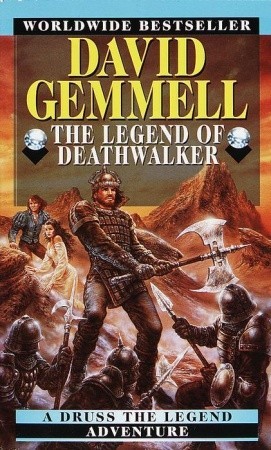
This is the second to last book in the Drenai series that I’ve read.  The only one that I haven’t gotten to yet is The Legend of Deathwalker, and I plan to get to that one right away.  After that, I’ll probably move on to the John Shannow novels, and then the Rigante series.  In three years, I wouldn’t be surprised if I’ve read every book that David Gemmell has ever written.  He’s just that kind of an author to me.  And if he were still alive, you can bet I’d be ravenously devouring every new book that comes out…

Sadly, the number of David Gemmell books in the world is finite.  But still, there’s quite a few left before I read them all.  And one day, somewhere in the far-off future, I hope to write books as incredible as his.  To one day surpass him would be an impossible dream…but as the Ventrians say, may all your dreams come true save one, for what is life without a dream?

Awesome, awesome book.  If you’re a fantasy reader and brutal stuff like rape doesn’t trigger you, you definitely need to give the Drenai Series a try.  Start with Legend, but get to this one shortly thereafter.  It’s an amazing, incredible read.