Last chance to get my books 50% off on Smashwords!

swlogoHey guys, just a heads up that tomorrow and Wednesday are the last days to get all my books 50% off on Smashwords for the annual summer sale.  Everything is under $2.50 USD, and the $.99 stuff is free!  That might seem like a pretty steep discount, but I actually earn as much from each sale as I would for a trade paperback sale if my books were traditionally published, and I don’t mind passing on the savings to you.

Also, my friend and fellow writer Ben Keeley did a blog post about our low-key backpacking trip up Rock Canyon, so if that interests you, you can check it out on his blog.  That rattlesnake was pretty freaky!  Good thing he was about as eager to get away from us as we were to get away from him.  We didn’t climb any mountains on this one, but we did find a gorgeous campsite on the side of a steep ravine. I definitely want to go camp there again sometime.

I’m taking it easy as far as the writing goes, but making some progress on The Sword Keeper.  A lot of it right now is gathering ideas and reviewing what I’ve written so far (eleven chapters, or about 50k words).  The first chapter requires some changes, but the rest I’ll probably let stand as it is and pick up where I left off.  Once I’m fully immersed in this story again, I think the rest will come quite readily.

In the meantime, here’s a video of Mariam Elieshvili singing “ჩვენ ახლა ერთურთს,” chven axla erturts.  I have no idea what the lyrics mean (something about looking for love in each others’ eyes), but Mariam’s voice is amazing and I think I may have a small celebrity crush on her.  All this Georgian music definitely puts me in the mood to work on The Sword Keeper, kind of like how all that Arabic music helped me to write Desert Stars.

… and now I want to go back to Georgia.  Again. :'(

SW-VI: BENEFACTOR is now out on Amazon, Smashwords, and Kobo!

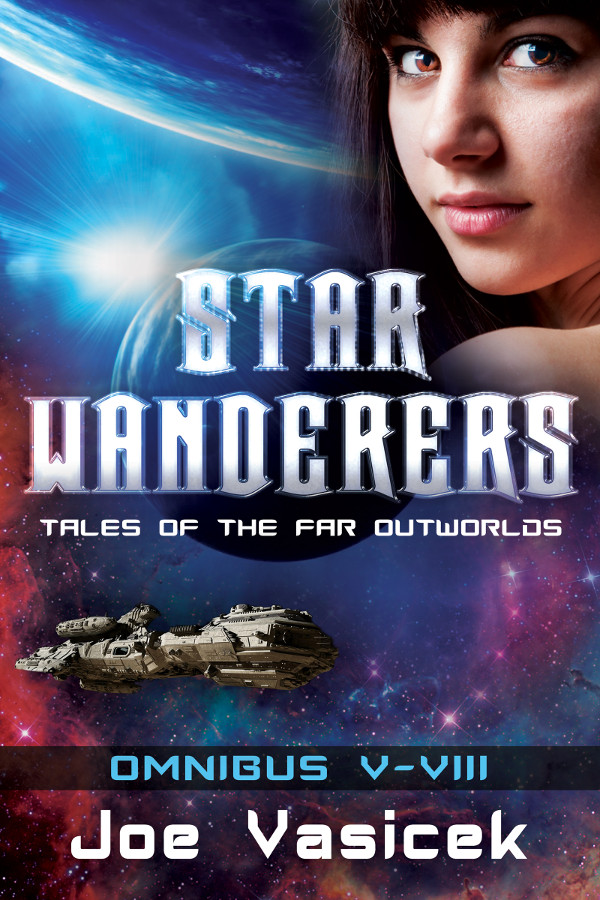
SW-VI (thumb)That’s right!  My latest book, Star Wanderers: Benefactor (Part VI) is now available on Amazon, Smashwords, and Kobo!  It’s $2.99, but for the next couple of days until the end of June, you can get it for $1.49 from Smashwords with the summer promotion code.

This one took a long time to write, especially for a novella, but I’m very satisfied with the result.  It shows the events of Fidelity from Jakob’s point of view, really diving into his character and exploring his background as a star wanderer who settled down and now struggles to take care of his family.  There are overtones of an impending conflict between the Outworlders and the Gaian Empire, which I plan to make a major part of the overworld story arc, and some new characters introduced as well.

Here’s the teaser:

IN A COLD AND LONELY UNIVERSE, A SIMPLE ACT OF GRACE CAN RESONATE ACROSS WORLDS.

An outworlder is nothing if not fiercely independent, and Jakob is no exception. But ever since he brought his family of starbound refugees to Alpha Oriana, he’s felt increasingly powerless. With the recent Imperial takeover and rumors of job cuts at the dockyards, it’s only a matter of time before they’re forced to move on—again.

When a young man and woman with an unusual story show up from his wife’s homeworld, he takes them in, if for no other reason than that they remind him of a time when he was young and still in love. Ever since he sent his sons away, his marriage has been a nightmare—but all he wanted was to give them a chance at a better life out among the stars. Whether or not that was a mistake, his wife has never forgiven him for it.

In the face of so many challenges, it’s not clear how long the family can hold together, but Jakob will sacrifice everything before he asks for help—even if the only way out lies through an open airlock.

Star Wanderers: Benefactor (Part VI) should be up on Barnes & Noble shortly, as well as Drivethru Fiction and All Romance eBooks.  In a couple of weeks, it should be out on iTunes, Sony, and Diesel as well.  If you want to add it to your Goodreads library, you can find it here.

Thanks guys!  I’m heading out on a short backpacking trip this weekend, but I’ll be back in a couple of days with more updates.  Later!

Trope Tuesday: Smart People Play Chess

Why?  Because Anastasia Gavrilova playing chess is HOT.
And if you’re Anastasia Gavrilova, chess gives you +10 charisma as well.

Want a fast and easy way to show that your characters are smart?  Not bookish, necessarily, or nerdy, or even the designated smart guy in the five-man band, but intellectually adept no matter what else their role in the story?  Well, you could indicate that through inordinate loquaciousness, but too much of that tends to make your dialog unreadable (not to mention, it’s way overdone).  You could have them rock a chalkboard, but not every story takes place in high school, and finding a chalkboard outside of academia is a bit of a challenge.  So what else can you do to indicate a high level of intelligence?

Show them playing chess.

It’s true.  Stereotypes aside, one of the most effective ways to indicate that your characters are intelligent is to show them playing chess.  From Star Trek to Discworld, Independence day to Doctor Who, Big Bang Theory to Harry Potter to Command & Conquer, chess is a fast, dirty, and effective way to show intelligence.  And while popular conceptions of chess nerds give the game a bit of baggage, it’s not as bad as you might think.  Sure, Sheldon might fit the stereotype, but Cain and Spock certainly don’t.  Even David Levinson from Independence Day turns out to be something of a badass in the end.

So why is chess such an effective way to show that a character is smart?  Probably because of all the other tropes associated with chess.  As one of the oldest and deepest strategy games of all time, chess is thoroughly embedded into our cultural consciousness.  Chess motifs are common in all sorts of stories, and the chess master is a significant character archetype.  There’s a reason we call the most complicated gambit pileup Xanatos Speed Chess.

Besides all the archetypal reasons for this trope, there are quite a few real-world reasons as well.  Playing chess can potentially do all sorts of interesting things to your brain, like stave off Alzheimer’s and improve your concentration and problem-solving skills.  All over the world, people associate chess skills with intellectual prowess, and after you’ve played a few games, it’s not hard to see why.  According to Carl Sagan, the game requires “strategy, foresight, analytical powers, and the ability to cross-correlate large numbers of variables and learn from experience.” If you’ve got all of those, chances are you’re at least above average.

Of course, this trope can be inverted in some clever and interesting ways.  In Bill and Ted’s Bogus Journey, for example, the ditzy main characters challenge Death to games of Battleship, Clue, Twister … basically, a whole host of non-cerebral games, in lieu of the expected trope.  In Foxtrot, the only character who loves chess is the Dad, who is rather dumb compared to his kids (maybe they all got bored of it?).  The classic example, though, has got to be Star Wars, where Chewbacca’s emotional impulsiveness is lampshaded over a game of <X> chess:

I haven’t used this trope a whole lot in my own work yet, but I just started work again on The Sword Keeper, an epic fantasy novel where chess tropes are going to be a major part of the story.  The mentor figure is something of a chess master, though because he’s a sentient sword he can’t experience or interact with the world except through his telepathic connection with the main character, a simple tavern girl.  She knows the basic rules of chess, however, (“chadrak” in this universe) and so one of the ways the sword trains her is through putting her through chess scenarios.  Later, it becomes apparent that the story itself is kind of like a game of chess, with the major characters loosely correlating with the different pieces, and the main character as the queen.  I’m excited–it’s going to be really cool. 😀

So yeah, this is definitely a trope you’re going to see from me in the future, and not just as a one-scene throwaway either.  Stay tuned for more!

New STAR WANDERERS story coming soon!

SW-VI Benefactor (thumb)So last night I finished the 2.0 draft of Star Wanderers: Benefactor (Part VI), and I have to say, it’s pretty good.  With the first draft, there were parts of it that worked well, but as a whole it didn’t seem to really cohere together, and I didn’t know why.  After getting some helpful feedback from first readers, I think I’ve figured it out and brought it together.

I’ve sent it out to some friends for proofreading, and that should be done before the end of next week.  While they’re doing that, I’ll write up the author’s note, figure out the teaser for Reproach (Part VII), and get everything else squared away for publication.  With luck, I’ll format the ebooks over the weekend of the 27th and have them up on Amazon, Kobo, Barnes & Noble, and Smashwords before the end of the month.

I’m really happy with the way this one turned out.  It doesn’t have a whole lot of action, but it really gets into the personal conflicts and struggles of the characters.  It also explores some of the implications of what it means to live in a culture where the oldest son of nearly every family leaves his homeworld at age 19 to venture across the stars, never to return again.  The other stories explore this from the perspective of one of the sons; this one explores that from the perspective of one of the fathers.

As always, if you’d like a free copy of this one, be sure to sign up for my mailing list; I’ll send out a Smashwords coupon code for email subscribers to download it for free.  The next one, Reproach, should be out in August/September (hopefully closer to August).

When something you’ve written moves you

SW-VI Benefactor (thumb)So I had an interesting experience today as I was revising Star Wanderers: Benefactor (Part VI), and I’m not sure how to describe it without sounding like “that guy” who gushes far too much about his books.  At the risk of being “that guy,” here goes.

As writers, it’s far too easy for us to write something in the heat of a creative passion, only to dismiss it later.  Perhaps we’re so afraid of screwing up that we yearn to fall back on the story that’s safe rather than the story that rings true, or perhaps we realize just how much of ourselves we’ve put into it that it scares us to death that someone might actually read it.  Too often, something else that’s broken about the story distracts us from the stuff that’s actually good, so we end up throwing it all out together.  Our critical minds work so differently from our creative ones that when the fires of creative passion turn to smoldering embers, it’s not unusual to feel like we’ve been left completely naked and need to scramble desperately to cover ourselves.

For that reason, I’ve made myself a rule not to revise a story without first making a set of bullet points, chapter by scene, of what I’m going to do.  My critical mind has full domain of that list of bullet points, but I will not let him carve up my story.  The list contains a series of instructions for my creative mind, who can actually revise quite well when given a little direction.  But when he thinks that the direction is wrong, he’s not afraid to push back.

The revision notes for my books always read like a back-and-forth argument between my critical and creative minds.  Once I’m finished writing up the bullet point list of revisions, I turn on track changes and cross them off one by one as I complete them.  But whenever I get to a point where my creative mind disagrees, I’ll cross it off and write down the reasons why it’s better to go in a different direction.  Some of the more recent notes for Benefactor include:

It’s not as much of an issue as you think.

Eh, the dialog works pretty well.

Already there.  Better to keep it subtle.

Why?  This is good.

No, it works very well with what’s already here.  Don’t change it.

So with that as a preface, I got to a scene in Benefactor today where one of the characters has a major life crisis upon learning that his wife is pregnant.  The pregnancy catches him completely by surprise, and makes him wake up and wonder if his life is really heading in the direction that he wants.  He feels like he’s stumbling into his future blindly, tripping over his feet without knowing where he’s going, and that frightens him.

I’d made some notes to add some stuff for clarification at the end of the scene, but I must have only been skimming it when I made the revision notes because all of that stuff was already there, and expressed more poignantly than I think I could have done.  Basically, the character comes to peace with the life he’s giving up by realizing that he will one day lead his son to follow in his footsteps, just as his own father did with him.

My critical mind completely missed that, because he was only looking for problems that needed to be fixed.  But when I read it again today, I was actually kind of shocked that this was something I’d written.  I don’t want to say that it’s the best thing that’s ever been written, because certainly I have lots of room for improvement, but the passage really moved me, and I wasn’t expecting that.

So yeah, revisions for Star Wanderers: Benefactor (Part VI) are coming along swimmingly.  It might be a bit tough to get the final draft proofread in time for a July release, but I’ve got some friends who might be able to help.  Just like I don’t trust my critical mind to meddle with the story, I don’t trust my eyeballs to catch all the typos and grammatical errors.  But I think that the substantive revisions will be finished by Tuesday, and after that, it’s time to get the publishing wheels grinding.

In the meantime, I was playing around with The Gimp today, and I came up with a cover for Star Wanderers: Reproach (Part VII).  Check it out!

SW-VII Reproach (cover) The image is the Orion Nebula, as imaged by the Spitzer Space Telescope.  You can find the original here.

I thought it was fitting, considering how Reproach is a parallel novella to Sacrifice, and Sacrifice also features an image of the Orion Nebula on the cover.  But the important thing is just that it looks cool and is sufficiently eye-catching.

So that’s about it.  I’ve got a lot of heavy revisions to do tomorrow, but even my critical mind agrees that chapters 4 and 5 are actually pretty good.  There’s at least one scene missing and a couple of other things that need to be added, but I’m actually looking forward to writing those.  Also, a couple of characters need some more fleshing out, but that shouldn’t be too difficult.  The Tuesday deadline is quite doable.

Have a good night, and thanks as always for reading!

Trope Tuesday: Knight Templar

For this one, I’m going to pull the description straight from tvtropes itself, since the whole page is pretty good:

Sometimes, the Forces of Light and Goodness get too hardcore. In a deadly combination of Well-Intentioned Extremist, The Fundamentalist and, generally speaking, not so different, they get blinded by themselves and their ideals, and this extreme becomes tyrannical sociopathy.

Usually, the Knight Templar’s primary step (or objective) to his perceived “utopia” is to get rid of that pesky “free will” thing that is the cause of crime and evil. Many Knight Templar types are utterly merciless in dealing with those whom they consider evil, and are prone to consider all crimes to be equal. The lightest offenses are met with Draconian punishments such as full imprisonment, death, brainwashing, or eternal torture.

It’s important to note that despite being villains/villainous within the context of the story, Knights Templar believe fully that they are on the side of righteousness and draw strength from that, and that their opponents are not. Trying to reason with one isn’t much good either, because many Knight Templar types believe that if you’re not with them, you’re against them. Invoking actual goodness and decency will have no effect, save for making Knights Templar demonize your cause as the work of the Devil. After all, they are certain that their own cause is just and noble, and anyone who stands in the way is a deluded fool at best.

Basically, this is what happens when the villain not only believes that he is the hero of the story, but a heroic hero.  It’s not himself he’s fighting for, but his cause–and because the righteousness of his cause is unassailable, anything that stands in the way of achieving it must be destroyed.

The name of the trope comes from the Knights Templar, the medieval military order established during the Crusades to maintain European dominance in the Middle East.  They were an elite fighting force that became associated with many of the atrocities of the Crusades.  When Saladin conquered the Kingdom of Jerusalem, he was careful to avoid civilian casualties but took no prisoners among the Templars and Hospitaliers.

Of all the story tropes I’ve studied, this one reflects reality more accurately than most.  When people believe unquestioningly that they’re right, they tend to stop listening to anyone who disagrees with them.  They turn the space around them into an echo chamber, like a one-sided Facebook feed or a narrow message board community.  When their beliefs reach a certain degree of fervency, they start to become angry not only with those who disagree, but with those who fail to agree with or support them.  Once their cause compels them to action, it doesn’t take long for the ends to justify the means.  Give them a little power, and you’ve got yourself a real life Knight Templar.

It’s precisely because this trope so closely reflects reality that it’s one of the better ways to create motivations for the villain.  It’s not enough to want to take over the world, you’ve got to have some reason to take it over–and what better reason than a cause you firmly believe in?  Assuming, of course, that the cause is believable–it’s still quite easy to botch things in the execution.

This is precisely the sort of thing Gandalf was trying to avoid when he refused to take the ring:

Understand. I would use this ring out of a desire to do good. But through me, it would wield a power too great and terrible to imagine!

Galadriel and Faramir refused the ring for similar reasons.  Boromir succumbed to the temptation, but repented for it by giving his life to defend the hobbits against the attack of Saruman’s Uruk-Hai.

In Christopher Nolan’s Batman trilogy, this is also a recurring trope.  It’s the main motivation behind Razalgul in Batman Begins, and describes Harvey Dent’s face-heel turn as he transforms from Gotham’s white knight into Two Face.  Come to think of it, it seems that the superhero genre in general is teeming with this trope.

There aren’t very many true Knights Templar in my own books, but I’m writing a fantasy series that should feature a few of them.  In The Sword Keeper, a brotherhood of sentient swords has passed on the fighting skills of generations of warriors, enabling their bearers to unite the world into a peaceful empire.  Then, one by one, the swords go insane, driving their bearers insane with them.  It all starts when one of them goes Templar, and ends when all the swords are lost or destroyed … all, that is, except the one whom the hero of prophecy will take up to save the world.  And that hero happens to be a backwoods tavern wench who isn’t even strong enough to lift it, much less wield it in battle.

So yeah, even though this isn’t a trope that I’ve played with much, it’s one that really irks me in real life, so that probably means you’ll be seeing it soon my own fiction.  If you have any other thoughts or examples to share, please be sure to drop a comment.  I’d be very much interested to hear your thoughts on this one.

Image source: Templar Knight in Battle Dress

It’s all there (mostly), just out of order

SW-VI Benefactor (thumb)So I picked up the rough draft of Star Wanderers: Benefactor (Part VI) this week and started making notes for the revision.  It turns out that most of the scenes after the first chapter are jumbled and out of order.

This is good, because it means that I don’t have to toss it out and write it from scratch.  All I have to do is figure out the right order, rework the transitions, and then maybe add a couple of scenes to smooth things over.  Not too difficult, and it should turn this story around from something’s-broken-and-I-don’t-know-what to dang-this-is-awesomesauce.

It’s not so good, though, because it means I’m going to have a real struggle over the next couple of weeks to get at the core essence of this story and draw it out.  That’s always tough, when I don’t get it on the first pass.

To be honest, I’ve kind of been avoiding this story for the last couple of months.  When I finished the rough draft and put it on the back burner, I had the sense that something was wrong, but I didn’t know what it was.  That’s always the worst.  Now that I know, it’s just a matter of doing the work.  But that’s also daunting, because it’s like I’m standing at the base of a mountain looking up.  At least the climb itself is invigorating, so once I get started, it should be pretty straightforward.

Benefactor takes the Star Wanderers series in a bit of a different direction, focusing on Jakob (Mariya’s father) and his struggle to provide for his family when all he’s ever really been is a star wanderer.  As an outworlder, he’s always had a certain amount of pride and independence, but as a starbound refugee with a family to look after, that only gets in the way.  When he married Salome and settled down, it seemed like they had a bright future, but now he’s trapped in a life he never wanted, and the love he once shared with his wife has grown cold.

Here’s an excerpt from the first chapter, which probably won’t change much in the final draft:

Jakob never felt more bone-weary than when he came off of a twelve-hour shift at the Oriana Station dockyards. His feet ached and his back groaned with pain, even in the low gravity of the tram as it raced from the hub to the rimside habs. As usually, the narrow car was crammed like a vacuum pack, every seat occupied with the hot and sweaty bodies of the other workers. He glanced out the window to catch a glimpse of the stars, but an advertisement for a synthetic protein formula filled the holographic windowpane.

My life is a prison, he thought to himself—silently, as always. It’s a prison of my own making, but it’s a prison nonetheless.

The twelve hour shifts had started only a standard week ago, but already it felt like months. A Gaian Imperial battle group had just arrived from the Coreward Stars, panicking some and causing a lot more work for others. Jakob didn’t have much time to follow interstellar politics, but he knew it meant longer work shifts for the foreseeable future. Which really wasn’t so bad, except that the overtime pay would barely keep the family above water, without paying off any of their debts.

From the quadrant tram station, he took an elevator to the slums on the lowest level. This was always the worst part: getting used to the slightly heavier gravity, after spending so much time in null-gee at the hub. He shuffled down the rimside corridor, barely lifting his feet off the floor. The walls were drab and gray, but spotlessly clean. That was something to say about the immigrant community—they might be poor, but they weren’t dirty.

The pungent odor of Deltan cooking spices met his nose the moment the door hissed open. That would be his mother-in-law, fixing dinner. He stepped inside and dropped his work boots on the floormat, waking his sister-in-law’s baby in the living room. He cringed from the high-pitched wailing almost as much as he did from the tongue-lashing he expected to get for it. But what did it matter? Ignoring the baby’s cries, he trudged off toward the bathroom for a much needed shower.

“Oh, hi Dad!”

His daughter Mariya bounded down the hallway, her black hair bobbing with every step. The bright smile on her sixteen year old face cut through his dark mood, at least momentarily. She gave him a great big hug, and he returned it with a grunt.

“Guess what?” she said, her eyes lit with excitement. “I finally found someone to rent out the spare room to!”

Jakob raised an eyebrow. “Oh?”

“Yeah! A couple from Delta Oriana—Megiddo Station, in fact. At least, the girl is from there. Her husband is out working on his ship—he’s a star wanderer, see—but she’s out in the living room right now, talking with Aunt Giuli. Do you want to meet her?”

Her words passed over him like a flurry of raw, unprocessed data. He focused on the important parts and disregarded the rest.

“How long are they going to stay?”

“Oh, not long. They just need a place to stay for a couple weeks until they’ve refitted their ship. Apparently, they—”

“How much are you going to charge them?”

So yeah, it’s a new direction from the previous books, but it’s got a lot of the same characters and ties in quite well with Fidelity, I think.  Also, it expands the universe and shows some other aspects of what life is like for star wanderers and outworlders in general.

It’s going to be to be a lot of work making sure I get this one right, but it’s a short novella, so it shouldn’t take too long.  Barring no unforeseen complications, I should still be able to get it out before the end of the month.  The next two books, Reproach and Deliverance, should be ready soon after that.

In the meantime, I’d better get some shuteye so I can wake up early and work full steam on this book tomorrow.  Gnight!

Why I love writing novellas

Star Wanderers I (thumb)Star Wanderers II (thumb)Star Wanderers III (thumb)Star Wanderers IV (thumb)SW-V Dreamweaver (thumb)SW-VI Benefactor (thumb)thumb (Sholpan)

For the first half of this year, almost every project I’ve worked on (with the exception of an unfinished short novel) has been a novella.  It’s not a form I was familiar with when I first started writing, but I’ve come to enjoy it immensely, and look forward to writing much more in the future.

The technical definition of a novella is pretty simple, at least according to SFWA.  It mainly has to do with word length:

  • Novel — 40,000 words or more
  • Novella — 17,500–39,999 words
  • Novelette — 7,500–17,499 words
  • Short Story — 7,499 words or fewer

That one simple distinction leads to a host of other differences, though, since words and story length are so crucial to the different types of stories you can tell.

Short stories tend to be more situational.  A good short story writer (which I am not) can use the form to explore all sorts of other story elements, but there’s always something of a tradeoff.  A good short story will have strong characterization but a simplistic or nonexistent plot, or center around a compelling concept but not provide an immersive setting.  It’s a very minimalistic form–there’s always something of a sacrifice.

A good short story can pack a real punch, but it doesn’t really immerse you in another world.  It might resonate for a long time after you read it, but you finish it almost as soon as you start it.  It’s a form that I enjoy in audio form, but don’t actually read very much.  It’s great for the commute or a road trip, but not so great when I’m curled up in the lovesack looking to get lost in a book.

That’s just me, at least.  And as for writing them, I need a lot more practice before I have anything useful to say on that.

With novels, it’s exactly the opposite.  They are so expansive that they tend to have multiple viewpoints, subplots, character arcs, and setting elements all woven together in one sprawling whole.  There are differences, of course, between a 200k word fantasy epic and a short 60k word thriller, but complexity is an important part of the form.  It’s not enough to have an interesting situation, or a single mind-blowing idea–you have to have several, and they have to work together.

When done well, the effect can be tremendous.  A good novel is much more than just the sum of its parts, and the climactic moments when everything comes together can be truly spectacular.  They’re incredibly immersive, too–I’m pretty sure that some of my childhood memories are things that never happened except in the pages of a book.

But sometimes, it can be hard to get into a novel, either because it starts off slow or because from the very beginning it’s so complex.  Also, it requires much more of an investment, especially in time.  I can’t tell you how many novels I’ve checked out from the library, only to return a few weeks later with a hefty overdue fine on my account–not because I didn’t like them, but because I just couldn’t find the time to finish.

In terms of writing, all of that storytelling complexity can make the task positively gargantuan.  It depends on the length of the novel, of course, but the longer it gets, the harder it is to keep everything straight.  And when something is off and the story just doesn’t seem to be coming together, it can be incredibly difficult to figure out exactly what is broken.  Even if it’s small, or something that’s easy to fix, you can easily find yourself revising in circles.

The novella falls more or less in the “Goldilocks” zone of these other forms.  It’s long enough to give you the space you need to play with things on a novelistic scale, but short enough that you don’t have to worry about bringing all that complexity to the page.

Generally, I’ve found that there isn’t much of a difference between novellas and novelettes.  I’ve dabbled with both, and found that the difference has more to do with brevity and less to do with actual structure or form.  A well-written novelette can do all (or at least most) of the things a novella can do, just in a slightly more economical fashion.  And of course, the differences in all of these forms is subjective and fuzzy.  Your experience could very well be different.

But personally, I find novellas (and novelettes) much more fun to write because it allows me, sometimes even forces me, to get a lot more intimate with my characters and their individual points of view.  A situation or idea alone is not enough to carry the story for the required length, but exploring multiple viewpoints (or at least more than two) tends to push the story too far.  Consequently, I find myself really diving into my characters and trying to see things from their perspective.

It’s similar with novels, but without all the other subplots or character arcs, there are fewer distractions–and fewer ways to screw up.  I can stay in the character’s head without having to break out to fix something else.  Also, my first drafts tend to be a lot cleaner, with less need for massive substantial revisions.  And even if the draft is irredeemable, I can toss it out and rewrite from scratch with a lot less pain, since it’s only 30k or 40k words.

So yeah, I really love writing novellas, which is something that would have surprised me only three or four years ago.  There aren’t a whole lot of traditional markets to sell them to, but that doesn’t matter because they’re perfect for ebooks and self-publishing.  It’s also a lot easier to take a loss on a perma-free novella than it is on a full-length novel.

I’ve found that I can write a good first draft of a novella in anywhere between two and six weeks.  I wish I could do it quicker, but I’m not a very fast writer, so thirty days is a pretty good cap for a deadline.  And because they’re shorter, they tend to be quicker to revise, and easier to hand off to alpha readers who will give you a good turn-around time for feedback.

For those of you who prefer more long-form stories, don’t worry–I haven’t given up on writing novels.  In fact, I’ve got a half-finished epic fantasy novel that I’ll probably work on next, once Star Wanderers: Benefactor (Part VI) has gone through a major revision pass.  But if you enjoy reading novellas as much as I enjoy writing them, then you’ve got a treat, because I’ve got a bunch of Star Wanderers novellas that will be coming out in the next few months!

And after that?  Who knows …

I will finish this novella tomorrow, I SWEAR.

I was going to finish it two weeks ago.  I really was.  But then, things were slow for a while as I adjusted to the new swing-shift job, and it wasn’t looking like I could do it, so I pushed the deadline back a week and went hiking instead.  No worries.

Then, the internet exploded and I got distracted.  So no book Saturday.  No worries, I told myself.  I’ll just finish it on Monday and go for another hike on Tuesday, my day off.

So.  Went grocery shopping on Monday, putzed around, wrote a bit, but didn’t really finish it.  I don’t know why.  Maybe I was still distracted.  Still, I figured I’d just call off the hike and finish it the next day.  Since it was supposed to be my day off, I could cook a nice batch of koshary too.

Tuesday, I cooked a nice batch of koshary, had some friends over, life was good, sat down to write … and got a call from my supervisor (who I’ve seen exactly once) that the regular employees have the 4th of July off, so could I please come in and work?

AAARGH!!!!

Did I mention that it’s been a hundred degrees here recently?  I’ve been sleeping practically naked and still sweating like crazy.  That’s probably more than you wanted to know, but I mention it only because I’ve been getting up progressively later.  Though the smart thing, of course, would be to wake up earlier when it’s still somewhat cool outside …

So anyways, Wednesday rolls around, and I get some good writing in.  I start the final chapter, with only two more scenes to go before it’s finished.  But it’s my sister’s birthday tomorrow, and I ought to stop by and say hi, which of course turns into a youtube party and playing with my nephew.  Also, my tomatoes are dying, so I really should pick up some fertilizer and see what I can do to revive them, but of course I don’t know hardly anything about fertilizer so it takes forever to find something that might actually do the trick.  Also, Institute is on Wednesdays, and I really should attend that more often (but I can’t, because of the job), so I go to that for a few hours.  Good times, meet some new people and chat up with friends, head back to my apartment but then the guy two doors down asks if I want to join him and a couple of girls for a game of cards, and since I really don’t have much of a social life (again, because of the job), I say yes and end up hanging out with them until midnight.

So tomorrow is the 4th of July.  There’s all sorts of stuff going on, including a family barbecue, the fair downtown, my sister’s birthday, my Mom coming into town, but #^$%@^#%^#@ I will finish this book!!!!1!!1!!!  Even if it means getting up at 7am, which it probably will.

And if I end up sleeping in again … no, that totally isn’t going to happen.  And it’s not going to happen because I’m going to bed RIGHT NOW.

Trope Tuesday: Gone Horribly Wrong

For this week’s Trope Tuesday post, I’ve invited a guest blogger to come on and discuss one of the tropes in his most recent book.  Andrew Saxsma is the author of Lonely Moon, a space opera / horror novel.  I haven’t read it yet so I can’t say much about it, but it looks interesting, and I’m a sucker for space opera.  So without further ado, here we go!

==================================================

saxsmaandrewThis trope is all about Science gone horribly, sometimes violently wrong.  Morality’s been thrown out of the window, compromised in favor of delicious success. Maybe the Mad Scientist played God; maybe mankind has accidentally awakened a Sleeping Giant.

This trope has many faces and masks and plays out in many different ways. In all cases, ethics are thrown to the wolves, and the big payoff is not as much a payoff as it is a new impeding doom the hero must now overcome.

Classically, this trope is mostly derived, if not invented, by Mary Shelley in her novel Frankenstein. Dr. Frankenstein’s obsession leads him to create what would eventually become the bane of his very existence. He unwittingly unleashes the mad dog from its dormant cage and makes it his mission to put it down. You might also recognize this trope from Deep Blue Sea, where scientists genetically enhance sharks for cancer research, but the predators get loose and begin eating their masters.

The key element is the backfire, the unforeseen consequence. It’s born of an innate character flaw, the inability to see beyond one’s good intentions. The character has a vision of a greater good in sight–to cheat death, to cure cancer. They’re so focused they never stop to think: was it worth it? Is this a line we should cross?

To make matters worse, this trope can become complicated when one’s intentions are infused with emotions. A dead loved one, revenge, a preemptive strike. Sometimes the choice is long decided before it is made.

In my book, Lonely Moon, the hero, Captain Hane, has a crisis of the monster. He faces a morally weighted fork in the road. Does he open a forbidden gate, opening our galaxy to a potentially devastating entity in an attempt to save us from an equally evil threat, or does he choose the path of uncertainty in hopes of finding a safer, less dangerous option?

Gone Horribly Wrong is a particularly fun trope to play with from a writer’s aspect, and I’m not sure if it’s a one and done. I plan on playing with this one again in the future.

lonely_moon

==================================================

Thanks, Andrew.  I think the Rule of Drama is one of the keys to doing this trope well.  Never pass up an opportunity to make things go wrong for your characters.  And if the problems are of their own making, that makes it all the juicier, especially when it adds the internal conflict of knowing that they’re the ones to blame.  We all love to watch a train wreck, especially in the world of fiction.

What do you guys think of bringing on more guest bloggers for the Trope Tuesday posts?  It’s something I’ve done occasionally in the past, but I’m thinking of doing it much more in the future.  I think it could be interesting to get some different points of view besides my own, and maybe introduce you guys to some new authors you might like.  Maybe it’s something I could rotate every other week.