Sick sick sick!

I have been sick for about a week now and it sucks—literally. Got a sore throat right now, and I’m sucking on garlic to try to make it go away. Strangely enough, it seems to be working.

It all started with my cute little niece, who apparently is an incubator for the plague. Came down with the mother of all stomach flus a week ago, and was spraying out both ends for three or four days. Just when my stomach settled and I thought things would return to normal, I woke up on Sunday with a throat so sore I could barely breathe.

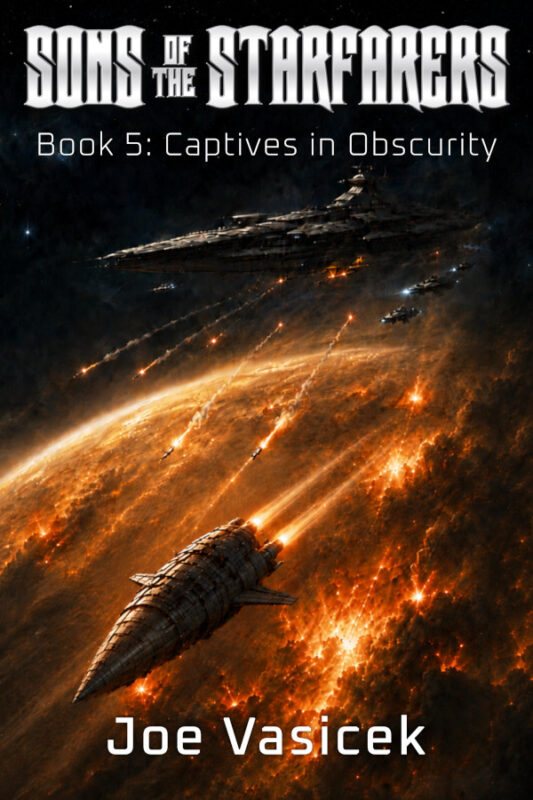
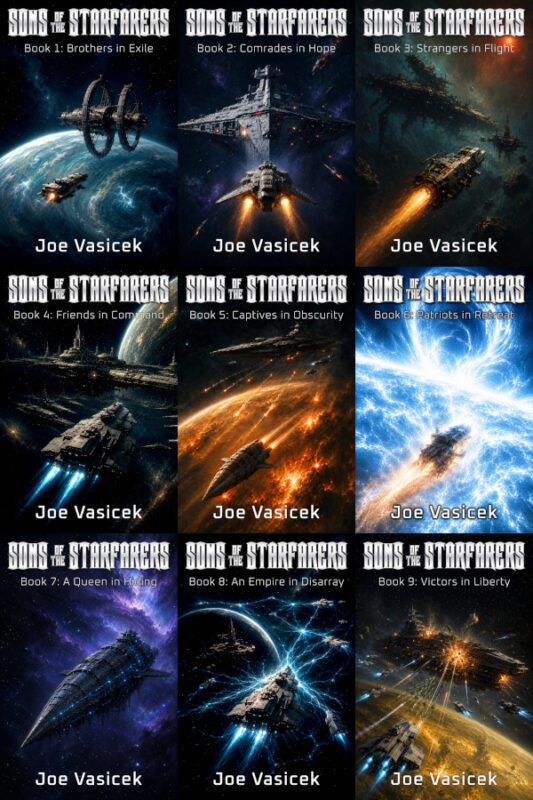
Somewhere in the middle of all that, though, I managed to finish Captives in Obscurity (Sons of the Starfarers: Book V). So that’s going out to the first readers. After that, I’ve got a couple of projects that I could start working on, though I probably won’t get to it until after I’m feeling better.

Heart of the Nebula is up for pre-order, though, so check it out! I’ll send out a newsletter announcing it soon, but I just switched from Tinyletter to Sendy and I’m still figuring out how it all works. Keep an eye on your inboxes though!

Now back to sucking that garlic…

To publish or submit?

Man, I am so sick right now. Caught a stomach flu from my neice, and it has been going through me like a chainsaw through butter.

In any case, things are going fairly well aside from that. Heart of the Nebula is now up for pre-order through November 21st, so you can expect to hear a lot more about that in the coming weeks. Captives in Obscurity (Sons of the Starfarers: Book V) is nearly ready to send off to my test readers, and should be published sometime in January or February. Besides that, I’m working on a couple of other big projects that should come out next year.

Right now, though, I have something of a dilemma. Do you guys remember Starship Lachoneus? It’s that completely unmarketable story idea I had a while back: the one where Jesus Christ organizes the construction of a generation ship to take humanity to the stars, because after His millenial reign, the Earth will be rendered uninhabitable. Well, I wrote the prologue, and it actually stands well enough on its own to be a short story. The dilemma is whether I should publish it now, or submit it to a short story market.

From what I can tell, the market for Mormon sci-fi short fiction is somewhere between small to non-existent. Irreantum closed a few years ago, Sunstone is limited to an annual contest, and Dialogue only pays in contributor copies. The Mormon Lit Blitz would be awesome, except that the story is more than 2k words long. Another option would be an anthology like Monsters and Mormons, but I’m not aware of any new ones.

I could try to submit it to the mainstream sci-fi markets, but I don’t think it would be a good fit for any of them. It’s written for a Mormon audience, with cultural and religious references that only people familiar with Mormonism would get. That said, the religious elements aren’t all that different from any other sci-fi world-building element, and the story isn’t overtly preachy or moral, so I suppose you don’t have to be a believing Mormon to enjoy it.

What do you guys think? Should I submit it elsewhere first, or publish it myself?

A glorious fisking and what it means to be a real man

Oh my heck, I just read the most glorious fisking of my life over on Larry Correia’s blog. The subject is a New York Times article titled “27 Ways to be a Modern Man” (is it just me or is the NY Times taking its cues from Buzzfeed?), and Larry pulls no punches. Glorious. Absolutely glorious.

It got me thinking, though, about what it means to be a real man. Jokes about meat and action movies aside, there seems to be a lot of confusion about the subject these days. It’s actually getting to be a serious problem with our society, as evidenced by the fact that a list as pathetic as Brian Lombardi’s can be taken seriously enough to be published in a major national newspaper.

So without further ado, here’s my list:

1) A real man provides for the needs of his family.

The traditional role of fathers is to provide, or to supply what is wanted or needed. There are many good reasons for this. Families have needs, some of which women are uniquely suited to fulfill, others of which men are uniquely suited to fulfill. Individual circumstances necessitate adaptations, but a real man knows that his duty is to his family.

A real man provides his family with shelter and security, with material support and protection. He makes his family feel safe, both from evil and from want. He provides them with love, with advice, with a positive example and role model for them to emulate. He provides his children with everything they need to grow up healthy and have families of their own.

A real man is not an absent father—unless, of course, the State steals his children from him and makes that impossible. Misandry is a far greater problem in our society than misogyny, especially within family law, but that’s a subject for another time.

2) A real man respects women and girls.

To respect someone is to regard them as being worthy of admiration because of good qualities, and to treat them in a proper way. A real man respects and values women, and treats them accordingly.

He does not see them as objects for his lusts, but as human beings. He recognizes the importance of their contributions to society, especially as wives and mothers, and helps them to feel wanted and appreciated.

A real man never lashes out at or physically abuses a woman. If a woman abuses him, he does not abuse her back.

3) A real man is someone that others can depend on.

A real man is dependable. He keeps his promises. He does what he says he will do. He understands that people are depending on him: his spouse, his children, his family, his parents, brothers, sisters, and friends. Inasmuch as it is within his power, he does not disappoint them.

4) A real man takes care of himself.

A real man understands that he cannot help others unless he first helps himself. For that reason, he strives for independence and self-reliance, so that he can better serve those who depend on him.

A real man does not need to be mothered, especially not by his wife or girlfriend. He cleans up after himself. He showers and keeps himself clean. He knows how to do his own laundry. He knows how to clean his own dishes. He knows how to eat healthy and how to exercise. He knows how to manage his time.

In short, a real man has his shit together. He may be a child at heart, but he is also a responsible adult.

5) A real man knows how and when to lead.

A real man does not wait for his parents or his wife to tell him what to do. He does not leave the decision-making to other people when it’s his responsibility to step up and lead. He knows how to take charge when people are looking up to him, and how to inspire confidence in those who look to him for direction.

Because he knows how to lead, he also knows how to follow. He does not his drag his feet or grumble about the tasks he’s assigned to do, but fulfills them to the best of his ability. He knows when to take charge, but he also knows when to step down. He also knows when to get out of the way.

6) A real man knows the difference between taste, quality, and value.

This was the biggest issue that I had with the NY Times article: 80% of the stuff on Lombardi’s list were merely matters of personal taste. A real man understands that different people have tastes that are different from his, and is perfectly willing to accept that. He does not condemn others for having “wrongfun.”

That said, he can also recognize quality and value. He understands that a $10 knockoff tool may, in the long-run, be more expensive than a well-made $50 tool. He knows how to use the right tool for the job, and how be efficient and do quality work.

7) A real man strives constantly to learn, grow, and improve.

At the same time, a real man recognizes that he is not an expert in all fields. When out of his area of expertise, he is able to admit what he does not know and to accept counsel from those who know more than him.

Life is a process of constant growth. Just like a muscle will atrophy if it is not exercised, so too will our minds and spirits deteriorate if we do not constantly strive for self-improvement. A real man recognizes this and does all he can to be a better man.

8) A real man faces his fears with courage.

Courage is not the absence of fear: it is the strength to overcome fear. The difference between heroes and cowards is often no more than the decision to stand up and do. A real man understands this, and overcomes his fears to do what is necessary. From the outside, he may appear fearless, but the truth is that he simply knows how to face his fears.

9) A real man helps others to achieve greatness.

A real man is not interested in petty infighting or drama. He does not keep score or hold grudges. He does not feel that he is diminished in any way by the achievements of others. Instead, he inspires and lifts those around him, often without even realizing it. People naturally look up to him, because he brings out the best in them.

10) A real man’s greatness is measured by the way he treats those he loves.

A real man is not overly concerned with titles or awards. He knows that greatness is not bestowed upon him by those in positions of authority, but is attributed to him according to how he treats those whom he loves. Because of this, he has developed a tremendous capacity to serve his fellow men, and exercises that capacity daily.

“Greater love hath no man than this: that a man lay down his life for his friends.” That is the true measure of a man: how much he gives of himself. Some men literally give everything, dying to serve and protect their loved ones. Others give their lives by living, giving freely of their time, talents, and love.

Regardless, a real man does not live for himself alone. He always lives for others.

A short rant about simultaneous submissions

TL;DR: If you run a short story magazine and it takes you longer than six weeks to respond to submissions, you should allow simultaneous submissions as a courtesy to your writers.

A simultaneous submission is when the writer sends the same story to multiple markets at the same time, instead of going down the list one-by-one and waiting for a rejection before submitting it to the next market. Multiple submissions are when the writer sends multiple stories to the same market at the same time. Generally, most sci-fi magazines do not accept simultaneous or multiple submissions.

I can understand why you don’t want to open the door to multiple submissions. A lot of us are fairly prolific, and if you allow us, we can swamp you with manuscripts in very short order. But simultaneous submissions are completely different.

Of course it’s frustrating to find a great story, only to learn that the writer has sold it somewhere else. But you know what’s even more frustrating? To watch your stories languish in slushpiles for months and even years while you know that you have readers who would eagerly snap them up the moment you publish them yourself. When you don’t allow simultaneous submissions, you are effectively demanding exclusivity for the length of the submission period, and exclusivity hurts readers and writers alike.

See, the publishing world has changed. The magazines aren’t the only available option for publishing our stories anymore. It is entirely possible for us to publish those stories ourselves, and to do quite well by them. In fact, if we have a story that’s ready to go, we’re putting off the money that we could be making if we decide to submit to the magazines instead.

The current status-quo regarding simultaneous and multiple submissions was made back when publishers held all the power, and writers could not realistically be their own publishers. It’s a holdout from the era of the gatekeepers, before the golden age of self-publishing. But that era is over, and we’re no longer as dependent on you as we used to be.

Which is not to say that the magazines have no value. On the contrary, you provide a great deal of value, and we want to support you with our content. That’s why we’re still submitting our stories to you instead of publishing themselves. When you publish our stories, it allows us to reach new readers and boosts our reputation in the field. We’re all in this together, and we want to support you just like you want to support us.

But look, can we meet in the middle here? When our stories are locked up in your slushpile for five months at a time, it makes us think twice. If you’re going to take your time, let us send our stories elsewhere while we wait to hear back from you.

I’m not going to lie: when it takes you three or more months to respond to our submissions, demanding exclusivity all the while, the word that comes to mind is “unprofessional.” I don’t care if your magazine has been in print for longer than I’ve been alive, or that you published such-and-such big name author before he was famous. It’s 2015 now, and that’s what it looks like.

I understand that you might not have the resources to respond to every submission in a timely way. That’s totally understandable. But if that is the case, there is no good reason why you can’t allow simultaneous submissions as a professional courtesy.

There are a lot of magazines that I would love to be published in. Many of these are semi-pro and token paying magazines that still want to support, in spite of the fact that they don’t pay very well. But even the pro-paying magazines make me think twice when my stories are locked up with them for months at a time. If your goal is to keep your slushpile manageable by getting me to self-reject, the best I can say is that it’s working.

If you run a short story magazine and you aren’t able to give us a timely response to our submissions, then please, do your writers a favor and allow us the courtesy of simultaneous submissions.

Cover reveal for my next big novel!

Wow, it’s been forever since I posted anything on this blog. I’ve definitely been busy, but haven’t been as good at keeping up with it here. That’s definitely going to change.

For those of you reading the Sons of the Starfarers series, I’m only about a chapter away from finishing the first draft of Captives in Obscurity. If all goes well, that one should be out sometime in December/January. There’s a huge, game-changing shift that takes the story in a completely unexpected direction—one that’s going to be really fun to tie in with everything else that’s going on. It should also answer some of the wider questions about the Gaia Nova universe, and set things up for the book where they rediscover Earth (or at least attempt to).

I’m also working on a fun shoot ’em up sci-fi adventure novel with the working title Gunslinger to the Stars. It’s kind of like a mash-up of Firefly, Guardians of the Galaxy, and Monster Hunter International. The main character is Sam Kletchka, a gunslinger / man of fortune from New Texas, one of the Gliese colonies near Earth. He sets out for adventure with his arsenal of firearms (affectionately named Mercy, Faithfulness, Righteousness, Judgment, Preservation, Love, Kindness, and Trust), and hilarity ensues, along with lots and lots of explosions.

In the meantime, though, I have some really, really awesome news! On November 21st, the weekend before Thanksgiving, the fourth novel in the Gaia Nova series will be coming out! Here is the cover and book description (the artist is Hideyoshi, who also did the covers for the other Gaia Nova books):HOTN (cover)

THEY LOST THE WAR, BUT WINNING THE PEACE IS STILL WITHIN THEIR GRASP.

Five years have passed since the Hameji conquered James McCoy’s homeworld, all but enslaving his people. Now, the occupation threatens to destroy them.

Deep in the heart of the Good Hope nebula, there is a place where they can start over. But it will take a strong leader to get them there, and the temptation to trade freedom for security has never been greater. Even if they manage to escape from the Hameji, the greatest threat to their future may come from within.

James once gave everything to save the ones he loved. This time, his sacrifice could make him a legend.

Heart of the Nebula is a direct sequel to Bringing Stella Home. Like all the other books in the Gaia Nova series, however, it can be read as a standalone book. A lot of characters from the other books come back for this one: James of course, but also Stella, Abaqa, Lars, and many other people from The Colony. There are also a lot of new characters.

This may be the most important book of my career to date. I started it almost five years ago, and have been working on-and-off on it ever since. In that time, I’ve really poured a lot of myself into it, perhaps more than any other book I’ve written.

If all goes well, it should go up for pre-order by the end of the week. The print version will come out with the ebook. Once Heart of the Nebula is up for pre-order, I’ll set Bringing Stella Home to free until November, and probably organize a blog tour for the book release. If you’re interested in having me guest post on your blog, shoot me an email at joseph.vasicek@gmail.com!


Two new stories!

Now that I’m back from Cape Cod, I’ve got two major projects that I’m focused on: finish the first draft of Captives in Obscurity (Sons of the Starfarers: Book V), and get Heart of the Nebula ready for publication in November. Those are some big releases, so you can expect to hear a lot in the coming months about them—especially Heart of the Nebula, which I’ve been working on for the past four years. Lots of exciting stuff!

In the meantime, I had two smaller releases in the past couple of weeks, and I think you guys are really going to enjoy them!

The first is the re-release of “A Hill on Which to Die,” an epic fantasy novelette about a band of free orcs trekking into the wilderness to start a new clan. This is my first real foray into fantasy, but I really enjoyed it and am thinking seriously about writing more books in this universe. If that sounds like something you’d like to see, then give this story a try and let me know what you think by posting a review or shooting me an email.

The second is a short story in the Star Wanderers universe. Longtime readers may recognize it as a story I wrote last year as part of the Short Blitz challenge“Starchild” is a quick read that takes place in a far-off corner of the universe, and shows what life is like on a tiny isolated space colony in the Far Outworlds.

This is only the tip of the iceberg as far as stories go. My goal is to have a new release at least every two months, with short stories in between the major novel releases. I’ve been averaging about one short story every month as far as writing goes, and it looks like quite a few of them are going to come off of the submission pipeline (either by getting picked up or by exhausting the pro/semi-pro markets) in the next year or so. This is all in addition to my novel writing, which hasn’t slowed down in any way from writing short stories.

So you can definitely expect to see more stories from me in the coming months! And as always, if you want to be the first to hear about a new release (as well as special offers and exclusives), then be sure to sign up for my email list.

Thanks for reading!

Nothing Found

Nothing Found


What’s going on here?

grinder screenshotAccording to The Submission Grinder, I currently have 8 short stories on submission. Right now, ALL of them are overdue for a response. I haven’t submitted a story anywhere in the past 30 days, and that’s highly unusual.

Either things are slow because it’s the end of the summer, or…

In related news, I have a new Star Wanderers short story that’s coming out at the end of the week! After submitting it to the major markets for the past year, I’ve decided to self-publish. The story fleshes out the Star Wanderers universe in some interesting ways, which I think you’ll appreciate if you enjoyed the original series.

Nothing Found

The Decline and Fall of Fandom and the Hugo Awards

Lately, I’ve taken a serious interest in family history. A huge amount of records have gone online in the past decade, making it far easier to trace your ancestors. Before that, my father was able to trace the Vasicek line to the Czech lands (places with cool names like Frenštát, Vratimov, Trojanovice, Staříč, etc), but that was as far as he could go. Just a couple of years ago, however, my sister found the parish records for that region. They’re mostly all scanned and online, and they go back as far as the late 15th century to the start of the Hapsburgs. The pieces are all there—all we have to do is put them together.

Needless to say, this has got me really excited. It also made me wonder: how far back is it possible go? According to my sister, who is also a certified genealogist, the European records start to get really sketchy around the 7th or 8th century. Only the royal lines go back that far, and since they were all trying to connect themselves to mythical figures and Biblical characters, the records are not very reliable.

So I went to Wikipedia to look up the period of Late Antiquity leading up to the 7th century, and soon became completely absorbed in it. This is the period when the Roman Empire collapsed, leaving Europe in a hot mess. The Vandals, Franks, Goths, Visigoths, Ostrogoths, Huns, and Saxons were running around all over the place, sometimes fighting for the Romans, sometimes fighting against them, constantly fighting each other, and migrating clear across the continent in their search for new homelands.

As clear as I can make it out, this is how it basically went down:

There once was a tribe on the Italian penninsula that built a city called Rome. Through innovations in engineering, warfare, governance, and philosophy, they conquered virtually all of the known world and built a mighty empire. Rome became legendary as the center of it all.

Over time, however, the Romans became decadent and corrupt. The empire slowly began to disintegrate and fall apart, though great pains were taken to preserve the appearance that all was well. By the end of the third century, it had effectively split into two halves: the eastern empire and the western empire. This division fell roughly along cultural lines: the Greco-Roman culture in the east, and the Latin-Roman culture in the west.

Around this time, a barbarian tribe (or alliance of tribes) appeared on the northeastern frontiers of the empire. Known as the Huns, these barbarians launched an invasion of Europe that completely shuffled the deck. They only briefly threatened the Romans, but had a much larger impact on the barbarian tribes of Europe, displacing them from their homelands and forcing them to seek a new home. This launched what is known as the migration period.

There were a lot of barbarian tribes seeking a new homeland: the Franks, the Saxons, the Goths, Visigoths, Ostrogoths, and the Vandals. With the Huns at their backs, they invaded the Roman Empire, which was the weaker of the two.

…except “invade” isn’t quite the right word. Many of these tribes became allies or foederati of the Romans (often after defeating them). Even some Hunnic tribes were absorbed into the empire in this way, and were often employed as mercenaries to fight against the Frankish, Gothic, and Vandal tribes that hadn’t allied with Rome. The salient point is that Rome had become weak, and thus had to make concessions to these barbarians who were starting to flood the empire.

At the end of the fourth century, a tribe of Visigoths that had settled in the eastern empire became upset with the way that the Romans were treating them. After being starved, taxed, and treated as sub-human, they took up arms under a leader named Alaric the First. They were unable to make much headway against the eastern empire, so instead they went west and invaded the Italian penninsula.

Over the course of the next two decades, the western empire vacillated between accomodating them, backstabbing them, and declaring outright war. This was mostly due to internal power struggles that had little to do with the Visigoths. Even though Alaric threatened the heart of the western empire and laid seige to Rome three times, they treated him with outright contempt, blatantly violating previous agreements and going so far as to ambush him under a flag of truce.

In 408, the internal power struggle eliminated the faction that was willing to accomodate the Visigoths. Shortly thereafter, Alaric decided that he’d had enough and marched on Rome. In 410, he sacked the city, shocking the civilized world.

Up until that point, Rome was considered sacrosanct. Sure, the barbarians were overrunning the frontiers and threatening vast swaths of the empire, but Rome was the cultural and spiritual center of the world. How could it possibly fall? But it did, and following the sack in 455 at the hands of the Vandals, the Roman Empire never regained its former glory.

Reading up on this history at the same time as the 2015 Hugo Awards played out has made me notice a bunch of similarities between the two events. Obviously, the decline and fall of Rome is not a perfect analogy for the decline and fall of the Hugo Awards, but there are some very interesting parallels.

The Hugo Awards were founded in the 1950s, back when SF&F fandom was a tiny community of geeks on the fringes of society, and not taken seriously by anyone in the cultural mainstream. Over the next several decades, the geeks took over the world, dominating the popular culture with things like Star Wars, Star Trek, Lord of the Rings, Harry Potter, Game of Thrones, etc.

But somewhere along the way, this happened:

Fandom (with a capital F) became decadent and corrupt as the Truefen jealously guarded their turf, creating all sorts of weird Hugo categories (“related work”? “short-form” editor vs. “long-form” editor?) and pushing back against the mainstreaming of the SF&F field. As a result, Worldcon went from the premier SF&F convention to a second-tier convention that falls well short of Dragoncon, Gencon, San Diego Comic Con, Salt Lake Comic Con and Fan Ex, etc, all of which are 1-2 orders of magnitude larger than Worldcon now. The once-prestigious Hugos were now decided by mere hundreds of votes.

Around this time, a tribe (or alliance of tribes) of cultural Marxists began to invade the cultural space. Also known as Social Justice Warriors (SJWs), they began to dominate multiple forms of media, pushing out many of the more conservative readers and viewers who resisted. Fandom (with a capital F) gradually embraced them, using them as mercenaries in their internal power struggles.

By this time, Fandom had split into two broad divisions: Baen and Tor. Baen books were more about action & adventure, while Tor books were more about social issues (though of course there was some overlap). These two houses dominated the field, but it was the Tor side of Fandom that had more ownership in the Hugos than the Baen side.

The SF&F fans who had been displaced by the SJW invasion formed the Sad Puppies and Rabid Puppies. To Fandom, however, they were all just “wrongfans”—essentially, barbarians. And it wouldn’t exactly be right to say that the puppies “invaded” Fandom, because many of them were already there or were willing to coexist and make alliances. Others, of course, were not.

Vox Day entered the scene as one of the disgruntled puppies who had had enough of Fandom. The Tor side was far more susceptible to his machinations, responding to him in knee-jerk fashion at every turn, so he went after them. In 2015, he sacked the Hugos, causing “no award” to sweep five categories (and place in eight more).

To an impartial observer, Vox Day was the only clear victor of the 2015 Hugo Awards. How else can you explain all the “no awards”? His stated goal was never to win the Hugos, it was to destroy them, and he accomplished that spectacularly. When an esteemed professional such as Toni Weisskopf loses to “no award” purely out of guilt by association (on a ballot decided by less than 6,000 total votes, no less), how can anyone possibly take the Hugos seriously anymore? What was once considered the most prestigious award in the SF&F field has now proven to be a narrow, exlusivist club of politically like-minded elitists.

Fandom (capital F) accomplished many wonderful things back in the days before SF&F entered the mainstream. In a very real sense, they conquered the world. But by doggedly trying to hold on to their turf and refusing to let others play with their toys, especially those who see the world differently than them, they are declining. Like the sack of Rome in 410, the sack of the Hugo Awards in 2015 was a watershed moment that demonstrated just how much the old order had decayed.

Can the Hugo Awards be saved? I seriously doubt it. The “truefans” will jealously clutch it to their chests until they die, and with the graying of fandom, that will probably be accomplished fairly soon. But just as the Renaissance rose from the long-cold ashes of the Roman Empire, so too I hope that something good will eventually come out of all of this. Because really, there is a place in fandom (lower-case f) for everyone, and that has never changed.

Sad Puppies 3: A Play in Three Parts

PART THE FIRST

Sad Puppies: Wouldn’t it be great if the Hugo Awards weren’t about identity politics anymore? If conservatives and libertarians weren’t shut out by the blatantly liberal bias? If we didn’t care about a writer’s skin color, or their gender, or their sexual orientation, but about the quality of their stories?

Social Justice Warriors: EVIL RACIST CISGENDER SCUM! You only say that because you’re WHITE, MALE, and PRIVILEGED!

Sad Puppies: Actually—

Puppy Kickers: Haha! We beat you wrongfans last year, and we’ll beat you again this year! Sad puppies suck!

Sad Puppies: Oh yeah?

Sad Puppies sweep the 2015 Hugo nominations.

Puppy Kickers: What the hell, puppies? You violated the gentleman’s agreement that has governed the Hugos since time immemorial!

Sad Puppies: Of course we did! Your “gentleman’s agreement” was elitist and wrong.

Puppy Kickers: Oh yeah? THIS MEANS WAR!

PART THE SECOND

Flashback to before the nominations. Enter Vox Day.

Vox Day: Fear and tremble, denizens of fandom! I will wreak vengeance on my enemies and destroy the Hugo Awards for all time! BWAHAHAHAHA!

Social Justice Warriors: Vox Day is EVIL! THIS MEANS WAR!!

Sad Puppies: No, don’t destroy the Hugos, Vox! There’s still a chance they can be saved.

Vox: Hmm, very well. But I shall not march in lock-step with you.

Vox Day organizes the Rabid Puppies slate. Return to present.

Puppy Kickers: Look, the Sad Puppies slate is almost identical to the Rabid Puppies slate! The Sad Puppies are really just followers of Vox Day!

Sad PuppiesThat’s not true. We were actually the ones to convince him to—

Social Justice Warriors: RACISTS! NAZIS! MISOGYNISTS! RACISTS! NAZIS! MISOGYNISTS!

Sad Puppies: Actually, if you look at our slate, you’ll see that—

Puppy Kickers: RACISTS! NAZIS! MISOGYNISTS! RACISTS! NAZIS! MISOGYNISTS!

Rabid Puppies: It’s no use to try to reason with these people. Sinistra delenda est!

PART THE THIRD

Puppy Kickers: Slate voting is EVIL! We must defeat the puppies at all costs to prove that vote rigging has no place in the Hugo Awards!

Social Justice Warriors: Here is a voting guide for how to make the puppies lose.

Sad Puppies: You hypocrites! How is that not rigging the vote?

Puppy Kickers: Haha, we don’t care! We’ll vote the way the SJWs tell us to, and brag about how we haven’t read any of the books on your crummy slate.

Sad Puppies: But—but there are a lot of good people here that are overdue for recognition! Toni Weiskopff, Kevin J. Anderson, Jim Butcher… and there are a lot of great new authors too, like Kary English. Our slate isn’t remotely racist or sexist. We’ve got people from all across the political spectrum too, because all we really care about is telling good stories!

Social Justice Warriors: We don’t care! If we can’t have the Hugos, NO ONE CAN!

The 2015 Hugo Awards. “No award” sweeps five categories.

Social Justice Warriors: VICTORY!

Puppy Kickers: Um, yeah! What they said! Uh… guys?

Vox Day: BWAHAHAHA! You fell for my Xanatos Gambit, you pitiful mindless fools! I HAVE DESTROYED THE HUGO AWARDS!

Rabid Puppies: All hail Vox Day, slayer of worlds! Sinistra delenda est!

Sad Puppies: Wow. Just… wow.

Rabid Puppies: Join us, Sad Puppies. Yield yourselves up unto us, and unite with us and become acquainted with our secret works. Sinistra delenda est!

Social Justice Warriors: Next year, we should give Anita Sarkeesian a Hugo!

Why my books are not in Kindle Unlimited

Last year, Amazon came out with a book subscription service called Kindle Unlimited. As a reader and an Amazon customer, I’ve noticed that they’ve been pushing this service quite aggressively. As a writer, I’ve been following it quite closely, especially with some recent changes with how they compensate their authors.

However, if you check my Amazon catalog, you will find that none of my books are available on Kindle Unlimited. And if I had to tell you why, I could sum it up in just one word:

Exclusivity.

In order to enroll your books in Kindle Unlimited, Amazon demands that the content of your book cannot be available anywhere else. Not on competing retailers. Not on your website. Not on a site like Wattpad or posted on social media. It’s KU and KU only, take it or leave it. And you can’t get around that by doing separate editions, since it’s the content that must be exlusive, not the book.

Recently, Hugh Howey argued that KU’s exclusivity doesn’t really hurt writers or readers, because all of Amazon’s competitors in the ebook market suck so hard that it’s no big loss to lose them anyways. I disagree, though. Different readers have different needs, and as great as Amazon is, it isn’t the best choice for everyone.

I believe that readers should be empowered to make their own choices, not only in what they read, but in how they read it. Some readers would rather sideload their ebooks, and don’t want to deal with Amazon’s proprietary .mobi format. Others would rather keep their books native to their device and not deal with Amazon’s apps. Others live in parts of the world where Amazon tacks on an arbitrary $2 USD surcharge to every kindle store purchase, and that obviously doesn’t work for them.

Put simply, I believe that exclusivity is a bad deal for readers—and that because of that, it’s also a bad deal for writers. The less control that readers have over what they read, the less they are going to read. The more control that middlemen have over the market (and for all the wonderful things that it does, Amazon is still a middleman between readers and writers), the less pressure there is for them to innovate and improve.

On many of the indie writers forums and communities that I frequent, it appears that other writers are more interested in short-term monetary gains than in doing what best serves their readers. And that’s unfortunate, because Kindle Unlimited is structured in such a way that it pits writers against each other in a zero-sub game. Instead of paying a fixed rate for each page (or KENPC) read, Amazon sets a “pot” and pays each author a share of it, in proportion to how many borrows/pages they got. Thus, if one author gets more reads than another (or games the system to make Amazon’s algorithms think that he had more reads), that means less money for the other author.

A lot of writers argue that it’s not really a zero-sub game because Amazon usually adds to the pot after the month is over, thus manipulating the borrow rate to hit some undisclosed target. Even if that’s true, though, it makes things even worse. If Amazon has a target borrow rate in mind, why not tell authors up front? It basically amounts to not telling authors how much they’re going to be paid until after their books have been sold. In any other supplier relationship, this blatant lack of transparency would be insane.

From what I can see, it’s all about control. Exclusivity gives them a great deal of control, not only over the marketplace but over authors as well. The lack of transparency and ever-changing borrow rates make it difficult for authors to gather the data they need to decide whether to stay in KU or to publish their books widely. And authors who decide not to opt into KU are punished by having their books rank lower, thus achieving less visibility in the Amazon ecosystem. In the year since KU came out, my Amazon income has fallen by at least 60%.

Even with all of that, though, I would be happy to enroll all of my books in Kindle Unlimited if Amazon dropped the exclusivity requirement. There are a lot of readers who prefer Amazon’s KU subscription service, and I would love to make my books available for them.

But exclusivity is a bad deal.