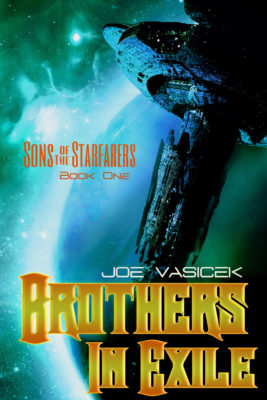
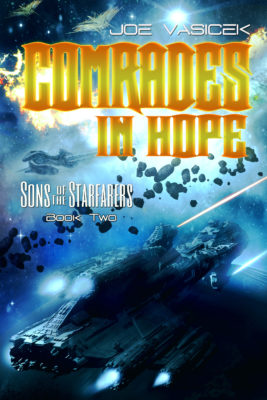
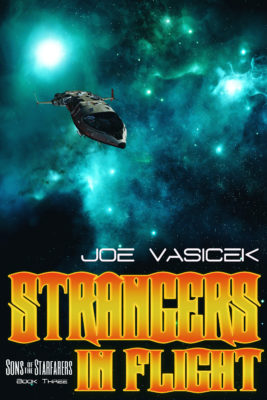
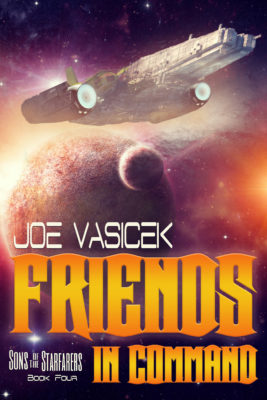
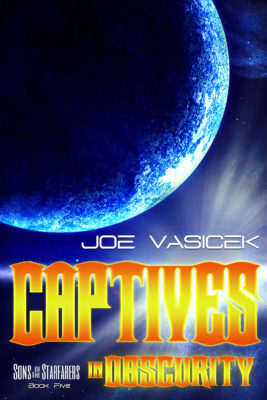
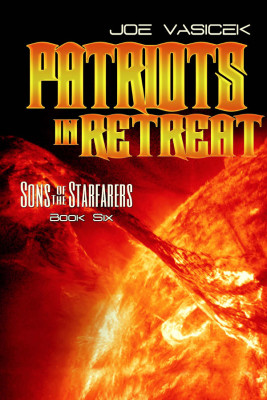
Behold!
Final draft? CHECK.
Cover art? CHECK.
Edits received? CHECK.
Edits approved? IN PROGRESS.
Blurb and metadata? IN PROGRESS.
Formatting? IN PROGRESS.
Estimated time to pre-order: 4 DAYS.
Release date: MAY 15th, 2016
Behold!
Final draft? CHECK.
Cover art? CHECK.
Edits received? CHECK.
Edits approved? IN PROGRESS.
Blurb and metadata? IN PROGRESS.
Formatting? IN PROGRESS.
Estimated time to pre-order: 4 DAYS.
Release date: MAY 15th, 2016
This question has been on my mind for the last couple of weeks, ever since I made a couple of semi-pro story sales. From all of the classes and conventions I’ve attended, the answer has been no, but I’m starting to wonder if that hasn’t changed in the last few years.
First of all, it’s worth pointing out that short stories are not like longer books. In my experience (and I am not a master of the short form by any stretch), short stories do not sell as well in ebook form as longer books. That’s been corroborated anecdotally by virtually every indie writer I’ve spoken with.
At the same time, they aren’t like longer form books in the traditional sense either. I have three deal breakers when it comes to traditional publishing: no non-compete clauses, no ambiguous rights reversion, and no payments based on net. Short story markets typically only buy first publication rights with a 6-12 month exclusivity period, and pay by the word. That means that there’s no reason (unless you want to self-publish immediately) not to sell your short stories to a traditional market first.
(For the sake of argument, I’m going to assume that you’re not writing erotica. It’s a completely different market with its own idiosyncracies, which I’m going to ignore just because I don’t write it. But numerous indies have already proven that it is definitely possible to make a living writing short-form erotica.)
So let’s do a little back-of-the-envelope to see what a professional short-story writer can make.
According to SFWA, a short story is any piece of writing less than 7,500 words long. For the sake of argument, let’s say you average about 4,000 words per short story.
If you write one short story per month, you’ll have 12 by the end of the year. If you write two per month, you’ll have about 25. That comes to about 300 words per day.
If you buckle down and write one short story a week (only 600 words per day), you’ll have about 50 short stories by the end of the year. Raise that to two short stories per week, and that’s 100 short stories per year.
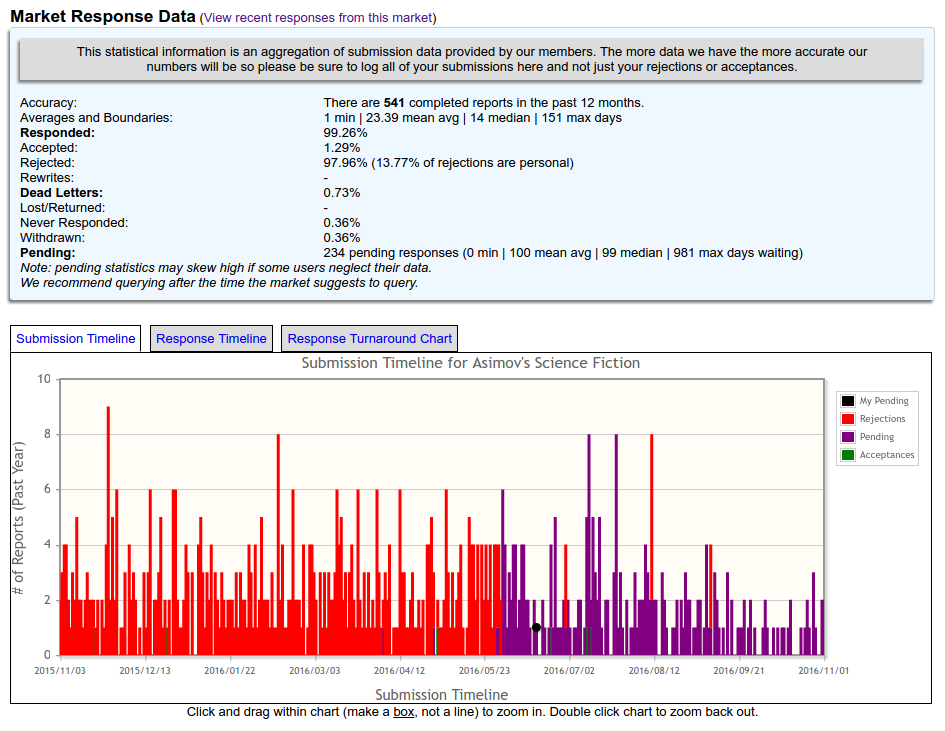
For the sake of argument, let’s say you’ve written 100 short stories. The next step is to put them on submission, using a database like The Submission Grinder to help you find markets. Here are the basic rules you’ll follow:
The professional markets pay upwards of $.06 per word. For a 4,000 word short story, that comes to $250 per sale. If we apply the Pareto principle to short story sales, only about 20% of our 100 stories will sell at this level (which is pathetically low for a professional short story writer, but let’s err on the conservative side). That comes to $5,000.
For the other 80 stories, let’s say you only manage to sell half of them at the minimum $50 rate—pathetic, I know, but we’re trying to be conservative. Forty stories at $50 each comes to $2,000. Together with the professional sales, that comes to a total of $7,000.
For reprint rights, let’s just apply the Pareto principle again to say that reprints account for about 20% of your income from traditional story sales, and original sales account for 80%. $7,000 divided by .8 is $8,750, which we’ll round down to $8,500 just to make the math easier.
So before you do any kind of self-publishing, you’ve got a positive balance of $8,500 just from writing and submitting those 100 stories. It’s not a lot, but it’s not insignificant either.
Now let’s say it takes about three years for you to make that $8,500, since it takes about two or three years to submit a story to all of the pro and semi-pro markets. That’s about $750 per quarter, or two professional sales, two or three semi-pro sales, and two or three reprint sales.
If I were going to self-publish short stories in order to make a living off of them, I would bundle and price them like this:
For the sake of argument, let’s ignore the $.99 singles. They only bring in 35¢ per sale, and you’re probably not going to release all of your short stories as singles. They can be useful for promotions, especially if you make them free from time to time, but they aren’t going to be moneymakers.
If you put all 100 stories into the $2.99 bundles, that comes to 33 (which we’ll round up to 35, just to make the math easier). The royalty rate on each of those sales is 70%, or $2. If you average only 8 sales each month of the $2.99 bundles, that comes to $560.
Looking at it another way, let’s apply the Pareto principle to say that 20% of those 35 bundles are selling a book a day. That’s 7 bundles making about $60 a month, or $420, and the rest are making $105, bringing the total each month to $525.
So for argument’s sake, let’s round down and say that you’re making $500 a month on your $2.99 bundles.
For the larger collections, let’s say you average only about 5 sales each per month, earning about $5 per sale. That’s $50 per collection, or $500 for 10 collections. Paperback sales may add to that, but let’s be conservative and just roll print sales into that number.
If it seems unusual to sell that much with self-published short stories, remember that each story published in a magazine serves as a de-facto advertisement for your self-published stories. With each new magazine publication, your name is put in front of hundreds or even thousands of short story readers, a portion of whom will search for you online and find your other work. Combine that with periodic free promotions on your singles, and it shouldn’t be too hard to build an audience.
So a typical month at these numbers would look something like this:
This is after only a year’s worth of work, writing 2 short stories per week or about 1.2k words per day. It might take a few years to get to this point, since it takes a few years to submit a short story to all of the markets, but if you can keep up this pace then by the time you’ve got 100 self-published short stories, this is probably what your career is going to look like.
And this is using conservative numbers. If you manage to sell half of those 100 stories to professional markets, the numbers go way up. Same if you have a couple of bundles that sell more than 1 copy per day. Same if you build a respectable email list that can push a couple hundred sales with each new release.
So is it possible to make a living writing short fiction? Well, let’s flip that question around and ask: is it possible to make a living writing short non-fiction? Of course it is—it’s called freelance writing. If anything, writing fiction gives us an advantage, because with fiction, the author is the brand.
These numbers look meager ($1,250 a month isn’t a great living), but remember, it’s only after 100 stories, or a year’s worth of work, writing at 1.2k words per day. If you can keep that up for several years, your income will scale up accordingly—especially on the self-publishing side.
Before the digital disruption of publishing, short fiction was dying a long, slow death. There weren’t a lot of paying markets for it, and self-publishing wasn’t a viable option. Now, there appears to be a renaissance of the short form. New pro and semi-pro markets are popping up all the time, ebooks and print on demand are opening up all sorts of new opportunities, and reader engagement has never been higher. That’s true of short fiction just as it’s true of the longer forms.
Is it easy to make a living writing short fiction? Hell no! It requires a tremendous amount of self-discipline, personal organization, and dedication. Even though 1.2k words/day isn’t a whole lot, headspace does become an issue with multiple stories. Above all else, you need to have an iron-thick skin when it comes to rejection. I’ve accrued over 150 rejections and only 4 semi-pro story sales over the course of my career.
But if you’re a prolific, hard-working writer with an efficient system for submitting, self-publishing, and marketing, then in theory at least it appears to be possible to make a living writing non-erotica short fiction.
One of the things about being a creative person is that it’s very hard to keep an organized daily routine for very long. Usually you’ll have one that works out well for a couple of weeks before something happens to make it fall apart completely, and then you have to recalibrate and start over. Nothing necessarily wrong with that, but it is something you have to adjust for.
I’m in one of those recalibrating phases right now, as you can probably tell by the fact that my unfinished WIP is past the self-imposed deadline and I haven’t posted in this blog in over a week. Don’t worry, though—things are going well, and I’ll soon be back up to speed.
Interestingly enough, it wasn’t LTUE that blew up my writing routine. I actually managed to write every day while I was there. It was a bunch of stuff that happened afterward, most notably taxes and car issues. The taxes are completely squared away, but the car issues are ongoing, so I dropped the writing to take a temp job all last week.
Gunslinger to the Stars is still unfinished but at a good stopping point. What I’m probably going to do is put it on the back burner for a month or two as I work on other projects.
Top on that list is to get Captives in Obscurity (Sons of the Starfarers: Book V) ready for publication. The copy edits are back and I have the cover now, so it should be up for pre-order before the end of the week.
Also, there’s another J.M. Wight short story I’m getting ready to put out. Just need to get some feedback and write the author’s note. Though what I may do is bundle that with another J.M. Wight story that I haven’t written yet, so that I can justify putting it out at the $2.99 price point. And the author’s note for this one is going to be a bit unusual too: an essay that tells my own personal story of how I got into family history and some of the spiritual things I’ve experienced from it.
So it may be another month or two before that J.M. Wight bundle comes out. But one thing that definitely is coming out is my short story “L’enfer, C’est la Solitude.” It will be appearing online at Perihelion for their March issue, where you can read it for free. More links as that becomes available.
I’ve also got some short story ideas that I want to flesh out. I’ll probably take the next week or two to work on those, but you won’t see them for a while since they’ll be on submission. But I do have a lot of blog posts that I want to write as well, including:
As for the personal issues that blew up my writing routine in the first place, don’t worry—everything’s fine. Right now, my plan is to buy a scooter and sell my car, just because a scooter would fit my needs better (and would be a lot of fun to ride!). It would also help me to save up for another vehicle next winter, possibly a truck. I’m not too keen on taking out an auto loan, but with taxes out of the way my personal finances are actually in a pretty good place—much better than I expected them to be. So things are looking up.
In any case, that’s what’s going on with me. I haven’t dropped off the face of the Earth yet, just recalibrating and making some adjustments. Expect to see some more stories very soon!
Fantastic news! I sold not one but two short stories this week!
“L’enfer, c’est la solitude” will appear in Perihelion in March or April. And sometime over the summer (probably in June), “The Curse of the Lifewalker” will appear in Sci Phi Journal.
Two semi-pro sales in one week is pretty fantastic, especially after garnering more than 175 rejections over the past two years. I’ve got a bunch more on submission, including several that I haven’t blogged about. I’m averaging about one short story per month, and new markets are popping up all the time, so I don’t expect this to be the last story sale announcement this year. May it be the first of many!
In other news, LTUE 2016 was fantastic. I’m debating whether to write a full blog post about that, because I didn’t take any pictures or tweet anything pithy about it. Still, I came out with a lot of takeaways, especially in terms of writing. The panels I participated on were a lot of fun too, geeking out about stuff like slower-than-light space travel and post-scarcity leisure societies. And it was also really great to see all of my old writing friends here in Utah.
Now I really want to do one of two things: attend another sci-fi convention, and write and submit more short stories!
It’s February, and that means it’s time for Life, the Universe, and Everything! From Thursday to Saturday this week, I’ll be at LTUE in Provo, Utah, my hometown sci-fi convention. If you get a chance to come and attend some panels, here is my schedule:
Flashbacks: Yea or Nay?
An in-depth discussion about how to write an effective flashback, and when you should avoid flashbacks entirely.
12:00 pm – 1:00 pm
Know Your Publishing Options
4:00 pm – 5:00 pm
A discussion on how current publishing strategies differ from more conventional strategies, and how to decide which is best for you.
A Leisure Society
A look at what becomes of people when computers and robots are doing all the work.
4:00 pm – 5:00 pm
Slower Than Light Space Travel
The limits of and possibilities for life in space without faster than light travel.
11:00 pm – 12:00 pm
Over the course of writing Gunslinger to the Stars, I’ve learned some interesting new things about my writing process, as well as being reminded of some of the basic lessons I learned back when I was getting started. These lessons have helped me to have some fantastic writing days, like today, where I hit 2200 WPH at one point and knocked off 1.7k words before lunch.
Just a week ago, though, I was struggling to write anything, which was strange considering how well the story had been coming along up to that point. The realization that helped me to get through that and get back to writing strong was that my difficulty was a function of story structure, and that different parts of the story require a different process.
What follows are my personal conclusions about my own writing process, which may or may not be similar to your own. Every writer is different, so what works for me may not work for you. At the same time, there are enough similarities that I hope my own process may provide some insight into your own.
First of all, let’s talk about story structure. There are a lot of different possible structures, but the most common one in the West is the three-act structure. This often echoes the hero’s journey, which goes something like this:
For purposes of this blog post, I’ll assume you’re already familiar with both the three-act structure and the hero’s journey. If not, there are plenty of other resources where you can learn about them in-depth.
I prefer to think in terms of four-part structure, however, where act two is divided into two halves. In typical three-act structure, the hero hits his lowest point at the midpoint of act two. This is also the midpoint of the story itself, where the hero reaches the nadir of the hero’s journey. In four-part structure, that midpoint is just treated like a plot point, dividing part two from part three. Everything else is the same.
Thus, when you frame a particular story in four-part structure, it looks like this:
The first part of the story typically starts in the ordinary world, until the inciting incident somewhere around the middle of part one calls the hero to adventure. He then either refuses the call (which usually leads to bad things because the call knows where you live), or he accepts it and has to fight off some threshold guardians to get into the realm of adventure (sometimes, he refuses it and has to fight the guardians). Typically around this point, he meets a mentor to help him on his way.
Prewriting: To get off to a good start, I have found that the key is to know (or at least have a good idea) how the story is going to end before I begin to write it. That way, I know that I’m starting in the right part and I have a general idea where I’m going. I don’t know how I’m going to get there yet, but that doesn’t really matter yet.
Writing: The hardest part about writing this part is the first scene. After that, it usually comes quite easily. It helps to do a bit of world building, or to outline the characters and their backstories, but it isn’t always necessary. Personally, I’ve found that I can discovery-write these things pretty well (and yes, if you haven’t guessed already, I’m a pantser).
Revising: This is usually the part that needs the most revising. It’s also the part that can get me into the most trouble if I don’t do it well. I’m a chronological writer, and if something in the story is seriously off, I have to go back and fix it before I can proceed to the end. I’ve forced myself to finish even when I knew that things were broken, and it only made the writing process worse. So for me, the beginning usually gets the most revision work, whether I plan on it or not.
Part two is where the adventure really begins. The hero crosses the threshold into the unfamiliar world, and everything is new and exciting. This is also the part where things start to become truly dangerous. Not everyone is who they seem in this part, and the hero may fall into some traps. But the mentor is usually still there to help him get back up.
Prewriting: In my experience, this is the part that needs the least pre-writing. It’s almost always pure discovery. With the ending clearly in mind but still distant enough not to worry about, I can afford to let the story meander a little and take me to some unexpected places.
Writing: This is usually the easiest part of the story to write, for the same reasons as above. I can afford to do almost 100% discovery writing at this part, and it usually feels quite effortless. When the writing does get blocked, it’s usually because something in part one is totally broken.
Revising: Most of the revision process for part two consists of making sure that later events are properly foreshadowed. I usually don’t add enough foreshadowing when I write the first draft, so it’s essential to go back and add it later. Thankfully, this can usually be accomplished by a couple of tweaks, or adding a couple extra paragraphs to an already extant scene.
This is where the story gets real. The hero falls into a much larger trap than any of the others, and the mentor can no longer help him (usually because he’s dead). Alone, the hero has to find his own way out, usually hitting rock bottom along the way. Just when it looks like all is lost, some new twist sends the hero in a different direction, setting things up for the final act.
Prewriting: This is where prewriting goes from being unimportant to absolutely essential. Whereas in part two, I can afford to let the story meander a little bit, in part three I absolutely need direction. It’s not enough just to know how the story will ultimately end: at this point, I’ve found that I really need to map my way there.
Writing: This is also typically the most difficult part for me to write. However, when the prewriting is done well and the plot is set up properly, it’s actually not that bad. But it’s important to go really hard on your characters—to make life truly miserable for them. There can be no easy way outs for them, otherwise the entire story will suffer.
Revising: For part three, revising usually consists of putting scenes in the proper order, not in rewriting them completely from scratch. If the foundational elements of the previous two parts were set up correctly, then everything in part three will usually come out well too, but they’re almost always in the wrong order. Transitions then are the part that usually need the most cleanup.
At this point, the hero has a clear direction and a knowledge of how to get there. In climbing up from his lowest point, he finds the boon that will save the world, makes peace with the higher power, and comes back stronger than ever before. But the forces of evil have never been stronger either, and the clash marks the climax of the entire story. There may be a big damn hero moment, or a last minute rescue from the cavalry. There may also be a standoff with no apparent solution, or some truly complex power plays. Inevitably, though, there is a resolution, followed by a return (even if only to the world of adventure). The hero saves the world, gets the girl, and rides off into the sunset. Curtains, applause, and lights.
Prewriting: By this point, most of the prewriting has already been done. The important thing is to have the flexibility to change and adjust, because this is the point where the story often surprises me. It is also the point where discovery-writing is often the most satisfying.
Writing: At this point, I’m usually tearing it up in a white-hot heat of creative energy. It’s extremely rare that I’ll get blocked at this point, but if I do, the key is almost always to just write through it. Often, I’ll make notes of things to change in revision and just barrel ahead—and it works, because there’s no need to set anything up for later. This is the moment of truth, where everything comes together.
Revising: Most of the revision at this point of the story has to do with tying up loose ends. That’s usually not a problem for me, though, because I tend to write very clean. If there is a loose end, it’s usually something that I’ve made a note to fix earlier in the story. For me, the ending is usually the part that needs revising the least.
So there you have it. The biggest lesson I’ve learned just recently is how important it is not to neglect the prewriting aspect of the creative process, especially around part-three. When everything is in place, it makes the story flow so much better.
What are your thoughts? Any plotters or outliners out there with a different take on the process? Everyone is different, but we’re all basically trying to do the same thing, so it’s interesting to see what works for different people!
Sorry for not posting to the blog in a while. I seem to be chronically disorganized, and updating the blog is unfortunately rather low on the priority list. But I’m still alive, and still writing.
Gunslinger to the Stars is coming along well, though it’s not been without its hiccups. I’m about halfway through right now, and while I’m probably not going to hit the original deadline, I should have no problem finishing the rough draft by the end of February.
I’m also happy to report that I’ve got the edits back for Captives in Obscurity (Sons of the Starfarers: Book V) and am working with the cover designer to get that part squared away soon. Once I have the cover, it’s a simple matter of writing up the metadata and formatting the ebook. So you can expect to see that go up for pre-order sometime in February.
Also in February, it looks like I’ll have a short story come out, possibly two! “The Gettysburg Paradox” is coming off of submission soon, and I recently wrote a J.M. Wight short titled “A Covenant of Hearts.” No idea where to submit that one, so I’ll probably just publish it myself. The J.M. Wight short needs a bit more work, but “The Gettysburg Paradox” is ready to go up almost right away. All I need to do is figure out a cover.
So even though things have been quiet, there’s a lot going on behind the scenes over here. Expect to see some more cool stuff really soon!
I was going to write another trope post for this Monday, but I got a little carried away with family history research (on the Texas Czech lines, no less), so instead I’m going to share another excerpt from my current WIP: Gunslinger to the Stars. I’m happy to report that it’s coming along fantastically well and the first draft should be finished early February.
For those of you who aren’t familiar with Gunslinger, it’s basically Monster Hunter International meets Guardians of the Galaxy. I’m not as much of a gun nut as Larry Correia, but I hang out with a lot of friends who are, and they’re helping me out with that aspect of the story. The main character is Sam Kletchka of New Texas, one of the Gliese colonies in Earth-space, and his love of guns is as Texan as you can expect:
Before I continue, I should take a few moments to introduce you to my guns. I’ve acquired quite a variety in my travels, but when I started out from New Texas, I had only six. These weapons form the core of my arsenal, and have gotten me out of more hard spots than I can recount.
My father was never particularly religious, but my mother was a devout Christian, and she made me read the Bible cover to cover before I left home for the stars. In the quiet moments between adventures, I sometimes pull out my pocket KJV to read a passage or two. My favorite is the book of Psalms, and on the long voyage from New Texas to Aldebaran, I must have read it a dozen times. About midway through the voyage, I read the following passage in Psalm 36:
5 Thy Mercy, O Lord, is in the heavens; and thy faithfulness reacheth unto the clouds.
6 Thy righteousness is like the great mountains; thy judgments are a great deep; O Lord, thou preservest man and beast.
7 How excellent is thy lovingkindness, O God! Therefore the children of men put their trust under the shadow of thy wings.
It was from this verse that my guns got their names.
MERCY is a supressed Ruger 22 Charger™ Rimfire Pistol. She’s fairly small and doesn’t pack much of a punch, but she’s as silent and stealthy as a Zan cloakship in deep space. Besides being perfect for cloak-and-dagger type stuff, Mercy is also quite excellent for hunting small game, on the few occasions where I’ve been stranded planetside without supplies.
The next two are AR-15 uppers that I can swap out depending on my needs. FAITHFULNESS is a suppressed 300 Blackout with a 9” barrel, perfect for boarding action. I use a homemade subsonic round with the ballistics tuned down just a notch, to allow for onboard fire that won’t accidentally puncture the ship’s hull. The suppressor is excellent for firing in confined spaces, and the standard 30 round magazine has plenty of capacity for most jobs.
RIGHTEOUSNESS is a .50 Beowulf upper that I can swap out for Faithfulness. This massive gun packs an enormous punch, enough to blow through a bulkhead and vent some atmo. I mix an oxidizer in the cartridges to allow it to fire in a vaccuum, making it an excellent weapon for EVA assaults. You just have to be careful to lock your magnetic boots firmly onto the ship’s hull, otherwise Newton’s third law will send you flying.
JUDGMENT is an M203 grenade launcher that attaches quite nicely onto Faithfulness and Righteousness. She makes the rifle a little heavier, but in zero gravity, that doesn’t really matter much. With the proper munitions, Judgment can light up a firefight like Christmas.
PRESERVATION is an 18” Mossberg 590A1™. She’s a tough little girl that can pack a serious punch. The best thing about shotguns, though, is that the ammunition is super easy to fabricate. That’s no small thing when you have to fab all your ammunition yourself. For that reason, if I were stranded on a desert planet and could take only one of my guns with me, it would be Preservation.
LOVE is my father’s trusty old 1911 9mm. She’s been in the family for quite a while, and when I left the Gliese colonies for the stars, he wanted me to take her. Besides being stupidly rugged, the 1911 is also quite easy to maintenance or to fabricate replacement parts. For that reason, it’s the handgun of choice for most offworld colonists.
KINDNESS is the Gliese Arms 2011 .45 ACP that you’ve already met. The 2011 is a lot like the 1911, but the 140mm double stack magazine allows for a capacity of 14+1, not bad for a .45. As you already saw from the gunfight at the Oasis, Kindness is a great gun for everyday carry, when you don’t know what you’re gonna need.
TRUST is a Himalayan Imports Chainpuri 15” Kukri: not a gun, but an excellent combat knife. The Nepalese Gurkhas were some of the most badass warriors of Earth, and the kukri is their signature weapon. I acquired Trust at the Earthfleet Academy on Luna, after winning a game of poker with my fellow cadets. She’s such a beauty, I wouldn’t dream of ever gambling her away.
Those are the weapons I started out with, and the main core of my personal arsenal. Over the course of my travels, I’ve picked up a few others, but I’ll introduce them to you later.
Tomorrow, I get to write about Sam’s other three guns: Faith, Hope, and Charity. These are alien weapons that he re-engineered for human use (he’s a fairly decent gunsmith—has to be, since he’s usually the only other human wherever he goes). True to its namesake, the greatest of these is Charity, for Charity never faileth, and whosoever is found possessed of it at the last day (or the end of the book), it shall be well with him.
Needless to say, Gunslinger to the Stars has a veritable arsenal of Chekhov’s guns. Before it’s over, I intend to fire them all. Repeatedly. If Sam had a theme song, this would probably be it:
631 words in 30 minutes, 1250 WPH. 2404 so far today. Taking a break to make dinner. #amwriting
— Joe Vasicek (@onelowerlight) January 8, 2016
#amwriting through a rough spot. 216 words in 30 minutes, only 400 WPH. Hopefully next session is better.
— Joe Vasicek (@onelowerlight) January 11, 2016
First session of the day: 432 words in 30 minutes, 900 WPH. The rough spot has been passed! #amwriting
— Joe Vasicek (@onelowerlight) January 12, 2016
First session of the day: 586 words in 25 minutes, 1400 WPH. Definitely through that rough patch! #amwriting
— Joe Vasicek (@onelowerlight) January 13, 2016
A couple of weeks ago, I wrote about how I plan to achieve my writing goal of hitting 10k words of fiction in a single day. The steps I laid out to getting there were:
I’m happy to report that the writing has been coming along very well! Ever since I started timing my sessions and keeping track of how much and how fast I write, it’s been as if someone turned on a switch inside my brain. The words are flowing, the story is coming along very well, and I’m a lot happier and more productive than I was only a month ago.
The main thing that does it is, ironically, forcing myself to stop every half hour or so. When I wake up in the morning and thing of how much I want to write that day, it can be a little daunting. By writing in short bursts, it helps to break the big goal down into parts. When you think too much about all the writing you want to achieve, it’s very easy to get caught up in the procrastination trap. But when you think of it as just a half-hour session of 400-600 words, it seems a lot more doable. And it is!
So things are coming along very well with Gunslinger to the Stars. My goal is to finish the first draft by February 6th and send it out to my first readers shortly thereafter. If things keep going the way they have been, I may actually finish it sooner.
As for reaching 10k words, I’m still a ways off but headed in the right direction. For now, I’m laying the foundation for it: building good habits and hitting a consistent stride. Once I’ve got that laid out, I’ll start to stretch myself, pushing the limits further and further until I’m ready to make the final approach to the summit. No sense in pushing too hard and burning out along the way.
In other news, I’ve sent Captives in Obscurity (Sons of the Starfarers: Book V) off to my editor, and should be getting it back in early February. The cover art should be ready around the same time. If all goes well, the book should be up for pre-order by the end of February, with a release date of May 15th.
I’m not sure when Patriots in Retreat (Book VI) will come out, since I’m still writing it, but as of right now I’m tentatively planning for a release sometime in August. After I’ve finished with Gunslinger to the Stars, I’ll move on to Patriots and see if I can’t knock that out before the end of February. If so, I might actually push the release date up to July.
As for other WIPs I intend to tackle, The Sword Keeper and Edenfall are on the top of the list. The free month for Genesis Earth went a lot better than I had expected, leading me to believe that there’s enough potential to make finishing the trilogy worthwhile. Besides, Edenfall is already plotted out, so if I can keep up the 10k pace it should be a cinch to write. Same with The Sword Keeper.
That just about does it for this post. I intended to write another Self-Sufficient Writer post responding to some of the craziness going on in the world right now, but that will have to hold off until next week. I’ve also got another trope post planned for Monday, so that should be interesting.
In the meantime, I’ll leave you with this video about how many twinkies it would take to power the Death Star. Take care!
Last week, George R.R. Martin surprised no one and disappointed everyone when he announced that The Winds of Winter would not come out before the next season of the Game of Thrones TV series that covers the events in that book. He apologized profusely to his fans, most of whom seemed to take it graciously, at least to his face. However, it spawned some heated discussions in the online communities that I frequent (most notably The Passive Voice) about the implicit contract between writers and reades.
This discussion is not new, even with regard to Mr. Martin. Way back in 2009, Neil Gaiman addressed this issue in a blog post where he stated quite memorably that “George R.R. Martin is not your bitch”:
People are not machines. Writers and artists aren’t machines.
You’re complaining about George doing other things than writing the books you want to read as if your buying the first book in the series was a contract with him: that you would pay over your ten dollars, and George for his part would spend every waking hour until the series was done, writing the rest of the books for you.
No such contract existed. You were paying your ten dollars for the book you were reading, and I assume that you enjoyed it because you want to know what happens next.
So that’s one end of the spectrum: that writing is an art, that it can’t be forced, that trying to force it is wrong, and that writers have no obligation to their readers to force anything. Readers should not stalk their favorite writers or tell them what they should or should not be doing to produce the next book. As Mr. Martin said in his latest post:
Unfortunately, the writing did not go as fast or as well as I would have liked. You can blame my travels or my blog posts or the distractions of other projects and the Cocteau and whatever, but maybe all that had an impact… you can blame my age, and maybe that had an impact too…but if truth be told, sometimes the writing goes well and sometimes it doesn’t, and that was true for me even when I was in my 20s.
On the other end of the spectrum, we have Larry Correia. Two days after Mr. Martin announced that The Winds of Winter would not be finished in time for the TV series, Mr. Correia announced his own plans for the year: which of his books are coming out, which books he plans to write, which project he’s going to collaborate on, and which conventions and events he will (or more notably, will not) be attending.
I don’t know whether he meant this as a dig at Mr. Martin specifically, but he included the following statement:
To all those sensitive artist types who whine about how they can’t rush art, and can’t get any writing done, oh, BS. Quit your crying, put your big girl panties on, and treat it like your job. Because it is a REAL JOB. And like all real jobs, if you don’t work then you shouldn’t GET PAID. So shut up, quit screwing around, and get back to work.
The part that really stood out to me, though, was his announcement that he would not be at DragonCon or GenCon this year:
I’m skipping DragonCon and GenCon this year, which pains me because I love those, but again, I’m trying to up the novel production, and all those cons in a row over the summer kick my butt.
I found it interesting because George R.R. Martin is well-known as a frequent convention attendee, to the point that by his own admission attending these conventions is his “way of life.” Larry Correia knows that his writing productivity takes a hit when he attends too many conventions, but George R.R. Martin either doesn’t know or has chosen to prioritize attending fannish events over his own writing.
This made me curious about Mr. Martin’s writing productivity, so I did a little digging and found the following figures, calculated by his fans:
Those numbers are rather stunning. He averaged only 200 words a day when writing A Dance with Dragons? Just for reference, this blog post is about seven hundred words so far, and I’m writing it while taking a break from my other writing (word count so far today: 1,100 words, and that’s a little low). Even if we allow for five drafts written at the same speed, five drafts still only comes to 1,000 words a day.
Now, I do think Mr. Gaiman makes a good point that it is neither healthy nor helpful to try and micromanage everything that a writer does. We can’t spend every waking hour working on the next book, and even if we did, it probably wouldn’t turn out as well, because refilling the creative well is an important part of the writing process. And I also have to admit that if you ran a similar calculation on my own books (especially the early ones), you would probably find some similarly embarrassing figures.
(Though to be fair to myself, I tend to have multiple irons in the fire at any given time, so a straight start date to publication date calculation doesn’t tell the whole story—and it probably doesn’t tell the whole story with George R.R. Martin as well. But still, even if those figures were twice as high, they would still be absurdly low for a working writer.)
When Mr. Gaiman and Mr. Martin say that the writing “comes when it comes” and there’s nothing they can do about it, I think they’re wrong. Dead wrong. Writing is an art, but it is also a craft. It can’t be forced, but it can be structured. Mr. Correia has evaluated how productively he writes and structured his convention-going plans accordingly. Has Mr. Martin?
I also think they’re dead wrong about the writer having no obligation to the reader. That’s total bunk. Reading is an act of collaboration between the writer and the reader: without readers, stories would never exist. They would just be markings on a page, or electrons on a drive, or at best ideas and daydreams in the writer’s head. If a tree falls in the forest, does it really make a sound? If a book is never opened, does it ever tell a story?
Part of this may be the difference in perspective between indie writers and traditionally published writers. In the traditional system, writers were paid an advance on royalties by their publishers. The contract also allowed for royalties, but those figures were set so low that most books never earned out their advance. Publishers made up for it by raising the advances for the writers they wanted to keep.
In contrast, indie writers live and die by their royalty checks. Had a good month? Congratulations, you can afford to eat. Had a bad month? Tsk, tsk. Better hurry up with that WIP of yours, because the longer it takes to publish it, the longer it takes for you to get paid.
But even for the fantastically successful writers who never have to worry about how they’ll pay their bills, I still believe that they have as much of an obligation to their readers as the rest of us. Without readers, we would not be able to do what we do. Without readers, it would be impossible to pursue writing as a career. We all want to live the dream, and the only way to do that is by treating our readers well.
So George R.R. Martin may not be your bitch, but I most certainly am. Writing is not something that happens only sometimes: it’s my job, and I do it every day. And as for accountability, I absolutely feel that I’m accountable to my readers. They are the whole reason I am able to do this in the first place. If that makes me their bitch, then so be it.