Did you think 2016 was crazy? Get ready, because 2017 will be even crazier. It’s going to be awesome.
Fortunately, things here in the States are going to get better before they get worse. And Utah is generally better off to begin with, so things aren’t going to get really bad until… well, let’s just say that when it comes, you’ll see it coming.
Keep building your writing career. Work hard at it. It’s not going to take off until you do. Cultivate the discipline to write consistently, even (or especially) when you don’t feel like it. You have so many stories in your head, and that’s the only way to make sure that they all get written down.
Don’t be afraid to branch out into other genres. Read widely, and you’ll have some ideas that will take you in a surprising direction. But don’t use that as an excuse to abandon your current WIPs. An important part of self-discipline is finishing what you start. Learn how to manage your excitement, and this won’t be a problem.
It’s important to cultivate discipline in every aspect of your life. We always start out with the best of intentions, but that’s rarely enough to see us through. At the same time, no battle plan survives contact with the enemy. Take frequent personal inventories to revisit your long-term goals, and you’ll find come December that the year was not wasted.
There’s more that I could tell you, but I think this is enough. Don’t let the craziness happening in the world distract you from your writing. You’ll have plenty of time and warning, so there’s no need to make a hobby of watching the world burn.
Work hard, stay the course, and I’ll see you on the other side.
Well, it’s been another year. Fasten your seatbelt and hold on tight, because you’re in for a twelve-month rollercoaster.
A lot of crazy events are going to happen in 2016. The things you’ve been predicting for years are going to start to come true, in ways that are going to surprise you. Don’t worry too much about the world falling apart, though. You’re on the right course, so keep working on your personal preparedness and self-reliance, and things will work out all right.
A lot of people are going to be dismayed with the major world events this year. Don’t be one of them. There’s a temptation to listen to the pessimists, to everyone shouting that the world is coming to an end. On a long enough timeline, they’re usually right, but the timing and order of events still matters. So don’t be dismayed. The world will still be here at the end of 2016.
Enough about current events; let’s talk about yourself. You’ve set some fantastic resolutions for 2016, and you’re going to actually achieve some of them. No, I’m not going to tell you which ones. I will say, though, that the biggest changes to your life this year will come as a result of pursuing them. Take courage and pursue them with enthusiasm.
If there is one piece of advice that I could give you, it is this: don’t be an obstacle to the blessings you hope to receive. If we could see ourselves from a higher perspective, we would realize that there are floods of blessings ready to be poured upon us, except for the obstacles that we throw up to stop them. Take care not to become your own greatest obstacle. Be good to yourself. Don’t beat yourself up for past mistakes, but see each day as an opportunity to become a better man.
Keep up your journal writing. That’s important. Also take time to review your journal. There are important things you wrote down in there that you shouldn’t soon forget.
You will experience many triumphs as well as setbacks. Don’t let the setbacks become permanent. You have a lot more control over the things in your life than you realize. Don’t be dismayed by the chaos in the world, because at the end of the day, the things that happen in far-off places don’t impact you nearly as much as your own day-to-day choices.
You’re going to make some really stupid publishing decisions, and if you don’t correct them quickly, it’s going to bite you hard. Gather as much data as you can, and update your charts and tables as often as new data comes in. Only trust your gut after you’ve thoroughly studied the data.
You’re on the right path. Just keep following it. If you stop midway and don’t follow it to the end, it makes no difference whether it’s right or wrong. Don’t quit.
That pretty much does it for this year. Hold on tight, and I’ll see you on the other side.
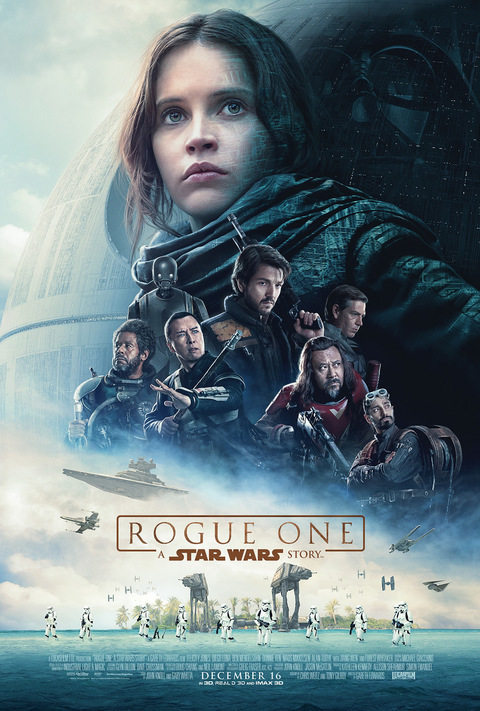
The Force Awakens was a great movie to bring the kids to. Rogue One is probably one you should watch by yourself. It’s a little bit darker, a lot more violent, and jam packed with nostalgia that would go over their little heads anyway.
Rogue one is to the Star Wars franchise what Halo: Reach is to the Halo franchise. The first Halo games were all about the plucky hero saving the galaxy from destruction, much like Star Wars (we won’t talk about the prequels). Halo: Reach was more about the people behind the scenes who set the stage for the main story, much like Rogue One.
I’m not sure if Rogue One has the same depth as Halo: Reach. I’d have to watch it again to decide. But the stories feel very similar.
One thing that Star Wars tends to screw up is the comedic relief, and here Rogue One happily breaks the trend. Some of the best lines in the movie were from K-2SO, the character equivalent in Rogue One for C-3PO and R2D2. Quite a few laugh out loud moments, and his particular style of dark humor fit the rest of the movie perfectly.
As much as I’m using the word “dark” to describe this movie, it’s actually not that dark. If you’re looking for Game of Thrones in space, you’ll have to look elsewhere. This is definitely still Star Wars, and while it might be a bit darker than Empire Strikes Back, I’m sure there are plenty of fans who would debate me on that.
I really like the way that this movie develops Tarkin, which is to say that I hate him even more at the end of it. In A New Hope, Tarkin was always overshadowed by Darth Vader. Not so in this one.
Darth Vader doesn’t get much screen time in Rogue One, but the time that he gets is put to excellent use. His last scene reminded me a lot of the 2003 animated Clone Wars series (the one that isn’t canon).
All in all, Rogue One was an excellent movie. It didn’t quite rise to the level of the classics, but that wasn’t what it was meant to do. As far as paying homage to the original trilogy goes, this may be the best of the new Star Wars movies yet. I definitely plan to include it in my next Star Wars marathon, and that’s saying a lot.
This year, I’m spending Christmas with my family in Iowa. Even though I don’t leave until Thursday, I mentally checked out on Monday morning. Haven’t gotten hardly any writing or publishing work done since.
Have I blogged about my thoughts on Christmas before? Looks like I haven’t. There’s a lot of things that I really love about Christmas, but there’s also a lot that I can’t hardly stand.
Things that I hate:
The movie Elf. Every single aspect of it.
About 80% of the Christmas music played in retail stores.
The crass commercialism. BUY BUY BUY!
The neverending war between “Happy Holidays and “Merry Christmas.”
Pretty much everything about the Santa Claus myth, especially the emphasis on convincing small children that it’s real.
Things that I love:
Charles Dickens’s A Christmas Carol.
Handel’s Messiah.
Nativities and creche displays.
Christmas caroling in general.
Christmas trees.
Secret Santa gift exchanges.
Spending time with family.
To be honest, every December 26th, I let out a small sigh of relief. The holiday season is a minefield.
New Year’s is a much more enjoyable holiday. I’m one of the few people who actually enjoys setting New Year’s resolutions, and while I don’t always keep them, there have been some amazing times when I have.
There’s a sense of rebirth that I really like with New Year’s. It’s a time when we all decide to put away the things of last year and focus on the possibilities ahead of us. That’s what resolutions are all about, and why I love setting them.
Then there’s Winter Solstice, the shortest day of the year (in the northern hemisphere anyways). It’s always insane how short the days get in winter. Even in Utah, which is not that far north, the lack of sunlight can really get to you. So it’s always nice to know that the shortest day is here and from now, they will only get longer.
So yeah, that’s pretty much the holidays. I probably won’t write much between now and January 1st, though I do hope to finish a short story. I figure that’s a small enough goal that I can actually get it done. As for blogging, I’ll at least do a New Year’s post, after I figure out my 2017 resolutions. Can’t promise anything other than that, but you’re probably all busy doing holiday things yourselves too.
Merry Christmas and Happy New Year’s! I’ll see you on the other side of the holiday minefield.
So it’s the end of another year. I’ve spent the last week or so taking stock of my writing career, figuring out what I did in 2016 that worked and what really didn’t.
Writing is a career where you have to periodically reinvent yourself. My goal from the beginning has been to make a living telling stories that I love, and until 2015, I was doing pretty well. I tried out a lot of new things in 2016, but it was still a tough year, so there’s still a lot left to do.
Here are some of the things I tried out in 2016:
Dropping perma-free for a free-pulsing strategy: This actually worked out fairly well. From a pure numbers point of view, I managed to give out more free books by free pulsing in 2016 than I did with my old perma-free books in 2015.
Unpublishing my novellas in favor of more novel-length works: This was really stupid. It made my free books less effective, and seriously undermined my earnngs. The goal was to give more prominent placement to my novel-length works, but sales didn’t increase accordingly. Moral of the story: so long as a book is selling, don’t unpublish it.
Submitting short stories to traditional markets: Worked pretty well. I got a handful of semi-pro sales and made a little north of $120. Not a huge boost, but not insubstantial either. And most of those were reprint sales.
Proactively building my mailing list: Probably the best thing I did all year. Instead of waiting for people to organically sign up, I started using InstaFreebie to get my name out. Now, I have a list that is just shy of 2,700 subscribers. It’s not enough to push a new release up to the top of the charts, but it is enough to noticeably boost sales and reviews.
Using my mailing list for more than just new releases: I was a bit worried about this at first, but it’s worked out quite well. So long as I’ve got something of value like an author cross-promotion, a free book, or book recommendations, the response has been quite positive.
Publish more short story singles: The jury’s still out on this one. Short stories definitely arent money-makers, and the response from free-pulsing has been rather tepid, but I have been able to use them effectively as incentives to subscribe to my mailing list. I will probably keep the ones that still sell after six months and unpublish the rest, opting instead to publish them in bundles.
Which brings me to my crazy ideas for 2017:
Release a new title each month
I went through all my WIPs and short story submission logs, and it looks like this is something I can actually do. Right now, the schedule consists of five short story bundles, four short story singles, one novella and two novels. Everything except the novella and two of the short stories are already written.
This would be fantastic. They say that nothing is better for book sales than publishing a new release, so this would really put that to the test.
Release a series in Kindle Unlimited
I’ve made it very clear that I’m against exclusivity, something that the Kindle Unlimited program requires. However, not having any of your books in Kindle Unlimited is also kind of exclusive, just in the opposite direction. Probably the craziest thing I’m considering right now is putting a series in Kindle Unlimited, just to see how it does.
However, unless I can try this with a new series, I probably won’t do it. At first, I considered putting Sons of the Starfarers in KU, but then I realized that this wouldn’t be fair to my non-Amazon readers who are waiting for the last four books.
Then there’s all the reporting anomalies with KU that numerous readers are reporting. Doesn’t exactly inspire confidence. Combine that with the low payouts and the relatively high probability that KU readers won’t try out my non-KU books, and I’m loathe to do this.
But enough readers pester me about it enough, I may give KU a try.
Raise book prices
By far, the biggest mistake I made in 2015 was underpricing my Star Wanderers books. Now, I’m starting to wonder if all my other books are underpriced.
There are a couple of ways to figure this out. One of them is to jack up all my book prices as high as I’m willing to price them (in this case, $9.99), then gradually lower them over the course of several weeks to see where sales reach an equilibrium. My gut tells me that this is a bad idea, though, at least for now.
The other way is to run a survey, which is what I’m doing below. There are only two questions. If you could, I’d greatly appreciate it.
Republish all single Star Wanderers novellas
This one goes back to what was probably my biggest mistake in 2016: unpublishing all the individual Star Wanderers novellas. It’s great to have them available in the omnibus editions, but the singles were still selling, and unpublishing them really didn’t accomplish anything useful. So you can expect them to make a comeback soon.
What I will probably do is price all the novellas at $2.99 and the omnibuses at $6.99. I’m also toying with the idea of free-pulsing them all over the course of the next year. But that would be really crazy.
Be a more active blogger
I’ve really neglected this blog, especially over the last few months. I’ve also been really bad about connecting with other bloggers, checking them out, leaving comments, and sending readers their way. So in 2017, I’d really like to be better about that.
That’s just about all for now. I’m not quite sure how many of these ideas I’m going to run with, but if you’ve any thoughts of your own, I’d like to hear them. Thanks!
I really enjoyed the experiment last month with the book recommendations. It seemed to go over fairly well, so now that it’s December let’s do it again!
Nothing Found
Don’t be fooled by the painfully self-published cover on this one. Captain Cosette is a light, clean, and really fun book. Imagine if Cinderella got a blaster rifle instead of a glass slipper, and became an ace starship pilot instead of going to the ball. I picked this one up a couple of years ago and really enjoyed it, and I think my readers will too!
Nothing Found
Michael Bunker is a really fascinating guy. He lives off-grid, writes off-grid, grows most of his own food, and is prepared for pretty much any apocalypse scenario you can think of. Not surprisingly, that’s also what he writes about. As a student of Russian history and literature, though, he puts a great deal of thoughtfulness into everything he writes. His stories are great, but I read him just as much for his insights into humanity, society, and the unsustainability of modern life.
Wick is an alternate history, where Hurricane Sandy in 2012 set off a series of cascading events leading up to the big SHTF. Just as Anatoliy Golitsyn and Yuri Bezmenov warned us, the global communist movement did not die in 1989, and Sandy is exactly the sort of crisis that the Soviet sleeper cells within the United States have been waiting for. The modern world as we know it is gone, and something truly terrifying is rising to take its place.
Nothing Found
“Redoubt” takes place in the same universe as Wick, but out in the Rockies. Three ex-special forces guys and an artist get holed up in a summer home high in the mountains when the big SHTF happens, and have to fight for their lives. Again, the thing about this story that really shines is Michael Bunker’s insights into modern society and how people deal (or fail to deal) with the end of the world.
Nothing Found
Eric James Stone is a friend of mine, and his novelette “That Leviathan, Whom Thou Hast Made” is my favorite work of his that I’ve read. It’s about an alien race of intelligent beings that live in the sun, and the human colonist who serves as the ecclesiastical leader to a small group of them who have converted to Mormonism. Theological hilarity ensues. It’s a fascinating story, and one of the most well-done treatments of religion in science fiction that I’ve ever read. I can see why it won a Nebula.
That pretty much does it for this month. Take care, and until next time, thanks for reading!
So you’ve written a short story, and you’re wondering what to do with it. You think it’s pretty good and you want to see it published, but you’re wondering what’s the best way to do that.
I can’t guarantee that this is the best way, but it is the way that I do it. Let’s start with the basics.
Indie vs. Traditional
Traditionally, short stories were published in magazines, anthologies, or collections. These were known as the “markets.” The editor was the one who chose which stories would go in and shepherded them to publication. Because of the periodical nature of the markets, there were a lot more short story slots than openings at the big publishing houses for novels, and many editors considered it a way for new writers to cut their teeth and prove their chops. It was also a great way for writers to get feedback, on the rare occasion that an editor wrote a personalized rejection.
In the 90s and 00s, the short story markets entered a period of decline, mostly due to the technological disruption of this newfangled thing called teh internets. Subscription rates for all the major sci-fi magazines went down, just like they did for newspapers. However, several new markets emerged to take advantage of the new ways to reach readers. The same innovations that spurred the indie publishing revolution also gave birth to new short story markets.
Today, when you write a short story, the first question you’ve got to answer is “do I want to self-publish this, or should I submit it to the markets first?” If you’re a happily self-published indie writer like me, the urge will be to self-publish first and ask questions later.
But Wait!
The awesome thing about short stories is that you can get the best of both worlds. How? Because unlike the major publishing houses, the traditional short story markets don’t impose prohibitive measures designed to gobble up your rights and lock down your publishing options. Publishing the same story in multiple markets is not only possible, it’s encouraged.
To maximize your returns, you have to be patient and impervious to rejection. You also have to learn some key terms. But first, as with any job, you have to select the right tools.
Get Thee to the Grinder!
To start out, you’re going to have to need some way to track all of your story submissions. By far, the Submission Grinder is the best free tool on the internet to do that. It’s a massive database for every English-speaking short story market, with stats compiled from user data. Not only does it tell you where you can submit, it gives you all sorts of useful statistics about each market. Create a free account, log your story, and use the Grinder’s search tools to find out where you can submit it.
Because I’m paranoid and believe in redundancy, I also keep a spreadsheet with all of my story submissions. At this point, though, it’s largely a backup. There’s no one right way to keep track of your submissions, but you absolutely need a system to keep track of them, and the best one out there is the Grinder.
Pro vs. Semi-Pro vs. Token
To decide whether a market is worth submitting to, you first have to determine how professional that market is. The best way to do that is by looking at the pay rates.
In the old days, when SFWA was more than just a snobbish in-crowd full of petty drama, you could tell that a market was professional if it was on the qualifying list for SFWA membership. Today, though, any market is considered professional if it pays at least 6¢ per word.
If a market pays between 1¢ and 6¢ per word, it is considered semi-pro.
If it pays less than 1¢ per word, it is considered a token-paying market.
Original vs. Reprint
Some markets want to be the first place where a story appears. If it’s already published elsewhere, they won’t touch it. Other markets don’t really care, though they may pay less for reprints.
The thing to look for here is “original fiction” or “first publication rights.” If a market’s submission guidelines specify either of those, then they won’t take your story if it’s self-published. Obviously, if you want your story to appear there, you can’t self-publish it first.
Most of the markets that accept reprints don’t mind if your story is already self-published. A couple of them do, which is super annoying, but whatever. As always, read the submission guidelines carefully before you submit.
In general, the more a market pays, the less it’s willing to accept reprints. Adjust your publishing strategy accordingly.
Multiple and Simultaneous Submissions
If the first thing you do after finishing a short story is submit it to every market that might possibly accept it, you’re liable to get yourself blacklisted and make a lot of editors angry. There is etiquette and protocol to the traditional publishing game, and if you want to succeed by going that route, you’re going to have to learn it.
A simultaneous submission is when you submit the same story to more than one market simultaneously.
A multiple submission is when you submit another story to the same market where you already have a story in consideration.
Most editors hate multiple and simultaneous submissions. If they like your story and want to buy it, the last thing they want is to find out that another editor beat them to the punch. Likewise, if they’re swamped with submissions (as they usually are), the last thing they want is more stories from someone who’s already submitted something to them.
For that reason, assume that a market does not accept multiple or simultaneous submissions, unless their guidelines say otherwise.
Of course, what’s bad for the editor isn’t necessarily bad for the writer. You can greatly speed up the submissions process by submitting to all the simultaneous-friendly markets at once, or by not having to wait for a response before submitting to a market again. The faster you can get through the submission process, the sooner it makes sense to self-publish.
With That Out of the Way…
Before you decide which publishing path to take, you first have to determine your publishing goals. Are you trying to make money, to build an audience, or both? Can you afford to be patient, or is time not on your side for whatever reason? Once you’ve determined what you personally want to accomplish, you’re able to make the important decisions that will take you there.
As a professional writer, it’s important for me to maximize profits. Also, I’ve found that I can do more to build an audience by self-publishing than by going through the traditional markets. That said, the prestige of publication in a pro market is still important in my field, so I find it worthwhile to submit original fiction to the pro markets before self-publishing.
Here are my criteria for submitting original fiction:
Will I make at least $100 from this story sale? ($20 for flash)
Is the average wait time for this market more than 60 days?
In a world where I can self-publish my stories and sell them directly, or give them away as freebies to build a readership for my other books, the traditional submission process costs both time and money. Also, if a market has eggregiously long wait times, that’s usually a red flag. Publish with them at your own risk.
However, for reprints I will submit my stories just about anywhere. They cost neither time nor money, because they don’t care if you self-publish first; all they want is non-exclusive publication rights. They don’t typically pay as well, but who cares? It’s free money, and the extra exposure isn’t going to cost you anything.
When making simultaneous submissions, I generally do it by tiers. If the story is at a pro market that accepts simultaneous submissions, I will only submit it to other pro markets. Likewise, if a story is at a semi-pro market, I will only simul-submit to other semi-pros. This is the best way to maximize your potential returns for original fiction.
In practice, though, since most simultaneus markets don’t pay more than $100, I usually end up submitting to them after I’ve already self-published. At that point, it doesn’t really matter where I submit, since a sale to a token market isn’t going to keep a semi-pro market from buying it too.
So in short, here’s my process:
Submit to all the markets that will pay at least $100 and respond in a reasonable manner (usually takes 1-2 years).
Self-publish.
Submit everywhere that accepts reprints and pays at least token rates.
A Word About Royalty-Share
In today’s rapidly changing publishing environment, a few markets are experimenting with non-traditional forms of payment. Royalty share is one of those. Instead of paying up front by the word, these markets pay you a share of the profits after the work is published.
In general, this is what I think of that:
Unless the royalty share arrangements are made against some sort of an advance, the publisher is basically asking you to take the risk for their venture. For original fiction, I’m generally not open to that, especially for markets with long exclusivity periods after publication. Tried that once, got burned, learned my lesson.
However, once I’ve self-published, the reprint rights are basically free money anyway, so I’m happy to give it a shot. Worst case scenario, I neither lose nor gain anything. And there are some places like Digital Fiction that are doing some really interesting things with non-traditional payment methods. I just signed a contract with them this week.
So yeah, that’s my process. The money in short fiction isn’t all that great, but if you’re systematic, organized, and prolific, you can make a decent profit at it. It’s one of the few areas of publishing where it still makes sense to go traditional, but you’ve got to know when to pull out and go indie. If you can afford to wait, it makes sense to run down all the pro and semi-pro markets with your original fiction. Otherwise, you have to figure out the cutoff point where it no longer makes sense to hold out.
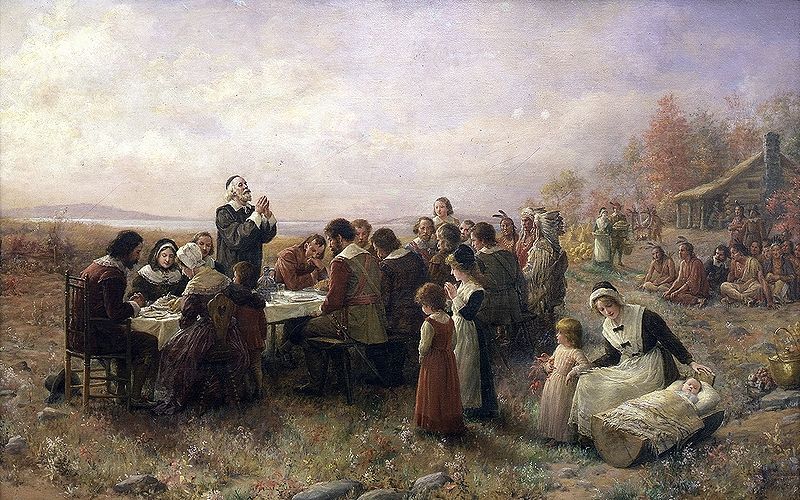
In a narcissistic, consumption-driven world where social media preening is ubiquitous, it is remarkable that we as a nation still take a day off to spend time with family, enjoy a hearty meal together, and reflect on the meaning of gratitude. Thanksgiving is a holiday that encourages us to think of others more than ourselves, and for that reason alone, it needs to be practiced and preserved.
I am thankful for many things this year.
First, I am thankful that I live in a free and prosperous country, one that still shines as a beacon of hope to the rest of humanity. Could it be more free? Yes. Could it be more prosperous? Certainly. Is the beacon of hope fading? If it is, then we owe it to ourselves and our future posterity to work diligently to keep it burning.
I am more thankful than I can express to my pioneer ancestors: the ones who made the trek to Utah, the ones who came from Czechy to Texas, the ones who established the Massachusetts Bay Colony, the ones who settled the Old Southwest and the ones who fought in the Civil War and afterward settled in Southern Illinois. The more I research my family history, the more I’ve come to realize that there are pioneers on every branch of my family tree, and that I enjoy the privileges that I do because of the many sacrifices that they made.
I am thankful to the men and women of the armed services who protect this country from the forces seeking to destroy it, not just those who are living today, but those of previous generations who gave their lives in service to their country. Because of them, we won our independence from the colonial forces of Europe, we preserved our Constitution in the face of a bloody civil war, and we quite literally saved the world from the twin evils of Fascism and Communism. There is evil in the world today that cannot be appeased, cannot be ignored, and cannot be defeated by words alone. I am thankful for the brave men and women who put their lives on the line every day to defeat it.
I am thankful for a loving family, for parents who made the commitment of marriage and still honor their vows to each other. I am thankful for my three sisters who still stay in touch with me and are an important part of my life. I’m thankful for nieces and nephews, for cousins and extended family, and for the many strong connections that still bind us together.
Lastly, I’m thankful for the opportunity to pursue a career as a writer. It’s not every person who gets to do this. Until just recently, there were very few opportunities to get published, and even fewer authors who could leverage publication into a full-time career. Even today, the path isn’t easy, so I am grateful to those readers who support me and make this possible.
So I thought it would be fun to start posting some monthly book recommendations on my blog, both of books I personally have enjoyed, and books like mine that I think my readers will enjoy. I’ve seen a lot of other authors do it, and it seems like a good way to pay it forward and invite good karma (and on a purely capitalist note, it also seems like a great way to bring in some affiliate income and spread my books around in the Amazon also-boughts).
For this month, I’ve chosen a novel, a novella, and a short story, all $.99 on Amazon (some of them are $2.99 on iBooks and Kobo). Two of the authors are personal friends of mine (Kindal Debenham and Annaliese Lemmon—we were both in the same college writing group), but I’ve thoroughly enjoyed their books and have no qualms recommending them.
We’ll start with Wolfhound by Kindal Debanham. This is a rip-roaring space adventure, and the first part of a trilogy that I highly recommend. Starship pilots from the frontier regions of space, fighting to defend their beloved home from pirates and invasion. This is exactly the kind of book I used to scour the local library for as a kid.
Nothing Found
I first discovered Date Night on Union Station from the Amazon also-boughts of my own Star Wanderers books, and it did not disappoint. Clean sci-fi romance with a generous helping of comedy. I haven’t read all the other books in the series yet, but I definitely plan to.
Nothing Found
Infant Insomnia is a bit of a departure from the kind of science fiction I usually write, but if you enjoyed Outworlder and Starchild I think you’ll like this one too. Short and tender, the story of a magical seer trying desperately to save her newborn child from the imminent death she sees in every possible branch of her child’s future.
 Coming soon!