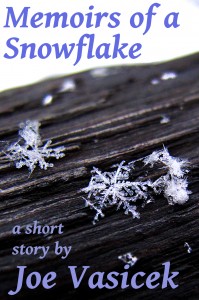
Memoirs of a Snowflake available on Amazon

I just released my first short story on the Kindle. “Memoirs of a Snowflake,” a whimsical short story about the life and times of a December snowflake, is available for $.99 on Amazon.

The publishing process was actually a lot easier than I thought it would be.  Because this is a short story, I didn’t have to worry about formatting for a table of contents or other stuff.  All I did was upload the .doc file, and Amazon automatically did the formatting.

Bryan and I did try to upload it as an html file, which failed miserably for reasons we don’t understand.  Also, Amazon automatically generated the free sample for it, which is something I’d like to figure out how to control in the future.

So as far as practice goes, this story perhaps wasn’t the best one to learn on.  However, it’s good to see how the publishing process works–and really, it’s not that hard.  The hardest part was reading all the terms and conditions, which took maybe an hour.  Everything else was just uploading files, filling in fields, and checking off boxes.

The cover art was fun.  To make it, I took this image from Wikimedia Commons (where practically everything is in the public domain), photoshopped it with The Gimp (“gimped” it?), and added the lettering.  Voila!  I don’t know if it’s my best work, but for a short story, I think it’s decent.

$.99 is the lowest that Amazon will allow me to price it.  For every sale, I make about $.35, and Amazon starts transferring money to my account after I earn $10. You can download it to your Kindle device, or you can read it on your computer with Amazon’s Kindle for PC program (where you can also read a two paragraph free sample, heh).

So far, I’ve made two sales and gotten one review–a pretty good one, too!  I posted the story on Facebook and Chuck has blogged about it, but that hasn’t translated into sales yet.  But after reading this, you all are going to go out and buy it, aren’t you?  AREN’T YOU??  Hehe, just kidding.

Next week, I’ll probably release “Decision LZ1527,” after I figure out the cover art.  It’s a little more complicated, because I wanted to buy the art that was in the magazine in which it was originally published.  But I’ve got that squared away, now just tweaking it.  And I’ll probably add an author’s note at the end, too.

This is exciting stuff!  I’m interested to see how the stories take off.  For those of my writer friends who are thinking of doing something like this for their own stuff, I’ll be sure to let you know how they do!

A few additional thoughts

So, after the last post on my ebook venture, I have a few thoughts:

I haven’t yet decided to go all out indie, so don’t think that I am.  All I’m doing right now is putting out a couple of my short stories, mostly so I can learn hands-on how the epublishing process works (and make all my mistakes with something that isn’t a full-length novel).

I write mostly space opera and science fiction adventure, and those are apparently selling pretty well.  I don’t know about horror or epic fantasy, so to all you horror / epic fantasy friends of mine, realize that my experience might not be your experience.

After looking into DBAs, LLCs, business licenses, and taxes, I’ve decided not to register as a business or set up a separate account for this venture–at least, not until I sell more than $500, which from what I understand is when the IRS requires Amazon to start reporting earnings (I could be wrong; I’m not a lawyer).  Again, I’m not doing this for the money right now, more for the experience and to learn how to do it.

Why, then, am I putting together a formal business plan?  Well, it’s more of a self-discipline thing; as a writer, I am in the eyes of the world a self-employed owner of a small business, so I want to discipline myself so that I can be successful as such.

And honestly, I think this is very exciting.  I’ve found, over the past year, that I’m the kind of guy who would rather work for himself or as an independent contractor than work for a corporation and take a salary–firstly, because I believe that the corporate paradigm is fundamentally evil, and second, because I enjoy the independence, the control over my livelihood, and the adventure of being an entrepreneur.

Anyhow, my CS friend Bryan is going to help me figure out how to publish on Kindle this Tuesday, so my short story “Memoirs of a Snowflake” will probably go live that afternoon.  As for “Decision LZ1527,” I’m probably going to spend some money on the cover art, which means figuring out contracts, payments, pricing, etc.  My my goal is to put it out sometime in April, though, and between now and then, I might put up something else.  So keep an eye out!

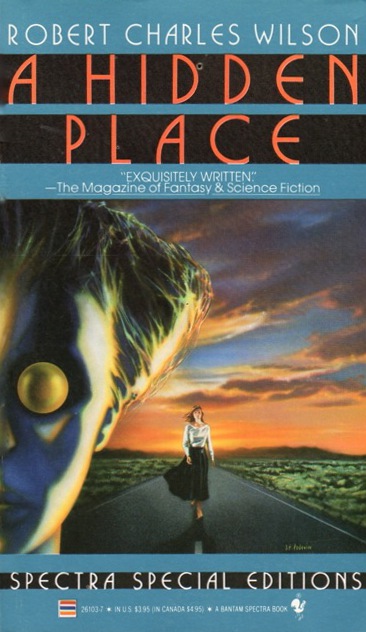
A Hidden Place by Robert Charles Wilson

Travis Fisher is an outsider in most places, but nowhere more than the small midwestern town of Haute Montagne.  But when his mother dies, leaving him parentless and jobless in the midst of the Great Depression, his stern aunt and uncle are the only ones who will take him in.

When Travis falls in love with Nancy Wilcox, the rebellious daughter of the Baptist Ladies Association president, things become worse.  With murderous transients roaming the countryside, Haute Montagne closes ranks, casting them out.

In this moment of distress, a mysterious yet hauntingly beautiful woman reaches out to them with a cry for help.  Stranded in the small midwestern town, she is a being from another world, and she is dying.  Only the two young lovers can help her, but to do so, they must find her dark, masculine half–and in so doing, confront the demons that threaten to tear them apart.

This is one of Robert Charles Wilson’s earlier novels, and I enjoyed it quite a bit.  It’s very short, yet well crafted and beautifully written.  Wilson’s prose is extremely evocative, and his descriptions of Haute Montagne brought back childhood memories from when I lived in the Midwest.  The story was also done well, and had a very satisfying ending.

While this is a good book, though, I wouldn’t say that it’s Wilson’s best.  His characters were interesting, but not nearly as compelling as those in Spin. The baptists were a little too villainous, though Travis’s aunt and uncle were individually more complex.

In spite of all this, however, the story was structured so well that the poignance of it largely overcame these flaws.  As a writer, that’s what I found most interesting about this book–how the masterful way the story was constructed made the whole greater than the sum of the parts.  Call it the monomyth, the hero’s journey, or whatever else, but something about this story made it reverberate in a powerful way.

I suppose that this is what all great stories do: echo some greater, universal story that is in all of us.  It’s the same echo that I felt when I read Spin, or Ender’s Game, or The Neverending Story, albeit a little softer.  It’s something that I hope my own stories evoke, this sense of clarity and wholeness, of returning to some great truth that we lost somewhere between birth and adulthood.

I don’t know if I’m making any sense, but those are my thoughts.  It’s a short read, and I enjoyed it quite a lot.  If you can find it, it’s a good one to pick up.

8-bit Irish music FTW!

Holy crap, this is so cool:

Doctor Octoroc is this awesome internet artist who did the 8-bit version of Dr. Horrible and the Twilight: Eclipse interactive game. This latest album release looks pretty good, combining two things I absolutely love: Celtic music and chiptunes.

Dude…seriously, this is awesome–like, 9.2 on the awesomeness Richter scale. I can’t stop listening to it.

Part of me is just a teeny tiny bit bummed, though…I was thinking of doing an 8-bit Celtic music album myself, but it looks like Octoroc beat me to it. Well, I can still give it a shot–and hopefully it will sound as good as this one!

Now, back to writing…

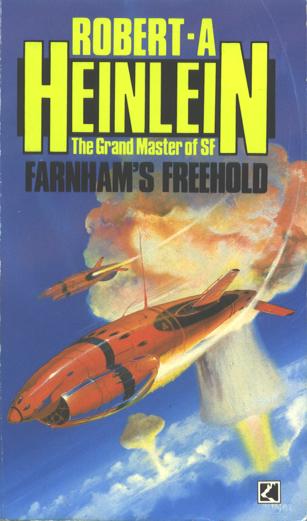
Farnham’s Freehold by Robert Heinlein

Bomb warning.  Third bomb warning.  This is not a drill.  Take shelter at once.  Any shelter.  You are going to be atom-bombed in the next few minutes.  So get the lead out, you stupid fools, and quit listening to this chatter!  TAKE SHELTER!

Thus begins the wild and crazy story of Hugh Farnham, a middle aged suburban American, with his alcoholic wife Grace, his law student son Duke and daughter Karen, their black house servant Joseph, Karen’s sorority sister Barbara, and the cat Mr.-Livingston-I-Presume.  When the Russians nuke the peaceful town of Mountain Springs into oblivion, only the uncanny foresight and resourcefulness of Hugh keeps them alive.  When they open their bomb shelter and climb outside, however, they find themselves in a world that defies anything they could ever imagine.

This book was incredible. I finished it at 4:00 am on a Sunday night, and honestly I wouldn’t have it any other way.  The characters are memorable and engaging, the plot face-paced and thrilling, the world fantastically imaginative, and the story both entertaining and thought provoking.  Wow.

Heinlein is an unparalleled storyteller, and I think he does it by creating worlds that are innately fascinating and imaginable and populating them with characters who act like real people, with the full range of reactions and motivations that real people have.

Consider the basic premise: who hasn’t wondered what World War III would be like?  No one who grew up during the Cold War, certainly.  And as for surviving and colonizing an uncivilized wilderness, people of all ages have been enthralled with that idea since Robinson Carusoe and The Swiss Family Robinson.  Heinlein capitalizes on this urge by telling us a story that we love to tell ourselves.

But the thing that really drew me in was the characters.

I’ll confess, when I got to the part where they open the bomb shelter and find themselves in a pristine, virgin wilderness instead of a blasted city, I threw the book across the room.  Up to that point, everything about the nuclear attack had been so realistic that the cross-dimensional time travel element totally threw me out.

However, even after I put the book down, I couldn’t stop thinking about Hugh Farnham.  The down to earth, no nonsense resourceful man who took the Boy Scout motto “Be Prepared” to a whole new level–who had the chutzpah to draw a gun on his own son when his rebellious behavior threatened to unravel the group–his undying attitude of “never surrender”–I just couldn’t stop thinking about him.  So I picked the book back up and finished it, and am I ever glad I did!

But it wasn’t just Hugh Farnham.  Grace, with her debilitating alcoholism and irrational outbursts, was a character I really loved to hate EVEN THOUGH she reminded me of people in my own family.  Joe, the longsuffering polite servant who changes so frighteningly with the reversal of fortune in the second half of the book; Duke, whose dysfunctional relationship with his father leads to so many problems; Barbara, the 60s era divorcee who goes from outsider to one of the closest members of the group–man, there were some memorable characters.  And NONE of them were caricatures; all of them had strengths and weaknesses, and while some fell prey to their flaws, others rose above them and triumphed magnificently.

I suppose that Farnham’s Freehold is a good example of pulp science fiction at its best: an imminently entertaining story that is also meaningful and thought provoking.  If so, then this is definitely the kind of stuff I want to write.  The descriptions may be sparse and the prose rather unremarkable–but man, the story…what a wild and crazy ride!

Interesting job search development

So over the weekend, I saw this ad on the Provo craigslist for a pizza delivery position, and decided to walk in on Monday and ask about it.  But I didn’t want to make the trip without doing some other errands, too.

I happened to have a complete set of The Chronicles of Narnia that I’d bought from my sister over the summer.  Knowing that I probably wouldn’t read them before my next move, I figured it would be best to trade them in for credit at Pioneer Book.

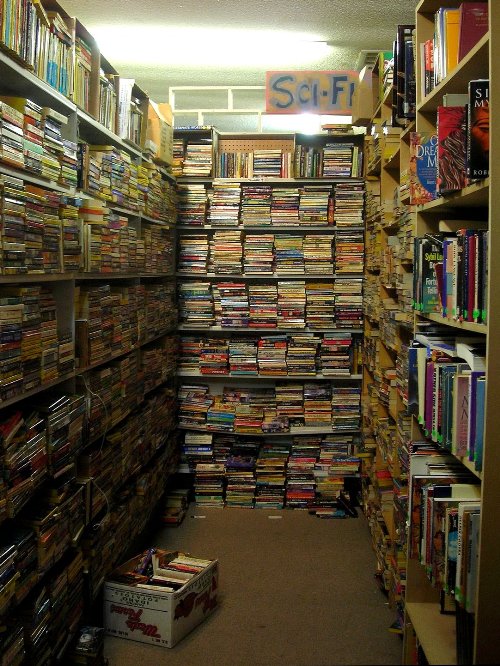
A little bit about Pioneer Book: it is the awesomest used bookstore in Utah Valley.  While I was in college, I used to go there at least three or four times a semester, often with friends.  Half the books I owned before I left for DC came from there, and even now, I find myself going back often.  Great place.

So I went to Cougar Creations, printed up a few copies of my resume (one for the pizza place, a couple others just to have on hand), and went downtown.  Unfortunately, the pizza place was closed, so I decided to come back later and run up to Pioneer Books instead.

I walked in, put The Chronicles of Narnia on the desk, and asked the cashier what they’d take for it.  She asked for me to hold on while she got her manager.

All of a sudden, I realized that this was my perfect in to ask if they had any job positions opening up soon.  I’d already planned to ask (since hey, it doesn’t hurt), but I hadn’t expected to talk with the manager.

Well, it turns out that I recognized the manager from when I’d come with my brother in law over Christmas break.  We chatted a bit, I asked if there were any positions opening in the next couple months, and he said that there might be, so I should probably come back and drop off a resume.

Guess what I happened to have in my jacket pocket?

Man, Pioneer Book would be an awesome place to work.  It’s a bookish job, with bookish people, in a city full of college students, working with books…man, if I could make enough money,  I might even postpone teaching English in Asia.

Most of the employees are students, so when April comes around and most of the students go home, some positions might very well open up.  And hopefully, I was able to leave a professional enough impression that they’ll call me back.  Wish me luck!

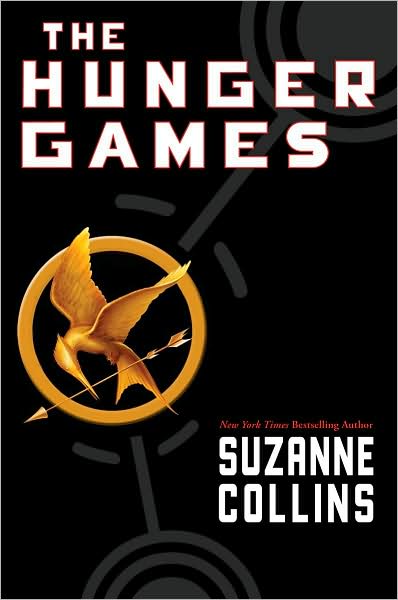
The Hunger Games by Suzanne Collins

This book review is going to be a bit unconventional, so please bear with me.

Normally, I only review books on my blog if I feel I can recommend them.  They might not be perfect, but overall, the praise outweighs the criticism. However, for me personally, The Hunger Games was a huge disappointment.

I’m not going to do a little book blurb like I usually do, because I want to spend all the available space on this post explaining the reasons why I was so disappointed.  Also because of that, this post will be full of spoilers.  Consider yourself warned.

First, let me say that I don’t think this book was all bad.  Suzanne Collins is very good at plot and pacing, and she knows how to keep a reader hooked.  In that way, this book reminded me of the old Michael Crichton thrillers that I devoured as a kid.

However, two crucial things killed about half of the suspense for me: the fact that this book was the first in a series, and the first person viewpoint.

From the very beginning, we know that Katniss isn’t going to die.  We know it, because she’s narrating the story to us directly (in present tense, which personally irks me, but I won’t go into that).  Unlike other gladiator-style heroic fantasies, where the major draw is to see who lives and who dies, we have that spoiled for us.

Of course, the argument in favor of the first person is that it helps the reader feel a closer connection with the viewpoint character.  The problem is, I never did.  At the end of the book, Katniss still feels like an outsider to me; I never felt like I got inside her head well enough to know who she really is.  When I try to imagine her, all I can envision is a wide-eyed mannekin.  She just didn’t come alive to me.

Why? Because the whole time, she’s only got one thing on her mind: survival.  I don’t see anything but fragmentary glimpses of her other motivations, and those are never fully fleshed out.  Her experiences growing up were just so traumatic that I can’t relate to her, and Suzanne Collins never provides a reference point outside of the awfulness of Katniss’s crapsack world.

Which is another thing that got to me: the setting.  Every time I opened the book, I dreaded going back to Collins’ world–and not in a good, “ooh, this world is so creepy/frightening” way, but in a “man, this place just makes me depressed” kind of way.  It wasn’t even that original–Panem is basically the USA as North Korea (though it could take place anywhere, for all the details Collins gives us).

What’s more, the setting is full of inconsistencies.  The people are starving to death, but the forests are full of game and wildlife.  In North Korea, people raze the forests for fuel and timber, driving all the game out.  Yes, I know the people of District 12 mine coal, but all of it presumably goes to Capitol, just like in District 11 all the grain goes to Capitol and the people still starve. Which makes me wonder: why are all the districts specializing in only one commodity?  That’s just stupid.

Which brings me to another thing: the sheer idiocy of the rulers of Panem.  If the Hunger Games are supposed to remind the people of how subjugated they are, why allow the tributes the opportunity to do something like pull a romance stunt?  Why spend all that time primping and preening them, interviewing them, and giving them an opportunity to manipulate the crowds?  When the people of District 11 sent Katniss the bread, why didn’t a government censor stop that from happening?  And finally, when Katniss and Peeta were the only ones left standing, why give them the opportunity to upstage the games by falling on each others’ swords?

Seriously, that last point got to me more than any of the others.  When they announced the rules change, that Peeta and Katniss were supposed to kill each other after all, why couldn’t the GM see the potential for things to go wrong?  Seriously, having them both kill each other–or refuse to kill each other–was such a blatantly obvious choice, I saw it the moment the rule change came into play.  The fact that the villains didn’t just threw me out of the story.

But that wasn’t the first thing that threw me out of the story.  The first thing was the parade, with Katniss and Peeta marching into the arena with their flaming cloaks.  All this time, Katniss has been set up as the underdog–she isn’t pretty, she isn’t strong, she’s mildly sympathetic for volunteering in place of her sister, but the audience in that arena is looking for blood, not sympathy.  So when the crowd goes wild for her and Peeta, I just didn’t buy it.

It only got worse as things went along.  When the tributes did the skill check, Katniss–who, from the beginning of the story, has been set up as the underdog–scores higher than anyone else.  Every time she’s in front of an audience, everyone is oohing and ahhing.  It made me want to gag.

Honestly, you know what it seemed like?  It seemed like Suzanne Collins fell in love with Katniss so much that she wanted to spoil her, even though the story required her to keep up the pressure.  She made sure to torture Katniss in the games–so much so that it felt downright melodramatic at times–but while they were still in Capitol, waiting for the games to start, Katniss felt like a spoiled Mary Sue.

And as for the romance, it fell completely flat from the beginning.  Katniss was nothing but a manipulative faker from the beginning–granted, because she needed to in order to stay alive, but the least she could have done was coordinate that with Peeta.

And that’s another reason why I had such little sympathy for her–she’s a callous, manipulative, lying little heartbreaker, like far too many women in this world.

So yeah, The Hunger Games was, in my opinion, a huge disappointment.  I can partially see why it did so well (strong female protagonist, excellent plot structure and pacing, lots of hooks and cliffhangers), but personally, I don’t think it deserves half the praise it’s gotten.  And after what friends have told me about the rest of the series, I can guarantee that I won’t be reading them.

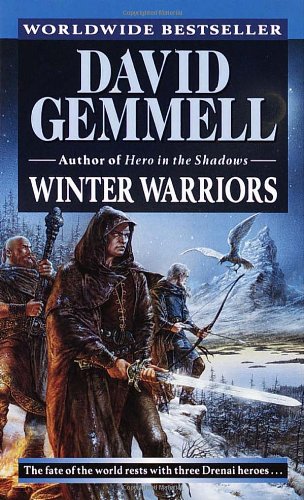
Winter Warriors by David Gemmell

Eons ago, in the Days of Fire, demons feasted upon the souls of men the way that men feast on cattle.  Those days ended when the second most powerful demon betrayed his people, damning them to purgatory so that men could inherit the Earth.

Four thousand years have passed, and the demons are beginning to come back.  The dread Kreyakin, advance guard to the demon invasion, have already passed into the world of men.  In order to open the portal to the other world, however, they must cast a spell requiring the lives of three kings.

Two of the kings have already been sacrificed.  The third lies within the womb of the Princess Axiana.

The fate of the mortal world now lies in the hands of three aged warriors–Nogusta the swordsman, Kebra the bowman, and Bison the brute–and a handful of unlikely fugitives.  Together, they must stand against the dread Kreyakin and all the forces of hell.

Alright, my attempt at a jacket blurb really doesn’t do this book justice.  I want to say it was one of the best Drenai books I’ve ever read, but the truth is it’s just like every other book in the Drenai saga, which is to say that it’s awesome.

I think I’ve figured out why I love David Gemmell’s books so much.  It’s because his books so perfectly capture what it means to be a man.  Women read Twilight because it perfectly captures the experience of being a teenage girl in love, and Gemmell’s books–all of them–capture what it means to be a man.

I’m not just talking about the platonic ideal of manhood–I’m talking about the everyday reality as well. Two men sitting together in “companionable silence.” A warrior who scoffs when his commander sends some lesser men to accomplish a mission, then after getting chided says “I spoke in haste,” and the matter is dropped.  Guys who tackle problem after problem, from fighting duels to fleeing from armies from helping the inexperienced princess with her messy childbirth, and do so without flinching, because hey, someone’s got to do it.

But the ideal is definitely there too, because in every single one of Gemmell’s books, circumstances conspire to push his characters right up to the very limits of their abilities.  When that happens, their true character shines out, and the most unlikely ones rise to great feats of heroism, often sacrificing their lives in the process.

Indeed, if there’s one underlying theme in all of Gemmell’s books, it’s about heroism and what makes a true hero.  It’s awesome.

The best part, though, is how Gemmell redeems even the darkest characters.  I can’t say much about this book without giving away the ending, but let me just say it was extremely satisfying.  Evil is not some slimy b-movie monster–it’s a quality that everyone possesses in varying degrees, alongside the potential for greatness.

In this way, I think Gemmell is the antithesis of George R. R. Martin.  While both authors write in shades of gray, Martin emphasizes how even the noblest, most honorable people have an ugly black stain somewhere in their character, whereas Gemmell focuses on the potential within all of us to rise above the darkness in our souls and accomplish feats of greatness.  His heroes are dark and gritty, but at the end of the day, they are heroes nonetheless.

In short, this book was awesome. If you’ve ever read a book by David Gemmell and loved it, I guarantee you’ll love this one.  I certainly did.

Thoughts on traditional vs. indie publishing

In case you didn’t know, the publishing industry is in the throes of a major revolution.  With the growing popularity of e-books and the collapse of distribution channels and chain bookstores such as Borders, traditional business models are proving simply untenable.

I’ve been perusing several internet sources to make sense of all the craziness, among them Joe Konrath’s blog (a midlister who is now making six figures via ebooks), Writer Beware (which still emphasizes caution with self-publishing), the Adventures in Sci Fi Publishing podcast (which has recently started interviewing several successful indie authors), Dean Wesley Smith’s blog, and his wife Kristine Rusch’s series on the changing business of publishing (which I highly recommend–seriously, if you read nothing else, read this).

Some of these people predict the imminent collapse of the big publishers, and have selected (ironically enough) 2012 as the predicted date of the collapse.  Others agree that many traditional publishers will collapse, but believe that most will survive and evolve into something different (the “dinosaurs evolved into birds” theory vs. the giant meteor).  All of them agree, however, that whatever new form the publishing industry takes, ebooks will dominate.

For someone in my position–a budding author looking to break in in the next few years–all of this is simultaneously thrilling and unnerving.  Should I venture into indie publishing and risk having my work lost in the flood?  Or should I spend the next five years toiling endlessly to break into traditional publishing, only to see my rights get tied up in a bankruptcy?

Thus far, my strategy has been to a reputable agent, or a new agent at a reputable agency.  I’ve been holding back from submitting directly to publishers, out of fear that getting rejected from publishers would make it difficult for an agent to do her job.

That was the orthodox model under the traditional system, when the big six (HBGUSA, HarperCollins, McMillan, Penguin, Random House, and Simon & Schuster) dominated the industry.  For the time being, they still dominate, but I’m wondering whether it’s such a good idea to go with them.

The big six have been swallowing up independent presses and imprints for years, and as a result, they’re now major corporations.  As such, they aren’t looking for moderate midlisters who sell consistently–those kinds of writers would drive them bankrupt.  No, in order to support their corporate expenses (like multimillion dollar office space and executive bonuses), they need bestsellers like Stephen King or J.K. Rowling.

Trouble is, they often lose when they gamble on new writers, which means that the next bestseller needs to be even more spectacular than the first.  And with the ebook revolution underway, they’re getting desperate.

Agent Kristin Nelson recently lambasted McMillan for claiming rights to all “derivative works” in their new boilerplate (a bad faith move comparable, IMO, with the worst scams on Writer Beware), while Kristine Rusch recently noted how the big publishers are becoming increasing hostile to new writers.  Advances as low as $1,500, or single book only contracts, or nebulous clauses that ensure publishers keep ebook rights for decades, even with the author barely making $20 per year on royalties?

How am I ever going to make it full time in a business like this?

Well, according to Joe Konrath, every day my books aren’t up as indie published ebooks, I’m losing big money.  His views are pretty extreme, but he makes a very compelling argument, especially for someone in my position.  Yes, there will be a flood of crap, but good stuff inevitably rises to the top.  Yes, sales start out slow, but that’s simply part of the new model–and they build over time.  For a minimal investment of time and money, I could launch my books and start earning an income from them now.

But money (such as I may or may not make as an indie) isn’t everything in this business.  At this point in my career, gaining prestige and making a name for myself is just as much if not more important than income.  Granted, I can build some prestige through indie publishing if my books sell enough, but I don’t want to have to depend on that, especially if it takes years for sales to build.

For the science fiction and fantasy genres, the professional standard is set by SFWA, or the Science Fiction & Fantasy Writers of America.  In order to become a member, you have to have your work published in one of their approved markets.

Last night, I did some research on those publishers.  Of those that specialize specifically in science fiction and fantasy, seven of them are affiliated with the big six (Tor, Ace, Baen, Bantam Spectra, Roc, Del Ray, and Orbit).  Thirteen others are independent presses that might conceivably be interested in my work.

Now, just because a science fiction and fantasy imprint is affiliated with the big six doesn’t mean it’s a bad idea to submit to them.  Tor, after all, is the undisputed king of the genre–the company has won the Hugo for “best publisher” every year since 1988.  I also tend to think (though I have no data to support it) that the bad contracts are more common with mainstream fiction.  Science fiction, after all, has always been small potatoes to the rest of the publishing world.

But precisely because science fiction is so small, I’m starting to wonder if it’s a bad idea to submit to agents first.  Agents go where the money is–in LDS publishing, virtually every author is unagented.  While there’s still a national market for science fiction, it’s definitely a small one, and all the agents I’ve found always tend to list it as an afterthought, focusing instead on YA/MG, thrillers, romance, or the ubiquitous “commercial fiction.”

In other words, I think that part of the reason agents have been so reluctant to pick me up, even after showing some interest, is that they just don’t see enough money to justify taking a risk on me.  Granted, it may also be the quality of my work, but the bulk of the rejections I’ve accrued seem to point more to subjective factors, like the agent’s personal tastes (the ubiquitous “I don’t feel I’m the right agent for this work”).
Which is not to say that I don’t think it’s a good idea to get agent–not at all.  Even Amanda Hocking, who has turned down several big publishing deals, has an agent.

No, what I’m saying is that in today’s market, it might be easier for a science fiction writer to attract an agent by getting picked up by a publisher, rather than attract a publisher by getting picked up by an agent.

And, of course, the only big reason to do any of this is to make a name for myself.  At some point, I will go indie, even if only with a few of my works.  The revolution has arrived, and I’d be a fool not to capitalize on it–the only question is when, and how.

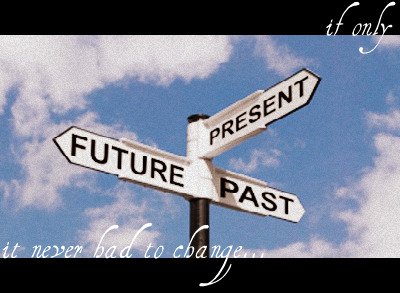
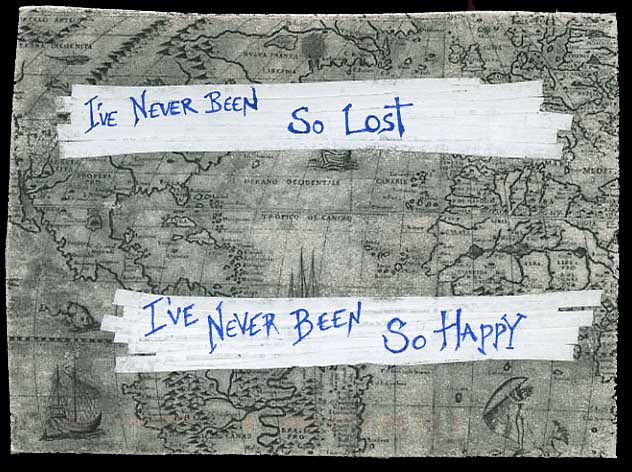
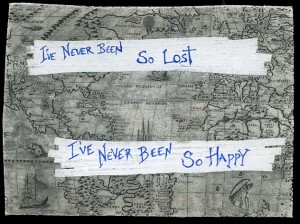
(images from Postsecret)
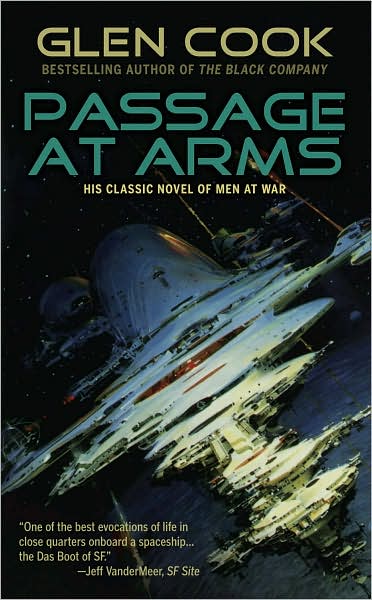
Passage at Arms by Glen Cook

Humanity is losing a long, bloody war of attrition against an alien race.  Our only military advantage lies in the climbers–small, guerrilla style gunboats that can cross into a higher dimensional plane.  Under the right conditions, this technology enables the ships to pass through space undetected.

As the war reaches a critical juncture, one former soldier, now a journalist, joins with the crew of a climber to get the inside story.  What he finds is a far cry from the brave, clean-shaven heroes portrayed by the official war propoganda; the climbers are a gritty, dirty-minded lot of soldiers, cursing the higher ups and living from leave to debaucherous leave.

When worst comes to worst, however, and crap hits the fan, everyone’s true colors come out.  When that happens, who will hold together, and who will fall apart?

I enjoyed this book a lot.  Parts of it were a little raunchy, but never too much for my taste, though your mileage may vary.  Glen Cook leans more towards flowery writing than pure storytelling, and while I had a few minor qualms with his writing style, the book was quite compelling.

Glen Cook really excels at character voice and viewpoint.  Even though the book was military sci-fi set almost entirely in space, it had a very distinct, almost noire feel to it.  Everything that happened was heavily filtered through the main character’s point of view, which made the narrative feel very intimate and personal.  When Charlie dances the foxtrot, you feel like you’re right there in the thick of it.

My favorite thing about this book, however, is the level of scientific realism in the combat systems.  Obviously, things like hyperspace and trans-dimensional drives are entirely speculative, but the orbital dynamics of the planetary siege and visual effects of the nightly bombardment gripped me from the first page.  It didn’t feel pulpy or cartoonish at all–in fact, it felt disturbingly reminiscent of news footage from the ’91 Gulf War, which haunted me for a while as a kid.  This isn’t your typical humans vs. aliens sf adventure novel–it’s like a firsthand account from someone who was there.

My biggest issue with the book was more stylistic than anything else; Cook tends to rely on one-sentence paragraphs to add extra punch–which can be effective, when done sparsely.  However, every page would have at least two or three of them, often occurring one after another.  For me personally, that was a bit too much, but obviously it didn’t keep me from finishing the book, or enjoying it.

So yeah, if you like your science fiction with a heavy dose of gritty realism, you’ll probably like this book.  Even if you don’t, it’s worth checking it out for the orbital dynamics and other interesting details.  Even though it probably isn’t perfect, it feels a lot more accurate than most of the other books out there.