Publishing in 2016 by David Gaughran

If you’re a writer with any interest in indie publishing at all, David Gaughran is someone you should be following right now.  He’s an up-and-coming Irish writer with a better handle on the changes in publishing than most.  I’m about halfway through his book Let’s Get Digital, and it’s quite good.

For today’s post, I asked him if he could map out some of the major competing predictions for how the ebook revolution will play out.  At this point, no one really knows, so any person’s speculation by itself isn’t all that useful.  He responded with an excellent analysis which I think you will find quite fascinating.

So without further ado, here he is!

==================================

Publishing in 2016

Predicting the future is always a mug’s game, as the historical advocates for paper clothes, jetpacks, time-travel, and hoverboards will tell you, if you can find them.

But Joe has been kind to me here. He’s not asking specifically for my predictions of what publishing will look like in five years. Rather, he wants diverging views of how things will play out, and the logic behind them.

I‘ve tried to be fair here, and made what I think are quite strong arguments for things I don’t think will happen, but the whole exercise is probably colored by my own views. Feel free to disagree in the comments. I’ll probably join the chorus of boos.

There are hundreds of potential scenarios, but here are two competing visions of publishing in 2016.

SCENARIO #1 – The Empire Strikes Back

Publishers were slow to embrace the digital future, but they learned. They stopped chaining the release of the e-book to print versions, instead releasing digital when ready (sometimes a year ahead of print), vastly reducing publishing time, and allowing them to build up an audience of fans, some of whom would also go on and buy expensive limited edition hardcovers, which proved very lucrative.

They also greatly increased the revenue split with authors which had two effects. First, they stopped losing writers to self-publishing. Second, writers became more motivated to go out and directly promote the book to readers – as the returns they got from each copy sold increased.

Finally, as most agents stopped accepting submissions for anything other than their publishing arms, instead scouring the Kindle Store for prospective clients, the gargantuan slush pile moved online. The ensuing decrease in quality of the average self-published book made readers actively avoid indies and cry out for some form of quality seal.

The publishers, keen to exploit their position as trusted tastemakers, banded together with furloughed newspaper reviewers to create “curation” sites, where readers could safely browse only “quality” works.

The online retailers, fearful of losing customers to the new, popular curation sites, started granting concessions and building storefronts for all the publishers, vastly reducing the visibility of self-published work.

The only indie authors that thrived were the expert self-promoters. As soon as they struggled out of the morass, they were co-opted by the large publishers, while the rest only sold a handful of copies to family and friends.

When enhanced e-books took off, most self-publishers couldn’t afford the initial investment to create all the extra audio, video, and gaming components that readers demanded. Ironically, the first indies to monopolize the e-book market – writers of thrillers, fantasy, and science fiction – suffered most.

Publishers, after merging with gaming companies, returned to their former position at the top of the pyramid, the retailers now cowed and forced to operate on the publishers’ terms, as they controlled all the top quality content.

WHY THIS WILL HAPPEN:

Once the format battles are settled and once the e-reader device war is over, the next fight will be over content. The large publishers still own most of the content, and are getting new content submitted to them every day, mostly by authors who would license it on pretty much any terms.

Publishers are locking down not just current rights, but lots of future potential rights, and e-books will never go out of print like books used to, meaning that authors without some kind of “sunset” clause will never get their rights back.

Some publishers are in trouble, but some are doing quite well out of the digital revolution. Some will learn the lessons, some will compete at lower prices, some will bring digital versions out first. And we shouldn’t forget that most of the major publishers are owned by large conglomerates with very deep pockets.

WHY THIS WON’T:

Any battles between agents, publishers, and authors are only a side-show. The real battle for control of publishing is between the tech giants: Google, Apple, Amazon. Apple are sitting on a cash pile of $78bn. Google have the resources to compete with anyone, in any area, once they make it a priority. Amazon have a lock on the market now and are investing most of their considerable revenue in aggressive expansion.

The notion that readers want “curated” selection is outdated. That has been chipped away at for years by the millions of books available on Amazon. The prize usually goes to the bookstore with the largest selection. Nobody can compete with Amazon here now, and it’s hard to see who can (outside of Google and Apple) in the future.

Readers are voting with their feet. Amazon are on the way to controlling over 50% of the overall US book market by 2012. Readers clearly want an uncurated selection.

This idea of a flood of terrible slush drowning out all the good work is built on a fundamental misunderstanding of how people actually buy books online. Most readers (around 80%) go to an online store with a purchase in mind (usually a recommendation, or another work by an author they have previously enjoyed).

They may add more before they pay, but these are things that caught their eye along the way (as recommended by a powerful algorithm based on their buying and viewing history). That won’t change. In fact, those recommendations will get smarter.

And I’m not convinced that enhanced e-books are the way of the future. Readers want to read a story. I think they will find those extras intrusive. Books may become like DVDs – with extras that can add to the enjoyment of a book after you are done reading, but not something that would normally make or break a purchase. Children’s books may be different, and when that generation grows up they may well have a different idea of what a book is or should be, but that’s far past 2016.

Finally, owning content is one thing, but you need somewhere to sell it. And the publishers have proved singularly unable or unwilling to develop a retail arm to compete with the giants. JK Rowling may be able to do it, but few other content owners could, and anyway, many analysts feel that she could make more by distributing to all the major retailers.

SCENARIO #2 – A Golden Age For Authors

Authors were slow to embrace the digital future, but they learned. They stopped submitting to agents that weren’t reading their work anyway, and started publishing online. Armed with sales records and a proven platform, they found publishing deals much easier to come by. Some used self-publishing as a springboard to a lucrative deal, others preferred to keep going it alone and keep reaping 70% royalties.

Publishers had to downsize rapidly to remain in business. Those who didn’t went under, with the loss of many jobs. But all those editors, designers, and publicists quickly found lucrative work as consultants, advisors, and service providers to the growing band of self-publishers who made investment in professional quality publications a priority.

The publishers themselves saw the flight of the mid-listers. Those authors saw their advances and royalties dwindle as further bookstores closed, and the surviving ones morphed into general merchandize operations which happened to have a selection of books at the back. Those stores only stocked bestsellers – many of whom remained with the publishers.

Initially, forward-thinking publishers saw great success with converting indie stars to trade deals. With a stellar sales record, and an untapped audience in print, these prolific self-publishers were as close as you could get to a sure thing in publishing, and they made a lot of money for themselves and their publishers, as their readership exploded in print.

Agents had mixed fortunes. Some made money spinning off successful self-publishers to publishing houses but, increasingly, the publishers found they could do this job themselves. Others attempted to move into publishing either as service providers to self-publishers or by launching full-blown publishing companies. Some succeeded, but most did not. By 2016, “literary agent” was an archaic term.

Authors, however, thrived. After e-books began to outsell all print in Christmas 2012, their rosy future was sealed. No longer did they have to submit to the query process or struggle to get their self-published work into bookstores. Everyone was buying e-books, and those who weren’t were buying print copies online.

By 2016, e-book growth had plateaued in the US, with print only holding on to 20% of the market. However, as new markets opened up in Brazil, Indonesia, Mexico, India, and China, authors poured in, leading to a boom in translation and local language marketing services.

This was quickly co-opted by the tech companies who hired armies of translators to clean up the text that the translation software spat out. Authors uploading to Amazon, Apple, and Google began to moan about the week it would take before their books appeared in Hindi, Mandarin, and Brazilian Portuguese.

WHY THIS WILL HAPPEN

The genie is out of the bottle. More and more authors are switching to self-publishing every day. Once they get a taste of 70% royalties, complete creative control, prices they set (and their fans love), and the ability to publish whatever they like, whenever they like, they won’t go back.

Some will get tempted by a publishing deal. However, with each bookstore closure and with each group of readers that switches to e-books or starts shopping for print online, the main reason to sign with a publishing company (print distribution) becomes less and less valuable.

Savvy self-publishers may sign a one-off trade deal to expand their readership into print. And once their new publisher does all the heavy lifting, they can switch back to the more lucrative royalties of going it alone, while keeping their higher profile and new readers.

Publishers don’t seem to be learning from their mistakes. They continue to fight the digital revolution, which is like trying to hold back the tide. Instead of offering writers better terms, they are inserting rights-grabs into publishing contracts. This will come back to bite them.

E-reader ownership has doubled in the last six months. It will explode in the run up to Christmas as all those new models come out from all the major manufacturers. Readers will continue to be lured to e-books by lower prices and greater selection, and the defection of their favorite authors to self-publishing.

WHY IT WON’T

Most self-publishers saw a drop in income when Amazon ran a sale of 600 bestsellers from large publishers in June. All of John Locke’s books were knocked out of the Top 100. Amanda Hocking saw a severe drop in rankings. Joe Konrath’s sales fell by 15%. Other self-publishers reported drops of up to 50%.

Amazon covered the cost of that sale, but it was so successful that they ran another in July, with even more publishers onboard – this time sharing the cost burden. These experiments could show publishers once-and-for-all that Amazon were right, that they would make lots more money with lower priced e-books.

Publishers could drop prices across the board, removing one of the prime advantages that self-publishers have: lower prices.

And, if one of the tech companies gets a permanent lock on the retail market, and sees off all competitors, the first thing they could do is demand exclusivity and cut the royalties, leaving writers back at square one.

***
David Gaughran is an Irish short story writer and novelist. His latest book Let’s Get Digital: How To Self-Publish, And Why You Should is available from Amazon and Smashwords for $2.99. The PDF version is available as a free download from his blog, so you can try before you buy.

Copyright (c) 2011 by David Gaughran.
You should check this guy out

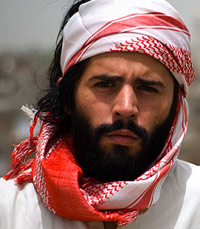
As some of you may know, in 2008 I traveled to Jordan with the BYU study abroad program.  One of my friends from the program was Joey Anthon Jackson, pictured here.

When we got back from Jordan in August, Joey graduated and promptly went back overseas.  Ever since, he’s been traveling the world, spending no more than a week or two in any one place.  He’s been from Korea to Iran, down to Ethiopia, up to Italy and Norway–seriously, I think the only place he hasn’t been is Antarctica.  He blogs about it, too.

Most recently, he’s joined up with a team from Oxford University to film a documentary about the nomadic Danakil people in western Ethiopia.  It looks like a really fascinating project, and Joey is definitely the right person to do it.

From his site:

In August and September of this year, I’ll join two young travelers (one the Chairman of the Oxford Exploration Club and another from Addis Ababa University) on a 6-week camel journey through the remote Afar region of eastern Ethiopia. Already sponsored in part by Oxford University, the Danakil Expedition aims to follow the footsteps of famous British explorer Wilfred Thesiger on his 1933-34 Awash Expedition.

We hope to develop a similarly involved relationship with the Afar People, becoming their guests in one of the world’s most inhospitable environments. Most importantly, we intend to document their threatened nomadic lifestyle with writing, photos and especially film. A travel writer and photographer, I will shoot the film entirely by DSLR. My colleagues and I are determined to reach the Afar lands by August, although I am still seeking support to cover the costs of suitable gear.

He’s buying supplies and leaving on August 8th, but he needs a little help with funding.  Towards that end, he’s put together a site on gofundme.com, where he’s giving out a bunch of really cool stuff for donations.  The deadline has technically passed, but anything you donate from now until the 8th will get to him in time.

I only promote stuff on this blog that I truly believe in.  I know Joey personally, and I know he’s got what it takes to make something amazing here.  Those of you who’ve read my books (especially the forthcoming Gaia Nova series) know that I have a thing for the Middle East and nomadic peoples, and this documentary looks to be not only timely and important, but downright fascinating as well.

Man, I wish I could be out there traveling the world like Joey does!  As he would probably say, “it’s easy–just buy a planet ticket.” One of these days, I just might…

How’s my new blog template?

It’s up!  What do you think?

I especially like the sidebar layout, with the featured item on top and the double sidebars below.  I think I’m going to put all my promotional stuff (books, social networks) on the right sidebar, with all the blog stuff (tags, archives, recent comments, blogroll, etc) on the left.

I’m not so sure about the Current Projects bar, though.  Does it look good on the left, or should I put it on the right, above my books?  I don’t want the sidebar to look too busy, but at the same time I don’t want to push my books too far down from the top.

I made a few tweaks to the color scheme, though there will probably be a few more kinks to work out in that area.  The black text on white is a radical departure from the previous template, which is going to take a while for me to get used to.  However, now that my blogging goals have shifted from personal to more professional, I think it’s a move in the right direction.

Things I’d like to change but don’t know how:

  • The blog header font.  I’d like to go back to Courier New small caps, like the old one.  Every time I try to tweak the CSS stylesheet, though, nothing I do seems to work.
  • Font size for pages and categories (pages are above the blog header, categories are below). Jerle pointed out that they could be larger, and I agree with him.
  • Background color for the child category pages.  They blend in too much with the current shade of gray.
  • The favicon.  I don’t want the generic WordPress logo, I want to make something unique to this site (like the eye).

That’s about all I can think of right now, but I’m definitely open to any of your suggestions.  My goal is to turn this blog into a home site for my writing career, where readers can connect with me and easily find my stuff.

Also, if you have any cool ideas for my Error! 404 page, please let me know.  Those are always fun.

Why I am not afraid of the Noise part II

A recent op-ed in the Wall Street Journal titled “Cherish the Book Publishers–You’ll Miss Them When They’re Gone” has ignited a firestorm across the indie publishing community.  The post’s basic argument is that the ease of self publishing and the end of New York as the gatekeepers of quality will make it harder for readers to find the truly worthwhile literature amid the flood of crap that will inevitably overwhelm us all.

Joe Konrath fired the opening salvo; in characteristic fashion, he decried the op-ed as hogwash and blamed jealousy among traditionally published writers for the perpetuation of this myth.  He concluded that while the “tsunami of crap” is real, it is ultimately irrelevant.

His advice? “Don’t write crap.”

Michael A. Stackpole responded by examining the much more dangerous fear of authors worried about the coming flood; the fear that their own work is crap, and not worth putting out.  After examining what we mean when we call something “crap,” he concludes that the really bad stuff will sink to the bottom…

…not because of a rising tide of crap, but because they deliberately swim toward the bottom, open their mouths, and willfully suck.

And the rest of us will happily swim past the effervescent markings of their demise, moving on into the golden age.

Kris Rusch’s take on the issue was perhaps the most instructive of all.  First, she used her own experience as editor of The Magazine of Fantasy & Science Fiction to completely blow out of the water the idea that editors are arbiters of good taste.  Editors buy what they like; when they try to predict what the public will like, more often than not they fail–and when they try push their own reading tastes onto the public, they make themselves irrelevant.

She concluded that the only truly relevant “gatekeepers” are other readers–that word of mouth is still king, and because the traditional publishing system treats books “like produce, taking them off the shelf as if the book will rot after a month,” indie publishing is much better suited to help the good stuff rise to the top.

David Gaughran responded next by pointing out all the ways that indie publishing and the ebook revolution are enriching the literary world.  He concluded that the only people hurt by these changes are the middlemen–that both writers and readers only stand to benefit.

Well.  Like I said, it’s quite a firestorm.

So what’s my take? I already posted my thoughts on why the original argument is invalid–that fear of the Noise, aka the “tsunami of crap,” is a specious reason not to epublish.  However, I think that the real issue goes much deeper than that.

The most fundamental divide between those who embrace the ebook revolution and those who fight it is whether or not they trust readers to find the truly great works of literature on their own.

The obvious question, of course, is what exactly constitutes “great literature.” As a lover of genre fiction, I measure the quality of literature by the impact it has on readers; that when readers can’t stop talking about how awesome a book is, it’s a good book.  For that reason, I’ve never put much credence by Twilight bashers; paranormal romance might not be my thing, but Stephanie Meyer struck a chord in a lot of people, and that certainly counts for something.  In other words, story is King.

Putting it that way makes the argument somewhat circular.  Can we trust readers to find the good stuff on their own?  Yes, because readers read what they love.  But what about that literary piece about a depressed writer who has a sexual affair that completely changes his life?  Well, I guess it just wasn’t that good.  But they would have loved it, if not for all that genre crap flooding the system!

As for readers getting swamped, I think the system itself prevents that.

First, readers browse by means of tags, search terms, categories, top seller lists, “also bought” lists, etc.  They follow book bloggers and take recommendations from friends.  When they find a book with an attractive cover, they click on it, give the book description a cursory glance, and perhaps check a few reader reviews.  If their curiosity is still piqued, they download the free sample to their ereader.

Up to this point, no money has been spent.  Readers can download as many free samples as they want, of anything that catches their fancy.  When they finally get around to reading the sample, they can decide whether they want to buy the book.  If they do, all they need is to click a button on their ereader, and the book is theirs.

Once they finish the book, the ereader prompts them to leave a review (at least the Kindle does this–not sure about the others).  If they enjoyed it, they can give a favorable rating which helps other readers find the book.  If they don’t, they can give an unfavorable rating which warns others to stay away.

What is happening is nothing less than the democratization of literature.  Therefore, it should come as no surprise that those who trust readers will embrace the new system, while those who still cling to editors-as-gatekeepers will reject it at all costs.

But can we really trust readers?  Yes, if we believe that story is King.  If readers and writers are collaborators in the literary experience, and the truly great literature is that which has the greatest impact on its readers’ lives, then it stands to reason that readers must be the ultimate judges of quality.

Therefore, if we truly believe in the power of story, we cannot help but put our trust in the readers.  And if that’s true, why shouldn’t we rejoice in the revolution?

I sincerely believe that we are witnessing the dawn of a great golden age of literature.  The invention of the ebook is at least as revolutionary as the Gutenburg press, perhaps a great deal more.

The only ones who have anything to fear from the revolution are those who have built their livelihoods by pushing their own arbitrary tastes on others.  Frankly, that’s nothing less than cultural tyranny–and with the democratization of literature, we no longer have to put up with it.

Viva la Revalucion!

Craving another retreat

Last night, I got together with an old friend from last year and went camping down in Sanpete county, in the Manti-Lasal National Forest.  Even though I didn’t get a whole lot of writing done, it was a much needed change of scenery.

Man, southern Utah is so different from the Salt Lake and Utah valleys.  More rural, more laid back, more of a back-country attitude but not in a California kind of way…I don’t know if that makes any sense, but I like it out there.  It feels like the kind of place you’d pass through on a road trip, that mystic old-time Americana that always feels like it’s just out of reach.  Part of me wants to settle down in a place like that someday, while the other part doesn’t want to settle down ever.

Spending time away like that gives you a renewed perspective.  I wouldn’t say that I feel more “centered” now, but getting out in the wilderness certainly made me see the daily grind here in Provo a little differently.  It’s so easy to get caught up in a routine, where the weeks and months go by until suddenly it’s summer again and you don’t know where the last year went.  Unless you take the time to step back, you can never get perspective.

Unfortunately, in order to save up for Worldcon this August, I’m going to need to work 40 hours per week almost right up to the convention weekend itself.  I’m not complaining; I feel blessed to have a steady source of income right now, especially in this economy.  But as a writer, it’s hard when your job takes so much time and energy away from your writing time.

Lately, I’ve only been spending two or three hours a day writing, and a lot of that time is filled with interruptions.  Part of it is just procrastination, but another part is that my day is so split up that the only periods of unbroken free time are from 9 pm to 8 am. That’s tough, because I need a big chunk of writing time to do my best work.

Even though I’ve been making decent progress on Desert Stars, I feel like I could be doing so much more.  If I could take a week off for a retreat where I did nothing but focused on my writing, I could probably finish this draft in a matter of days, with time to start a bunch of new projects.  In fact, I already have about a half dozen stories in embryo, with scenes and characters just begging to be written.  Once this latest project is finished, I don’t quite know what I’ll be starting next.

Since I should be writing right now instead of posting to this blog, I’ll wrap up by saying that I really wish I could take some time off for another retreat, this time to focus solely on my writing.  But since I can’t, I’ll do my best to carve away large periods of unbroken time for writing, and unplugging myself from distractions both online and off in order to make the most of it.

It’s a difficult balance, one that’s a constant struggle to maintain.  Right now, I feel like I’m on the losing side of the battle, which means it’s time for a change of routine.  Thankfully, taking some time off in the wilderness has helped me to better see what I need to do.  I only hope I can maintain that perspective in order to break out of this stifling routine.

<sigh> One of these days, when writing is my primary source of income, this will not be nearly so difficult of a problem.  You have no idea how much I want to make that happen.  In the meantime, back to work.

Writing is like tending an orchard

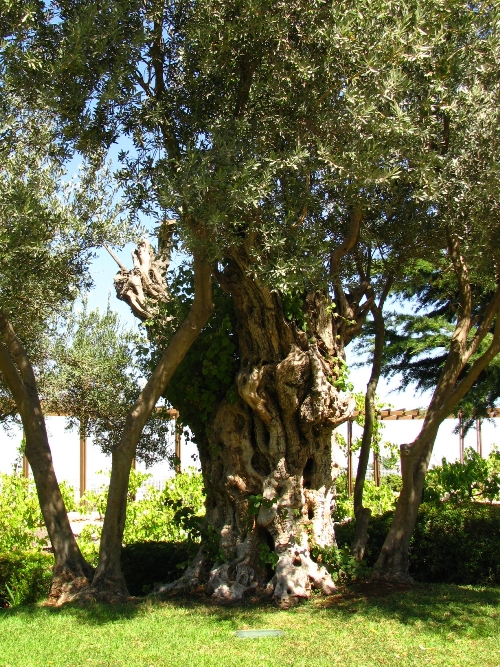
So I was hiking the Y tonight, pondering various things, and the thought occurred to me that writing is a lot like an olive orchard.

First, you’ve got the land, both cultivated and wild.  Cultivated land is like your conscious mind, where everything fits neatly into order and you have control over what you create.  The subconscious is the land beyond the fence, where things grow wild.

Ideas are like seeds; they’re everywhere, but only a few ever take root and sprout.  Those that do need to have new sprouts periodically grafted into the old, in order to preserve the entire tree.  These grafts may come from the cultivated ground of your cultivated mind, but more often than not they come from the wildlands of the subconscious.

Each novel is like an individual olive tree.  It takes a lot of time and work to grow one to maturity, but once you do, it can live for a long, long time.  The fruit itself is like the earnings you get by licensing copyright; if you prune the tree carefully (aka do a good job managing your intellectual property), it just keeps on producing.

Of course, in order to make sure your trees grow properly, you need to be constantly enriching the soil of your mind.  That’s where education and life experience comes in.

Since trees sometimes die, you have to maintain several trees at once in order for your orchard to succeed.  And even though it’s a hell of a lot of work, over the long run the returns are enormous.

For the ancients, olives were a major staple crop. In Greek mythology, Athena was chosen as the patron goddess of the city of Athens because her gift of an olive tree was considered more precious than any other.  And just as good books help us expand our minds, better understand and empathize with others, and generally rise above the boredom and mundane-ness of our daily lives, so also the fruit from this metaphorical orchard is truly of great worth.

Anyhow, those were some of my random ponderings, climbing down the mountain.  Someday, I want to have an orchard that covers an entire hillside and produces thousands of pounds of olives!  Just thinking of it makes me hungry.  Mmm, olives…

Hmm…short stories?

Kris Rusch has another excellent Thursday post up on her blog, and this one deals with the effect of the ebook revolution on the short story format.  Synopsis: short stories stand to EXPLODE in the next few years, and this is good for everybody, especially indie writers.

Getting a story published in a magazine 1) builds a writer’s cred, 2) attracts new readers to the writer’s other works, and 3) pays decently well without giving up copyright for longer than a couple of years.  Basically, it’s like getting paid to advertise.

I have to admit, I’m not much of a short story writer, but if Kris’s predictions are right (and they sure make a lot of sense), I might have to take some time and rework my short form game.

To start, I should probably read short stories voraciously.  Fortunately, I have like twenty back issues of Leading Edge on my shelf (the best short story I have ever read is “When She Grows a Soul” by Patrick Weekes in issue 46; I reread it on my lunch break today and it made me cry.  Seriously).  I’ve also subscribed to Clarkesworld magazine, which is only $1.99 per month on the Kindle.

Once I’ve finished the current draft of Desert Stars, I may or may not take off some time to focus on writing short fiction.  I’m a little hesitant to do that, though; novels are my first love, and will probably be my bread and butter as this writing career takes off.  Still, I need a lot of work on my short form, so maybe it would be worth taking a month or so…not sure yet.

In any case, I discovered via the Kindle Boards that if you release an ebook/estory for free on a competing vendor’s site, Amazon will price match and drop the price to free.  Since I probably won’t be able to sell the short stories I’ve epublished, I figure I ought to give that a try.  I never really planned to make much money off of them, and “selling” them for free will hopefully attract readers who will buy my novels.

In the meantime, I really should get back to writing.  Whether novels or short stories, my bread and butter lies with putting words to paper–electronic or otherwise.

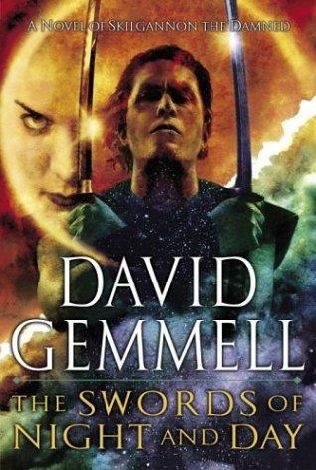
The Swords of Night and Day by David Gemmell

A thousand years ago, a young warrior named Skilgannon helped the princess Jianna escape an attempt on her life.  They became lovers, and when she retook her throne, she made Skilgannon her chief general.  When she ordered the abject annihilation of her enemies, he loved her too much to refuse her–and thus became Skilgannon the Damned.

Now, the wizard Landis has recalled Skilgannon back from Hell to defeat the tyrant queen known as the Eternal.  For hundreds of years, the Eternal has ruled the world, using the arcane arts of a fallen civilization to achieve immortality and crush all who oppose her.

When the Eternal learns of Landis’s treachery, the only hope for freedom lies with Skilgannon, the axeman Harad, the huntress Askari, and the Drenai ranger Alahir.  But how can they defeat an enemy who commands nearly all the armies of the world?  Who has lived a dozen lifetimes and simply steals the bodies of her clones whenever she is killed?

But most of all, how can Skilgannon defeat the Eternal when she is none other than Jianna, his beloved?

The Swords of Night and Day is a direct sequel to White Wolf, the first David Gemmell novel that I read.  I have to admit, I wasn’t particularly impressed with White Wolf; it meandered a lot and didn’t seem to have any clear direction.

That is most certainly not the case with The Swords of Night and Day, however.  I was hooked from the very beginning, and could hardly put it down until the shocking, mind-bending twist at the end.  It tied up all the loose ends from White Wolf and completed Skilgannon’s character arc in a surprising yet satisfying way.

One of the reasons I think I love David Gemmell so much is because he captures so perfectly the experience of being a man.  In that, I suspect that Gemmell is to me what Jane Austen is to most women.

But even though Gemmell’s characters might be crass, vulgar, chauvanistic, and downright detestable at times, there is always something heroic deep inside of them–something worth redeeming.  And when he does redeem them, it surprises me how powerful it is–even when he redeems someone I don’t want him to.

With The Swords of Night and Day in particular, one of the things that particularly fascinated me was the fictional cosmology of the Drenai universe.  With magic that can resurrect people’s spirits from hell, the story must inevitably deal with questions of the afterlife.  Yet even so, there’s still enough ambiguity and latent potential that it never felt stilted or labored.  If anything, it felt a bit like Tolkien’s cosmology in The Silmarillion, where all the stuff about gods, angels, and the undying lands only added to the sense of wonder.

I love just about all of David Gemmell’s books, but this one in particular was well worth the time and experience reading it.  I wouldn’t recommend starting with this one, though: better to read Legend, White Wolf, and The King Beyond The Gate first.  But if you’ve read and enjoyed those ones, you will DEFINITELY love this one.  I certainly did.

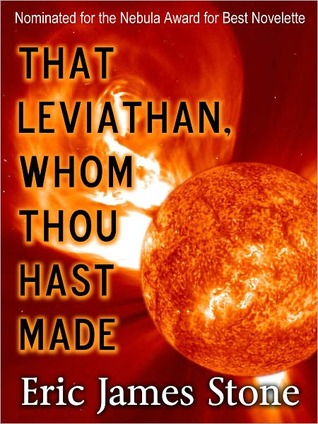
That Leviathan, Whom Thou Hast Made by Eric James Stone

When Harry Malan’s work transferred him to Sol Station deep inside the sun’s core, he didn’t expect to become a Mormon branch president over more than a hundred alien converts to the faith.  The Swales, ancient sun-dwelling beings with their own history and culture, travel the universe by naturally teleporting between stars.

When Harry learns that one of the members of his congregation has been raped, he determines to take it up with the chief Swale.  But at several thousand meters long and more than a hundred millenia old, the chief is revered by the Swales as a god incarnate.  To make matters worse, the only other eligible female on the station is an atheist xenoanthropologist determined to stop Harry from “polluting” the Swale culture.

In an alien society millions of years older than humanity, where gods were dwelling among mortals long before the birth of Jesus Christ, is there a place for those who convert to any of the human faiths?

This story was awesome, and I’m not just saying that because I’m a practicing Mormon.  The story concept was brilliant, the alien world was fascinating, and the issues raised were dealt with in a very balanced way.  This is a must read for any Latter-day Saint science fiction writer–or for aspiring writers of any religious faith, for that matter.  In fact, Eric James Stone has it available right now on his website for free–so check it out!

My only issue was that the story didn’t feel fleshed out enough.  The Swales were so fascinating, I wanted to spend more time with them–I wanted to explore their culture, learn more about their history and evolution, etc.  I also wished there were more detailed descriptions to make me feel like I was there.

I think that has more to do with the shortcomings of the medium than anything else, though.  The piece is an 8,000 word short story / novelette, so there isn’t a whole lot of room to flesh things out.  Still, the world is so fascinating, can you blame me for wanting more?

All things considered, “That Leviathan, Whom Thou has Made” definitely deserves the Nebula Award which it won earlier this year, and I wouldn’t be surprised if it wins a Hugo as well.  It represents a significant milestone in LDS literature, and is an excellent mainstream piece as well.  Whether you’re Mormon, Christian, Muslim, or whatever, if you’re a religiously devout writer of science fiction, this is a must-read.  And even if you’re not, it’s still a great story.  Highly recommended.

I’ve never registered on the Absolute Write forums…

and now I don’t need to.

The publishing industry has turned into the wild and lawless west, complete with lynch mobs and posses, isolated and inbred communities, a gold rush for ebooks, and dirty corporate executives looking to railroad their way over the honest, hardworking authors who just want a plot of land to call their own.

It’s insane–and yet, at the same time, so freaking awesome.

Just five years ago, there was only one real way to make a living as a writer: go with a traditional publisher. But now? Now, there are no rules. Now, you can be a cowboy and still make a name for yourself.

I do want to express my sympathy for Robin, though. Her blog, Write 2 Publish, is an excellent source of information on the changing publishing world, and I’ve always found her commentary thoughtful and insightful. The fact that she was banned from one of the largest online communities of writers (and especially the way in which she was banned) only confirms to me how seriously wrong-headed people are who cling dogmatically to traditional publishing models.

There are two kinds of people in this world…