Ira Glass on storytelling

I just listened to this awesome presentation by Ira Glass, host of This American Life, on the art of storytelling and narrative, and I wanted to share it because it’s that good. 

If you haven’t ever heard of This American Life before, do yourself a favor and check it out.  You may or may not love it, but it’s one of the best produced radio shows out there, with fascinating stories from all walks of life that will completely blow you away.  My favorite is probably the one about the department of the LAPD that exists entirely to identify the next of kin of people who live and die alone–and how many people in this world have essentially no connections with the people around them.  It was an incredibly sad and incredibly moving story.

Anyhow, Ira makes some very good points about how stories work, and how we as humans are wired to see the world around us in terms of story.  It’s not enough to simply convey facts–you have to hook your audience by making them feel emotionally involved, and creating suspense by giving them the sense that the events in your story are leading up to something.

He finishes the lecture by recounting the basic frame story of the Thousand and One Arabian Nights: how Scheherazade saves the kingdom from the sultan’s madness through the power of story.  It’s a wonderful tale, one that has a lot of bearing on why we write and why fiction matters.

That’s one of the reasons why I decided to name this blog “One Thousand and One Parsecs”; it implies a combination of the magic of the Arabian Nights with the science fiction elements that I love so much. Like Scheherazade, I hope to tell stories that have the power to transform individuals and ultimately change the world for better.

That’s enough from me. Here’s Ira Glass:
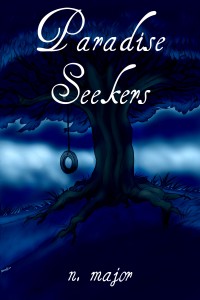
Paradise Seekers by Nathan Major

Haven–a land where no one knows who they are, where they’re from, or how they got there.  A place where everyone has a different recurring dream every night, which gradually grows in intensity until it drives them to madness.  A place where everyone has only a short amount of time to find Paradise, before they perish.

When Sam first comes to Haven, he thinks he’s found an idyllic utopia.  However, as he slowly uncovers the gruesome secrets of the place, he realizes he’s in a race against time to make Atonement and escape.

But how can he do that, when he can’t even remember who he is?  And how can he save the girl he loves, when she has only days before her dreams drive her into madness?

A few weeks ago, I said I’d start reviewing indie books on this blog.  This is my first one.  As a disclaimer, Nathan Major is a fellow Utah writer and a friend of mine, and I received a copy of the book for free, with the agreement that I would review it.

I genuinely enjoyed this book.  It’s a very compelling story, with a mysterious dystopian world and an intriguing premise.  Nathan is very good at building suspense and keeping the reader hooked, and the ending fully lived up to its potential.

As far as editing goes, I noticed only minimal spelling and grammatical errors.  However, the copy I read had some major formatting issues, such as wacky indents and an auto-generated table of contents that missed a few chapters.  Nathan assures me he’s fixed those issues, but I can’t vouch for the most recent copy.

As for the story, while I enjoyed it, it did feel as if it had been published too early.  More than once, I wanted to scream at the characters for doing something stupid, and the romance was occasionally over-the-top sappy.  The level of melodrama was on par with most anime, which is great if you can stand it.  Still, the story kept me hooked, and while I occasionally had to put the story down just to cool off, I always came back to it, right up to the very satisfying end.

If you like dystopian YA, I think you’ll like this book.  It reminded me a little of The Giver, with the urgency and sense of danger of a thriller.  Like I said, it also had a bit of an anime flair to it, so if you’re a fan of anime and manga, the issues I had with it probably won’t be as bad for you.

Overall, I rate Paradise Seekers at 3.5 stars.  If the formatting issues were fixed, I would rate it at 4.  Nathan has a natural talent at good storytelling, and I expect we’ll see many good things from him in the future.

Paradise Seekers is available for .99c from Amazon and free on Smashwords.

Worldcon 2011: Saturday

Alright, I should just write this up and finish my convention report before life sweeps me away completely.

Saturday was the main day of the con.  To be honest, I forgot all the panels I went to, except this really awesome one by a guy at NASA on near Earth objects (NEOs).  Holyfreakingcow there are thousands of these objects AND WE ARE SENDING MISSIONS TO THEM!!!  So cool!

I went to a kaffeklatsch with Nancy Kress, which turned out to be quite an interesting experience.  She’s an extremely gracious person, much like Tracy Hickman, and gave some excellent career advice: 1) no matter the obstacles or difficulties, always find a way to keep writing, and 2) always be true to the story.

Had dinner with some other Utah writers, and I wish I could say it was pleasant, but for some reason it got very antagonistic.  I know it takes two to tango, but I honestly don’t know what I did to make it that way.  Perhaps stress levels were running high, or people misread my tone, but the conversation at our table completely fell apart at least twice.  It was very wierd.

Part of it might have to do with the fact that I’ve become something of a trailblazer for indie publishing within the SLC / Utah Valley writing community.  Which brings me to another side note: everyone talks about how militant and polarizing self publishers are, when in my experience it’s the advocates of traditional publishing who tend to adopt an us vs. them attitude.  To be sure, there are plenty of desperate to be published writers who take the indie path just to “stick it to the man,” but those people tend to fade away once they realize it isn’t a silver bullet.

Anyway, the Hugo Awards in the evening were great!  Robert Silverberg presented the award for Best Novella, and for fifteen minutes he was my favorite person in the world.  So hilarious!  I’ve tried to find a video, but there doesn’t seem to be one up yet.  Utah writers were nominated in six categories, and even though none of them won, the competition was pretty dang good, so I don’t feel so bad about losing.

All in all, it was a great convention!  I had a lot of fun, even if I did feel a little exhausted by the end of it.  I’m not sure if I’ll be attending future worldcons in my current capacity as a beginning writer, but I most likely will buy supporting memberships in order to vote in the Hugos (and download the voting packet).  It’s a good community, and I’m glad to be a part of it.

Worldcon 2011: Thursday

Wow, the last couple days have been packed with awesome con-stuff, but I’ve got a short break so I thought I’d blog about it.

Thursday was great, attended a few panels but mostly just wandered around meeting people.  I’m a little surprised with how many people read this blog.  Got Brandon to sign my Kindle, and he was really supportive about my decision to epublish.  I seem to be one of the only Utah writers going full-steam with indie publishing, but a handful of others are considering it, though for now they’re in the minority (which surprises me).

Anyhow, Thursday had a couple of really notable panels.  The first was on faith and science fiction, and had both Eric James Stone and Moshe Feder on it, among others.  Excellent discussion, though a couple of the commenters tried to derail it.

I found it surprising that the panelists didn’t have a good answer to my question: how do you reconcile far future sf with millenialist religions?  That’s exactly what I’m trying to do with my Gaia Nova universe–create a far future epic that isn’t incompatible with the major western religions (Islam, Christianity, Judaism, etc).  From the after-panel discussion, I got a strong recommendation to read C.S. Lewis’s space trilogy, so I’ll definitely be checking that out soon.

The other notable Thursday panel I attended was on ebook art, and featured John Picacio and Lou Anders, among others.  John feels pretty strongly that indie writers are seriously devaluing cover illustration, and within the first ten minutes someone in the audience literally told him to f___ off!  Wow, talk about tension–but even though it almost fell apart, the panel turned out to be very enlightening.

Let me just take a moment to say that I’m very impressed with what Lou Anders is doing over at Pyr.  While the rest of the publishing world seems to have their heads in the sand when it comes to the ebook revolution, Lou is one of the few who sees it more as an opportunity than a threat.  I’m not currently looking for a publisher, mostly because I’m waiting to see how things shake out, but I would be very surprised if Pyr is one of the publishers that goes under.

The parties in the evening were pretty good–as always, the Tor party was literally packed.  Brandon saw a group of us clustering together, so he broke us up and sent us off to talk with editors and agents.  He tried to point me out to an agent, but…you know, I’m not really looking for one right now.  Brandon keeps telling me not to believe DWS when it comes to agents, and while I’m certainly not fundamentally opposed to them, I feel that I can better build my career by going in other directions.  At some point in the future, maybe, but for now…not so much.

Speaking of Dean, I spent the whole evening hunting for him, then gave up around midnight only to find out the next day that he showed up at the SFWA suite fifteen minutes after I left (nooo!). And now that it’s 9pm in Reno and the parties are just getting started, I think I’ll cut this blog post here and recap Friday sometime later.

See you around!

Worldcon 2011: Wednesday

Just a quick update from Renovation before I crash for the night.

We left Provo pretty early–about 6:30, actually–and met up with Eric in Eagle Mountain.  The drive to Reno was pretty long, but we had some awesome geeky conversations along the way.  My favorite: how to successfully conduct an alien invasion.

So we rolled into town around 4:30, dropped our stuff off at the hotel, and hiked down to the convention center to register and wander around aimlessly until finding people we knew.  At least, that’s what I did, and even though it’s a big con (about 4k to 5k people) it didn’t take long to run into a bunch of writing friends from Utah.  The cool part: they had cornered Moshe Feder and were having a delightful conversation with him.  Awesome guy, Moshe Feder.  Very gracious and fun to talk with.

After that, I went with the gang to Tachyon Press’s panel.  It was pretty good; a little dry, but still interesting.  Kristy is really hoping to land an editing job with one of these companies, so she was more into it than I was, though I did ask a few questions about epublishing.  I asked Moshe too, and my general vibe is that people in the traditional system are still in a “wait and see” mode.

So then we all went to IHOP, which was fun; it was good to catch up a bit, as well as relax and enjoy some good food.  I went back to the con alone and browsed the freebie tables a bit, but there didn’t seem to be too much happening other than parties for the various committees trying to get their city voted for next year’s Worldcon.  However, there seem to be a lot of movies showing in the late evening hours here (something I haven’t seen at a con before), so in the future I’ll have to try that out too.  In any case, it was a pretty relaxing and uneventful evening.

Tomorrow is PACKED, though, and by packed I mean there’s waaay too much stuff going on for me to hit it all.  But out of all those, the one panel that I absolutely WILL attend is “Making It As a Writer” with Dean Wesley Smith, among others.  That one looks fascinating.

Other than that, I don’t have much to say.  The convention is just getting started, so there’s not a whole lot to report…yet.  I’ll keep you posted as the good stuff happens.  In the meantime, sleeeeeep.

Worldcon in T-minus 10, 9, 8…

So I just finished packing for Worldcon, including 4 apples, 1 lb ginger snaps, and enough PBJ material to last the weekend (because fast food is disgusting and expensive).  I’ll be leaving tomorrow at 6:30 am with Cavan to pick up Logan in Orem, then meet up with Eric in Eagle Mountain and head out for Reno, hopefully before 7:30.
This will be my first time at Worldcon, and I’m pretty stoked!  It looks pretty freaking huge–Charlie sent me the PDF of the pocket program, and it had maybe twenty times the number of rooms for panels, workshops…man, it’s going to be hard not to get lost.  Also, I don’t think they’ll be giving away free books like at World Fantasy, though I’ll keep an eye out for whatever I can find!

I don’t have any specific goals, but here is what I would like to do:

  • Meet up with the other Utah writers (there are a lot of us!).
  • Network with other indie writers and book bloggers.
  • Gather as much info on ebooks and the publishing industry as possible.
  • Discover up-and-coming short fiction markets and what they’re looking for.
  • Gauge the general zeitgeist of the science fiction & fantasy community.
  • Throw something at Brandon.
  • Have fun!

That’s just about it.  See you in Reno!

News, a correction, and an awesome AvB remix

Today I was supposed to finish the second draft of Sholpan, but I moved apartments this weekend, so everything got thrown completely out of whack.  I’m all moved into my new place now (with some awesome Quarkie roommates), but Sholpan is going to have to wait until Monday.

Fortunately, I’ve only got a couple of new scenes to write, then touch up the rest to make sure it fits the novella storyline.  I got in touch with my copy editor, and he should be able to have them for me by mid-September.  If all goes well, I’ll send it out to a couple of my first readers to give it a pass, make the fixes, and then send it out to Josh and have it up about a month from now.

I’ve gotten some amazing responses for “Memoirs of a Snowflake” in the past week, and it’s gotten almost 2,000 downloads on Amazon so far.  Not bad!  However, while rereading it, I noticed an error: in the author’s note, I said that I wrote the story in December of 2008, when really it was 2007.  I must have been thinking “winter of 2008” when I wrote it the first time.  In any case, I’ve made the corrections, so it should be up on Amazon in 24 hours, and all the other sites before the end of the month (since I distribute to them through Smashwords).

Also, another piece of encouraging news: the boss at the temp job I’ve been working the past few months wants to hire me!  If that works out, I should have steady work at least through into 2012.  I’m hoping they’ll let me work part time, since that would help me juggle the writing career a lot better, but this is their busy season so I might have to work 40+ hour weeks for a while.  Still, it’s better than starving.

Which reminds me: my first royalty check from Amazon comes in next month, and to celebrate, I’m going to crack open that bottle of Martinelli’s from Charlie and throw a small party.  More on that later.

Finally, I found this the other day while trawling youtube for good trance tunes.  It’s a remix of “Are We Human?” by the Killers, done by Armin Van Buuren.  Everything Armin touches seems to turn to gold, and this is no exception.  Check it out!

NPR’s Top 100 Science Fiction & Fantasy

In case you didn’t know, NPR just put together a list of the Top 100 Science Fiction and Fantasy novels of all time.  The list had a panel of judges who vetted nominations, but the voting was public and turnout–over 60,000–was pretty high.

I usually don’t like top 100 lists, but this one did a pretty good job representing the genre.  I recognized about 2/3rds of the titles, and most of my own personal favorites were included.

There were a few notable exceptions, however.  David Gemmell wasn’t represented at all–a travesty of the highest proportions.  Neither was C.J. Cherryh, which I find very surprising.  Robert Charles Wilson has certainly written some books worthy of the list, and Dave Wolverton’s On My Way to Paradise–which, I would argue, is one of the best science fiction novels ever written–was notably absent.

Also, a few of the titles were further down on the list than I would have put them.  The Dispossessed by Ursula K. Le Guin came in at #78, while I would have put it at least in the top 20.  A Canticle for Leibowitz did better at #35, but was it really an inferior book to The Handmaid’s Tale?  Come on, people.

One thing I don’t think this list represents well (or top 100 lists in general) is the way in which sf&f fandom has split into dozens of communities and tribes, almost like Darwin’s finches on the Galapagos Islands.  Before science fiction went mainstream, it was possible to follow all the various titles and developments.  Now, however, there’s so much out there that it’s impossible to be fully cognizant of everything.

I think fandom has split into some very distinct communities clustered around the popular authors and sub-genres, and there’s not a whole lot of overlap between them.  None of them are large enough to spawn an entirely new genre (with the possible exception of paranormal romance), but lumping them all into science fiction & fantasy can be a bit problematic.

That said, I think this is a pretty good list.  What do you think?

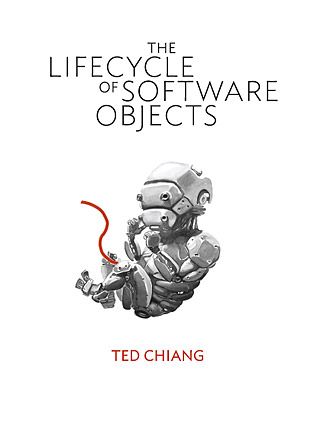
The Lifecycle of Software Objects by Ted Chiang

Ana was a washed-up zoologist turned programmer looking for work; Derek was an avatar designer for the Data Earth virtual reality platform.  The thing that brought them together: Blue Gamma Inc., manufacturer of autonomous self-aware AI pets known as digients.

Like any pet, each digient requires constant attention as they learn and grow.  Soon, Ana and Derek become as attached to their own digients as parents to their children.  But when Blue Gamma goes out of business and the Data Earth platform becomes obsolete, the future for the digients looks grim–until they enter the next phase of their natural evolution.

I really, really liked this story.  It’s got just about everything that makes science fiction so great: futuristic setting, well-rounded characters with believable motivations, one Big Lie with everything else held more or less at the level of our current understanding, and tons of parallels between the fantastic world and our own that makes you step back and really think about things.

The interesting thing about this story was how it played with all the old robot/AI tropes.  Usually, stories of this kind will have the robots rise to transcendence, either becoming the benevolent (or largely absent) rulers of the world, or taking over and enslaving humanity in some fashion. Not so with this story; the scope was much more intimate and personal, driven by characters rather than the Fate of Mankind, and that ultimately made the story much more believable.

If I had any problem with this story at all, it was the ending.  After so much build-up and development, I felt as if it cut off rather abruptly, just as things were getting more and more interesting.  I suppose the author was going for something of a “Flowers for Algernon” feel, but that wasn’t what I took from it.  Or perhaps he ran up against the novella word limit and decided to cut it off; I don’t know.

Regardless, I thoroughly enjoyed this story.  It’s certainly worthy of the Hugo for which it’s been nominated.  Highly recommended.

Should authors respond to reviews?

In the last six days since it went free, “From the Ice Incarnate” has had almost 2,250 downloads, and with so much attention, reviews are starting to trickle in.  Amazon has a very elegant system, which not only allows other readers to vote on whether a review is helpful, but to comment and start a discussion.

This raises a question, however; when is it appropriate for an author to respond to a review?  I’ve seen answers that go all over the board; some readers love it, while others are adamant that writers should never respond in any way–that to do so would be consummately unprofessional.

From an indie writer’s perspective, this is especially tricky.  On the one hand, we want to engage with our readers, since that’s a crucial part of making this into a viable career (Seth Godin makes some excellent points on that subject).  On the other hand, because reviews are so subjective and judgmental, there’s a very real danger that any discussion involving the author could turn very nasty, very quickly.

Whenever anyone posts a positive review of my work, I want to thank them.  If I only respond to positive reviews, though, that could make me look like I’m ignoring the critical ones.  But if I acknowledge the critical reviews that are thoughtful and well reasoned, what do I do with the inevitable one star reviews written by someone who’s just plain crazy?

The last thing I want is to be forced into taking a reactionary position in a public discussion.  While I’m confident I can keep my ego in check and avoid outright argument, that’s not the only danger I foresee here.  Besides, I believe very firmly that the story should speak for itself, and for that reason I think it’s better for the author to be as invisible as possible.

At the same time, I really do want to thank those who take the time to post a glowing review.  Perhaps the best option is to acknowledge them here or on twitter instead of Amazon?  I’m not sure.  And sometimes, questions arise that aren’t related to the story, where responding directly to the review is the most efficient way to handle it.

In any case, I’m going to be cautious for now, at least until I find a position that makes sense.  If you have any suggestions for how I can balance these concerns, please let me know.

And for those of you who have posted kind reviews: thank you!