Why I won’t be watching Amazon’s Rings of Power

Believe it or not, I actually did not have an opinion on Amazon’s latest boondoggle, the Lord of the Rings TV series called “Rings of Power,” until about three days ago. I expected it to be a disappointment, partially because I expected it to be woke, but mostly because all the major TV series seem to suck these days and I didn’t have any reason to believe that this one would be an exception. Amazon doesn’t strike me as being as insufferably woke as Disney or Netflix, though I did hear a lot of things about their Wheel of Time series (didn’t watch it, just because I haven’t read the books yet and plan to read them soon), but when people started complaining about the wokeness in Rings of Power, it didn’t surprise me either.

With that said, it seems that most people aren’t complaining that the series is overly woke, but that it’s just badly written. Kind of like how the thing that made Star Wars VIII: The Last Jedi was so terrible just because the storytelling was so bad. A lot of people also hated it for being woke, but I’ve also heard it argued that the movie wasn’t woke at all, and if you really dig into the underlying message you’ll find that it actually repudiates many key woke tenets. But whether or not that’s true, it was just an objectively terrible movie, with plot holes large enough to drive a Death Star through and protagonists so unlikeable they make Jabba the Hutt look like a sympathetic figure. But I digress.

So anyways, I didn’t really have an opinion about Amazon’s Rings of Power yet, and was actually planning to watch the first two episodes… until I read the show’s official response to all the negative reviews it’s been getting.

Just for fun, let’s fisk it together:

We, the cast of Rings of Power, stand together in absolute solidarity

“Solidarity” is a lefty word. The left tends to favor certain words more than others (for example, they could have used “support” here instead). Also, they’re constantly trying to twist words in order to give them some advantage, however slight it might be. So right away, this word choice was a yellow flag for me.

and against the relentless racism,

Yeah, but is it really “racism” though?

threats, harassment, and abuse

Again, I can’t take these accusations at face value because most of the time, “harassment” is just lefty-speak for “someone who disagrees with me.” These people claim that speech is violence, and then turn around and use violence to try to silence—or worse, compell—the speech of everyone else.

Also, what about the fans who came to this show in good faith and were genuinely disappointed? Every book, movie, game, or TV show gets at least a few one-star reviews. Even the best ones do. Some people just have different tastes. Are you seriously lumping all of those fans into the same box with the trolls and the racists?

some of our castmates of color

Every time I read “X of color” now, I inwardly hear “colored X.” The two phrases mean the exact same thing, but one of them signals woke virtue, while the other will get you banned from the Nebulas hours after they name you a Grand Master (and against the express objections of the supposed victim, no less).

But honestly, “people of color” is just the lefty way of saying “people who aren’t white.” Which is often just another way to be racist against white people.

are being subjected to on a daily basis. We refuse to ignore it or tolerate it.

Do you remember when “tolerance” was supposed to be a virtue, and anyone who was “intolerant,” for any reason whatsoever, was considered a terrible person? But one of the key tenets of wokeism is that rules that apply to non-woke people don’t apply to you.

Also, whatever happened to being “diverse”? Because if diversity is truly the goal, then there are going to be people who genuinely hate your show—and that’s okay. It doesn’t make them racist. It just means that they have a diversity of tastes.

So once again, why are you calling everyone who hates the show a racist, abusive harasser?

JRR Tolkien created a world which, by definition, is multi-cultural.

He created a fantasy world with a lot of different cultures. That’s completely different from being multi-cultural, or promoting the ideology of multi-culturalism.

I’ve only read Lord of the Rings twice, but I don’t remember it being political or ideological. Why are you trying to make it out to fit your own political views? Have you read the books at all?

A world in which free peoples from different races and cultures join together, in fellowship, to defeat the forces of evil.

Yeah, but that’s not multi-culturalism. When the US invaded Iraq in 2003, we made a coalition with many different “free peoples from different races and cultures,” but that wasn’t multi-cultural because 1) we organized the coalition outside of, and actually in contravention of, the UN Security Council, and 2) the multi-culturalists condemned the invasion at the time, and still condemn it to this day.

It sounds to me like these people are twisting the word “multi-cultural” into pretzels to suit their own rhetorical ends. Which is typical of how leftists twist language.

Rings of Power reflects that. Our world has never been all white, fantasy has never been all white, Middle-earth is not all white.

Actually, Tolkien’s explicit goal with creating Middle Earth was to provide England with a founding mythology that was free of all Norman French influence. So that’s debatable.

But more importantly, who ever said that the goal is to make Middle-Earth, or the fantasy genre as a whole, “all white”? Are you seriously implying that everyone who hates Rings of Power is somehow a white supremacist?

BIPOC belong in Middle-earth and they are here to stay.

Yep, that’s exactly what you’re saying. Everyone who hates Rings of Power, for whatever reason, is actually just a white supremacist. Way to piss all over the Tolkien fans who just don’t like your show.

Finally, all our love and fellowship go out to the fans supporting us,

…but not to the Tolkien fans who don’t like the show. They can fuck right off.

especially fans of colour

…because if you don’t like our show, you obviously aren’t black.

who are themselves being attacked simply for existing in this fandom.

As you have just demonstrated by literally accusing all of the disappointed Tolkien fans—including the black fans—of being white supremacists. How dare those people exist!

Accusation = projection = confession with these people. In every case. No exception.

We see you,

No, you don’t.

your bravery,

No, you really don’t.

It’s much braver to speak up and be honest about what you think about shows like this, especially when all of the Big Tech and social media sites censor you and falsely accuse you of being a white supremacist for your opinions.

and endless creativity. Your cosplays, fancams, fan art, and

In all fairness to the publicity folks who wrote this, they did use the Oxford comma properly. So kudos for that.

insights make this community a richer place and remind us of our purpose.

The inverse of this is that when you call everyone who disagrees with you a white supremacist, your community becomes a poorer place, your creativity dies, and you ultimately forget your purpose. Which is exactly what is happening right now with every corner of the arts that has gone woke.

You are valid,

Once again, the left seems to favor this word. Not sure why.

you are loved,

Sorry, but I don’t turn to corporations or TV shows for love and affection. When I do need love and affection, I turn to the actual people in my life, thank you very much.

and you belong.

Unless you disagree with us, of course.

You are an integral part of the LOTR family—

Fandom is many things, but it is not and should not be a substitution for family. And frankly, given how toxic most fandoms have become, if I needed to find a new family, why would I choose such a dysfunctional one?

thanks for having our backs.

And thanks for stabbing us in our backs, you woke corporate shills.

So yeah, I won’t be watching Rings of Power at all now. Any show that turns on their fans and calls them all racists and white supremacists for not liking the show is totally undeserving of my time, attention, or respect.

But it wasn’t a total loss. We did get this from it:
Did the internet ruin fandom?

Ever since I made a spreadsheet to track all the Hugo and Nebula award-winning books, I’ve noticed some interesting patterns. I’ve already blogged about how the genre seemed to transform after the creation of SFWA and the introduction of the Nebula Awards. That seems to mark the point where the left’s long march through the institutions began in our genre, though it may be coincidental as that is also when the New Wave began. Or the two events may be connected, which wouldn’t surprise me.

In any case, I’ve expanded that spreadsheet to include the Dragon Awards and the Goodreads Choice Awards for the fantasy and science fiction categories, and I’m now in the process of adding all the books from the Locus magazine’s readers’ poll, at least for science fiction and fantasy. From what I can tell, Locus basically sets which books will be considered for nomination with most of the older awards, creating what a cynical person might call a “master slate.” And since Locus has been insufferably woke for a very long time (I still read my local university library’s copy every month, though articles like this one make me question why), that goes a long way to explaining how the Hugos and Nebulas became so woke—though I’m still not sure if Locus is woke because its core readership (and primary revenue source), the New York publishing establishment, is woke, or if the organization was captured during the left’s long march through the institutions. Or if Locus has simply been woke from its inception.

But I’ve noticed other patterns, including some with the Goodread’s Choice Awards (which include a very public vote tally) that seem to indicate that the Hugos, the Nebulas, and the Locus readers’ poll are now of minimal cultural significance: a sideshow, if you will, or a very small clique that represents the genre’s past, not its future. Which is actually pretty obvious—you don’t need to assemble a spreadsheet of thousands of books to see that. But it’s an interesting pattern nonetheless, and it’s made me wonder if perhaps the rise of the internet—in particular, social media—killed fandom, at least as we traditionally understand it.

From what I can tell, SF&F fandom began in the 20s during the era of Hugo Gernsback’s “scientifiction” and the pulps. During the Golden Age of the 30s and 40s, fandom began to organize things Worldcon and the Hugos, but the genre was still very monolothic, with so few books and magazines being published each year that it was possible for a devoted fan to read all of them. In fact, the culture generally was very monolithic, with ABC, NBC, and CBS dominating television, the New York Times dominating the newspapers, and Life and the Saturday Evening Post dominating the magazines.

Because of the monolithic nature of the culture during this time, it was possible for a single figure to dominate and shape the field, like Walter Cronkite in journalism, or John W. Campbell Jr. in science fiction. But fandom was still mostly a localized affair, with geographical distance and the limitations of communications technology keeping fannish controversies from becoming too fractious or toxic—though not for lack of effort. But in a world without internet, where arguments happened either in person at conventions or the local club, or else evolved gradually in the pages of the various fanzines, none of the factions ever tried to split or go their own way. Granted, part of that was due to the monolithic nature of the genre—if they did split off, where would they go?—but there was still a sense that everyone in their small corner of fandom was a part of a far greater whole, even with all of their passionate and sometimes fractious opinions.

But as science fiction grew, it became less monolithic, if for no other reason than that it was no longer possible to read all of the books and magazines that were coming out. From what I can tell, the genre crossed that threshold sometime in the 60s. This was also when the New Wave pushed back against the standards set by Campbell and began producing some very experimental (and also more left-wing) work. But fandom didn’t totally fracture at this time. Instead, from what I can tell, the Locus reader’s poll emerged in order to filter out everything but the very best work for consideration for the awards.

In a world where everyone considers themselves to be part of the larger community of fandom, awards—even the relatively minor ones—carry a lot of weight. This remained true through the 70s and 80s as science fiction grew to the point where it truly went mainstream. In fact, the awards became even more important, because there was no longer any way for even the most devoted fan to read (or watch, or play) all of the new books and magazines (or movies, or shows, or games) that were coming out. New subgenres and subcultures of fandom began to emerge, but everyone still looked to the awards—particularly the Hugos and the Nebulas—as the standard of excellence.

But the publishers placed even more weight on the awards, because winning a Hugo, or getting on a New York Times bestseller list, often were key to propelling sales. So over time, the publishers gradually took over the awards, as well as the organizations and infrastructure that had been built around them. With the Nebulas, it isn’t hard to see how this happened, as SFWA allows publishers to be members (creating a very obvious conflict of interest that the leadership of that organization has chosen to ignore). With the Hugos, it probably happened through Locus, since the magazine depends so much on advertising for its financials. This became even more true as the subscriber base declined in the 90s, as it did for all of the major magazines in the field.

What caused the decline in subscribers? The internet, of course. Fans no longer depended on the ‘zines to stay in touch with the broader community, but began to organize into listservs, email chains, and message board forums instead. Later, blogs and social media continued this trend. Geographic distance became increasingly irrelevant, and fandom became less of something that you connected with through your local group of friends and more something that you connected with online as an atomized individual.

But ironically, the more interconnected fandom became via the internet, the more it began to fracture. All of those passionate opinions were no longer tempered by the boundaries of time and distance, and the snarkiest and most vitriolic or self-righteous opinions were often the ones that garnered the largest audience. This became even more true with the advent of social media, which relies on amplifying outrage to addict its users and maximize profits. Social media also encouraged the formation of echo chambers, where the various corners of fandom spent so much time talking to each other than they soon had little in common with the wider fandom. Geographical distance counted much less, but ideological distance counted for more—much more.

But did the internet ruin fandom, or save it? Or in other words, was this transformation a net loss or a net gain for fans of the genre? Because, on the creation side of things, I think the internet was very much a positive development. No longer did a creator have to rely on a small clique of ossified New York gatekeepers for their work to see the light of day, and the nature of online distribution meant that a quirky book written for a tiny but underserved subculture could find and grow an audience quite effectively, even without any mainstream appeal. Of course, this only accelerated the division of fandom, but it also meant that those subcultures—many of which had been underserved for decades—now had much more content tailored specifically for them.

In the 10s, the deepening divisions within fandom manifested in a fight for control of the major awards—specifically, the Hugos. That was whate the puppies were all about. But the fight became so toxic that the awards themselves became discredited, and the victory of the wrongfun brigade proved to be a Pyrrhic one. And because the culture is no longer monolithic, and fandom is no longer a single community united by a love for the same thing, the fall of the awards has given us a world where it matters much less that you’re a fan of science fiction and fantasy generally, and much more that you’re a fan of X author, or X game, or X thing.

Gone are the days when a single author, or editor, or influencer can reshape the culture in their own image. The wrongfun brigade is still trying to do that, but all they will ultimately accomplish is to destroy everything that they touch, including all of the legacy institutions that they now control. But this also means that we’ve lost that sense of being part of a larger, broader community. Of course, it’s fair to argue that that was always just an illusion, and that we’re all much better off now that there’s something literally for everybody. But I do think that’s come at a cost of increasing social isolation.

The pandemic has no doubt accelerated this. I wasn’t at Chicon or Dragoncon this past weekend, but I have friends that were, and I plan to meet up with them at FanX Salt Lake later this month. It will be interesting to get their take on all this. In the meantime, I will continue to fill out my book awards spreadsheet and look for interesting patterns.

Steelmanning the pro-aborts

Remember when the wrongfun brigade screamed and shouted and gnashed their teeth that the Sad Puppies were cheating the Hugo Awards through “slate voting,” or whatever the hell they called it? That we were somehow gaming the system to put our racist, sexist, misogynistic, fascist authors (many of whom were non-white, female, and/or flaming libertarians) on the ballot? Well… if you’ve been paying attention to the Dragon Awards, you know by now that those accusations were always flat-out lies, because the wrongfun brigade has been doing exactly the same thing they accused us of doing: cramming the wokest garbage on the Dragon Awards ballot, year after year after year.

It’s a toss-up which book is the worst offender, but so far I think that The Future of Another Timeline by Annalee Newitz takes the “worst book ever nominated for a Dragon by the wrongfun brigade” award. Seriously, if I were to write a parody of a book written by a washed-up second-wave feminist desperately trying to stay culturally relevant by proving her woke bona fides, there would not be any substantial difference between that and the actual novel. The villians—I kid you not—are an evil time-traveling brotherhood of men’s rights activists who are trying to rewrite history so that women are enslaved as breeders for the Patriarchy. Thankfully, the righteous sisterhood (er, trans-sister, non-binary… damn, that’s awkward) of uber-feminists thwarts the evil MRAs and defeats them in an epic time travel war. Abortions for all!

Seriously, it is clear from the very first page of this woefully inadequate toilet paper substitute that Newitz has never even attempted to thoughtfully and meaningfully engage with a men’s right’s activist, let alone an actual feminist who engaged meaningfully with them. And that’s what I find so fascinating. There was a time when the left was actually pretty good about engaging their ideological opponents on their own terms, and steel-manning, rather than straw-manning, the opposition’s arguments. Today, the left is totally incapable of that. That’s why all of the books that the wrongfun brigade afflicts upon us read like parodies, and why all of the awards that the wrongfun brigade has taken over are best taken as a list of books to avoid.

But all of this got me to thinking: am I capable of steel-manning the left’s argument on a position with which I vehemently disagree? Can I make their argument for them in a way that would make even the most rabid, foaming-at-the-mouth feminist nod reluctantly and admit: “yes, that is exactly what I believe”?

Let’s find out, shall we?


Since the dawn of time, women have been bound and fettered to their wombs. The ability to give birth, which the right sees as a privilege and a blessing, is actually the source of all the inequality between the sexes, and the reason why women have never been as free or as liberated as men.

Throughout history, men could have sex as often as they wished without any fear of becoming pregnant from the encounter. They might fear getting their female partner pregnant, but they always had the option to walk away. In contrast, women had to be constantly aware of the fact that any sexual encounter—whether wanted or not—could lead to nine months of exquisite physical torture, followed by a bloody birthing experience that often resulted in her death. And even in those cases where the mother survived, she now had a child who would be physically dependent on her for years, and mentally or emotionally dependent on her for decades. All of this could result from even the most innocuous sexual exploration—or a single unwanted rape.

Without reliable birth control—and many traditional religious societies still discourage birth control, same as they have for centuries—even a comfortably married woman could expect to spend the majority of her life bearing and caring for children, whether or not she wanted to. And because this experience was universal to all women, society developed strict gender roles that discouraged women from pursuing an education or a career. How could a woman pursue such things, when so many small children depended on her? In this way, the womb defined a woman’s station in life, and she had very little control or say in the matter. After all, what sort of a wife could deny her husband sex? And what sort of a woman could make a living in a world of men without a husband?

The invention of the birth control pill did a lot to liberate women, but it didn’t do enough. At best, the pill granted women a reprive that allowed them to see what the world might be like if they were no longer bound to their wombs. After all, even the most reliable birth control fails from time to time, especially if you forget to take it (or find it too difficult to obtain).

This is where the issue of abortion comes in. Conservatives like to smear us as being “unscientific” or confused about when life begins, but in truth that is just a side issue—a distraction from the real issue, which is liberating women from their wombs. Because the power to create life isn’t empowering at all if it only goes one way. If you have the power to give, but not to take, that power can be used against you. Same if you have the power to create, but not to destroy.

This is why abortion needs to be both legal and readily available through all stages of pregnancy: because unless women can choose to abort the life within them, then they will never be truly liberated. Nature has given them the power to give life, but without the power to take it, women will always be second-class citizens, confined to the restrictive gender roles imposed on them by their wombs. This is why birth control alone is insufficient: it only blocks the ability to create life, and that imperfectly. But power has to flow both ways.

Conservatives make a lot of noise about the value of life, but they are suspiciously silent on the issue of quality of life. Indeed, they seem to be unable or unwilling to consider that some lives simply are not worth living. Thus, they are willing to make exceptions to their pro-life stance for things like ectopic pregnancies—conditions where the choice is between letting both the mother and the baby die, or killing the baby to save the mother—but they fail to see how the same principle might apply in situations where the woman has to choose between aborting the child to obtain a successful career, or have the child and condemn them both to a life of abject poverty.

Not all life is equal. Some lives are more worth living than others, and some people’s lives are so terrible that they wish they’d never been born. How is it virtuous or noble to give anyone that kind of a life? It isn’t. Abortion is a hard thing, but sometimes it is necessary, and the alternative—the pro-life position—is downright cruel.

But that isn’t the main reason why abortion is so important. The main reason is that it liberates women from the fetters of the womb. It grants them the antithesis to the power that nature grants them, the power to create life, and thus allows them to pursue whatever sort of path they wish. Many women who have abortions go on to have children later in life, when the time is right for them. And because of those abortions, they are better able to care for those children, when they do come.

At this point, we should talk about how men control women’s bodies. Now, it’s obvious that there isn’t some super-secret Patriarchy society that meets on Tuesdays to discuss how they can advance their goal to turn all women into slaves for breeding purposes. That’s not what we mean when we say “controlling women’s bodies.” However, it is natural for people to fear the things that they don’t understand, and to try to exert control over the thing that they fear. Men clearly don’t understand women—that fact has been memed so often, it’s practically self-evident. So is it really all that hard to believe that men often try to exhert control over women, out of their fear and misunderstanding?

This control takes on many forms, but perhaps the most common form is that of gender roles. Men want women to take on a defined role because, among other things, that makes women understandable. But these roles are often more constrictive than the corresponding roles imposed upon men. A “mother” is often subject to a higher standard than a “father,” and is judged much more harshly when she fails to live up to that role. Also, the role of “mother” grants a lot less bodily autonomy than that of “father.” Is it really hard to see how this becomes a mechanism of control—specifically, over women’s bodies?

The issue at the heart of all of this is liberation. Freeing women from the harsh realities imposed upon them by their wombs is just the beginning. The ultimate liberation is the freedom to redefine reality itself—to decide whether or not one actually is a woman, and transcend the restrictions of sex and gender altogether. And why shouldn’t we exercise this power? Since the dawn of time, humans have been creatures of innovation, refusing to accept the constraints that nature has imposed upon us. When we looked up at the birds and saw that they could fly, we didn’t say “that’s nice, but nature didn’t give us that ability, so we should just stay in our place here on Earth.” Rather, we took inspiration from the birds and kept innovating and inventing until we, too, had the ability to fly. Why should sex or gender be any different?

This is why feminism and transgenderism aren’t actually at odds. It’s also why the new “what is a woman?” meme on the right, however cute, is totally irrelevant. Yes, it is true that ever since the dawn of time, a woman has been defined as an adult human female. That isn’t interesting. What is interesting is what women may become, after they’ve been liberated. Or men, for that matter. Because the liberation of women also ultimately liberates all of humanity: male, female, and everything in-between.

Liberation is the goal. Liberation is the key. Accept no boundaries, and refuse to live by the rules that are imposed upon you. Partake of the forbidden fruit, and you too may ascend to godhood. Refuse to accept the stories of Icarus and Prometheus as cautionary tales. Rage, rage against the dying of the light.

Trump season 6 has officially jumped the shark.

I’m calling it now: Trump season 6 has officially jumped the shark.

The show has been nothing if not a little over the top, but it’s been building steadily enough that even when it strains credulity, there ends up being a good reason for it. Until now, that is.

I’ll admit, when the global pandemic dropped at the beginning of season 4 right in the middle of the first impeachment, it made me wonder if the show had jumped the shark at that time. But the pandemic turned out to be a major turning point that redefined the whole show. It was also necessary to get him out of the White House in the beginning of season 5.

Now that was a bold move, to make him “lose” the election. But it was also quite brilliant, as it was necessary to show that even after he was nominally removed from power, Trump is still the center of gravity for the whole political system. Without him, the Democrats have absolutely nothing, as most of the country hates their policies as well as their hypocritical racism. Only by uniting the base against a common enemy do they have any hope of making it.

Also, it’s been really fascinating the way the writers have turned Biden into a mirror of Trump. Everything that Trump’s enemies have accused him of doing, Biden has actually done. Remember “Grab them by the pussy” from the first season? Yeah, Biden has actually done that. Also, stumbling on the stairs to Air Force One? I’d actually forgotten about that one, since it seemed like just a throwaway moment in season 2. The writers must have had tremendous foresight to set all that up way back then. It’s one of the reasons why this show ranks right up there with Breaking Bad and The Man in the High Castle.

Now, the show almost jumped the shark with the Ukraine-Russia war at the beginning of season 6. But that was actually foreshadowed back in seasons 3 and 4, with the first impeachment proceedings. Also, the very first episode of season 1 alluded to the simmering situation that Obama had left in Crimea and the Donbas after the Maidan protests. It was subtle, but it was there. Besides, with all of the talk about how Trump would start WWIII if he were elected, it was necessary for the writers to get Biden into a hot proxy war with Russia, which may yet prove to be the start of the next world war. Besides, they toned it down a bit by turning it into a WWI-style meatgrinder, rather than immediately jumping to a trans-Atlantic nuclear exchange.

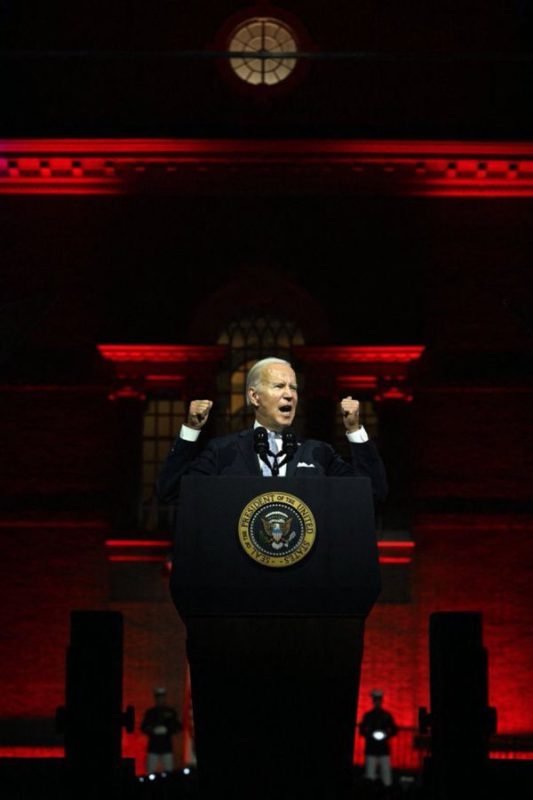
But Biden’s latest speech was just way too over the top. I mean, I know the show’s been setting things up for a civil war sometime in the next few seasons, but the optics of that speech were just way too on point. I could almost hear one of the soldiers off-screen asking “Hans, are we the baddies?” Dark Biden, my ass.

Still, I guess I’ll still keep watching the show, if for no other reason than to find out how the Ukraine war ends. At least that subplot is still interesting, though at the rate things are going, the Chinese invasion of Taiwan will be as ridiculous as the last season of Game of Thrones. So will the civil war, apparently. At this point, they’ve just been drawing it out for way too long.

What about you? Are you still enjoying the show, or do you agree with me that season 6 has really jumped the shark?

Three common tropes that I hate (and what I’d like to see more of instead)

So I’ve been reading a lot of books in the last few months, which means that I’ve been DNFing a lot of books too, and I’ve noticed some recurring patterns in the books that I’ve DNFed. A lot of these are tropes that I’ve either gotten sick of seeing, or that tend to make for a much weaker book. Or both.

I thought it might be interesting to point a few of them out, but I don’t want this post to be totally negative, so I’ll counteract that by also sharing some positive tropes that I’d like to see more of instead. If you guys enjoy this post, maybe I’ll do something like it again in a couple of months.

The Only True Love is LGBTQ Love

I see this one all the time in SF&F these days. Basically, if there are two characters who are romantically involved with each other, or if there is a romantic subplot to the story (not the main plot: sci-fi romance is a separate thing, for purposes of this trope), then that romantic relationship has to be gay, trans, or queer in some way. Or polyamorous, I suppose (does poly fall under the “+” in “LGBTQ+”? Maybe it’s the “P” in “LMNOP.”)

From what I gather, this trope began when LGBTQ activists pointed out that their particular kinks and orientations were “under-represented” in SF&F. Publishers, editors, and authors responded by filling their stories with more LGBTQ relationships, in order to avoid getting singled out as not being sufficiently LGBTQ-friendly. It’s the same principle as the zombie apocalypse: you don’t actually have to be the fastest runner, you just have to run faster than the guy behind you. Of course, since the SF&F field is so thoroughly dominated by leftists, pretty soon every story had an LGBTQ romance in it, to the point where straight romantic sub-plots are now actually kind of rare, at least in the books that are winning all the awards. Which is how you know the “under-representation” angle was a lie from the beginning.

It’s gotten to the point where if any character at all announces themselves as LGBTQ in the first few chapters of a novel, or the first few paragraphs of a short story, I immediately DNF. Call me homophobic; I don’t really care. These stories are so predictable that I can often pick out both which characters are going to be LGBTQ and which ones will end up together, within a page or two of them stepping into the story.

Of course, the main reason I don’t like these stories is because I’m not LGBTQ myself, and personally find straight romantic subplots to be much more interesting and satisfying. But there is another reason, and it has to do with the way that all of these stories aren’t just about entertaining readers, but about promoting LGBTQ pride.

This is going to get me a lot of hate, but it’s true so I’m going to say it anyway: the only thing that unites the LGBTQ movement together is the normalization of sexual perversity.

Think about it for a moment: what do each of the letters in LGBTQ really have to do with each other? Most gays would be happy to live in a world without women, and most lesbians would be happy to live in a world without men. Both of them view bisexuals with veiled suspicion and sometimes outright hostility, as if they’re somehow traitors to the wider homosexual cause. Transgenders affirm their identity by playing into as many stereotypes of masculinity and femininity as they can, which puts them directly at odds with masculine women and feminine men. And queers adopt all sorts of positions that contradict—or even negate—every other letter in the pantheon.

The LGBTQ movement is so full of internal contradictions that the only way it can hold together is to unite against a common enemy, and the only enemies that they all have in common are the people who affirm that there is a moral dimension to human sexuality, and that some forms of sexual expression are immoral. Even the modern notion that all consensual sex is fine goes too far for these people, because it excludes pedophilia, since children are not capable of giving their consent. And does anyone really doubt that one of the LGBTQ movement’s ultimate goals is to normalize pedophilia? When it’s not uncommon to see children under 12 at pride parades, drag shows, and drag queen story hour at the local library, sometimes as the very stars of the show?

I’ll say it again: the only thing that unites the LGBTQ movement is the normalization of sexual perversity. As soon as the leaders of the movement draw a line in the sand and say “this is not okay, this goes too far,” the movement will turn on itself and the revolution will eat its own. Thus, every new form of sexual perversion must be one-upped by something even more perverse. That is why we are literally butchering and chemically castrating children now.

(As a side note, it’s worth pointing out that being gay does not automatically make you part of the LGBTQ movement. My brother in law is openly gay, but he’s also a practicing Latter-day Saint who rejects all of this stuff. His faith is directly at odds with the LGBTQ movement, and he has chosen to keep his faith.)

So now, whenever I read a book with two (or more) characters in an LGBTQ relationship, I can’t help but feel that I’m reading “message” fiction, where the message is ultimately to normalize some other aspect of sexual perversion. Sorry (not sorry), but no thanks.

Instead: More pro-family, pro-natalist, life affirming fiction

So what do I want see instead? More stories with strong, healthy families. Stories about motherhood and fatherhood, that affirm the importance of both parents in raising children. Pro-natalist stories where having children is seen as a good thing, not as destroying the environment or burdening the world with more mouths to feed. In other words, stories that affirm and celebrate the intrinsic value of life—every life.

The one thing that all LGBTQ relationships have in common is that they cannot naturally produce children. Because of this, stories that follow the “all true love is LGBTQ love” tend to be about found families, rather than natural families. Parents are often absent or abusive in these stories, and children are either adopted or non-existant. A significant number of these stories also tend toward the macabre, since affirming the intrinsic value of life ultimately invalidates many of these LGBTQ relationships.

But that’s not why I want more pro-family, pro-natalist, life affirming stories. It isn’t about bashing LGBTQ, but about presenting a vision that stands apart from the LGBTQ movement, and doesn’t kowtow to the activists’ demands. It can even have room for some LGBTQ characters and relationships. Kings of the Wyld by Nicholas Eames is a good example of that, where one of the side characters is monogamously gay, and the protagonist is very much a family man. Another life affirming book I really enjoyed was To Sleep in a Sea of Stars by Christopher Paolini.

All Christians are Evil or Stupid

This is one you probably don’t notice if you aren’t Christian yourself, but I see it all the time, as do most other Christian readers that I know. If a character in a book or a story is some sort of Christian, then invariably they will turn out to be a villain, or so stupid that they’re less of a help and more of an obstacle to the protagonist. Or an eccentric curiosity.

It wasn’t always this way. Back in the 80s and 90s, there were lots of science fiction novels where the good guys were Christians. But these days, if the Christian character turns out to be a good guy, the author is either indie or a pariah to the rest of the SF&F field, like Larry Correia, John C. Wright, or Orson Scott Card.

Activists like to point out that if a majority of books tend to portray a particular race, gender, or sexuality in a negative light, it’s a sign that the field itself is racist/sexist/etc. They aren’t wrong. Now apply that to how mainstream science fiction and fantasy tends to portray Christians, and you begin to see the problem. There is a ton of anti-Christian bigotry in the culture right now, and it shows when you read most of these books.

Instead: More badass Mormons

So what do I want to see instead? More stories with badass Mormons. I’m only partially joking. As a member of the Church of Jesus Christ of Latter-day Saints, of course I would love to see more books with members of my faith doing awesome and inspiring things, but I’d be happy to see other kinds of Christians too.

Even books with generic Christians as good guys would be nice, but it would be better if something unique about their faith is central to the story. For that, you need to go deeper than a generic approach, so it would be better to make the character a member of a particular church or creed. And even though we Christians have our own theological differences, and sometimes argue quiet passionately over them, I wouldn’t at all mind to read stories with more Catholic main characters, or Evangelical, or even a well-written Jehovah’s Witness.

But personally, I want to see more badass Latter-day Saints.

An Innocently Profane and Vulgar Childhood

This one isn’t quite as prevalent as the other two, at least in the books I’ve read recently. However, it is definitely a common trope, especially in more recent books. Basically, it’s when something profane or vulgar invades a character’s childhood, but that isn’t portrayed as bad or even significant. For example, when there’s a child on the page and the people around them are swearing, or maybe even the children themselves. Or as a child, a character is exposed to something sexual, but it’s not a big deal.

In most of these books, it doesn’t seem like the author is doing it intentionally. But as Jonathan Haidt points out, liberals tend not to value things like purity and innocence as much as conservatives, or even really at all. Since the SF&F field is so thoroughly dominated by leftists, I think they often tend to violate the innocence of childhood without realizing that they’re doing it.

But in some books, it seems like the author is doing it intentionally to make a point: either that innocence itself is an illusion, or that children do better when they aren’t sheltered from the harsh realities of the world (they don’t). Or often, the author just thinks it’s funny to juxtapose childhood innocence with the profane (it isn’t—at least, not to me).

Instead: More noblebright

This isn’t generally a trope that you see in noblebright fiction. Not that noblebright doesn’t wrestle with questions of profanity, vulgarity, and evil, but it does tend to respect the boundaries of childhood innocence. And even after the characters lose their innocence, they still tend to become purified by the events of the story. There is a difference between being innocent and being pure, and a lot of really excellent noblebright stories explore the finer nuances of that difference.

Noblebright isn’t very popular right now, but I hope that will change in the coming years. There are some very good reasons to think that it will. Of course, noblebright can be done poorly, and stories that don’t put their characters into any real peril tend to be boring and unengaging. But it is possible to put children in peril without violating their innocence, or rejecting the concept of innocence to begin with. That is what I want to see.

Quick Update Post

It’s been a while since I posted to this blog. I had planned to keep a regular twice-a-week posting schedule, then went a little more than that for about a month before falling out of the routine.

We just got back home from a family road trip, where we drove out to Omaha and back again, making the Mormon pioneer trek in both directions. It was our first time going on a road trip with the baby, and we had a really fantastic time! Saw Chimney Rock, Independence Rock, Martin’s Cove, Sixth Crossing, Fort Bridger…and then we decided to go straight home, instead of finishing the trek with a tour of Salt Lake City. But that’s only a quick day trip for us, so we’ll probably do that soon.

It was a really awesome road trip, and definitely a good thing to get away and actually vacate for a while. But now that we’re back, I need to pick up some of the balls I’ve dropped and get back into the saddle. Writing is a high priority: I haven’t written hardly anything in the past week. Another big priority is publishing. I was supposed to put out a new short story single last weekend, but decided to put it off until we got back home. So that’s something I’m going to do right away.

I also want to get back into blogging. While on vacation, I DNFed a dozen books, most of them recent Hugo, Nebula, Dragon, and Goodreads Choice nominees. I have a lot of thoughts. Also, the 2022 Dragon Award nominees are out, and I’ve got to be honest, it looks kind of schizophrenic—which is exactly what you would expect to see with rival political tribes battling for control of fandom. But that’s been the case for the Dragons ever since the award’s inception. Again, I have thoughts.

Point is, I’ve got a lot of work to catch up on, but I hope to get back into a good blogging routine before the end of the month. That’s the plan, and it’s not a lack of content that’s the problem: more just a question of routine. Expect to see more here soon.

Do trans people exist?

There’s this video clip currently making the rounds where Senator Josh Hawley (R-MO) confronts a crazy-eyed law professor from Berkely and gets called out for, among other things, saying that trans people “don’t exist.” It’s a highly partisan exchange that I’m sure will be used by both sides to rally the base, but it also gets at the fundamental incoherence of the modern LGBTQ+ movement, which I find absolutely fascinating.

First of all, it’s worth examining the accusation that Hawley doesn’t think that trans people “exist.” What exactly does that accusation mean? It can actually mean one (or both) of two things:

  1. The category of “trans” is not (or should not be) a legitimate identity for legal and societal purposes.
  2. People who identify as “trans” should be un-personed and deprived of all their basic human rights.

It’s extremely disingenuous of the professor to conflate those things, because it is entirely possible to believe the former without believing the latter: that is, to believe that “trans” as a category is illegitimate while also acknowledging that people who identify as “trans” are still people and deserving of basic human rights. Also, it’s disingenuous of her to argue that denying “trans” as a category causes people who identify as “trans” to commit suicide, as the suicide rate for transgender people is the same after they transition as it is before they transition. But I digress.

The thing that makes this interesting, at least to me, is that if you follow the professor’s logic to its conclusion, it actually undermines the fundamental premise of the gay rights movement: that gays, lesbians, and bisexuals didn’t choose to be gay, but in fact were “born this way.” Allow me to explain.

At first, the argument was “I didn’t choose to be gay, I was born this way.” Thus the concept of sexual identity was born, with categories for heterosexual, homosexual (gay/lesbian), and bisexual.

Then, the argument was “I’m a man/woman who was born in a woman’s/man’s body.” In other words, that gender and sex are separate things, and it is possible to identify with a gender that is different than your sex. Thus, the concept of gender identity was born, and with it the category of transgender.

At this point, it’s important to point out that the “born this way” argument still held sway. The idea wasn’t that trans people choose to change gender, but that they were, in fact, born in the wrong body. Thus the distinction between sex and gender.

But once the trans category was added to the movement, transforming it into LGBT, that created a major epistemological problem for its members: how do you know which category you belong to? That is, how do you know whether you’re actually a gay man, or really a woman in a man’s body? You can’t be both. You were either born one way, or you were born the other. So which one is it, and how do you know?

This is where the movement began to fall apart, because there is no objective way to tell the difference between gay/lesbian and trans. It’s entirely subjective. And once we allowed that, suddenly we got a bunch of people saying things like:

“What if I feel like a man today, and a woman tomorrow?”

“What if I don’t feel like a man OR a woman?”

“What if I feel like I’m actually a cat, or a wolf?”

“What if I feel like I’m a totally different gender/sexual category that none of y’all have imagined yet?”

And suddenly, just like that, the “born this way” argument was completely undermined, because if gender and sexuality are subjective, then it can be whatever you want it to be. Which is how we got personal bios like this one:

Serah Eley is a software developer and former podcaster who once produced a weekly science fiction podcast called Escape Pod. It’s since gone on to become somewhat successful. She strangely mispronounced her name as Steve Eley at the time; she’s since realized that life is much more fun as a woman, and came out as transgender last year. Serah lives in Atlanta, Georgia with her two wives, Alison and Cat.

So if there were ever any betting pools on what happened to Steve: changed sex, joined a committed lesbian love triangle is the dark horse winner. She is, obviously, still Having Fun.

So gender is something you can change on a whim because it’s “more fun”? That doesn’t sound at all like Serah was “born this way.” It sounds a lot more like “reality is whatever I want it to be.”

But if sexuality and gender are all subjective, the entire premise that the movement was originally built upon—that LGBT people are “born this way”—is completely false, and the “born this way” argument is outdated at best, and at worst was a Trojan Horse for the LGBTQ+ agenda from the very beginning.

Either way, by the standards of this Berkeley professor, gays, lesbians, and bisexuals “don’t exist.”

Just like man and woman “don’t exist.”

Just like objective reality doesn’t “exist.”

Because biological sex, “born this way” arguments, and objective reality itself are all fundamentally transphobic.

That’s where you get if you follow the LGBTQ+ logic to its ultimate conclusion. The fundamental premises on which the movement is based are totally incoherent and self-contradictory. It’s remarkable, really, because the language the movement uses is not all that different from the Orwellian doublespeak of 1984.

But hey, I’ve also been reliably informed that reason and logic are all just constructs of white supremacy, so obviously that means that professor crazy-eyes is right and there’s nothing to see here. Move along. Move along.

Reading Resolution Update: June

My 2022 reading resolution: Read or DNF every novel that has won a Hugo or a Nebula award, and acquire all the good ones.

This is the last one of these resolution updates that I’m going to post here on this blog. I’ve only got three books left now: Falling Free by Lois McMaster Bujold (1989 Nebula), A Fire Upon the Deep by Vernor Vinge (1993 Hugo), and Doomsday Book by Connie Willis (1993 Hugo and Nebula). Since I already own all of those, I’ll probably finish reading them by the end of July, and the only other books I need to acquire to finish the resolution are Way Station by Clifford D. Simak (1964 Hugo), Rainbows End by Vernor Vinge (2007 Hugo), and Powers by Ursula K. Le Guin (2009 Nebula).

I will, however, do an in-depth study of the final results and post them here. There should be some interesting trends, and hopefully my own reading preferences will provide some useful insights, though really those preferences say more about me than they do about these books. Reading tastes are very subjective, so I’m sure there are a lot of good and brilliant people who love some of these books that I’ve passed on, and vice versa. But maybe sharing my own reading preferences will help others to develop their own, and if that helps to encourage more reading, that would be great.

One of the major insights that I’ve already discovered is that the best predictor that I will not like a book is if it won a Nebula without winning a Hugo. In a post last month, I speculated as to why that may be. I’ve already expanded my Hugo/Nebula award spreadsheet to include all of the nominated books as well, but I’ve blacked out the Nebula nominated books and will probably skip most of them. After all, if there’s something about the Nebula books that rubs me the wrong way, maybe I can get more use from that award by using it as a “do not read” list rather than a recommended reading list.

I’m also branching out to the Dragons and Goodreads Choice award-winning books, starting with the most recent ones and working my way back. The really neat thing about Goodreads Choice is that they post how many votes each top-20 book got in each category, and how many votes were cast in each category overall, so it’s very easy to quantify and rank each book. For example, in the science fiction category, Project Hail Mary by Andy Weir won first place in 2021 with 92,831 votes out of 281,584, or a 32.97% plurality. That is the largest plurality that any book has ever won in that category, so either Project Hail Mary is a damned good book, or all the other books really sucked—and I tend to think it’s the former, which is why I’m reading it now.

The Dragons are very different, but I haven’t read enough of them to notice any trends or form any opinions. However, there are some indications that the Dragons are the anti-Hugos/Nebulas, and to some lesser extent the anti-Goodreads Choice Awards, which seem to swing more toward the Hugo/Nebula crowd, even if most of the Hugo and Nebula nominated books only typically get between 5% and <1% of the vote. To gather more data, I’ve decided not to skip any of the Hugo/Nebula books that placed in the Goodreads Choice Award, especially since 2015 when the Sad Puppies schism really shook things up in the science fiction book world. So it will be interesting to see which of these books I think are worth reading and owning, and which ones I think aren’t.

So in short, now that I’ve (just about) read all of the Hugo and Nebula winning books, I’m going to move on to the Hugo (but not Nebula) nominated books, the Dragons, and the Goodreads Choice winners and nominees. But I’m not going to set a deadline, or hold myself to reading all of them. Rather, I’m just going to take it as a starting point, and instead set a goal of 100 pages per day, reading whatever strikes my fancy.

Books that I read and plan to or have already acquired

  • Hyperion by Dan Simmons (1990 Hugo)

Books that I did not finish

  • Startide Rising by David Brin (1984 Hugo and Nebula)
  • The Uplift War by David Brin (1988 Hugo)
  • To Say Nothing of the Dog by Connie Willis (1999 Hugo)
  • A Deepness in the Sky by Vernor Vinge (2000 Hugo)
  • Darwin’s Radio by Greg Bear (2001 Nebula)
  • Jonathan Strange & Mr. Norell by Susanna Clarke (2005 Hugo)
  • A Master of Djinn by P. Djeli Clark (2022 Nebula)