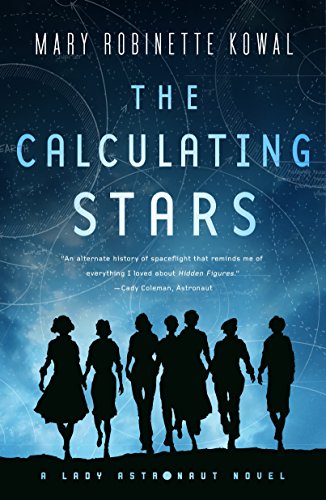
The Calculating Stars actually started out pretty good. Mary Robinette Kowal is a very skilled writer, and her main character in this book was both likeable and interesting—something that seems to be increasing rare in Hugo-nominated books. It also didn’t hurt that in the very first chapter, a giant meteor wiped out Washington DC and most of the eastern seaboard. But then it gradually turned into a story about the little woman who roared and her band of misfit minorities who team up to fight Captain Patriarchy, and the super-woke feminism just ruined it for me.
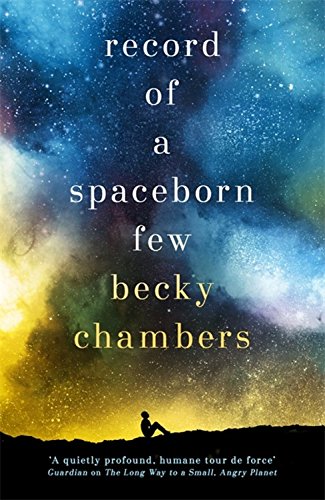
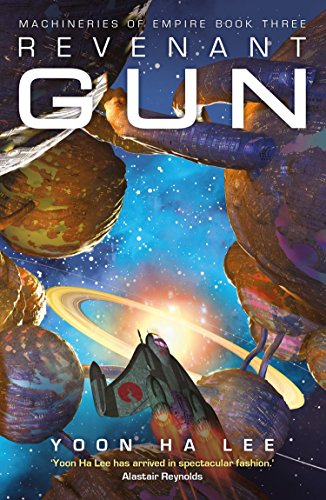
I didn’t read Revenant Gun or Record of a Spaceborn Few because I DNFed both series with the first book. With Yoon Ha Lee’s Machineries of Empire series, I don’t remember much, except that the first book made absolutely no sense to me, with so much meaningless violence that it bordered on the absurd. With Becky Chambers’s Wayfarers series, it started off as an interesting space opera, but the ship quickly turned into a lesbian love boat, with lots of queer and transgender aliens to boot. Wokery ensues.
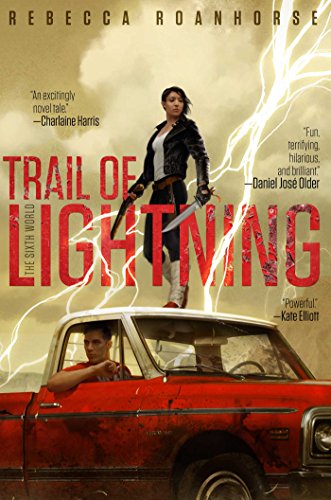
As for Trail of Lightning, I honestly don’t remember much about that one, other than that it started to give me woke vibes and I didn’t really like any of the characters. I think it also played the Death is Chic and Life is Not Worth Saving trope, which I personally cannot stand. If the main character had struck me as a good and decent person, I probably would have kept reading, but so many books that suffer from wokeness also suffer from having protagonists who are just terrible human beings in general. I don’t think the two are unrelated.
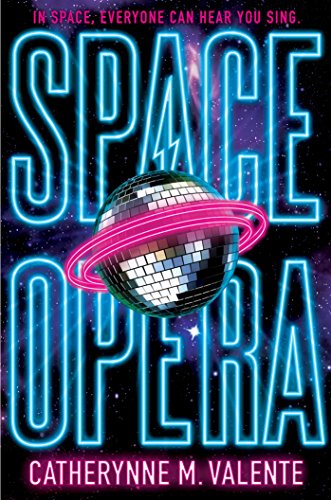
The first chapter of Space Opera was laugh out loud hilarious, and I actually enjoyed it quite a lot. Valente’s gonzo humor is a lot of fun! Then… I don’t know quite how to put this, but the story just started to feel depressing, and I’m not sure why. Also, the gonzo writing style started to grate on me after a while, kind of like Chuck Wendig’s writing does for anything longer than a blog article. It wasn’t a terrible book, but I didn’t end up finishing it.
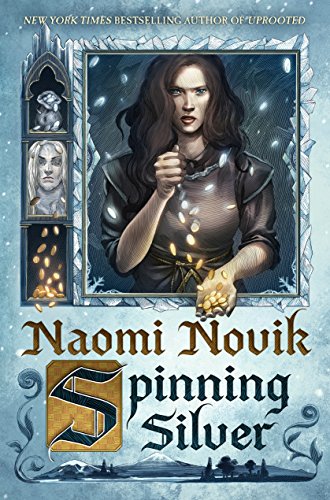
But I really loved Spinning Silver, much more than I was expecting to. I’m not generally into fairy tell retellings, but this one stirred something primal in my Slavic roots and scratched an itch I didn’t even know that I had. Besides all that, it’s just a damn good story. The villains were genuinely villainous, the peril was genuinely perilous, the good guys all had satisfying growth arcs, and the ending was a crowning moment of awesome that brought everything full circle in the best possible way. Really great book.
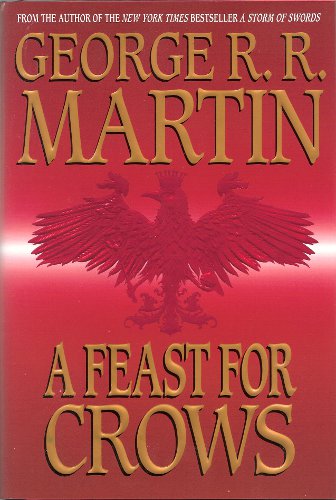
This is going to be controversial, but I don’t think any of George R.R. Martin’s A Song of Ice and Fire books should have been nominated for the Hugo Award. In the first place, those books are pure fantasy, and while the line between fantasy and science fiction can become blurry at times, with everyone drawing it in a slightly different place (Dragonriders of Pern, for example), I do think it’s important to draw that line somewhere, because each of us as readers draws that line somewhere. Some readers read only fantasy, some read only science fiction, and even among readers who read both, they scratch very different itches.
(As a side note, A Dance With Dragons came out right when I was indie publishing my first few books, and I remember being super annoyed that it was monopolizing all of the top spots on the Amazon bestseller charts for subgenres like science fiction > action & adventure, even though it was very clearly not a science fiction book. That annoyed me as both a writer and a reader.)
More than that, though… how do I say this? I know that a lot of people are (or were) huge fans of Game of Thrones, that it had a huge and lasting cultural impact, and that the writing quality of both the books and the miniseries was quite excellent, at least for the first few books/seasons… but to what end? The HBO series itself is blatantly pornographic, and the books are even worse, glorifying the immorality and horrific violence that characterizes the series. Worse, there is no good or evil in this world: only power. This means that there are no heroes, only victims and victimizers.
I’m not sure how much Game of Thrones is responsible for shaping our current cultural decay, and how much it was simply a reflection of the culture in which it was created, but this obsession with power and the victim-victimizer complex lies at the heart of all of the social pathologies currently driving the West to cultural and spiritual suicide. It’s the force driving our own modern Game of Thrones, between the MAGA disciples of orange Jesus and the machinations of our Big Tech and Deep State overlords, with their hordes of hypnotized NPC zombies protesting in behalf of [current thing], all while remaining carefully masked. It turns out that when you embrace Martin’s paradigm, rejecting good and evil for the pure pursuit of power, and define everyone by their victimhood status, it leads to the death of everything in your culture that is good, true, and beautiful.
And even laying all of that aside, the fact that Martin hasn’t finished the damned series yet has done more to destroy the epic fantasy genre than all the other things that his career has otherwise accomplished. If you’re a new fantasy writer and you have a great idea for an epic fantasy series, you’d better have a good day job or a sugar daddy/momma, because most readers won’t give your series a chance until after you’ve finished the last book. But can we honestly blame the readers for this, when Martin ran off with their money and left them all burned?
Back when Game of Thrones / A Song of Ice and Fire was still ascendant, fans and readers were all mesmerized by how skillfully George R.R. Martin could subvert their expectations and pull off twists that no one had foreseen. It turns out that the biggest expectation that Martin ever subverted was the expectation that he would finish the damned series.
Anyways, that’s enough ranting about George R.R. Martin and the pathological effect that I believe he’s had on the culture. I read A Game of Thrones back in 2010 and decided to skip the rest of the series. The writing was fantastic, but I hated all of the characters and could tell that things were going to get way too dark and way too graphic in the later books. And now, I wish I lived in a world where George R.R. Martin was still a mostly unknown midlist author, with a small cult following but not a lot of influence on the culture overall. It would be a much better world.
I skipped Accelerando, because I’ve read enough Charles Stross to know that his particular brand of grungy cyberpunk nihilism rubs me the wrong way. Learning the World wasn’t terrible, but I DNFed it because I got bored, though I could be persuaded to try it again. It was just too much of an idea book, without enough story to really hook me.
Old Man’s War… my thoughts on that one are complicated. I cannot stand Scalzi as either an author or a human being. He’s basically an obnoxious internet influencer who made it big back in the days of the blogosphere, before “influencer” was a job title. Of course, to be an influencer, you have to either 1) be an extremely attractive woman, or 2) be off your rocker somehow, and that definitely describes Scalzi. He is an obnoxious blowhard who likes to argue with people on the internet for fun and profit, except he’s apparently not as good at social media as he was at blogging, so he’s pivoted to writing science fiction and playing the SFWA mean girls game instead.
But most of that happened after Old Man’s War, so it’s not exactly fair to judge the book on all of that. And I have to admit, I enjoyed it back in 2008 when I read it. It’s basically a retelling of Starship Troopers and The Forever War, but without all of the nihilism and politics—and since the nihilism and the politics are the things that got me hung up on both books (though I actually enjoyed the politics of Starship Troopers; the part that slightly annoyed me was getting a lengthy treatise on human sociology instead of an adventure novel), Old Man’s War was basically a retelling with all of the good parts and less of the bad parts. So I’ll grudgingly give Scalzi his due and admit that his first book is good enough to deserve an affirmative vote.
But Robert Charle’s Wilson’s Spin is easily the best book on the ballot from this year, and possibly the best Hugo-nominated book that I’ve read from this whole decade. It’s fantastic. One of the best science fiction novels I’ve ever read. The rest of the trilogy is just as good, too. In fact, Spin and its sequel Axis were a huge influence on my own Genesis Earth, though it may not be obvious at first glance. I read Spin when I was studying overseas in Amman, Jordan, while I was still working on the first draft of Genesis Earth. The next year, I read a whole bunch of Robert Charles Wilson’s other books, and I have to say that I have yet to read a book he wrote that I didn’t enjoy. His books have had as much influence on me as Ursula K. Le Guin, and largely scratch the same itch.
So that’s how the 2006 Hugos shape up for me: three books that I didn’t like, and two that I did—and one of those books is one of my all-time favorites.
Alright, let’s tackle the most controversial Hugo awards since Sad Puppies 3—and possibly the most controversial Hugos ever!
The Nominees
Legends & Lattes by Travis Baldree
Nettle & Bone by T. Kingfisher
The Spare Man by Mary Robinette Kowal
The Daughter of Doctor Moreau by Silvia Moreno-Garcia
Nona the Ninth by Tamsyn Muir
The Kaiju Preservation Society by John Scalzi
The Actual Results
Nettle & Bone by T. Kingfisher
Legends & Lattes by Travis Baldree
The Kaiju Preservation Society by John Scalzi
The Daughter of Doctor Moreau by Silvia Moreno-Garcia
The Spare Man by Mary Robinette Kowal
Nona the Ninth by Tamsyn Muir
How I Would Have Voted
No Award
The Daughter of Doctor Moreau by Silvia Moreno-Garcia
Legends & Lattes by Travis Baldree
Explanation
The 2023 Hugo Awards were an epic clusterfuck, from which the Hugos might never recover (and honestly, I kind of hope they don’t). Not only did the organizers exclude a bunch of titles like Babel by R.F. Kuang that probably would have placed very high, if not outright won first place—excluded them for no other discernible reason other than that they might have offended the Chinese Communist Party, since China was hosting the awards—but they also disqualified thousands of Chinese ballots for the same reason that they disqualified thousands of Sad Puppy ballots in subsequent years since the big kerfluffle in 2015: namely, that they were Wrongfans having Wrongfun.
Apparently, to get on the Hugo ballot, you have to either 1) pander to or be a member of the SFWA mean girls club (for crying out loud, two of the authors on this year’s ballot were former SFWA presidents), or 2) write a lesbian love story. I suppose you can also get on the ballot if you write a love story that’s gay, transgender, polyamorous, or some other flavor of queer, but lesbians are easier because the male readers are less likely to be grossed out or confused by it.
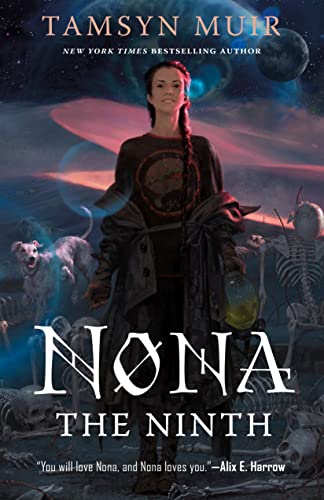
Anyways, I didn’t enjoy any of these books, though I have to admit that I didn’t even try to read The Kaiju Preservation Society (because I cannot stand Scalzi, either as an author or a human. The Collapsing Empire with its random throwaway sex scene in the second or third chapter was the last straw for me) and The Spare Man (my wife picked it up and was so confused and turned off by the non-gendered pronoun dickery that I knew it was too woke for me). I DNFed Tamsyn Muir’s Locked Tomb series with Gideon the Ninth, for reasons that I detailed in my recap of the 2021 Hugo Awards.
As for Nettle & Bone, I was pleasantly surprised at first, because the love interest was heterosexual—which, for the Hugos, is very unusual these days. But there were other things about the book that turned me off, such as the anachronism of a religious medieval world that’s been gutted of anything religious that might offend a non-religious reader in 2023, and a very anti-natalist bias with some lines that could have come straight from Margaret Sanger. So that’s why I put Nettle & Bone below No Award, and didn’t even bother ranking it anywhere on my ballot.
Legends & Lattes wasn’t terrible, but I got bored after the first couple of chapters, and because of the lesbian love story I’m not too keen to try it again (though I suppose I could be persuaded otherwise). As for The Daughter of Doctor Moreau, I didn’t find anything objectionable with that one, and actually got about halfway through, but… I just didn’t care about any of the characters. Not a terrible book, but it just wasn’t for me.
Of the two, I think I liked The Daughter of Doctor Moreau better, or disliked it less, which is why I put it on the ballot above Legend & Lattes and below No Award. Why include anything on a ballot below No Award? Because the way that ranked choice voting works, you can still influence the outcome that way even if No Award is eliminated during the counting. It’s basically like saying: “I don’t think any of these books deserve an award, but if I had to award one of them, I’d give it to (1) and (2), in that order.”
So that’s my take on the infamous 2023 Hugo Awards. Frankly, I think it would have been much better if the Chinese wrongfans had completely taken it over, and made it so that Worldcon was held in China every other year, with Chinese authors dominating the Hugos from now on. There are certainly enough Chinese sci-fi readers to justify such a move. But alas, it seems that the Trufans are going to keep clutching the Hugos with a deathgrip until 1) they’re all dead (since most of them are boomers anyway), or 2) the Trufans and the Hugos both become culturally irrelevant, if indeed they aren’t already.
(Speaking of China, hi Mike Glyer! Still buying views from Chinese clickfarms to boost your online rankings? It must be a real slow news week if you pick up this blog for your File 770 pixel scroll.)
It’s interesting to see which of these books hold up after nearly fifty years, and which of them really don’t. Of the five here, I think Children of Dune is the only one that still has any lasting cultural relevance, and that only because of the first book, Dune.
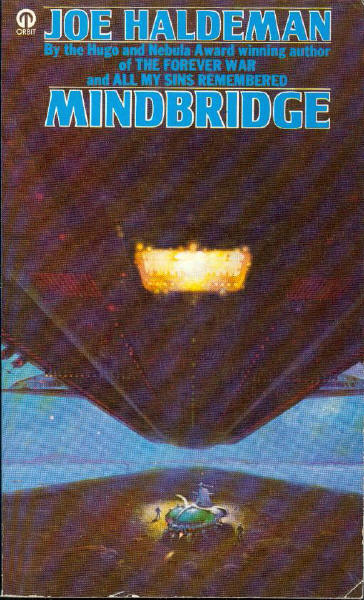
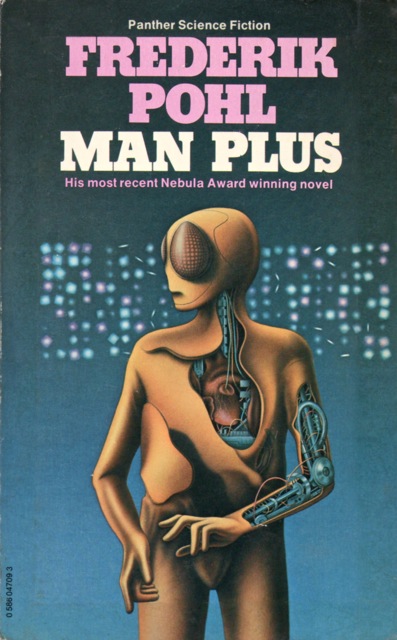
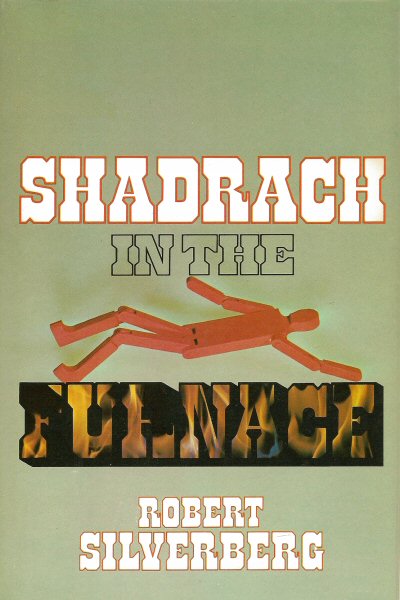
Children of Dune is also (perhaps not surprisingly) the only book that I would consider worthy of voting for. It’s nowhere near as good as Dune, but of the Dune sequels, it’s the best one I’ve read so far (though the way Leto transformed into a… whatever really seemed to come out of nowhere). Man Plus and Shadrach in the Furnace weren’t terrible, but I didn’t finish them. I can’t speak to Mindbridge, because I didn’t bother reading it: I’ve read enough Haldeman to know that he has a penchant for nihilism that really rubs me the wrong way.
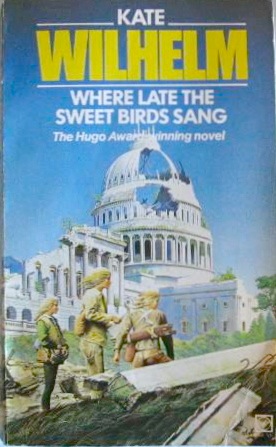
As for Where Late the Sweet Birds Sang, it was really awful. I don’t remember the plot exactly, but the book is full of leftist 70s doom porn regarding climate change and Malthusian resource shortages, combined with a resurgence of The Patriarchy that forces all the female characters into becoming breeders. It’s dark, dystopian, and apocalyptic in all the worst ways, with a very strong political bent to it that holds up about as well as all of the end-of-the-world predictions that the climate cultists have been peddling since the 70s. Basically, Where Late the Sweet Birds Sang is why I’d vote “No Award” after Children of Dune.
Man Plus had some interesting writing, but it didn’t really hold my interest, probably because of all the Malthusian and Freudian undertones. It wasn’t insufferably political, though, which is why I would actually affirmatively vote for it after “No Award.” I would certainly rather that Man Plus had won out over Where Late the Sweet Birds Sang. Same with Shadrach in the Furnace, which isn’t terrible, though it does have some weird communist power fantasies in it. I really love the way Silverberg writes, but the things he chooses to write about just seem totally pointless to me.
The 70s was a very weird time for science fiction… and probably a weird time for the world in general. As you can probably tell, I’m not a huge fan of New Wave science fiction (with a few notable exceptions). Things got a lot better after Reagan’s Morning in America, not just for the country, but for science fiction as well. Then we hit the 90s, which the Zoomers tend to look on as a simple, idyllic time when all was bright and wonderful in the world, which strikes me as hilarious because I remember it as a time of rampant school shootings and MTV-driven cultural decay. But that’s a subject for another post.
The City in the Middle of the Night by Charlie Jane Anders
The Ten Thousand Doors of January by Alix E. Harrow
The Light Brigade by Kameron Hurley
A Memory Called Empire by Arkady Martine
Middlegame by Seanan McGuire
Gideon the Ninth by Tamsyn Muir
The Actual Results
A Memory Called Empire by Arkady Martine
Middlegame by Seanan McGuire
Gideon the Ninth by Tamsyn Muir
The Light Brigade by Kameron Hurley
The City in the Middle of the Night by Charlie Jane Anders
The Ten Thousand Doors of January by Alix E. Harrow
How I Would Have Voted
No Award
Explanation
The wokery was strong this year.
I have a list of tropes that I cannot stand anymore, to the point that I will usually DNF any book that uses them. All of the nominated books this year fell fell into at least one of those tropes, including:
All true love is LGBTQ love
A profane and vulgar childhood
Death is chic
Life is not worth saving
Badass woman warrior, slay!
One of these days, I’ll write a blog post describing all of these tropes. If they weren’t so common in fiction these days, I would have more tolerance for them, but I’ve seen them all so much that they get an immediate “nope” whenever I see them.
The City in the Middle of the Night was like something written by a mental patient, and not in a good way. If I wrote a parody of a book written by a leftist, it would read no differently than this book.
I forget why I DNFed The Ten Thousand Doors of January, but I think it was because of the trope I call “a profane and vulgar childhood,” where children lose (or are never really allowed to experience) their innocence before they grow up, and the author doesn’t treat this like the tragedy it truly is. There may have also been an anti-racist / anti-colonialist bent that turned me off, if I remember correctly.
I wanted to like The Dark Brigade, because I enjoy reading Kameron Hurley’s op-eds in Locus Magazine, but the book was way too dark and profane. Also, it suffered from “all true love is LGBTQ love” and “badass woman warrior, slay!” which I am just so tired of reading.
A Memory Called Empire is one of those sprawling space operas about a massive galactic empire, but it read too much like something written by an English major with little to no understanding of how geopolitics actually works. Also, the “all true love is LGBTQ love” was strong with this one.
Finally, Middlegame and Gideon the Ninth are both prime examples of “death is chic,” a trope which plays right into the death cult that currently dominates our culture. But even if the macabre obsession with death is just an aesthetic, it’s one that I personally cannot stand. With that said, though, I think it goes beyond the aesthetic for both of these books—but I didn’t stick around long enough to find out.
For all of these books, the characters fell completely flat for me. One of the things I need in order to connect with a character is to get a sense right off the bat that they’re a good person—or, if they’re a bad person, that needs to be lampshaded clearly as a flaw. But in so many books that are published these days, the characters are just downright awful people who care only for themselves, and rarely is this pointed out as a flaw.
Increasingly, it seems that we live in a world where the culture tells us that nothing is true and everything is permitted. Screw that.
I’ve been going back and forth on this post for almost a year now, wondering how exactly to express my thoughts. Some of the positive reviews on my fiction have expressed that I write “libertarian fiction,” and in some ways, I think that’s accurate: certainly, I value liberty very strongly, and support those government policies that are designed to safeguard our liberties while opposing those that seek to destroy it. That has not changed. But my views of libertarianism more generally have, perhaps in some ways that might surprise my longtime readers.
First, a little bit of my personal history. I grew up in one of the most liberal parts of the country, Pioneer Valley, Massachusetts, and considered myself a conservative while I lived there. Then, after serving a two-year mission for my church in Silicon Valley, California—what is probably the most progressive, leftist part of the country—I went to college at Brigham Young University, in the most Republican county of the most Republican state in the United States. At that point, I considered myself to be a sort of left-leaning classical liberal. When Dick Cheney spoke at BYU’s commencement, I blogged about the protests and attended the alternate commencement where Ralph Nader spoke.
I graduated in 2010, in the middle of the Great Recession, and made the fateful decision not to go to grad school at that time. To this day, I count that as the single best decision I ever made in my life (right up there with deleting my Facebook and Twitter accounts). Not only did this force me to learn how to navigate the real world, but it also got me out of the indoctrination factory that the national university system has become, even to a degree at my alma mater, BYU.
About five years after I graduated, I got red-pilled and started listening to right-wing commentators like Glenn Beck, Ben Shapiro, and Dennis Prager. I also looked seriously into Ron Paul and the libertarian movement, and became something of a libertarian. As fractitious as libertarianism is as a political philosophy, it seemed like the most logically coherent and intellectually honest way of understanding the world, whereas leftism and conservatism were both riddled with internal contradictions.
But then I got married and started a family. That experience has changed me in a lot of ways, perhaps even more than all the rest of my life experiences combined. But politically, the biggest thing it has caused me to rethink is this question:
What is the fundamental unit of society?
I’d always played lip service to the belief that the family is the fundamental unit of society, but starting a family of my own has made that real for me—indeed, has made me realize—in a way that simple bumper-sticker slogans never could. Before, I was living for myself. Now, I live for my children. Before, I was the hero of my own story, and that story was a single volume. Now, my story is just a single volume in an ongoing saga, a link in the chain of the generations that came before and will go on after me.
Libertarians believe that they stand in opposition to authoritarians of all stripes, be they communists, fascists, socialists, etc. But both libertarians and authoritarians operate on the unspoken assumption that the individual, not the family, is the fundamental unit of society. Leftists want to destroy the family and put the state in charge of raising and educating children, in order to make them obedient to government authority. Libertarians, on the other hand, romanticize this idea of the atomized individual who follows his own path and eschews all forms of collectivism, including the family. Ayn Rand’s books are populated by ubermensch who seem like they’ve sprung forth from the head of Zeus, and the children in her novels are basically just adults in miniature.
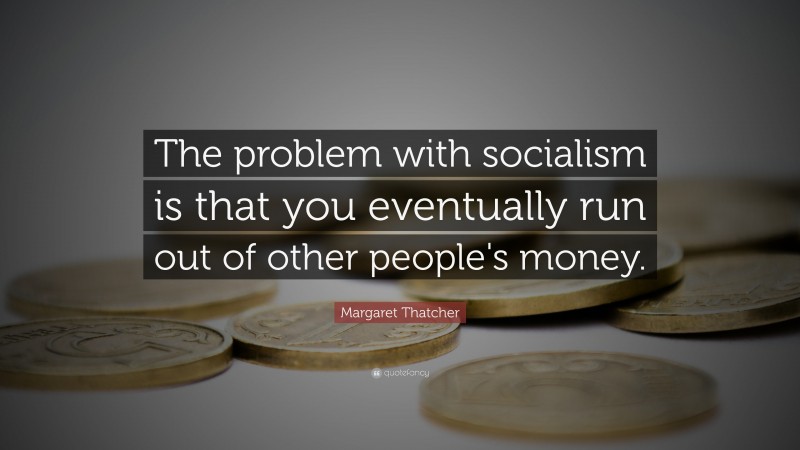
Allow me to put it this way: Margaret Thatcher had a brilliant quote about socialism that libertarians love to repeat. And from a purely economic standpoint, I believe that the libertarians are correct. But change that quote just a little, and you get this:
The problem with socialism libertarianism is that you eventually run out of other people’s money families.
Families don’t just happen. They take a lot of work to build and to maintain, and unless they are planted in a culture that nourishes them, they will wither and die. Libertarianism does not foster that kind of a culture, yet it depends on families in order to raise the kind of people who can make a libertarian society work. People from broken families often lack the mental and emotional maturity to take upon themselves the personal responsibilities that come with personal liberty—in other words, they lack the capacity for personal independence which libertarianism depends on. Growing up in a healthy family isn’t the only way to develop that sort of independence, but a society of broken families will invariably fail to produce such a people.
This is why libertarianism ultimately leads to authoritarianism. We aren’t all characters in an Ayn Rand novel: we aren’t all ubermensch all of the time, reshaping the world by the strength of our will. And when we inevitable fail, where can we turn to for help? If society is nothing more than a group of individuals, then ultimately the only place to turn to is the state. Perhaps there may be churches, companies, or other private civic organizations to which a person may turn, but any form of libertarianism that rejects altruism as a moral good will fail to foster these organizations as well. So, in the absense of anywhere else to turn, individuals will, over time, turn increasingly to the state, trading their libertarian freedoms for economic and social security. A society that exalts the individual at the expense of the family will always, in the end, devolve into a statist tyranny.
If you want to create a stable society that recognizes individual freedom, you have to recognize the family as the fundamental unit of that society, and you have to proactively enact policies that will foster a culture of strong families. Not only does this give you a social safety net that is totally apart from the state, but it also ensures that your society will be self-perpetuating, since one of the central purposes of the family is to create and raise children.
In fact, the family is perhaps the best antidote to government power creeping into every facet of society, which also makes it the best way to push back against woke leftism, ESG, and the Great Reset. Hence why everything about leftist progressivism is calculated to destroy the family. Parents concerned about CRT in their schools? Domestic terrorists. Kids who say that they’re transgender? Transition them without telling the parents, and take them away from their families if the parents object.
But it’s not just a partisan issue. If the family is the fundamental unit of society and needs to be strengthened, then there are things on both the left and the right that need to change. For example, poverty is a huge issue for families, since poor families are much more likely to break up due to the stress. But conservatives often ignore the issue of income inequality, mouthing platitudes about the free market while giving us socialism for the rich and capitalism for the poor. And the libertarians are little better, what with how they push for the legalization of drugs, prostitution, abortion, and pornography. Few things have done more to destroy the family than widespread substance abuse and the hypersexualization of our society.
This is why I’ve mostly given up on reading Heinlein anymore. He’s a brilliant writer with a fascinating take on some of science fiction’s most fundamental tropes, but whenever he writes about sex or sexuality, all I can think of is “the problem with libertarianism is that you eventually run out of other people’s families.” Heinlein and his boomer readership took the family for granted, neglected their own, and gave us a world of widespread sexual promiscuity, where society is falling apart.
So that’s why I don’t consider myself a libertarian anymore, even though there are many tenets of libertarianism that I still admire and believe, especially on the economic side. I suppose you say that I’m a conservative, but that isn’t really accurate either, because most strains of conservatism in 2024 really seem more about conserving the leftism of two or three generations ago. So I guess that means I’m politically homeless—just like most of my fellow Americans these days.