I enjoyed The Aeronaut’s Windlass. It was a fun steampunk adventure, sort of like a mashup between Horatio Hornblower and the Bioshock games. It’s also very unlike most books to be nominated for the Hugo, probably because it was nominated by the Sad Puppies. After this year, the people who run the Hugo Awards rewrote the rules to allow them to disallow “slate voting,” which was how they disqualified the majority of ballots in the 2023 Hugo Awards, including almost all of the ballots cast by Chinese fans. But guys, it’s the Puppies who were totally the racists.
All of the other books were pretty terrible, in my opinion. I’ve already written about The Fifth Season at length, so I won’t go into that rant here. I’ve also written at length about Ann Leckie’s obsession with fake transgender pronouns, and since Ancillary Mercy is basically just another book about pronouns, I won’t waste any more time on that subject.
I wanted to like Uprooted, since I loved Spinning Silver so much, but both times I tried to read it, I ended up DNFing it midway through. Partly that’s because the fantasy retelling of Beauty and the Beast was not as interesting to me, but there was also a scene where the main character and her mentor randomly started making out after casting a spell together, with a graphic description of digital penetration. The whole thing came so totally out of the blue that it threw me out of the book, and I had no desire to finish it after that.
I’m also really conflicted about Seveneves. I’m not a huge fan of Neal Stephenson generally, especially after the neon orgy scene at the end of Diamond Age, and Seveneves is loooong… like, over 800 pages long. Which would be fie, if Stephenson had the economy of words of a true master like Louis L’Amour, but Stephenson really doesn’t. Around 100 pages or so, I skipped to the last chapter and read a spoiler-filled synopsis just to see if it was worth pressing on, and I decided that it really wasn’t, because 1) it’s apparently never explained why or how the moon exploded, and 2) the Hillary Clinton analog becomes absolutely insufferable, and I really didn’t want to slog through four hundred pages of that. Seveneves has an interesting premise, but if you cut out half the words it would be a better book.
2011 was the only year in which I actually attended Worldcon and voted in the Hugos. This was, of course, before the Sad Puppies and before I became totally disillusioned with the awards. I have to confess that I didn’t actually read any of the novels, though I did get the free ebooks in the voter packet and tried to read a couple of them. Mostly, I voted based on whether I recognized the author’s name, and whether or not the book descriptions appealed to me. I remember that I voted for Blackout and All Clear in the top slot, but I don’t remember how the rest of the ballot shook out.
If I had to do it again, I would still put Blackout and All Clear at the top of the ballot (which are two separate books, though they form a duology and were published in the same year, which is why they appear together). However, I ended up DNFing all of the other books, and because Feed and The Hundred Thousand Kingdoms struck me as being horrible enough to warrant a No Award vote, I couldn’t merely abstain from voting positively for any of the others.
But first, Blackout and All Clear is a delightful time travel story from Connie Willis’s Oxford University Time Travelers series. Unlike The Doomsday Book, the story is quite a lot of fun with an upbeat and hopeful ending, and unlike To Say Nothing of the Dog, the time travelers find themselves in some very real peril when their time machine breaks down. The first book was okay, but the second book was fantastic, and wrapped things up very nicely. A fun and uplifting read.
I DNFed Feed for a number of reasons, but the main reason was that I couldn’t stand the sexual innuendo between the brother and sister. Yes, I know that technically they’re supposed to be step-brother and step-sister, and yes, I know that meaningless and gratuitous sex is supposed to be a trope of zombie fiction, but still. Yuck. I could be wrong about this, but the vibe I got was that the author is addicted to pornography, and that’s just not a mind I want to spend any time with. Also, the world makes no sense: the zombie apocalypse has brought our country to a state of collapse, but 1) basic infrastructure like electricity and internet still operates without any problems, and 2) bloggers need to get a permit from the federal government in order to blog? Sorry, but I just can’t buy any of it.
I don’t remember much from The Hundred Thousand Kingdoms, since it’s been several years since I first tried to read it, but I think the main reason I DNFed this one was because all of the characters struck me as being terrible people, and I frankly didn’t care what happened to any of them. For the same reason, I didn’t read A Song of Ice and Fire past book one (though there were other reasons I DNFed that series, most of them content related). And I think there were some content-related issues in this one too, which is also why I would place it under No Award, as opposed to merely abstaining.
I really wanted to like Cryoburn, since I enjoyed many of the other Vorkosigan Saga books, especially Young Miles and Barrayar. But this one takes place when Miles is middle-aged, and powerful enough that he’s not really threatened at all. Instead, we follow the story of a misfit street urchin who’s trying to earn his freedom, or something like that, and I frankly didn’t find his story or his character all that interesting or compelling. About four or five hours into the audiobook, I just got bored of it, which I wasn’t expecting at all.
The Vorkosigan Saga is different from most other series, in that all of the books are basically standalones linked only by the recurring characters, and the fact that Bujold has written it completely out of order, basically dropping books randomly into the chronology however it suits her fancy. The latest book, Gentleman Jole and the Red Queen, was such a disappointment to my wife that the way she described it to me made me feel totally disillusioned. I haven’t gotten around to reading it yet, so I can’t say for sure that it’s terrible, but it definitely took the series in a direction I wish it had never gone. I suppose that the lesson from all this is that it’s possible to draw out a series way too far, especially a non-linear one. The early Vorkosigan books are great… the later ones, not so much (and by “earlier,” I mean the ones that Bujold wrote earlier, not necessarily the earlier ones in the chronology).
As for The Dervish House, it was fine. Very pretty and well written, I guess. It just wasn’t for me. I got bored about a hundred pages in and dropped it. I suppose I could be convinced to give it another shot, but from what I can tell, it’s not really my kind of book.
There will not be a second assassination attempt against President Trump before the election. The original plan was to assassinate Trump before the Republican convention, in order to coronate Nikki Haley and guarantee that the proxy war with Russia would continue. With Vance now pegged as the heir apparent, removing Trump via assassination would be a much greater liability to those plans. This prediction expires November 5th, 2024 (remember, remember, the fifth of November!)
The FBI and DHS will continue to stonewall the investigation into the assassination attempt until something even more explosive dominates the news cycle. This will not prevent the alternative media and “citizen’s investigations” from continuing, but it will prevent them from reaching the normies. If they need to fabricate something to blow up the news cycle, they will do it. This prediction will expire August 31st, 2024.
Biden will be removed from office via the 25th amendment, and Harris will become the 47th President. At this point, I just don’t think that they can prevent this from happening. This may be the thing that gives them the cover they need to memory-hole the investigation. This prediction expires January 20th, 2025.
The Democrats will nominate Harris for President. I have no idea who she will pick for VP, but I don’t think it matters, because
Harris will lose badly and Trump will win the 2024 election in an electoral landslide. I think the Democrats have resigned themselves to a second Trump term, which is why they want to run Harris against him, since it’s the best way to get rid of her. At this point, they are playing for 2028, not 2024. Prediction 4 expires August 22nd, 2024. Prediction 5 expires November 5th, 2024.
Before Trump becomes president, NATO will become entangled in a direct war with Russia. This is the ultimate poison pill for the globalists/neocons. By getting us into a direct war, they will force Trump’s hand and make it impossible for him to negotiate any sort of peace with Putin. This prediction expires January 20th, 2025.
The war with Russia will not go nuclear, if only because Russia no longer has a functioning nuclear arsenal. However, it will be as scary as hell, because we will probably call their bluff. This prediction expires January 20th, 2025.
There will be a major shakedown of the administrative state in the first 100 days of Trump’s second term. Several national figures who were thought to be untouchable will be removed from power. This prediction expires April 30th, 2025.
In the first year of Trump’s second term in office, at least one of the following three things will happen:
A second global pandemic,
A domestic terrorist attack on the scale of 9/11, or
A major banking collapse and/or sovereign debt crisis that destroys the global economy. More poison pills that the deep state will try to use to sabotage Trump’s second term. I don’t know which one(s) they’re going to use, but I don’t think they’re going to stop with Russia. This prediction expires December 31st, 2025.
At some point in the next four years, the Federal Reserve will roll out a CBDC and will use a major crisis to force us to adopt it. I don’t know if they will succeed in this, but they certainly will try. I also don’t know how Trump will react to this, but if he makes Jamie Dimon his Treasury Secretary, I’m not very optimistic that he will stop it. This prediction expires January 20th, 2029.
As tempting as it is to run out the script for Ezra’s Eagle, which has proved surprisingly durable up to this point, I don’t believe it will actually play out the way Michael B. Rush has interpreted it. Even if it is a true prophecy, it may be that Ezra foresaw a possible future, not the future that will actually happen. There’s a reason why the book of 2nd Esdras is in the apocrypha.
Since each of these predictions has an expiration date, I will write another blog post at each of them to see how ridiculously wrong my predictions were. As a gentle reminder, I am a science fiction writer, which means that I tell lies for a living. Don’t hold my feet to the fire too much for any of these, as I’ll be shocked if I got more than 50% of them right.
With everything going on, I can’t help but wonder if/how this all plays into the Ezra’s Eagle prophecy, which I’m not entirely sure I believe, but which makes for a really fascinating (and terrifying) scenario moving forward. If you haven’t heard of the Ezra’s Eagle prophecy, check out my previous post on the subject, which for the last couple of months has been getting more views than any other post on my blog.
In any case, there is a very simple way that Ezra’s Eagle could play out, and it’s not only plausible, but it may actually be probable. Here’s how it goes down:
Trump wins the election, giving him +270 votes in the electoral college.
Congress passes a resolution declaring Trump to be an insurrectionist.
On January 6th 2025, Congress refuses to ratify the election because Trump is an insurrectionist. But since the Democratic ticket has less than 270 votes in the electoral college, the election gets thrown to the House of Representatives.
The House of Representatives is under no obligation to elect either Trump or Harris (or whoever ends up getting the Democratic nomination). In fact, they can elect whoever they want—even someone who wasn’t involved in the primaries at all.
The House selects a dark horse candidate for president, who turns out to be the first eagle’s head in the prophecy.
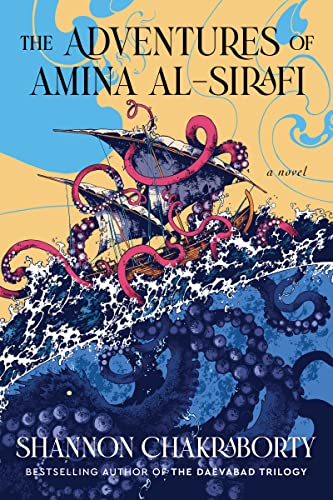
The Adventures of Amina al-Sirafi by Shannon Chakraborty
The Saint of Bright Doors by Vajra Chandrasekera
Translation State by Ann Leckie
Starter Villain by John Scalzi
Some Desperate Glory by Emily Tesh
Witch King by Martha Wells
The Actual Results
(To be determined…)
How I Would Vote
No Award
Explanation
For reasons that should be obvious after last week’s rant, I will not be voting in the actual Hugo Awards this year, principally because there’s no way in hell that I’m going to let these snobby wokescold blowhards have any of my money. But if I were going to vote in the 2024 Hugos, this is what my ballot would look like.
I did not even attempt to read Starter Villain by John Scalzi, because I knew that I would hate it, since 1) it was written by John Scalzi, the most insufferable former SFWA president (an impressive achievement), and 2) Daniel Greene did such a brutal takedown of the novel that I felt no need to read it afterward. But all of the other books I picked up and started, even though I ended up DNFing them all for various reasons.
The one that I feel most conflicted about is Some Desperate Glory by Emily Tesh, a debut novel. It didn’t hook me hard enough to push on past the red flags, but it did have an interesting start that made me want to read more. However, there were a lot of signs that this was the sort of book that I would throw across the room in disgust (“strong” female characters, fascist caricatures, anti-natalist Malthusian vibes (though I may be wrong about that), etc). Even after I read a spoiler-filled online synopsis, though, I still couldn’t tell if that would be the case. The thing that ultimately convinced me to DNF it, though, was the blurb that called it a “queer coming of age story.” A synonymous phrase for that would be “sexual grooming of a minor,” which I have absolutely no desire to read.
The one that I feel least conflicted about is Translation State by Ann Leckie. To demonstrate why, here is everything I read right up to the moment when I decided to DNF it:
Enae
Athtur House, Saeniss Polity
The last stragglers in the funeral procession were barely out the ghost door before the mason bots unfolded their long legs and reached for the pile of stones they’d removed from the wall so painstakingly the day before. Enae hadn’t looked back to see the door being sealed up, but sie could hear it
Yet another novel from Ann Leckie where the fake transgender pronouns are the most interesting and compelling thing about her characters, and also the basis for the entire book. Hard DNF.
The Adventures of Amina al-Sirafi had an interesting start, but like Some Desperate Glory, there were enough red flags to make me reluctant to keep reading, so I read a spoiler-filled synopsis and discovered that one of the characters who is central to the plot decides that she’s a boy instead of a girl, and socially transitions her gender as a major plot point. Which means that Chakraborty, a liberal white woman who converted to Islam, is writing less for a Muslim readership (which could have actually been interesting) and more for a woke white liberal woman readership, which is probably how this book got nominated for the Hugo in the first place. These days, if there are no lesbians, it’s gotta be trannies. Hard pass.
The Saint of Bright Doors is a textbook case of two tropes that I cannot abide in contemporary science fiction: “a profane and vulgar childhood” and “all true love is LGBTQ love.” In real life, childhood innocence is something that should be sacred and pure, but in fiction that purity is often sullied deliberately for purposes of plot and character development. Which is fine if it happens occasionally, or with a nod to the tragedy of it—if all of our characters had perfect lives, there would be no conflict worth writing about. But these days, it seems like every child in every book has a screwed up childhood, to the point where the authors seem to treat it with casual indifference. As for “all true love is LGBTQ love,” homosexual relationships are so overrepresented in fiction these days that the moment it’s casually dropped that the main character has a gay lover, my guard immediately goes up. Call me a homophobe if you want to. I don’t really care.
Witch King frankly just bored me. There was nothing about the main character that I found interesting or compelling, which is a shame, because Murderbot from Martha Wells’s series of the same name is one of the most interesting and compelling characters I’ve read in recent years. Also, there was just too much worldbuilding information dropped in the first couple of chapters, before I was really hooked to the story, that I found it difficult to follow. I had the same problem with Wells’s early fantasy novels, where it felt too much like work just to read them. If I’m going to do the work to get invested in a complex fantasy world, I want to know that there’s going to be a payoff at the end, and if the initial hook is weak, I have very little faith that the author can pull it off. Granted, Wells did pull off a satisfying ending with her murderbot novel, Network Effect, but the last two installments in the Murderbot series have disappointed me.
So who is actually going to win the Hugo Award this year?
Probably not Scalzi, because he’s a straight white male.
Vajra Chandrasekera has a much stronger position, given that 1) he’s brown, 2) he edited Strange Horizons for several years when it was a contender for the Hugos, and 3) The Saint of Bright Doors won the Nebula Award last year. However, his LGBTQ characters are of the vanilla variety, which works against him, and he’s not openly LGBTQ on any of his bios.
Martha Wells can probably pull a lot of votes from her Murderbot fans, but she’s also straight and white, which works against her.
Ann Leckie is also white, but she’s really inovative with those fake transgender pronouns, which gives her an edge… I suppose it depends on whether our current transgender moment is waxing or waning. And even if it is waning in the culture generally, science fiction has been so thoroughly captured by the wokescolds that it may still be enough to push her over the top.
S.A. Chakraborty is a straight white woman, which works against her, but she’s also a convert to Islam, which may give her an edge if she can play to the anti-semitic pro-Palestinian hysteria that’s the Current Thing right now. Even that might be a bit of a stretch, though, and I don’t see anything else that gives her an edge.
As for Emily Tesh, she’s more or less the dark horse in this race: an author so new that she doesn’t have a Wikipedia page yet, and she’s already won the Astounding Award and a World Fantasy Award. If her bio declared that she’s a lesbian, I would bet that she’s the favorite, since Arkady Martine pulled the same dark horse trick in 2019. But if she’s just another straight white woman, that dampens her odds considerably.
My prediction is that the Hugo will go to Vajra Chandrasekera for The Saint of Bright Doors, just because it’s already won the Nebula, and the same people who vote for the Nebulas also vote for the Hugos—even more so as the Hugos become increasingly irrelevant. Also, he’s the only non-white author on the ballot, and there’s probably going to be a lot of virtue signalling angst after the obvious racism that happened with the Hugos last year.
But the book with the best cover art is definitely Some Desperate Glory, followed closely by The Adventures of Amina al-Sirafi. The other covers are either mediocre or garbage (especially Translation State, which looks like 70s diarrhea).
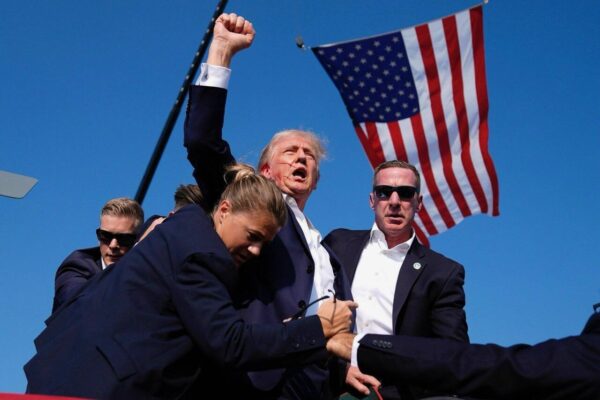
There was a second shooter, probably on the water tower. The first shooter, who was identified and killed by the counter-snipers, was obviously a fall-guy, with the second shooter on scene as insurance in case the first guy failed.
I don’t think the Secret Service agents on the scene were in on the plot. They demonstrated some glaring incompetence, but that’s actually become quite typical of the agency in recent years.
The reason the counter-snipers didn’t fire first was probably because there were trees obscuring their view. I don’t think they were in on the plot. However, the fact that they were positioned where they were is all kinds of suspicious, since it gave the first shooter a perfect position—and who put the counter-snipers on that roof in the first place? They should have been on the water tower, which commanded the whole area.
The first shooter could not have gotten into position without some kind of inside help. The level of official incompetence that it would take to allow him to get into position the way he did approaches the level of an Epstein suicide. He was on the freaking roof of the temporary police headquarters, for crying out loud—he had to cross a parking lot full of police cars to get to the effing ladder!
Kim Cheatle absolutely needs to take responsibility and resign as head of the Secret Service. The fact that she hasn’t tells me that she wants to hang on to power long enough to cover up her complicity.
I have zero faith in the FBI and expect them to use the “investigation” to cover up the truth and destroy evidence. Within a month, most of this stuff is likely going to be memory-holed by Google and all the other big tech companies. Take note.
However, with everything that has happened since the failed assassination, I am actually quite hopeful. Trump is demonstrating incredible leadership, and appears to be changing his message to a genuine call for unity. From what I can tell, this brush with death has deeply changed him.
Also, the Right is tremendously unified right now, to the point where I would be surprised if the people who plotted to take his life make another attempt. If the would-be assassins are indeed with the deep state / intelligence agencies (which makes sense, since a second-term Trump administration represents an existential threat to their power), then they’ve got to see that making him a martyr will blow up in their faces, especially now.
However, I could be wrong, especially if one of the goals of the would-be assassins is to blow up the country and drive us into a hot civil war. But who would that actually benefit, besides a foreign power? A post-Trump America would become totally ungovernable, even dangerously anarchic, if Trump were to become a martyr at this point.
The way the establishment appears to be in total disarray tells me that they are in retreat and making this sort of calculation right now. They will probably throw the Secret Service under the bus and do everything they can to hide just how far up the food chain this assassination plot really goes.
If Trump survives to November and the election is allowed to proceed, Trump will almost certainly become the 47th president. Since he represents an existential threat to the people currently in power, I think there’s a high likelihood that some sort of “crisis” will emerge that gives them an excuse to cancel the election. It could be a second pandemic. It could be a global war. It could be an October 7th-style terrorist attack on American soil. All of these are possibilities.
However, if none of this occurs and we somehow manage to get to November without a major crisis, I expect the people in power to do everything they can to plant some poison pills for the second Trump administration, in order to tie his hands. The most obvious of these would be to incite a direct military conflict between the US and Russia. It wouldn’t be easy for Trump to disentangle us from the Russia-Ukraine proxy war we’re currently fighting, but he could probably still do it. However, if the bombs are already flying between the US and Russia when he comes in on day 1, then the Neocons get the war they so desperately want, and there’s nothing he can do to stop it.
Assuming that Russia’s nuclear arsenal is still functional, the world has never been closer to a global nuclear war than it is right now—and with every second that passes, the likelihood only grows. It will probably take divine intervention to prevent that from happening between now and November, but we’ve already seen divine intervention in the fact that Trump is still with us. Which is not to make him out to be Jesus—if anything, he’s an American Samson—but it’s only by the grace of God that he is still alive.
The Three-Body Problem by Cixin Liu and Ken Liu, trans.
The Actual Results
The Three-Body Problem by Cixin Liu and Ken Liu, trans.
The Goblin Emperor by Katherine Addison
Ancillary Sword by Ann Leckie
No Award
Skin Game by Jim Butcher
The Dark Between the Stars by Kevin J. Anderson
How I Would Have Voted
Skin Game by Jim Butcher
The Three-Body Problem by Cixin Liu and Ken Liu, trans.
No Award
The Dark Between the Stars by Kevin J. Anderson
The Goblin Emperor by Katherine Addison
Explanation
All right, I’ve read enough books now that I’m back to doing these “how I would have voted” posts for the Hugo Awards. And to kick things off, I thought I would start with one of the most infamous years in the history of the Hugos, the year of the Sad Puppies. Of course, I was around back then—in fact, it’s when China Mike Glyer of File 770 discovered me, and has been cross-linking to my blog ever since (I guess whenever the sci-fi news week is slow, or whenever he thinks that my posts would make good chum for his own readers—all twelve of them, not counting the Chinese bots).
The main reason it took me so long to get to 2015 was because I had never read any of the Dresden File books, up to this point. And I still haven’t read books 1-6 yet; in an interview on the Writers of the Future podcast, Jim Butcher said that book 7 is actually the best place to start the series. So I did that a few months ago, and I have to say that it’s been an amazing whirlwind read so far. Really great reading experience. Every one of these books has been either a 4-star or a 5-star, especially Changes, which is probably the best urban fantasy book I’ve ever read.
I haven’t finished Skin Game quite yet, but I’ve already read enough of it to know that I definitely would have put it at the top of my ballot if I had been stupid enough to give the snobby asshats and petty wannabe tyrants who run Worldcon any of my money. Sadly, I wasn’t so smart in 2011, but I have since repented, and I can tell you right now that these blowhards will ever see another cent from me. But more on that later.
The Three-Body Problem was the book that actually won the award, and I have to say that I sincerely enjoyed it. There’s a lot of really amazing science fiction coming out of China these days, which makes it an absolute shame that so many Chinese writers and fans were arbitrarily blocked and denied in 2023 for the high crime and misdemeanor of “slate voting,” whatever the hell that’s supposed to mean. Seriously, the Hugos need to die. But I digress.
The Three-Body Problem was a fascinating book. It was a little heavy on info dumps, but that’s probably because Chinese fiction has slightly different conventions than English fiction. In any case, it was fascinating enough to keep me reading, and the story itself was terrific. Also, as an American reader, I found it particularly refreshing to read a book that was written outside of our woke cultural moment. There were a lot of references to Chinese communism, especially the Cultural Revolution, but none of the insane wokeness that permeates our American culture.
Those were the only two books that I managed to read to the end. All of the other ones I DNFed, though for different reasons.
I wanted to like The Dark Between Stars, not the least because Kevin J. Anderson is a great guy, and a deserving writer—his Star Wars books were some of the first science fiction I ever read, and definitely influenced my decision to become a writer. But after the first chapter, which had an interesting set up with some characters I felt genuinely interested in, I felt like the book started throwing new characters at me, and lots and lots of boring information about the universe, as if the story itself had stopped cold and I was suddenly reading a history book. Way too many info dumps. Maybe I’ll try reading it again at some point, but I just couldn’t get into it.
The Goblin Emperor had a similar problem, though it wasn’t necessarily the info dumps that got to me, so much as sheer boredom, and the fact that the only fantasy element in the book was that the characters were all goblins—though the author could have said they were humans, or elves, or aliens, and it wouldn’t have changed the story hardly at all. Also, the political intrigue was not very intriguing. I’ve played games of Crusader Kings 2 where the political machinations were more interesting. And since the story itself was entirely focused on the political intrigue and machinations, I didn’t finish it.
As for Ancillary Sword, I DNFed that series with the first book, which follows the adventures of a sentient space ship who is obsessed about what its pronouns are. Seriously, that’s about 80% of the book right there, and the reason why Anne Leckie is a favorite of the Hugo crowd. Pronouns. Give me a break. For the 2024 Hugos, another one of her books in the same universe is on the ballot, and it took me all of one paragraph to give it a hard DNF. Pronouns, pronouns, pronouns. What are your pronouns? Did you know that you can make up a word and call it a pronoun? Let’s make up some pronouns together, kids! Just remember to vote as many times as you can in the upcoming election, otherwise Literally Hitler will blow up the world—never mind that our current leader is a nasty old dimentia patient whose face is a public service announcement for the side effects of botox, and his heir apparent is a cocksucking DEI hire who likes to cackle about school buses and Venn diagrams. It’s amazing how far you can get in today’s world with a pretty face and some high-quality knee pads.
It is impossible to mock these people too much. If they had the power to do so, everyone who opposes them would be rounded up in a cattle car and buried in an unmarked grave. The Sad Puppies were basically a prelude to the Trump revolt, just like Gamergate the year before. And what did we learn from it? That the people who control the institutions—in this case, Worldcon and the Hugo Awards—hate us. They knew that all the accusations of “racism” and “white supremacy” were all false. They knew that all those dirty smear tactics were just a means to an end. It’s not about good and evil, it’s about power, just like that line from the Acolyte, which is a perfect example of how they deliberately vandalize everything, especially a beloved franchise like Star Wars. Everything that’s happening in the broader culture right now, with multi-billion dollar entertainment companies like Disney that are going woke and broke, happened in science fiction first. The Puppies tried to push back against the rising tide of woke insanity, but the rot was too deep, and the cancer had already metastasized. All they managed to do was prove was that the Hugos are beyond saving.
2015 was a watershed year for science fiction, not because two of its most prolific and beloved authors lost to No Award, but because Worldcon lost the plot and the Hugos were revealed to be a farce. Jim Butcher is bigger than the Hugos, and so is Kevin J. Anderson. So are most of the Chinese authors who were excluded in 2023 (but guys, it’s the Puppies who are the racists). The reason I’m doing these “how I would have voted” blog posts has less to do with any respect I might have for the Hugo Awards, and more to do with the fascination of watching a massive pileup on a frozen interstate. I want to go back and rewatch it from the moment it all began—which, so far as I can tell, was sometime in the late 60s. But I’ll save that rant for another time.