Leadership as Burden in Friends in Command

Leadership stories often celebrate the moment someone takes command—but they rarely linger on what command actually costs. Friends in Command, a military science fiction novel and a later entry in the Sons of the Starfarers space opera series, is built around a harder question: What happens when you’re responsible for other people’s lives—and every available choice is expensive? In this book, leadership isn’t a badge. It’s a burden you carry while everything around you is breaking.

Where the Idea Came From

Friends in Command is a “bridge story”—the kind of middle book in a military science fiction series that has to pay off enough to feel satisfying, but not so much that it steals thunder from what’s coming next. I was especially inspired by The Empire Strikes Back as a model: a story that stands on its own, deepens the characters, and ends at a low point that changes them. While drafting, real life was also turbulent—moving, a painful breakup, and the mental fatigue that comes from trying to “power through” when you’re not at your best. In the end, I delayed publication and rebuilt parts of the book to make it stronger, including adding a missing viewpoint character—because sometimes the responsible choice is the slower one. Looking back, that process mirrored the book’s central theme: leadership isn’t about moving fast or looking strong—it’s about carrying responsibility well, even when that means slowing down and rebuilding.

How the Burden of Leadership Shapes the Story

In Friends in Command, leadership pressure doesn’t sit in the background—it drives the conflicts. As the interstellar war escalates across the Sons of the Starfarers series, this book zeroes in on what command looks like when systems are fraying and no choice is clean. The war has moved into a new phase, command structures are strained, and the people in charge keep getting handed problems that aren’t fair and aren’t clean. That’s where Mara’s story hits hardest. She’s competent, disciplined, and loyal, but she keeps being forced into situations where “doing your duty” isn’t a simple rule—it’s a living weight. She can’t make everyone happy. She can’t protect everyone. And she can’t escape the fact that her decisions ripple outward into other people’s futures.

The book also sharpens the theme by putting different kinds of leaders side by side. Some characters lead by instinct, some by procedure, some by sheer force of will—but all of them are faced with the same truth: command means owning consequences you didn’t ask for. Sometimes leadership looks like restraint—holding the line when chasing something personal would cost other people their lives. Sometimes it looks like bending rules because the “field” has changed and waiting for permission will get people killed. And sometimes it looks like choosing which loss you can live with, because the story refuses to pretend that victory comes without debt.

What the Burden of Leadership Says About Us

We live in a world where responsibility often arrives before we feel ready—parenting, marriage, work leadership, caregiving, community duty, even the quiet obligation to keep going when people depend on us. Stories like Friends in Command remind us that leadership isn’t proven by confidence or charisma; it’s proven by endurance, moral courage, and the willingness to carry weight without being applauded for it—even in the middle of a war that won’t pause for our doubts. The people we trust most aren’t always the ones who want power—they’re the ones who feel the cost, and lead anyway.

Why This Theme Matters to Me

I care about this theme because I don’t believe leadership is mainly about authority—I think it’s about love expressed as responsibility. The older I get, the more I notice that the “right” choice is often the one that costs you something: time, pride, comfort, certainty. Writing Friends in Command taught me that you can’t always fix a situation, but you can choose to carry it honestly—and that kind of burden, carried with integrity, is one of the most human things we do.

Where to Get the Book

Related Posts and Pages

Explore the series index for Sons of the Starfarers.

Return to the book page for Friends in Command.

Is Friends in Command for You?

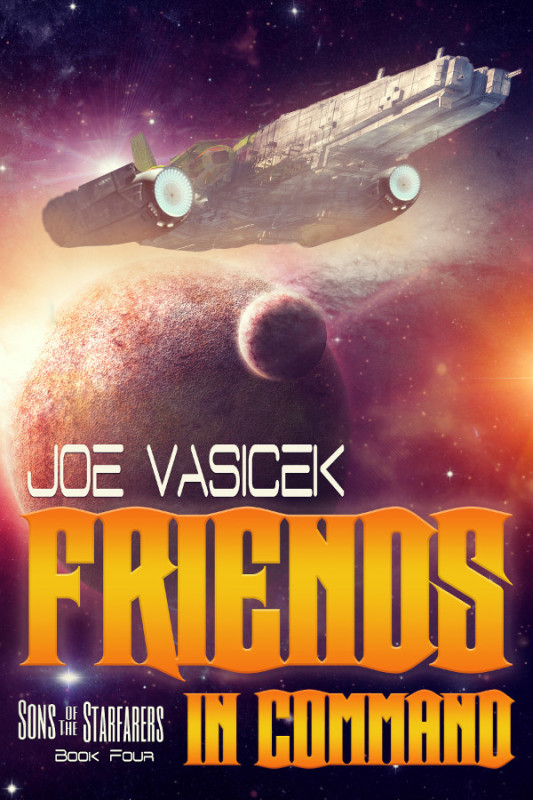
Friends in Command is a character-driven military science fiction novel and space opera series installment about leadership, loyalty, and the quiet terror of being responsible for other people’s lives. Set during an escalating interstellar war, it follows a small starship crew forced to grow up fast—personally, morally, and professionally—when command stops being theoretical and starts being real.

This is the fourth book in the Sons of the Starfarers military science fiction series and builds directly on the events, relationships, and character arcs established in the earlier novels.

What Kind of Reader Will Love Friends in Command?

If you love…

  • military science fiction that focuses on people, leadership, and consequences, not just tactics
  • character-driven space opera about friends becoming leaders under pressure
  • stories where command is a burden, not a reward
  • long-running series with deepening relationships and evolving roles across multiple books
  • emotional arcs about loyalty, responsibility, and hard-earned maturity in wartime

…then Friends in Command is probably your kind of story.

What You’ll Find Inside

The story centers on a young crew—many of them longtime comrades—now thrust into positions of real authority aboard a frontline warship in a character-driven military space opera. As the war grows more complex and dangerous, friendships are tested, mistakes carry higher costs, and leadership becomes a daily moral trial. The tone is thoughtful and tense, balancing moments of action with introspective, character-focused scenes, and the pacing reflects the pressure of command: urgent when it must be, deliberate when it matters most.

What Makes Friends in Command Different

Unlike many military SF novels that focus on ascension and glory, Friends in Command is about the awkward, painful middle stage of leadership—when characters are no longer protected by inexperience but not yet confident masters of their roles. It functions as a bridge book within the series, deepening character arcs and setting the emotional stakes for what comes next. Readers who enjoy ensemble casts and long-form character growth—rather than clean standalone victories—will find this installment especially rewarding.

What You Won’t Find

This is not a standalone novel, and it’s not designed for readers who want a reset with each book. You also won’t find nihilism or shock-for-shock’s-sake violence; while the story is intense and serious, it remains grounded in loyalty, conscience, and earned hope rather than cynicism.

Why I Think You Might Love It

I think Friends in Command resonates because it captures a moment many stories skip over: when people are promoted before they feel ready, and the cost of getting things wrong suddenly includes the people they care about most—a moment many readers recognize from real life as much as from fiction. This book mattered to me because it let the characters stop reacting and start choosing—sometimes badly, sometimes bravely—and those choices ripple forward through the rest of the series.

Where to Get the Book

Related Posts and Pages

Explore the series index for Sons of the Starfarers.

Return to the book page for Friends in Command.

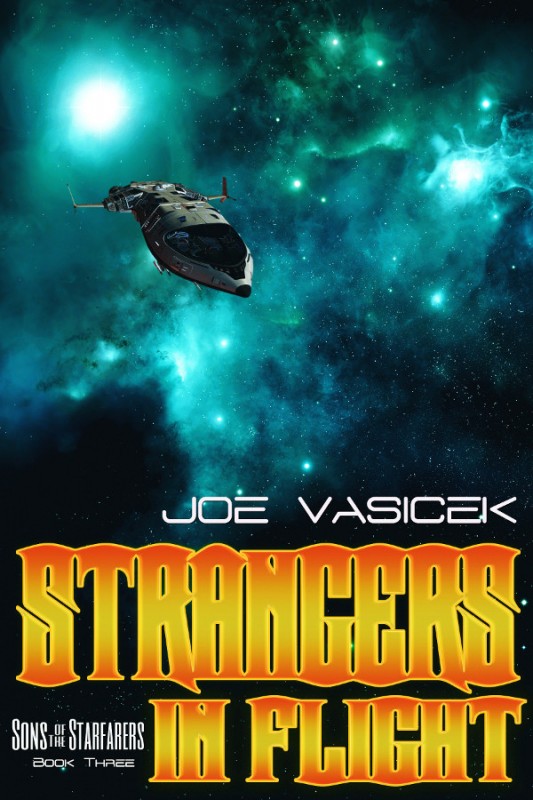
The Search for Belonging in Strangers in Flight

What does it mean to belong when everything familiar has been stripped away? Strangers in Flight is a character-driven science fiction and space opera novel about people who survive catastrophe, only to discover that survival alone isn’t enough. Set amid war, displacement, and life on the interstellar frontier, and against the backdrop of an ongoing interstellar conflict in the Sons of the Starfarers series, the novel asks a simple but painful question: how do you build a sense of home when you wake up alone in a universe that no longer knows who you are?

Where the Idea Came From

The idea for this theme grew out of thinking about what it would be like to lose not just your home, but your entire cultural and social world overnight. In the author’s note, I talk about wanting to explore loneliness at an extreme scale: being the sole survivor of a people, waking into a future where everyone who shaped your identity is gone. Science fiction gave me the space to externalize that loneliness—to turn it into a literal universe of strangers. I was especially interested in what happens after the escape—when the danger passes, but the isolation remains—and how belonging has to be rebuilt from nothing.

How The Search for Belonging Shapes the Story

Belonging is the emotional engine that drives Strangers in Flight. Reva’s struggle is not just physical survival or escape from enemies, but the deeper shock of cultural and personal dislocation. She wakes into a galaxy that doesn’t share her language, her customs, or her assumptions about the body, privacy, and trust. Her choices throughout the story are shaped by the question of whether belonging is even possible—or whether survival requires emotional withdrawal. That tension—between isolation and connection—echoes throughout the wider conflict of the series, where entire peoples are being displaced by war.

Isaac’s journey mirrors this from the opposite direction. Though he has a ship, a profession, and a place in the wider conflict of the Sons of the Starfarers series, he is also profoundly isolated—adrift on the frontier, defined more by what he avoids than what he commits to. When these two characters come together, the story treats belonging not as instant comfort, but as something forged through mutual risk, responsibility, and choice. These decisions ripple outward, shaping the story’s conflicts and setting the tone for the relationships that continue across the series.

What The Search for Belonging Says About Us

At a time when many people feel disconnected even while surrounded by others, Strangers in Flight frames belonging as a fundamental human need rather than a luxury. The novel suggests that loneliness is not just emotional pain, but a condition that makes us vulnerable—to despair, exploitation, and moral compromise. If you’ve ever felt out of place, unseen, or unmoored after loss or change, this story treats that experience with seriousness and empathy. At the same time, it offers a quiet hope: belonging doesn’t require shared origins or perfect understanding. It begins when people choose to care for one another, even when doing so is inconvenient, risky, or costly.

Why This Theme Matters to Me

This theme matters to me because I’ve always been drawn to stories about people on the margins—exiles, refugees, wanderers, and survivors—who have to decide whether connection is still worth the risk after loss. I wanted to write a story that takes loneliness seriously without becoming cynical, and that treats belonging not as something we passively receive, but something we actively build. That question—how people find one another in the aftermath of upheaval—runs throughout the Sons of the Starfarers series. For me, Strangers in Flight is ultimately about the hope that even in a vast and lonely universe, belonging can still be found—sometimes in the most unexpected places.

Where to Get the Book

Related Posts and Pages

Explore the series index for Sons of the Starfarers.

Return to the book page for Strangers in Flight.

Is Strangers in Flight for you?

The Sons of the Starfarers series is a character-focused science fiction saga about exile, loyalty, and survival on the edges of interstellar war. Strangers in Flight (Sons of the Starfarers: Book 3) is a military science fiction adventure story about survival on the run—when one wrong jump can put you back in the hands of people who own the corridors. It delivers starship tension, cultural collision, and the slow, earned shift from “I’m alone” to “we’re in this together”—when survival starts depending on someone else.

What Kind of Reader Will Love Strangers in Flight?

If you love…

  • space opera / military-flavored SF where the danger feels immediate and personal (pirates, patrols, docking bays, and narrow escapes)
  • character-driven adventure about loyalty, grief, and the determination to keep going when everything gets taken from you
  • fish-out-of-water culture shock with real emotional weight (language barriers, customs clashes, trying to belong in a world that isn’t yours)
  • unlikely partners / found connection—two strangers forced to trust each other under pressure
  • resourceful protagonists who solve problems under confinement and constant surveillance

…then Strangers in Flight is probably your kind of story.

What You’ll Find Inside

This book follows Isaac—an outworld starfarer trying to stay alive and get free—and Reva, the once-mysterious “henna girl,” now awake and thrust into a hostile culture where even basic norms (language, clothing, privacy) don’t match her own. The mood is tense and kinetic, with a constant undercurrent of grief, disorientation, and stubborn hope. The style leans fast-paced and adventure-forward, with close-up emotional stakes and the feeling that every safe place is temporary.

What Makes Strangers in Flight Different

Instead of drawing out its central mystery across the entire series, Strangers in Flight brings a long-teased character fully into the story and allows her to actively shape its direction. It’s here where Reva (the mysterious cryosleep survivor from the first book) becomes a full character whose choices reshape the direction of the story. The book also leans hard into culture as conflict—not just politics and lasers, but the intimate friction of norms, taboos, and translation (and what it costs to adapt without losing yourself). And at its core, it’s about two people helping each other endure different kinds of captivity—external and internal—until they aren’t strangers anymore.

What You Won’t Find

You won’t find a slow, meditative “slice-of-life in space” book here—this one is built to keep the overarching series moving and to keep the tension tight. Also: while the story includes a culture with different norms around privacy and modesty, and moments of uncomfortable attention from antagonistic men, it treats the situation as a real complication and source of vulnerability rather than as eroticized content.

Why I Think You Might Love It

When I hit Book 3, this story stopped feeling like “the next installment” and started feeling like the bridge that revealed how the series could become what it wanted to be. I didn’t want Reva’s mystery to dominate everything, so I made a choice that changed the whole series: I brought her fully onstage, let her become real, and let the plot grow out of who she is—sharp, resourceful, and carrying a kind of loss that’s harder to outrun than any ship. And in a strange way, that’s what I hope lands for you as a reader: the idea that sometimes the best way to survive your own crisis is to help someone else survive theirs—until “strangers” quietly becomes “we.”

Where to Get the Book

Related Posts and Pages

Explore the Sons of the Starfarers series index.

Return to the book page for Strangers in Flight.

The Hope That Survives Trauma in Comrades in Hope

War has a way of shrinking the future until all you can see is the next breath, the next corridor, the next impossible choice. Comrades in Hope is a character-driven military science fiction novel that asks a simple question with a hard edge: what does hope look like when you’ve already seen the worst—and you don’t get to look away? In this book, hope isn’t optimism or denial. It’s what you do after the damage, when survival alone isn’t enough.

Where the Idea Came From

Part of the spark for this theme came from pairing two kinds of characters I wanted in the same story: a young man who still believes the universe can bend toward good, and a survivor who has learned—through loss—that the universe doesn’t care what you believe. Aaron arrives in the Outworld Flotilla carrying naïve expectations and a private vow, while Mara has already been forged by catastrophe, grief, and the long-term psychological trauma of war. Their shared culture and language create a lifeline between them, but it also forces the question into the open: can hope survive trauma without becoming a lie?

How Hope and Trauma Shape the Story

From the beginning, Aaron is out of place—linguistically, culturally, militarily—and that displacement matters, because Comrades in Hope is not a story about winning battles, but about surviving war with your humanity intact. It comes from not understanding the world you’ve been thrown into, from feeling helpless at the exact moments when competence would save lives. Aaron leans on translation tools and improvisation, while Mara carries the grim competence of someone who’s already paid the price of being unprepared. Their relationship becomes a pressure chamber where hope and trauma argue with each other in real time: Aaron keeps reaching for the possibility of a better outcome, while Mara keeps pointing to the body count and the way war turns people into numbers. Yet even her pessimism has a wound behind it—she doesn’t reject hope because it’s childish; she rejects it because she’s afraid of what it costs to believe again.

As the conflict escalates, the book keeps putting hope in the least comfortable place: inside terror, exhaustion, and grief. There are moments where survival narrows to shared oxygen, sealed compartments, and the blunt math of “who made it and who didn’t.” In those scenes, hope stops being a feeling and becomes a decision—sometimes as small as refusing to abandon someone, sometimes as stubborn as continuing the search when every rational signal says it’s over. One of the most revealing turns comes when Aaron challenges Mara’s refusal to hope for herself, and she answers that she can still hope for someone else. That’s the heart of the book: trauma isolates, but hope reconnects—often first as hope for another person, when you can’t yet hold hope for yourself.

What This Theme Says About Us

Most of us won’t fight aboard captured battleships or live under the constant threat of empire, but we do know what it’s like to be changed by pain—and to wonder whether what we lost can ever be rebuilt. Comrades in Hope leans into a truth that shows up again and again in real life: trauma doesn’t only injure the body or the memory; it injures the imagination. It makes the future feel unsafe to picture. And yet, again and again, people choose hope anyway—not because they’re sure things will work out, but because they refuse to let suffering have the final word on who they are. This is why stories like Comrades in Hope resonate with readers who care about resilience, found family, and the quiet moral choices people make under pressure—especially in times of war and displacement.

Why This Theme Matters to Me

I wrote Comrades in Hope fast, almost breathless, and in a very “discovery writer” way—following the characters into the war and letting their struggles shape what the book became. What I love about this story is that it doesn’t treat hope as a motivational poster, especially in the context of war and trauma. It treats it as something you earn, something you protect, and sometimes something you borrow from the people beside you when you’ve got nothing left. And on a personal level, I keep coming back to how much this whole career—and every book I get to write—depends on readers choosing to care, choosing to share, choosing to keep stories alive. That’s its own kind of hope, and I don’t take it for granted.

Where to Get the Book

Related Posts and Pages

Explore the series index for Sons of the Starfarers.

Return to the book page for Comrades in Hope.

Is Comrades in Hope for you?

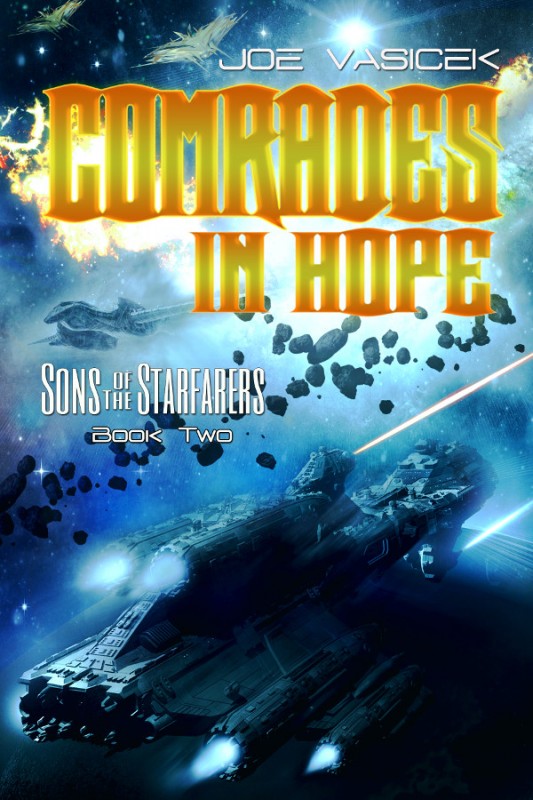
Comrades in Hope (Sons of the Starfarers: Book 2) is a classic military science fiction space-war adventure that balances pulse-pounding starship combat with a character-driven choice to keep going when morale—and manpower—are running out. It has military SF boarding actions, starship danger, tight comradeship, and a thread of mystery and longing centered on a captured young woman—known only as the “henna girl”—and what it costs Aaron to keep hoping she can be saved.

What Kind of Reader Will Love Comrades in Hope?

If you love…

  • military science fiction and space opera with starship battles, drop-ship runs, and boarding actions
  • ragtag underdogs vs. an empire, where victory is possible but never easy
  • comrades-in-arms stories about loyalty, survival, and carrying each other through the worst of it
  • a hope-in-the-dark emotional tone (grim circumstances, but not nihilistic)

…then Comrades in Hope is probably your kind of story.

What You’ll Find Inside

The story follows Aaron Deltana, a young pilot thrown into a sprawling interstellar war before he’s fully ready for it. As missions grow more dangerous and losses mount, he must rely on his crew, risky technology, and sheer determination to keep people alive during desperate missions behind enemy lines. The mood is tense and urgent, balancing fast-paced action with quieter moments of fear, resolve, and hard-earned trust. The style is mission-driven and cinematic, with a strong emotional core rooted in comradeship. While this is the second book in the series, the story provides enough context to follow the conflict while deepening the larger arc of the war.

What Makes Comrades in Hope Different

Fans of classic space opera and military science fiction will recognize familiar elements—campaign briefings, shipboard action, and soldiers doing their best under impossible pressure. What sets this story apart is its focus on a protagonist who begins as a cultural and linguistic outsider, forced to learn, adapt, and grow in real time. Layered beneath the war narrative is a haunting personal mystery that gives the conflict a deeply human stake, turning survival into something more than just winning the next battle.

What You Won’t Find

You won’t find grimdark nihilism or cruelty for its own sake. The violence and hardship are real, but the story consistently returns to loyalty, sacrifice, and the choice to protect others. You also won’t find a romance-driven plot—the emotional heart of the story lies in duty, rescue, and standing by your comrades under fire.

Why I Think You Might Love It

I wrote this story as a love letter to classic space adventure—the kind that believes courage and loyalty still matter, even in the middle of chaos. At its core, it’s about choosing hope, courage, and responsibility when giving up would be easier, and about the bonds formed when people rely on each other in the worst conditions imaginable. If you enjoy science fiction that looks hardship in the eye and still insists on meaning, I think this story will resonate with you.

Where to Get the Book

Related Posts and Pages

Explore the series index for Sons of the Starfarers.

Return to the book page for Comrades in Hope.

The Cost of Compassion in Brothers in Exile

At its heart, Brothers in Exile is a character-driven space opera and science fiction adventure built around a single, defining moral choice. The story asks a deceptively simple question: what happens when compassion turns freedom into responsibility? From that choice grows a story about brotherhood, moral obligation, and the moment when an independent life gives way to lasting commitment.

Where the Idea Came From

Brothers in Exile grew out of my thoughts on frontier stories about rugged individualism and personal freedom. On the edge of civilization, mobility means safety: you can leave, disengage, and avoid entanglements. I wanted to explore what happens when characters reject that logic—not because they’re naïve, but because compassion demands commitment. What if, in a frontier science fiction setting, compassion isn’t a momentary kindness, but a decision that permanently ties you to others—and to a future you can no longer walk away from?

How the Cost of Compassion Shapes the Story

In Brothers in Exile, Isaac and Aaron begin as independent starfarers with no fixed home, no political allegiance, and no long-term obligations beyond each other. Compassion changes that. When they choose to help a young woman frozen in cryosleep—someone they were never meant to be responsible for—they are no longer merely passing through the Outworlds. They become involved—personally, morally, and historically.

The cost of compassion in this story is not framed as regret or doubt; the brothers never question whether they did the right thing. Instead, the cost appears as entanglement: new enemies, new loyalties, new dangers, and the slow erosion of the freedom they once prized. Isaac feels this as the weight of responsibility—each compassionate choice narrowing his room to maneuver. Aaron experiences it as clarity: once you recognize another person’s humanity, walking away is no longer an option.

This tension—between freedom and obligation, independence and belonging—drives the conflict of the book and sets the trajectory for everything that follows.

What the Cost of Compassion Says About Us

We often want to think about compassion as something offered freely, but real compassion creates bonds—and bonds create responsibility. Brothers in Exile reflects the idea that freedom is comfortable precisely because it avoids commitment. True compassion ends that comfort. It ties us to people, to places, and to futures we did not plan. The story suggests that while this cost is real and often painful, it is also the price of meaning. For readers who enjoy thoughtful, hopeful science fiction where moral choices matter more than spectacle, this tension sits at the heart of the story.

Why This Theme Matters to Me

This theme matters to me because I don’t believe that moral choices exist in isolation. Compassion changes who we are and what we’re responsible for next. In Brothers in Exile, Isaac and Aaron don’t lose their freedom because they make a mistake—they lose it because they choose to care. That choice doesn’t make their lives easier, but it gives them direction, purpose, and a place in a larger story. That, to me, is what makes the cost of compassion worthwhile—and why this story belongs at the beginning of the Sons of the Starfarers series.

Where to Get the Book

Related Posts and Pages

Explore the series index for the Sons of the Starfarers series.
Return to the book page for Brothers in Exile.

Is Brothers in Exile for you?

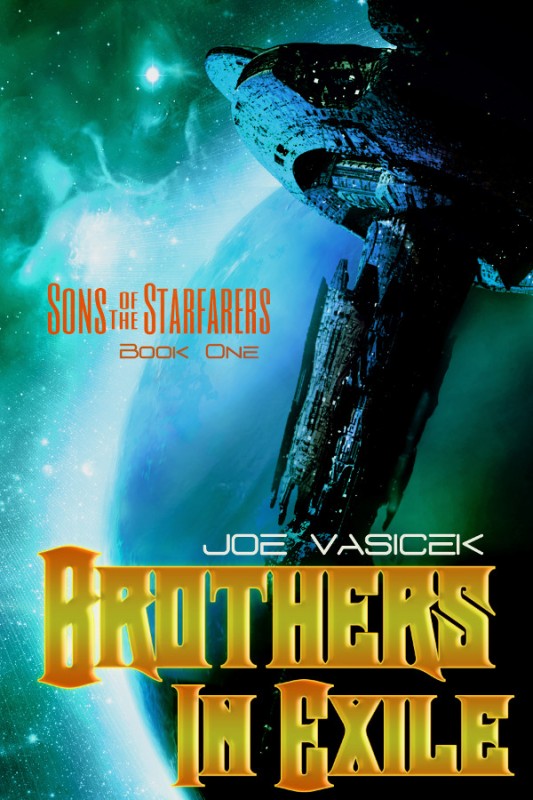
Brothers in Exile by Joe Vasicek is a character-driven space opera / adventure sci-fi about two brothers trying to survive as independent starfarers on the edge of a growing empire. When their routine run takes them to a silent derelict station—and a discovery they can’t ignore—the story turns into a tense, momentum-driven ride through frontier ports, bad deals, and the early tremors of interstellar conquest.

Brothers in Exile is Book 1 of Sons of the Starfarers, a clean, character-driven space opera series about starfarers caught in the early tremors of imperial expansion.

What Kind of Reader Will Love Brothers in Exile?

If you love…

  • frontier space opera: starships, stations, salvage, dangerous trade routes
  • space opera with heart: loyal crews, sacrifice, and family bonds under pressure
  • clean, hopeful science fiction (minimal profanity, no explicit sex) with faith, family, and conscience in the background
  • high-stakes trouble that escalates fast: one decision → bigger consequences → empire-scale ripple effects
  • mystery + rescue momentum, where “we can’t just walk away” drives the plot

…then Brothers in Exile is probably your kind of story.

What You’ll Find Inside

Isaac Deltana is the careful one—the older brother trying to keep their ship, their finances, and their lives from flying apart. Aaron is the spark—reckless, brave, and stubbornly determined to do the right thing once he believes something matters. The tone is tense but humane: a fast-paced, character-driven space adventure with heart, built around survival, moral choice, and the bond between brothers as the Outworlds begin to feel the shadow of the Gaian Imperials stretching outward.

What Makes Brothers in Exile Different

A lot of space opera is driven by lone wolves or chosen ones; this one is driven by family—two brothers who can’t stop being brothers even when everything is going wrong. It has the frontier trading feel of classic space opera, but puts family and moral choice front and center. It has a “scrappy ship on the fringe” flavor you might associate with Firefly, but the moral center is steadier and the tone is less cynical. And while there’s big-picture geopolitics (expansion, control, annexation), the story stays grounded in human-scale decisions: what you owe a stranger, what freedom costs, and how far you’ll go to keep someone from being used or erased.

What You Won’t Find

You won’t find grimdark nihilism, explicit sexual content, or shock-for-shock’s-sake violence. This is clean, character-driven space opera—fast-moving and emotional—rather than slow, technical hard sci-fi. The science is ‘believable enough,’ but the focus is on choices, consequences, and the bond between brothers.

Why I Think You Might Love Brothers in Exile

I wrote Brothers in Exile because I wanted a space adventure where the relationship mattered as much as the action. In my author’s note, I talk about how the brother dynamic in the film Gettysburg (and the real emotional weight behind it) helped shape the characters Isaac and Aaron—the older brother trying to be the responsible one, and the reckless younger brother who pushes back against the authority figures in his life. If you enjoy stories where family is both the complication and the strength—where two people face the void together and refuse to stop caring—I think you’re going to enjoy this book.

Where to Get Brothers in Exile

Related Posts and Pages

Explore the series index for the Sons of the Starfarers series.
Return to the book page for Brothers in Exile.

Free Book: Brothers in Exile

This book has been permafree for a while now, but I’m currently running a promotion on it, so it’s worth posting it here. If you like science fiction and you haven’t read many of my books yet, this is a great place to start!

Brothers in Exile

Brothers in Exile

Two brothers, one starship. A girl frozen in cryostasis. A galaxy on the verge of war.

Isaac and Aaron are nothing if not survivors. Their homeworld lost and their people scattered, all they have left is each other. Then, in the Far Outworlds, they find a dead colony with a beautiful young woman frozen in cryostasis. She is also a survivor—and she needs their help.

Order Now!
About the Book
Deep in the Far Outworlds, a derelict space station holds the bones of a long-dead people—and a beautiful young woman locked in cryofreeze. When the star-wandering brothers Isaac and Aaron Deltana find the sleeping girl, they soon realize that they are her only hope for rescue. If they don’t take her, then slavers certainly will. With no way to revive her, they set a course for the New Pleiades in hopes of finding someone who can help. But a storm is brewing over that region of space. After a series of brutal civil wars, the Gaian Empire has turned its sights outward. A frontier war is on the verge of breaking out, and the brothers are about to be caught in the middle of it. They both harbor a secret, though. Somewhere else in the Outworlds is another derelict station—one that they used to call home. That secret will either bind them together or draw them apart in SONS OF THE STARFARERS BOOK I: BROTHERS IN EXILE
Details
Author: Joe Vasicek
Series: Sons of the Starfarers, Book 1
Genres: Action & Adventure, Military, Science Fiction, Space Exploration, Space Opera
Tag: 2014 Release
Publication Year: May 2014
Length: short novel
eBook Price: free!
Joe Vasicek

Joe Vasicek fell in love with science fiction and fantasy when he read The Neverending Story as a child. He is the author of more than twenty books, including Genesis Earth, Gunslinger to the Stars, The Sword Keeper, and the Sons of the Starfarers series. As a young man, he studied Arabic at Brigham Young University and traveled across the Middle East and the Caucasus Mountains. He lives in Utah with his wife and two apple trees.

Preview
Some of the links in the page above are "affiliate links." This means if you click on the link and purchase the item, I will receive an affiliate commission. You will not receive any additional charge. As an Amazon Associate I earn from qualifying purchases.